Daily Archives: October 6, 2014

Greek recipes: Sfougato from the island of Lesbos

Sfougato from the island of Lesbos

Feel free to change what cheese you use to your tastes.

A pita without a pastry cover.

This is a pita without a pastry cover. I have substituted the local cheese from Limnos with kefalograviera – maybe you would like another cheese.

Ingredients:
6 medium zucchini grated very thick with water squeezed out
3 eggs beaten
5 spring onions, finely cut
5 tablespoons of dill without the stems, finely cut
100 kefalograviera cheese, grated
50 grams finely crumbled feta
1/2 teaspoon of cayenne pepper
1/2 teaspoon black pepper
175 grams plain flour
a little oil for greasing oven dish
salt to taste

Method:
1. Heat oven to 180°C.
2. In a large bowl mix zucchini, eggs, onions, the herbs and spices, the cheeses and pepper and salt.
3. Add flour and mix well.
4. Grease a pita dish and spread the mixture evenly.
5. Drizzle with a good olive oil on top.
6. Bake for 55 minutes.
7. About half way through the baking, cover with foil.
8. Take out of the oven, cut and serve hot or cold.

source: Neos Kosmos

Greek recipes:Strapatsada

Strapatsada

Other ingredients can be added to taste, like peppers or spinach.

Italians call it a frittata, we call it strapatsada

This is what the Italians call a frittata and we call it strapatsada. There are many versions from all over Greece and depending on the area its name can change too. I’ll give you a family size one, which can be made for the whole family with a salad and crusty bread on the side and is yummy.

Ingredients:
10 eggs
1 large red onion, sliced
3 tomatoes cut in large pieces like for a salad
10-15 pitted Kalamata olives
400 grams of feta, crumbled
3 tablespoons of finely chopped parsley
salt and pepper to taste
2 tablespoons olive oil

Method :
1. Beat the eggs in a bowl with parsley and salt and pepper.
2. In a deep, ovenproof frypan heat oil and sauté onions till translucent.
3. Add the tomatoes and the olives and sauté for another 2 minutes.
4. Lower heat and add the eggs and cook till slightly set.
5. Add the feta and place under the grill till eggs rise and brown.
6. Cut into slices and serve.

Note: Other ingredients can be added to taste, like peppers or spinach. My favourite addition is freshly fried potatoes. Instead of grilling, the dish can be put in a hot oven for a few minutes. Also try fresh potato chips with fresh tomatoes and eggs – in this version you might like to leave the eggs ‘matia’ (to my non-Greek readers, the word means ‘eyes’ and we use it for eggs that are ‘sunny side up’).

source: Neos Kosmos

Greek recipes:Artichokes with broad beans and avgolemono

Artichokes with broad beans and avgolemono

If using fresh artichokes, cook them first.

Artichokes have a bit of preparation to them, so make sure you give them the right attention.

Note: Fresh artichokes need the branch cut off, the outer layer leaves discarded, then the top of the artichoke cut off as the top of the leaves are tough. Inside the heart there is a furry part (the choke) that needs to be scooped out. They are then placed in a deep bowl of water with salt and/or lemon juice and allowed to stand till ready to use. If left out of water they will discolour. They also need longer cooking time than the broad beans. I prefer to use artichoke hearts already in a can, it is easier and you can never go wrong this way.
If using fresh artichokes, cook them first. Otherwise, cook the broad beans and then add the tinned artichoke hearts that have been drained.

Ingredients:
500 grams broad beans
6-8 artichoke hearts
1 small onion
1 bunch spring onions
1/2 bunch of dill
1/2 bunch of parsley
3/4 cup of olive oil
juice of one lemon
2 cups of water

Method:
1. In a heavy bottom saucepan, place olive oil and heat. Chop onion and spring onions finely and cook while stirring until translucent.
2. Put in broad beans, cover with 2 cups of water, cook until tender.
3. Add canned artichoke hearts, finely chopped dill and parsley.
4. Add lemon juice and cook for 3/4 hour or until vegetables are just right and not too overcooked, always on very low heat.
5. Make the avgolemono and pour on top, serve hot to warm.

Avgolemono sauce

Ingredients:
2 eggs
juice of 2 lemons
1 cup of warm stock from the vegetables
Method:
1. Separate eggs, putting whites in a bowl and setting aside the yolks.
2. Beat egg whites till stiff.
3. Add yolks and mix well.
4. Add the lemon juice very slowly while beating the eggs so as not to curdle.
5. Add the hot juice from the artichokes and mix well.
6. Add slowly some of the hot juice from the vegetables into the warm egg lemon sauce and mix.
7. Pour the sauce over the vegetables.

source: Neos Kosmos

‘Heaven and Earth’ opens at Art Institute of Chicago

'Heaven and Earth' opens at Art Institute of Chicago

Byzantine art rings

The exhibition includes major works from Greece consisting of mosaics, sculptures, manuscripts, luxury glass, silver, icons, and wall paintings.

A new exhibition at the Art Institute of Chicago, ‘Heaven and Earth: Art of Byzantium from Greek Collections’, presents more than 60 superb artworks of the Byzantine era, from the 4th to the 15th centuries.

Organised by the Hellenic Ministry of Culture and Sports of Athens, with the collaboration of the Benaki Museum, Athens, and originally exhibited at the National Gallery of Art in Washington, DC, and the J. Paul Getty Museum in Los Angeles, the exhibition includes major artistic holdings from Greece consisting of mosaics, sculptures, manuscripts, luxury glass, silver, personal adornments, liturgical textiles, icons, and wall paintings. About one third of the original exhibition will be presented in the Art Institute’s Mary and Michael Jaharis Galleries of Greek, Roman and Byzantine art from 27 September 2014 through to 15 February 2015.

Source: The Greek Star

Ζωολογικός κήπος προσπαθούσε επί χρόνια να ζευγαρώσει δύο… αρσενικές ύαινες!

Ζωολογικός κήπος προσπαθούσε επί χρόνια να ζευγαρώσει δύο... αρσενικές ύαινες!

Οι υπεύθυνοι του ζωολογικού κήπου Μαρουγιάμα στο Σαπόρο της Ιαπωνίας ανακάλυψαν μετά από πολυετείς αποτυχημένες προσπάθειες να ζευγαρώσουν δύο ύαινες πως και οι δύο ήταν αρσενικές.

Σύμφωνα με τους εκπροσώπους του ζωολογικού κήπου, οι δύο στικτές ύαινες, με τα ονόματα Καμουτόρι και Κάμι, γεννήθηκαν από διαφορετικούς γονείς στον ζωολογικό κήπο Νταεζέον στη Νότια Κορέα το 2008 και το 2009 αντίστοιχα. Στη συνέχεια δωρίστηκαν στον κήπο Μαρουγιάμα στα πλαίσια των εορτασμών για την αδελφοποίηση των πόλεων Σαπόρο και Νταεζέον.

Μετά την άφιξή τους στο Μαρουγιάμα, ο Καμουτόρι αναγνωρίστηκε ως αρσενικός, αλλά ο Κάμι ως θηλυκός, και οι υπεύθυνοι του κήπου είδαν ως ενθαρρυντικό στοιχείο το γεγονός ότι τα δύο ζώα έπαιζαν μαζί και έδειχναν τρυφερότητα. Ωστόσο, οι σχέσεις τους πάγωσαν το 2012 και τελικά τα δύο ζώα έπρεπε να χωριστούν το 2014 λόγων συνεχόμενων καυγάδων.

Μετά το χωρισμό τους, οι υπεύθυνοι του κήπου πραγματοποίησαν ορμονικά τεστ τα οποία αποκάλυψαν την προηγούμενη εβδομάδα πως εντέλει και τα δύο ζώα ήταν αρσενικά. Προς υπεράσπισή τους, οι ειδικοί σημειώνουν πως το φύλο των υαινών είναι δύσκολο να προσδιοριστεί επειδή εξωτερικά τα γεννητικά όργανα των δύο φύλων έχουν ομοιότητες.

Οι στικτές ύαινες αποτελούν το μεγαλύτερο και πιο επιθετικό είδος υαινών και ζουν στην υποσαχάρια Αφρική. Ο πληθυσμός τους αριθμεί τα 27 με 47 χιλιάδες άτομα, σύμφωνα με τη Διεθνή Ένωση Προστασίας της Φύσης. Συνήθως ζουν σε αγέλες με πολύπλοκες κοινωνικές δομές που μπορούν να φτάσουν τα 100 μέλη και κυνηγάνε από κοινού είτε μόνες, τρεφόμενες συνήθως από νεκρά ή μικρά ζώα και αιγοπρόβατα.

Σε ανακοίνωσή τους, οι εκπρόσωποι του ζωολογικού κήπου δήλωσαν πως στο μέλλον σκοπεύουν να αποκτήσουν μία θηλυκή ύαινα και να προσπαθήσουν να τη ζευγαρώσουν με μία από τις δύο αρσενικές ύαινες.

Πηγή:zougla.gr

Spartathlon defies crisis

Spartathlon defies crisis

The race also includes a 1,200 metre ascent and descent of Mount Parthenio. Photo: Spartathlon Official Greece flickr.

With a budget of less than 250,000 euros, organisers have created an event whose international market value far exceeds that of its cost of staging

From a daring attempt by a group of friends to one of the most iconic endurance races in the world, the 246-km Spartathlon has defied the downturn in Greek sports, drawing record numbers as ultra marathons become more popular.

In a country that has seen international events wiped off the calendar amid a ravaging economic crisis, this race has captured the imagination of runners the world over, making it a rare example of how to succeed in difficult financial times.

First completed in 1982 by a group of British friends and now with a budget of less than 250,000 euros, organisers have created and cultivated an event whose international market value far exceeds that of its cost of staging.

Up until a few years ago the budget for the race was just half that before a private Greek foundation pitched in as the race’s sole sponsor.

Retracing the steps of ancient Athenian messenger Pheidippidis, who also ran from the Marathon battle ground to Athens to announce victory over the Persians, when he ran to Sparta to seek help against the invading army, this race takes runners on a highlight tour of ancient Greece.

Elefsis, Corinth, Nemea, Megara and Sparta – landmark cities and city-states in ancient Greece – lie in the runners’ path on the way to the Peloponnesian heartland.

Through citrus orchards, vineyards and olive tree groves along the sparkling Aegean sea, and up the 1,200m high Parthenio mountain at night with temperatures dropping to single digits, this race is equally picturesque as it is gruelling.

Last Saturday, Italian runner Ivan Cudin won the 245.3km historic Spartathlon race for a third time, clocking 22 hours, 29 minutes and 29 seconds.
Cubin, 39, fourth last year, also won in 2010 and 2011.

Finishing second for a second year in a row was Germany’s 30-year-old Florian Reus in 23:57.13 while 33-year-old Andrzej Radzikowski of Poland was third in 25:49.05.

The first woman across the line for a second year in a row was 40-year-old Szilvia Lubics of Hungary in 26:53.40. She was ninth overall.

The first Greek to make it to the finish line was 43-year-old Ioannis Kourkourikis, coming in at 29:45:28 and 23rd overall.

The race has remained a huge event on the growing running calendar of the year. The race is neither the toughest, nor the longest, yet more sign up for it every year.

“This is because of the historical aspect. The race built around a legend,” said Danish long distance runner and coach Claus Rasmussen, who attempted the race and was the first to run it in sandals.

“There are hundreds more scenic races, longer ones, more challenging ones and definitely with more history around them. But this one has history within itself.”

A record participation of 380 athletes from 42 countries touched the statue of Spartan warrior king Leonidas in the town centre. The race started at the Acropolis in Athens on Friday and ended in the southern Greek town of Sparta on Saturday.

Among the runners this year was also American Dean Karnazes, one of the world’s most renowned ultra marathon runners and best-selling author, who made his maiden Spartathlon attempt, albeit on a diet Pheidippidis would have had as a documentary crew follow him around.

American Jan Olsen, the 2013 24-hour world champion of the International Association of Ultrarunners, was also another big name participant.

Race organisers, whose strict rules and qualification criteria have sparked a smaller Sparta-to-Athens run organised by runners who fail to make the cut for the Spartathlon, say they cannot keep up with the demand.

“At the moment we are basically limited in our growth by the number of hotel rooms in Sparta. We just cannot sleep all the people wanting to compete,” Spartathlon organising committee member Takis Alikaniotis told Reuters.

This growth is partly due to a current boom in ultra marathon races worldwide, with more and more athletes eager to tackle longer distances.

But more importantly it is also due to the fact the race is offering athletes and potential sponsors a unique proposition, Simon Chadwick, professor of sports business strategy at Coventry University, told Reuters.

“It (Spartathlon) is almost as if it is symbolic of Greece, of what went before and the challenges now facing sport.”

“We are operating in an environment where sport does not just happen. Sport is more commercially market-driven and so the ultra marathon is a symbol of what Greece has been and what Greece needs to become.”

For the first time this year the race is under the auspices of the country’s Tourism Ministry as Greece looks to improve its image abroad after years of bad press.

“Greece must take it (sports events) more seriously in strategic and commercial terms and drive economic activity,” Chadwick said.

“Clearly in terms of brand Greece there is an incredible sporting heritage there that the government could take advantage of. The country is looking for
opportunities.”

The top five finishers:
1. Ivan Cudin (ITA) 22hr 29min 29sec
2. Florian Reus (GER) 23:57.13
3. Andrzej Redzikowski (POL) 25:49.05
4. Marco Bonfiglio (ITA) 26:01.26
5. Dietmar Goebel (GER) 26:15.57

Source: Karolos Grohmann for Reuters, AFP

Postecoglou started his Asian Cup homework before WC

Postecoglou started his Asian Cup homework before WC

Socceroos coach Ange Postecoglou is stamping out over-confidence in the team. Photo: AAP/Lukas Coch.

With less than 100 days to go until the Socceroos enter the Asian Cup, Ange Postecoglou has revealed he has been studying his opponents since before the World Cup

Socceroos coach Ange Postecoglou isn’t taking the impending Asian Cup lightly, and has been working towards a tactic since before the World Cup.

“Even pre-World Cup we scouted every Asian team at the World Cup. We’ve got people on the ground everywhere,” he said, speaking at the launch of the 100 days to go milestone for January’s Cup.

“We’re not underestimating the enormity of this challenge. There won’t be anything any Asian team has done over the last six months – whether they’re in our group or not – that we won’t know about. The one thing we won’t be short of is preparation.”

Postecoglou’s pedantic nature is also translated to his players, often travelling to see Australian potentials in action and sitting them down for a decisive interview.

His imperative is to stamp out over-confidence.

“One thing we won’t be doing is being that arrogant that we’re thinking about doing things before we’ve done the hard work,” he says.

“Our job is to prepare the team for a really, really tough tournament. Our focus is on preparing for that first game in Melbourne [against Kuwait].”

The team will take on Kuwait on January 9, and will play three friendlies before then.

The 23-man squad is off to the Middle East in two weeks to take on the UAE and Qatar before heading to Japan in November to take on the Blue Samurai.

source: Neos Kosmos

Police bust airport trafficking ring

Police bust airport trafficking ring

Thessaloniki’s Makedonia Airport noticed suspicious movements by Syrian travellers.

Seven arrested on suspicion of helping migrants travel from Greece to Germany with fake papers.

An airline pilot, an airport check-in attendant and two Thessaloniki-based travel agents are among seven people arrested on suspicion of helping migrants travel from Greece to Germany with fake papers.

A 48-year-old Cypriot man, who has been on the Cyprus police’s wanted list since 2004 for fraud and forgery, is alleged to have masterminded the operation. He was arrested along with the other six suspects following raids in Thessaloniki and Athens last week.

An investigation was launched after police at Thessaloniki’s Makedonia Airport noticed suspicious movements by Syrian travellers. The aliens bureau carried out a five-month probe and found that the trafficking ring had been helping to ferry immigrants to Germany illegally since at least October 2013.

Each Syrian paid the ring between 2,000 and 3,000 euros to be given forged identity papers and a ticket out of Greece. The Cypriot is alleged to have created five forged identity cards that were used by the migrants to get past airport security.

The check-in attendant allegedly worked with the 48-year-old to help the migrants board their flights. Authorities said she gave the ring information about when inexperienced airline and security employees would be on duty, making it easier for the migrants to pass unnoticed. She allegedly received 600 euros for each immigrant who left Makedonia Airport without getting caught.

The travel agents are accused of knowingly issuing airplane tickets for passengers with forged papers.

Police made the arrests after tapping the ring members’ phones. During the conversations, it was revealed that the 31-year-old pilot was also involved in the trafficking activities.

Source: Kathimerini

Poverty hits 6.3 million people in Greece

imagesWOSRIMTJ

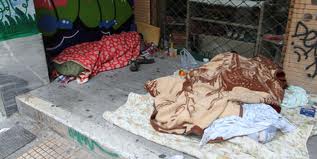
Three in every five Greeks were living in poverty or under the threat of poverty in 2013.

Three in every five Greeks, or some 6.3 million people, were living in poverty or under the threat of poverty in 2013 due to material deprivation and unemployment, a report by parliament’s State Budget Office showed on Thursday.

Using data on household incomes and living conditions, the report – titled ‘Minimum Income Policies in the European Union and Greece: A Comparative Analysis’ – found that “some 2.5 million people are below the threshold of relative poverty, which is set at 60 per cent of the average household income”. It added that “3.8 million people are facing the threat of poverty due to material deprivation and unemployment”, resulting in a total of 6.3 million people.

The State Budget Office’s economists who drafted the report argued that in contrast with other European countries “which implement programs to handle social inequalities, Greece, which faces huge phenomena of extreme poverty and social exclusion, is acting slowly”. They added that there is high demand for social assistance, while its supply by the state is “fragmented and full of administrative malfunctions”.

In that context “the social safety net is inefficient, while there is no prospect for the recovery of income losses resulting from the economic recession in the near future”, the report noted, reminding readers that the measure of the minimum guaranteed income “arrived in Greece belatedly”.

According to Eurostat Greece ranks top among the 28 European Union countries in terms of poverty risk and also has the highest poverty share in the population (23.1 per cent). Greece also ranks fourth among EU states in poverty disparity, after Spain, Romania and Bulgaria.

Relative poverty is defined by the percentage of households earning less than 60 per cent of an average household’s income in 2013 (for one person that amounted to 432 euros per month and for a four-member family to 908 euros).

Source: Kathimerini

Australia: Victorian charity’s links to Golden Dawn revealed

Vic charity's links to Golden Dawn revealed

Marchers at an anti-fascism rally in Athens earlier this month mark one year since the fatal stabbing of Greek rapper Pavlos Fyssas at the hands of Golden Dawn supporters. Photo: AAP/NEWZULU/Nicolas Koutsokostas

Activity of Voithame Tin Ellada to be raised in parliament

The work of Melbourne-based charity Voithame Tin Ellada (VTE), which has been requesting donations of cash and clothes from Australia’s Greek community, is to be raised in the Victorian parliament.

Revelations surfaced this week after The Guardian reported that the Australian branch of Greece’s ultra-nationalist Golden Dawn party has been raising funds to send on to Greece, under the banner of an unregistered charity.

Following publication of the article, state Liberal MP Nicholas Kotsiras told Neos Kosmos he would be raising the matter in the next sitting of parliament.
“I’d like the authorities to take a good look at it,” he said.

“Our aim should be to take away the oxygen of the group so they disappear as quickly as they appeared.”

VTE’s Facebook page (taken down after publication of The Guardian article) showed workers for the charity wearing Golden Dawn inscribed T-shirts.

A Christmas fundraising drive – asking donors to deposit cash into a Greek bank account – was reportedly launched on the page last week by Golden Dawn’s Australian representative, Ignatius Gavrilidis. The donations requested purported to help Greek citizens afflicted by the financial downturn.

Mr Gavrilidis confirmed to the Guardian that VTE was affiliated with Golden Dawn and money raised went towards providing food for people in Greece who could prove Greek citizenship.

“We buy the food direct from the producers and Golden Dawn takes delivery of the goods … We use their labour, they hand out the food where it’s appropriate,” he said.

Golden Dawn became the third-largest political force in Greece after elections in May and has increasingly turned to diaspora branches to build support and assist fundraising.

Their Australian spokesman said that VTE was originally set up in November 2013 by Greek Australians not associated with the ultra-right party.

“But these individuals failed to attract support, and I offered my assistance, and they were more than happy to get it off the ground.”

Mr Gavrilidis added that the charity had been absorbed into Golden Dawn’s Australian branch early in 2014.

“We decided to aid VTE and back them up, and we became VTE ourselves.” A shipping container of clothing collected in Australia by the charity was sent to Athens in March.

Alex Kakafikas, a spokesman for the Melbourne Anti-Fascist Initiative, told Neos Kosmos that while he understood the community’s motivation to donate to VTE, “there is no guarantee that any donated money or goods will go to where they claim”.

“The other problem regarding this ‘charity’, is that it is merely a public relations front to whitewash [Golden Dawn’s] role in racially and politically motivated violence.”

Mr Kakafikas added: “In the current climate of hysteria surrounding ‘terrorism’, why should Golden Dawn and its front VTE be spared the same attention by the authorities [that is] given to Islamic charities?

In a statement provided to Neos Kosmos the Greek Orthodox Community of Melbourne and Victoria said that apart from the VTE charity’s “affiliation to a xenophobic political party,” the organisation had a “selective distribution process by making outrageous claims that all items and funds collected will be provided only to those citizens of Greece who hold a national ID card proving their Greek nationality.”

GOCMV’s statement added that it was “the duty of the relevant authorities to investigate the group and its operations.

“Illegal entities operating under the pretence of charitable status are unacceptable in our multicultural society and should be exposed for their deceptive conduct.”

The Victorian Government’s Consumer Affairs department has confirmed that VTE is not registered as a charity.

Director of Consumer Affairs, Dr Claire Noone told Neos Kosmos that under the Fundraising Act 1998, Consumer Affairs has “a range of statutory powers to facilitate an investigation into contraventions of the Act, including fundraising whilst unregistered”.

source: Neos Kosmos