Monthly Archives: April 2014

First Earth-sized planet Kepler-186f discovered within ‘habitable zone’ sweet spot; could have water

842614-cdf6ef0c-c661-11e3-b68a-f6104b7c1796

THE hunt for potential life in outer space has taken a step forward — an international team of researchers has discovered the first Earth-sized planet within the “habitable zone” of another star.

The exoplanet dubbed Kepler-186f was first spotted by scientists using NASA’s Kepler telescope, according to research published in the US journal Science.

The new planet is “more of an Earth cousin than an Earth twin,” said Elisa Quintana of the SETI Institute at NASA’s Ames Research Centre in California, the lead author of the paper published in Science.

“What makes this finding particularly compelling is that this Earth-sized planet, one of five orbiting this star, which is cooler than the Sun, resides in a temperate region where water could exist in liquid form,” she said.

“This discovery does confirm that Earth-sized planets do exist in the habitable zones of other stars”, she said.

The exoplanet, located some 500 light years from Earth, orbits in what is seen as the sweet spot around its star: not too close and not too far, so it could have liquid water, considered a crucial component to possibly hosting life.

“The discovery of Kepler-186f is a significant step toward finding worlds like our planet Earth,” said Paul Hertz, NASA’s Astrophysics Division director at the agency’s headquarters in Washington.

Kepler-186f is around 1.1-times the size of Earth — which researchers say is key to predicting the composition of the surface and its atmosphere.

When planets are 1.5 times the size of Earth or larger, many of them seem to attract a thick hydrogen and helium layer that makes them start to resemble gas giants like Jupiter or Saturn.

Kepler-186f is the fifth and outermost planet orbiting the Kepler-186 star, right on the far edge of that solar system’s habitable zone, meaning the surface temperature might not be warm enough to stop water from freezing.

“However, it is also slightly larger than the Earth, and so the hope would be that this would result in a thicker atmosphere that would provide extra insulation,” explained San Francisco State University astronomer Stephen Kane, another member of the team behind the discovery.

— Tracking ‘transits’ —

Scientists using the NASA’s Kepler telescope first discovered it by tracking “transits” — shadows that cross in front of the star.

The finding was confirmed by observations from the W.M. Keck and Gemini Observatories.

“The discovery of planets with Earth-like properties is one important link in the chain required to answer” whether life can exist on other planets, said co-author Fred Adams, an astronomer at the University of Michigan.

“And the discovery of the planet Kepler-186f is an important step toward finding a planet that is like our Earth,” he added.

But current technology does not allow astronomers to see the celestial body directly or do any analysis to determine its atmosphere or composition.

“Some people call these habitable planets, which of course we have no idea if they are,” said Kane. “We simply know that they are in the habitable zone, and that is the best place to start looking for habitable planets.” Because its star is so dim, Kepler-186f may not be suitable for follow-up studies to determine its composition, explained Quintana.

“However, our research tells us that we should be able to find planets around bright stars that will be ideal targets to observe” with telescopes like NASA’s Webb orbiting telescope, currently under construction, she said.

Of nearly 1,800 planets detected over the past 20 years, only around 20 orbit within the so-called “habitable zone” — and all appear to be larger than Earth, which makes it harder to tell whether or not they are gas giants.

The Kepler space telescope, launched in March 2009, observes some 150,000 stars, a few thousand of which have been found to have possible planets.

source: news.com.au
Centipede eats its way out of deadly snake

snake3

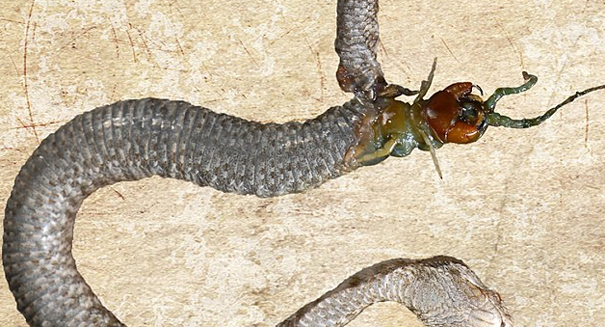
Scientists are astonished to find a viper eaten alive from the inside out by his prey, a centipede.

While scientists were on a field study in Macedonia, they came upon the carcass of a nose-horned viper–not an unusual sight in the region they were in. This viper, however, was unusual. That is because the head of a centipede was sticking out of the snake’s abdomen, Live Science reported. The researchers were astonished.

After conducting a postmortem on the viper, Vipera ammodytes, the researchers concluded that the centipede likely eviscerated the predator from the inside out.

“All of us were astonished, as nobody has ever seen something like this,” said Ljiljana Tomovic, a herpetologist at the University of Belgrade, in an email to Live Science. A report of the rare never-before-seen event was published in the journal Ecologica Montenegrian, with the title: ‘Two fangs good, a hundred legs better; juvenile viper devoured by an adult centipede it had ingested.’

The scientists took a photo of the centipede, Scolopendra cingulate, busting out of the young female snake’s abdomen. Measurements of the two creatures side by side show that the centipede is almost as long as the viper.

In May of last year, Tomovic and his colleagues were tagging reptiles on Macedonia’s Golem Grad, a 44-acre (18 hectars) island in Lake Prespa, a place that is home to thousands of tortoises, tens of thousands of dice snakes, and hundreds of vipers, Live Science said.

One researcher, Dragan Arsovki, happened to turn over a stone and saw the remnants of the unfortunate viper, Tomovic said. She also said that the centipede was actually heavier–114 percent heavier–than the snake.

Upon dissecting the viper, the scientists found that its visceral organs were missing and wrote that “the entire volume of its body was occupied by the centipede.’

“Therefore, we cannot dismiss the possibility that the snake swallowed the centipede alive, and that, paradoxically, the prey has eaten its way through the snake, almost reaching its freedom,” the authors wrote.

source: sciencerecorder.com

Tony Abbott to meet Royals at Bear Cottage

At Bear Cottage, the couple will be met by Prime Minister Tony Abbott and his wife, Margie.

The visit is designed to raise awareness of the children’s hospice, which provides medical and end-of-life care to children suffering from life-limiting illnesses.

Bear Cottage was established in 2001 entirely through community support and donations.

Nursing Unit Manager at Bear Cottage, Narelle Martin, says the facility’s affiliation with The Children’s Hospital at Westmead allows them to provide some of the best medical care in the world.

“We’re the only children’s hospice in the world that is directly affiliated to a children’s hospital,” she said.

“The care that the kids can get here is fantastic.”

Dedicated staff aim to create a unique and holistic care program for the children.

The staff include a full-time play therapist, social workers, music and art therapists, registered nurses and a chef. There are also 80 trained volunteers that help in the house.

The team’s vision is to create a setting that is as far removed from a hospital environment as possible.

“Bear Cottage is like a Club Med for kids… it’s got everything that a child would want… there’s toys, Xboxes and PlayStations… the dog is always a hit,” Ms Martin said.

The couple will be met at the hospice by Prime Minister Tony Abbott.

Cottage gives carers a much-needed break

Leo and Julie Murnane travel from Lithgow in NSW to Bear Cottage four times a year.

They bring their 13-year-old son Michael, who suffers from Batten Disease – a fatal disorder of the nervous system.

While Michael is cared for by Bear Cottage staff, Julie and Leo are free to take time out from their 24-hour job as his full-time carers.

“We just don’t have to do anything, we can look after ourselves. It’s amazing… You can ask them for anything and 99 times out of 100, they’ll try and get it, or try and do it.”

It is hoped the Royal visit will focus attention on Bear Cottage and help raise its profile.

Ms Martin says there is a lot of anticipation at the cottage ahead of the visit.

“We’re very excited that she (the Duchess) has taken the time out to come and visit us,” she said.

“Getting the message out there and showcasing Bear Cottage is fantastic and hopefully it’ll highlight that Australia may need some more children’s hospices in due course.”

Yesterday, the Duke and Duchess visited the Blue Mountains west of Sydney.

They met residents from the town of Winmalee, which was devastated by bushfires last October, as well as Rural Fire Service volunteers and girl guides.

source:abc.net.au


South Korean ferry skipper ‘delayed evacuation for 30 minutes’

140416-korea-ferry-main-5a_0360ae141a68798a57880a3e0eeb223f_nbcnews-fp-1240-600

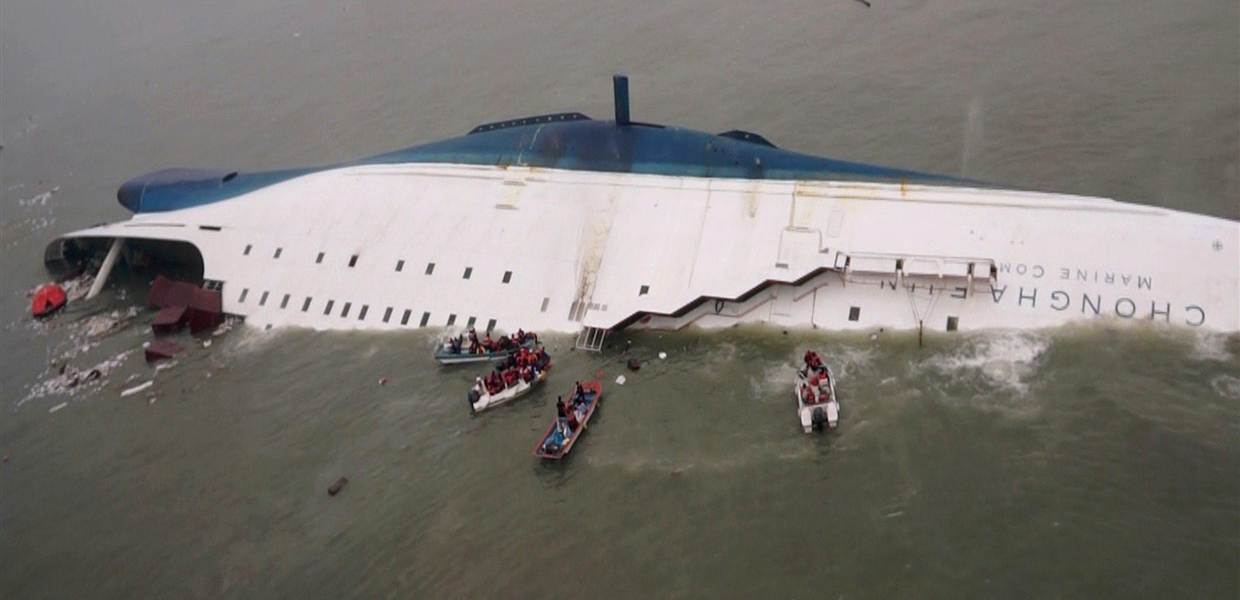
THE captain of a doomed ferry delayed evacuation for half an hour after a South Korean transportation official ordered preparations to abandon ship, raising more questions about whether quick action could have saved scores of passengers still missing and feared dead, according to a transcript of the ship-to-shore exchange and interviews with a crew member.

It’s also emerged that the ship’s third officer was in charge of the bridge when the ferry capsized.

The order by an unidentified official at the Jeju Vessel Traffic Services Centre to put on life jackets and prepare for evacuation came just five minutes after a Wednesday morning distress call by the Sewol ferry. The ferry, which was bound for Jeju island, replied that “it’s hard for people to move.’’

The confirmed death toll from Wednesday’s sinking off southern South Korea was 25, most of bodies found floating in the ocean, the coast guard said. But 48 hours after the sinking, the number was expected to rise sharply with about 270 people missing, many of them high school students on a class trip. Officials said there were 179 survivors.

The captain hasn’t spoken publicly about his decision making.

However South Korean prosecutors said the third officer — not the captain — was in command of steering the ship when the accident occurred.

Captain Lee Joon-Seok, who has become a focus of public anger for escaping the ferry while hundreds of others were trapped, was “in the back’’, prosecutors said.

The new details about communication between the bridge and transportation officials follow a revelation by a crew member in an interview with The Associated Press that the captain’s eventual evacuation order came at least half an hour after the distress signal.

Meanwhile, strong currents and rain hampered rescue attempts as they entered a third day. There was no progress in attempts to enter the ship and look for any survivors, officials.

Divers worked in shifts to try to get into the sunken vessel, where most of the missing passengers are thought to be, but strong currents would not allow them to enter. The divers planned to pump oxygen into the ship to help any survivors, but first they had to get inside, said coast guard spokesman Kim Jae-in.

The water temperature in the area was about 12 degrees Celsius, cold enough to cause signs of hypothermia after about 90 minutes of exposure.

Mr Kim said two vessels with cranes arrived and would help with the rescue and to salvage the ferry, which sank not far from the southern city of Mokpo and now sits with just part of its keel visible. But salvage operations hadn’t started yet because of the rescue attempts. Salvaging the capsized ship could be risky because the vessel could get wedged deeper in the ocean’s floor, he said.

A private company has sent a robot to help aid rescue operation, but Mr Kim said the robot is still a prototype and hasn’t been yet been used.

Out of 29 crew members, 20 people, including the captain, Lee Joon-seok, 68, survived, the coast guard said.

The captain made a brief, videotaped appearance, although his face was hidden by a grey hoodie.

“I am really sorry and deeply ashamed,’’ Mr Lee said. “I don’t know what to say.’’

Kim Soo-hyun, a senior coast guard official, said officials were investigating whether the captain got on one of the first rescue boats.

Kim Han-sik, president of Chonghaejin Marine Co., the ship’s owner, also apologised separately, bowing deeply and saying through his tears, “I committed a sin punishable by death. … I am at a loss for words. I am sorry. I am sorry.’’

The 146-metre Sewol had left Incheon on the north-western coast of South Korea on Tuesday for the overnight journey to the southern resort island of Jeju. There were 475 people aboard, including 325 students from Danwon High School in Ansan, which is near Seoul,

It was three hours from its destination when it began to list for an unknown reason.

Oh Yong-seok, a helmsman on the ferry with 10 years of shipping experience, said that when the crew gathered on the bridge and sent a distress call, the ship was already listing more than 5 degrees, the critical angle at which a vessel can be brought back to even keel.

The first instructions from the captain were for passengers to put on life jackets and stay where they were, Mr Oh said.

Video obtained by The Associated Press that was shot by a survivor, truck driver Kim Dong-soo, shows the vessel listing severely with people in life jackets clinging to the side of the ship to keep from sliding. The initial announcement for passengers to stay in their quarters can be heard.

A third mate reported that the ship could not be righted, and the captain ordered another attempt, which also failed, Mr Oh said. A crew member then tried to reach a lifeboat but fell because the vessel was tilting, prompting the first mate to suggest to the captain that he order an evacuation, Mr Oh said.

About 30 minutes after passengers were told to stay in place, the captain finally gave the order to evacuate, Mr Oh said, adding that he wasn’t sure that in the confusion and chaos on the bridge if the order was relayed to the passengers. Several survivors told the AP that they never heard any evacuation order.

By then, it was impossible for crew members to move to passengers’ rooms to help them because the ship was tilted at an impossibly acute angle, he said. The delay in evacuation also likely prevented lifeboats from being deployed.

“We couldn’t even move one step. The slope was too big,’’ said Mr Oh, who escaped with about a dozen others, including the captain.

Passenger Koo Bon-hee told the AP that many people were trapped inside by windows that were too hard to break. He wanted to escape earlier but didn’t because of the announcement to stay put.

“The rescue wasn’t done well. We were wearing life jackets. We had time,’’ the 36-year-old Koo said from a hospital bed in Mokpo where he was treated for minor injuries. “If people had jumped into the water … they could have been rescued. But we were told not to go out.’’

The last major ferry disaster in South Korea was in 1993, when 292 people were killed.

source:theaustralian.com.au

Royal visit: Prince William, Kate to visit Bear Cottage children’s hospice in Sydney


royal-visit

The Royal couple will spend the third day of their Australian tour in Sydney, visiting The Royal Easter Show and the Bear Cottage children’s hospice in Manly.

Their visit to Bear Cottage is designed to raise awareness of the children’s hospice, which is the only one of its kind in New South Wales and one of only two in Australia.

The hospice provides medical and end-of-life care to children suffering from life-limiting illnesses.

The Duke and Duchess of Cambridge visited the Blue Mountains west of Sydney yesterday.

They met residents from the town of Winmalee, which was devastated by bushfires last October, as well as Rural Fire Service volunteers and girl guides.

Bear Cottage was established in 2001 entirely through community support and donations.

Nursing Unit Manager at Bear Cottage, Narelle Martin, says the facility’s affiliation with The Children’s Hospital at Westmead allows them to provide some of the best medical care in the world.

“We’re the only children’s hospice in the world that is directly affiliated to a children’s hospital,” she said.

“The care that the kids can get here is fantastic.”

Dedicated staff aim to create a unique and holistic care program for the children.

The staff include a full-time play therapist, social workers, music and art therapists, registered nurses and a chef. There are also 80 trained volunteers that help in the house.

The team’s vision is to create a setting that is as far removed from a hospital environment as possible.

No uniforms are worn and they do not perform any medical procedures in the children’s bedrooms.

“Bear Cottage is like a Club Med for kids… it’s got everything that a child would want… there’s toys, Xboxes and PlayStations… the dog is always a hit,” Ms Martin said.

Royal visit itinerary – Australia

  • April 16 – Sydney, NSW – Opera House reception
  • April 17 – Blue Mountains, NSW – visiting bushfire-affected areas
  • April 18 – Bear Cottage Sydney, NSW
  • April 19 – Brisbane, Qld – RAAF base visit
  • April 20 – Sydney, NSW – Easter Sunday church service
  • April 21 – Canberra, ACT
  • April 22 – Uluru, NT
  • April 23 – Adelaide, SA – Meet young Australians at Northern Sound System
  • April 24 – Canberra, ACT – Reception at Parliament House
  • April 25 – Canberra, ACT – Anzac Day march and service at War Memorial

source: abc.net.au


Ισόβια για τους δύο χρυσαυγίτες δολοφόνους

GOLDEN DAWN

Για την εν ψυχρώ δολοφονία του 27χρονου εργάτη από το Πακιστάν Σαχζάτ Λουκμάν, που σημειώθηκε πριν από ένα χρόνο στα Πετράλωνα.

Ισόβια κάθειρξη και επιπλέον ποινή 32 μηνών επέβαλε το Πρωτοβάθμιο Κακουργιοδικείο στους Διονύση Λιακόπουλο και Χρήστο Στεργιόπουλο για την εν ψυχρώ δολοφονία του 27χρονου εργάτη από το Πακιστάν Σαχζάτ Λουκμάν, που σημειώθηκε πριν από ένα χρόνο στα Πετράλωνα.
Στους δύο άνδρες, που κατηγορούνται και για την υπόθεση της Χρυσής Αυγής, δεν αναγνωρίστηκε κανένα ελαφρυντικό, ενώ ως κίνητρο αναφέρθηκε η διαφορετικότητα.
Το δικαστήριο αποφάσισε ομόφωνα την ενοχή των δύο κατηγορουμένων για τη δολοφονία του 27χρονου εργάτη, υιοθετώντας την πρόταση της εισαγγελέα, η οποία είχε ζητήσει με την αγόρευση της πριν από λίγες ημέρες την καταδίκη τους.

Οι δύο κατηγορούμενοι κρίθηκαν ομόφωνα ένοχοι για τα αδικήματα της ανθρωποκτονίας από πρόθεση και από κοινού, της οπλοφορίας, της οπλοχρησίας, της παράνομης οπλοκατοχής και της αποδοχής προϊόντος εγκλήματος, χωρίς την αναγνώριση ελαφρυντικών.

Δικαστές και ένορκοι του Μικτού Ορκωτού Κακουργιοδικείου απέρριψαν τους ισχυρισμούς των Διονύση Λιακόπουλου και Χρήστου Στεργιόπουλου, ότι το θύμα τους είχε κλείσει τον δρόμο με το ποδήλατο του ξημερώματα της 17ης Ιανουαρίου 2013 οπότε και έπεσε νεκρός ο 27χρονος.

Αντίστοιχα και η εισαγγελική πρόταση προς το δικαστήριο ήταν ότι όσα ισχυρίζονται οι δύο κατηγορούμενοι περί διαπληκτισμού με το θύμα «δεν αντέχουν στη λογική».
Η εισαγγελέας με την πρότασή της διαφοροποιήθηκε από το βούλευμα που απέδιδε την ανθρωποκτονία σε «ασήμαντον αφορμή» και υποστήριξε ότι το έγκλημα των δύο κατηγορουμένων «είχε κίνητρο τη διαφορετικότητα».

Κατά την εισαγγελική κρίση: «Οι κατηγορούμενοι τέλεσαν ανθρωποκτονία σε ήρεμη ψυχική κατάσταση και έπληξαν το θύμα με 7 μαχαιριές. Συναποφάσισαν να αφαιρέσουν τη ζωή ενός αθώου αλλοδαπού άνδρα και δη πακιστανικής καταγωγής. Το ποιό πλήγμα ήταν θανατηφόρο δεν έχει καμία σημασία. Σημασία έχει ότι από την αρχή ήταν αποφασισμένοι».

Το δικαστήριο κατά την ανάγνωση της ετυμηγορίας του δεν αποφάνθηκε αν ενέταξε τη δολοφονία στα «ρατσιστικά εγκλήματα», ωστόσο όπως ανέφερε η πρόεδρος, που ρωτήθηκε από την Πολιτική Αγωγή σχετικά, η κρίση του δικαστηρίου θα αναδειχθεί από την αιτιολόγηση της απόφασης με τη δημοσίευση του σκεπτικού.
Στις αγορεύσεις τους οι συνήγοροι υπεράσπισης των δύο κατηγορουμένων ζήτησαν από το δικαστήριο να μην κηρύξει ενόχους τους εντολείς τους όπως εισάγονται οι κατηγορίες, δηλαδή για ανθρωποκτονία από πρόθεση και συναυτουργία σε αυτήν, αλλά για θανατηφόρες σωματικές βλάβες. Τόνισαν δε, πως οι δύο νεαροί δεν είχαν πρόθεση να σκοτώσουν.

Αντίθετα η Πολιτική Αγωγή, που εκπροσωπεί τους γονείς του 27χρονου οι οποίοι κατέθεσαν στο δικαστήριο για τον γιο τους, ζήτησε την καταδίκη των δύο για έγκλημα που διέπραξαν συνειδητά με ρατσιστικό κίνητρο.

Πηγή: Νέος Κόσμος

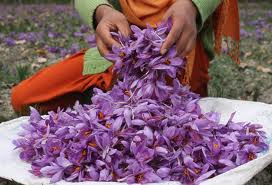
Ο κρόκος Κοζάνης διατίθεται σε 23 χώρες του εξωτερικού

krokos

Η Ελλάδα η μεγαλύτερη παραγωγός χώρα κρόκου στην Ευρώπη.

Την πρώτη θέση ανάμεσα στις χώρες της Ευρώπης ως προς την παραγωγή κρόκου κατέχει η Ελλάδα που έχει εισέλθει δυναμικά στην παγκόσμια αγορά του ακριβότερου μπαχαρικού στον κόσμο καθώς χρειάζονται περίπου 150.000 άνθη κρόκου για ένα κιλό αποξηραμένων στιγμάτων! Και μπορεί ο μεγαλύτερος όγκος παραγωγής στην υφήλιο να αποδίδεται στο Ιράν ωστόσο η υψηλή ποιότητα του ελληνικού κρόκου ενισχύει διαρκώς τη φήμη του.

Είναι χαρακτηριστικό ότι με βάση τη διεθνώς αναγνωρισμένη διαδικασία του ISO (3632 TS) μέσα από την αξιολόγηση των συγκεντρώσεων της κροκίνης, της πικροκροκίνης και της σαφρανάλης, ο κρόκος Κοζάνης διαθέτει χρωστική δύναμη 66 βαθμούς υψηλότερη από το ελάχιστο διεθνές πρότυπο γεγονός που τον τοποθετεί στην κορυφή.

Τα παραπάνω επισημαίνει στο ΑΠΕ-ΜΠΕ ο γενικός διευθυντής της “Προϊόντα Κρόκου Κοζάνης” Άγγελος Μάρκου, ο οποίος γνωστοποιεί ότι τα εν λόγω προϊόντα διατίθεται σε 2500 σημεία στην Ελλάδα και σε συνολικά 23 χώρες του εξωτερικού. Ανάμεσά τους βρίσκονται το Κουβέιτ, το Κατάρ, το Μπαχρέιν, τα Ηνωμένα Αραβικά Εμιράτα, η Αυστραλία, η Ιαπωνία, το Χονγκ Κονγκ, η Αμερική και ο Καναδάς! Στην Ευρώπη, οι χώρες στις οποίες “ταξιδεύουν” τα προϊόντα με κρόκο Κοζάνης είναι η Κύπρος, η Αγγλία, η Γερμανία, η Ισπανία, η Βουλγαρία, η Δανία, η Πολωνία, η Τσεχία, η Ελβετία, η Γαλλία, το Βέλγιο, η Ολλανδία, η Ρωσία και η Σλοβενία.
“Η προσπάθεια ανάπτυξης σε παγκόσμιο επίπεδο είναι συνεχής. Βρισκόμαστε σε διαρκή αναζήτηση νέων αγορών που ταιριάζουν με το προφίλ των συγκεκριμένων προϊόντων και διαθέτουν το κατάλληλο δίκτυο διανομής” σχολιάζει ο κ. Μάρκου και διευκρινίζει ότι το δίκτυο διανομής περιλαμβάνει φαρμακεία, καταστήματα βιολογικών προϊόντων, ντελικατέσεν, ξενοδοχεία, εστιατόρια και καφέ αλλά και χώρους spa.

Δεν είναι τυχαίο, άλλωστε, ότι η εταιρεία “Προϊόντα Κρόκου Κοζάνης” ιδρύθηκε το 2008 ως αποτέλεσμα της συνεργασίας του Αναγκαστικού Συνεταιρισμού Κροκοπαραγωγών Κοζάνης και της “Κορρές”, η οποία επενδύει στα ελληνικά βότανα λόγω των ευεργετικών για τον οργανισμό χαρακτηριστικών του και κυρίως των αντιοξειδωτικών ιδιοτήτων του. Σύμφωνα με την παραδοσιακή ιατρική, στις ευεργετικές ιδιότητες του κρόκου συμπεριλαμβάνονται, επίσης, η αντισηπτική, αντισπασμωδική και χωνευτική δράση, ενώ νέες μελέτες απέδειξαν ότι τα στίγματά του διαθέτουν ουσίες με ισχυρές αντιοξειδωτικές ιδιότητες που προστατεύουν από τις ελεύθερες ρίζες.

Σε ό,τι αφορά το “μερίδιο” των εξαγωγών τη συνολική παραγωγή του κρόκου Κοζάνης αυτό φτάνει το 45% των συνολικών πωλήσεων ενώ για το άμεσο μέλλον προτεραιότητα αποτελούν οι ευρωπαϊκές αγορές και η Αμερική.
Ερωτηθείς για το στοιχείο εκείνο που έδωσε την απαραίτητη ώθηση στις εξαγωγές, ο κ. Μάρκου αναφέρεται στα καινοτόμα προϊόντα όπως τα βιολογικά αφεψήματα με κρόκο Κοζάνης, η συσκευασία των οποίων απέκτησε νέα διακριτή αισθητική που συνέβαλε στις στρατηγικές κινήσεις επέκτασης στις διεθνείς αγορές μέσα από στοχευμένα, κατάλληλα κανάλια διανομής.

Σύμφωνα με τον ίδιο, η σειρά αφεψημάτων με Κρόκο Κοζάνης και επιλεγμένα βότανα έδωσε νέα εμπορική διάσταση στην πολύτιμη αυτή α’ ύλη, δημιουργώντας μια νέα ευκαιρία για επέκταση της παρουσίας στην Ελλάδα και παράλληλα μία νέα προοπτική για εξαγωγές και συνεπώς για την ενίσχυση του εισοδήματος των κροκοπαραγωγών. Πρόκειται για τα μοναδικά αφεψήματα στο είδος τους διεθνώς, καθώς πρώτη φορά ένα από τα πολυτιμότερα και με επιστημονικά αποδεδειγμένα οφέλη καρύκευμα, συνδυάζεται με πλήθος άλλων βιολογικών βοτάνων, δημιουργώντας μοναδικές συνταγές, που μετατρέπουν τον κρόκο Κοζάνης σε καθημερινή διατροφική συνήθεια -ελληνικά προϊόντα που συνδυάζουν την ποιότητα και την καινοτομία με την ευεργετική για τον οργανισμό δράση. Η εξισορροπημένη σχέση ποιότητας-τιμής τα κατέστησε απόλυτα ανταγωνιστικά στην εγχώρια και διεθνή αγορά.

Αξίζει να σημειωθεί ότι κάθε φακελάκι, λόγω της υψηλής ποιότητας του κρόκου, δίνει 400ml ροφήματος, διατηρώντας αναλλοίωτα τα βασικά χαρακτηριστικά αρώματος, γεύσης, χρώματος και βέβαια τη δράση των ευεργετικών ουσιών των βοτάνων και ιδιαίτερα του κρόκου. Επίσης, με τρία φακελάκια την ημέρα, καλύπτεται, σύμφωνα με έρευνες, η ημερήσια συνιστώμενη δόση σε αντιοξειδωτικές ουσίες που περιέχει ο κρόκος.

Στο μεταξύ, οι βραβεύσεις από επίσημους, αξιόπιστους διεθνείς φορείς, όπως το International Taste & Quality Institute, επισφραγίζουν τη δυναμική και τις ορθές επιχειρηματικές πρακτικές μίας ελληνικής εταιρείας με ισχυρό εξαγωγικό προφίλ και επιβεβαιώνουν την υπεροχή και προστιθέμενη αξία των προϊόντων της. Συγκεκριμένα, απονεμήθηκε στη σειρά των ροφημάτων το Βραβείο Ανώτερης Γεύσης ενώ το βιολογικό Αρωματικό Ρόφημα με κρόκο Κοζάνης & Φασκόμηλο απέσπασε μία ακόμα διάκριση στο πλαίσιο των βρετανικών Great Taste Awards 2010.

Την ίδια στιγμή, οκτακόσιες οικογένειες εξακολουθούν να ασχολούνται με την καλλιέργεια του κρόκου με προοπτικές διεύρυνσής της ενώ σε ερευνητικό επίπεδο η “Προϊόντα Κρόκου Κοζάνης” συμμετέχει σε προγράμματα που εστιάζουν στις ευεργετικές ιδιότητες των ουσιών που περιέχονται στον κρόκο Κοζάνης. Τα προγράμματα αυτά υλοποιούνται σε συνεργασία με το Γεωπονικό Πανεπιστήμιο Αθηνών και το Τμήμα Χημείας του Αριστοτέλειου Πανεπιστημίου Θεσσαλονίκης και στο πλαίσιο του Ευρωπαϊκού Προγράμματος Παραγωγών Χωρών Σαφράν που στοχεύει στην ενίσχυση της ανταγωνιστικότητας του Ευρωπαϊκού Κρόκου (COST Saffronomics).

Πηγή: Νέος Κόσμος

Del Piero future in Australia uncertain

del%20piero%20(2)

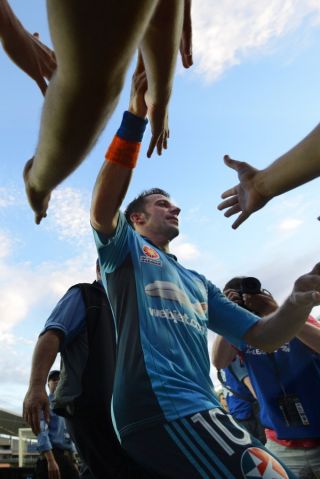
Sydney FC’s Alessandro Del Piero embraced by fans. Photo: AAP/Dean Lewins.

Talks to begin with Sydney FC management at the end of the season.

Alessandro Del Piero’s future in Australia is still uncertain, as the end of the season will see him out of contract with Sydney FC.

The Italian international is yet to be offered a new deal by the Sky Blues, who he has represented with distinction for the past two years.

Management has said they will be sitting down after the season’s end to discus Del Piero’s future at the club.

“We have already had a chat with the owners and with chairman Scott Barlow and we are ready to talk at the end of the season,” Del Peiro said.

“We will do the best thing for everyone, but I don’t think about that at the moment.”

Talk about the star transferring during his time at Sydney FC always circulated, and just recently reports about him moving to Thailand had the media speculating.

Rumours of retirement have also circulated, as Piero turns 40 in November. He has said a career in management and coaching would be of interest if and when he decides to retire.

Del Piero might even become Sydney FC’s player-manager next season should Frank Farina’s contract not be renewed has been privately tossed up at the club should he decide to continue his playing career.

Sydney FC beat out offers from Premier League giants Liverpool and signed Del Piero for $2 million a season.

source: Neos Kosmos

Tasmania: Apple Isle’s Hellenic roots

tasmania

Tasmanian Greek Australians at the March 25 parade.

In Tasmania, more than one hundred young Greek Australians attend the small Greek community school every week.

In the shadow of larger and more prominent Greek Australian communities, and due to its distance from mainland Australian Hellenes, the Greek community of Tasmania is often forgotten about.
Looking back to history now, when the first Greek settlers were culturally and linguistically isolated on this island state, and described as being able to speak neither English nor Greek, things have drastically changed.
They may be more isolated than other Australian Greeks but it is this isolation that brings the small community together and its members are heavily involved.
Almost 95 per cent of the Tasmanian Greek population, that numbers close to 5,000 people, is located in Hobart.
The success story of this Greek community is its one Greek Community School of Tasmania that has been operating in the capital city of the island state.
Amid the small community, the school in Hobart’s Federal Street every year welcomes 100 to 120 Greek students. Others are non-Greeks and Philhellenes who share love for the Greek language.
Now in his fifth year in Tasmania, the principal of the St George Greek Community School is Thomas Apostolidis. Alongside Maria Papalambrou, they have been commissioned by the Greek state to teach the Greek language to Greeks of the diaspora.
The expression of interest for Greek school is constantly growing, Mr Apostolidis tells Neos Kosmos, with the recent 21st Estia Greek Festival at Hobart’s Princes Wharf bringing more of those interested to join the school.
With the Greek crisis and part of their salary cut off, it is not easy to make a living in a country of Australian standards. For two teachers, this was a good reason to return to Greece but not good enough to leave their Tasmanian students.
With three other local teachers, they use history and theatre to enhance students learning experience of both Greek language and culture. They have staged five plays, honoured every Greek historical event at Hobart’s cenotaph, and even created a video that won third prize at the recent Greek Student Film Festival.
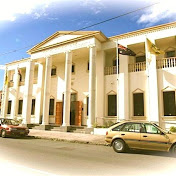
With over 45 entries from Greek schools around Australia, their short film Greece means light was awarded. In the short video, with the script written by Maria Papalambrou and directed by Thomas Apostolidis, Greek students are featured in front of Hobart’s Lady Franklin Gallery, a building influenced by Hellenic architecture.
“This short film was aimed to show the influence that classical Hellenic architecture had on Hobart, the second oldest city and the first that was built in Australia in neoclassical style. The culmination of it is the Lady Franklin Gallery in Ancanthe Park in Hobart’s Lenah Valley. It is a classical building along the lines of a Greek temple built by Lady Jane Franklin herself, wife of Sir John Franklin, who was governor of Tasmania at the time. It’s an ancient Greek naos. She was a big Philhellene,” Mr Apostolidis tells Neos Kosmos.
About the level of Greek knowledge amongst young generations of Greek Australians in the lonely Australian state, Mr Apostolidis says it’s diverse.
“Those who have cut off all their connections with their roots and their heritage have a tendency to assimilate, and eventually they will lose the language as well. The only thing Greek to remain will be their surnames ending with -is or -os.
“But those whose parents are proud of themselves and empower their children to be proud of their heritage, they will keep the language alive,” Mr Apostolidis says confidently.
To follow the activities of the Greek School of Tasmania or to enrol, visit their facebook page www.facebook.com/GreekCommunityofTasmania

source: Neos Kosmos

Easter celebrations in Greece

Easter%20Celebrations01

Corfu, Skiathos, Patmos, Monemvasia and Leonidio are only some of the most famous destinations to experience and celebrate Easter in Greece.

Greece plays host to religious celebrations with deeply rooted customs and centuries-old traditions all year round. One of the greatest if not the greatest celebrations is Easter.

The faithful all over the country follow the Holy Week ritual devoutly, giving themselves body and soul into the culmination of the Passion of Christ and finally rejoicing in His Resurrection.

However, different regions in Greece also have their own unique customs and traditions during the Easter period.

Some of the most famous destinations to experience and to celebrate Easter in Greece are considered to be Corfu, Skiathos, Patmos, Chios, Leonidio and Monemvasia and other places. There you can have the one-of-a-kind opportunity to delve into an overwhelming spiritual atmosphere and participate into sacred rituals, ancient-old traditions and joyful celebrations.

Spending Easter on Skiathos, the island of “the saint of the Greek literature” famous novelist Alexandros Papadiamantis, is definitely a spiritual experience, as the locals observe the monastery ritual of Mount Athos, and live the Holly Week in devoutness and deep contemplation. The sound of the funeral bells ringing, and the scents of the nature in blossom blend harmoniously in sweet melancholy.

Fascinating religious celebrations held in the city of Corfu at Easter, throughout the Holly Week are an experience not to be missed out.

On Good Wednesday at 8.30 p.m. Corfiots fill up the Municipal Theatre to hear the Municipal Chorus singing ecclesiastical hymns of the Holly Week.

On Good Thursday in the Duomo, the Catholic Cathedral, 12 candles are lit and put out one at a time after the reading of each of the 12 Gospels.

On Good Friday young girls decorate the Epitaphs, whose circumambulation begins early in the afternoon accompanied by choruses and bands. The last Epitaph and most impressive one, the Epitaph of Corfu Cathedral, makes its appearance at 10.00 p.m. Listen to the music performed by the Philharmonics of Corfu, which gives an ecstatic dimension in this mournful night…

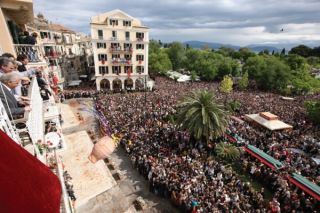
On Easter Saturday at 11.00 a.m., the first Resurrection is announced. Be prepared to experience a truly unique celebration: “Christós Anésti” is proclaimed against a background of loudly pealing bells and the joyful sounds of the bands as they parade through the streets. People hurl clay pots from windows and balconies which crash
noisily on the streets below. At night, attend the Catholic Mass of the Resurrection in Duomo, or the Orthodox Resurrection Service at “Páno Platía” (Upper Square). Visitors will find themselves surrounded by thousands of lit candles: on balconies, on window sills or held by others attending the ceremony. The Resurrection of Christ is celebrated at 12.00 sharp with drum beats and fireworks.

During the Holly Week on the Aegean island of Patmos, the Island where the Apocalypse had been written, visitors are immersed in a deeply spiritual atmosphere. The presence of the Monastery of St. John brings about an uninterrupted observance and practice of the preserved Early Christian traditions like “The Washing of the Disciples’ Feet”, the Re-enactment of the Deposition from the Cross in the Monastery of St. John. Do not forget the celebration of the Resurrection on Easter Sunday
and the highlight of Easter ceremonies, the “Liturgy of Love”, held on Easter Sunday at 3 in the afternoon at the Monastery of St. John.

Apart from being the island of Aromas in the Northeastern Aegean, Chios is well known for the magnificent Easter festivities too. On the night of the Holy Saturday the villagers of Vrontádοs are ready to set the night on fire! A rocket war breaks out here, which dates back to the age of the Turkish occupation (15th-19th centuries) and
turns this village into a virtual battlefield.

During Easter time in Leonidio in the Peloponnese devoutness and excitement go hand in hand, thanks to the spectacular custom of the balloons that is more than one century old. Although its origin is unknown, it is believed that the custom is a revival of a similar one that the seamen of the area had seen practiced in some Asian country.

Following the Good Friday procession of the Epitaph around the cobbled lanes of the medieval fortress town of Monemvasia in Laconia is an unforgettable experience; the faithful join in the procession taking place in the church of Elkomenos Christ holding white candles; Easter hymns echoing around the place create a mystical
atmosphere steeped in devoutness and contemplation… On Easter Sunday evening, in the courtyard of Elkomenos Christ Church, you can observe the ancient-old
ritual of “Judas Burning” reviving: an effigy of Judas made by wood and straw- and filled with explosives- is set on fire!

The tradition of the burning of Judas is also witnessed in other places in Greece, such as the villages of Thrace. The children make the effigy of Judas and they go to every house of the village, asking for branches in order to burn him the day after the Epitaph. On Holy Friday the procession of the Epitaph stops outside a chapel, where the fire is ready to burn Judas. The moment the priest reads the Gospel they light the fire and burn his effigy. Later they get some of the ashes and throw in the tombs.

At Ierissos in Halkidiki locals and visitors sing and dance all Easter songs and end with the “Kagkelefto” dance, which is the representation of the massacre of 400 locals by the Ottomans during the war of independence in 1821. The dance passes under an arch of laurel where two young men with raised swords stand.

Whereas in Livadia, a regional capital in central Greece, on Eastern Sunday the entire city is covered by a cloud of smoke throughout the day, and revives the custom of the “lakkon”. The inhabitants stay awake to make the “pit” and even before dawn, they have prepared the spot and the pile of branches. The oldest of the family or the clan makes a cross and lits the fire with the candle of the Holy Light. The celebrations last until late afternoon, accompanied by local music and of course plenty of wine.

source: Neos Kosmos