Daily Archives: April 29, 2014

The ex-minister, the tycoons, the super yacht and the corrupt political system

1398687192877_jpg-620x349

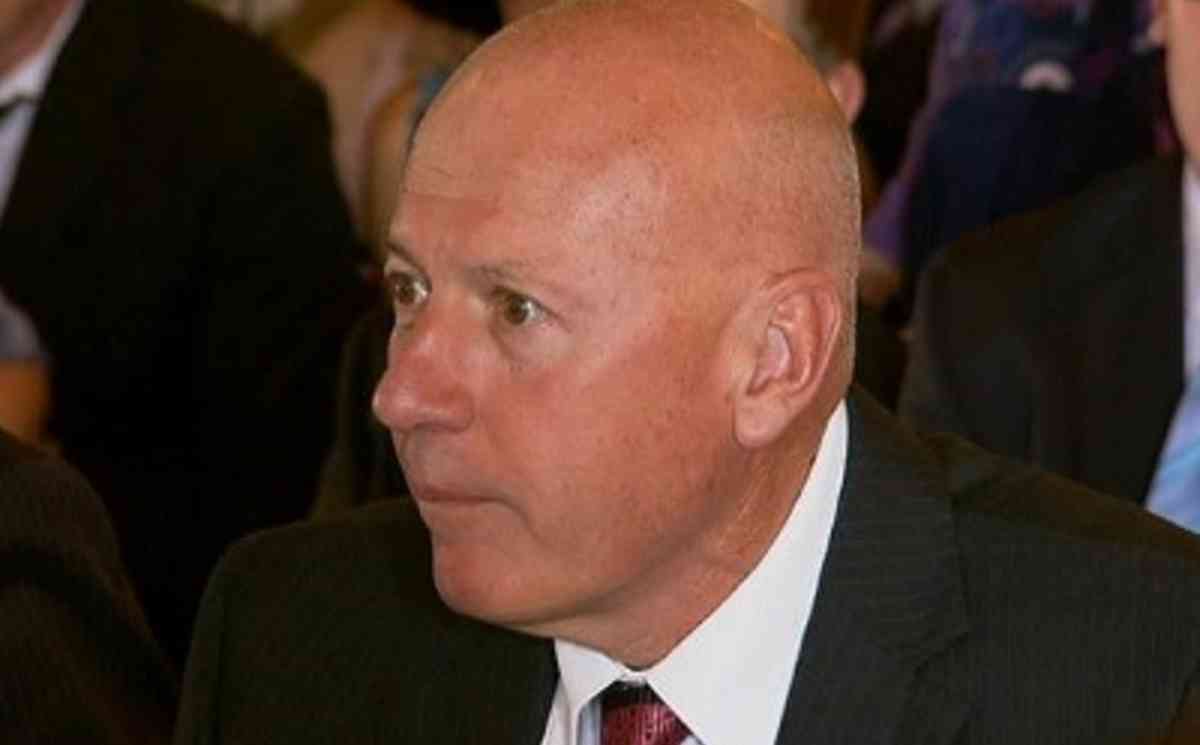
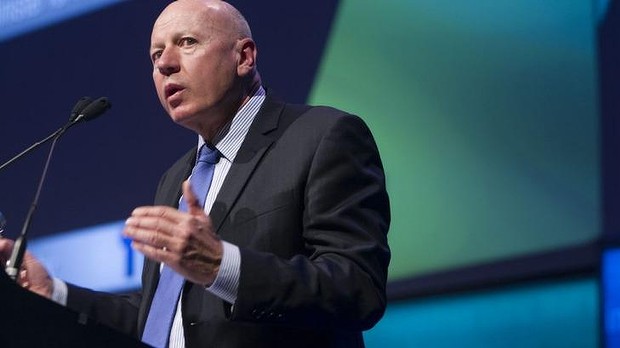
Explosive allegations: Former energy minister Chris Hartcher. Photo: Glenn Hunt

The Independent Commission Against Corruption inquiry into fund-raising and influence-peddling in the NSW Liberal Party, codenamed Operation Spicer, opened on Monday with explosive allegations that Mr Hartcher and fellow central coast Liberal MPs Chris Spence and Darren Webber corruptly solicited more than $400,000 in campaign donations in return for political favours.

Among the donors were Nathan Tinkler’s property development group Buildev, the Obeid-linked company Australian Water Holdings and Gazcorp, the developer behind the controversial Orange Grove shopping centre development in Liverpool.

Mr Hartcher, who quit cabinet last year after the ICAC raided his central coast electorate office, allegedly laundered some of the cash through a Central Coast law firm, which was “dragged … unwittingly into an illicit enterprise”.

The payments were made to Eightbyfive, a “sham” company set up by Mr Hartcher’s former adviser Tim Koelma to disguise the donations as payment for services by providing fake invoices. The bulk of the money came from property developers, who have been banned from donating to political parties in NSW since 2009.

Marie Ficarra, the former parliamentary secretary to Premier Mike Baird, stood aside on Monday and moved to the crossbenches after the inquiry heard allegations she directed prominent developer Tony Merhi to donate $5000 to Eightbyfive.

Her spokesman said she “denies the allegations completely” and would present evidence to show she was innocent and “acted in good faith at all times”.

But counsel assisting the commission, Geoffrey Watson, SC, said that both Ms Ficarra and Mr Merhi “knew they were doing the wrong thing”.

The inquiry heard Mr Hartcher and Lane Cove MP Anthony Roberts, who took over the energy portfolio after Mr Hartcher’s resignation, enjoyed a Whitsundays snorkelling holiday in 2007 on board the Octavia, an 82-foot luxury yacht owned by the late property developer Nabil Gazal and his sons Nabil and Nicholas. The family’s company, Gazcorp, allegedly channelled $137,000 to Eightbyfive for “fake services”.

Mr Watson suggested that as result of the payments, Mr Hartcher assisted the Gazals to get the Orange Grove shopping centre approved. Mr Roberts, who did not declare the trip on the pecuniary interests register, insisted it was a private trip and he paid his own airfares and costs.

The inquiry heard Mr Hartcher’s office used the Liberal Party’s chief fund-raising body, the Millennium Forum, and an organisation called the Free Enterprise Foundation to “re-channel” about $165,000 in donations from banned donors.

The foundation was allegedly used by members of the NSW Liberal Party to disguise illegal donations by “washing and re-channelling” payments, and it received $700,000 before the state election.

“Not all of that came from prohibited donors, but a substantial part of it did,” Mr Watson said.

Liberal Party fund-raiser Mr Nicolaou, who resigned as chairman of the Millennium Forum in April, agreed in private evidence at the ICAC that the Free Enterprise Foundation was used to hide payments from prohibited donors. He said this included one of the nation’s largest developers, Harry Triguboff from Meriton.

But Meriton said on Monday it had donated $50,000 to the foundation “on the basis that it be used for the federal Liberal Party”, which does not ban developer donations.

The inquiry heard Mr Nicolaou, on the letterhead of the Millennium Forum, urged 2GB broadcaster Alan Jones to use his radio program to destroy the career of Kerry Schott, then head of Sydney Water.

At the time, Dr Schott was standing in the way of a lucrative public-private partnership for Australian Water Holdings, which donated $183,000 to Eightbyfive.

Mr Baird said on Monday he was “shocked and appalled” by the allegations. He told newly appointed NSW Liberal state director Tony Nutt to “investigate the allegations made at ICAC and respond to them promptly – including by dealing with any payments that have been made to the party in contravention of the law”.

“If any wrongdoing is found, the book should, and will, be thrown at the perpetrators,” Mr Baird said.

Mr Watson said Mr Tinkler’s horse stud, Patinack Farm, donated $66,000 to Eightbyfive. Mr Hartcher “repeatedly granted favours” to the donors, including Mr Tinkler’s property development group Buildev.

“It is a fact of political life that it is hard to close the door on a political donor,” Mr Watson said.

Former Newcastle Labor MP Jodi McKay reported Mr Tinkler to the ICAC when he offered to support her 2011 election campaign financially and told her he could get an employee to act as a “front” for the payments.

The inquiry heard Police Minister Mike Gallacher was on “first-name terms” with Mr Tinkler’s associate Ray Williams and Mr Williams texted Mr Gallacher in March 2011 to set up a “lunch or dinner”.

Source: smh .com.au

New York pilot claims to have found images of missing Malaysia Airlines flight MH370

283741-d13b4314-cf0f-11e3-ae84-eacdfc097015

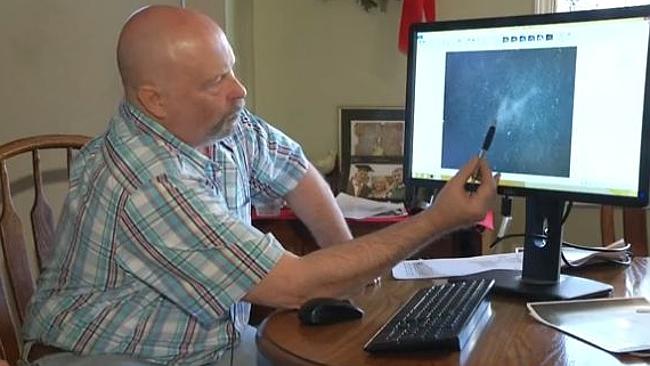
Is it a plane? … The image discovered by New York pilot Michael Hoebel. Picture: WIVB/TomNod Source: Supplied

A PILOT in New York claims he has found an image of the wreckage of MH370 online.

Michael Hoebel, 60, said he had found an image of what appeared to be the plane in one piece in the Gulf of Thailand — the exact place where the missing Malaysia Airlines plane made its last communication with air traffic control before falling silent in the early hours of March 8.

The Boeing 777 vanished from radar an hour into its flight from Kuala Lumpur to Beijing. Why that happened is still a mystery.

Using the online satellite imagery website TomNod, Hoebel said he was shocked to find the plane resting in what appeared to be an unbroken state.

“I was taken aback because I couldn’t believe I would find this,” he told a local TV news channel.

Despite Mr Hoebel’s claims, the search for the missing plane will continue under the waters of the Indian Ocean.

Prime Minister Tony Abbott said it is now unlikely that any aircraft debris will be found on the ocean surface, so the hunt for the plane will now be entering a new phase.

He described the search as “probably the most difficult search in human history”.

Standing alongside search co-ordinator retired Air Chief Marshal Angus Houston, the prime minister said the new phase would focus “under the sea”.

061186-b9898d84-cf0f-11e3-ae84-eacdfc097015

The lost jet? … Michael Hoebel believes he has found satellite images of the wreckage off the coast of Thailand. Source: Supplied

Mr Abbott admitted it was “possible” nothing may ever be found, but said that would be a “terrible outcome” for the families of those on board who would live under a “crippling cloud of uncertainty”.

Mr Abbott and Air Chief Marshal Houston said using the new side scanner sonar equipment to search the underwater area would take about eight months — and that was without any potential weather or equipment issues.

It was highly unlikely any aircraft debris would now be found on the ocean surface as most material would have become waterlogged and sunk, the PM said.

Authorities, he said, were baffled and disappointed that they could not find any wreckage.

“We have now searched close to 400 square kilometres under the sea.” he said.

The expanded search for the missing Malaysia Airlines plane continues as the world awaits the release of a preliminary report into the disaster.

The report has already been sent to the UN’s International Civil Aviation Organisation and will be released to the public this week.

It’s understood to contain a safety recommendation for real-time tracking of commercial aircraft, which is the same advice given after the 2009 Air France crash.

The air search for MH370 wreckage was set to resume Monday after it was suspended due to bad weather over the weekend.

Sea swells were expected to reach four to five metres, with a cold front predicted to leave the search area.

source: news.com.au

Budget 2014: Tony Abbott says age pension reform ‘essential and unavoidable’

imagesCADM9456
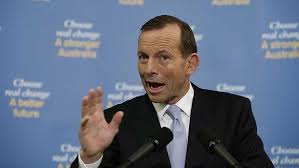
Prime Minister Tony Abbott said he would make it tougher for new retirees to qualify for the age pension after the next election and gave his strongest signal yet that he will target Medicare in his first budget.

Mr Abbott delivered a speech to the Sydney Institute on Monday night calling on Australians to put the country first on budget night, instead of focusing on individual gains or losses.

He said he would stick to his pre-election promise of not cutting the age pension and said any increase of the retirement age to 70 would occur in the long term and not in the next five years.

But he said long-term reform of the age pension was “essential and unavoidable”.

“I want to assure vulnerable people that the age pension won’t be less tomorrow than it is today, and that people turning 65 tomorrow are certainly not going to have to wait five years to retire,” he said.

“To keep our commitments, there will be no changes to the pension during this term of parliament but there should be changes to indexation arrangements and eligibility thresholds for the long term.”

The Prime Minister also said there were “other social security benefits” where the indexation – or rate by which the benefit increases – as well as eligibility, needed tightening.

“Such benefits won’t be less tomorrow than they are today, but the rate of increase will be slower and needs to be slower if a comprehensive social safety net is to be preserved for everyone’s future,” he said.

He said the best way to help a family earning $100,000 per year was to reduce tax and increase opportunities, not “social security handouts”.

Abbott aiming to increase efficiency in health spending

Mr Abbott also fuelled expectations of a $6 co-payment fee for patients visiting their doctors as he argued for more efficiency in the health system.

The co-payment is being proposed by Mr Abbott’s former health advisor, Terry Barnes, who says the charge should also be applied to people visiting emergency wards, to stop overloading hospitals.

The Prime Minister said he would stand by his pledge not to reduce overall health spending, but said he wants to make it more efficient.

“Part of that will be more price signals in the system with a strong safety net because free services to patients are certainly not free to taxpayers,” he said.

Labor has called the co-payment a “GP tax” and said it would be a betrayal of Mr Abbott’s pledge not to introduce any new taxes.

They are also homing in on speculation the Government is considering introducing a levy on high-income earners to help repay the debt.

Opposition Leader Bill Shorten said any “deficit tax” should be labelled a “deceit tax”.

Mr Abbott has not ruled out the prospect of the levy despite his repeated insistence before the election that the Coalition stands for no new taxes.

In his Sydney Institute address, Mr Abbott specifically singled out “high-income earners” such as himself and other parliamentarians as having to shoulder the burden in repaying “Labor’s spending binge”.

“I can assure you that everyone will be involved, including high-income earners such as Members of Parliament,” he said.

The Prime Minister said the economic pain now would lead to permanent economic gains in the future and could lead to personal tax cuts in any second term of his government.

He said his first budget would be “nation building” even though it cuts government spending because it will bring the budget “close to surplus” although it will remain “on track” to a “strong surplus within a decade”.

But the Prime Minister said he would not “offer a spurious guarantee of a surplus by a particular date”, a promise which dogged former Labor treasurer Wayne Swan, who repeatedly pledged to deliver a surplus but never achieved one.

Mr Abbott said he knows the budget contains “political risks” and nearly everyone will have a “grumble” on budget night, but he said voters need to think of the wider benefits for the nation.

He said Labor did not just “booby trap” the budget but “created a ponzi scheme of unsustainable spending”, which he said his government was elected to repair.

“For too long, governments talked about being economically responsible but squibbed the big challenges. I don’t expect the Government to be more popular the day after the budget but hope that we might have earned people’s respect for saying what we mean and doing what we say,” he said.

Innes Willox from the Australian Industry Group told Lateline there are very strong economic arguments for tightening pension eligibility.

“We support a gradual rise in the pension age and the Government can make some changes around pension policy as it sees fit, but we do need to make changes – there is no doubt about that,” he said.

Mr Willox also cautioned the Government about rushing back to a surplus.

“Going too hard, too fast would really damage the economy, which is growing below growth. We have to remember that – we already have a very fragile economy,” he said.

Source: abc.net.au


Money-washing claims engulf NSW Libs

skynews_img_1200_745

The ICAC hearings continue in Sydney today, after yesterday’s allegations of political donation rorting sent yet another party MP to the crossbench.

The corruption probe aired claims Liberal figures had used a sham company to secretly funnel more than 400 thousand dollars in political donations in exchange for favours from sidelined cabinet minister Chris Hartcher.

Counsel assisting the inquiry, Geoffrey Watson, said the watchdog’s investigators had uncovered evidence of ‘sophisticated, well-organised and systematic subversion of the electoral funding laws’ of NSW.

Central to ICAC’s Operation Spicer is alleged slush fund EightByFive, set up by Mr Hartcher’s former staffer Tim Koelma.

The company purported to offer marketing and strategic advice, Mr Watson said, but its true role was to conceal political donations from property developers, which have been banned in NSW since 2009.

One MP who is said to have known about EightByFive is upper house MP Marie Ficarra, who stepped down from the parliamentary Liberal Party yesterday at the premier’s request.

source: skynews.com.au

Βρήκαν 50 μούμιες σε τάφο στην Αίγυπτο

moumia_556695172

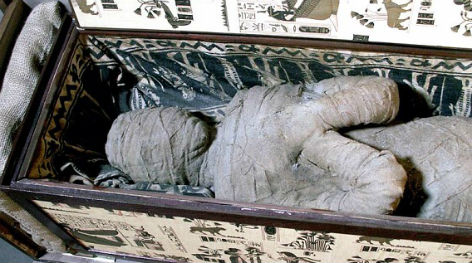
Περίπου 50 μούμιες, μεταξύ των οποίων και μούμιες νεογέννητων παιδιών, βρέθηκαν σε έναν τεράστιο τάφο στην Κοιλάδα των Βασιλέων, στο Λούξορ της Αιγύπτου, ανακοίνωσε σήμερα ο υπουργός Αρχαιοτήτων Μοχάμεντ Ιμπραχίμ.

Ξύλινες σαρκοφάγοι και νεκρικές μάσκες βρέθηκαν δίπλα στα λείψανα που πιθανότατα χρονολογούνται από την εποχή του Νέου Βασιλείου, μετέδωσε το πρακτορείο MENA επικαλούμενο δηλώσεις του υπουργού. Το Νέο Βασίλειο περιλαμβάνει τη 18η, τη 19η και την 20ή Δυναστεία των φαραώ που κυβέρνησαν την Αίγυπτο από το 1567 μέχρι το 1056 π.Χ.

Σύμφωνα με τις πρώτες ενδείξεις, στον τάφο αυτό, ο οποίος είχε λεηλατηθεί στο παρελθόν από τυμβωρύχους, είχαν τοποθετηθεί επίσης οι σοροί πριγκίπων και πριγκιπισσών.

Η ανακάλυψη έγινε από μια ομάδα ελβετών αρχαιολόγων του Πανεπιστημίου της Βασιλείας σε συνεργασία με τις αιγυπτιακές αρχές.

Οι αρχαιότητες παίζουν καθοριστικό ρόλο στον τουρισμό της Αιγύπτου που έχει πληγεί σοβαρά τα τελευταία τρία χρόνια. Μετά την Αραβική Άνοιξη οι αρχές δυσκολεύονται να φυλάξουν με ασφάλεια τους αρχαιολογικούς τόπους και να σταματήσουν τις παράνομες ανασκαφές και τις κλοπές από μουσεία, τεμένη ή καταστήματα.

Πηγή: zougla.gr

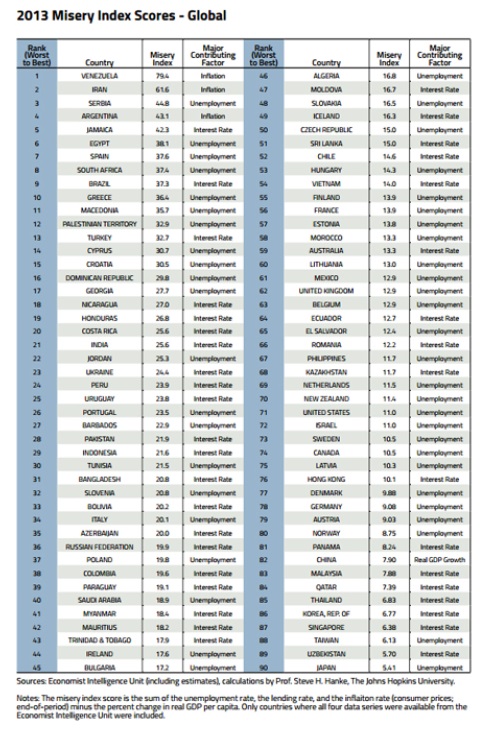
Στις 10 πιο εξαθλιωμένες χώρες του κόσμου η Ελλάδα

ftoxeia_296059071

Την ώρα που στην Ελλάδα μιλάμε για Ανάπτυξη, το αμερικανικό Ινστιτούτο Cato κατατάσσει την χώρα μας στην λίστα των δέκα χωρών με τη μεγαλύτερη εξαθλίωση παγκοσμίως μετά από την έρευνα ανάλυσης δεδομένων του 2013.

Παγκόσμια «πρωταθλήτρια» στην εξαθλίωση είναι η Βενεζουέλα, στην δεύτερη θέση είναι το Ιράν και στην τρίτη θέση η Σερβία. Τέταρτη έρχεται η Αργεντινή και ακολουθούν κατά σειρά η Τζαμάικα, η Αίγυπτος, η Ισπανία, η Νότια Αφρική, η Βραζιλία και τέλος η Ελλάδα. Οι συνολικά 90 χώρες που περιλαμβάνονται στον “δείκτη δυστυχίας” επιλέχθηκαν με βάση τα δεδομένα του Economist Intelligence Unit και αναλύθηκαν από τον καθηγητή Steve Hanke του πανεπιστημίου Johns Hopkins.

Ο τύπος που χρησιμοποιήθηκε για την κατάρτιση του καταλόγου αφορά τον πληθωρισμό, τα επιτόκια δανεισμού, τα ποσοστά ανεργίας και τη μείωση του κατά κεφαλήν ΑΕΠ από έτος σε έτος.

Για την Ελλάδα, ο καθοριστικότερος παράγοντας που την έκανε να “μπει” τελικά στην λίστα υπήρξε η ανεργία, που αποτελεί και την μεγαλύτερη πληγή της χώρας μας Αναλυτικά ο κατάλογος με τις 90 χώρες που παρουσιάζονται στην Έκθεση:

280414185950_0263

Πηγή: madata.gr

Australia: Cretan community honours WWII veteran of Greece

lesbirthday

Many happy returns: Veteran Les Manning is serenaded by the Cretan community in Melbourne on Easter Monday. Photo: Mike Sweet.

Mr Les Manning – one of the few remaining WWII veterans who fought in the Battle of Crete – celebrated his one hundred and first birthday, and the Cretan community in Victoria were out in force to wish him many more happy returns.

Les, accompanied by daughter Lynda, and three grand-daughters, was guest of honour at a special Easter Monday lunch hosted by the Pancretan Association of Melbourne at the Cretan Village in Wantirna.
A meal of mezedes and spit-roasted lamb was followed by chocolate cake with a single candle, and the entire dining room singing Happy Birthday – in English and then Greek – to the old soldier.
After Les thanked his fellow diners, his daughter Lynda Banks said the extraordinary affection shown by the Cretan community to her father was warmly appreciated.
“They make us feel so welcome, they’re a very loving and passionate people, and we feel like we’re part of their family,” said Lynda.
“They come up to dad and kiss him. It’s a wonderful experience and I know it inspires him to live another two or three years at least.”
“It makes me feel great,” said Les as his daughter and granddaughters joined the traditional Cretan dancing accompanied by a bouzouki band.
Despite having suffered a stroke since turning 100, Les was in good form – still recounting his experiences of the Battle of Crete with great clarity.
After the Allied evacuation of mainland Greece in April 1941, he and his fellow Diggers of the Victoria-raised 2/7 Battalion were sent to the island just before the German airborne invasion.
The 2/7th were deployed at Georgioupolis in the opening days of the battle, but on 27 May 1941, they took part in what became known as the charge at 42nd Street near Souda, where Anzac troops forced back an elite division of Austrian mountain troops, buying time for other Allied soldiers to cross the White Mountains to the evacuation point at Sfakia.
Les, pinned down by mortar fire at 42nd Street, made it to Sfakia days later, but like thousands of others, he was left behind. Evading capture briefly, Les became a prisoner of war and was shipped to Stalag 13 in Bavaria where he spent the rest of the war.
Born and raised in Richmond, Leslie Manning – the son of a Flinders Lane rag trader – joined the 2/7th Battalion in October 1939, and left Port Melbourne for the Middle East in April 1940. A year later he was in Greece.
After the war, Les worked as a security guard for the state savings bank in Melbourne. A father of four, he celebrated his sixtieth wedding anniversary with his wife Alma last year.
John Nikolakakis, president of the Pancretan Association of Melbourne told Neos Kosmos that the association was delighted to be able to mark Les’s 101st birthday with him.
“To have him celebrate with us is an honour to us all,” said Mr Nikolakakis.
“To think this veteran was born before the events at Gallipoli in 1915 proves how much we should respect these very few veterans that are still with us. God bless you Les and Happy Birthday!”

source: Neos Kosmos

Greeks blosssom in Qatar

GR-Greeks%20in%20Qatar02

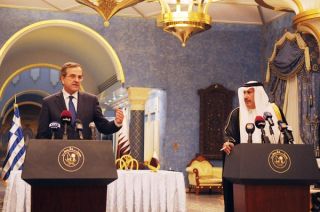
Greek PM Antonis Samaras with then Qatari PM Hamad bin Jassim bin Jaber Al Thani, during his trip to Doha in 2013.

A sizeable community of highly skilled labour makes its presence felt in the Arab state.

Qatari government officials may make headlines every time they visit Greece, but are you aware of the unsung heroes behind the emirate’s economic boom, many of whom are Greek? Some 3,000 Greeks live in Qatar, making them a sizeable community.

Civil engineers, mechanical engineers, chemical engineers, pilots, stewards, hotel workers, sports trainers, physical therapists and sports event planners have descended on Qatar in droves to join in the frenzied preparations for the 2022 World Cup – for which a Greek serves as managing director of the organising committee.

The massive effort to get the emirate ready to host the world’s biggest soccer event also includes the construction of a metro system in Doha and a railway line linking Qatar to Oman, Bahrain, the United Arab Emirates, Saudi Arabia and Kuwait.

Of course stadiums are also being built, along with extensions to the water and electricity networks, as well as new streets and residential buildings.
Four major construction firms from Greece and Cyprus are part of the push.

“The whole thing is a bit reminiscent of Greece before the 2004 Olympics,” 62-year-old engineer Matthaios Lygiaris, who moved to Qatar from Dubai in December 2011, told the Greek daily Kathimerini recently.

The engineer, a Greek from Egypt, has had jobs all over the world, particularly after working on the Athens metro gave him the credentials to work on its counterpart in Dubai and now that in Doha. He said that the company he is presently working for employs about 30 Greek engineers who are using their know-how to help Qatar build a modern transportation system, which it is currently sorely lacking.

“It’s a win-win relationship. Greece thirsts for Qatari investment and Qatar needs the expertise of Greek scientists, as well as the experience of those who worked for the Athens Olympic Games,” said Lygiaris.

Qatar appears eager to make a name for itself as a host for large sporting events and to this end it has made exemplary use of the facilities it built for the 2006 Asian Games.

“Athletic events ranging from equestrian to speedboat races take place almost every week,” said Lygiaris.

The royal family of Qatar, meanwhile, has aspirations to transform the emirate into a cultural destination as well, an effort that is being spearheaded by the artistically minded Sheikha Mayassa Al Thani, daughter of Sheikh Hamad bin Khalifa Al-Thani, and which may in the future generate job positions in new areas.
With Qatar growing as it is, many Greeks are heading east with their families in tow.

“There was a time when Greek women were reluctant to move to an Arab country,” said the head of the parent-teacher association of a Greek educational program in Qatar who asked not to be named. She said that the program currently has 100 students, mostly of elementary school age, and explained how Greek mothers – the majority aged around 35-45, well educated and who left careers behind in Greece – are throwing themselves into the task of keeping house and home as their husbands work demanding hours.

“The biggest concern when deciding whether or not to move here is whether the children will adapt to foreign schools,” she said. “Of course, the new generation has resoundingly refuted all of our fears.”

Back in 2007, Qatari workers were shocked to see a female engineer, especially one running the show.

“A woman on a construction site was a rarity,” said Penelope Kyriazi, who went to Doha for the Asian Games in 2006 – after working for the Athens Olympics and later for a firm in Scotland – and is still there.

“The secret is to be open to accepting the good and the bad in any new place,” she said, explaining that one of the most rewarding parts of such an experience is working with colleagues from all over the world, which is why she prefers to work for multinational companies.

“The restrictions imposed on women are well known, but we have other privileges here: we are always allowed first in a line and, for example, we don’t pay admission at bars,” she added.
What Kyriazi misses most from life in Europe is cultural activities and green spaces, though the ease of travel that Qatar affords makes up for these absences.
“I am very lucky, because I can get to hundreds of destinations from here,” she said.
Persa Hadzimike rides her motorcycle to work every day. She is a holistic therapist who specialises in Thai massage techniques and got a job at a physical rehabilitation centre in Qatar through a job ad in a Greek newspaper. It is not the first time the 39-year-old former handball champion has emigrated. She has also lived and worked in Cyprus.

“I suddenly found myself having to choose between two places: Sweden and Qatar. I chose the latter because I can’t stand cold weather. It was tough for the first few weeks, especially because the bureaucracy here is torturous,” she said.

On the upside, Hadzimike said she was warmly welcomed by all of her colleagues, including the other 14 Greeks who work there.

“I’ve made new friends, started Arabic lessons and recently got cable TV so I can watch developments in Greece,” she said.

Zisis Vryzas is a 28-year-old engineer specialising in petroleum research who started his career in Scotland and then went on to work in Kuwait and Qatar.
“Qatar is far more cosmopolitan than Kuwait,” said Vryzas, a research associate at Texas A&M University’s local branch, which employs another 15 Greek scientists.
“I have a formal work schedule, but basically I follow the pace of my experiments. I had applied for jobs in the East from the start and I think I made the right decision,” he said, adding that he has met a lot of Greeks around his age and has been impressed by their qualifications.
Mechanical engineer Yiannis Spanos, 38, left London for a job as a project manager in Qatar, where the pay and his career prospects are much improved.
“Negotiating your contract is very important, while a strong resum� and work experience abroad are seen as positive assets,” said Spanos, who is planning to stay in Qatar for five years.
“I miss being able to walk in a park after work; everything is done by car here, which is why I chose to live on the Pearl [an artificial island],” he said.
“The Qataris are very nice people. They are calm and patient; you can have good conversations with them and I admire them because even though they have money, they also live simply.”
J.D., aged 39, closed up her shop in Greece, packed her bags and boarded a plane to Qatar with her 4-year-old son a year-and-a-half after her husband moved out there for work.
Her son is now 7 and attends an international school, and J.D. says that he adjusted much better than she expected.

Greek wives living in Qatar with their children are big on networking and have started a Facebook page to keep in touch and organise events and get-togethers. The Greek school in Doha also provides ample opportunities for networking as mothers wait for their kids to come out of class. The school also hosts events that the mothers organise, such as traditional Greek dance lessons, book swaps and theatrical events.

“The playground here feels like home,” said Eleni Karoyianni, who moved to Doha with her family in September 2013. “It wasn’t so much for economic reasons; we were compelled to leave because of the feeling that we couldn’t make any kind of plans for the future in Greece,” said the 40-year-old lawyer, who also found a job in Qatar.

While Qatar offers a lifestyle of much higher standards than would have been available to them back home, the Greeks in Qatar still face daily challenges such as incredibly high rents, and of course the extreme heat.

Karoyianni, who wakes up at 5.00 am every day to get the kids off to school and to get herself to work on time, argued that while she and her husband both work long hours, she feels more tranquil.

“The philosophy here can be summed up in the phrase ‘Insha’Allah’, which means God willing. We have adopted this mantra and it makes us patient and optimistic that everything will be OK.”

Source: ekathimerini


Australia’s $60m hunt for MH370 widens

imagesNHL9SMNM

AFTER weeks spent scouring the Indian Ocean without finding any trace of missing Malaysia Airlines flight MH370, Australia has committed itself to a $60 million search covering a massively expanded 60,000 square kilometres of sea floor.

Fifty-two days after the aircraft disappeared with its 239 passengers and crew while on a flight from Kuala Lumpur to Beijing, Tony Abbott announced that the search was entering a new phase focused on a massive expanse of ocean bed, 700km long and 80km wide. That is where satellite data has indicated the aircraft is likely to have run out of fuel and crashed.

The Prime Minister said he was baffled and disappointed that the aircraft had not been found.

“I regret to say that, thus far, none of our efforts in the air, on the surface or under sea have found any wreckage,” he said. “This is probably the most difficult search in human history.”

Former Australian Defence Force chief Angus Houston, who is overseeing the international search effort, told The Australian that by the time the search got under way there was little chance of finding floating debris, especially as a cyclone had been through the area.

“Unfortunately, the visual search in the Indian Ocean did not really get going until day nine,” he said. “If you get there immediately after the aircraft has gone into the water, particularly if it has broken up badly, if you get to the spot where it went in you’ll find something, Air Chief Marshal Houston said.

“But we started very late in the whole scheme of things and most of the wreckage would have sunk. Even things like cushions, once they come waterlogged, they gradually sink.”

Air Chief Marshal Houston said that in the case of an Air France jet that crashed in the ­Atlantic in 2009, wreckage was found on the fifth day of the search, but by day 16 searchers found no more floating debris and the surface search was called off after 26 days.

He did not think wreckage was likely to wash up on the Australian coastline.

If any wreckage was still afloat it was now certain to be a long way from the crash site, he said.

Air Chief Marshal Houston said he believed from analysis of satellite data that the aircraft was in the area to be searched. “I think we are in the right area,” he said.

Mr Abbott said the new phase of the search would involve a thorough analysis of the aircraft’s probable impact zone. He renewed his pledge to do everything possible to find the plane.

“I want the families to know, I want the world to know, that Australia will not shirk its responsibilities in this area. We will do everything we humanly can, everything we reasonably can, to solve this mystery.’’

The expanded underwater search, which has so far covered 400sq km of sea floor, will continue about 1100km west of the northwestern tip of Australia.

Mr Abbott made his announcement after a team using a remote-controlled mini-submarine had finished combing what it considered the most promising search area.

Air Chief Marshal Houston said the undersea search, to a depth of 4.5km or more, could take eight months if all went well.

He said the ocean floor was covered in silt and heavier parts of the aircraft might have sunk into it.

But he said he had been told that lighter parts of the aircraft would probably have been lying on top of the silt and would have been detected by the mini-submarine’s sonar equipment.

“The expert advice we have is that, irrespective of how thick it is, if there is an aircraft down there, there should be some debris lying on top of the silt,” Air Chief Marshal Houston said.

Mr Abbott said the mini-­submarine would continue its search, but that the search team would also be adopting different technology.

The government, in consultation with Malaysia and China, would be willing to engage one or more commercial companies to undertake the work, he said.

Mr Abbott said that would cost an estimated $60m and Australia would welcome contributions from other nations.

In the meantime, ships from Australia, China and Malaysia would continue the search.

source: theaustralian.com.au

Australia: Tony Abbott’s $100,000 welfare test for families

imagesCYR07HEE

FAMILIES will lose access to taxpayer benefits under a hard-line plan to slash budget spending as Tony Abbott signals a new income threshold of $100,000 to determine who gets “handouts” from Canberra. Social security payments will be scaled back and eligibility rules tightened in a bid to save billions of dollars while forcing people out of welfare and into work.

Outlining his plans in a major speech last night, the Prime Minister also made it clear that “high-income earners”, including politicians, would feel some of the budget pain amid growing talk of a new levy on millions of taxpayers.

As Labor accused Mr Abbott of breaking his election promises, reports last night suggested the deficit levy would be set at ­1 per cent of income for those earning more than $80,000 and double to 2 per cent for those earning $180,000 or more.

Mr Abbott ruled out changes to the pension before the next election but made the case for sweeping reform after 2017 while also leaving room for an increase in the retirement age over the long-term.

He insisted on the need for immediate reform to other benefits, however, by warning that indexation rates would have to change to slow the growth in payments.

“Not for a second would I label families as ‘rich’ just because they are earning $100,000 a year,” Mr Abbott said last night at The Sydney Institute’s annual dinner. “A teacher married to a part-time shop assistant with children to feed, clothe and educate is certainly not rich, especially paying a capital city mortgage.

“But the best way to help families on $100,000 a year is long-term tax relief and more business and job opportunities, not social security handouts.”

The toughening stand on welfare payments revives a political fight over “working families” after Labor scaled back benefits to households earning more than $150,000 a year, sparking a furious attack from Mr Abbott as opposition leader in 2011.

Mr Abbott’s remarks also run counter to a key aspect of his own paid parental leave scheme, which applies a threshold of $150,000 a year to cap payments despite a push by the Greens to set the level at $100,000 instead.

Mr Abbott last night contrasted the “temporary” pain of the budget savings measures with a long-term economic improvement, holding out the prospect of a reward for families in five years.

“The changes in this budget will make personal tax cuts much more likely in four or five years’ time,” he said.

The timetable confirms expectations that taxpayers will get no relief from “bracket creep” for at least five years, moving into higher tax brackets as inflation increases their earnings.

Those on the top of the ­income scale will have to carry some of the new burdens, however, amid confirmation from government sources yesterday that a “deficit levy” was on the agenda.

“I can assure you that everyone will be involved, including high-income earners such as members of parliament,” Mr Abbott said of the budget overhaul.

Attacking Labor’s “unsustainable” spending measures, Mr Abbott promised a budget that would put the nation on track to a “strong surplus within a decade” to “keep faith” with his election commitments. But Labor has stepped up claims the Prime Minister is breaking election promises, citing assurances from Mr Abbott in September there would be “no change to pensions” and no cuts to education or health spending.

Bill Shorten disputed the government’s central assumptions that deficits would amount to $123 billion over four years and federal debt would reach $667bn without action to cut spending. The Opposition Leader said the Abbott government had “concocted a budget emergency” to justify measures that broke election promises and apply a new tax on households.

“By their decisions that they’ve made since coming into power, they’ve doubled the deficit,” Mr Shorten said. “Now because they’ve doubled deficit they want all Australians to pay a deceit tax because of the broken promises of the Abbott Liberal government.”

Treasury’s pre-election fiscal outlook, issued last August, forecast $63bn in deficits over four years but Mr Hockey’s midyear update, four months later, forecast $123bn over the same period. “It is clear to most reasonable Australians that the Abbott government said one thing in opposition and are now doing something else in government,” Mr Shorten said.

On the defensive over his election pledges, Mr Abbott ruled out changes to the pension during this term of parliament but made the case for reforms after the next election. He also drew a crucial distinction between curbing the growth in payments and cutting them in absolute terms.

“To keep our commitments, there will be no changes to the pension during this term of parliament but there should be changes to indexation arrangements and eligibility thresholds in three years’ time,” he said. “There are other social security benefits where indexation arrangements and eligibility thresholds should be adjusted now so that our social safety net is more sustainable for the long-term. Such benefits won’t be less tomorrow than they are today but the rate of increase will be slower and needs to be slower if a comprehensive social safety net is to be preserved for everyone’s future.”

Mr Abbott also claimed the ­removal of the carbon tax and the retention of Labor’s household compensation measures would leave pensioners and families better off, removing an impost that costs average households $550 a year. On education, he countered claims of broken promises by noting that he had “explicitly” ­refused to commit to Labor’s spending programs beyond the four years of the budget forward estimates.

Mr Abbott also restated his vow that there would be no cut to overall health funding but insisted this would allow changes to ­individual programs.

As the government proceeds with a $6 co-payment from patients visiting the doctor, Mr ­Abbott said new charges would include “more price signals” on health services because “free” services were not free to taxpayers.

The PM’s speech went beyond the warnings from Hockey last week, and argued for all Australians to share the budget burden.

The Coalition has promised not to means-test the Child Care Benefit, which goes to many families on high incomes.

source: theaustralian.com.au