Monthly Archives: April 2016

Great white scares pro surfers in WA

624718899

A group of the world’s top surfers were left shaken after a close encounter with an estimated 4.5 metre great white shark ahead of the West Australian leg of the World Surfing League tour.

US surfer Kanoa Igarashi said he and a handful of other professionals were surfing Margaret River’s famed Mainbreak at sunset when the great white appeared.

‘We went over a wave and me and Caio (Ibelli) are looking out and see this fin emerging out of the water, it looked like a submarine, it kept growing,’ Igarashi told Stab Magazine.

‘Then it was flustering and thrashing, making so much water and then it just shot down and I looked over at Caio and he had the most scared face I’ve ever seen, no one said a word.’

source:skynews.com.au

Church of Greece scrambling to avoid bankruptcy

moni_petraki-thumb-large

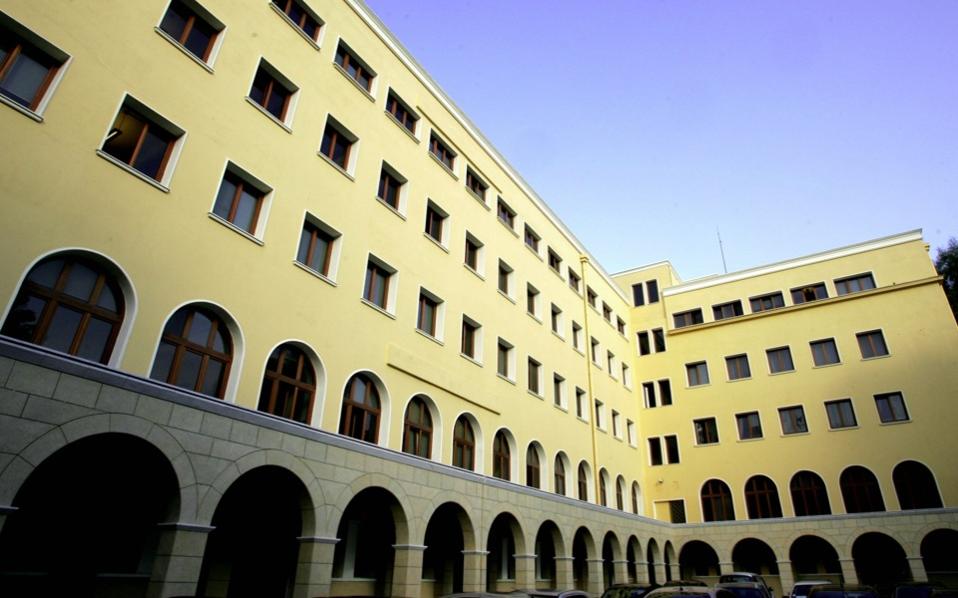
The Church of Greece is struggling financially as revenues dry up and taxes keep rising, with emblematic monasteries such as those of Petraki and Penteli in the capital putting a freeze on payments in order to make ends meet.

Churches and monasteries across the country are already facing problems paying salaries, seeking to settle their bills and property taxes in installments and selling off real estate to raise the cash to cover operating costs. The result is that their social programs are now at risk, such as soup kitchens for the poor, something that is expected to set off a domino effect of social implications as the Church is one of the driving forces in the effort to help the worst affected by the economic crisis in Greece.

As the Church scrambles to raise funds, the state keeps raising obstacles to investments, while a solution has yet to be found as regards its prime real estate assets. A total of 123 Church properties in Athens, Vouliagmeni, Piraeus and Thessaloniki have been sold to the state but not paid for, while the Church can no longer make use of them.

Revenues drying up

The Church of Greece has two main sources of income – real estate and National Bank of Greece shares – and both are drying up: Rents are declining and buyers are increasingly hard to come by, while NBG shares were at 0.23 euros at the time of going to print.

Speaking to Kathimerini, the general director of the Central Ecclesiastical Financial Service (EKYO), Father Salonon Antonios, explained that the Church participated in NBG’s share capital increases in 1996 and in 2005. In 2005, the shares were bought at 22 euros and their value reached 47.80 euros. In 2010, the Church again took part in NBG’s share capital increase, this time under pressure from high-ranking government officials and the local banking system who wanted to send a message of credibility and solvency. To participate in the process, the Church was granted a loan of 27 million euros from Hellenic Postbank and used another amount equal to that from its savings.

However, says Antonios, “the Church does not gamble,” suggesting that the shares should have been better managed and sold at peak price. This didn’t happen and then the crisis hit the Church as it did the country, with NBG stopping dividend payments in 2008 and the price of shares plummeting to levels at which they are not worth selling.

Real estate slump

At the same time, the slump in the real estate market caused another major source of revenue to dry up for the Church, which has 19,000 hectares of arable land, 700 plots of land, 400 office spaces and 260 residences in its portfolio. Rents have dropped at rates of between 30 and 70 percent depending on location since 2008, many properties are untenanted and utilizing them is a headache because of the cost of maintenance – for which there is no cash.

“The Church’s revenues have declined by about 75 percent today compared with 2008. Then, the annual budget was around 23 million euros and today it is around 6 million euros,” says Antonios.

The Church has called on the state to take action to attract investors and to solve a number of problems that are preventing it from utilizing properties. For example, the Church owns a 130-hectare plot between Lake Vouliagmeni and the town of Varkiza on Athens’s southeastern coast, most of which is covered in sand and rocks. The Church has asked the state to approve a small construction quota so that a potential investor could build on 22.5 hectares and be obliged to plant the remaining 107.5 with trees, but so far it has been told that the decision on the area’s delineation is still pending.

The Church is also eager to utilize a large plot at Schisto near Piraeus, where there is rising demand for logistic centers and other port-related activities. The state has deemed the area forestland, while the Church has maps showing that this definition dates back to 1850 and has not been updated since.

Tax relief

Every metropolitan church, monastery and even parish church has assets that they themselves manage and each of these entities pays property and income tax – in contrast to popular belief. Petraki Monastery, struggling with salary payments, recently applied to enter a scheme that allows indebted taxpayers to pay their contributions in 100 installments. As further evidence to dispel the myth of the Church’s enormous wealth, sources told Kathimerini that Petraki Monastery’s real estate assets are limited to one building near Evangelismos Hospital in Kolonaki and another on Koumoundourou Square, both in central Athens though widely disparate in terms of property values.

Penteli Monastery is not faring much better, as it recently sold its single real estate asset in order to meet operating costs.

Antonios also explains that EKYO is responsible for funding to all metropolitan churches, most of which run programs to help the poor and the homeless, showing that these program will be at risk unless solutions are found.

souurce:ekathimerini.com

Australia’s young universities crowd world rankings

untitled

Australia has more highly ranked, up-and-coming universities than almost any country in the world, the latest university rankings from Times Higher Education show.

The latest rankings, which lists the top 150 universities less than than 50 years old, includes 19 Australia universities, exceeded only by Britain with 25.

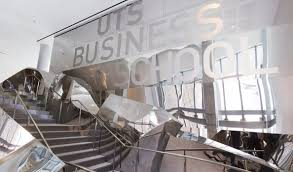
Australia’s top university less than than 50 is the 28-year-old University of Technology, Sydney (21st in the world), followed by the Queensland University of Technology (equal 28th) and Charles Darwin University (equal 31st), each of which are 27 years old.

Times Higher Education’s rankings editor Phil Baty said one of the strengths of Australian higher education was its strong community of young institutions.

Australia’s other universities in the top 150 less than than 50 list are, in order: University of Wollongong, James Cook University, Flinders University, Griffith University, Deakin University, University of South Australia, La Trobe University, Swinburne University of Technology, Murdoch University, Western Sydney University, Curtin University, Southern Cross University, RMIT University, University of Canberra, Central Queensland University and Edith Cowan University.

The world’s top university less than than 50 years is Switzerland’s Ecole Polytechnique Federale de Lausanne, followed by Singapore’s Nanyang Technological University and Hong Kong University of Science and Technology.

source:afr.com

Port Augusta has a message for Newcastle

untitled

THE end of coal came swiftly for Port Augusta in South Australia, even while politicians pointed to mine approvals stretching out to 2030.

First a coal-fired power station closed in 2012. Then the mine that produced the brown coal that serviced the power station shut in November 2015. Then the area’s second power station announced it was shutting, in May.

While federal politicians were struck dumb for awhile once the penny dropped that coal was finished in Port Augusta in 2016, and not 2030, the community was already five years ahead with a plan for a new Port Augusta based on renewable energy.

It is pushing the federal government for support from the Clean Energy Innovation Fund for a large scale solar thermal plant to create new jobs and on-demand clean energy. Prime Minister Malcolm Turnbull has indicated it may receive federal backing.

One of the people who pushed for a new Port Augusta, Daniel Spencer of Repower Port Augusta, is in the Lower Hunter from Friday for the third annual Beyond Coal and Gas national conference. Information on the conference and program click here.

The experience of Port Augusta is a warning for Australia in general, but particularly for the Hunter region, Mr Spencer said.

“What do people in the Hunter want to be known for in 20 years – a sound transition from coal or a community facing an emergency?” he said.

The theme of the conference at Myuna Bay Sport and Recreation Centre is Transition is Now. The message is “Communities fighting coal and gas projects and driving the unstoppable momentum to a clean energy future.”

Speakers include American farmer John Fenton, star of the movie Gaslands, whose town now has its drinking water trucked in after the US Environmental Protection Agency found that fracking for shale gas had poisoned the water.

Mr Fenton is touring Australia with a warning about the dangers of fracking, and to provide support for local communities campaigning against coal seam gas.

Queensland woman Helen Bender is a keynote speaker, after the suicide of her father, farmer George Bender, in October after 10 years of fighting against coal seam gas drilling on his land.

Another keynote speaker is Indian campaigner Ramesh Agrawal, who was shot while fighting to stop one of the largest proposed coal mines in his part of the sub-continent.

The conference will also include discussions with leading renewable energy expert Professor Mark Diesendorf, Richard Denniss of The Australia Institute, author and journalist Elizabeth Farrelly, Lock the Gate founder Drew Hutton and Wangan and Jagalingou traditional owner Adrian Burragubba, whose people are fighting the giant Carmichael coal mine in Queensland.

John Hepburn, executive director of The Sunrise Project which is convening the conference, said the coming together of people from around the world from Friday to Monday was part of a global movement of people who accepted the reality of climate change and the need for a change to renewable energy.

“The bubble has burst. It is now accepted that coal is in structural decline and a massive transition is underway, as the world turns to renewables. Meanwhile a social movement continues to defend communities, our natural heritage and the global climate from the impacts of the fossil fuel industry,” Mr Hepburn said.

New polling this week showed for the first time that a majority of people in NSW believe coal mining does more harm than good, with 84 per cent wanting farmland, water and the environment protected from coal and coal seam gas.

“The Beyond Coal and Gas Conference boasts a great lineup of national and international speakers who’ll join with over 350 people from all walks of life, involved in some way with the social movement to phase out fossil fuels and transition to a future powered by renewable energy,” Mr Hepburn said.

Mr Spencer said the sudden collapse of coal in Port Augusta meant there was a significant focus on the area and how communities and governments responded, which also represented opportunity.

Port Augusta Council, business leaders, unions, environmental groups and community groups developed plans for the area to become a renewable energy centre based on a new solar thermal power plant.

Mr Turnbull acknowledged the opportunity the sudden end of coal in Port Augusta represented, by specifically identifying the solar thermal power plant as a possible project that could be supported under the federal Clean Energy Innovation Fund.

Hunter communities needed to consider the region’s future as jobs are lost in the mining industry, multinationals increasingly sell off assets, and dire predictions of mine closures and stranded assets – that were ridiculed only five years ago – seem more likely as the price of coal continues to drop, Mr Spencer said.

“It would be of unbelievable national significance to transition the Hunter from coal to renewable energy,” he said.

“The sad part of the experience in Port Augusta is that if governments had responded quicker to what the community was calling for from 2012, more people would not be forced to leave town because we would have had a plan in place.

“Port Augusta was once part of the iron triangle, an old industry place like Newcastle. It’s now trying to rebrand its image and capitalise the fact that it’s being forced to embrace the new.”

source:theherald.com

Origi gives Liverpool edge in Dortmund 1-1 draw

2350536_w2

Mats Hummels cancelled out Divock Origi’s opener but Dortmund were unable to prevent Liverpool taking home an away goal advantage.

Liverpool will take a precious away goal back to Anfield after an entertaining 1-1 draw with Borussia Dortmund on Jürgen Klopp’s return to his former club in the first leg of the sides’ UEFA Europa League quarter-final.

For a match that started at a furious pace, goalmouth action was at an early premium. Mamadou Sakho blocked from the impressive Henrikh Mkhitaryan in the 16th minute, but otherwise opportunities were limited during the opening half-hour.

That changed, however, when Liverpool took the lead against the run of play. Immediately after Pierre-Emerick Aubameyang had drawn a good save from Simon Mignolet, James Milner nodded the ball forward at the other end for Divock Origi, who calmly slotted past Roman Weidenfeller.

Dortmund responded strongly, with Mignolet called into action on several occasions, and continued in the same fashion after the interval. Indeed, three minutes into the second period Dortmund were deservedly level, Mats Hummels rising highest to plant a powerful header past Mignolet.

The visitors, however, stayed in the game, with Philippe Coutinho eliciting an outstanding stop from Weidenfeller before the hour. Dortmund finished in the ascendancy, though ultimately both sides were content to take the tie, perfectly poised, to Anfield.

Wall of noise
The BVB Stadion Dortmund was perhaps as loud as it has been all season, yet if Klopp knew exactly what to expect from the famous ‘Yellow Wall’, it took his players a while to get going. With Dortmund clearly relishing the occasion, Liverpool were off the pace in the first half-hour before coming alive when Origi struck in the 36th minute.

Captain fantastic
Hummels has been in superb form since the turn of the year and crowned another imposing performance with a fantastic equaliser. Climbing to meet Mkhitaryan’s cross from the right, the Dortmund captain’s header left Mignolet with no chance. At the back, the German international marshalled Origi well for the most part.

Klopp-cam
Klopp’s Dortmund homecoming was undeniably the pre-match talking point, although once proceedings got under way the quality of football on show overshadowed anything else. The game was played at a furious pace throughout, with no shortage of attacking quality on show either. Dortmund were probably the better side on the night, but Liverpool’s rugged defensive display also deserved plaudits.

source:uefa.com

Europa League: Liverpool head to head with Borussia Dortmund

2349893_w2

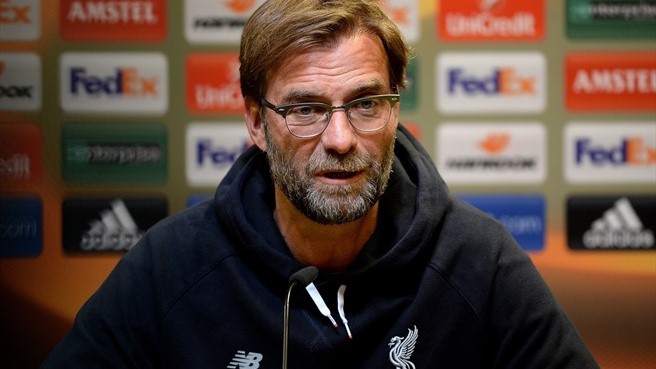
Yet those expecting an outpouring of emotion from the Liverpool manager – who between 2008 and 2015 guided Dortmund to one of the most successful periods in their history – were left disappointed.

Putting the sentiment of the occasion to one side, Klopp was sober in his assessment of the size of the task facing the visitors in Thursday’s UEFA Europa League quarter-final first leg. “We’ve said Borussia Dortmund are favourites in this competition and I don’t think there’s anybody that really disagrees with that,” he said. “If we are not good [on Thursday] then it will be easy for Borussia Dortmund.”

Indeed, since Klopp’s departure last summer, successor Thomas Tuchel has revitalised last season’s seventh-placed Bundesliga team, turning BVB into one of Europe’s most feared outfits. Still unbeaten in 2016, the Schwarzgelben – currently second in Germany – underlined their strength with home and away wins over both Porto and Tottenham Hotspur in the knockout rounds.

“Dortmund have a cool way of playing, courageous going forward and aggressive, so it won’t be easy but we’re well prepared,” said Klopp. “If it was easy [to beat Dortmund], one or two teams might have discovered it earlier.”

The return of Klopp, however, presents a new challenge for Tuchel’s men both off and on the pitch. While Tuchel was quick to downplay the off-field significance of his predecessor’s homecoming – “it’s not the first time I’ve welcomed Jürgen back to his old club” – the city of Dortmund seems delighted to have one of its favourite adopted sons back where he made his name.

“[Klopp was] a great coach, perfect for Dortmund,” said Ilias, a Greek who has lived in Dortmund for 27 years and works in a city-centre restaurant. “Everyone loves Klopp. My favourite memory is that game against Málaga in the Champions League [2012/13 quarter-finals] – it was phenomenal.”

Three seasons on and Klopp will tread a familiar path to lead a young, vibrant set of players out at the BVB Stadion Dortmund for a European last-eight tie. This time, though, he heads a Liverpool side showing early signs of embracing the counter-pressing style pioneered by his BVB teams.

As midfielder Gonzalo Castro – one of four players in this Dortmund squad not to have played under Klopp – warned in the pre-match press conference, it is a style that could damage BVB’s hopes of lifting this trophy for the first time. “Plenty of people know how Klopp likes to play and how he played at Dortmund. They’ll attempt to press us early: ball and man.”

Tuchel echoed that caution, saying: “Liverpool have got stronger over the last few weeks, in large part due to Jürgen’s input. They’re very difficult to play against – they defend very high and have outstanding individual quality, particularly going forward.

“Jürgen is a very, very competitive kind of coach, one of the most competitive guys I know. From the moment the whistle blows he wants to win.”

Or as Klopp put it: “During the game nobody has to think about how I feel. Ever since the beginning of our lives we have played against our best friends and have always wanted to beat them.”

source:uefa.com

Pressure mounts at Piraeus port between officials, volunteers

protest-thumb-large

While government authorities were trying to convince migrants and refugees stranded at Piraeus port to move to other shelters around the country Wednesday, harbor officials there lashed out at volunteers for allegedly encouraging refugees to demand the opening of European Union borders, despite last month’s deal between Brussels and Ankara to deport migrants back to Turkey.

In a statement issued Wednesday, the Piraeus Port Authority alleged that there are people there “that are obstructing the plan to transfer refugees and migrants to organized shelters” and urged judicial authorities to intervene so the law is upheld.

“The time has arrived for the law to be strictly enforced against those who are taking advantage of the desperation and vulnerability of refugees and migrants,” the statement said. Rights groups have slammed the EU agreement with Ankara as a contravention of international law. Amnesty International has also lambasted the deal, saying that Turkey is not a safe country for refugees.

According to the latest official figures, there are 4,720 refugees and migrants – most of them families – stranded in deplorable conditions at Piraeus port.

The government’s migration spokesman, Giorgos Kyritsis, Wednesday reiterated that the aim is to evacuate the migrants from the port to other shelters by Easter Sunday.

However, according to some reports, the government has allegedly not done enough to inform refugees and volunteers on how the former’s transfer will be implemented, making a bad situation even worse.

“I came here to help. Someone must guide me. I can’t just ask the refugees what they need,” one female volunteer from Spain told Kathimerini.

Meanwhile, further deportations of refugees under the EU deal may be delayed by up to two weeks until the required infrastructure is in place, according to Alternate Foreign Minister for European Affairs Nikos Xydakis, to deal with the growing number of migrants applying for asylum.

Xydakis admitted Wednesday that few migrants will return to Turkey over the next couple of weeks following the initial deportation of 202 on Monday.

“We knew there would be a lag, an intermediate period before the program takes off, of at least two weeks to get through the first batch of applications,” he said, adding that some deportations may take place Friday.

He also said that Greece still does not have enough personnel on the ground to process the increased volume of asylum applications. He added that despite the hundreds of security experts provided by EU border agency Frontex, only some 20 EU legal experts have arrived in Greece so far.

“This is the weakness of the whole procedure. It is easier to deploy police officers than experts in refugee law, interpreters, debriefers, but they are coming” he said.

“In two weeks we can get through 400 to 500 applications,” Xydakis said.

According to the latest statistics, migrant flows into Greece saw a sharp decline yesterday as no arrivals were recorded on the islands of the northern Aegean (Lesvos, Chios and Samos) for the first time in months.

source:ekathimerini.com

A piece of Melbourne in Thessaloniki

Melbourne%2001

A proposal has been put forward to name a street or town square after Melbourne

Continually looking for ways to strengthen the sister-city relationship, a proposal has been made to name a street, or better yet, a town square after Melbourne in Thessaloniki.

The suggestion was formally made by president of the Thessaloniki Association ‘The White Tower’, Paul Mavroudis, in a letter to the governor of Thessaloniki Vasilios Georgiou.

Greek composer and director Constantine Athirides has already expressed his support for the idea.

The creator of the acclaimed play Alexander the Great Rock Opera was welcomed by the association Down Under last month, where he gave an insightful presentation on his work, granting attendees the chance to view a promo video of the opera and partake in discussion about the story and portrayal of Alexander the Great.

Taken by his overwhelmingly positive experience at the association, Athirides formally thanked organisers in a letter on his return to Greece, adding that he “had the chance to witness first hand the strength and dynamism of the Macedonian diaspora”.

The idea was put forward to help honour the 32nd anniversary of the sister-city relationship.

Members have already organised a stellar program for 2016 to mark the occasion, including a festival set to take place later this year on November 27.

source:Neos Kosmos

Larger / SmallerNight Mode Voluntary administration hits Hunter businesses of iron and steel company Arrium

imagesIB2L8JUL

RALLY CRY: About 500 people hit the streets of Whyalla on Tuesday in support of the town’s embattled steelworks, which in turn feeds the OneSteel rolling mills in Newcastle. Picture: Louis Mayfield, Whyalla News.

WHYALLA steelworks might the public face of embattled iron and steel company Arrium but it has at least 1200 Hunter employees facing an uncertain future after the company and more than 70 of its subsidiaries went into voluntary administration on Thursday morning.

Financial administrators Grant Thornton took control of the company after its board and its bankers could not agree on a solution for the $4 billion in debts that the company accumulated – much of it in building up an iron ore business that became a big loss-maker in the wake of plummeting commodity prices.

As well as its South Australian businesses, Arrium owns and operates a range of steel assets in and around Newcastle, which between them still employ more than 1200 people, even after years of steady workforce reductions.

Arrium assets include the OneSteel still mills at Mayfield, employing an estimated 700 people, and the Comsteel and Moly-Cop businesses at Waratah, with a workforce of about 500.

The administrators said the Moly-Cop business had not been put into administration “and should be largely unaffected”.

But it was unclear how this would play out in Newcastle, given the shared work site with Comsteel, which is one of the companies in administration. Arrium also owns a metal recycling plant at Hexham, a steel reinforcing business at Bennetts Green and a Metalcentre retail outlet at Cardiff. The administrators said it would be “business as usual” for the time being at the affected businesses.

Arrium’s financial woes have been well-known for a long time, but the situation escalated this week when the company’s 35-bank lending syndicate rejected a $1.2 billion rescue package proposed by the company and a US “vulture fund” specialising in lending to distressed companies.

On Thursday morning, Arrium said four representatives of international insolvency specialist firm Grant Thornton had been appointed to act as voluntary administrators for each of the “relevant companies” in the Arrium group.

“As previously announced, Arrium has been in discussions with its lenders (banks and noteholders) following the lenders’ rejection of the recapitalisation plan . . . involving GSO Capital Partners LP (on behalf of funds managed by it and its affiliates) that was announced on 22 February 2016,” Arrium said.
“These discussions have now ceased. After considering the available alternatives, in the current circumstances it has become clear to the board of Arrium that it has, unfortunately, been left with no option other than to place the relevant companies into voluntary administration in order to protect the interests of stakeholders.”

The statement included a list of the 74 companies affected, including various OneSteel entities and Comsteel Pty Limited.

Arrium made no mention of Moly-Cop – which makes grinding balls for the mining industry – in its stock exchange announcement but Grant Thornton said “the Australian and global Moly-Cop business is not affected by the appointment”.

Arrium had tried unsuccessfully to sell Moly-Cop late last year, and Grant Thornton was working on “an appropriate strategy” for that business globally.

As well as the $2.8 billion owed to banks, Arrium reportedly owes $1 billion to its trade creditors and has obligations to its employees totalling $500 million, as well as responsibility for various environmental clean-ups, led by the Whyalla steel plant.

Arrium began life as OneSteel in 2000 as part of BHP’s push to get out of the steel industry. Its push into iron ore was originally applauded by analysts and investors, but when the commodities boom ended, the cost of the company’s rapid expansion was apparent.

Analysts say Arrium has a number of good businesses and while the Newcastle rolling mills are fed entirely from Whyalla, they could obtain steel from Arrium’s Sydney electric arc steel-making furnace if Whyalla was to shut.

Grant Thornton promised “a thorough and impartial investigation” of Arrium’s problems. A first creditors’ meeting would be held within eight business days. Arrium shares are suspended from trade at 2.2 cents, down from their 2008 peak of $5.91.

RALLY CRY: About 500 people hit the streets of Whyalla on Tuesday in support of the town’s embattled steelworks, which in turn feeds the OneSteel rolling mills in Newcastle. Picture: Louis Mayfield, Whyalla News.

source:theherald.com

Lambis Englezos attends Newcastle Combined Schools ANZAC Service, commemorating 100 years since Battle of Fromelles

untitled

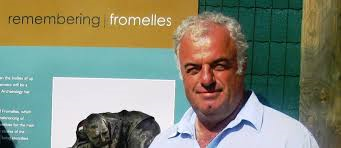
LAMBIS Englezos, whose research uncovered unmarked war graves in France containing the bodies of 250 soldiers, has been a guest of honour at the Newcastle Combined Schools ANZAC Service.

Retired teacher Mr Englezos joined relatives of Hunter men who fought in Fromelles and 1400 students from 40 Catholic, independent and state schools at the 61st annual service, which was held in the Civic Theatre.

“I have never seen anything like this before,” Mr Englezos said of the service, which focused on the 100th anniversary of the Battle of Fromelles, which took place on the night of July 19, 1916.

The battle was the worst night in the country’s military history and involved 5533 Australian casualties, including 2000 dead and 1336 missing.

“There’s a beautiful creative energy behind all of this. It’s a wonderful initiative to encourage youth to commemorate and remember the service and sacrifice made for this country.”

Artistic director Michelle Gosper said the 60 minute event included elements of a traditional ANZAC service, including laying tributes, a lone piper playing a lament, The Ode of Remembrance, the Last Post, a minute of silence, the Reveille and the national anthem.

But it also included a moving drama performance and musical numbers, The Mothers Song and Fromelles.

“Not many young people have experience with these events and this is a great way for them to learn about the war through stories told in a dramatic and engaging way,” Ms Gosper said.

The service also focused on the story of Mr Englezos, who visited Fromelles in 2002 and realised there was a discrepancy between the lists of the missing and the numbers of unidentified soldiers in surrounding cemeteries. He said his theory the Germans had buried a number of soldiers in unmarked mass graves at Pheasant Wood was met with “active discouragement from official authorities”, but proved to be correct. Of the 250 soldiers found, 144 have been identified, including 11 Hunter men.

Service attendee Reginald Coghlan, 91, praised the event as “marvellous” and “respectful”. He said it brought to life the experience of his late father Edward Joseph Coghlan of Mayfield, who survived Fromelles.

source:theherald.com