Daily Archives: December 12, 2014

Στο Σαν Ντιέγκο μεταφέρθηκε η ταλαιπωρημένη τίγρη των Τρικάλων

Ο Φοίβος χρειάστηκε να ναρκωθεί για να μπει στο κλουβί (Πηγή: Δήμος Τρικκαίων)

Χάρη στις δωρεές του BBC αλλά και πολλών Βρετανών ιδιωτών, μια άρρωστη αρσενική τίγρη που ζούσε σε ακατάλληλο περιβάλλον στα Τρίκαλα μεταφέρθηκε στον διάσημο Ζωολογικό Κήπο του Σαν Ντέγκο.

Ο Φοίβος ολοκλήρωσε με ασφάλεια την υπερατλαντική πτήση, επιβεβαίωσε στην εφημερίδα Espresso η Αμαλία Σωτήρχου, διευθύνουσα σύμβουλος της ελληνικής οργάνωσης Animal Action.

O Φοίβος και η αδελφή του Αθηνά, η οποία πέθανε πέρυσι έπειτα από χειρουργική επέμβαση, είχαν κατασχεθεί από τσίρκο στην Αττική το 2002 και πήραν τα ονόματα των μασκότ των Ολυμπιακών Αγώνων της Αθήνας. Έκτοτε ζούσαν στον μικρό και ακατάλληλο χώρο του Ζωολογικού Κήπου Τρικάλων.

Σύμφωνα με την Animal Action, ο Φοίβος πάσχει πιθανώς από κατάθλιψη και επιπλέον έχει ανάγκη επείγουσας χειρουργικής επέμβασης, καθώς πάσχει από δυσπλασία του ισχίου.

Για τη συγκέντρωση του ποσού των 11.000 λιρών που απαιτούνταν για τη μεταφορά του ζώου στο Σαν Ντιέγκο, ο πρώην διευθύνων σύμβουλος της οργάνωσης Ντέιβιντ Μπαρνς ξεκίνησε εκστρατεία crowd funding.

Φιλόζωοι δωρητές, κυρίως στη Βρετανία, προσέφεραν συνολικά 7.779 λίρες, και τα υπόλοιπα χρήματα δόθηκαν από το BBC, το οποίο βιντεοσκόπησε την επιχείρηση μεταφοράς την περασμένη Τρίτη.

Το βρετανικό δίκτυο θα προβάλλει το θέμα το πρωί της Παρασκευής.

Πηγή:in.gr

EUROPA CUP: Ο ΠΑΟΚ έχασε από τη Γκινγκάμπ και είπε… αντίο Ευρώπη

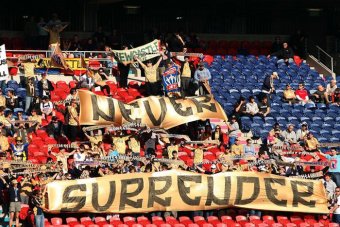
Ο ΠΑΟΚ έχασε από τη Γκινγκάμπ και είπε... αντίο Ευρώπη

Εκτός Ευρώπης έμεινε ο ΠΑΟΚ. Στο παιχνίδι που κρινόταν η πρόκριση στους «32» του Europa League, ο «Δικέφαλος» του Βορρά ηττήθηκε 2-1 από την Γκινγκάμπ στην Τούμπα, στο πλαίσιο της 6ης και τελευταίας αγωνιστικής του 11ου ομίλου.

Οι Θεσσαλονικείς, που ήθελαν μόνο τη νίκη, έμειναν στην 3η θέση του γκρουπ, πίσω από τους Γάλλους που θα συνεχίσουν στη διοργάνωση και τη Φιορεντίνα που τερμάτισε στην πρώτη θέση.

Ο Μποβού στο 7′ και στο 83′ πέτυχε τα γκολ της Γκινγκάμπ, ενώ στο 22′ ο Αθανασιάδης είχε ισοφαρίσει προσωρινά με πέναλτι που είχε κερδίσει ο ίδιος.

Στην πρώτη φάση του αγώνα η Γκινγκάμπ πήρε προβάδισμα στο σκορ με ωραία καρφωτή κεφαλιά του Μποβί στο 7′ από φάουλ που εκτελέστηκε από δεξιά από τον Ζιρές. Ο ΠΑΟΚ μετά τον αιφνιδιασμό αυτό προσπάθησε να ανασυνταχθεί και στο 11′ μακρινό σουτ του Κάτσε έξω από τη μεγάλη περιοχή της Γκινγκάμπ, μπλοκάρει εύκολα ο Λεσλ.

Ψύχραιμα ο ΠΑΟΚ αντιμετωπίζει την αρνητική αυτή εξέλιξη και στο 22′ κερδίζει πέναλτι που παραχωρεί ο Γιάκομπσεν κόβοντας την πορεία της μπάλας με το χέρι σε σέντρα του Αθανασιάδη. Ο αρχηγός του ΠΑΟΚ που συμπλήρωσε σήμερα 200 συμμετοχές στην καριέρα του, πέτυχε με εύστοχο χτύπημα το 1-1 φέρνοντας την ισορροπία στην αναμέτρηση.

Στο 30΄ ο Περέιρα προσπάθησε με πάσα βρίσκει τον Ρατς, ο οποίος σαν επιθετικός, κάνει την προβολή, χωρίς ωστόσο να προλαβαίνει την μπάλα, με τον Λεσλ να μπλοκάρει. Στο 32′ ο Μαντάν σε μια σπουδαία φάση για την Γαλλική ομάδα, σημαδεύει το αριστερό δοκάρι του Γλύκου.

Επιθετικά μπαίνει στην επανάληψη στον αγώνα ο ΠΑΟΚ και στο 52΄ δημιουργεί και χάνει μια σημαντική και πολύ μεγάλη ευκαιρία για το δεύτερο γκολ. Ο Ρατς εκτέλεσε το κόρνερ ο Σαλπιγγίδης πήρε την κεφαλιά δίνοντας πάσα στον Αθνασιάδη ο οποίος επίσης με κεφαλιά εξ` επαφής έστειλε την μπάλα στο δοκάρι της Γκινγκάμπ, ενώ η δεύτερη κεφαλιά του πήγε στην αγκαλιά του Λεσλ.

Οι Γάλλοι όμως δεν περιοριζονται στην άμυνα. Εχοντας το πλεονέκτημα της ταχύτητας δημιουργούν αραιά αλλά επικίνδυνα καταστάσεις στα μετόπισθεν του ΠΑΟΚ και αυτό δεν μπορεί να το αντιμετωπίσει η ελληνική ομάδα. Στο 60′ σε μια γρήγορη αντεπίθεση από σέντρα του Πιέντ ο Ζιρές κάτοχος της μπάλας στην περιοχή του ΠΑΟΚ σουτάρει δυνατά για να αποκρούσει ενστικτωδώς ο Γλύκος και να σώσει έτσι την εστία του.

H συνέχεια της αναμέτρησης κρύβει μια άγρια ομορφιά καθώς ο ΠΑΟΚ με δυνάμεις προσπαθεί να βγει επιθετικά αλλά από την άλλη πλευρά η Γκινγκάμπ με ξαφνικές και πολύ επικίνδυνες αντεπίθέσεις πλησιάζει στην εστία του Γλύκου.

Ο ΠΑΟΚ επιμένει παρά την κούραση των παικτών του και στο 73΄ο Αθανασιάδης πλησιάζει στο καθοριστικό δεύτερο γκολ, το σουτ όμως του διεθνή φορ, περνά μόλις πάνω από τα δοκάρια του Λεσλ.

Στο 84′ όμως οι Γάλλοι βάζουν την σφραγίδα τους στο παιχνίδι. Ο Μποβί μετά από πολύ καλή ενέργεια και πάσα του Σανκαρέ με δυνατό σουτ παραβιάζει την εστία του Γλύκου διαμορφωνοντας το 1-2 που «γονατίζει» τον ΠΑΟΚ και τον αφήνει εκτός πρόκρισης στην επόμενη φάση του Europa League.

Ο ΠΑΟΚ χωρίς πολλές λύσεις αν και η προσπάθεια του ήταν φανερή, «λύγισε» τελικά στην Γκινγκάμπ, μια ομάδα με αρετές και ταχύτητα στις αντιδράσεις της που πήρε δίκαι τη νίκη άρα και την πρόκριση. Η ελληνική ομάδα παρουσίασε τις ίδιες χτυπητές αδυναμίες στην άμυνα με αργές αντιδράσεις και ατολμία στην επίθεση.

Η Γκινγκάμπ με κορυφαίο παίκτη τον σκόρερ των δυο τερμάτων της Μποβί, έδειξε πως παρά τις απουσίες της είχε λύσεις και έπαιξε παρά την πίεση του ΠΑΟΚ καλό παιχνίδι κερδίζοντας την πρόκριση στην συνέχεια της διοργάνωσης για πρώτη φορά στην ιστορία της στην φάση των «32»

Διαιτητής: Κέβιν Μπλομ (Ολλανδός)Εδειξε κίτρινες κάρτες στους Αθανασιάδη, Σκόνδρα, Λεβέκ.

ΠΑΟΚ: Γλύκος, Σκόνδρας, Βίτορ, Τζαβέλλας, Ρατς, Γκολάσα (53′ Μάρτενς), Κάτσε (77′ Μαντούρο), Τζανδάρης, Περέιρα ( 51′ Παπαδόπουλος), Σαλπιγγίδης, Αθανασιάδης.

Γκινγκάμπ: Λεσλ, Γιάκομπσεν, Ανγκουά, Σορμπόν, Λεβέκ, Σανκαρέ, Μποβί, Ματίς, Γιαταμπαρέ, (46′ Πιέντ) Ζιρές (86′ Ντος Σάντος), Μαντάν (75′ Κερμπράτ).

Πηγή:in.gr

Mary Coustas celebrates Jamie’s 1st birthday

Mary Coustas celebrates Jamie's 1st birthday

Mary Coustas with husband George Betsis and little Jamie on her birthday. Photo: Who Magazine.

Mary Coustas, 50, and her husband George Betsis, 55 have celebrated their daughter’s first birthday.

After so much heartache, Mary Coustas has something to marvel at.

Her daughter, Jamie, has just turned one.

Coustas, 50, and her husband George Betsis, 55, held a big Greek garden party and welcomed 75 guests to celebrate the milestone.

The overjoyed mum told Who Magazine that her first year of motherhood was “dreamy” and has surpassed any expectations.

“My imagination could not have lived up to the reality of how captivating Jamie is,” she said.

Coustas, better known as her Greek alter-ego Effie, had a turbulent and heartbreaking journey to conceive little Jamie.

She endured 23 IFV attempts, miscarriages, and the tragic stillbirth of daughter Stevie in 2011.

But this year has been all about celebration, with Coustas taking their bundle of joy all the way to Greece to be christened.

“My dream of christening our daughter Jamie in Tinos, Greece where I prayed for her 15 months earlier, finally came true,” she said on her Facebook page in September.

Source: Who Magazine

Milk-Shakin’ through Australia

Milk-Shakin' through Australia

Pacific Cafe & Milk Bar in Sydney. George and Panayiota (nee Kokinopoulos) Rongas took over running of the milk bar in 1966.

Effy Alexakis and Leonard Janiszewski present their last lecture on the history of Greek Australian Milk Bars in Sydney.

The lecture series, entitled Shakin’ the World Over: the Greek Australian Milk Bar continues on Saturday at the Sydney Mechanical Arts School in Pitt Street, Sydney.

Effy Alexakis and Leonard Janiszewski will be taking on the mesmerizing story of Australia’s Greek milk bars, which commenced and initially rapidly multiplied in Sydney in the early 1930s, infuriating the Australian Hotels Association.

According to Alexakis and Laniszewski, five years after Mick Adam’s (Joachim Tavlarides) creation of the “milk bar” in Sydney in November 1932, some 4,000 milk bars were operating in Australia, most of which were Greek-run. How long before Adams’ milk business was the milkshake being served in Australia is still open to speculation.

The pair stresses that commercial Greek involvement with milkshakes commenced in the Southern United States during the late 19th century, just as Greek migration was increasing to the Antipodes in the 1890s. Some of these Greek arrivals were from the United States and they took up selling milkshakes primarily on street corners, until Adams’ milk bar hit the market. He promoted milkshake as a health food, imported electric Hamilton Beach milkshake makers to provide speed, efficiency and multiplicity in the production, and then undercut the price. Many Greek families in Australia embarked on this business, elevating the milkshake to Australia’s national drink, especially during the ’50s and ’60s.

Because of the demand, Mick Adams made an effort to make the milk drink even more tasty and appealing, so by the 1970s, he managed to turn his healthy refreshment into a concoction of fats, sugar as well as artificial colours and flavours, introducing ice-cream to the original recipe.

This resulted into tea taking once again the “preferred national light beverage” title. The Milk Bar culture was soon after replaced by the Greek café that led to the increase of coffee drinking.

The lecture is open to public and will be held delivered on behalf of the City of Sydney Historical Association at Mitchell Theatre, the Sydney Mechanic’s School of Arts, 280 Pitt St, Sydney, NSW, at 2.00 pm today.

source: Neos Kosmos

Adelaide:George Street festival on this weekend

George Street festival on this weekend

Food, fun and lots of dancing on offer.

Those in Adelaide will be able to indulge in some Greek culture and lots of live music at the annual George Street Greek Festival in Thebarton.

Live music by Acropolis Band and special appearance by Melbourne based singer Kalliroy Kanavos will highlight the annual George Street Greek Festival in Thebarton this weekend.

The two-day event will be a chance for the Greek Australian community of Adelaide to indulge in cultural festivities and get a taste of the motherland, with lots of traditional foods, dances and music on offer.

Now in its fourth year, the festival has become synonymous with Adelaide Greek community and provides families with bit of traditional fun before the holidays.

Those wanting to see Acropolis Band will have a chance on both days, while Ms Kanavos will be performing live with clarinet player George Kirkopoulos.

Entry is free and all are welcome.

The annual George Street Greek Festival will be held on George Street, Thebarton on Saturday and Sunday 13-14 December, just outside the church of St Nicholas.

For more information visit http://www.gocsa.org.au

source: Neos Kosmos

Western Sydney Wanderers coach Tony Popovic praises players after Club World Cup pay dispute resolved

Covic and Popovic celebrate Asian Champions League win

Western Sydney coach Tony Popovic has praised his players’ professionalism after the pay dispute that threatened the club’s Club World Cup campaign was finally resolved.

The Wanderers squad had threatened to boycott this weekend’s match against Mexican side Cruz Azul in Morocco because of what they considered an unfair share of tournament prize money.

But a tense stand-off lasting almost a week ended on Thursday, with the Wanderers and Professional Footballers Australia announcing they had reached a new agreement.

While both parties refused to reveal the details, it is believed the players will receive a significant increase on the initial offer of a 10 per cent of the guaranteed $1.2 million prize money but less than the 50 per cent they sought.

The controversy has overshadowed the Asian Champions’ build-up to a match that could lead to a dream semi-final against Real Madrid, but Popovic said the resolution would change little on the training paddock.

“We see on paper that something has been resolved but for the last two days, I have seen a group determined to do very well here,” Popovic said in Rabat on Thursday.

“There’s a unity amongst the staff and players that is normal for me.

“I haven’t seen a change and I don’t expect to see a change because I have been very happy with how they have looked since we arrived.”

While there are suggestions the dispute could damage relations between the players and club in the long run, Popovic praised the handling of the issue from all parties.

“It’s a credit to the club – not just the players,” he said.

“It’s unfortunate that there has been an issue in public domain but I am not surprised to see how well they have looked after their bodies and have conducted themselves to prepare for a fantastic game, which we are a part of.

“As a coach I have seen nothing to worry me.”

The Wanderers are long outsiders to beat North American champions Cruz Azul, with the winner to face Real Madrid in the semi-finals.

Western Sydney are winless in the A-League after the first nine rounds but Popovic said there were strong signs to suggest his team could rise to the occasion in the Moroccan capital.

“When we train well, we play well and this week I’ve already seen some great things on the training paddock,” he said.

“Playing well doesn’t mean we’ll win on Saturday but we’ll certainly go into it with confidence.”

The Wanderers have drawn rivals Guangzhou Evergrande in their Asian Champions League group but are currently languishing in last place in the A-League.

source: abc.net.au

Newcastle Jets coach calls on fans to get behind the struggling team

2250426-3x2-340x227

Newcastle Jets coach Phil Stubbins has called on the city to get behind his team as they battle to re-gain form.

The Jets have managed just four draws from nine starts this season, but have been in winning positions and surrendered the lead in the final minutes of several games.

They are backing up after a disappointing 3-1 loss at home to Wellington Phoenix.

Stubbins does not feel under pressure, but said his team would benefit from knowing the community is behind them when they take on the Glory in Perth tonight.

“You want to win games, and the more you go without it you get a little bit more edgy towards wanting the result, but in terms of the pressure, no,” he said.

“The flipside of it is that we need to be supported. I think Its all good to kick a dog when it is down, so to speak.

“But, we’ve got a lot of things that we’ve done right and we’ve done well and with support I think that is going to help us get out of the hole that we are in.”

Stubbins said his team cannot be worrying about its poor record in Perth.

“If we go to Perth and think it is just a graveyard for us, we haven’t got the right mentality in the group,” he said.

“We need to go there with a real pair of them.

“It’s a great record Perth has got, but it would be a fantastic one for us to break and certainly, in the current circumstances, it would be a very nice tasting beer after the game if that was to happen.”

Jets coach excited by prospect of European takeover

Meanwhile, Newcastle Jets coach Phil Stubbins said he is excited by the prospect of the team being taken over by a European club.

The Jets operation is for sale after the owner, former mining magnate Nathan Tinkler, announced in August he was selling the team and his A-League licence.

Scottish club Dundee United has expressed an interest in acquiring the Jets.

Coach Stubbins said he has not personally met with any representatives from Dundee United, but believes new ownership will help with the salary cap and attract marquee players.

“Look I hope so,” he said.

“I think the Newcastle Jets is an unbelievable platform, not only into Australian football and the A-League, but also into Asia.

“For any prospective owner out there taking over the Newcastle Jets I would say it is a fantastic opportunity.

“If we did have new ownership, I think we would all welcome what that would bring to the table for the Newcastle Jets.”

source: abc.net.au

Australia:NBN tax on new homes

NBN tax on new homes

The Abbott Government has quietly announced a surprise $900 tax for newly built homes connecting to the National Broadband Network.

Communications Minister Malcolm Turnbull has also given the green light for companies to compete with the NBN in new developments, unpicking one of the core principles of the program as laid out by the former Labor government.

In a policy update paper released yesterday, the Government announced NBN Co would levy a one-time connection charge of $300 on new homes, admitting resale service providers would pass that charge on to consumers.

NBN Co would also levy a “deployment charge” on developers of $600 for new homes that would also likely be passed on to the homebuyer.

But in perhaps the most significant step, the Government said it would allow developers to choose among competing telco infrastructure providers to roll out cable – effectively opening up wholesale competition against the NBN.

When the NBN was first unveiled by Labor, NBN Co was to be the sole provider of fibre optic cable to homes and suburbs, with internet providers such as iiNet using that network to sell fast broadband to homes.

In a further cost to developers, the Government said at new building sites where backhaul was not available, NBN Co would charge builders a co-contribution of up to 50 per cent of the first $1000 per capital cost incurred.

Labor communications spokesman Jason Clare said the tax would hit those who could afford it the least – young families building their first home.

In a separate paper, the Government said it would remove NBN Co’s current system of uniform national wholesale prices and replace it with price caps.

Under the uniform wholesale prices scheme developed by Labor, NBN Co would sell broadband to internet service providers at the same cost.

But Labor claims replacing that model with price caps could end with internet users in the bush paying more than users in the city.

The Abbott Government has slowly been allowing competition to the NBN wholesale network in some urban areas.

“The fact is that nothing when it comes to the NBN is ‘free’, despite Labor’s best attempts to convince the electorate it will be,” a spokesman for Mr Turnbull said.

source: yahoo.com

Brisbane:12th Annual Moncrieff Awards


12th Annual Moncrieff Awards

MP Steven Ciobo (C) and James Nides with Greek Australian recipients of the awards (from left) Perry Arathimos, Peter Zerveas, Sophia Rafailidis, Rebecca Cominos and Leon Cominos.

Six of the 34 awards given to members of the Greek Australian community.

The 12th Annual Moncrieff Community Awards were held in Brisbane last month, with six of the 34 awards given to members of the Greek Australian community.

Organised by Honorary Parliamentary Secretary MP Steven Ciobo, the ceremony takes places every year to recognise the contribution of volunteers in the local community who make a difference in the lives of others.

Awarded for their voluntary services of 20 years or more were Mr Leon Cominos, Mr Peter Zerveas, Mr Perry Arathimos, Mrs Rebecca Cominos, Ms Sophie Rafailidis and Mr John Alexion.

Mr Ciobo said that the volunteers are examples of the character that makes Australia a better country.

Referring to the recipients as ‘backyard heroes’, the MP hopes that their good work will inspire others to follow by example.

source: Neos Kosmos

The Australian Greek Welfare Society

The Australian Greek Welfare Society

The AGWS Board with the Hon. Justice Emilios Kyrou.

Justice Emilios Kyrou explains why he thinks AGWS is an organisation that excels at making elderly Greek Australians feel welcome and cared for.

I want to share some thoughts with you about why I agreed to become the patron of the Australian Greek Welfare Society (AGWS). The key words that describe my motivation are respect and gratitude.

The word respect is apt because I have always admired people and organisations that are dedicated to helping others in need and who are motivated by a sense of community service rather than a desire to personally profit. This describes the society perfectly. It is a non-profit organisation that depends on volunteers and financial assistance from the community for its effectiveness.

The word gratitude is apt because the key beneficiaries of the society’s services include Greek Australians of my parents’ generation who migrated to Australia after the Second World War. Most of them are now in their 70s and 80s and are becoming increasingly frail. Many of them also had limited educational opportunities in Greece and Australia and continue to have English language difficulties. This means that some mainstream health and welfare services are not easily accessible to them. In order for such services to be fully effective, they need to be provided in a culturally and linguistically appropriate manner by organisations with which that generation feels comfortable. The AGWS is clearly such an organisation.

My generation, which has benefited immensely from the sacrifices of my parents’ generation, needs to do more to acknowledge our gratitude for those sacrifices and to actively promote the welfare of that generation. We need to do this personally, at the family level, as well as collectively, by supporting organisations such as the society.

Prior to my appointment as a judge in May 2008, my involvement with the Greek community of Melbourne was mainly confined to Greek community groups representing the area where I grew up in Melbourne and the area from which my family emigrated in Greece. The key bodies with which I was involved were the Greek Orthodox Community of Broadmeadows and Districts and the Philanthropic Association of Imathia Veria. I was not involved with the peak body, the Greek Orthodox Community of Melbourne and Victoria, or welfare bodies such as the AGWS and Fronditha Care.

The level of my involvement changed after May 2008. As I was then and remain the only Greek-born judge in Victoria, I received invitations from many Greek Australian organisations to participate in their activities. I made a policy decision to accept those invitations where my involvement might add some value to the organisations in question or the people that they assist. I have been particularly keen to be involved with organisations providing services to Greek youth, as my educational and professional experiences may provide some guidance and encouragement. I have also been keen to be involved with organisations that provide services to my parents’ generation for the reasons that I have already mentioned.

Until the society invited me to become its patron, I did not have a detailed understanding of its history, services and personnel. So I made discreet enquiries. I was delighted to learn that the AGWS was well known in the Greek Australian community and enjoyed an excellent reputation. Those to whom I spoke were unanimous in praising Voula Messimeri, George Spiliotis and the board and staff of the society. I was told that they were all very professional and well liked. Indeed, a senior Greek lawyer said of George, ‘Eine kalo pedi o Giorgos’. The society was universally seen as providing much needed services and making a tangible difference to the wellbeing of its clients. This positive feedback made it very easy for me to accept the role as the society’s patron.
It is a pity that the AGWS did not exist in April 1968, when my family arrived from Greece. My family’s adjustment to life in Melbourne was very difficult because no member of my family spoke English and there were few established Greek families in Broadmeadows to assist us. The assistance we received was well-meaning but ad hoc and incomplete. Those early years would have been less confusing and stressful if the society was in existence because it could have taken us under its wings and helped us like it did many new arrivals following its establishment in 1972.

Who would have expected that the services that the society provided to new arrivals in the 1970s would again be in high demand 40 years later? Yet this is precisely what has occurred due to the spike in Greek Australians who have been living in Greece returning to Australia due to Greece’s economic crisis. The society should be congratulated for having the flexibility to respond to the settlement needs of these individuals, which include accommodation, employment, social welfare entitlements and education.

When I was initially shown around the society’s headquarters in Brunswick earlier this year, I was very impressed by everything I saw. However, three things stood out. The first was the enthusiasm of the staff and the fact that many of them were bilingual. The second was the cardiac program to assist in meeting the rehabilitation needs of ageing members of our community. The third was the computer literacy classes, in particular those directed at the use of the internet and communication tools such as email and Skype. When I saw the exercise bikes and the computers, it struck me that the two programs were essential to tackle two important challenges of my parents’ generation, namely, the risk of recurrence of adverse health episodes and the risk of isolation, loneliness and being cut off from family and friends both in Australia and in Greece.

I hope that some of the society’s clients are inspired to use their newly acquired computer skills to record their life stories. In my opinion, the lives of people of my parents’ generation are truly amazing. I have a real concern that many remarkable life stories will be lost to the community with the passing of that generation.

The services that the AGWS provides are not confined to individuals of my parents’ generation. For example, the society conducts a childcare program out of the ALPHA Children’s Centre. It caters to all in the Greek Australian community, including at both ends of the life cycle. Its diverse programs have a common aim: to look after vulnerable members of the Greek Australian community and to promote their interests.

On 17 April this year, I attended a breakfast function at the society’s head office, during which a promotional video was shown. The video included footage of young families arriving from Greece after the Second World War and snippets of their life progression, including men and women who arrived in their 20s and 30s and are now over 70. I found the video very moving because it reminded me of my family’s journey as migrants. My father was 34 years of age in 1968 when we arrived in Australia and he is now 80. My mother was 31 years of age and she is now 77. I remember them as tall, strong and fearless when we arrived in Australia. Now they are elderly and do not appear as tall. They suffer from the usual health issues that come with age and seem to become stressed more readily. These attributes are common among individuals of my parents’ generation.

When my family arrived in Australia, my brother and I were aged eight and four, respectively. We depended on our parents to provide for us and to protect us. Now, our parents are increasingly depending on us to look after them. As busy professionals, we cannot be at our parents’ side at all times. They need to continue looking after themselves as best they can on a day-to-day basis and to seek support and companionship from their network of friends when we cannot be with them. As the friends in their network are also elderly, there is a real need for organisations such as the society to act as a safety net to ensure that the needs of elderly Greek Australians who are still able to live independently are met. The society’s social support program and community visitors scheme, which provide for visits by volunteers to frail elderly people, make a vital difference to the morale and wellbeing of those individuals. Equally important is the society’s respite program for carers of family members who are elderly or suffer from a disability.

Knowing that someone cares and that if you ask for help you will receive it is so important for the peace of mind of the elderly. I will give you a personal example. My parents live in their own home. Although they cannot read English, they cope with routine mail because this normally comprises bills with which they are familiar. However, when they receive mail that is out of the ordinary, my father telephones me wherever I am and the following conversation takes place. ‘Emilie, elava ena grama ke then xero ti lei’. ‘Baba, pou na xero ti lei afou then boro na to do. Tha ertho apopse apo to spiti ke tha sto exigiso.’ When I say this, I can hear my father breathe more easily. All he was after was reassurance that, whatever the nature of the letter, it will be looked after.
My parents’ generation have, through their hard work, laid solid foundations for not only their children but also for the Greek community of Australia to flourish and succeed. They will not be with us forever, so we must all do what we can to support and honour them both individually and through organisations such as the society. We cannot forget them or neglect them. We must look after them not only financially but provide companionship and emotional support for them. They were strong and proud when they first arrived in Australia. Although there are limits to what can be done with age-related health issues, there is much that we can do both individually and collectively to ensure that they remain happy and proud rather than feeling lonely and isolated. As an organisation, the society excels at making elderly Greek Australians feel welcome and cared for. The services it provides are truly invaluable.

Having the right programs in place is only one of the components that are required for effective service delivery. The other important components are the people who provide the services and the culture within which they are provided. The AGWS is pre-eminent in all of the above. As I have already said, when I first visited the society’s head office, I was struck by the dedication, professionalism and enthusiasm of the staff. These qualities are essential to ensure that elderly Greek Australians who are the recipients of the society’s services feel that they are respected and that they are treated with dignity. Based on my involvement with the society to date, it is clear that respect and dignity are the hallmarks of the society’s service delivery.

I respect the work that the AGWS performs for the Greek Australian community and I am grateful for the dedicated way in which the work is performed, particularly for individuals of my parents’ generation.

*This is an edited version of a paper presented by Justice Emilios Kyrou at the Annual General Meeting of the Australian Greek Welfare Society.

source: Neos Kosmos