
An ancient faith in a modern world
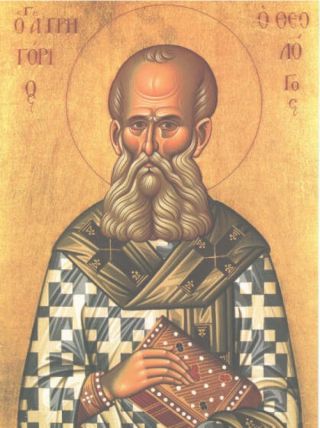
The Orthodox Church has a rich history and tradition. This is evident in its magnificent Byzantine heritage, which gave birth to saints and theologians of the calibre of Gregory of Nazianzus (regarded as the greatest theologian of the 4th century) and Maximus the Confessor, who “stands out as the most productive and significant theological figure in either eastern or western Christendom during the seventh century” (these are the words of two Australian scholars, Bronwen Neil and Pauline Allen).
It was during this ‘Age of the Church Fathers’ that the seven Ecumenical Councils were held, which defined the essential tenets of the Christian faith, as in the Creed still recited today that begins: “We believe in one God, the Father Almighty, maker of heaven and earth, and of all things visible and invisible.”
The Byzantine period also witnessed the flowering of religious iconography and architecture, the creation of moving and inspiring liturgical music and poetry, the rise of a deeply spiritual monastic culture, and the spread of Christianity beyond the borders of Byzantium – beginning with the 9th-century Apostles of the Slavs, the two Greek brothers from Thessaloniki, Cyril and Methodius. Soon after Bulgaria, Serbia and Russia converted to Orthodoxy, and later Romania did too. But at the same time something tragic was taking place within the Byzantine Church.
It was becoming more and more estranged from the Western, Latin-speaking Church, to the point where in 1054 Pope Leo IX and Constantinople’s Patriarch Michael Cerularius mutually excommunicated each other. (The anathemas of 1054 were mutually withdrawn only in 1965.) On top of this, the Byzantine Empire was falling into decline, and from the late 14th century to the mid-15th century the historic Orthodox dominions of the Byzantine Empire were conquered by the Ottomans.
The Orthodox Church now lived “in the shadow of the mosque”, to use Sidney Griffith’s phrase. Under Ottoman occupation, the Church could only hope to survive rather than to thrive. This had far-reaching consequences: ecclesiastical and theological development was halted for centuries, giving rise to conservatism as well as nationalism. Bishops were now compelled to take up the role of government officials, the Patriarch became the ethnarch, and the church became indistinguishable from the nation. In its struggle to survive under oppressive conditions, the church inevitably cultivated a ‘siege mentality’, a feeling of defensiveness and victimisation, which was repeated when the church was again persecuted in the twentieth-century, this time by communist regimes in Russia and Eastern Europe.
The Orthodox Church today is largely free of such persecution, and it constitutes the third-largest Christian denomination in the world. In fact, Orthodoxy has become globalised over the last century due to emigration from the Orthodox ‘heartland’ (mainly the former Byzantine, Ottoman, and Russian imperial lands) to western Europe, the United States, Canada, and of course Australia.
More recently, missionary activity has bolstered Orthodoxy’s presence in East Asia and Africa. This makes Orthodoxy truly ‘global’, existing and evolving in diverse and pluralistic contexts. But the spread of Orthodoxy, especially to secular and technologically advanced countries like Australia, also introduces many challenges.
How has the church fared? How has it met these challenges of a modern and postmodern world? Is the church, as some have argued, still stuck in Byzantium, pining for a lost world of Byzantine order and splendour? One of the challenges faced by the Orthodox Church today is democracy. In modern liberal democracies, sovereign power resides in the people as a whole, and with this comes great emphasis on personal autonomy, equality, justice, fairness, inclusivity, participation, and diversity.
The Orthodox Church, however, has grown out of a political system that was theocratic, not democratic. In the Byzantine Empire, religious intolerance, coercion and persecution were commonplace, and there was no attempt to foster religious pluralism.
This raises the question: is Orthodoxy compatible with democracy? Samuel Huntington infamously stated in The Clash of Civilisations that Europe ends where Western Christianity ends and Islam and Orthodoxy begin. I think Huntington was wrong. Even though Orthodoxy was formed within a political context in which democracy had no meaning, there are resources within the Orthodox tradition that would allow it to give unequivocal support to democratic principles. But giving support to democratic principles is not enough; these principles must also be applied to the church itself. Applying the values of democracy to the church might require (among other things): the recognition of the fundamental equality of all members of the People of God and therefore a more inclusive approach towards the laity; allowing clergy and laity to take part in the election of bishops; encouraging diversity, and even dissent; and an openness to dialogue with other faiths.
Another challenge faced by the Orthodox Church is nationalism or ethnocentrism, especially the identification of ‘Greekness’ with Orthodoxy. This is not only a problem in Greece, where the church remains closely tied to the state, but also in countries like Australia where there is a sizeable Greek diaspora. It is understandable that the main priority of each Orthodox church in Australia (Greek, Russian, Serbian, etc.) has been to care for its expatriate community and to preserve the ‘home’ culture. But in being (administratively) divided along ethnic lines, the unity of the Church is compromised and its capacity to effectively preach the Gospel to the entire Australian community is diminished.






 STUDIO 3 NEWCASTLE AUSTRALIA