Monthly Archives: April 2014

Boeing 777: Νέα ηχητικά σήματα, ελπίδα για τα μαύρα κουτιά

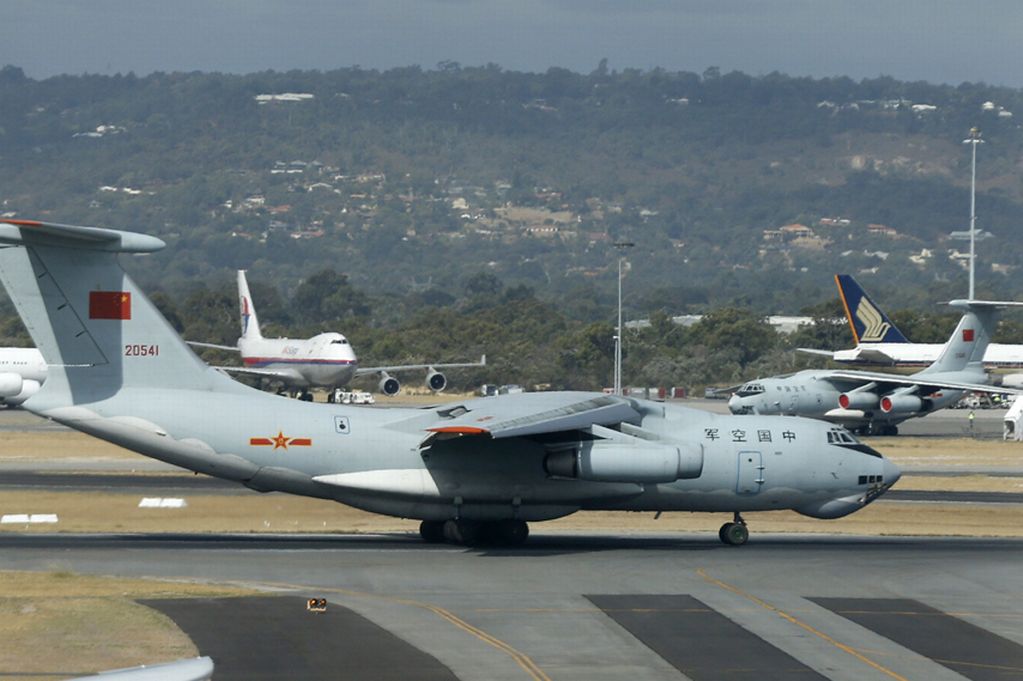
CS59614767A-Chinese-Air-For-3377393

Αυστραλιανό πλοίο που συμμετέχει στις έρευνες για το αγνοούμενο Boeing 777 των Μαλαισιανών Αερογραμμών εντόπισε δύο νέα ηχητικά σήματα που παραπέμπουν στα μαύρα κουτιά του Boeing 777, ανακοίνωσαν οι αυστραλιανές αρχές.

Ο πτέραρχος εν αποστρατεία Άνγκους Χιούστον, ο επικεφαλής της αυστραλιανής υπηρεσίας που συντονίζει την έρευνα για τον εντοπισμό της πτήσης MH370, περιέγραψε την εξέλιξη αυτή ως «την πιο πολλά υποσχόμενη μέχρι στιγμής» στην επιχείρηση αναζήτησης του αεροσκάφους.

Πηγή: madata.gr

SYRIZA in lead, poll states

syriza

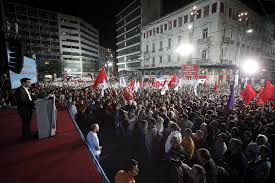
New Democracy on rise but SYRIZA in lead for May vote, poll shows.

Despite a rise of 2.2 percentage points in two months, New Democracy trailed SYRIZA in a March opinion poll published in Eleftherotypia newspaper this week.

The survey for May’s European Parliament elections put the leftists in the lead on 21.8 percent, virtually unchanged from February, and New Democracy in second on 19.7 per cent.

Golden Dawn was third with 7.6 percent, followed by To Potami (The River) on 6.4, the Communist Party on 5.2, Olive Tree alliance on 4.3, Independent Greeks on 4.2 and Democratic Left on 3.1.

The poll, however, also indicated that none of the parties have convinced voters they are able to tackle the country’s problems.

Only two in 10 respondents had a positive view of the New Democracy-PASOK coalition, while 68.9 percent of those questioned believe that SYRIZA would not be able to change the terms of Greece’s bailout and implement a different economic policy.

Source: Kathimerini / Eleftherotypia

Growth, not debt write-off, is the key

imagesWY7ZHM39

Efforts of Greece and creditors should be focused on expanding the country’s economy in the long term.

Greece has surprised many pundits by achieving a bigger-than-estimated primary budget surplus last year but it has a long way to go to reach a much higher level consistent with sustainable debt.

However, relying on fiscal orthodoxy to bring the debt ratio down to Maastricht levels is a risky route. It is not favorable to growth and is vulnerable to external and internal shocks – as recent political developments have demonstrated. Therefore, the government and the eurozone creditors should come up with a credible plan to boost economic growth in the medium term and deal more effectively with the debt overhang. Germany and Chancellor Merkel could play a constructive role to this extent.

It is not easy but it is possible for the Greek gross general government debt ratio to be reduced to a targeted 124 percent of GDP in 2020, as envisaged by the finance ministers of eurozone members in November 2012, from more than 170 percent last year. It requires that Greece attains a primary surplus of around 4 to 4.5 percent of GDP in 2016 and keeps it around that level for several years.

Having state revenues exceed spending, excluding interest payments, by about 9 billion euros in 2016 and beyond is a tall order. That said, last year’s 2.5- to 3-billion-euro surplus indicates it is possible, even if one takes out one-off items, given the GDP contraction by a revised 3.9 percent.

It should be noted that the 2013 figure does not include money spent for the recapitalization of Greek banks. There is another way to look at it by focusing on the primary balance adjusted for the ups and downs of the economy, the so-called structural or cyclically adjusted primary balance.

The European Commission has projected that Greece will post a primary surplus in excess of 7 percent of potential GDP in 2014 and above 6 percent in 2015, that is, if its economy is working on all cylinders. Prior to the crisis, the potential GDP growth was estimated between 2.5 and 3.5 percent but it must have come down since then and likely stands somewhere between 1.5 and 2.5 percent now. Assuming the economy picks up steam and grows by 3 percent annually or more from 2016 on, projected in the program, Greece can produce a primary surplus of 9 billion euros or 4-4.5 percent of GDP.

However, this is a risky route since any adverse external – i.e. recession in the eurozone – or internal events – i.e. politics – could derail the fiscal consolidation enough to miss the surplus target. This is more so since the process is supposed to last several years and entails the transfer of fiscal resources to the servicing of public debt, which is unlikely to be favorable for growth. In addition, this approach entails a long period of high debt ratios. It is therefore necessary that fiscal consolidation is supplemented by other means to deal effectively with the debt overhang.

It would be unrealistic to expect the ECB to make things easier for Greece or other debtors by setting a higher inflation target given German opposition to such a move. It is also unrealistic to expect a haircut on the Greek nominal debt since some creditors oppose it fiercely. It is, however, reasonable to expect that the Eurogroup will make good on its November 2012 promise for measures to provide debt relief. This will likely take the form of lower interest rates on the EU bilateral loans (GLF) of the first bailout, amounting to 52.9 billion euros, and the extension of maturities. It would be helpful in somewhat cutting annual interest payments and postponing the repayment of principal but it will not be effective in tackling the debt overhang issue.

Fiscal orthodoxy and the expected debt relief measures, however welcome, will not be enough to cut the Greek debt-to-GDP ratio drastically and drive it down to the Maastricht criterion of 60 percent in the long-run. So, the strategy should be supplemented by an investment plan to boost growth. This cannot be a Greek affair alone since there will not be enough resources from local banks, even after the second round of capital increases, and other domestic institutions to fund the projects.

Visiting Chancellor Merkel’s help in mobilizing available EU resources via the EIB and others, to fund such a plan, resembling the post-war Marshall Plan, in Greece and other southern countries, could boost growth rates, especially if it targets investments in tradable goods and services to prop up exports. This would also be good for northern countries since rising living standards in Greece and other countries, following the severe economic downturn, will make it possible for them to export more. Of course, such plans are easier said than done, as the recent experience with the Institute for Growth (IfG) illustrates. The latter, in which foreign banks such as Germany’s KfW and potentially the EIB along with Greek private investors would participate in its capital, has yet to operate. IfG, also called the Greek growth or investment fund, was supposed to already be up and running, providing mainly cheaper funding to small and medium-sized firms.

Fiscal consolidation is necessary for debt-ridden countries like Greece. However, history shoes us that large debt-to-GDP ratio reductions have relied more on growth rates and low borrowing costs than budgetary discipline. This is more so when the required primary surpluses to drive the debt ratio down are sizeable and have to persist for many years. Given the creditors’ unwillingness to write down the Greek public debt, the next best course of action is to boost growth via a major investment plan. Chancellor Merkel can be instrumental in this.

Source: Kathimerini

The end of Alexander Downer’s Cyprus adventure


downer

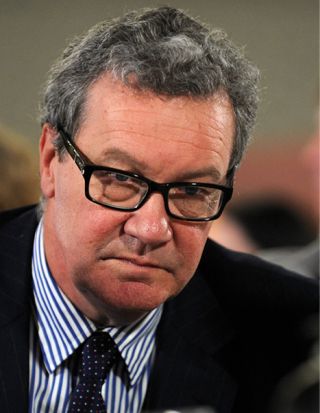
Structural obstacles, not Downer, are impeding a solution to the Cyprus problem.

Michalis S. Michael

My first foray with Alexander Downer occurred back in 1994 when, as Leader of the Federal Opposition, we were pitted to debate, through the columns of Neos Kosmos’ New Generation, why Australia should (he argued not) become a republic. The second time our paths crossed was when – by then – Australia’s longest serving foreign minister, Downer, was appointed as the UN Secretary General’s Special Envoy on Cyprus in 2008. His South Australia office rang me requesting a recent research article I published on the Cyprus Peace Talks. This was followed with subsequent requests for both editions of my book Resolving the Cyprus Conflict: Negotiating History (Palgrave Macmillan, 2009 & 2011). I found that nothing excites academics more than the alluring belief that their work might influence policy making and shape history – whether Downer did, or did not, is a very ephemeral presumption on anyone’s behalf.

However, my first actual meeting with Downer was over a steak and a good red (I, like a good child of the working class, opted for the local KEO brew as my beverage of choice) at Nicosia’s Hilton Fontana Restaurant on 23 June 2010. Joined by Australia’s High Commissioner Mr Evan Williams, this was a most revealing and light-hearted conversation. By then, caustic headlines had begun to saturate the predominantly, but not exclusively, Greek Cypriot media (i.e. ‘Greek Cypriots’ anger at ‘biased’ Downer’, The Age, 22/2/2010). He remained utterly undeterred. He was not “here to win a popularity contest”. He was not seeking public office nor was he a practicing politician seeking re-election. He was there to push ahead and in a very robust, tenacious and matter-of-fact Aussie way to get the two sides to agree to a settlement. Alas, dear Alexander, if only the Cyprus problem was that uncomplicated.

In a way it’s very easy to ‘pick on’ Downer. His demeanour and his readiness to be open and frank (especially with the media) – frequently landed him in many-an-undiplomatic remark (considered margaritaria [pearly gems] by most eager news-seeking reporters) that he needed to climb back from. By the end of his tenure, Downer’s relationship with the Greek Cypriots, in particular, had all but dissipated.

Until Downer took over the thankless task of the UN SG’s special envoy to Cyprus – for ‘blessed (may be) the peacemakers’ (Matthew 5:9) but let me assure you they are often scorned upon by those they are trying to reconcile – Australia’s reputation in Cyprus was pretty good. This was largely due to the diligent, good nature and impartial role of the Australian police contingent serving with UNFICYP since 1964 and the good fortune to have had very first-rate, accessible and earnest High Commissioners in Nicosia. I suppose Downer began with gusto – manoeuvring in the shadows of the Annan plan and the 2004 referendum – honestly believing that the threads were there to bring it all together and settle this long protracted problem by way of some old fashion Australian robust pragmatism (a can-do attitude – not quite the American jingoism of Nike’s “Just do it” or their penchant for sloganeering such as Obama’s “Yes we can”). And while he rightly assessed the power relationships involving the various parties – in particular focusing on Ankara as the main decision maker on the Turkish side – and that it had to be an indigenous “Cypriot-owned, Cypriot-led process and solution” to even have a chance of getting up – he nevertheless faulted in comprehending the potency of the internal political front within each side – what is known in the conflict resolution parlour as the ‘negotiator’s dilemma’: meaning that the intra-communal process is as significant as the actual inter-communal negotiations in successfully reaching a mediated settlement. But to be fair to Downer this is something that all negotiators and third party mediators have failed to apprehend.

Assessments of Downer’s foray into the Cyprus conflict have been mixed: ranging from Dr Andrekos Varnavas’ 2010 astute observations to more scathing annotations such as those from Panteio University’s Prof Mario’s Evriviades – roughly corresponding to the two ideological narratives that have dominated Greek Cypriot discourse as far back as 1878 when British colonialism and modernity arrived in Cyprus (invariably many binary adjectives have been used to describe them including: accommodationalists-rejectionalists, moderates-hardliners, pragmatists-militants). However, there is always a tendency to exaggerate the role that personalities can – or cannot – play in these situations. For sure leadership is an imperative factor for change and continuity in developments, but I rather subscribe to more structuralist factors and determinist renditions of causation. Structural problems/obstacles, not Downer (και “ο κάθε Downer”), are what is impeding a solution to the Cyprus problem.

Finally, when all is said and done, I think that after six years, Downer – like so many before him – got tired and frustrated over the gridlock that is the Cyprus problem and with a new Coalition federal government in Australia, fresh opportunities beckon for ‘young’ Downer on his illustrious post-parliamentary adventures – including a return to his old stomping grounds, the UK, as Australia’s High Commissioner.

*Dr Michalis S. Michael is deputy director for the Centre of Dialogue and senior research fellow at La Trobe University in Melbourne.

source: Neos Kosmos

Sinodinos grilled at ICAC

sinodinosicac01

Senator Arthur Sinodinos leaves the ICAC hearing after giving evidence on Thursday. Photo: AAP/Dan Himbrechts


‘Door-opener’ role at Australian Water Holdings the fundamental question.

Arthur Sinodinos’ six-hour testimony before the NSW Independent Commission Against Corruption (ICAC) – over his time on the board of Australian Water Holdings (AWH) – left the former assistant treasurer’s actions open to question this week – after he admitted he did nothing to investigate why a company he chaired was charging exorbitant expenses to the state utility Sydney Water.

The ICAC inquiry is looking into AWH and its links to disgraced ex-Labor MP Eddie Obeid, and heard that Mr Sinodinos – a former AWH director and NSW Liberal Party treasurer – stood to make up to $20 million if AWH won a lucrative contract with Sydney Water.

During his appearance at the inquiry on Thursday he was asked to defend what he did to earn an alleged $200,000 salary from AWH for undertaking between 25 and 45 hours of work a year.

Mr Sinodinos told the hearing that he was not brought into the company as a financial officer or political lobbyist but “in a business sense…as a door-opener.”
AWH paid $72,000 in donations to the NSW Liberal Party when the Senator was on its board, which he also denied knowledge of.

In testimony punctuated by either “I don’t recall” or “I don’t recollect”, Senator Sinodinos said he had no knowledge of many of the intricate workings of AWH’s business dealings, and that for three years his friend and Liberal fundraiser Paul Nicolaou was on a monthly retainer of $5000 to lobby on behalf of AWH.
Evidence presented to the inquiry suggests that three Liberal-aligned lobbying companies were receiving $17,000 a month from AWH while Mr Sinodinos was a director, at a time when the company was hard-pushed to meet obligations to pay tax and superannuation.

Without the inquiry’s findings presenting a complete vindication of Senator Sinodinos’ actions at AWH, the damage to his political ambitions could be irreversible. A return to cabinet for one of the Liberal’s most articulate power brokers may be a long way off.
The ICAC inquiry is likely to run until the end of next week.

source: Neos Kosmos

Malaysia Airlines MH370: authorities ‘very close’ to finding missing plane

Malaysia_MH370_pin_2874038b

Australian search co-ordinator optimisitic of locating MH370 after navy ship detected pulse signals believed to be from the aircraft’s black box pinger

Authorities say they are “very close” to finding the missing Malaysian Airlines plane after an Australian ship detected pulse signals – believed to be from the aircraft’s black box pinger – which lasted for two hours and twenty minutes.

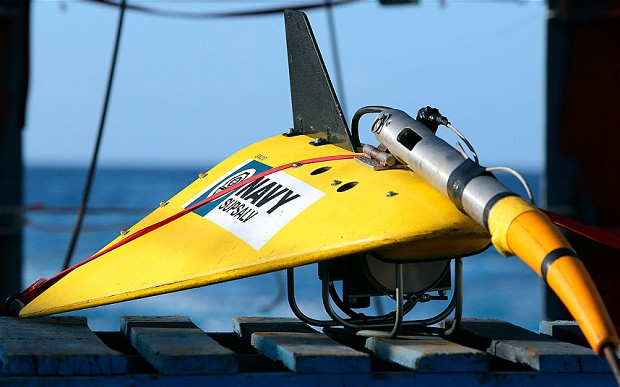
Angus Houston, who is co-ordinating the multinational search, said Australia’s Ocean Shield heard a second batch of signals several hours later for 13 minutes but lost contact about 24 hours ago and is trying to relocate the pulses. The signals “sound just like an emergency locator beacon” and are believed to have been emitted from a pinger attached to the plane’s black box, he said.

“We are encouraged that we are very close to where we need to be,” he said.

“In the search so far it is probably the best information we have had… We are trying to fix the position on the basis of the transmissions… I would want more information before we say ’this is it’.”

Mr Houston, a former Australian defence chief, said it would probably take days to confirm whether the plane has been found and a potential subsequent recovery of the aircraft would take a “long long time”, possibly months. Authorities have not confirmed whether the signals tally with those recently heard by a Chinese ship, which is further south.

Mr Houston said the area in the Indian Ocean where the plane is believed to be located is 14,800 feet deep. An underwater autonomous vehicle will be dispatched to comb the ocean bed for possible wreckage but its depth limit is also 14,800 feet.

“This is very deep water – we are right on the edge of capability,” he said.

“What I would like to see now is to find some wreckage. That would help solve the mystery. Without wreckage, we can’t say it is definitely here. We have to go down and have a look.”

The black box pinger lasts 30 days before it runs out of battery life though it may last a further two weeks. The plane, carrying 239 passengers, disappeared on March 8, which means the pinging may already be fading.

“This is not the end of the search,” he said. “We still have a lot of difficult painstaking work to do to confirm that this is where the aircraft entered the water. We need more evidence.”

source: telegraph.co.uk

Liverpool’s Steven Gerrard sinks West Ham from spot in game of controversy

Steven Gerrard West Ham United v Liverpool - Premier League

Not for the first time, Liverpool could be grateful to Steven Gerrard for his nerveless precision from the spot. The captain scored his 10th and 11th penalties of the season in all competitions as his club maintained their Premier League title challenge and made light of a remarkable refereeing blunder into the bargain.

One of the principal talking points of a dramatic afternoon came at the end of the first half when Andy Carroll, West Ham’s former Liverpool striker, who was on a mission to prove and score points against his old side, clouted the visiting goalkeeper, Simon Mignolet, following Mark Noble’s corner. Guy Demel duly flicked home his first goal in West Ham colours but the linesman, Stuart Burt, was flagging. The goal looked set to be disallowed. Yet, after a lengthy conversation with Burt, the referee, Anthony Taylor, overruled him. West Ham were level. Taylor happens to hail from Manchester; cue Liverpudlian conspiracies.

Gerrard, however, cut through them when he blasted in the second penalty – his 10th successful conversion of the league campaign – and it was West Ham that were left to spit the feathers over the other big discussion point even if, on balance, Liverpool were value for the victory. Despite a disciplined performance, West Ham did not do enough in the final third.

Sam Allardyce and everybody with West Ham in their hearts – or, indeed, Chelsea and Manchester City – could not believe that Taylor chose to penalise Adrián, the West Ham goalkeeper, for bringing down Jon Flanagan, after the Liverpool full-back had nicked the ball in front of him inside the area. It was a close call and Brendan Rodgers, the Liverpool manager, admitted that it was one of those which tended to feel a “wee bit contentious” when they went against you. Rodgers also suggested that Taylor was “chasing the game” after the controversy of the West Ham equaliser. Adrián did make contact with the ball as the players initially came together but, as Flanagan continued to try to reach it, the goalkeeper grabbed at his foot.

The arguments raged at the time and long into the night while there were boos from the Upton Park crowd upon the final whistle. Allardyce’s anger was fuelled, in part, by the fact a committed performance had yielded nothing; West Ham did carry the fight to Liverpool, particularly in the first half. But Allardyce appeared to undermine his arguments about injustice when he agreed that Demel’s equaliser ought not to have stood. He seemed more preoccupied with simply complaining about the officials.

This was not a vintage performance from Liverpool, even if they looked better after Rodgers switched from 4-3-3 to a diamond midfield at half-time. They only cut loose in an attacking sense after Gerrard’s second penalty but it was nevertheless a ninth consecutive league victory and the excitement around the club, as they eye a first championship since 1990, is palpable.

The visit of City to Anfield next Sunday has all the hallmarks of a title decider and it was interesting to hear Rodgers lay the psychological groundwork, when he talked of the money that City had spent in order to win the league and the Champions League. But his team, as he acknowledged, is playing without any inhibitions.

This was a gutsy win, in which West Ham’s physical power had to be contained, and it came not only from Carroll but Mohamed Diamé, who drove inside from the flank and the central defenders, Winston Reid and James Tomkins. Carroll’s duel with Martin Skrtel was box-office stuff.

Liverpool were content to punch on the counter, to harness the pace and quicksilver quality in their ranks and they flickered, mainly through Luis Suárez. The opening goal came on the break, following a direct ball from Gerrard and Suárez was central to it. Tomkins had played him well up to that point, even if the Uruguayan had managed to wriggle clear of the West Ham defence to bend a 20th-minute shot against the crossbar, but the home team did not escape when he darted on to Gerrard’s pass and touched inside Tomkins. The defender left his hand out, the ball struck it and it was an obvious award.

Up stepped Gerrard and up flashed the Sky TV graphic on both of the stadium’s big screens about where the Liverpool captain had placed his most recent penalties, which was weird, even if Adrián surely had to be pre-armed with that kind of information. Gerrard still sent him the wrong way, planting the kick low into the bottom right-hand corner.

West Ham fought back. Literally. It felt inconceivable that Taylor could not see Carroll leading with his arm to clump Mignolet on the head but Demel’s goal would stand. Carroll almost got the goal he craved on 61 minutes only for his header from Diamé’s cross to thump against the crossbar and the game turned again on the second penalty, which Gerrard hammered into the other corner.

Liverpool might have embellished the final scoreline. Suárez hit the crossbar again with an impudent chip while he was also denied one-on-one by Adrián and the goalkeeper saved smartly from Raheem Sterling. Liverpool roll on.

source: theguardian.com

Second signal heard during search for black box from missing Malaysia Airlines flight MH370

993283-dbfa45ec-bd31-11e3-8d13-11191f4f4fe3

Hopes of breakthrough … Chinese vessel the Haixun 01 detected the signal hours after it picked up an initial pulse signal. Source: AFP


NEW satellite calculations have put the likely location of Malaysia Airlines Flight MH370 in the same spot where Chinese patrol vessel Haixun 01 detected deep water acoustic sounds on two consecutive days.

In the strongest lead to date, Air Chief Marshall Angus Houston said the Haixun 01 picked up sounds coming from about 4,500m down, in two locations just two kilometres apart, on Friday and Saturday.

The searchers are seeking the jet’s two black boxes, the Cockpit Voice Recorder and the Flight Data Recorder. This has raised the possibility the Haixun 01 may have heard frequencies from the two separated boxes from a crashed and broken plane.

While Mr Houston viewed the developments as positive, he warned against any drawing any conclusions until the sounds had been properly evaluated.

He said the Australian Defence vessel Ocean Shield had also detected acoustic noises from its towed pinger locator yesterday mid-morning, in a more northern area.

But given the strength of the Chinese lead, Ocean Shield would likely be deployed to join Haixun 01 once it had fully investigated what it was picking up.

She and HMS Echo, which also has deep-sea listening equipment, would not likely arrive till later today or tomorrow, in a new search area which appears to be about 1500km west of Shark Bay.

This location coincides with new advice from experts calculating the plane’s likely flight path, now placing it slightly further south than they thought.

It is understood the revision is because they found issues with the satellite when it was receiving information from the flight as it headed wildly off-course on March 8.

The Chinese have reported seeing white objects floating about 90km from the new area.

News of Friday afternoon’s acoustic detection was released to the world by the Chinese government’s Xinhua news agency, via reporters on the boat.

Mr Houston, who is leading the Joint Agency Coordination Centre, agreed this was how he first heard about it.

The Australians approached the Chinese asking for more information.

“This morning we were contacted by the Chinese authorities and advised that Haixun 01 had late yesterday afternoon redetected the signals for 90 seconds within just two kilometres of the original section,” Mr Houston said.

He would not be drawn to criticising the Chinese method of information sharing, preferring to see it as a positive.

“This is an important and encouraging lead, but one which I urge you to treat carefully,” he said.

“Based on the new advice, the southern area (of the existing search zone, where Haixun 01 is operating) now has a higher priority.”

Air and sea searchers will converge on the Haixun 01 location today, with 10 military, two civil aircraft and 13 ships participating.

Neither Mr Houston nor the RAN’s Commodore Peter Leavy talked in terms of the vessels picking up frequencies at 37.5 kHz per second, which is the international standard beacon frequency for black boxes.


They instead talked of “fleeting acoustic events”. Mr Houston said Haixun 01 stayed in the area after hearing the first sound, and picked up a more sustained event lasting 90 seconds yesterday.

As the search entered Day 30 yesterday, the batteries in the black boxes are due to fail at any time, putting greater pressure on the multinational task force.

Pleading with the media not to draw conclusions that the plane had been found, Mr Houston said for the sake of families all information had to be treated as unverified until it was confirmed.

It has been a month since Malaysia Airlines flight 370 disappeared en route to Beijing with 239 people on board.


Time running out to find black box

Batteries in the Malaysia Airlines 777’s two black boxes are due to expire today or tomorrow.

Australian planes may be sent to the southern Indian Ocean search area where the “pulse signal” was detected.

But the Australian team leading the international search has warned there is no confirmed link to the missing Malaysia Airlines plane.

Late yesterday it was reported by the Xinhua News Agency — apparently from Chinese reporters on the vessel — that a 15 second pulse was picked up at around 4.30pm.

The pulse was reportedly emitting pulses every second at 37.5kHz — the international standard beacon frequency for black boxes.

The Malaysia Airlines jet had two black boxes aboard, the Cockpit Voice Recorder and the Flight Data Recorder.

It would be expected that a boat such as Haixun 01, which is thought to have a hull-mounted beacon-listening device, would initially pick up a signal and then lose it as it passed over the location. It would then retrace its steps to refine the location.

The JACC did not say whether the Australian Defence support vessel Ocean Shield, which has been towing a pinger locator in areas east of the Haixun 01, will now be moved to Haixun’s location.

The location, which according to Xinhua is 25 degrees south latitude and 101 degrees east longitude, places it in a new area beneath and above areas that have already been searched, roughly 1500km west-north-west of Shark Bay.

Chinese naval vessels Jinggangshan and Kunlunshan have already joined up with Haixun 01. Now it remains to be seen if there will be a convergence of ships and planes on the area.

An update from Mr Houston could come at around 11am WST, if he has anything to add.

In an interview with News Corp yesterday, prior to the Xinhua report, the mission commander on the Ocean Shield, James Lybrand, said it was to be expected that if a boat picked up black box signals, the sound would quickly fade as the ship moved away.

It would then be required to turn back over the search area and “localise” the frequency emissions, which could take many hours.


Commander Lybrand said yesterday there was “negligible” chance any pings at 37.5kHz was from biological sources, such as whales, and would almost certainly be from one of the two black boxes.

These sounds, or pulses, cannot be heard with human ears.

Shanghai-based Xinmin Evening News cited its reporter on board the patrol ship as reporting that the ship’s crew had “basically confirmed” that the signal was from the missing Boeing 777-200.

However, experts have cautioned that the same signal could come from “a variety of things”.

“It could be a false signal,” oceanographer Simon Boxall told CNN. “We’ve had a lot of red herrings, hyperbole on this whole search.”

The view is not necessarily shared by searchers, who believe the beacon frequencies are too distinctive to be confused for anything else.

If the signals do turn out to be from the black boxes, the priority will be to narrow the location to as small an area as possible, and then to send an automated underwater vehicle (AUV) down.

It is not clear whether the Chinese have such a vessel, but the Ocean Shield does. It can take high-resolution images and has robotic arms that would be able to grab the black boxes if they were accessible.

The AUV would be controlled by underwater search experts from private firm Phoenix International, who are aboard the Ocean Shield with RAN, and the US Navy’s Supervisor of Salvage.

It would also be likely the British sub MHS Tireless, which is operating in the search zone, would also be sent to the area if it was determined the pulses were a credible lead.

Mr Houston said last night that its rescue coordination centre was now in contact with the Chinese searchers.

“The RCC in Australia has spoken to the RCC in China and asked for any further information that may be relevant,” he said last night.

“The deployment of RAAF assets to the area where the Chinese ship detected the sounds is being considered. I will provide further updates if, and when, more information becomes available.”

It has been a month since Malaysia Airlines flight 370 disappeared en route to Beijing on March 8 with 239 people on board.

Up to 10 military planes, three civilian jets and 11 ships have been scouring a 217,000-sq-km of ocean northwest of Perth near where investigators have hypothesised the plane went down.

Australian Defence Minister David Johnston was asked last night about Chinese reports during a live cross on ABC24 for the WA Senate election.

“I know nothing. I don’t want to confirm anything because I think there has been a lot of this sort of false positives,” Senator Johnston said.

“Let’s wait until we have an official release.

“But look, I’m excited, I’m optimistic, but let me tell you it’s a very, very big ocean out there and up until this time, we’ve had a lot of disappointment.”

source: news.com.au

Πεντάρα η Ελλάς Μελβούρνης στο Γκριν Green Gully

hellas

Από τον χθεσινό αγώνα


Παρελθόν είναι πλέον ο κακός δαίμονας της ελληνικής ομάδας το Γκριν Γκάλι το οποίο πάντα στο γήπεδό του της έκοβε βαθμούς.

Το περασμένο Σάββατο η South Melbourne έκανε επίδειξη σε όλες τις γραμμές της και φιλοδώρησε τους γηπεδούχους με πέντε τέρματα και με τελικό σκορ 3-5!΄
Έτσι έκανε 3 στα 3 με 9 βαθμούς και τέρματα 11-5 που δείχνει καθαρά ότι τόσο η επίθεσή της όσο και η άμυνά της δουλεύουν σωστά.

Στο α’ μέρος η κυανόλευκη ομάδα προηγήθηκε 0-4 με τον Milos Lujic να κάνει το χατ τρικ με τρία τέρματα και να συμπληρώνει ο Reed.
Στην επανάληψη το Γκριν Γκάλλι πέρασε  στην επίθεση και μείωσε σε 2-4… αλλά στο 75’ και 77’ δύο παίκτες των γηπεδούχων (ο ένας ήταν ο τερματοφύλακας) είδαν  κόκκινη κάρτα για να μείνουν εννέα που όμως μπαίνοντας στις καθυστερήσεις μείωσαν σε 3-4 και μπήκαν στο παιγνίδι.

Με ένα ακόμη τέρμα που πέτυχε ο Reed στο 95’  το τελικό  αποτέλεσμα έφτασε στο 3-5 βρίσκοντας την ελληνική ομάδα νικήτρια και να φτάνει το 3 στα 3 που δίκαια είναι και πρωτοπόρος στην βαθμολογία.

Αυστραλία: Το «Έβερεστ» μιας 78χρονης Ελληνίδας

sydney%20harbour_1

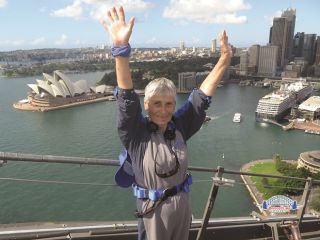
Η Βασιλική Σερβίνη κατακτώντας το δικό της “Έβερεστ”


Ανέβηκε στη γέφυρα του Σίδνεϊ για να γιορτάσει τα γενέθλια του γιου της.

Ποιος είπε ότι μόνο οι νέοι είναι τολμηροί. Μια ευχάριστη έκπληξη και μια καταπληκτική εμπειρία περίμενε την 78χρονη κ. Βασιλική Σερβίνη την περασμένη Παρασκευή.
Ο γιος της ο Θωμάς θα γιόρταζε την Κυριακή, 30 Μαρτίου, την 50ή επέτειο των γενεθλίων του και αποφάσισε να γιορτάσει το γεγονός κάπως διαφορετικά, τακτοποιώντας τα αεροπορικά εισιτήρια με προορισμό το Σίδνεϊ, την διαμονή και περιήγηση. Και για να δει η οικογένειά του κάθε ορίζοντα της πόλης στις καλύτερες στιγμές της, υπήρχε ένας συναρπαστικός τρόπος: η άνοδος στη γέφυρα του Σίδνεϊ (Sydney Harbour Bridge Climb). Η εμπειρία αυτή, πίστεψε ο Θωμάς, θα τους έδινε την καλύτερη δυνατή θέα, να δουν για παράδειγμα την περίφημη Όπερα του Σίδνεϊ καθώς και να απολαύσουν μια πανοραμική θέα ολόκληρης της περιοχής στο κέντρο της πόλης. Δεν έπεσε έξω με τους υπολογισμούς του.

Ανέβηκε με τόλμη τη γέφυρα του Σίδνεϊ, περίπου 2,5 ώρες ανάβασης και κατάβασης. Χρειάστηκε περίπου μία ώρα για να φτάσει στην κορυφή αυτού του εικονικού συμβόλου το οποίο έχει 134 μέτρα ύψος. Ο οδηγός και ξεναγός, που ήταν παρών καθ’ όλη τη διάρκεια της επιχείρησης, σχολίασε την αντοχή και τόλμη της κυρίας Βασιλικής με τον χαρακτηρισμό ότι «ανέβαινε σαν το κατσικάκι του βουνού».

Η κ. Βασιλική, το δεύτερο κορίτσι μιας οικογένειας με πέντε παιδιά, άφησε το 1958 και σε ηλικία 21 ετών τα πάτρια εδάφη, στην Κάτω Καλλινίκη Φλώρινας, και ταξιδεύοντας με το πλοίο «Ariel», έφτασε στη Μελβούρνη τo 1958, για να συναντήσει και να παντρευτεί τον αείμνηστο τώρα σύζυγό της, Αλέξανδρο, που είχε έρθει εδώ το 1956. Από τον γάμο τους απέκτησαν δύο παιδιά, τον Θωμά και την Μαίρη, που τα λατρεύει κυριολεκτικά και είναι πολύ περήφανη γι’ αυτά.
Δύσκολες εποχές τότε, αφοσιώθηκε στην εργασία και την οικογένειά της και δεν τής δόθηκε ποτέ η ευκαιρία να ταξιδέψει. Ήταν, όπως είπε, το πρώτο της αεροπορικό ταξίδι με την Qantas και η πρώτη της εξόρμηση εκτός Μελβούρνης.

Θα της μείνει, όντως, αξέχαστη η καταπληκτική αυτή εμπειρία και μίλησε με θαυμασμό και αγάπη για τα παιδιά της.
Εμείς, με τη σειρά μας, της ευχόμαστε υγεία, χαρές και πολλές άλλες εξορμήσεις.

Πηγή: Νέος Κόσμος