Monthly Archives: April 2014

Aυστραλία:Κάλεσμα Λιβέρη προς αποδήμους

shliveris02

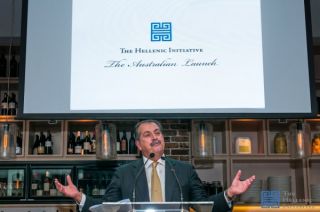
Στιγμιότυπο από την παρουσίαση των στόχων της «Ελληνικής Πρωτοβουλίας» σε εκδήλωση που έγινε πρόσφατα στο Σίδνεϊ


Τώρα που η Ελλάδα παίρνει τα πάνω της πρέπει να την στηρίξουμε.

«Η Ελλάδα  σήμερα αντιμετωπίζει πλέον όλες τις προκλήσεις με επιτυχία» υποστήριξε ένας από τους ισχυρότερους Έλληνες ομογενείς  ο Ελληνοαυστραλός, Ανδρέας Λιβέρης, παρουσιάζοντας και στην Αυστραλία τους στόχους της «Ελληνικής Πρωτοβουλίας».

Πρόεδρος της εταιρείας Dow Chemicals, μιας από τις μεγαλύτερες εταιρείες χημικών στον κόσμο, ο κ. Λιβέρης βρέθηκε  στο Σίδνεϊ για την προεκτείνει  την πρωτοβουλία των οικονομικά ισχυρότερων Ελλήνων της διασποράς, που, μεταξύ άλλων, στόχο  έχει διοχετεύσει πόρους στην Ελλάδα για να ενισχύσει την επιχειρηματικότητα. Ο  κ. Λιβέρης, επικεφαλής αυτής της προσπάθειας,  λέει πως τώρα που η Ελλάδα ετοιμάζεται να βγει στις αγορές επιβάλλεται η προσπάθεια της να στηριχτεί και από τους απόδημους.
«Αν δεν το κάνουμε εμείς, τότε ποιοι θα το κάνουν;» διερωτήθηκε και πρόσθεσε πως οι στόχοι της «Ελληνικής Πρωτοβουλίας» είναι μακροπρόθεσμοι.

«Εμείς», είπε, «εστιάζουμε την προσοχή μας μέχρι την Ελλάδα του 2050. Αυτή η πρωτοβουλία δεν είναι του ενός μηνός.  Είναι μία πρωτοβουλία  δεκαετιών».
Στην εκδήλωση παρευρέθηκαν πολυάριθμοι ομογενείς επιχειρηματίες από όλη την Αυστραλία αλλά και κάποιοι από τις ΗΠΑ.

Μεταξύ των ομιλητών  ήταν και ο υφυπουργός Εξωτερικών, Άκης Γεροντόπουλος, ο οποίος επισκέφθηκε πρόσφατα την Αυστραλία.

Πηγή: Νέος Κόσμος

Race Act: Shorten urges ethnic voices to be heard

bill shorten

Deeper concerns aired over Australia’s race laws.

Bill Shorten says the Abbott government is more likely to respond to grass-roots criticism than to Labor’s campaign to peg back changes to the Race Discrimination Act.

The Opposition Leader has called on communities with direct experience of racial vilification to make their voices heard during the consultation period for the legislation.

In a speech to the Zionist Federation of Australia last weekend, Mr Shorten spoke of his opposition to the government’s controversial revision of the Act, telling his audience that time was running out to persuade the Coalition to change tack.

Submissions concerning the current RDA exposure draft can be made by email to 18cconsulation@ag.gov.au and have to be submitted by April 30.
While urging people to oppose the government’s plans, Mr Shorten also warned against over-reaction, saying that he did not accuse the Prime Minister, Attorney-General George Brandis, or the cabinet of condoning racism or bigotry over their views.

Mr Shorten said the practical effect of the changes – which he has called a “seriously retrograde step” – needed to be uppermost in the debate.

While the lobby to keep current legal protections against racist speech has attracted most attention – the debate widened this week, with influential commentators suggesting people should look beyond the practical effects of repealing section 18C of the Act – which currently enables Australians to use litigation if they feel defamed (a course of action rarely used) – to the symbolism of the legislation.

Monash University lecturer Waleed Aly and Race Discrimination Commissioner Tim Soutphommasane, both writing in Fairfax Media, focused their objections to the government’s reforms on a deeper level.

Twenty years after the Act’s introduction, to suggest that the level of bigotry in Australia has been influenced by it, said Waleed Aly, is a furphy.
“We’re not exactly playing for cut-throat stakes,” said Mr Aly in his article, that took aim at the underlying anachronistic basis of Australia’s Race laws, and its emphasis on a white-dominated racial power hierarchy.

“Supporters of the Racial Discrimination Act are wrong if they insist it provides anything like substantial protection against racism. I’ve copped my share of racial abuse both in public and in private, and section 18C wasn’t ever going to do a damn thing about it,” added Aly.

Tim Soutphommasane said that he would allow for some clarification of the act – to make clear racial abuse is only unlawful if it causes “profound and serious effects”, as opposed to “mere slights”.

The Commissioner also suggested protection of free speech “conducted reasonably and in good faith” could be strengthened by changes to the Act.
But Soutphommasane warned that the proposed changes, by weakening legal protection against racial vilification, “would give legal sanction to the most serious forms of racial vilification if expressed in the course of participating in a public discussion.

“They would, I fear, embolden a minority with bigoted views to amplify their prejudice.”

The furore over repealing section 18 of the act has seen the government alter its position over the legislation. Adjusting the proposed changes in light of community concerns is now likely.

source: Neos Kosmos


Boeing 777: Ερευνούμε στη σωστή περιοχή


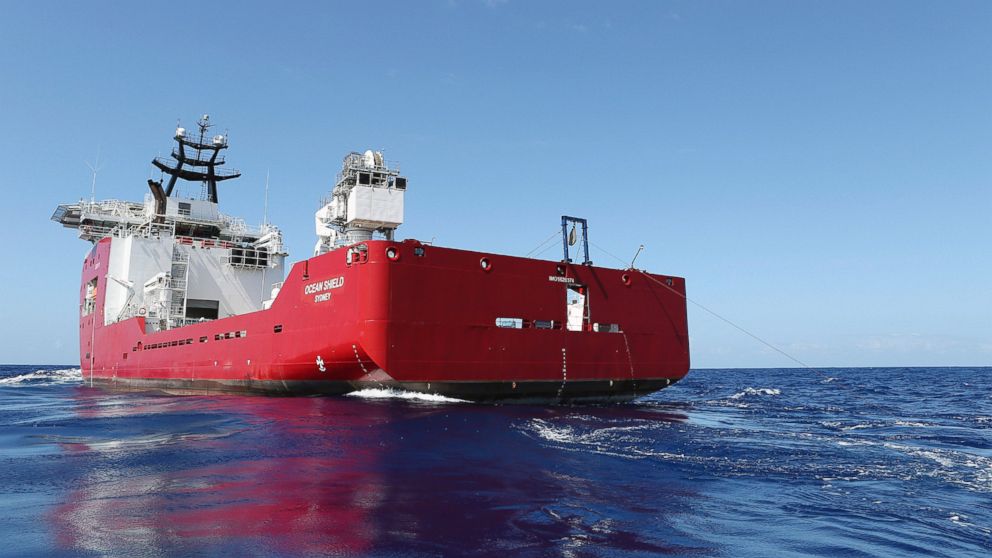
AP_Ocean_Shield_140408_DG_16x9_992Αυστραλοί αξιωματούχοι ανακοίνωσαν σήμερα ότι εντοπίστηκαν δύο νέα ηχητικά σήματα που μπορεί να προέρχονται από το μαύρο κουτί του αγνοούμενου αεροσκάφους της Malaysia Airlines, στο οποίο επέβαιναν 239 άτομα.

Ο Αυστραλός επικεφαλής των ερευνών Άνγκους Χιούστον είπε ότι το ένα σήμα εντοπίστηκε το μεσημέρι της Τρίτης και διήρκεσε πέντε λεπτά και 32 δευτερόλεπτα, ενώ ένα δεύτερο εντοπίστηκε χθες το βράδυ και διήρκεσε επτά λεπτά.

Το αυστραλιανό ερευνητικό πλοίο «Ocean Shield» εντόπισε δύο ηχητικά σήματα και το Σαββατοκύριακο – το ένα με διάρκεια μεγαλύτερη των δύο ωρών και το άλλο περίπου 13 λεπτών.

«Θεωρώ ότι ερευνούμε στη σωστή περιοχή, αλλά πρέπει να αναγνωρίσουμε οπτικά τα συντρίμμια του αεροσκάφους προτού επιβεβαιώσουμε ότι εδώ συνετρίβη η πτήση MH370», δήλωσε ο Χιούστον στους δημοσιογράφους στο Περθ.

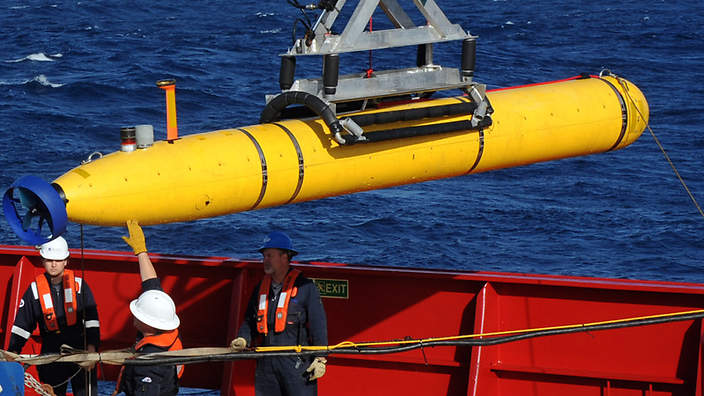
Όπως διευκρίνισε, τα νέα ηχητικά σήματα μπορεί να επιτρέψουν στις αρχές να περιορίσουν την έκταση της ζώνης ερευνών σε σημείο ώστε το μίνι μη επανδρωμένο υποβρύχιο Bluefin 21, το οποίο φέρει το «Ocean Shield», να αναζητήσει πλέον στον βυθό τα συντρίμμια του αεροσκάφους.

«Τώρα, ελπίζουμε ότι με τον εντοπισμό πολλών σημάτων θα περιοριστούμε σε μία μικρή περιοχή και αισιοδοξούμε ότι σε μερικές ημέρες θα μπορέσουμε να βρούμε κάτι στον βυθό», συμπλήρωσε.

Η ανάλυση των δεδομένων που κατέγραψαν δορυφόροι οδηγεί τους υπεύθυνους των ερευνών στο συμπέρασμα ότι το Boeing 777 κατέπεσε σε μία απομακρυσμένη περιοχή στον Ινδικό Ωκεανό κοντά στο Περθ.

Οι έρευνες τώρα έχουν επικεντρωθεί σε μία ζώνη περίπου 2.261 χιλιομέτρων βορειοδυτικά της συγκεκριμένης πόλης.

Το μαύρο κουτί αναμένεται να σταματήσει να εκπέμπει από μέρα σε μέρα.

ΠΗΓΗ: ΑΠΕ-ΜΠΕ

Search for Malaysian jet to be costliest in history

BOB_bluefin_800x600

KUALA LUMPUR, Malaysia: As the intensive hunt for Malaysia Airlines Flight 370 entered its second month on Tuesday, the only certainty was that it would become the most expensive search and recovery effort in aviation history, with an international fleet of ships and planes scouring the Indian Ocean at a cost of millions of dollars a day.

For the most part, the dozens of countries that have contributed personnel, equipment and expertise to the search have borne the costs while declining to disclose them, with officials offering a united front in saying it would be callous to talk about money while a commercial airliner and the 239 people aboard remained unaccounted for.

On Wednesday, officials reported that an underwater signal had been detected on two occasions the day before, reviving hopes that they still might locate the Boeing 777-200’s data and voice recorders. Still, many of the governments involved may soon face a tough decision about whether to keep bearing the extraordinary costs of the search, analysts said.

“Each country will have to ask itself: What are the prospects of further investigation and the cost-benefit of it?” said Ramon Navaratnam, chairman of the Center for Public Policy Studies at the Asian Strategy and Leadership Institute in Kuala Lumpur. “If there’s no prospect, there’s no prospect: We have to be very realistic. But it’s a very difficult to decision to make. It’s like someone on a medical support system and you have to determine whether to pull the wires or not.”

Until now, the costliest search and recovery effort ever undertaken followed the crash of Air France Flight 447 hundreds of miles off the coast of Brazil in 2009, reaching about 115 million euros, roughly $160 million at the time, over the course of two years, according to estimates by experts who participated in that effort.

But the search for Flight 370 is already far more complicated, and may have already topped that total. Some of the ships involved cost hundreds of thousands of dollars a day apiece to use, and some of the aircraft being used can cost thousands of dollars an hour each to operate, officials say.

While there is an international convention that determines responsibility for air accident investigations, there are no protocols or treaties that dictate who pays, experts said. The most likely case is that the countries and companies participating in the search for Flight 370 will bear their own costs, several analysts predicted.

Even if searchers are able to pinpoint wreckage from the plane soon, it would open another costly chapter, involving undersea exploration and possibly the recovery of parts of the plane, bodies and other evidence from depths of nearly three miles.

Angus Houston, an Australian who is the lead coordinator of the search, said that the recovery phase could in itself take “a long, long time,” measurable in months.

In the case of Air France Flight 447, the French agency that investigated the crash, the Bureau of Investigations and Analysis, spent about 32 million on the undersea search and the forensic investigation of debris.

The airline and the plane’s manufacturer, Airbus, together ended up covering about 16 million of those costs. The costs of the surface search were shared by the governments involved, including France, the United States and Brazil, which was also responsible for conducting autopsies of 50 of the passengers.

“At times this is done by specific states, and at others on a joint basis,” said Anthony Philbin, spokesman for the International Civil Aviation Organization, a United Nations group.

When TWA Flight 800 exploded off the coast of Long Island in 1996, the airline was already near bankruptcy and refused to pay for anything, said James E Hall, who was chairman of the National Transportation Safety Board at the time.

As a result, the board and the Federal Bureau of Investigation, which shared responsibility for the inquiry, got a special allocation from Congress to retrieve aircraft parts from the floor of the Atlantic as evidence in a potential criminal inquiry, he said. The recovery bill came to millions of dollars, with the largest salvage ship costing $60,000 a day.

In the past few weeks, after the search for the missing Malaysia Airlines jetliner shifted to the southern Indian Ocean, the burden has been shouldered largely by a seven-nation coalition: Australia, China, Japan, Malaysia, New Zealand, South Korea and the United States. Those countries together have contributed at least 10 military vessels, one polar supply vessel, 14 military aircraft and five civilian aircraft, officials said. At least seven merchant ships from various nations have also participated, and in recent days, Britain has added a naval survey vessel and a nuclear submarine.

But those numbers do not account for the contributions when the search ranged from the South China Sea to the Strait of Malacca and included many more nations, scores of planes and ships, and hundreds of personnel.

Among the countries involved in the current phase, only the United States and South Korea have publicized their expenditures.

The Pentagon spent about $3.3 million to cover the cost of American ships and aircraft participating in the search through the end of March. The Pentagon has also budgeted an additional $3.6 million to cover search costs, including the deployment of the underwater device that detected potential beacon pings over the weekend, said Lt Col Jeff Pool, a Pentagon spokesman.

During the first three weeks of South Korea’s involvement, which began on March 15, the government spent about $563,000 to cover the operation of a P-3C Orion surveillance plane and a C-130 Hercules transport plane as well as food and other expenses to support 39 pilots and other personnel, according to a spokesman for the country’s foreign ministry.

And with as many as a dozen aircraft flying daylong reconnaissance flights, the aerial search alone is costing hundreds of thousands of dollars per day.

In addition, millions of dollars have already been spent on radar and satellite data collection, as well as on the criminal investigation of the pilots and others aboard Flight 370.

Some analysts do not expect much haggling, however, about the final costs of the search.

“I don’t think a lot of these countries are big on heaping the bill on Malaysia,” said Oh Ei Sun, a senior fellow at the S. Rajaratnam School of International Studies in Singapore. “It’s just not the right thing to do.”

Navaratnam, of the Center for Public Policy Studies here, said the possibility that solving the mysteries of Flight 370 could help prevent anything similar from happening again should be reason enough for nations to contribute as much as they can.

“Hopefully, from this tremendously sad experience, we also learn,” he said. “Those who died need not have died in vain.”

source: indiatimes.com

 

MH370 Tragedy: Experts confirm pulse signals are from a black box

AP_Ocean_Shield_140408_DG_16x9_992

The Australian Defense vessel Ocean Shield tows a pinger locator during the search for missing Malaysia Airlines Flight 370.

 PERTH: Experts in Australia and the United States have confirmed that the pulse signals picked up by vessels searching for a missing Malaysian airliner in the southern Indian Ocean are from a man-made device and are not natural sounds from the sea, according to the Joint Agency Co-ordination Centre (JACC).
Its chief co-ordinator, Air Chief Marshal (Rtd) Angus Houston, said Wednesday the experts, from the Australian Joint Acoustic Analysis Centre (AJACC) in New South Wales and the black box manufacturer in the United States,  had confirmed that the 33.31 kHz signals were from the flight data recorder of a black box.
However, it could not be confirmed whether the signals had come from the black box of the missing Malaysia Airlines (MAS) flight, MH370, he said.
“The two recent signals were detected by the Australian Defence Vessel (ADV) Ocean Shield at 4.27 pm and 10.17 pm yesterday,” he told a press conference on developments in the search for the Boeing 777-200ER aircraft.
The first signal lasted for five minutes and 32 seconds and the second, seven minutes, he said.
Last Monday, Ocean Shield detected two signals after having picked up one on Sunday, while a Chinese ship, Haixun 01, traced two signals last Friday and Saturday.
Flight MH370, carrying 227 passengers and 12 crew, left the KL International Airport at 12.41 am on March 8 and disappeared from radar screens about an hour later, while over the South China Sea. It was to have arrived in Beijing at 6.30 am on the same day.
A multinational search was mounted for the aircraft, first in the South China Sea and then, after it was learned that the plane had veered off course, along two corridors – the northern corridor stretching from the border of Kazakhstan and Turkmenistan to northern Thailand, and the southern corridor, from Indonesia to the southern Indian Ocean.
Following an unprecedented type of analysis of satellite data, United Kingdom satellite telecommunications company Inmarsat and the UK Air Accidents Investigation Branch (AAIB) concluded that Flight MH370 flew along the southern corridor and that its last position was in the middle of the Indian Ocean, west of Perth.
Malaysian Prime Minister Datuk Seri Najib Razak then announced on March 24, seventeen days after the disappearance of the Boeing 777-200ER aircraft, that the flight path of MH370 “ended in the southern Indian Ocean”.
Houston said the signals were getting weaker, probably because the black box’s battery was dying or the device was being moved by the ocean’s currents.
“The more detection of signals we get, the better we can refine the search area,” he said.
He said that for the time being the search area of the Ocean Shield was 25 sq km where it was using a towed pinger locater, while aerial search would also begin at the designated area.
Houston cautioned that one of the challenges for the underwater search would be silt on the ocean floor that could hinder the visual cameras in the search for the aircraft.
He said the silt could be 10 metres deep or more.
Meanwhile, the commander of Joint Task Force 658, Commodore Peter Leavy, said at the same press conference that the search teams had lowered 84 sonar buoyant floats in the search area to assist the Ocean Shield to detect the signals.
He said the devices had several sensors that could detect any signal from about 1,000 feet (304.8 metres) deep.
He also said that the use of submarines in the search was not suitable due to their limited submerge capability compared to the depth of the ocean, which was 4,500 metres. — BERNAMA

source: abcnews.go.com

Missing Malaysia plane: Search ‘regains recorder signal’

_74124337_021842764reu

Teams searching for the missing Malaysia Airlines plane have reacquired signals that could be consistent with “black box” flight recorders.

An Australian vessel heard the signals again on Tuesday afternoon and evening, the search chief said.

Signals heard earlier had also been further analysed by experts who concluded they were from “specific electronic equipment”, he said.

Flight MH370 disappeared on 8 March, carrying 239 people.

It was travelling from Kuala Lumpur to Beijing when it lost contact with air traffic controllers.

Malaysian officials say that based on satellite data, they believe it ended its flight in the southern Indian Ocean, thousands of kilometres from its intended flight path.

“I believe we are searching in the right area,” said Air Chief Marshal Angus Houston, who heads the joint agency co-ordinating the search.

“But we need to visually identify aircraft wreckage before we can confirm with certainty that this is the final resting place of MH370.”

‘Clear signal’

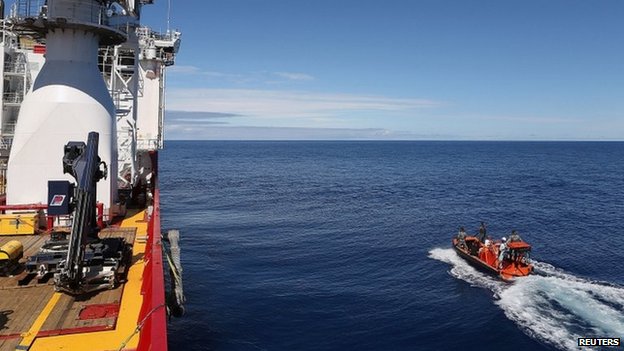
The Australian vessel, Ocean Shield, has been towing a US Navy pinger locator to listen for signals from the plane’s flight recorders in waters west of the Australian city of Perth.

It twice acquired signals over the weekend.

On Tuesday, it located the signals again, the first time for five minutes and 32 seconds, and the second time for around seven minutes, said ACM Houston.

“Ocean Shield has now detected four transmissions in the same broad area,” he said. “Yesterday’s signals will assist in better defining a reduced and much more manageable search area on the ocean floor.

The signals have been heard in sea with a depth of 4,500 metres (15,000 feet).

ACM Houston said it was important to refine the search area as much as possible before sending down the Bluefin 21 underwater drone to search for wreckage.

“Now hopefully with lots of transmissions we’ll have a tight, small area and hopefully in a matter of days we will be able to find something on the bottom,” he said.

Experts at the Australian Joint Acoustic Analysis Centre had also analysed the first two signals heard over the weekend, he added.

Their analysis showed that a “stable, distinct and clear signal” was detected. Experts had therefore assessed that it was not of natural origin and was likely from specific electronic equipment.

“They believe the signals to be consistent with the specification and description of a flight data recorder,” ACM Houston said.

Search teams have been racing against time to locate signals from the flight recorders before their batteries expire after about one month.

Investigators still do not know why MH370 strayed so far off course, after disappearing over the South China Sea between Malaysia and Vietnam.

The backgrounds of both passengers and crew have been scrutinised as officials considered hijacking, sabotage, pilot action or mechanical failure as possible causes.

So far, there is no official explanation for what might have happened.

source: bbc.com


Ίαν Θορπ: Στην εντατική o Ολυμπιονίκης, με κίνδυνο να χάσει το χέρι του

thorp4_316364732

Μετά τα προβλήματα ψυχικής υγείας που αντιμετώπιζε, ο Ιαν Θορπ μπήκε σε νέες περιπέτειες. Ο Ολυμπιονίκης της κολύμβησης νοσηλεύεται στην εντατική, κινδυνεύοντας να χάσει το αριστερό του χέρι εξαιτίας μόλυνσης.

Ο 31χρονος που ανέβηκε πέντε φορές στο ψηλότερο σκαλί των Ολυμπιακών αγώνων, βρίσκεται σε νοσοκομείο στο Σίδνεϊ. Σύμφωνα με το Network Seven, έπαθε μόλυνση έπειτα από επέμβαση που έκανε στην Ελβετία και η κατάστασή του είναι τόσο σοβαρή που υπάρχουν φόβοι ότι μπορεί να χάσει την κίνηση στο χέρι του.

Τους τελευταίους μήνες ο Θορπ αδυνατούσε να κρύψει το πρόβλημα κατάθλιψης, που τον ταλαιπωρεί από την εποχή που θριάμβευε στις πισίνες. Το Φεβρουάριο ο πατέρας του παραδέχθηκε δημόσια πως ο πρώην αθλητής πάλευε με την κατάθλιψη, ενώ μπήκε σε κλινική για να αποτοξινωθεί από τα ισχυρά φάρμακα που έπαιρνε τόσο για αυτό το πρόβλημα, όσο και για τον τραυματισμό του στον ώμο.

Πηγή: iefimerida.gr

Borussia Dortmund 2-0 Real Madrid: Hosts crash out despite Reus double


dortmund

Real Madrid staved off a thrilling Borussia Dortmund comeback to progress to the Champions League semi-finals despite a 2-0 defeat.

With a 3-0 first-leg advantage, Madrid were rocking at half-time as Marco Reus’ double reduced the aggregate score to 3-2 in a fervent atmosphere at Signal Iduna Park on Tuesday.

Both goals came after Angel Di Maria had seen a penalty saved by Roman Weidenfeller, the Argentinian losing his footing on the wet surface as he went to strike the ball.

Two efforts from Reus – capitalising on mistakes from the visitors each time – gave Jurgen Klopp’s side hope of a memorable fightback but they could not force the third goal that would have sent the tie into extra-time as Real gained a measure of revenge for last year’s semi-final loss to Dortmund.

Carlo Ancelotti left Cristiano Ronaldo, struggling with a minor knee injury, on the bench for the duration of the game and Madrid just about managed in his absence, holding off a determined Dortmund in the final stages to book their place in the last four.

The visitors wasted a golden opportunity to practically wrap up the tie in the 17th minute, Weidenfeller diving to his left to keep out Di Maria’s spot-kick after Lukasz Piszczek was adjudged to have handled Fabio Coentrao’s cross.

Dortmund ought to have got themselves the early goal their fans craved two minutes later, Henrikh Mkhitaryan side-footing wide from 10 yards after being teed up by Reus.

However, Reus rendered that miss irrelevant in the 24th minute, taking advantage of Pepe’s weak back-header to round Iker Casillas and slot the ball into the net.

Dortmund were rampant, Casillas tipping a Mats Hummels header over the bar from Reus’ curling free-kick, before the Germany playmaker doubled his tally in the 37th minute as once again Madrid contributed to their own downfall.

Asier Illarramendi surrendered possession, allowing Reus to feed Robert Lewandowski, and as his shot was tipped onto the post by Casillas, the 24-year-old was on hand to smash in the rebound.

Real made a bright start to the second half, Gareth Bale testing Weidenfeller with a stinging effort in the 49th minute, before a last-ditch challenge from Hummels denied Karim Benzema as the Frenchman prepared to shoot into an empty net on the hour mark.

Despite their improved showing, Madrid were lucky to stay ahead in the tie in the 65th minute when Mkhitaryan struck the outside of the post after rounding Casillas following more excellent work by Reus.

The Armenian again went close three minutes later, this time seeing his strike saved by the Spanish goalkeeper as Dortmund continued to press, Casillas also denying Kevin Grosskreutz in the 71st minute.

Despite a frantic finale, Dortmund were unable to carve out one more clear opportunity as the final whistle allowed the visitors to breathe a huge sigh of relief.

source:goal.com

Chelsea 2-0 Paris Saint-Germain (Agg 3-3): Ba the hero as Blues edge through

388501hp2

The hosts went ahead in the first half through Andre Schurrle and hit the woodwork repeatedly after the break, with the Blues finally rewarded for their efforts with a late winner.

Demba Ba scored a late goal to send Chelsea through to the semi-finals of the Champions League at the expense of Paris Saint-Germain, with a 2-0 victory at Stamford Bridge enough to send Jose Mourinho‘s men through on away goals with a 3-3 aggregate scoreline.

Eden Hazard limped off 17 minutes into the first half with what appeared to be a hamstring injury, although replacement Schurrle opened the scoring with a fine finish from 12 yards out on 31 minutes.

The Stamford Bridge side hit the woodwork twice in two minutes early after the interval, with Andre Schurrle cracking a shot off the crossbar before Oscar whipped a free kick against the frame of the goal as the hosts looked for an all-important second goal.

The visitors were subdued without the presence of mercurial striker Zlatan Ibrahimovic – with Edinson Cavani missing a glorious chance to wrap up the tie in the final stages – and with Mourinho introducing Ba and Fernando Torres late in the game, the former netted a close-range strike to spark joyous scenes at Stamford Bridge.

source: goal.com

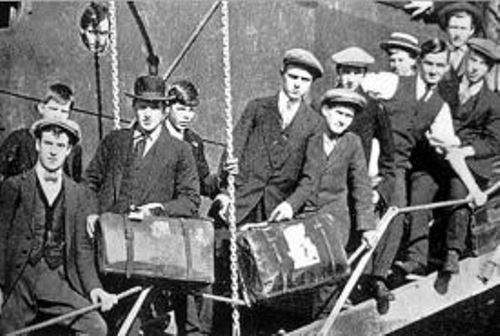
Ελληνικό Μουσείο σε απομακρυσμένο χωριό της Αυστραλίας

metanastes_

Ένα πρωτότυπο ελληνικό μουσείο εγκαινίασε το Σάββατο σε μια απομακρυσμένη περιοχή της Νέας Νότιας Ουαλίας η κυβερνήτης της πολιτείας Μαρί Μπασίρ.

Στη Bindara, ένα απομακρυσμένο χωριό, επτά ώρες οδήγησης από το Σίδνεϊ και τέσσερις από το Μπρίσμπαν, με 1300 κατοίκους σήμερα, αναβίωσε ένα από τα πιο αντιπροσωπευτικά κεφάλαια της ιστορίας των Ελλήνων μεταναστών στην Αυστραλία, στην προσπάθειά τους να εισχωρήσουν στον οικονομικό ιστό της χώρας με τα cafe στην ύπαιθρο.

Αρχικά, το 1936 κτίστηκε το cafe από τρεις Έλληνες συνεργάτες, οι οποίοι, στη συνέχεια, έχτισαν δίπλα ακριβώς το Roxy Theatre που επρόκειτο να συγκεντρώσει το ενδιαφέρον όχι μόνο των ντόπιων αλλά και επισκεπτών από όλη την Αυστραλία και το εξωτερικό.

Ο εγγονός ενός εξ αυτών, του Πίτερ Φέρου, ο νομικός-συγγραφέας, Πίτερ Πρινέας, ανέλαβε τον συντονισμό του εξοπλισμού του Μουσείου, ενώ το 2006 εξέδωσε το βιβλίο «Katsehamos and the Great Idea», όπου περιγράφεται η Οδύσσεια των τριών συνεταίρων και απεικονίζεται το κλίμα τη εποχής.

Σήμερα, μετά από επτά περίπου χρόνων πορείας ενός δρόμου «πλήρους εκπλήξεων, ικανοποίησης, αλλά και δυσχερειών, οικονομικής κυρίως φύσης, βρισκόμαστε μπροστά σ’ ένα αποτέλεσμα που έχει ξεπεράσει και αυτές τις προσδοκίες μας’» δήλωσε στο «Νέο Κόσμο» ο Πίτερ Πρινέας.

«Το Μουσείο αυτό «μιλά» για τους Έλληνες που εγκαταστάθηκαν στην Αυστραλία από το 1890 μέχρι το 1950.

Κοίταζαν πώς να εισχωρήσουν στην τοπική οικονομία και τα cafe ήταν η πρώτη τους επιλογή. Μερικοί προχώρησαν μετά στην απόκτηση και λειτουργία κινηματογράφων. Το Roxy Theatre που χτίστηκε το 1936 και το Cafe στο Bingara είναι αντιπροσωπευτικά αυτής της εποχής, συμπληρώνονται, δε, σήμερα από το Μουσείο».

Το Μουσείο αυτό, θα συμπληρώσει ο ίδιος, «είναι γεμάτο από θησαυρούς που μας έχουν παραχωρήσει οικογένειες Αυστραλο-Ελλήνων πολύ πιο πέρα από τα σύνορα του Bindara».

Απ’ όλα, βέβαια, πιο σημαντικό, είναι ότι έχουμε «ζωντανά», όπως ήταν και λειτουργούσαν τότε to Roxy Cafe και το Roxy Theatre. Όλα αυτά τα δένει και τους δίνει υπόσταση και ζωντάνια το σημερινό Mουσείο. Είναι ένα επίτευγμα για το οποίο είμαστε ιδιαίτερα περήφανοι» θα πει ο Πίτερ Πρινέας ο οποίος έζησε τα παιδικά του χρόνια στο Prineas Cafe στο Holbrook της N.N.Oυαλίας.

Το σχέδιο του Mουσείου ανήκει στην εταιρία Convergence Associates, από τη Μελβούρνη, που έχει σχεδιάσει και το Ιταλικό Μουσείο στο Carlton..

Κάθε χώρος, έχει τον δικό του αέρα και ρόλο χρησιμότητας. Το cafe, για παράδειγμα δίνει τη δυνατότητα, μέσω οπτικoακουστικού συστήματος, να ακούει ο επισκέπτης ιστορίες από ιδιοκτήτες αυτών των επιχειρήσεων, καθώς επίσης και μνήμες πελατών, με την υπόκρουση ελληνικής μουσικής.

Υπάρχουν οι βιογραφίες αξιόλογων Ελληνοαυστραλών που πέρασαν τα παιδικά τους χρόνια στα cafe.

«Είναι μια απόδοση τιμής στον κάθε Ελληνοαυστραλό που έφτασε στην Αυστραλία από το 1817 και μετά. Mε την πάροδο του χρόνου, πιστεύω ότι θα γίνει τόπος προσκυνήματος για κάθε Έλληνα της Αυστραλίας και του κόσμου τελικά» είπε στο «Νέο Κόσμο» ο Γιώργος Πούλος, μέλος της Επιτροπής του Μουσείου.

Η όλη αναβίωση του «ελληνικού ονείρου» που φέρει την ονομασία Roxy, σ’ ένα απομακρυσμένο χωριό της Αυστραλίας, έχει πολύ πιο μεγάλες επεκτάσεις από τις φαινομενικές.

Στην πραγματικότητα, δεν πρόκειται μόνο για μια συγκεκριμένη ιστορία τριών ανθρώπων που δημιούργησαν κάτι συγκεκριμένο, αλλά για την αναβίωση του πνεύματος των μεταναστών που ήλθαν από τα χωριά τους στην άγνωστη γη, αποφασισμένοι να επιτύχουν και να κάνουν συνεχώς νέες κατακτήσεις. Μιλά για το όραμα των σκαπανέων που δεν δείλιασαν να αναμετρηθούν με τις αντιξοότητες που βρέθηκαν στο διάβα τους και να δημιουργήσουν έργα που μιλούν για το ψυχικό τους σθένος, την τόλμη, την περηφάνια και το απτόητο πνεύμα τους.

Πηγή: greekreporter.gr