Monthly Archives: April 2014

Makris: king of the Gold Coast

oracle01

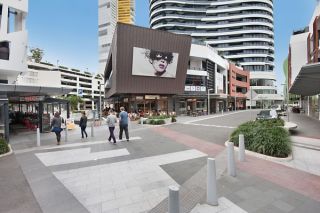
Greek Australian entrepreneur Con Makris has added the Oracle shopping centre to his portfolio.

10 Apr 2014

Adelaide’s richest man, Con Makris has secured his title as the ‘king’ of the Gold Coast after purchasing the city’s largest shopping centre, the Oracle, for $65 million. This comes after his purchases of the Marina Mirage for $52 million, and the Marina Frontage for $7.1 million.

Mr Makris has said that the Oracle twin towers is the best property he has bought in his 45-year long career. He is also on the look-out for more properties like this but says none have come up on the market yet.

Mr Makris was 16 when he migrated to Australia. Without knowing a word of English, he took a job at the foundry melting steel and worked from 6:00am to 9:00pm seven days a week. No stranger to hard work, as a businessman he dabbled in supermarkets, fish and chip shops, chicken shops, and bakeries, but made his mark as the founder of Makris Group. The groups portfolio of assets include office buildings and commercial properties, as well as shopping centres such as Bonnyrigg Plaza in NSW and Endeavour Hills Shopping Centre in Victoria.
The property tycoon often visits Greece and spreads his wealth in the Hellenic Republic.

source: Neos Kosmos

Roxy Theatre returns to its glory

roxy

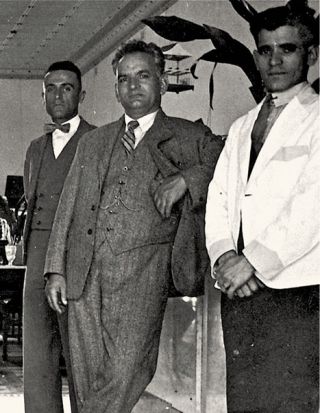
Opening of Golden Bell Café at Barraba NSW 1930. Standing from left, Theo Feros ‘Balis’, local businessman Paul Jacobs, Peter Feros ‘Katsehamos’ and Ioannes Feros ‘Kathikos’. Source:: ‘Katsehamos and the Great Idea’ by Peter Prineas.

As the Roxy Museum opens its doors in Bingara, the historical building is expected to become a pilgrimage for Greek Australians.

The town of Bingara came alive on Saturday as Greek Australians from around the country make their way to the New South Wales town, for the opening of the Roxy Museum.

Heralding the Roxy Theatre’s return to glory, the two-day long official opening of the museum will be as magnificent as the Roxy building itself, with over 300 people expected to attend.

Made possible by a $94,000 grant from the NSW Ministry of Arts and donations from the Greek Australian community, the Roxy Greek Museum will be officially opened today, by NSW Governor, Professor Marie Bashir and in the presence of the Greek Ambassador to Australia, Haris Dafaranos and NSW Minister for Arts George Souris.

Planned for the two-day event are guided tours of the museum, movie screenings in the Roxy theatre, talks by special guests and antique car displays. Showing the visitors around the museum will be its curator Peter Prineas and the members of the Melbourne-based design team, Convergence Associates, who were in charge of the theatre restoration.
The highlight of the weekend, a Gala Dinner and Ball will be held after the official opening, under the stars on the main street of Bingara that will be closed for this occasion. Bringing the glamour of the 1930’s back to Bingara, it will be an evening of Greek feast and plate smashing, in the rhythms of the live Greek band Ha Va Le.

As curator Peter Prineas told Neos Kosmos, smashing of plates will serve as a fundraiser for the new museum.

On Sunday, the celebrations will continue with the launch of the Greek Immigration Olive Grove, a tree planting ceremony in recognition of Greek immigration to Australia. The first tree to be planted by curator Peter Prineas will be dedicated to Emmanuel Aroney, George Psaltis and Prineas’ grandfather Peter Feros, who built the Roxy Theatre in 1936.

“It all began with the Roxy Theatre. In dark and silence for 40 years, it was the biggest building in Bingara, so a couple of academics who were interested in cinema heritage in NSW, influenced the former premier Bob Karr to make some funding available to reopen theatres like the Roxy, which were in a number of country towns and were closed since the late 60’s, when TV came to the country towns and cinema became a history. There was this enormous building still standing and in good condition, and they thought it would be a good idea to revive the town,” Mr Prineas tells Neos Kosmos.

The theatre was the first part of the historical Roxy building to be brought back – it was reopened in 2004. But there wasn’t much recognition of its Greek significance, until Prineas’ book Katsehamos and the Great Idea was published, explaining the Greek history of the Roxy Theatre and Café.

“The book was launched in 2006 at the theatre, and people realised that the Greek Australian narrative that is attached to this building is one of the most important things about it. That Greek Australian significance influenced the Council to acquire and bring back the 1930s’ Greek café next to the theatre, which was built by the original Greek developers. Soon after, we decided that the Greek museum would be a good idea,” says Prineas.
For the whole concept to be realised, from restoring the Roxy Theatre and Café to opening a museum, it took 16 years.
The Roxy Museum, dedicated to the history of Greek settlement in Australia, is now expected to become a pilgrimage for Greek Australians, to pay tribute to the legacy of the Greek café and cinema operators.

“When you travel around Australia, there are not many places that people of Greek Australian ancestry can stop and look at and say that it tells their story. I think you can say that about the Roxy and its significance. It is a living tribute to the history of Greeks in Australia.”

Comprising rare memorabilia, photographs, interpretive texts, the museum will invoke the vivid dream that the Roxy’s original creators – and hundreds of other Greek pioneers – realised in New South Wales and beyond.

“We’ve been inviting people for some years now to contribute material, and there has been a steady stream of Greek Australians who came to Bingara to give us dishes, logo crockery, to tell the story.

“The museum tells its story through a respectable collection of café memorabilia and logo crockery, some excellent items from two old Greek picture theatres, and a couple of audio-visual presentations. Also, we have a digital interactive map Café and Cinema Trail which visitors can use to locate hundreds of former Greek cafés and cinemas in NSW.”

For further information about the Roxy Museum and to book your tickets, call the Bingara Visitor Information Centre on 02 6724 0066 or visit http://www.roxybingara.com.au/museum-opening

source:Neos Kosmos

Do the milkshake!

milkshake

It was the Greek migrants who took the humble milkshake and made it a national drink.

What first rose to popularity as a health drink, the modest milkshake rose to popularity as Australia’s favourite beverage thanks to Greek run milk bars of the ’50s and ’60s.

According to Macquarie University researchers, documentary photographer Effy Alexakis and historian Leonard Janiszewski, the pair have suggested that five years after Mick Adams’ (Joachim Tavlarides) creation of the “milk bar” in Sydney in November 1932, some 4,000 milk bars were operating in Australia (most were Greek-run), and that by the 1950s, milkshakes were confidently challenging tea as the most commercially popular light beverage of choice.
“What we’ve been able to uncover is that by the 1950s milkshakes were in a commanding position in regards to challenging tea as a commercially popular light beverage,” Janiszewski tells Neos Kosmos.

He says Australians would look at milk bars as their “point of social contact”.

“[Australians] would go there in terms of family orientation, but it was also at the milk bars, particularly in the late 50s and early ’60s, that had a youth culture, so they were actually straddling both spheres – family and in terms of youth,” adds Janiszewski saying this phenomenon was Australia-wide and not just prominent in the big cities of Melbourne and Sydney.

“So whilst at home, Australians would be tea-totallers but when they went out they were looking for a sense of modernity and that happened to be aspects provided at milk bars through the milkshakes themselves.

“You can see with statistics that were gathered during this time, consumption of tea was going down and consumption of milk and milkshakes was going up. And in so doing it became the national drink and it was part of the broader context of Americanisation within Australian society which the Greeks were a vehicle for – unconsciously of course.”
Alexakis and Janiszewski point out that commercial Greek involvement with milkshakes commenced in the United States during the late 19th century – particularly in the southern states. In Australia, milkshakes were being sold in pubs and emporiums just as Greek chain-migration was increasing to the Antipodes in the 1890s. Some of these Greek arrivals were from the United States and they took up selling milkshakes primarily on street corners – either shaking the ingredients (cold milk diluted with water and flavoured with vanilla powder) by hand, or with a hand-cranked machine (imported from the United States) that violently shook the contents, one or two glasses at a time.

At this stage however, the drink was not exceptionally popular. With Adams’ “milk bar” revolution, its status quickly changed – Adams promoted the milkshake as a health food, imported electric Hamilton Beach milkshake makers to provide speed, efficiency and multiplicity in the production, and then undercut by five pence the price of milkshakes to customers.

“When the milkshake came to Australia it certainly had developed further along the line and they would certainly put in things like butter, eggs, chocolate, rum essence, dried and even fresh fruit,” he says of ingredients used. Through this, two very different types of milkshakes were created; one that is thick and textured similar to today’s smoothie and one a smooth milkshake.

During the ’50s, the milkshake began to lose its health drink emphasis and became a drink to tantalise the senses almost – both through taste sensations but also visual sensations.

“You started to get cream dollops placed on top of the milkshakes, you got a variety of sculpted glasses for the milkshakes themselves, and because they were a symbol that was good about modernity they were used to titillate people.”

Initially, male pub patrons flocked to milk bars (particularly for the bootlegger punch milkshake that contained a dash of rum essence). But it was the encroachment of the milkshake into Australian family life through the numerous, humble, suburban Greek-run milk bars, that not only sustained its longevity, but elevated its status to that of a national drink. During the 1950 and early 1960s, families and youth culture embraced the milkshake as an enjoyable, affordable treat – a symbol of modernity and the “good life” that it offered. But in doing so however, milkshakes themselves were transformed by booming commercial success, and the desire to not only maintain, but to further increase sales: what had initially been promoted as a health food by Mick Adams had become, by the 1970s, a concoction of fats, sugar and artificial colours and flavours. The Greek milk bar and its milk shake though had succeeded in challenging the dominance of tea as the preferred national light beverage. The Greek café would later play its part in the rise of coffee drinking.

“Whilst there were milk bars that were run by non-Greeks, it was the Greeks, definitely from the 1930s right up to the mid 1960s, who dominated the industry – absolutely there is no question about that. And it’s through these numbers that the milkshake was able to establish itself.”

Janiszewski and Alexakis will discuss this interesting development in their Greek café and milk bar research in two lectures which they will present in Sydney during April – part of the pair’s ongoing “Shakin’ the World Over: the Greek-Australian Milk Bar” series. The first will be delivered to the Ryde Historical Society at historic Willandra House, Top Ryde, on Tuesday 8 April, and the second to the Castlereagh Probus Club at Castlereagh Street, Sydney, on Monday 14 April.

source: Neos Kosmos

Atlético Madrid get lift from Koke and push past Barcelona into the semis

atletico's Koke, Tiago

These really are the best days of their lives. Atlético Madrid are in the semi-final of the European Cup for the first time in 40 years and it is no fluke. How appropriate that the man who scored the goal that took them there should be called Koke Resurrección. Atlético were Spain’s losers, remember. They called them El Pupas, the jinxed one. No more. A manager may never have had such an immediate and complete an impact on a club as Diego Simeone has at the Vicente Calderón.

Football’s Robin Hood, as their midfielder Tiago called them, continue to rob from the rich. Here, they took from Barcelona, who will be absent from a Champions League semi-final for the first time in seven years. And victory, met with a roar that almost made your ears bleed, was entirely deserved.

The only surprise was that Barcelona lasted as long as they did. A goal down after six minutes, they were still a goal down after 90. They had chances, sure, but not as many as their hosts, who left the posts shuddering three times. Barça, too, will shudder when they look back on this.

“Win, win, win and win again” declared the mosaic that stretched across one side of a packed stadium. The phrase honoured its author, Luis Aragonés, yet Atlético did not necessarily need to win. A draw could take them through, if it finished 0-0. 1-1 would take this game to extra time and penalties.

That seemed plausible too: four times these teams had met this season; four times they had drawn; twice it had finished 1-1, twice it had finished 0-0. It was natural to expect something similar here, all the more so as the top scorer Diego Costa was injured and not even on the bench, a fact that makes the feat all the more fantastic. In his absence Atlético, who were also without Arda Turan, started with Adrián and David Villa up front. Adrián had scored just twice this season and had not even made the squad in five of the last six games. But here, his contribution was immense right from the start. And far from seek the draw, Atlético tore into the visitors.

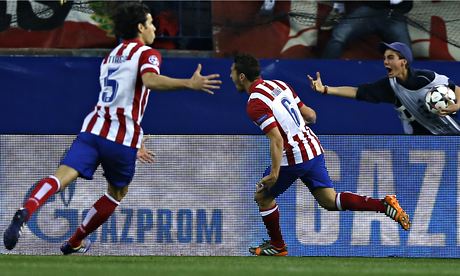
It all  started with Raúl García shooting over from a similar position to the one from which Diego had scored in the first leg. Then Adrián smashed a shot against the bar. The ball dropped to David Villa whose cross reached Adrián and he knocked it down for Koke, who was free near the other post to score. The roar was deafening and the clock showed just six minutes.

It would be tempting to say that Barcelona were soon hanging on for dear life, except that they were barely hanging on at all. It was all they could do to hope that the storm would pass. They looked terrified and overrun, a team with virtually no defence and a goalkeeper who frightened them almost as much as the forwards running beyond them.

So much for waiting; Atlético sensed the weakness and stepped forward, pushing Barcelona on to the ropes and pounding at them. The amazing thing was that they did not land the knockout blow. Villa turned and shot over, José Pinto was nearly caught by Adrián and twice more they hit posts inside 20 minutes. Both times it was Villa, once from the left, once from the right. The score may have been different but this was every bit as much of a hammering as last season’s semi-final against Bayern Munich had been.

Just before the half-time whistle Cesc Fábregas went down in the area, his legs seemingly swept from under him by Diego Godín right in front of the touchline official. Howard Webb did not give a penalty, just as he had not when Adrián had tumbled at the other end minutes before.

Barcelona complained, but looking at the scoreboard they could have few complaints; that they were only losing 1-0 was the best thing they could say about the opening 45 minutes. There had been a run from Neymar, followed by a wonderful nutmeg, and a Lionel Messi header wide while Andrés Iniesta had taken responsibility and sought to take control but survival was as much as they could have expected. More, in fact.

If Barcelona had been given a second chance, they appeared determined to take it. The Catalan side began the second half creating the best chance of the night thus far. Xavi and Messi combined and the former played in Neymar. Thibaut Courtois was quickly to him and the loose ball dropped to Messi, who was swiftly suffocated by a crowd of Atlético defenders. A moment later, the ball dropped to Xavi five yards out, with Courtois looking uncertain for once. Leaning back, Xavi scooped his shot over the bar. He had the next chance, too, and it was a good one. But he headed wide from Dani Alves’s cross.

Gerardo Martino made his first change just after, taking off Fábregas, who did not even wait to see the board before departing: he knew his number was up. Alexis Sánchez went on but instead the opportunity fell to the man who followed him on to the pitch a minute later and the chances fell the way of the home side, dashing forward when tiredness permitted and into the space Barcelona left them. Adrián left to a standing ovation and Diego came on – he soon escaped down the right and drew a sharp save from Pinto at the near post.

Next the Barcelona goalkeeper made another save when Atlético broke free on the other side. Gabi and Villa raced through, Villa running to make space. Gabi tried to slot the ball into the far corner from around 10 yards but Pinto stuck out a foot. A minute later, Villa seemed to be barged over in the Barcelona area but Webb again said “no”; as bodies tumbled all around the follow-up shot was blocked.

Neymar put a diving header wide from Alexis’s cross. But this was desperate now. Barcelona lacked imagination, still less inspiration. And when the best chance fell in the final minute, it fell to Cristian Rodríguez, an Atlético substitute. Pinto saved the chance but no one saved Barcelona. Atlético’s incredible story continues.

source: theguardian.com

Bayern Munich blow Manchester United away after Patrice Evra’s strike

bayern miunich

Bayern’s Mario Mandzukic celebrates after scoring the equaliser against Manchester United. Photograph: Matthias Schrader/AP

The most disappointing part for Manchester United is that, briefly, they had this game under their own control. They ought to be anguished by the speed at which everything unravelled and it will be almost 18 months, or possibly longer, before they get another chance to get it out of their system.

Bayern certainly showed their competitive courage once Patrice Evra had stunned everyone with a cannon of a shot, but there was still the unmistakable sense that United played a considerable part in their own downfall. This was not Bayern at their indomitable best, or even particularly close to it, but David Moyes’s team crumpled in that last half an hour in a way that felt completely out of synch with everything that they had shown before the opening goal.

Bayern equalised in their next attack through Mario Mandzukic’s header and United lost all their defensive poise in those moments, when Thomas Müller gave Pep Guardiola’s side the lead and Arjen Robben eluded Evra and Nemanja Vidic to soothe any lingering nerves among the home crowd. Three goals had arrived in 17 minutes and, for United, it was made even more galling bearing in mind what had happened in the first two-thirds of the match.

It was probably just inevitable there would be long spells when United had to defend in numbers. Even the mosaics here are intimidating. “Kings of the Cup” was the message held up in thousands of pieces of red, purple and white behind one of the goals.

Yet it also quickly became apparent this was not going to be a night when Bayern simply swatted aside the Premier League’s seventh-placed team. Arsène Wenger’s view is that Bayern are not quite as brilliantly accomplished now as when Jupp Heynckes was in charge and, though that was dismissed at the time as sour grapes after Arsenal had been eliminated, maybe there is actually something in that.

Bayern may have won the Bundesliga in record-quick time this season but, for all their strengths, the old sheen of invincibility is not always so obvious these days when put in context with that stunning 7-0 aggregate win over Barcelona in last season’s semi-finals.

At times, they were even bordering on the predictable, feeding the ball to Robben over and again, and relying on his ability to run at defenders, cutting in from the right.

There were plenty of occasions when Robben had his opponents on their heels but it was unusual in those moments to see Guardiola’s team looking a little short of other ideas. Franck Ribéry was strangely subdued in the early parts when Moyes was certainly entitled to be encouraged about the way his players set about the game.

Whatever their problems this season, however many times they have strayed dangerously close to full-on crisis, United have actually put together a distinguished away record.

Their basic structure was good, with two midfielders in deep-lying positions and wingers who were willing to double up as full-backs, and the players in support of Wayne Rooney were quick to join him on the occasions when they did have the ball in promising areas.

Rooney, playing at the spearhead of their attack, was an elusive and difficult opponent for the two centre-halves, Dante and Jérôme Boateng, and they also had the ball in the net in the first half, only for a linesman’s flag to deny Antonio Valencia the opening goal.

Bayern were missing Javi Martínez and Bastian Schweinsteiger among others but, then again, United had a considerable list of their own absentees. Moyes could be seen leaving his dugout at one point of the first half to remonstrate with Darren Fletcher for losing the ball in a dangerous position but that kind of carelessness was kept to a minimum. Or it was until they actually had the temerity to take the lead.

Until that point Vidic had played as though determined to remind everyone that he will be badly missed at Old Trafford next season. Chris Smalling had justified his selection ahead of Rio Ferdinand and, for the most part, Phil Jones had not allowed Ribéry to play with the usual menace.

Ribéry did, however, play a considerable part in the goal. It was his cross, from the left, that picked out Mandzukic and the Croat had a clear height advantage on Evra as he directed his header into the bottom corner.

Evra’s goal was an absolute peach, struck first-time from fully 25 yards and still rising as it flew into the top left-hand corner of Manuel Neuer’s net. Valencia’s cross from the right had eluded everyone. It was an unstoppable finish and, at that stage, the small but boisterous group of away supporters could dare to imagine an improbable victory.

Unfortunately, at this level a team will always be punished for defending with such fragility. Müller got away from Vidic for the second Bayern goal, turning in Robben’s cross from the right, and the Dutchman’s solo run and finish ensured the home side could relax through the final exchanges.

They will go into a third successive semi-final while United are left to wonder when they will renew acquaintances with this competition.

source: theguardina.com

Mundine loses to Clottey

dh_mundine-20140410050807469290-620x349

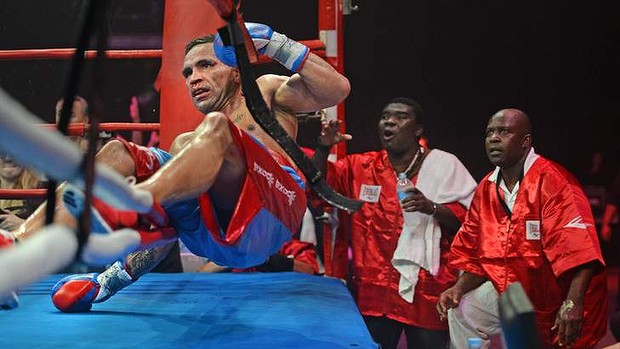
Anthony Mundine is knocked to the ground by Joshua Clottery. Photo: Marina Neil

Anthony Mundine’s world title hopes took a potentially fatal hit and raised questions over his boxing future after he was knocked down five times in a 12 round points loss to Joshua Clottey on Wednesday.

Mundine, the No.3 ranked fighter in the WBA’s International super welterweight division, was felled twice in the sixth and once in the third, eighth and tenth rounds at Newcastle Entertainment Centre.

The three Australian judges scored the Ghanaian the winner by margins of six, eight and nine points.

The Australian showed enormous heart to make it through to the end of probably the most punishing fight of his career.

“I got caught early and I couldn’t recover,” Mundine said.

“Full credit to Joshua, he put me on my back a few times, but I finished the fight.

“I’m not going to think about it (fighting on). Right now I’m going to take some time off.”

Former IBF welterweight champion Clottey dictated the inside exchanges, frequently forcing Mundine back and punishing him on the ropes.

Mundine did his best work when fighting in centre ring and putting some space between Clottey and himself

However the Australian didn’t use his jab as much as expected.

Both men complained to referee Anthony Shipley about the other’s tactics in the first round.

Clottey fell to the canvas near the end of round two after being hit on the back of the head, which caused Shipley to caution the Australian.

He put Mundine down late in the third with a straight right to the top of the head.

Mundine lost his right boot in the fourth when Clottey again scored well at close quarters.

Clottey put his stamp on the fight in the sixth, felling Mundine twice, tagging the Australian with a number of shots.

Mundine fought back gamely in the seventh, enjoying one of his better rounds.

Clottey continued to land blows are the fight dragged on, earning further knockdowns in the eighth and tenth rounds to remove any doubt about the outcome once the bout went the distance.

source: ninemsn.com.au

Liberals break ranks against George Brandis race hate law

aaa-w-liberals-20140409184902675892-620x349

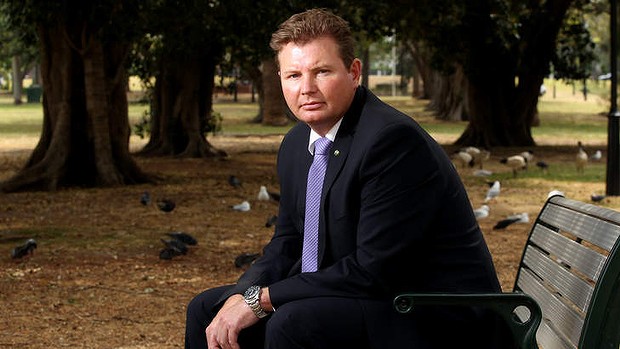
“I believe that we are potentially permitting acts that have no place in our wonderfully multicultural communities”: Liberal MP Craig Laundy. Photo: Janie Barrett

A Liberal MP has signalled his readiness to cross the floor and vote against the Abbott government if controversial changes to the Racial Discrimination Act proceed in their proposed form.

Craig Laundy, whose electorate of Reid is one of Sydney’s most ethnically diverse, has written to Attorney-General George Brandis to outline his opposition to plans to water down race hate protections.

Mr Laundy has received 3000 individual pieces of correspondence from constituents on the government’s intentions for sections 18C and 18D of the Discrimination Act.

None was in support of Senator Brandis’ ‘‘right to be a bigot’’ reforms, which he insisted were in defence of freedom of speech.

‘‘I believe we are potentially permitting acts that have no place in our wonderfully multicultural communities,’’ Mr Laundy said.

When asked whether he was prepared to become the first member of the Abbott government to cross the floor, he said he would vote with his ‘‘community and country’’ as his priorities.

‘‘I brought my integrity to Parliament and I intend to take it with me when I go,” he said. “We [as politicians] should always seek to add value for our children, not take value away.

‘‘At the right time I will make a decision [on how to vote] based on what is put in front of me.”

Mr Laundy received immediate support from fellow Liberal David Coleman, who held the nearby seat of Banks.

‘‘The Government has released an exposure draft of legislation which attempts to strike the balance between free speech and protection from racial discrimination,” he said.

“In my view, the exposure draft does not achieve this balance, and needs to be amended to provide greater protection against racial discrimination. I will be conveying this view to my colleagues.’’

John Alexander, whose seat of Bennelong had as many people who identified as ‘‘Chinese’’ as ‘‘Australian’’, was another Liberal rattled by the fierce public response to removing elements of the act that made it unlawful to “offend, insult or humiliate’’ someone based on their race or ethnicity.

The proposed law would instead offer protection for ‘‘vilification and intimidation’’, with sweeping exemptions provided in 18D.

Mr Alexander, who last week was reported as having considered pushing a petition around the backbench, met with Senator Brandis to express his opposition.

A spokesman for Victorian Liberal Jason Wood confirmed he was opposed to the changes as drafted. Veteran Liberal Philip Ruddock and Aboriginal MP Ken Wyatt had also expressed concern about the direction of the reforms.

Mr Laundy said his opposition was as personal as it was political after his 14-year-old daughter witnessed her friend being abused in public for wearing an Islamic hijab.

‘‘Over the duration of many discussions that I have had on this issue, not a single person has suggested to me that their right to free speech has been restricted by the act in its current form,” he said.

“Consequently, I do not believe that the case for such far-reaching and potentially damaging changes has yet been made.’’

The Opposition has begun to capitalise on the heat in marginal electorates. On Wednesday, shadow attorney-general Mark Dreyfus held a town hall meeting in Dandenong, outer Melbourne, with Hugh de Krester of the Human Rights Law Centre. More meetings are planned in Sydney and Brisbane.

Last week, Senator Matt Thistlethwaite held a press conference in Chinese for Chinese-Australian media to stoke concern.

Twenty Chinese community groups have come together to fight Senator Brandis’ proposal.

source: brisbanetimes.com.au

Γιώργος Καπινιάρης:Σκορπάει γέλιο κάνοντας τον Ζορμπά … φρικιό

geok

Ο ομογενής κωμικός


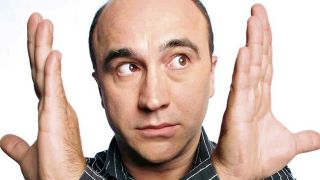
Γιώργος Καπινιάρης: Από τους πιο γνωστούς ηθοποιούς που έχει αναδείξει η Ομογένεια της Αυστραλίας.

Από τους πιο γνωστούς ηθοποιούς που έχει αναδείξει η Ομογένεια της Αυστραλίας είναι ο Γιώργος Καπινιάρης. Τον γνωρίσαμε οι περισσότεροι σαν «Memo» στην προ εικοσαετίας τηλεοπτική σειρά «Acropolis Now». Έκτοτε μας έχει χαρίσει άφθονο γέλιο με τις παραστάσεις του. Έχει καθιερωθεί ως κωμικός, όμως τον ταλέντο του έχει φανεί και σε άλλους απαιτητικούς ρόλους. Φέτος παρουσιάζει τις παραστάσεις του που τιτλοφορούνται: «Zorba the Freak – Ζορμπάς …το φρικιό». Η συνέντευξη που ακολουθεί, παραχωρήθηκε με την ευκαιρία της συμμετοχής του στο 32ο Ελληνικό Φεστιβάλ του Σίδνεϊ που διοργανώνει η Ελληνική Ορθόδοξη Κοινότητα της ΝΝΟ. Ο ομογενής ηθοποιός μιλά για τα παιδικά του χρόνια, για την μεταναστευτική καταγωγή του και πώς αυτή επηρέασε την ανέλιξή του ως ηθοποιού, και δίνει μια απλή συμβουλή σε όσους φιλοδοξούν να διακριθούν στην τέχνη της Υποκριτικής.

– Αρχικά να μας πεις πώς καταφέρνεις να κάνεις τον Ζορμπά …φρικιό. Τι περιλαμβάνει αυτή η τελευταία σου παράσταση;
– Είναι ένα έργο για το πώς μεγαλώνουν οι Έλληνες σε αυτή τη χώρα. Αρχίζουμε από την παιδική ηλικία, μετά περνάμε στην ενηλικίωση, ύστερα όταν ένας γίνεται γονέας… Όλα αυτά είναι σε μια παράσταση, που έχει να κάνει και με τις δικές μου εμπειρίες και γενικά πώς βλέπω εγώ τη ζωή και πιθανόν να έχουν τις ίδιες απόψεις με εμένα και άλλοι Ελληνοαυστραλοί.

– Στο έργο μιλάς για την εμπειρία να είσαι ελληνικής καταγωγής και να μεγαλώνεις στην Αυστραλία. Το κάνεις αυτό με χιούμορ και προσφέρεις γέλιο στους θεατές. Πώς καταφέρνεις να το πετυχαίνεις αυτό, ιδιαίτερα για εκείνες τις εμπειρίες που ίσως να μην ήταν ευχάριστες.
– Αυτές οι ιστορίες έχουν και τις καλύτερες αντιδράσεις… Οι τραυματικές εμπειρίες είναι πάντα οι πιο διασκεδαστικές για το κοινό. Είναι σαν θεραπεία για αυτούς. «Α, ώστε δεν συνέβαιναν μόνο σε μένα αυτά!» λένε … Ο κωμικός Μπίλι Κρίσταλ (Billy Crystal) είπε κάποτε: «η κωμωδία βγαίνει από την τραγωδία», κι αυτό είναι αλήθεια.

– Στο επάγγελμά σου, η μεταναστευτική καταγωγή, είναι στιγμές που μπορεί να είναι πλεονέκτημα και άλλες στιγμές μειονέκτημα;
– Η ελληνική καταγωγή σίγουρα υπήρξε για μένα μειονέκτημα στην Αυστραλία στη σταδιοδρομία μου ως ηθοποιός. Ως νέος στη δουλειά αυτή είχα αμέσως του στίγμα του ανθρώπου με μεταναστευτική καταγωγή. Ακόμα και τώρα υπάρχουν ρόλοι που δεν μου δίνονται λόγω του πώς ακούγεται η φωνή μου, του τρόπου που φαίνομαι ή ακόμα και της εθνικής μου προέλευσης. Γι’ αυτό κι εγώ κάνω την παραγωγή στις περισσότερες από τις παραστάσεις μου. Το ίδιο ισχύει και για πολλούς συναδέλφους μου που κάνουν αυτό που κάνω κι εγώ. Ευτυχώς, βρεθήκαμε να εργαζόμαστε στην εποχή του «εθνοτικού χιούμορ» ή αλλιώς wog χιούμορ, όπως λέγεται, το οποίο είχε και έχει πέραση στο κοινό, γι’ αυτό και επιμένουμε σε αυτό το είδος για 30 χρόνια τώρα. Είμαστε οι Ελληνοαυστραλοί, Ιταλο-Αυστραλοί, Ινδο-Αυστραλοί, Λιβανεζο-Αυστραλοί, Αυστραλοί ασιατικής καταγωγής και γενικά όλοι οι «Έθνικ-Αυστραλοί» που έχουν άμεση σχέση με αυτό που παρουσιάζουμε από την σκηνή.

– Σε ανησυχεί μήπως ο κόσμος σε ταυτίζει με έναν «έθνικ κωμικό», και έτσι δεν αναγνωρίζεται στο βαθμό που θα έπρεπε το ταλέντο σου ως ηθοποιός;
– Ήταν μια ανησυχία που είχα, όταν ξεκίνησα. Τώρα έχω συμβιβαστεί με αυτή την πραγματικότητα. Επιπλέον, τώρα είμαι μεγαλύτερος, όχι πια τόσο …  όμορφος, κι έτσι είναι αρκετοί ρόλοι που εκ των πραγμάτων δεν μπορώ πια να υποδυθώ. Πάντως, εξακολουθώ να θεωρώ τον εαυτό μου τυχερό για τα όσα κατόρθωσα σε αυτόν τον κλάδο. Το βλέπω σαν ένα συνδυασμό ταλέντου, σκληρής δουλειάς και βεβαίως λίγης τύχης. Δεν πρέπει να μας διαφεύγει ότι το 90% όλων των ηθοποιών (όχι μόνο των ελληνικής καταγωγής) είναι άνεργοι σ’ αυτή τη χώρα.

– Πώς αντιδρούν εκείνοι οι ακροατές/θεατές σου που δεν ανήκουν σε μεταναστευτικές κοινότητες. Τα καταλαβαίνουν τα αστεία σου; Πώς νιώθουν και πώς αντιδρούν όταν σατιρίζεις την Αυστραλία;
– Το να είσαι Αυστραλός σημαίνει να αστειεύεσαι με τον εαυτό σου. Οι Αυστραλοί (Aussies) δεν έχουν πρόβλημα με τις δικές μου κωμωδίες. Πρόσφατα, ήμουνα σε μία επταήμερη «Rock & Roll» κρουαζιέρα, με οκτώ παραστάσεις για 2.500 Αγγλο-Αυστραλούς, άνω των 50 ετών. Ένιωθα κάπως άβολα. Όμως ξετρελάθηκαν μαζί μου. Οι Έλληνες στην Ελλάδα είναι λίγο διαφορετικοί. Δεν νομίζω ότι γελούν με τον εαυτό τους τόσο εύκολα.

– Μίλησέ μας για τους γονείς σου, πού γεννήθηκες και μεγάλωσες και πώς ήταν τα παιδικά σου χρόνια;
– Οι γονείς μου συναντήθηκαν στο «ΠΑΤΡΙΣ» το 1960 ταξιδεύοντας από την Ελλάδα προς την Αυστραλία. Η μητέρα μου ήταν από την Κατερίνη και ο πατέρας μου από την Καλαμάτα. Παντρεύτηκαν στη Μελβούρνη και έμειναν στο Richmond. Εγώ γεννήθηκα το 1962 στο Queen Victoria Hospital, το οποίο βρίσκονταν στην «ελληνική οδό» στο κέντρο της Μελβούρνης Lonsdale Street. Το 1975 μετακομίσαμε στο East Doncaster. Κι εκεί που αρχικά ήμασταν η μόνη ελληνική οικογένεια στην οδό, σταδιακά τα ανατολικά προάστια γέμισαν με Έλληνες μέχρι και την δεκαετία του ’80.

– Πώς αποφάσισες να γίνει ηθοποιός; Τι ήταν αυτό που σε παρακίνησε;
– Ήμουν πάντα καλός στα θεατρικά μαθήματα στο σχολείο. Είχα την έφεση να ανεβαίνω στη σκηνή και να υποδύομαι. Ονειρευόμουνα να γίνω ποδοσφαιριστής ή αρχιτέκτονας, αλλά είχα το φυσικό ταλέντο να τραγουδάω, να χορεύω, και να παίζω ρόλους… Μετά το Γυμνάσιο με δέχθηκαν στην σχολή Rusden (σήμερα ονομάζεται Deakin University) για να παρακολουθήσω μαθήματα θεάτρου, χορού και μέσων ενημέρωσης. Κι έτσι, από εκεί άρχισε να ξετυλίγεται το κουβάρι της σταδιοδρομίας μου. Εκεί, επίσης, γνώρισα αρκετούς συναδέλφους μου, μεταξύ των οποίων, ο Simon Palomares και ο Νίκος Γιαννόπουλος.

– Ποιους ηθοποιούς και άλλους καλλιτέχνες θαύμαζες και ήθελες να τους μοιάσεις;
– Μερικοί από εκείνους που θαύμαζα μεγαλώνοντας ήταν οι Jerry Lewis, Lou Costello, Bob Hope, Danny Kaye, Elvis, The Beatles, KISS, ABBA, Robin Williams, Harpo Marx, The Sky hooks, The Sweet, Eddie Murphy, Bill Cosby, Richard Prior, Bill Murray, John Travolta, Graham Kennedy αλλά και οι Έλληνες Κώστας Βουτσάς και Αλίκη Βουγιουκλάκη.

– Είναι κάποιοι άλλοι στόχοι στη σταδιοδρομία σου που θα ήθελες να πετύχεις;

– Θα ήθελα όσο προχωρά η σταδιοδρομία μου να σκηνοθετήσω. Επίσης, θα ήθελα να παίξω πρωταγωνιστικό ρόλο σε ταινία μεγάλου μήκους, ενώ δεν θα ‘λεγα όχι και σε εμφανίσεις στα τηλεοπτικά προγράμματα «Dancing With the Stars» και ‘Play School’.

– Τέλος, ποιες είναι οι συμβουλές σου στους νέους ανθρώπους, ιδιαίτερα εκείνους που προέρχονται από μεταναστευτικές παροικίες, και φιλοδοξούν να γίνουν ηθοποιοί;

– Μην το κάνετε για τη δόξα … Κάντε το για την υποκριτική!

Πηγή: Νέος Κόσμος

Ελληνική ομορφιά στα καλλιστεία National Teen Galaxy

ztanastasopoulos1

Η 17χρονη Ελένη Αναστασοπούλου


Η μόλις δεκαεπτά χρονών Ελένη Αναστασοπούλου ανακηρύχθηκε τον περασμένο μήνα Geelong Miss Teen Galaxy.

Η μόλις δεκαεπτά χρονών Ελένη Αναστασοπουλου ανακηρύχθηκε τον περασμένο μήνα Geelong Miss Teen Galaxy, τίτλος που της εξασφάλισε την πρόκριση στον τελικό του διαγωνισμού σε εθνικό επίπεδο.

Είναι μόλις ο τέταρτος χρόνος του διαγωνισμού Galaxy στην Αυστραλία, αλλά τα καλλιστεία Galaxy International διεξάγονται από το 1988 στις ΗΠΑ, με τις φιναλίστ κάθε χώρας να διαγωνίζονται για τη διάκριση. Στόχος είναι, φυσικά, η προώθηση του ιδανικού της ομορφιάς, όπως αποτυπώνεται σε κοπέλες από διαφορετικά μέρη της υφηλίου, ενώ αποτελεί μια μοναδική ευκαιρία για τις συμμετέχουσες να ανελιχθούν επαγγελματικά στο χώρο της μόδας.

Η Ελένη, παρ’ ότι δεν είχε εμπειρία από το χώρο του μόντελινγκ, κατάφερε να ξεχωρίσει στο πρώτο στάδιο του διαγωνισμού στη Μελβούρνη και να βρεθεί ανάμεσα στις φιναλίστ από όλη την Αυστραλία. Όπως δήλωσε στο «Νέο Κόσμο», άκουσε για τον διαγωνισμό από μια ανάρτηση στο facebook, ενώ η διάκριση υπήρξε για αυτήν μια ευχάριστη έκπληξη.

Οι 24 φιναλίστ θα διαγωνιστούν για τον τίτλο της Teen Galaxy και η νικήτρια θα εκπροσωπήσει την χώρα ως Miss Australia στον παγκόσμιο τελικό που θα γίνει τον Αύγουστο στη Φλόριντα των ΗΠΑ.

Ως μέρος της προετοιμασίας για τον τελικό, η Ελένη ανέλαβε μια ευγενή πρωτοβουλία: να συλλέξει χρήματα για το ίδρυμα Make a wish. Κατάφερε να συγκεντρώσει περισσότερα από $13,000 σε φιλανθρωπικό δείπνο που διοργάνωσε με καλεσμένους φίλους και συγγενείς που στηρίζουν την προσπάθειά της.

Για την Ελένη Αναστασοπούλου η συμμετοχή στο διαγωνισμό έχει ήδη αναδειχθεί μια πολύτιμη εμπειρία, με ενδιαφέρουσες γνωριμίες και μια ευκαιρία να αναπτύξει τις ικανότητές της και να δικτυωθεί στο χώρο της μόδας. Βρίσκεται, μάλιστα, στο Year 12 του Λυκείου και σκέφτεται στο μέλλον να δημιουργήσει τη δική της αλυσίδα ρούχων, αν και δεν αποκλείει το ενδεχόμενο να ακολουθήσει την καριέρα της αστυνομικού! Εμείς από την πλευρά μας της ευχόμαστε καλή επιτυχία!

Πηγή: Νέος Κόσμος

Αυστραλία:Ο ένας ιερέας βίαζε 11χρονο κορίτσι και ο άλλος… παρακολουθούσε

priest

Συγκλονιστικές αποκαλύψεις κατά τη δίκη του ιερέα της Καθολικής Εκκλησίας Gerald Ridsdale.

Σε 8χρονη φυλάκιση καταδικάστηκε ο ιερέας της Καθολικής Εκκλησίας, Gerald Ridsdale, καθώς κρίθηκε ένοχος για παιδοφιλία, έγκλημα το οποίο διέπραξε πριν από 40 χρόνια με θύμα ένα 11χρονο κορίτσι.

Ο 79χρονος σήμερα Ridsdale ήταν ιερέας στην ενορία του St Alipius στο Ballarat τότε, και σύμφωνα με έγγραφη κατάθεση του θύματος ο ιερέας την πήγε στο δωμάτιό του και άρχισε να της δείχνει πορνογραφικά περιοδικά. Το 11χρονο τότε κορίτσι κατάφερε να του ξεφύγει αλλά αυτός έτρεξε πίσω και αφού την έπιασε της ζήτησε να σκύψει και στη συνέχεια την βίασε.

Ο ιερέας δεν αρνήθηκε την ενοχή του αλλά εκτός από την απεχθή αυτή πράξη του που ξεσκεπάστηκε στο δικαστήριο, αποκαλύφθηκε και μία άλλη συγκλονιστική «λεπτομέρεια». Ενόσω ο Ridsdale βίαζε το 11χρονο κορίτσι ένας άλλος ιερέας τον παρακολουθούσε. Αυτήν τη συγκλονιστική αποκάλυψη έκανε το ίδιο το θύμα. Το όνομα του ιερέα δεν αποκαλύφθηκε στο δικαστήριο αλλά ο δικαστής, Michael Rozenes, κατά την ανάγνωση της ποινής του Risdale έκανε ιδιαίτερη μνεία στο γεγονός ότι ο μάρτυρας της απεχθούς πράξης του δεν την κατήγγειλε ποτέ στην αστυνομία. «Ίσως να μην εμπλέκεσαι εσύ σ’ αυτό αλλά πρέπει να αναφέρω ότι το γεγονός ότι ένας άλλος ιερέας είδε τι έκανες και δεν σε κατέδωσε είναι ενδεικτικό της ‘κουλτούρας’ που επικρατούσε εκείνη την εποχή στους κόλπους της εκκλησίας. Μίας ‘κουλτούρας’ που θεωρούσε αποδεκτή την σεξουαλική κακοποίηση ανηλίκων» είπε χαρακτηριστικά ο δικαστής.

Να προσθέσουμε ότι το 11χρονο τότε κορίτσι βιάστηκε πολλές φορές ακόμα από τον ιερέα και γλίτωσε από τα «νύχια» του αδίστακτου παιδεραστή μόνο όταν έφυγε με την οικογένειά του από την περιοχή.

Αξίζει να αναφερθεί ότι αυτό δεν είναι το πρώτο σεξουαλικό έγκλημα για το οποίο έχει διωχθεί ο αδίστακτος παιδεραστής ιερέας. Ο Ridsdale εκτίει ήδη ποινή 20ετούς φυλάκισης για παρόμοια εγκλήματα που αφορούν τη σεξουαλική κακοποίηση 14 θυμάτων. Επειδή οι παλαιότερες ποινές του και η τελευταία χρονικά συμπίπτουν, ο 79χρονος σήμερα Ridsdale έχει δικαίωμα να κάνει αίτηση πρόωρης αποφυλάκισης το 2019.

Τέλος, και παρά το γεγονός ότι κάποια ΜΜΕ προσπάθησαν να διαπιστώσουν την ταυτότητα του ιερέα που είδε το βιασμό του 11χρονου κοριτσιού, η αστυνομία, ο δικαστής αλλά και το θύμα αρνούνται να την αποκαλύψουν.

Πηγή:Νέος Κόσμος