Daily Archives: April 16, 2014

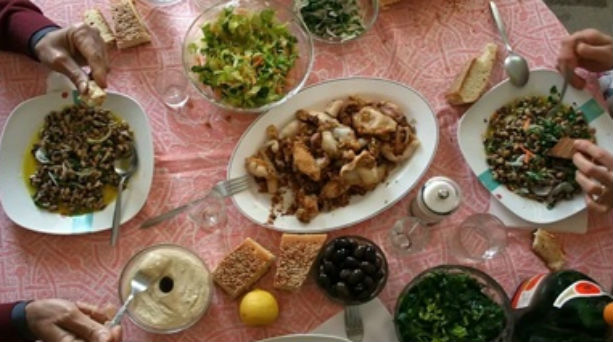
Νόστιμες μοναστηριακές συνταγές για όσους νηστεύουν

nisteia_306685295

Δοκιμάστε απλές και νόστιμες συνταγές από το Άγιο Όρος.

Μακαρόνια με ταραμά της Γερόντισσας Πάνσεμνης

Υλικά:

μισό κιλό μακαρόνια
200 γραμμάρια ταραμάς
1 φλιτζάνι ψιλοκομμένα κρεμμύδια
3 σκελίδες σκόρδου
2 φλιτζάνια χυμός ντομάτας
2 φύλλα δάφνης
3 κουταλιές μαϊντανός
3/4 φλιτζανιού λάδι
1 κουταλάκι ζάχαρη
αλάτι
πιπέρι

Βάζουμε τον ταραμά σε χλιαρό νερό για μία ώρα, να ξαλμυρίσει. Τσιγαρίζουμε στο λάδι τα κρεμμύδια και το σκόρδο. Όταν μαραθούν, προσθέτουμε την ντομάτα, ρίχνουμε τον ταραμά, την δάφνη, αλάτι, πιπέρι, τη ζάχαρη και τον μαϊντανό. Τα αφήνουμε να βράσουν, μέχρι να πιουν¨το νερό. Βράζουμε τα μακαρόνια. Τα σερβίρουμε ζεστά, με λίγη τριμμένη φρυγανιά και τη σάλτσα.

Σουσαμόπιτα

Υλικά:

½ κιλό σουσάμι
3 φλιτζάνια τσαγιού καρύδια κοπανισμένα
1 φλιτζάνι τσαγιού ζάχαρη
κανέλα
γαρίφαλο σκόνη
1 κιλό φύλλα κρούστας
½ φλιτζάνι τσαγιού λάδι
καλαμποκέλαιο για άλειμμα

Σιρόπι: 6 ποτήρια ζάχαρη, 8 ποτήρια νερό

Πλένουμε, καβουρντίζουμε και σπάζουμε το σουσάμι. Προσθέτουμε τα καρύδια, τη ζάχαρη, την κανέλα και το γαρίφαλο. Στρώνουμε 7–8 φύλλα, αλείφοντάς τα με λάδι. Κατόπιν αρχίζουμε να στρώνουμε διαδοχικά φύλλα για γέμιση. Στο τέλος αφήνουμε μερικά φύλλα σκέτα. Μόλις τελειώσουμε με τη διαδικασία αυτή, καίμε 1/2 φλιτζάνι τσαγιού λάδι και το ρίχνουμε στην πίτα. Την ψήνουμε σε μέτριο φούρνο για 1 ώρα. Όταν κρυώσει η πίτα, βράζουμε το σιρόπι για 8 λεπτά και τη σιροπιάζουμε.

Αγιορείτικη ψαρόσουπα

Υλικά:

1 κιλό ψάρια διάφορα για βραστά
2 κρεμμύδια
1 μάτσο σέλινο
4 καρότα
2 πράσινες πιπεριές
1 μάτσο άνηθο ψιλοκομμένο
4 πατάτες μέτριες
¼ φλιτζάνι λάδι
αλάτι, πιπέρι
½ φλιτζάνι ρύζι

Καθαρίζουμε και πλένουμε τα ψάρια. Καθαρίζουμε τα λαχανικά. Βράζουμε σε 1,5 λίτρο νερό τα ψάρια μαζί με τα λαχανικά ολόκληρα, εκτός από τον άνηθο. Όταν βράσουν όλα καλά, βγάζουμε τα λαχανικά και τα περνάμε από το μπλέντερ ή από το μύλο των λαχανικών, εκτός μόνο από τις πιπεριές, που τις πετάμε. Σουρώνουμε τα ψάρια, τα πετάμε και βάζουμε το καθαρό ζουμί σε μια κατσαρόλα. Ρίχνουμε μέσα επίσης το λάδι, τον άνηθο, αλάτι και τα πολτοποιημένα λαχανικά. Όταν πάρουν βράση όλα μαζί, ρίχνουμε το ρύζι και ανακατεύουμε για 10 λεπτά. Το κατεβάζουμε και ρίχνουμε λεμόνι και πιπέρι.

Ρυζόγαλο με ταχίνι

Υλικά:

1 φλιτζάνι του καφέ ρύζι για σούπα
1 λίτρο νερό
3 κουταλιές της σούπας κορν φλάουρ
1 φλιτζάνι του καφέ νερό
ξύσμα 2 λεμονιών
2 κουταλιές της σούπας ταχίνι
½ φλιτζάνι του καφέ νερό
2 φλιτζάνια του καφέ ζάχαρη

Σε μια κατσαρόλα βράζουμε το ρύζι με το 1 λίτρο νερό σε χαμηλή φωτιά. Διαλύουμε το κορν φλάουερ και το ρίχνουμε στο βρασμένο ρύζι, προσθέτοντας το ξύσμα λεμονιών, το ταχίνι που το διαλύσαμε στο ½ φλιτζάνι του καφέ, χλιαρό νερό και τη ζάχαρη. Ανακατώνουμε συνέχεια. Μόλις πήξει η κρέμα, τη σερβίρουμε στα μπωλ και τη γαρνίρουμε με κανέλα.

Όλες οι συνταγές είναι από το http://www.monastiriaka.gr/.

Πηγή: madata.gr

Η αρωματική «έκφραση» της Πασχαλιάς

PASXALINA-KOYLOYRAKIA-olivemagazinegr1

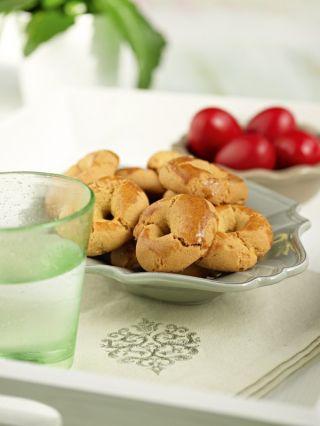
Κουλουράκια Πασχαλινά και τσουρέκια.

Το Πάσχα εκτός από ημέρες κατάνυξης και ημέρες περισυλλογής είναι και ημέρες που όλο και κάτι θα θελήσουμε να φτιάξουμε στο σπίτι για να μυρίσει με τις γνώριμες στην εποχή μυρωδιές. Παρακάτω σας δίνουμε 2 εύκολες συνταγές για την περίοδο αυτή και σας ευχόμαστε καλή επιτυχία και καλό Πάσχα!

ΤΣΟΥΡΕΚΙΑ ΠΑΣΧΑΛΙΝΑ

ΥΛΙΚΑ
• 2 κιλά αλεύρι δυνατό
• 200 γρ. μαγιά νωπή ή 8 κουταλιές ξερή
• 1 κούπα νερό χλιαρό (40 βαθμών Κελσίου)
• 3 1/2 κούπες ζάχαρη
• 1 κουταλάκι αλάτι
• 1 κουταλιά μαχλέπι αλεσμένο ή 1 1/2 κουταλάκι βανίλια ή μαστίχα κοπανισμένη ή 4 κουταλιές ξύσμα εσπεριδοειδών
• 2 κουταλιές σπορέλαιο
• 10 αυγά
• 1 κούπα γάλα καυτό
• 1 1/4 κούπα βούτυρο, λιωμένο, ζεστό

ΕΚΤΕΛΕΣΗ
Για να κάνετε επιτυχημένα, αφράτα τσουρέκια, υπάρχουν δύο μυστικά. Να προσθέσετε το βούτυρο στο τέλος και να μην τα παραζυμώσετε.
Διαλύστε τη μαγιά στο χλιαρό νερό και προσθέστε λίγο από το αλεύρι, ώστε να επιτύχετε πηχτό χυλό. Αφήστε τη σκεπασμένη σε ζεστό μέρος να φουσκώσει. Βάλτε σε μια λεκάνη ζυμώματος τη ζάχαρη, το αλάτι, τα μυρωδικά και το σπορέλαιο. Ρίξτε το καυτό γάλα κι ανακατέψτε.
Προσθέστε τ’ αυγά και δουλέψτε το μίγμα με τα χέρια, σπάζοντας τα κροκάδια των αυγών. Προσθέστε τη φουσκωμένη μαγιά και δουλέψτε τη με τα χέρια, να ανακατευτεί με τα υπόλοιπα υλικά. Ρίξτε κατόπιν το αλεύρι σε δόσεις και δουλέψτε το μίγμα με τα χέρια, ώσπου να υγρανθεί όλο το αλεύρι. Ύστερα, πάρτε το ζεστό βούτυρο με τις χούφτες σας λίγο, λίγο και ρίχνοντάς το επάνω στη ζύμη, διπλώστε την πολλές φορές, χωρίς να τη ζυμώνετε, ώσπου να τελειώσει όλο το βούτυρο.
Μην περιμένετε ν’ απορροφηθεί εντελώς το βούτυρο πριν ρίξετε το επόμενο. Δεν πρέπει να παιδέψετε πολύ τη ζύμη, αν θέλετε να επιτύχετε αφράτα και κορδωνάτα τσουράκια.
Η ζύμη πρέπει να είναι ζεστή, απαλή και βουτυρωμένη.
Το βούτυρο απορροφάται, καθώς η ζύμη φουσκώνει. Σκεπάστε την κι αφήστε σε ζεστό και υγρό μέρος, ώσπου να διπλασιασθεί σε όγκο (1 – 2 ώρες, ανάλογα με το περιβάλλον). Η ζύμη είναι έτοιμη, όταν πιέζοντάς την ελαφρά με το δάχτυλο, το αποτύπωμα μένει.
Χωρίς να ξαναζυμώσετε τη ζύμη, χωρίστε την και πλάστε μ’ αυτήν χοντρά κορδόνια. Πλέξτε τα τρία, τρία σε πλεξίδες κι αραδιάστε τις σε ταψί φούρνου, σε κάποια απόσταση τη μία από την άλλη. Γίνονται 4 πολύ χοντρές πλεξίδες ή 6 μέτριες. Σκεπάστε κι αφήστε να διπλασιαστούν σε όγκο, 30′ περίπου.
Αλείψτε τις επιφάνειες με κροκάδι, αραιωμένο με λίγο νερό και πασπαλίστε τις με αμυγδαλάκι φιλέ. Ψήστε τα τσουρέκια στους 200 βαθμούς Κελσίου, 20′ – 25′, ανάλογα με το πάχος που θα τους δώσετε. Προσοχή, μην τα παραψήσετε, γιατί στεγνώνουν πολύ γρήγορα. Φυλάξτε τα στην κατάψυξη, κλεισμένα ερμητικά σε πλαστικές σακούλες.

ΚΟΥΛΟΥΡΙΑ ΠΑΣΧΑΛΙΝΑ ΤΗΣ ΙΣΜΗΝΗΣ

ΥΛΙΚΑ
• 1κιλό και 1/4 αλεύρι
• 3 κούπες ζάχαρη
• 1 φλυτζάνι του τσαγιού βούτυρο γάλακτος
• 8 αυγά
• 1 κούπα γάλα
• 1 φλιτζανάκι χυμό πορτοκαλιού
• 3 βανίλιες
• 1/2 κουταλιά αλάτι
• 2 κουταλιές αμμωνία
• 1-2 κροκάδια αραιωμένα με λίγο νερό

ΕΚΤΕΛΕΣΗ
Κοσκινίζουμε το αλεύρι και το βάζουμε σε μία λεκάνη.
Στην συνέχεια κάνουμε μία λακκούβα στο κέντρο και ρίχνουμε το ζεσταμένο σε ένα κατσαρολάκι βούτυρο. Αφού κρυώσει λίγο το μείγμα το τρίβουμε.
Βάζουμε στο μίξερ τους κρόκους των αυγών και τη ζάχαρη, και τα χτυπάμε μέχρι να αφρατέψουν.
Ξεχωριστά χτυπάμε τα ασπράδια μέχρι να γίνουν μαρέγκα.
Σε άλλο μπολ βάζουμε το γάλα και προσθέτουμε ανακατεύοντας την αμμωνία .
Ρίχνουμε στο μείγμα με το αλεύρι, το μείγμα με τους κρόκους αυγών και λίγο-λίγο από το μείγμα με το γάλα, μέχρι να ενσωματωθούν όλα.
Με τη ζύμη που φτιάξαμε, πλάθουμε κορδονάκια και τους δίνουμε το σχήμα που θέλουμε .
Τα τοποθετούμε στο ταψί, απομακρυσμένα το ένα από το άλλο, γιατί η ζύμη θα φουσκώσει.
Τα αλείφουμε από πάνω με το κροκάδι, για να ροδίσουν. Ψήνουμε στους 180 βαθμούς Κελσίου, για 20′.
Καλή επιτυχία!

source: Neos Kosmos

Goddess style, made in Greece

goddess_style

In the time of Greek crisis, the founders of Ancient Greek Sandals managed to give work to people domestically, and prove opportunities to succeed do exist in Greece.

“According to an Ancient Greek myth, the gods and goddesses had their sandals made on the beautiful island of Crete by a gifted sandal maker who enriched each pair with magical powers. Famous for having made the flying sandals for Hermes, the sandal maker also embellished them with his personal signature … a ‘golden wing’ buckle.”

Centuries later, it’s a golden wing buckle that embellishes the designs of Christina Martini and Nikolas Minoglou, the founders of footwear brand Ancient Greek Sandals.

Launched in 2011 and made in Greece, these sandals, infused with Ancient Greek historical references – including their names – are handmade by skilled, local Greek craftsmen using centuries-old techniques.

It took the new brand one season only to bewitch footwear lovers around the world, and only a few more months to introduce the brand to Australia.
The sandals first arrived in Australia in October 2011, through their first stockist, Love Story, in Perth. Though an official Ancient Greek Sandals store has not been established yet in Australia and with no immediate plans for one, stockists in New South Wales, Queensland and Western Australia – more than 10 of them – now keep AGS’ Australian customers content.

As long as she can remember, Athens born and raised Christina Martini was always fascinated by shoes. She would continuously draw Cinderella’s shoes and her favourite thing when dressing up was to wear her mother’s ’80s pumps around the house.

It was in London, where she studied fashion, that she discovered the specialised footwear design course at Cordwainers College. Given the success of Ancient Greek Sandals, it doesn’t seem random that this College has also shaped names such as Jimmy Choo and Rupert Sanderson.
Martini further developed her skills during the eight years she spent as a designer at Louis Vuitton and Balenciaga.
“Louis Vuitton was like a second school for me, I learned everything that has to do with the making of luxury shoes there. I was always at the factories in Italy working with the most skilled craftsmen in the world. Working closely with Marc Jacobs and Nicolas Ghesquiere, two of the most important designers of our time, was a dream come true,” she tells Neos Kosmos.

It was the mutual love of Martini and Minoglou for Ancient Greece and shoes, combined with the desire to create something new and different, that led them to co-found a company that recreates the timeless and yet historical art of ancient sandal making.

Now it is their own footwear that can be found on the shelves of high-end shops around the world.

“We met through a very good friend. Right from the start we realised that we had the same vision and decided to think about how we could make it happen,” says Martini.

“Nikolas is the perfect business partner. I totally trust his decisions and he is always supportive and enthusiastic with my designs. We share the same dream.”

The divine designs of the Ancient Gree Sandals are often inspired by mythology and the Ancient Greek gods. Even the names of the sandals are Ancient Greek – Medea, Nephele, Kariatida …

For a duo that grew up in Greece, familiar with Ancient Greek history and mythology, and with ruins and archaeological sites in their close proximity, there was not much research to be done.

“Most of the times the name is connected with the design. For example, the myth of Icarus inspired our best-seller winged sandal which is called ‘Ikaria’, or a braided sandal inspired by the hair of the Kariatis statues is called ‘Kariatida’. There is always a small story behind the names … Sometimes it’s fictional,” Martini explains.

Traditional, but luxurious and more elaborate footwear is what perfectly describes Ancient Greek Sandals. The sandals have a classic beauty, but are also embellished with new details and designs.
In Martini’s own words, it’s Ancient Greece but for the modern woman.

“I was always fond of the traditional Greek sandals and their raw construction which has existed for centuries. My idea was to keep the same techniques using high quality materials, recreating the designs. I’m often inspired by original sandals depicted on statues or frescos.”

The ideas for new designs come to Martini while flipping through archaeology books, from vases and sculptures seen in museums or simply from imagination. With the brand being influenced by Ancient Greek techniques and styles I wonder how hard it must be to keep changing and coming up with new ideas, while staying faithful to the Ancient Greek inspiration. But she reassures me – her inspiration is endless, she says.

“For the moment it is not hard at all. I still explore different fields of Ancient Greek art such as jewellery, pottery and sculpture. I find the inspiration unlimited. Our main construction is the flat sandal but we have started to experiment with other heel types such as the wooden platform and wedges. In addition the materials and colours are changing every season, always in line with our original concept.”

Just three years since Ancient Greek Sandals was founded, handcrafted by a small team in Athens, they can often be seen on Hollywood stars and high-style connoisseurs. The founders, as they modestly admit, were confident but never thought the brand will conquer the world so quickly.

“Although we were a bit nervous in the beginning, we both had high ambitions and total confidence. Of course, we didn’t expect it to take off so fast. Seeing the market’s reaction the first season we launched, we automatically knew we were on the right track,” Minoglou says.

What makes Ancient Greek sandals timelessly stylish is tradition and classic design. For its high achieving founders, it is their wish to establish themselves as a traditional sandal brand which women go back to whenever they want an easy, good quality, comfortable and desirable sandal. Sandals that will carry memories of many summers and not only one.

With the brand inspired by Ancient Greece and loved by style connoisseurs worldwide, it feels that it again breathes life into the historical art of ancient sandal making. Minoglou is adamant to focus on the impact it has on the Greece of today. With the country going through such turmoil, for the founders – success of the AGS is success for Greece.

“We do feel very honoured that our sandals carry the ‘made in Greece’ stamp and are being sold in high-end shops in more than 40 countries. We feel proud that we have been able to create and sell a product across the globe, which is not only made in Greece but is also connected to our roots.
“We definitely think that we are contributing to Greece’s recovery, both directly by giving work to people domestically, but mainly indirectly by sending a strong message to the world and the young people of Greece; a message that opportunities to succeed do exist and that the Greek economy is not dead as most of us think,” London born Minoglou says.

In the same spirit, after working in Italy and Paris for over 10 years, Christina Martini had the urge to move back to Greece.

“I was always thinking that it would be great to find a way to work from Greece but couldn’t figure out how it would be possible. With the Ancient Greek Sandals idea, I realised I could make my dream come true. I moved with my partner to his family farm in Corfu where he produces olive oil.
“My family’s quality of life in the countryside is wonderful, but every now and again I do feel the urge to travel and visit the big cities such as London, New York and Paris.”
To find out more about Ancient Greek Sandals and their Australian stockists, visit www.ancient-greek-sandals.com

source: Neos Kosmos

Santos finds blueprint for Greek success

santos

Coach Fernando Santos has transformed the Greek national team over four years, amassing a 24-13-5 record.

Known as the ‘Engineer’ in his native Portugal for his university education and careful planning, Fernando Santos has lived up to that reputation in Greece since taking over as coach of the national soccer team.

Santos has transformed the team from one that struggled to live up to its astonishing victory at the 2004 European Championship to habitual qualifiers at major tournaments.

Since taking over in 2010, the 59-year-old Santos has earned an impressive 24-13-5 record, with two of those losses in friendlies using youngsters in the lineup.

Santos spent his first 15 months on the job unbeaten, easily qualifying for Euro 2012 and then advancing to the quarterfinals in the country’s first big achievement since 2004.

Following a short playing career, Santos returned to soccer as a coach 27 years ago, roughly splitting his time between Portugal and Greece with stints at FC Porto, Benfica, AEK Athens, Panathinaikos and PAOK.

Despite winning little silverware, he became regarded in Greece as a coach who could rescue troubled clubs – a skill in urgent demand at the national team four years ago when team squabbles and a rather disappointing World Cup campaign in South Africa threatened the country with a swift return to the soccer wilderness.

He kept the controlled style of play mastered by his predecessor, the idiosyncratic Otto Rehhagel, but threw out the rest of his rule book – fielding talented youngsters who struggled to get match time at their own clubs, and playing more aggressively, often with three strikers.

Fans loved it, and he loved them right back.

“I’ve never felt anything like it. The Greek people have embraced me,” the typically low-key Santos said after play-off matches against Romania sealed World Cup qualification.

Players threw him in the air, he cried, and spoke Greek publicly for the first time.

Santos has said he will step down after the World Cup, revealing that coaching had tired him and that he wanted to think about the remainder of his career.

“I have a few years left in coaching and I need to think about myself … After all these years, you get attached to the people around you,” he said. “So, professionally it wasn’t a difficult decision, but emotionally it was.”

Source: AP

Tug of war for Sydney Academy

tempe%20reserve%20sydney

Sydney FC’s bid to make a Centre for Excellence could be derailed by community support of Sydney Olympic.

One stretch of land has created a tug of war between two football clubs, the A-League’s Sydney FC and local Sydney Olympic.

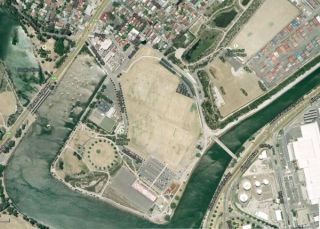
The two clubs are both looking to build a Centre of Excellence at Tempe Reserve, in an attempt to foster the world class football academy Sydney has lacked.

Sydney FC has its reputation as a top tier club training the country’s best, while Sydney Olympic has community support and a long running history of grassroots football training attached to its name.

The Reserve is currently in the Marrickville Council’s hands and they ultimately have the last say on who gets to develop the land.

The site sits near the foot of Sydney Airport and is one of the main spots Sydney FC is looking to build their new headquarters, training base and Centre for Excellence project.

They’re hoping to accommodate youth teams down to grassroots levels with the development, to mirror academies started by fellow A-League team Central Coast Mariners.

With the buy-out of Melbourne Heart, rumours have circulated that the club is considering creating a training academy at the grounds of La Trobe University to introduce the first A-League affiliated academy in Melbourne. The time is ripe and somewhat delayed for Sydney FC to start their own journey outside of
the A-League.

Sydney FC Chairman Scott Barlow has always wanted for the club to progress and sink its teeth into the neighbourhood, providing a more robust future for the club in its 10 year existence.

Sydney Olympic, on the other hand, has community support and a much longer running relationship with the area. Its longevity has been a testament to the Greek community that started and nurtured it.

Sydney Olympic vice president, Graham Athanaseris, says the community involvement Sydney Olympic has is one of the biggest positives for the club and its biggest asset in winning the building permits.

“We are a community based club, and we’re not about private enterprise, we’re about availing the opportunity to the greater community, and that’s schools in the area, public and private sector,” he tells Neos Kosmos.

“They’re looking at making money out of their Centre of Excellence, we’re doing this to create an opportunity, it’s not about making money, it’s about adding value.”

Private school Newington College who uses the Reserve first began talks with Olympic for a joint application to see them share the future facilities.

Sydney FC jumped on the bandwagon the minute Olympic made its intentions known, Mr Athanaseris says.

The school already has an existing relationship with Olympic regarding use of Tasker Park in Canterbury and past and present players have attended the school.

If Sydney FC fails to get its development at Tempe Reserve, it’s made no secret that it has been looking at plan B sites.

Leichhardt Oval was one such site, where the club approached the council last year to nut out if the plan was viable and would be met with council support.

If Sydney FC and Olympic get the green light, (and one moves to another site), will the business model be viable? Can two Sydney academies co-exist?

Mr Athanaseris believes the two Centres can and will co-exist, and won’t be hampered by one another so much. He believes demand is high and that the two academies will be vastly different.

“The growth of the sport constitutes having more than one facility,” he says.

“I think it’s been lacking in Australia for a very long time.

“The only common denominator we have is lending ourselves to a round ball, we’re going to have other programs in place and we’ve added different aspects
to our bid that Sydney FC wouldn’t have considered.”

The tug of war will continue, but at least it will be a win-win for the sport.

source: Neos Kosmos