Daily Archives: April 2, 2014

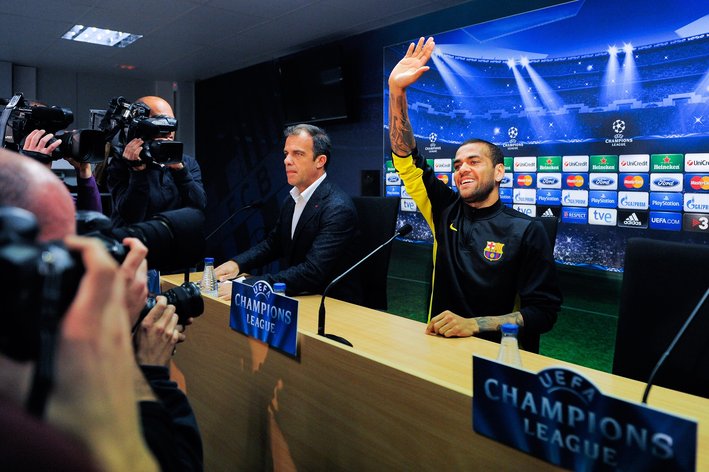
Champions League: La Liga top two clash as Barcelona host Atletico Madrid

FC Barcelona Training Session

The top two in La Liga put their domestic rivalry to one side as Barcelona and Atletico Madrid clash in the first leg of their Champions League quarter-final on Tuesday.

Atletico currently sit on top in Spain, a point better off than defending champions Barca, but the record between the two sides is weighted heavily in favour of the Catalan giants, who have not lost a Champions League quarter-final match since 2003.

Atletico do look to have a mountain to climb given their recent record against Barcelona, which has not seen them win at the Camp Nou since 2006 when Fernando Torres scored twice.

Their last win over Barca was in 2010, when they beat them at the Vicente Calderon, and although their successes are limited, they are unbeaten against them this season in three matches.

In addition, Barcelona’s record against fellow Spanish sides in the Champions League is not wonderful, having only won two of those six clashes.

The two faced off over two legs in the Spanish Super Cup, with both games ending in draws as Barcelona prevailed only due to scoring an away goal in Madrid.

The two have also met in La Liga earlier this year but that match ended goalless.

Barcelona are looking to book their seventh successive semi-final appearance in the Champions League, which would extend the record they already hold.

Atletico have not reached the semi-finals since 1974, but along with city rivals Real, they are one of only two teams who are still undefeated in the Champions League this season.

Barca come into the game off the back of a narrow 1-0 win over their city rivals Espanyol, whilst Atletico claimed a 2-1 success at Athletic Bilbao in the Basque country.

The match interestingly also pits two Argentine coaches against each other in the shape of Gerardo Martino and Diego Simeone.

source: eurosport.com

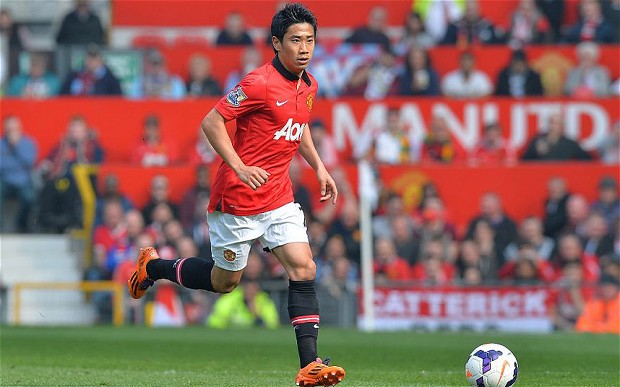
Manchester United v Bayern Munich: Shinji Kagawa could be key figure in Champions League quarter-final


kagawa4_2868283b

Moyes mulls over option of starting the Japanese playmaker in an central role behind Wayne Rooney in Champions League quarter-final against the Germans.

David Moyes has rarely trusted Shinji Kagawa this season, often dropping the 25-year-old attacking midfielder first after a poor result or team performance. But, with Juan Mata ineligible and Robin van Persie sidelined with a knee injury, the former Borussia Dortmund playmaker would appear an obvious choice for a key role in Tuesday night’s Champions League quarter-final first leg against Bayern Munich.

Kagawa has been on the winning side in each of his four matches against the German champions, but when asked whether that record would work in his favour, the Manchester United manager delivered a response which, in football terms, was along the lines of ‘don’t call us, we’ll call you.’

“It is something we seriously considered,” Moyes said. “Shinji is a really important player for us. He gives us something different and he is certainly in our thoughts for the game.”

The fact that Kagawa’s place against Bayern is not guaranteed highlights the manager’s doubts about the midfielder and the dilemma facing him about the approach United must take against Bayern.

If Moyes is prepared to be bold, Kagawa’s impressive performances during the recent victories over West Ham United and Aston Villa would ensure his place in the No 10 role behind Wayne Rooney.

But Bayern’s power in midfield may force Moyes to go for numbers in the centre of the pitch, resulting in Kagawa’s flair and vision being sacrificed in favour of a more workmanlike axis of Michael Carrick, Ryan Giggs and Marouane Fellaini.

Kagawa has appeared in less than half of United’s 47 games this season, with those close to the player claiming that his mild mannered persona prevents him from going public with his genuine frustration at being consistently overlooked by Moyes.

Ever since a group of Borussia Dortmund supporters launched a ‘Free Shinji’ campaign in August – an effort to persuade Dortmund to take him back to Germany in January – the £17 million signing has struggled for the game time to persuade Moyes of his worth.

When United lost at home to West Bromwich Albion in September, Kagawa was withdrawn at half-time and singled out by Moyes for his apparently underwhelming performance – comments which did little to inflate the confidence of a player whose self-critical nature has led many to question his ability to succeed at Old Trafford.

Yet there has been a pattern to Kagawa’s eye-catching performances in a United shirt and the fact that his return to form has coincided with Van Persie’s injury should not go unnoticed. Last season, Kagawa thrived when playing behind Van Persie or Rooney, but he proved peripheral when both forwards played, as a result of being consigned to the flanks.

Out on the wing, Kagawa struggles to make an impression, but his impact from a central role –– his pass which led to United’s penalty against Villa emphasised his destructive capabilities through the middle –– gave weight to claims last season by Dortmund coach Jurgen Klopp that the player is best used in the No 10 role.

“Shinji Kagawa is one of the best players in the world and he now plays 20 minutes at Manchester United –– on the left wing!” Klopp said. “

“Central midfield is Shinji’s best role. He’s an offensive midfielder with one of the best noses for goal I ever saw.”

Touch maps from the West Ham and Villa games show Kagawa’s heavy involvement when playing centrally and, under Klopp, he claimed 17 goals from that position in his final season at Dortmund, inspiring the club to a domestic double.

With Mata arriving at Old Trafford in January, however, his days at Old Trafford appear to be numbered.

But if Moyes trusts him against Bayern, Kagawa may just give United the cutting edge that could, perhaps, give the German champions something to worry about it.

source: telegraph.co.uk


Migrants face ‘living hell’ in Greek detention

Greece immigration centres

Migrants and asylum-seekers detained in Greece are being forced to endure deplorable conditions, often with devastating effects on their health, according to a report from aid agency Médecins Sans Frontières (MSF).

Doctors who have attended internment camps, police stations and coastguard facilities around the country described “a living hell” for thousands of immigrants denied fresh air, natural light and basic sanitation.

In one detention camp in Komotini, not far from the Turkish border, medics saw human excrement seeping through cracked pipes between the building’s floors.

“I did not think that such conditions were possible on European soil,” said Marietta Provopoulou, who spent more than a decade working in Africa before returning to Athens to head MSF in Greece. “The main complaint of migrants is that they are not being treated like human beings, that they are being subjected to a living hell,” she told the Guardian. “And they are right.”

MSF said the practice of rounding up migrants on a massive scale had created a breeding ground for disease in detention centres nationwide.

Outbreaks of scabies in overcrowded camps were commonplace. So, too, were respiratory infections, gastrointestinal disorders, musculoskeletal problems, dental problems and tuberculosis. Unaccompanied minors – mostly from Afghanistan – wrongly registered as adults were also being detained.

“The conditions are shocking,” said Panagiotis Tziavas, a MSF doctor.

“Not only are people crammed in a very small area. Another major problem are the sanitary conditions … most of the latrines are in a disgusting state.”

Greece is a major transit point for immigrants desperate to get to Europe from Asia, Africa and the Middle East. Under pressure from the EU to stem the influx, Greece’s conservative-dominated coalition began a “clean-up” operation in the summer of 2012, systematically detaining migrants and asylum-seekers, often indiscriminately.

MSF teams with access to detention facilities over the past six years said they had witnessed a surge in the numbers subject to prolonged detention, with most incarcerated for the maximum limit of 18 months. In an atmosphere of far-right anti-immigrant sentiment, there was also the risk of repeated detentions. Even asylum-seekers fleeing war-torn countries such as Syria were being incarcerated for up to 15 months.

“Often migrants are detained for up to 18 months in the holding cells of police stations that were only meant to keep people for a few days,” said Ioanna Kotsioni, head of migration policy at MSF Greece.

Many former army camps and military academies were hastily transformed into detention centres overnight. Facilities were cramped and humid with soggy mattresses causing growing numbers to suffer from musculoskeletal problems, the group said.

“Around 6,000 migrants and asylum seekers are currently being detained and the illnesses we are seeing are linked, without doubt, to the squalid living conditions,” she added. “In police stations, where bed bugs are common, detainees rarely have access to fresh air, natural light or exercise areas – in violation of European law. In some detention camps they have limited or no access to showers or toilets. And in Komotini, we saw human waste seeping through broken pipes from one floor of the building to the next. The indifference on the part of authorities was extraordinary.”

A number of migrants have reportedly tried to take their own lives. One 16-year-old Afghan boy, who had made the perilous journey from his home country to Greece, but was detained in Komotini, recently jumped from the roof of the building in protest over the living conditions, according to MSF.

“We are detained for 18 months. Why? I have come for peace, I am not a criminal,” the boy, who broke both his legs, was quoted as telling the relief organisation. “The water of the showers is always cold and the toilets never work. The food is bad, it’s not healthy food. Many times I have asked to be released because I am a minor but they have always refused … since they didn’t want to release me I thought it was better for me to jump off the roof than to stay here.”

source: theguardian.com