Monthly Archives: June 2014

Gerontopoulos welcomes St Spyridon students

Gerontopoulos01

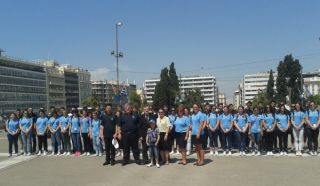
Deputy Foreign Minister of Greece responsible for the Hellenic diaspora Akis Gerontopoulos (C) with students and teachers of St Spyridon College at Syntagma Square in Athens. Photo Supplied.

Students and teachers of Sydney’s St Spyridon College are currently visiting Greece.

Deputy Foreign Minister of Greece responsible for the Hellenic diaspora, Akis Gerontopoulos, last Sunday met, in the heart of Athens at Syntagma Square, students and teachers of Sydney’s St Spyridon College who are currently visiting Greece on holidays.

The students and Minister laid a wreath at the Shrine of the Unknown Soldier in Syntagma Square as agreed earlier in the year during the Greek Minister’s visit at St Spyridon’s College in Sydney in March.

source: Neos Kosmos


WORLD CUP 2014:Australia eyes Spain sendoff

cahill%20(2)_0

The Socceroos will give the Spaniards no mercy in their final match for the World Cup.

Our fate might be sealed, but the Socceroos aren’t going to walk away from the World Cup without a stunning send off.

Up against the Cup’s biggest upset, Spain, at the Arena da Baixada, Curitiba next Monday (Tuesday 2.00 am AEST), the whole team is itching to show the world that Australia isn’t a team it can underestimate. Already Australia holds a better goal difference than the title holders Spain, a feat no one would have put their money on before Spain’s demoralising 5-1 loss to the Netherlands.

The squad came into the World Cup hoping to cause some upsets, and it definitely has. Both Chile and the Netherlands thought they were going to have easy wins, but in fact were chasing after the speedy Socceroos, leaving the pitch still gawking at Tim Cahill’s goals.

Despite not qualifying for the knock out stage, the Socceroos aren’t going to take their last game lightly. After a recovery session at their pool in their home base of Vitoria on Thursday, it’s back to business for the squad.

Socceroo defensive midfielder Matt McKay says he’s extremely happy with the way the squad has gelled in Vitoria, and knows that the Spaniards will be desperate to restore some pride in their game.

“Spain are a special team and are still reigning world champions, and will want to make a statement against us,” he said.

McKay, just like the rest of the team, believes in coach Ange Postecoglou’s goal of building the new golden age of the Socceroos, and knows it will take time.

“We are here to win games. We made a statement to the world that we can play and have made Australia proud,” he says.

Tim Cahill will miss the next match but will be there to support the team and make sure they achieve the right send off.

“This last game is massive. If we beat Spain it will be one of the best moments in Australian football.”

Cahill paid tribute to coach Postecoglou who, despite losing both opening games at the World Cup (Chile 3-1, Holland 3-2), has reinvigorated the national team since taking over eight months ago.

“Under Ange we trust in him and he trusts us. He knew a long time ago that we could do something special at this World Cup.”

“It is great to have a coach who believes in us and who will be around for a long time.”

source: Neos Kosmos

Young leading the change in Greece: Economides

economides

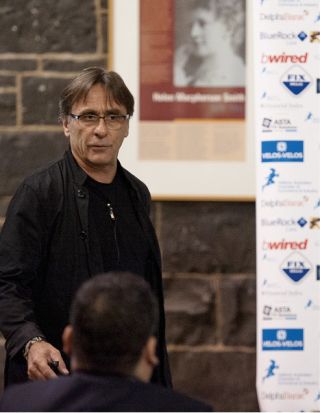
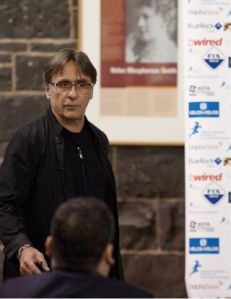
Peter Economides at HACCI’s seminar at the State Library of Victoria this week. PHOTO: Constantly Flashing Photography.

Ad guru and brand strategist Peter Economides sees the creative young in Greece making big differences by adapting to harsh circumstances.

“When you’re in serious trouble, you have to do something, you have no choice,” world-renowned brand strategist Peter Economides muses.

That push under very harsh circumstances is helping young Greek professionals to find new and inventive ways to stay afloat in their debt riddled country.
With the unemployment level for the 18-34s still teetering at 60 per cent, the situation has fostered a new age of start-ups and business ventures for the young that stay behind.

Mr Economides, who has helped brands like Apple and Coca-Cola define themselves globally, believes Greece’s young are creating the change that Greece so desperately needs, way ahead of the government’s actions.

“We have a very well educated young population that just can’t find work,” he tells Neos Kosmos on his visit to Melbourne.

“So what happens is you either pack up and leave and go somewhere else, you join Golden Dawn and you get all anti-immigrant or you start throwing Molotov cocktails because you’ve become very angry.”

“But there’s another reaction that comes out of all of this, which is ‘I need to do something’.”

This reality, that being educated and able to work isn’t necessarily going to get you a job, and most probably won’t, has created a new group of Greeks that have to think outside the box, invest in a good idea, and put everything they have into making it work.

They aren’t going to wait for the government to introduce new reforms, they learn to work with what they have, and work the system to their advantage.

In the past couple of years, countless Greek start ups have found global success, making products that aren’t adding to an already saturated market, but filling voids in the consumer world.

Companies like Dirty Secret, an app that started out as a direct response to the crisis, giving young people tips on where to go in Athens that is off the beaten track, something to look forward to.

The app/email subscription business has now expanded to 72 cities and is coming soon to Australia.

Greeks aren’t just filling niche markets, they are also creating unique Greek products that add to already well established markets.
COCO-MAT, a company that makes mattresses out of Greek seaweed and cotton, has become a hit in 12 countries and is expanding to more.

The idea came to owner Paul Efmorfidis when he was on a beach in Greece. Annoyed at having to sit on uncomfortable, rough sand, he laid out some seaweed to sit on, and discovered just how comfortable it could be.

“He said, ‘I can’t make mattresses better than Germans or Americans but I can make mattresses only as a Greek can’,” Mr Economides remembers Mr Efmorfidis telling him

In 2012, Mr Economides launched his ‘Ginete’ campaign, to create a safehaven for creatives and start ups.

Although the idea hasn’t seen the implementation phase, Mr Economides has fostered a smaller project with the help of the Dutch Embassy in Greece.

The project, called Orange Grove, started out as a way to foster better relations with the Dutch and the Greeks, but doing it in a very constructive way.

The project, set up in a 400 sqm space in the Dutch Embassy, sees more than 37 start ups working alongside each other, being offered mentoring from both Dutch and Greek professionals, and links them to financial aid from big business.

The Dutch government is so impressed with the initiative that it’s looking to introduce Orange Groves in other embassies around the world.

“I go there and give talks every few weeks, they bring in people from Dutch universities, we do a ‘Dragons Den’ every few weeks where we just pull these kids to pieces, we marry them up with finance people, I mean it’s a really good incubator,” Mr Economides says.

He believes the initiative answers a big need, something that the Greek government has been slow to encourage.

Fostering these hubs will create a brand new, creatively mature nation, and will open up trade options with countries and their businesses.

That is where Mr Economides believes the disapora can be very useful. Creating business connections with these start ups won’t be charity, but rather a mutually useful tool for companies to expand into a European market.

He is already seeing a shift with big Greek companies, who are adapting to their shrinking Greek market share and are looking to global markets to supplement their brands.

‘I think they’re realising that it’s not a question of taking a Greek product and simply going and selling it abroad, they have to really take something and which will have demand and real consumer relevance assured,” he says.

“Well-established Greek companies, who are very good at doing what they’re doing now turning seriously and looking at global markets.’

The only concerning factor for Mr Economides is the mass exodus of young Greek creatives. The lack of opportunities in Greece has seen thousands seek better fortunes in more stable countries like Australia and the US.

The only way he believes the young will feel secure in their own country is to believe in a realistic ideal.

“I think the way to get them to stop leaving is to give them a vision that a young person can buy and say ‘Yes, I believe in that’,” he says.

“It needs initiatives like the Dutch initiative but on a bigger scale.”

He wants to see Greece change its brand and adapt it to a new sentiment.

“We can’t be this ouzo slugging character dancing on the beach, but the spirit of that we certainly need,” he says.

“We’re looking for the descendants of Zorba; what we do that separates the Greeks from anyone else are all those elements of focusing on life.”

Mr Economides was in Melbourne this week and hosted two events for the Hellenic Chamber of Commerce and Industry (HACCI). He will be back in Melbourne in September to launch the Benaki Museum collection at the Hellenic Museum.

source: Neos Kosmos

 

Greece: Banks can seize deposits for debts

GR-banks-debts

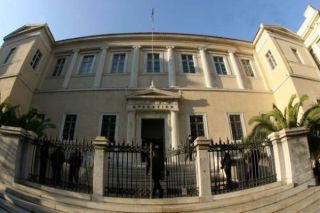
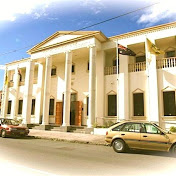
The Council of State in Greece.

Council of State says no notification to account holders is necessary.

The Greek state and insurance funds have the right to seize bank account deposits for debts owed to them without informing the account holder, the Council of State, the country’s supreme administrative court ruled this week.

In an irrevocable decision that overturns earlier rulings, the Council of State said that informing account holders of the intention to seize deposits would defeat the purpose.

“Were the (account) owner notified of the measure, s/he would rush to withdraw the funds from the third party (the bank)” or s/he “would transfer their assets to another party”, it said.

The court ruled that the lack of notification did not violate constitutional rules. It said debtors were well aware when payment deadlines had passed and warned that the use of “obligatory measures” against them to collect debts was possible once the deadline passed.

The ruling arose from case taken by the CEO of a now defunct company, which owed €565,393 to the Social Security Foundation (IKA), the country’s largest social insurance fund. The tax office authorised the recovery of the debt and proceeded to withdraw the funds from the account into which the CEO’s pension was paid without informing him. He only found out about the seizure nine months later when he went to withdraw funds.

In a decision in March, a section of the Council of State had ruled the seizures were illegal if the state did not inform the account owner.

This week’s decision, however, reverses this judgement.

Source: enetenglish, ana-mpa

Council of State says no notification to account holders is necessary.


Greece: Property prices plummet

Gr-property%20plummets

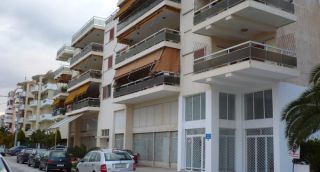
Greece recorded one of the biggest property price falls in the world at the end of 2013, according to the IMF.

IMF report finds it is better to buy rather than rent in Greece.

IMF’s ‘Global Housing Watch’ says that a typical upscale housing unit of 100 m2 in Greece was only slightly out of reach of average household incomes, but were much more affordable than in places like Belgium, Canada, Australia or the UK.

Greece recorded the second biggest decline in real estate prices in the world in the fourth quarter of 2013, the International Monetary Fund said on Thursday.

In a report called ‘Global Housing Watch’, the IMF said the biggest decline worldwide was in India (-9.1 per cent), followed by Greece (-7.02 per cent), Italy (-6.54 per cent), Cyprus (-6.48 per cent) and Croatia (-6.35 per cent).

On the other hand, the Philippines (10.56 per cent), Hong Kong (10.25 per cent), New Zealand (9.1 per cent), China (9.1 per cent) and Colombia (8.1 per cent) saw their real estate prices increase in the same period.

The report said that a typical upscale housing unit of 100 m2 was only slightly out of reach of average household incomes, but was much more affordable than in places like Belgium, Canada, Australia or the UK.

The report also found that the house price-to-rent ratio in Greece was -16.3 per cent below the average. In other words, it makes more sense to buy a home than to rent it. In Canada, on the other hand, the current ratio is about 86.7 per cent, meaning it makes the most sense to rent.

Source: enetenglish, ana-mpa


Incoming senators under pressure: Tony Abbott reintroduces carbon tax repeal bills

abbott

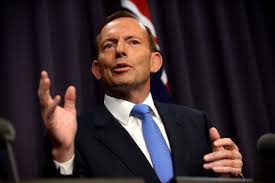
Prime Minister Tony Abbott has set up the axing of the carbon tax as one of the first debates of the new Senate, reintroducing a bill to repeal the tax into the House of Representatives.

He has called on the Federal Parliament to quickly “scrap this toxic tax”, putting pressure on incoming crossbench senators who take their places on July 1.

The government’s bill to repeal Labor’s carbon price was reintroduced on Monday, three months after Labor and the Greens first used their numbers to defeat the bill in the Senate.

Mr Abbott said earlier on Monday that he expected the new senators to support the scrapping of the tax and “urgently” pass the abolition bill after July 1.

“The people have spoken and now it’s up to this Parliament to show it listened,” Mr Abbott told the Parliament.

“The Australian people passed their judgment on the carbon tax.”

Mr Abbott said his government had set down a “visionary” budget for Australia, but scrapping the carbon tax was a “cornerstone” for achieving its plan for a stronger economy.

Palmer United Party leader Clive Palmer, whose three senators will share the balance of power in the new Senate, said he will announce his party’s final position on the carbon tax on Wednesday.

Speaking to reporters during a visit to a Canberra school on Monday, Opposition Leader Bill Shorten said Labor had made it clear it would only support the repeal of the carbon tax if it was replaced by ”an effective policy”.

”I don’t think anyone thinks that this smelly bag of fish called the Direct Action policy, a multibillion-dollar boondoogle to hide the fact that they’re climate sceptics, satisfies anyone,” he said.

”How in good conscience when we meet these lovely children today, how can we say to them in the years to come that we were in a Parliament that did nothing about climate change?”

The government also reintroduced bills on Monday to abolish the Climate Change Authority and the mining tax as it sets about making the dismantling of the previous government’s carbon laws one of the first items of business for the new Senate.

The government is facing a fight on some measures after the current Senate created a double dissolution trigger by voting down a bill to abolish the Clean Energy Finance Corporation for the second time last week.

That bill is also being reintroduced, but its success could hinge on the vote of one senator – incoming Australian Motoring Enthusiast Party senator Ricky Muir.

Mr Abbott’s declaration that voters had passed their judgment on the carbon tax comes as an annual poll by The Climate Institute found that for the first time more Australians support Australia’s carbon pricing laws than oppose them.

The poll found that the number of Australians who disagree with the laws fell to 30 per cent, down from 52 per cent in 2012, when the Coalition’s attack on the carbon tax was at its peak. It also represents an 11 per cent decline in opposition from last year.

At the same time the percentage of Australians who supported the carbon price rose 6 per cent to 34 per cent over the past year. It is the first rise in support under the Climate Institute poll since the laws were introduced by the Gillard government.

But more people were indifferent than supportive or opposed, with 36 per cent saying they neither agreed nor disagreed with the laws.

The poll – carried out by JWS Research, which surveyed 1100 people online late last month – also found just 22 per cent of people supported the government’s Direct Action scheme, which will replace the carbon tax.

source: smh.com.au

Australia:Top students shun teaching careers

teachers

THE nation’s best students are increasingly deciding against becoming school teachers, research shows.

A REPORT compiled by the Australian Institute of Teaching and School Leadership obtained by News Corp Australia shows more than 40 per cent of students entering the profession in 2005 were drawn from the top echelons but by 2012, the number had dropped to fewer than 30 per cent.

At the same time, the proportion of students entering teaching with poor Year 12 results rose to 13 per cent from less than 10 per cent.

Education Union federal president Angelo Gavrielatos has told The Australian the union supports measures to increase teacher education entry levels and believes a cap on the number of places available is needed.

Mr Gavrielatos also questioned why Education Minister Christopher Pyne had commissioned a review of teacher education and excluded issues relating to enrolment standards from its terms of reference.

The institute’s report, which uses customised data provided by the federal Education Department, reveals a startling attrition of the brightest students out of teaching.

It also finds that one in five teaching students are from disadvantaged backgrounds, compared with 15 per cent in other degrees, and teaching also has a greater representation of students from regional areas: 26 per cent compared with 20 per cent.

source: theaustralian.com.au

Έκρυβαν έξι νεκρούς Έλληνες στρατιώτες για 73 χρόνια

6krumelstrat_974632717

Επί 73 ολόκληρα χρόνια τους «έκρυβε» στην αυλή του σπιτιού της.

Τα περισσότερα από αυτά τα χρόνια διακινδυνεύοντας την προσωπική της ελευθερία ή και τη ζωή της. Μολονότι δεν ήταν καν μέλη της οικογένειας της, φρόντιζε να μην τους «λείπει» τίποτα. Ακόμα και η δροσιά, τα ζεστά καλοκαίρια. Τώρα που ο ήλιος της ζωής της αρχίζει να δύει, και θα αναγκαστεί να τους «αποχωριστεί», θέλει να τους «παραδώσει» εκεί όπου ανήκουν: στις λαμπρές σελίδες της εποποιίας του έθνους.

Οι «φιλοξενούμενοι» της κ. Ερμιόνης Μπρίγκου είναι έξι νεκροί Έλληνες στρατιώτες. Τους είδε, εννιάχρονο κοριτσάκι τότε, να πέφτουν νεκροί μπροστά στο σπίτι της πολεμώντας τον ιταλικό στρατό στη Χειμάρρα της Αλβανίας και βοήθησε, με τις παιδικές της δυνάμεις, τους γονείς της να τους κουβαλήσουν και να τους θάψουν στην αυλή τους. Έκτοτε και μέχρι σήμερα δεν τους «άφησε» ποτέ μόνους. Ούτε ακόμα και όταν την εποχή της δικτατορίας του Χότζα όλα «τα ‘σκιαζέ η φοβέρα».

Όπως εξιστόρησε στην Καθημερινή, μια μέρα οι Ιταλοί χτύπησαν το σπίτι-στρατηγείο με όλμους σκοτώνοντας έξι στρατιώτες. Καθώς οι υπόλοιποι αναγκάστηκαν να μεταφερθούν, γιατί είχαν γίνε στόχος, μαζί με τον πατέρα και τη μητέρα της «σήκωσαν» τους Έλληνες στρατιώτες και τους μετέφεραν στην αυλή. Έσκαψαν, άνοιξαν εκεί δυο τάφους και τους έθαψαν. «Ένας από αυτούς πεθαίνοντας μας είπε: εγώ φεύγω, σας αφήνω το πορτοφόλι μου».

Στη «μακρά νύχτα» του Χότζα, οι Έλληνες στρατιώτες αναπαύονταν «εν τόπω χλοερώ», με τη φροντίδα της οικογένειας Μπρίγκου. Για τους Έλληνες κατοίκους του οικισμού ήταν ένα καλά κρυμμένο «ιερό μυστικό». Φρόντιζαν να μη μαθευτεί και μπουν σε περιπέτειες, με δεδομένη την εχθρότητα του καθεστώτος και του αλβανικού εθνικισμού, απέναντι στους Χειμαρριώτες. «Είχαμε φόβο, κρατούσαμε κλειστό το στόμα», λέει η κ. Ερμιόνη.

Πηγή:enikos.gr

Australia: Going back to work a poor idea for single mums

single mums

SINGLE mothers earning a low income may be taking home just $3.44 per hour with their pay consumed by income tax, lost welfare benefits and childcare costs.

New research from the University of Canberra reveals how small the financial incentive can be to return to work after having a child.

It found a single mother being paid a low income would keep just $9.09 of her $16.37 hourly wage for working part time at 20 hours per week.

If she then went full time at 40 hours per week, those 20 extra hours would earn her an extra $3.44 per hour.

For a single parent on average wages, it would be closer to $10.20 an hour.

Principal research fellow Ben Phillips with the university’s National Centre for Social and Economic Modelling said despite the small wages, there were other reasons mothers returned to work.

“I think in this day and age, if you’re out of the labour force for three, four, five years or even longer, it doesn’t look particularly good on your resume,” Mr Phillips told ABC Radio.

Mr Phillips said on these calculations, childcare would be costing about $170 per day – rates charged near Sydney Harbour or in remote mining communities.

On average, this might be closer to $80 for a 10-hour day of care, or $50 per day in North Queensland, where daycare is cheapest.

source: whitsundaytimes.com.au

Australia:Poll finds support growing for carbon pricing laws

MJwide-p9climate-20140622182510895241-620x349

Support for Australia’s carbon pricing laws has grown as the Abbott government prepares to repeal them next month, with more people now in favour than opposed.

An annual poll by the Climate Institute found the number of Australians who disagree with the laws fell to 30 per cent, down from 52 per cent in 2012 when the Coalition’s attack on the carbon tax was at its peak. It also represents an 11 per cent decline in opposition from last year.

At the same time the percentage of Australians who supported the carbon price rose six per cent, to 34 per cent, over the past year. It is the first rise in support under the Climate Institute poll since the laws were first introduced by the Gillard government.

But more people were indifferent than supportive or opposed, with 36 per cent of people saying they neither agreed nor disagreed with the laws.

The poll – carried out by JWS Research, which surveyed 1100 people online late last month – also found just 22 per cent of people supported the government’s Direct Action scheme, which will replace the carbon tax.

Australians were also cynical of both major political parties when it came to climate change. Voters were particularly sceptical of Prime Minister Tony Abbott, with only 20 per cent saying they believed him when he said he was concerned about action on climate change. Opposition Leader Bill Shorten performed only slightly better, with 31 per cent trusting his approach to climate change.

In other results the polling found 61 per cent of people wanted Australia to be a global leader on solutions for climate change.

It comes as the independent Climate Change Authority said in a new research paper the international community expected Australia to present credible targets for cutting greenhouse gas emissions after 2020 as part of the push to strike a historic new global deal on climate change.

In the paper, looking at what the new treaty could look like, the authority says if Australia led positively on targets and other issues it would enhance its influence in crafting the new agreement, which is due to be finalised at a meeting in Paris late next year, to come into effect from 2020.

Authority chairman and former Reserve Bank governor Bernie Fraser said Australia had played an active role at past international negotiations and ”as a wealthy developed country and a high per capita emitter of greenhouse gases, it will be expected to carry a fair share of the post-2020 emissions reductions”.

In its report the authority says given Australia’s relative wealth and capacity it will be expected to produce an unconditional post-2020 target by April next year, as some countries were invited to do at United Nations climate negotiations in Warsaw last year.

In a previous report the Climate Change Authority – which the Abbott government plans to close –  recommended Australia adopt a 40-60 per cent emissions cut on 2000 levels by 2030.

The Abbott government has so far committed to a five per cent cut in emissions from 2000 levels. A spokesman for Environment Minister Greg Hunt said the government would review the 2020 emissions target next year considering further action and targets on the basis of ”comparable real global action”.

The authority paper also warns insisting on a global agreement similar to the current Kyoto Protocol – a universal, prescriptive, enforcement-oriented legal agreement – would likely be counterproductive as it is not achievable in the short term.

source: smh.com.au