Monthly Archives: June 2014

NASA discovers gargantuan rocky planet dubbed ‘mega-Earth’

megaearth1

Scientists dubbed the planet a mega-Earth because it’s much larger than previously discovered rocky celestial bodies. Photo: AFP / HANDOUT /Harvard-Smithsonian Center for Astrophysics / David A. Aguilar (CfA)

The planet, sighted by NASA’s Kepler spacecraft, is located 560 light years from Earth and circles a Sun-like star every 45 days.

Boston: A rocky planet weighing 17 times as much as Earth has been found, surprising astronomers who expected it to be a big ball of gas.
Scientists dubbed the planet a mega-Earth because it’s much larger than previously discovered rocky celestial bodies. The planet, sighted by the US National Aeronautics and Space Administration’s Kepler spacecraft, is located 560 light years from Earth and circles a Sun-like star every 45 days. The finding was reported on Monday at the American Astronomical Society meeting in Boston.
Scientists have theorized that a planet that big, formed when heavy elements were scarce in the early days of the universe, couldn’t have formed as a solid. They expected to find that the planet, called Kepler-10c, was a gas giant like Jupiter, made up primarily of hydrogen. Instead, when they measured its density with special instruments, they found it weighed more than Earth.
Finding Kepler-10c tells us that rocky planets could form much earlier than we thought, said Dimitar Sasselov, director of the Origins of Life Initiative at Harvard University, in a statement. And if you can make rocks, you can make life.
The new planet is in a system about 11 billion years old, forming less than 3 billion years after the Big Bang, according to the report on Tuesday. The Earth is about 4.54 billion years old. BLOOMBERG
source: livemint.com

Socceroos get off to winning start but Tom Rogic fails to deliver as fitness concerns mount

1401741518257_jpg-620x349

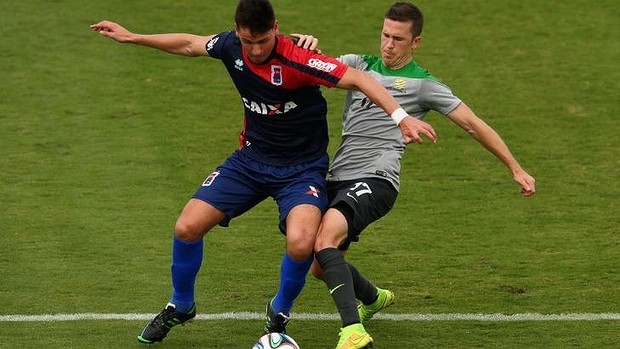
An experimental Australian side got its Brazilian campaign off to a winning start against local second division side Clube Parana, two first-half goals from Adam Taggart and Oliver Bozanic enough to see off the opposition in a warm-up match before the serious stuff starts at the weekend with a game against Croatia.

While some players certainly advanced their cases for retention in the squad or to play a part in the tournament proper – especially Bozanic,Massimo Luongo and Ben Halloran –  the highly-regarded Tom Rogic finished the game with a cloud over his head.

The latter’s fitness has been a concern for months and the frailty of his body has been a major issue clouding his selection. He started this game in an advanced midfield role but contributed little after he sustained another knock midway through the opening period, being replaced at half time as Melbourne Victory’s James Troisi came into the game.

Rogic represents the biggest gamble that Socceroos coach Ange Postecoglou has to take when he names the squad on Tuesday night, Australian time.

The lanky midfielder offers a creative option that few others in this group of players can and his vision gives him the ability to unlock defences with sharp passes in an instant. But he has not been able to play any consistent football for the best part of a year now and he still looks some way off match sharpness.

ostecoglou’s dilemma is whether to go with the elegant Celtic man, knowing that while he may only  be used as an impact player he can offer something the team lacks, or whether to be the pragmatist and leave him out on the basis that no-one who is not fit enough to play a full game should be part of a World Cup squad.

Certainly assistant coach Aurelio Vidmar made no secret of his admiration for the midfielder who spent the second half of the season in the A-League on loan to Melbourne Victory.

“He hasn’t played in quite a while so you’ve got to remember most of these guys haven’t played for quite a while and they’ve had a pretty heavy load over the last three weeks.Tommy was in the camp in the beginning of May in Adelaide, so he’s had some extra work as well, he just needs to find a little bit of rhythm.

“As I said it was pretty hard out there, tough conditions. It was an important hit-out for everyone. He was probably frustrated because he didn’t get too much of the ball and they closed him pretty sharply today so you’ve got to try and find your rhythm and when you’re not in match rhythm it’s a bit difficult but he put himself out there and tried to do his best.

”For me he’s certainly a very special player, he’s young, he’s got a lot to learn but he’s one of those that, in a second, can turn a game for you. So all of those considerations will be up for debate tonight.(when the team management decides which four players to cull).

“He’s got a level head on his shoulders so there’s been a lot of talk over the last year or two that he’s the nest massive player coming out of Australia but he’s still got a lot of work to do. He’s young, he knows what his capabilities are, he’s a very good player and the more game time he has the better he’ll become.

“We’ve seen a massive improvement from the early days when he was at Central Coast to where he is now so there’s no doubt that the more games he plays the better and stronger he will become and the more influential he will be for our team.”

“No-one’s out of the picture, that’s a discussion we’ll have tonight with the coaching staff and Ange and look to move forward from there.”

Josh Kennedy had been expected to lead the line in this game, but made way for Taggart after the Socceroos coaching staff decided not to risk him for fear up worsening an ongoing back injury. But there was no long-term fitness doubt about Kennedy’s readiness for the World Cup, Vidmar said.

“He aggravated his back right at the end of training yesterday and he’s pulled up quite well this morning so we decided not to risk it and that’s why Adam played. We had a chat to him this morning and he’s very good, we just thought it was the best thing for him not to take any chances.” Still, Taggart did his cause no harm, netting the second goal with a sharp first-time finish from a Luke Wilkshire cross in the 28th minute

Vidmar did, however, say that full-back Ivan Franjic, whose arrival in Brazil saw him nursing a knee injury, was progressing well and would be ready to rejoin full training soon.

”He’s back in the group on Wednesday, so he trained over the last couple of days. He trained this morning, he had a modified session with four or five that we had out there then did a bit of extra work after that and he felt no pain or ill-effects of the knock that he got.”

Should Postecoglou and his team opt to leave Rogic out then Luongo would likely be the beneficiary. The 21-year-old midfielder, who plays for Swindon Town in England’s third tier, had a solid game against Clube Parana, working hard and seeking to break the lines with through balls. While he has been little heralded in the run up to this tournament he looks, on the evidence of this performance, that he can certainly make a contribution.

As can Bozanic, once a Central Coast team-mate of Rogic’s who now plays in Switzerland. He looked accomplished in midfield in the first half, getting forward to score the opening goal in the 18th minute, and then showing his versatility when he slotted in at left back in the second period, alternating with McKay who went to a more familiar midfield role having played at left back in the first half.

Halloran’s pace and dynamism down the right also makes him a threat, and a viable alternative to Matthew Leckie, who has been used in the starting line up in that wide attacking position in recent games.

Bailey Wright, the Preston North End centre half, made his first appearance in a Socceroos XI although it cannot be counted as a full international. But, said Vidmar, he was happy to be part of the group and had fitted in well.

The assistant coach also  had good things to say of Bozanic and Luongo.

“He (Bozanic) was one of the better performers today for sure, he was really solid. It’s something we wanted to try as well, with the change at left-back with Matty McKay and they both did quite well.

“The second half became a bit more of a game of transition, even the opposition started giving it away as well and we gave it away a bit more than what we wanted. But that’s work in progress.

”I thought he (Luongo) was pretty good today, especially in the first half, he played a lot of balls forward and that’s exactly what we’re looking for from midfielders.

“He linked up really well and as the game got stretched in the second half we lost our way and it became a bit of a transition game, which is not what we want. We want to keep it a bit more controlled. But he was good and again a young player no-one knows a lot about him but he looks quite silky and tidy so I think he’s got a good future.”

As the management team spend the next 12 hours working on the final composition of the squad, Vidmar suggested that adaptability would be a key criteria.

“In the end, after discussions with Ange and the coaching group, it’s going to be what the best balance is going forward and if we’re really stuck in any spots whether we’ve got players who are flexible enough to play one or two positions. I think that’s what it’s going to come down to.’’

source: smh.com.au

The Abbott government’s once useful political mantras have turned it into a policy cul-de-sac.

psi-gourley-wide-20140602210754541293-620x349

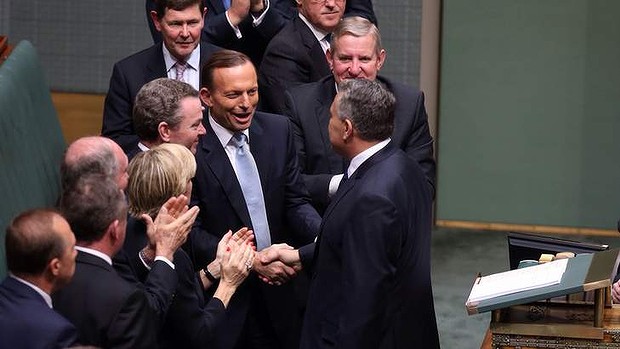
Enjoying the moment … Tony Abbott and his ministers congratulates Joe Hockey after the Treasurer delivered his first budget speech. Photo: Andrew Meares

Are the standards of debate between politicians and the ways in which they speak to their electoral masters worse now than they have been? It’s hard to tell, but it can be said with confidence that, at present, these standards are low.

The ‘deficit disaster’ is essentially the responsibility of a government in which Abbott, Hockey and the ever colourful Kevin Andrews were ministers.

Former federal Coalition leader John Hewson recently remarked on what he called ”the devastated state of political debate in Australia” and lamented that ”policy substance … has been almost totally eschewed”. Hewson ran one of the most honest election campaigns in modern Australia history and he lost; it’s an example that may have been taken too much to heart.

Of course it’s unreasonable to expect politicians to promote their fortunes in an even-handed way. To gain electoral support, they must stress their policies’ merits and expose the flaws in those of their opponents. Through such contests, degrees of balance can be achieved in political debate – provided that participants behave reasonably and honestly. Unfortunately, reason and honesty are now being significantly displaced by deception, exaggeration and a willingness to speak in riddles. In the befuddling murk, the public interest is left gasping for air

The Abbott government is not solely responsible for the predicament but it has things to answer for. As much as the budget’s substance is affecting its fortunes, the government’s political strategy and the ways in which it is communicated seem to be making matters worse for it.

Let’s look at some of the Coalition’s strategic themes.

In the first place, it can hardly bring itself to see that debt and taxation are even necessary evils. It believes debt should be avoided and tax reduced. Prime Minister Tony Abbott says ”it is my guiding principle that we are taxed too much” and he claims that no country has ever taxed itself to prosperity. The Treasurer, Joe Hockey, says: ”I look at my children and I say there is no way on God’s earth I am going to leave you with a debt.”

There’s no suggestion in the Coalition’s story lines that debt has been essential to the working of economies and that it helps to ensure equity in public financing. For example, it is entirely reasonable for the cost of roads being built now to be shared by those who will benefit from them over the years by debt financing. On tax, as this column has previously noted, a fair and efficient tax system has always been an important part of the good government of prosperous countries, while its absence is a defining feature of less fortunate ones.

If debt and tax are to be demonised, then the Coalition must blame any debt and deficit problems on its opponents, lest it look like a hypocrite. So, over the years, it has attributed the fiscal problems before the federal government to ”Labor’s debt and deficit disaster”. This refrain has been accompanied by Abbott’s claim that ”the fiscal position will always be better under the Coalition because budget surpluses and reducing debt … that’s in our DNA”.

Let the Rudd-Gillard governments take the rap for much of the current level of debt; however, it is low relative to much of Australia’s history and to current debt levels in comparable countries. The debt should be reduced but it is not at disastrous levels and, without it, the country may well have gone into recession.

Responsibility for the budget deficit can be more widely shared. It’s the cumulative product of decisions taken over many years, including by Kevin Rudd and Julia Gillard but also others before and after them. Indeed, Abbott can put his hand up on account of his generous maternity-leave scheme, trying to drop the carbon and minerals taxes, and his absurd promise, against the recommendation of Tony Shepherd’s audit commission, to restore defence spending to 2 per cent of gross domestic product.

Since 1945, significant budget surpluses have been achieved only rarely: once by Ben Chifley, three times by Bob Hawke, and eight times by John Howard, who shared another with Rudd, who was elected during the 2007-08 fiscal year. That is, the Menzies, Holt, Gorton, McMahon and Fraser governments managed only a few, small surpluses. So much for the claim about the Coalition’s DNA.

So what’s behind the budget’s difficulties? An economist and former secretary of the Department of the Prime Minister and Cabinet, Michael Keating, has helpfully pointed out that government spending for the current financial year is expected to be about 24.1 per cent of GDP, a bit below the average of the previous 12 years of 24.5 per cent. Government revenue, however, will come in about 23.1 per cent of GDP compared to the past 12-year average of 24.3 per cent, which is a relatively low take by the standards of many other countries. Keating concludes that ”if we have a fiscal problem, it does not seem to have been caused by excessive expenditure but by a drop in taxation revenue, and the prime cause of that was the miscalculations made by the Howard-Costello government when they embarked on their 2001 tax reforms, which have turned out to cost more than expected at the time”.

To put Keating’s point another way, the ”deficit disaster” is essentially the responsibility of a government in which Abbott, Hockey and the ever colourful Kevin Andrews were ministers. What the heck.

The problem for the Abbott government is that its useful political mantras about reducing tax and its deceptive wailing about the alleged spending atrocities and waste of Rudd and Gillard have turned it into a policy cul-de-sac. Apart from the Medicare-PBS co-payments and undoing the Howard freeze on petrol tax indexation, its principal means of improving the budget is cutting spending. This, however, doesn’t address the critical fiscal weakness around revenue. Indeed, Abbott has bound himself into reducing taxes and, if he does so, he will compound the fiscal problem he has – unless he’s able to make further large-scale and unpopular spending cuts. Such are the hazards of mantra-based policy.

Abbott says there’s only one plan, it’s his and there’s no alternative. He has to say that because he’s caught in his own policy trap that distances him from any number of meritorious options.

For example, economics professor Ross Garnaut has said: ”Australia can stay within the boundaries of fiscal responsibility over the next four years … by retaining carbon pricing rather than the array of changes that are at risk in the Senate.”

If that’s too much of a U-turn, the government could move now on the fundamentally inequitable superannuation and capital gains tax concessions, negative gearing, trusts and, as Australia Institute head Richard Dennis has suggested, consider extending the GST to private school fees and private health insurance – the burden of which would fall more on the better-off. These are rich revenue sources that would not need to be pressed far to make more significant contributions towards getting the budget back into the black than all of the measures Abbott is now taking.

As the Coalition’s broad strategies have hamstrung it in government, it has tied itself into numerous tactical knots.

Hockey’s spiel on the budget has been full of riddles. At the National Press Club, he said: ”Last night’s budget was forged on the values that modern Australia embodies: the values of enterprise, of hard work, of self-reliance, of control of your destiny, of the fact that we’ve got to move away from a culture of entitlement in some areas to a culture of opportunity and hope.” What on earth does this string of false opposites mean? Most likely not very much. Certainly exhorting unemployed young people about getting with opportunity and hope might not cut a lot of ice while they’re being refused any benefits for six months and perhaps more. It’s no wonder this speech is not on Hockey’s website.

Then the Prime Minister put his foot in it. When caught short on a question about opinion polls, he said the Howard government took a big hit in them after its first budget – it did not. Then he claimed that modelling by the National Centre for Social and Economic Modelling of the budget’s effects on certain groups was based on assumptions devised by the opposition. The NATSEM says that’s not so. As Abbott has created an impression that he might not have stuck to some of his pre-election promises as closely as some hoped, his office leader, Peta Credlin, might suggest he now follow Mark Twain’s advice: when in doubt, tell the truth.

Finally, in a policy and political sense, the government is not being much helped by a couple of its ardent supporters, those doughty friends of the overdog: audit commission chairman Tony Shepherd and Murdoch press journalist Henry Ergas.

Shepherd (a former Commonwealth employee in the now defunct Department of Supply, with curious gaps in his Who’s Who entry) is upset about the raw reception the budget has copped, including from David Gonski of the education review fame. Shepherd says he would have ”loved to keep education funding at the levels of Gonski” but that ”all areas have to make a contribution” to ”bring spending under control”. That kind of thinking is precisely wrong. Spending cuts should be made on their merits and in ways that do not conflict with other high objectives of government. For example, if cutting education funding restricts productivity improvement, and that’s likely, then it should be protected. The ”all areas making a contribution school” is a fool’s paradise from which Shepherd should try to withdraw himself, but only after he’s found the way to correctly calculate the average number of times per year that people visit a medical practitioner.

Consistent with the Murdoch press formulas, Ergas says: ”When spending is allowed to get out of control, it is consequently on the relatively poor, who are the main recipients of public expenditure, that the burden falls.” The point is that spending hasn’t been ”out of control” but a greater burden has been put on the ”relatively poor”. Ergas wouldn’t go along with that, of course, and he points out that ”the effective average rate of tax on Australian top-income earners is three percentage points higher than in Canada, give percentage points higher than in Sweden and 10 percentage points higher than in the US”. The international comparison of tax rates is not a simple matter and it’s unclear what Ergas means by ”top-income earners”, but data prepared by KPMG shows Australia with a top marginal tax rate of 45 per cent, Canada between 39-50 per cent depending on differing rates of tax levied by provincial governments, 57 per cent for Sweden and 39.6 per cent for the US, onto which must be added state and local government income taxes. But, however all of this computes, Australia’s international ranking on the tax of ”top-income earners” may be of scant consolation to unemployed young people now destined to spend long periods without any income.

Perhaps the Prime Minister should have the last word. He said Opposition Leader Bill Shorten’s address in reply to the budget was ”all politics, no policy; all complaint, no solutions”. It’s a fair comment and one that could have been made about Abbott when he was the opposition leader. There’s a lesson here for Shorten.

Paddy Gourley is a former senior public servant. pdg@home.netspeed.com.au

source:brisbanetimes.com.au

 

Έκθεση στην Αυστραλία για τους μύθους, τους θεούς και τους θνητούς της Ελλάδας

untitled

Έτσι εγκαινιάζεται η πολυετής συνεργασία του Μουσείου Μπενάκη με το Ελληνικό Μουσείο Μελβούρνης.

Τη μακρόχρονη συνεργασία του Μουσείου Μπενάκη με το Ελληνικό Μουσείο Μελβούρνης εγκαινιάζει Έκθεση έργων πενταετούς διαρκείας από τις συλλογές του Μουσείου Μπενάκη, που θα παρουσιαστεί στη δεύτερη μεγαλύτερη πόλη της Αυστραλίας-σημαντικό κέντρο της ελληνικής Διασποράς.

Η Έκθεση υπό το γενικό τίτλο «Gods, Myths and Mortals: Greek Treasures Across the Millennia», θα παρουσιαστεί από τον Ιούνιο του 2014 μέχρι τον Ιούνιο του 2019 στο Hellenic Museum της Μελβούρνης. Αποτελεί, δε, την πρώτη από μια σειρά εκθέσεων και δράσεων, στο πλαίσιο της δεκαετούς συνεργασίας που έχουν συμφωνήσει τα δύο Μουσεία, με στόχο να γνωρίσει το κοινό της Αυστραλίας τους σημαντικότερους αρχαίους πολιτισμούς.

Η έκθεση «Gods, Myths and Mortals: Greek Treasures Across the Millennia» καταγράφει την επίδραση της ιστορικής και κοινωνικής ανάπτυξης στη διαμόρφωση της ταυτότητας, από τα προϊστορικά μέχρι τα νεώτερα ελληνικά χρόνια. Επίσης, διερευνά τη σχέση μεταξύ των θεών, των μύθων και των ανθρώπων και των κοινών στοιχείων τους, που αποτέλεσαν τη βάση για να θεμελιωθούν συμμαχίες, διαιρούμενα όρια και καθοδηγούμενοι πολιτισμοί.

Συνολικά, θα εκτεθούν 92 αρχαία και νεώτερα αντικείμενα από τις συλλογές του Μουσείου Μπενάκη, όπως ειδώλια, εργαλεία, αγγεία, κοσμήματα, χειρόγραφα και κοστούμια,
Στα εκθέματα συγκαταλέγεται ένα από τα πρώτα αποκτήματα της συλλογής του Αντώνη Μπενάκη, η χρυσή κύλικα με έκτυπη παράσταση κυνηγετικών σκύλων, που χρονολογείται στην Υστεροελλαδική ΙΙ-ΙΙΙΑ1 περίοδο (15ος- πρώιμος 14ος αιώνας π.Χ.).

Επίσης, θα παρουσιαστούν μεταξύ άλλων χρυσό στεφάνι από φύλλα μυρτιάς με ένα πολύφυλλο άνθος στο κέντρο (4ος-3ος αιώνας π.Χ.), τμήμα χρυσού περιδεραίου με κυλινδρικές ψήφους και κρεμαστά εξαρτήματα σε σχήμα κλειστού άνθους (4ος αιώνας π.Χ.), πήλινο μινωικό ειδώλιο γυναικείας μορφής (1450-1375 π.Χ.) και αττικός ερυθρόμορφος καλυκωτός κρατήρας με παράσταση του Διονύσου, της Αριάδνης και του Έρωτα, που αποδίδεται στον Ζωγράφο της Βιέννης (400-390 π.Χ.).

Πηγή: Νέος Κόσμος

Aυστραλία: Συμπάροικοι έφεραν στον κόσμο το μικρότερο μωρό της Βικτώριας

john04

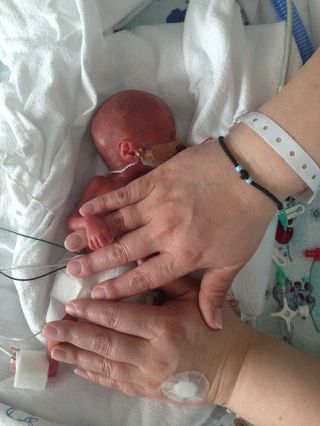
Μία χούφτα άνθρωπος ήταν ο Γιαννάκης όταν γεννήθηκε. Στην φωτογραφία μας όταν ήταν μόλις 4 ημερών

Συμπάροικοι έφεραν στον κόσμο το μικρότερο μωρό της Βικτώριας και… πιθανώς το πιο πεισματάρικο.

Ο τοσοδούλης Γιαννάκης Μεταξιώτης, γεννήθηκε στις 14 Δεκεμβρίου 2013, είχε συμπληρώσει 26 εβδομάδες στην κοιλιά της μητέρας του, ζύγιζε 395 γραμμάρια και είχε ύψος 27 εκατοστά. Ήταν το μικρότερο μωρό της Βικτώριας τότε. Αλλά ο Γιαννάκης, που ήταν μία χούφτα άνθρωπος και, βέβαια, μικρός στο μάτι, όταν γεννήθηκε, αποδείχθηκε πέντε μήνες μετά, ότι όσο μπόι του έλειπε το είχε σε… πείσμα. Αυτό το πεισματάρικο το πήρε σίγουρα από τον μπαμπά Κώστα και την μαμά Πόλα, που έκανε όχι μία, όχι δύο, όχι τρεις, αλλά 16 εξωσωματικές γονιμοποιήσεις για να καταφέρει να αποκτήσει ένα παιδί, με άλλα λόγια τον Γιαννάκη.

Την Τετάρτη ο Γιαννάκης δεν άλλαξε μόνο τόπο κατοικίας (πήγε στο σπίτι του τελικά) αλλά έσπασε και ένα ακόμα ρεκόρ. Είναι το μικρότερο μωρό που γεννήθηκε και επέζησε στη Βικτώρια.

Η ΜΕΤ’ ΕΜΠΟΔΙΩΝ «ΑΦΙΞΗ» ΤΟΥ ΓΙΑΝΝΑΚΗ

Η Πόλα είχε περάσει πολλά, περισσότερα από όσα οι αντοχές πολλών γυναικών επιτρέπουν. Δεν ήταν μόνο οι 16 εξωσωματικές που κουβαλούσε στο ιατρικό της ιστορικό, οι οποίες σίγουρα είχαν και τις σχετικές επιπτώσεις στην υγεία της, ήταν και οι τρεις αποβολές που την φόβιζαν όταν στην 16η της εξωσωματική οι γιατροί την πληροφόρησαν ότι ήταν έγκυος. «Η αλήθεια είναι ότι λόγω της ηλικίας μου ήξερα πως αυτή η φορά θα ήταν η τελευταία» μου λέει «και ήλπιζα ότι ο Θεός θα μας βοηθήσει και θα μας δώσει ένα παιδί».

Και έτσι έγινε. Και όλα πήγαιναν ρολόι έως στην 20ή εβδομάδα κύησης. Τότε άρχισαν κάποια μικροπροβλήματα, που, όμως, μέσα σε δύο-τρεις εβδομάδες μεγάλωσαν. «Ο πλακούντας είχε σταματήσει να τρέφει το μωρό, και αυτό είχε σταματήσει να αναπτύσσεται» λέει η Πόλα.
Οι γιατροί έπρεπε να καθυστερήσουν τη άφιξη του Γιαννάκη τουλάχιστον τρεις ακόμα εβδομάδες γιατί γνώριζαν ότι οι πνεύμονές του δεν είχαν ωριμάσει αρκετά. «Είχα υπνική άπνοια και οι γιατροί με συνέδεσαν σε μία ειδική συσκευή για να βοηθήσουν την αναπνοή μου, κάτι που βοηθούσε και το μωρό ενώ παράλληλα μου έδιναν πολύ κορτιζόνη για τον ίδιο λόγο» θυμάται σήμερα.

Ο Γιαννάκης περίμενε και… «κλώτσαγε μετά μανίας» όπως μου λέει η Πόλα.
Στις 14 του Δεκέμβρη η Πόλα και ο Κώστας έκαναν την καθημερινή της «βόλτα» στο νοσοκομείο Mercy. «Με το που η Δρ Walker τον είδε στους υπερήχους μας λέει ‘harry birthday’ δεν το κατάλαβα κανένας μας δεν είχε γενέθλια εκείνη τη μέρα». Μ’ αυτόν τον τρόπο η γιατρός ανακοίνωσε στην Πόλα και τον Κώστα ότι ο Γιαννάκης τους είχε αποφασίσει να έρθει στον κόσμο αυτό.

ΑΠΟ ΠΕΙΣΜΑ Ο ΓΙΑΝΝΑΚΗΣ ΤΑ ΠΗΓΕ ΜΙΑ ΧΑΡΑ

Οι στιγμές που πέρασαν ο Κώστας και η Πόλα, ήταν πολύ δύσκολες. «Έπρεπε να είμαστε και οι δύο δυνατοί και εγώ προσπαθούσα να την στηρίξω όσο μπορούσα» μου λέει ο Κώστας.

«Δεν είχα καιρό για συναισθηματισμούς. Κάθε μέρα έπρεπε να είμαι δίπλα του, έπρεπε να είμαι δυνατή. Ο καθένας μας έχει τον δικό του τρόπο να αντιμετωπίζει τις δυσκολίες της ζωής. Εγώ αποφάσισα να βλέπω την κάθε μου επίσκεψη στο νοσοκομείο σαν δουλειά. Πήγαινα εκεί, ρωτούσα τους γιατρούς τι πρέπει να κάνω σήμερα και το έκανα. Αυτή η αντιμετώπιση ήταν, νομίζω, αυτό που με βοήθησε να παραμείνω δυνατή. Δεν έχασα ούτε στιγμή την πίστη μου ότι το αγοράκι μας θα τα καταφέρει» αναφέρει.

Στο πλευρό της είχε το μεγάλο της στήριγμα, τον σύζυγό της Κώστα. «Δεν επρόκειτο να επιτρέψω στον εαυτό μου ή στην Πόλα να χάσουμε την ελπίδα μας» προσθέτει ο μπαμπάς του Γιαννάκη.

Δεν ήταν, όμως, μόνο αυτό που συντηρούσε την ελπίδα των δύο γονέων. Ήταν και ο Γιαννάκης. «Ξέρω, ακούγεται παράξενο, αλλά ακόμα και οι γιατροί στην εντατική μας το είπαν… ‘πολύ πεισματάρικο μωρό’. Το πιστεύω. Κάποιες στιγμές απορούσα. Οι επιπλοκές στην υγεία του έκοβαν τα δικά μας τα πόδια, αυτός όμως μέσα σε λίγο επανερχόταν. Δεν το έβαζε κάτω. ‘Μαχητής’ μας έλεγαν οι γιατροί».

Ο Γιαννάκης, πέρα από την αναμενόμενη αδυναμία του στους πνεύμονες, η οποία και θα αποτελέσει παρελθόν σε ένα-δύο χρόνια και μία μικρή επέμβαση με λέιζερ στα ματάκια του είναι, παρά το μέγεθός του, ταύρος. Κανένα άλλο πρόβλημα. Η καρδούλα χτυπάει ρολόι, ο εγκέφαλος απόλυτα φυσιολογικός, και από κλοτσοπατινάδα άλλο τίποτα. Την Τετάρτη πηγαίνοντας σπίτι του ζύγιζε 3,4 κιλά, με άλλα λόγια μέσα σε 5 μήνες δεκαπλασίασε το βάρος του.
«Τον έχουμε δίπλα μας, τον έχουμε κοντά μας και αυτό είναι που έχει σημασία. Όσα περάσαμε θα ξεχαστούν. Ήδη, έχω αρχίσει να τα ξεχνάω, ιδιαίτερα όταν κοιτώ τα γαλανά του ματάκια και το πηγούνι του» λέει η Πόλα.

«Με το πείσμα του δεν ξέρω πως θα τα πάμε» συμπληρώνει γελώντας ο τρισευτυχισμένος μπαμπάς Κώστας.

Πηγή: Νέος Κόσμος

Future of Orthodox Church

church

As part of Term 2 of the 2014 Greek History and Culture Seminars hosted by the Greek Orthodox Community of Melbourne and Victoria, lecture Current Condition and the Future Prospects of the Orthodox Church will be given by Dr Nick Trakakis.

Dr Nick Trakakis is a Research Fellow and Senior Lecturer in Philosophy, and Assistant Director of the Centre for Philosophy and Phenomenology of Religion, at the Australian Catholic University (Melbourne campus).

When: Thursday 12 June at 7.00 pm
Where: Ithacan Philanthropic Society building, Level 2, 329 Elizabeth Street, Melbourne
For more information, visit www.greekcommunity.com.au or contact (03) 9662 2722

The lecture Current Condition and the Future Prospects of the Orthodox Church will be given by Dr Nick Trakakis om the future of the Orthodox church in Australia.


Documentary about Markos Vamvakaris

comm-film%2001

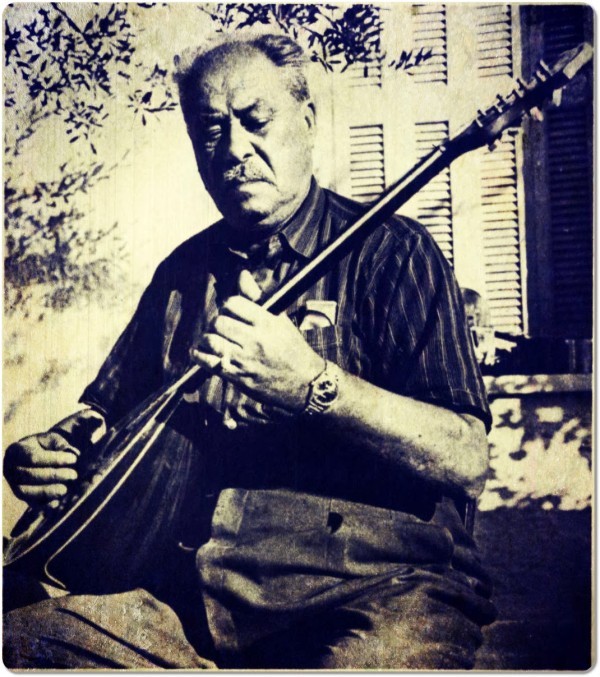
As part of the repertoire of the Greek Film Society of Brisbane, a movie I Like Hearts Like Mine – Markos Vamvakaris (2000, 68′) will be screened on 24 June.

As part of the repertoire of the Greek Film Society of Brisbane, a movie I Like Hearts Like Mine – Markos Vamvakaris (2000, 68′) will be screened on 24 June.

Directed by Giorgos Zervas, the movie is a portrait of Markos Vamvakaris (1905-1972), one of the greatest creators of Greek rebetiko song.

With rare footage, audio, sound tracks and interviews with family and musician friends, the director provides insight into the musician’s personal life and the milieu in which he lived and created.

The documentary captures the rebetiko way of life epitomised in Vamvakaris whose music expresses its harshness and tenderness.

The screening will be followed by a special rebetika concert with live bouzoukia.

When: Tuesday 24 June at 7.45 pm
Where: The Greek Club, 29 Edmondstone St, South Brisbane
For more information, visit www.greekfilmsociety.com

source: Neos Kosmos

Greek Australians continue to gamble

gambling%20cafenio

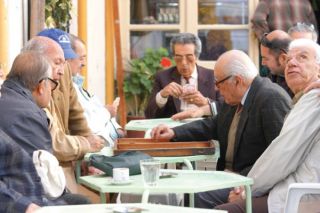
Boredom cited as one of the major reasons Greek Australians take up gambling.

“If there’s a couple of dollars being played and bragging rights, there’s no harm, but having lived in a Greek village for 11 years in the 80s, I have heard many horror stories like people losing houses over a game of thanasi,” says Australian Greek Welfare Society’s Dimitri Bouras.

He has seen the dangers of gambling first hand in the Greek community in Australia and says it is very easy for people to become addicted.

In Australia, you’ll see a group of older Greek men playing cards in almost ever suburban café or pub. It’s a familiar sight, so familiar in fact that many are desensitised to it.

It’s seen as a social game, something for entertainment, but a simple punt can turn into a full fledged problem, especially if gambling becomes a way to fight boredom.

Research shows that Greeks continue to gamble despitesustaining losses because they feel the social rewards are more important.
The study conducted by the Victorian Commonwealth Gaming Association, mentioned boredom and loneliness was a major contributor to why Greeks pick up and sustain gambling.

36 per cent of 664 Greek, Chinese, Vietnamese and Arabic-speaking Victorians participants in the 2000 study cited that boredom and loneliness was the main reason they gambled.

The fact that people are less likely to stop when they incur losses shows the power that peer pressure and the fear of being left out can be. Case worker Dimitri Bouras blames senior citizen clubs for promoting this kind of behaviour and turning a blind eye to problem gamblers.

“I think the main issue is boredom,” he tells Neos Kosmos.

“If a person is on a pension with all the time in the world, especially if you haven’t had the time to develop interests, the easy way out is gambling.
“A lot of senior citizen clubs are accountable for this.”

He remembers in the 90s and early 00s when senior citizen clubs used to pick up elderly Greeks and bus them to a TAB, offering them cheap lunches. The social ‘event’ would end up with throngs of Greeks sitting at 5c pokies machines playing for most of the day.

The social aspect can easily mask a bigger problem.

Ethnic Communities Council of Victoria executive director and Responsible Gambling Awareness Week spokesperson, Ross Barnett says the Greek community suffers from a lack of awareness about the problems of gambling.

“It can become a problem when it starts to become an obsession,” he tells Neos Kosmos.

“When it takes over your life and it’s a key thing in your life, and it starts to affect your relationships, job or career or your financial viability.”
Mr Bouras agrees and says more should be done to target small scale gambling.

“Even small scale gambling, when the ego takes over, can turn into something a lot bigger,” he says.

“It’s a slippery slope.”

The fact that gambling is seen in the Greek community as entertainment makes those that are struggling with a gambling addiction not willing to seek help.
They are embarrassed, and the stigma of being financially unstable thanks to their gambling has many people fearing for their reputation if they are seen to be seeking help.

“There’s a stigma attached, the Greek community is very close knit and the “what are people going to say?” issue which acts a veil for many other issues including gambling,” Mr Bouras says.

“That alone is the biggest hurdle, of preventing a person coming forward in order to seek some help.”

In his time at the AGWS, Mr Bouras has only dealt with a handful of cases, and says he gets more people coming through for help with drug or alcohol related problems showing that many are keeping their gambling problems to themselves.

Gambling is a very hidden and isolated problem for an individual and means many don’t seek the help they need until it’s very late.

“They find drugs and alcohol more embarrassing, there’s more help, and the other issue is, ice, methamphetamines, means the son might break into the house and destroy everything just to get $50 and that’s what pushes parents to become more proactive in seeking help,” he says.

“With gambling it’s more of a quiet issue.”

It’s not just Greek pensioners coming for help for their gambling addictions, currently the trend is showing that many young people are succumbing to dangerous levels of gambling, mostly thanks to the digital age.

Online gambling is available 24/7 and with the ability to make a punt via phones and at work promotes a more addictive gambling habit.
The highest rates of problem gambling is now centred in the 18 to 24 age group and has a lot to do with targeted advertising and the abundance of online betting companies.

In his time at the AGWS, Mr Bouras has dealt with many parents coming forward seeing help for their children’s gambling problems.
All the cases he has worked on have been so desperate Mr Bouras says that houses were in the process of being mortgaged.

The link between gambling and elder abuse is something many people don’t immediately see.

“Financial abuse among the Greek community imposed especially by second generation Greeks to first generation Greeks is a very very prevalent issue,” he says.

“It’s kept under a veil of secrecy, but more and more issues are coming forward.”

The AGWS offers short term counselling on gambling issues and elder abuse, they will let people know of their rights and then refer people onto gamblers help and other addiction help.

The Greek community is one of four ethnic communities that have higher rates of problem gambling in Australia.

They join the Chinese, Vietnamese and Arabic communities with high rates of problem gambling.

At the moment, there is no culturally appropriate help provided to people from an ethnic background at the responsible gambling foundations of Australia.
It’s something the foundations are aware of and are working hard at making services available to non-English speaking Australians.

The Victorian Responsible Gambling Foundation CEO Sergio Sardo says they will be launching services very soon to cater to this need.

“We are launching a greater variety of help services for ethnic communities,” he tells Neos Kosmos.

“We hope that the message cuts through, now more so than ever.”

The Foundation has been urged by the ECCV to change its media campaign to better accommodate ethnic communities.

“We are encouraging the Victorian responsible gambling foundation to make sure it changes it media and promotion tactics to ensure that those messages are getting out to the community and also the Greek community in ways that they are going to be understood,” Mr Barnet says.

Responsible Gambling Awareness Week is held in May each year to raise awareness of the importance of gambling responsibly.

source: Neos Kosmos

Sinodinos will return, says Hockey

sinodinos

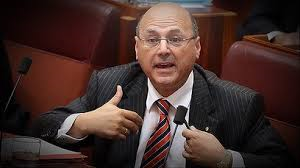
Treasurer Joe Hockey is confident senator Arthur Sinodinos will return to the front bench as assistant treasurer, after standing aside from the ministry in March.

Treasurer Joe Hockey is confident senator Arthur Sinodinos will return to the front bench as assistant treasurer, after standing aside from the ministry in March, while a NSW Independent Commission Against Corruption (ICAC) inquiry is under way.

Senator Sinodinos has appeared as a witness at the ICAC hearing and he has denied any wrongdoing in relation to his role as a director in the water company Australian Water Holdings (AWH) that funnelled donations to the NSW Liberal Party.

The Treasurer told Sky News’ Australian Agenda program that Mathias Cormann had been doing an “outstanding job” as assistant treasurer but said “we look forward to Arthur coming back.”

When asked if he was confident NSW Senator Sinodinos would return, Mr Hockey replied: “Yep, absolutely.”
Source: Sky News

Ο Μήτρογλου επιστρέφει στον Ολυμπιακό;

mitrogloutsiroto_935099535

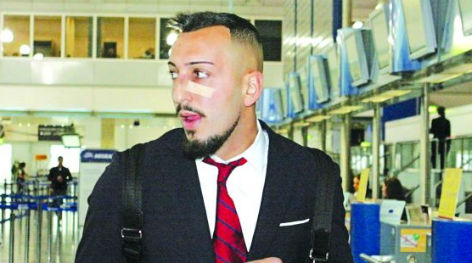
Πιθανότητες επιστροφής στον Ολυμπιακό δίνουν οι Άγγλοι στον Κώστα Μήτρογλου με τα σενάρια στο νησί να δίνουν και να παίρνουν.

Δεν είναι η πρώτη φορά φέτος που το όνομα του Μήτρογλου συνδέεται με τον Ολυμπιακό και προφανώς δεν θα είναι και η τελευταία. Το πρωί της Κυριακής η Sun αλλά και τουρκικά ΜΜΕ διοχέτευσαν την πληροφορία πως εκτός από την Γαλατασαράϊ στο… τραπέζι για τον παίκτη υπάρχει και ο πρωταθλητής Ελλάδας.

Το απόγευμα της Κυριακής και το Vitalfootball μπήκε στον… χορό των δημοσιευμάτων και των σεναρίων για τον διεθνή φορ. Όπως αναφέρει αυτό μπορεί να συμβεί επειδή η Φούλαμ χρωστάει ακόμα χρήματα στους ερυθρόλευκους για την μεταγραφή του παίκτη.

Συμπληρώνεται εκτός των άλλων πως τα πάντα θα κριθούν πιθανότατα μετά το Μουντιάλ. Βέβαια είναι από πολύ δύσκολο έως και… απίθανο να γυρίσει ο Μήτρογλου στον Ολυμπιακό όμως οι Άγγλοι επιμένουν και στο ποδόσφαιρο και τις μεταγραφές οι ανατροπές είναι και συνεχείς και συχνές.

Πηγή: gazzetta.gr