Daily Archives: June 20, 2014

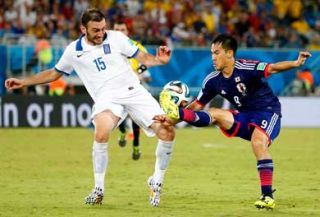
Greece draw 0-0 with Japan

greece_vs_japan_390_2006

Goalless draw with Japan keeps spirited Greece alive in the 2014 World Cup.

Greece’s first ever clean sheet in its World Cup history has kept it in the running for the second round, as the 0-0 draw with Japan with a man down for most of the game in the rainy and windy conditions at Natal, has given it its first point in the tournament.

The Blue-and-whites now need victory by any score against the Ivory Coast on Tuesday, while hoping that Colombia will not lose to Japan at the same time.

The Greek defense showed much more composure than in the game with Colombia, not allowing the Japanese to enter the Greek box and forcing them to threaten keeper Orestis Karnezis only through long-range shots, mainly by Yuya Osako. However in attack the Greeks opted in most cases for personal and not team efforts.

Given the rapid players that Japan has, the Greek strategy was to slow the game down, at a rate than was even slower than the match Greece played with Colombia. Contributing to the slow pace of the game was the whistle-happy referee from El Salvador.

Japan definitely lagged expectations and will feel disappointed not to have scored against its 10-man opponent.

After a productive first 10 minutes, including a decent Panayiotis Kone shot on goal that was fisted away, the Greeks sat back to allow the Japanese to enjoy more possession and space.

The problems for Greece started in the 34th minute, as injured Mitroglou had to come off, with Fanis Gekas coming on. Then four minutes later Katsouranis collected his second booking within 15 minutes, leaving Greece with 10 men. That also brought about the second substitution for Greece manager Fernando Santos, with Giorgos Karagounis replacing Yiannis Fetfatzidis.

The red card served as a wake-up call for the Blue-and-whites, as they raised their game and a powerful shot by Vassilis Torosidis forced Eiji Kawashima to an acrobatic save, while Gekas was wrongly stopped for an offside as he was sent clear to score just before half-time.

Greece’s first threat in the second half came 14 minutes after the restart with a Gekas header after a corner kick, that Kawashima palmed away.

There were moments when the Japanese defense got very nervous, although had Yosito Okubo scored from close range in the 68th, things would have been very different. Giorgos Samaras knew he should have done better when he rose unchallenged in the box to head the ball wide after 80 minutes.

Dimitris Salpingidis came on in the last 10 minutes for Kone, being Santos’s last-ditch effort to steal the game.

The Greek defense held firm, with Karnezis meeting all the challenges that the Japanese gave him.

The 0-0 result was probably the best Greece could have hoped for, given the conditions of the game, in what was only the first draw Greece has grabbed in the World Cup finals.

To their credit, the few hundreds of Greek fans at the stands often managed to outshout the thousands of Japanese to give a much-needed boost to the national team.

Source: Kathimerinie
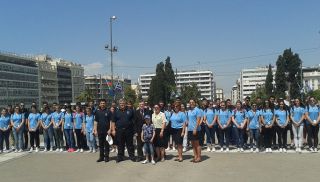
Συνάντηση Γεροντόπουλου-μαθητών του Κολλεγίου «Άγιος Σπυρίδων» Σίδνεϊ

shgero

Ο κ. Γεροντόπουλος με τους μαθητές του Κολλεγίου

Οι μαθητές βρίσκονται για διακοπές στην Ελλάδα.

Ο υφυπουργός Εξωτερικών, Άκης Γεροντόπουλος, συναντήθηκε την Κυριακή, 15 Ιουνίου, στην πλατεία Συντάγματος, με τους μαθητές και τους συνοδούς καθηγητές του ομογενειακού Κολλεγίου «Άγιος Σπυρίδων» Σίδνεϊ, οι οποίοι βρίσκονται για διακοπές στην Ελλάδα. Αφού τους καλωσόρισε και συζήτησε μαζί τους, κατέθεσαν μαζί στεφάνι στο μνημείο του Άγνωστου Στρατιώτη. Κρατήθηκε ενός λεπτού σιγή στη μνήμη των πεσόντων και, στη συνέχεια, οι μαθητές έψαλαν τον εθνικό μας ύμνο.

Ο κ. Γεροντόπουλος είχε επισκεφθεί το ελληνικό Κολλέγιο «Άγιος Σπυρίδων» στα τέλη του περασμένου Μαρτίου, όταν πραγματοποίησε επίσκεψη στην Αυστραλία και έμεινε εντυπωσιασμένος από τη σπουδαία δουλειά που γίνεται εκεί. Τότε είχε ενημερωθεί για το ταξίδι των μαθητών στην Ελλάδα και είχαν συμφωνήσει να συναντηθούν στην Αθήνα, ώστε να καταθέσουν μαζί στεφάνι στον Άγνωστο Στρατιώτη, κάτι που έγινε το πρωί της Κυριακής. Ευχήθηκε στα παιδιά των Ελλήνων ομογενών καλή συνέχεια στις διακοπές τους, αφού μετά την Αθήνα θα επισκεφθούν άλλα μέρη της πατρίδας μας και έδωσε άλλη μια φορά συγχαρητήρια στους δασκάλους τους για τη σημαντική προσφορά τους στη μόρφωση των νεαρών συμπατριωτών μας του Σίδνεϊ.

Πηγή: Νέος Κόσμος

Πιθανή η Aυστραλιανή παρέμβαση στο Ιράκ

aussie army

Οι τζιχαντιστές προελαύνουν προς τη Βαγδάτη.

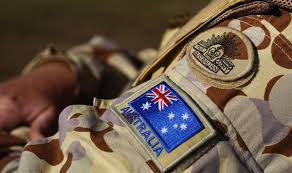
Η κυβέρνηση του Ιράκ ενδέχεται να ζητήσει από την Αυστραλία να συμβάλει στην αντιμετώπιση των τζιχαντιστών της ISIS, που προελαύνουν προς τη Βαγδάτη.
Αυτό δήλωσε ο πρέσβης του Ιράκ στην Αυστραλία, Μουχαγιέντ Σαλέχ – ο οποίος παραδέχθηκε, όμως, ότι η παρουσία δυτικών στρατιωτών στο Ιράκ ίσως επιδεινώσει την κατάσταση.

Ο ίδιος δεν απέκλεισε το ενδεχόμενο η Βαγδάτη να ζητήσει και την παρέμβαση της Τεχεράνης για την αντιμετώπιση των τζιχαντιστών.
Την ίδια στιγμή, επίλεκτες δυνάμεις της Αυστραλίας (SAS) είναι έτοιμες να επέμβουν στη Βαγδάτη για να σώσουν τους Αυστραλούς διπλωμάτες, αν παραστεί ανάγκη, ενώ ο Αυστραλός πρωθυπουργός, Τόνι Άμποτ, προειδοποίησε ότι, αν δεν αντιμετωπιστεί η κατάσταση, υπάρχει κίνδυνος «το Ιράκ να μετατραπεί σε κράτος τρομοκρατών» σε περίπτωση που επικρατήσουν οι τζιχαντιστές.

Εξάλλου, εντολή να απομακρυνθεί το προσωπικό από τις πρεσβείες τους στην ιρακινή πρωτεύουσα έδωσαν οι ΗΠΑ και η Αυστραλία, παρά τις εγγυήσεις της Βαγδάτης ότι έχει εξαπολύσει αντεπίθεση προκειμένου να σταματήσει την προέλαση των τζιχαντιστών.

Την ίδια στιγμή. ο πρωθυπουργός του Ιράκ, Νούρι Αλ Μαλίκι, απέπεμψε τέσσερις ανώτερους αξιωματούχους του τομέα της ασφάλειας, επειδή εγκατέλειψαν «το επαγγελματικό και στρατιωτικό τους καθήκον». Η κίνηση αυτή έρχεται μία εβδομάδα μετά την πτώση της Μοσούλης.
Επίσης, συνάντηση πραγματοποίησαν στο Ιράκ σουνίτες και σιίτες πολιτικοί ηγέτες, υπογράφοντας κοινή διακήρυξη, με την οποία ζητούν να επιτευχθεί εθνική ενότητα, την ώρα που οι Τζιχαντιστές προελαύνουν προς τη Βαγδάτη.

Η συνάντηση -στην οποία παρέστη και ο σιίτης πρωθυπουργός Νούρι αλ-Μαλίκι-, έρχεται λίγες ημέρες μετά τις δηλώσεις του προέδρου των ΗΠΑ ότι η πολιτική προσπάθεια για εθνική ενότητα αποτελεί προϋπόθεση για να βοηθήσουν οι ΗΠΑ το Ιράκ.

Ο Μπαράκ Ομπάμα εξετάζει τα επόμενα βήματα για το Ιράκ και στο πλαίσιο αυτό θα συναντηθεί με τους ηγέτες του Κογκρέσου.
Εν τω μεταξύ, το Στέιτ Ντιπάρτμεντ είπε ότι οι ΗΠΑ είναι ανοιχτές σε επιπλέον συνομιλίες με το Ιράν για την αστάθεια στο Ιράκ, αλλά επισήμανε ότι μία τέτοια συνάντηση δεν θα είναι σε υψηλό επίπεδο.

Αξίζει να σημειωθεί ότι ο αναπληρωτής υπουργός Εξωτερικών των ΗΠΑ συναντήθηκε τη Δευτέρα με Ιρανούς αξιωματούχους στο περιθώριο των συνομιλιών στη Βιέννη για το πυρηνικό πρόγραμμα της Τεχεράνης.

Η εκπρόσωπος του Στέιτ Ντιπάρτμεντ, Τζεν Ψάκι, δήλωσε, πάντως, ότι δεν αναμένονται άλλες συνομιλίες για το θέμα στη Γενεύη.
Σε μία άλλη εξέλιξη, τουλάχιστον 10 άνθρωποι σκοτώθηκαν όταν εξερράγη παγιδευμένο με εκρηκτικά αυτοκίνητο σε μια αγορά στη συνοικία Σαντρ Σίτι, όπου κατοικούν στην πλειονότητα σιίτες, βόρεια της Βαγδάτης.

Οι τζιχαντιστές προσπαθούν να προελάσουν προς την Βαγδάτη, ενώ το ΙΚΙΛ ανακοίνωσε ότι σκότωσε 1.700 Ιρακινούς σιίτες στρατιώτες, ένα έγκλημα το οποίο η εκπρόσωπος του αμερικανικού υπουργείου Εξωτερικών, Τζένιφερ Ψάκι, χαρακτήρισε «τρομερό».

Την ίδια ώρα, το αμερικανικό πλοίο «USS Mesa Verde», με 550 πεζοναύτες και αεροσκάφη Osprey, τα οποία μπορούν να πετούν ως ελικόπτερα και ως αεροπλάνα, έφτασε στον Κόλπο για να υποστηρίξει μια πιθανή αμερικανική δράση που θα αποσκοπεί να βοηθήσει την κυβέρνηση του Ιράκ να πολεμήσει τους σουνίτες τζιχαντιστές.
«Ο (Αμερικανός) υπουργός Άμυνας Τσακ Χέιγκελ έδωσε εντολή στο πλοίο αμφίβιων μεταφορών USS Mesa Verde να εισέλθει στον Κόλπο. Αυτό έχει ήδη διασχίσει τα Στενά του Ορμούζ» σημείωσε ο εκπρόσωπος του αμερικανικού υπουργείου Άμυνας, Τζον Κέρμπι.

Ο Αμερικανός πρόεδρος, Μπαράκ Ομπάμα, πάντως, έχει δηλώσει ότι εξετάζει την πιθανότητα στρατιωτικής δράσης, αλλά όχι την αποστολή αμερικανικών στρατευμάτων στο Ιράκ, για να βοηθήσει την Βαγδάτη να σταματήσει την προέλαση των τζιχαντιστών.

Πηγή: Νέος Κόσμος

The history of the Socceroos

Socceroos%20jersey%2002

It wasn’t until the end of World War II and the influx of thousands of European migrants that football was made popular in Australia, with many bringing their passion for football to Australian shores.

The earliest accounts of ‘football’ being played in Melbourne can be found in several sketches of early Melbourne by Edmund Finn, writing under the pen-name Garryowen.

During the 1850s, there were numerous mentions of ‘foot-ball’ in Australian newspapers of the time.

“A match at foot-ball between two sides of 12 each convoluted the sports. The game was all on one side from the beginning, and won easily by Mr Harry and his 11.”

In the 20th century, the first Football Associations were formed and the sport was regularly covered in daily newspapers.

While Australia’s first official international was played against New Zealand in 1922, its first attempt at qualification for the World Cup wasn’t until 1965, and it took until 1974 before the Socceroos made it. It would be another 32 years before the Socceroos would join the world’s elite again.

With limited budgets and resources for football in Australia of the time, there was little opportunity for professionalism, with all players having to balance their football careers with full-time work and family life.

It wasn’t until the end of World War II and the influx of thousands of European migrants that football was made popular on the Fifth Continent, with many bringing their passion for football to Australian shores.

Many joined ethnic-based clubs as a way to make friends, continue links with their old country and play the game they loved. The clubs’ names were associated with their homelands, reflecting the players’ cultural background, and sometimes, games were used to express nationalistic animosities.

The game played in 19th century Australia had been was transformed, with those from diverse cultural backgrounds increasing its popularity. It was their input that took the Australian national team to the 1974 World Cup.

Due to some controversial administrative changes to football in Australia, in 1959 Australia ceased to be officially recognised by FIFA. As a result, Australia was banned from playing international football. In 1963 the dispute with FIFA was resolved, and Australia became a fully fledged member of the world’s governing body .

Australia’s national team nickname, Socceroos, was coined in 1967 by Sydney journalist Tony Horstead in his coverage of the team on a tour to South Vietnam during the Vietnam War.

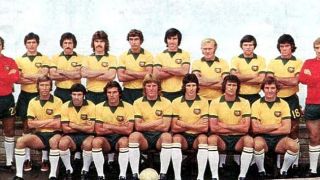
In 1974 the Socceroos won their way into the World Cup by defeating South Korea, Iran and Iraq, ensuring the country’s first ever participation in a FIFA World Cup.

For Australia’s part-timers, the World Cup was a totally different experience, up against fully professional players from nations where the sport was like a religion.

Coached by Rale Rasic, Australia’s first two 1974 World Cup matches were against East Germany (a 2-0 loss) and hosts and eventual winners West Germany (a 3-0 loss). Against Chile in Berlin, Australia claimed its first World Cup point with a scoreless draw, departing from the 1974 FIFA World Cup without a goal to show from their debut appearance.

Qualifications for the World Cup over the following three decades proved to be a nightmare, with failure after failure.

It took Australia 32 years to finally secure its position amongst the World Cup elite, when it returned to Germany for the 2006 World Cup under Dutch master coach Guus Hiddink.

The 2006 tournament has seen the Australian team achieve its best result ever, qualifying for the Round of 16.

Since then, the team has represented Australia at the FIFA World Cup tournament on one more occasion, in 2010 in South Africa, and will do so again at the 2014 World Cup in Brazil.

When the 2014 World Cup groups were drawn in December 2013, Australia (59th) had a FIFA ranking well behind group opponents Spain (1st), Netherlands (9th) and Chile (15th).

It will clearly be an uphill battle, but, let us be inspired by the 1974 captain Peter Wilson’s words: “Socceroos can do the impossible”. And there is nothing to lose.

source: Neos Kosmos


Postecoglou heartbroken but proud of Socceroos

postecoglou%20rain

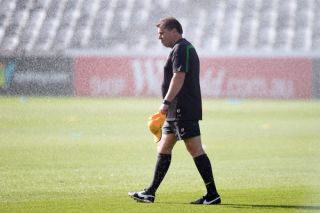
Australia mathematically out of the race. Photo: AAP/ Paul Miller.

Despite dominating the Dutch in their second group stage match in Brazil, the Socceroos didn’t get the win they deserved, falling 3-2 and bowing out of the World Cup race.

Heartbroken but intensely proud, Ange Postecoglou says his Socceroos have set a benchmark that can help them become a feared attacking force in world football.

But that doesn’t ease the pain of defeat to the Netherlands and a World Cup campaign ended at the group stage.

“It’s a heartbreaker mate,” said Postecoglou after the Socceroos mostly dominated the Dutch, but lost 3-2 in a World Cup classic in Porto Alegre.

The defeat, and Chile’s subsequent triumph against Spain, consigns Australia to departing Brazil after their final group match against also-ousted Spain on Monday (Tuesday AEST).

Talisman Tim Cahill, who struck an all-time screamer of a goal, will miss that game through suspension.

He copped his second yellow card of the tournament, yet ends his World Cup career after scoring a dazzling volley many were calling the goal of the tournament.

“At home in my garden I score like that every day but this is what’s it’s all about,” Cahill said.

“Football is all about these moments. And what better place to do it that in the home of football in Brazil.”

Cahill’s mercurial moment came as the unfancied Australians, the lowest-ranked nation in Brazil, almost pulled off one of the great World Cup heists, dominating and leading 2-1 against the team that had thrashed reigning champions Spain 5-1.

“We did everything we needed to do today bar win the game,” Postecoglou said after the thriller on Wednesday (Thursday AEST).

“That has got to be our benchmark moving forward.”

Postecoglou refused to blame goalkeeper Mat Ryan for a gaffe which gifted the Dutch the match-winning goal; nor Mathew Leckie for failing to nod in a close-range header seconds earlier.

“It’s nobody’s fault. We win as a team, we lose as a team,” he said.

Postecoglou said the inspired display, coming after a tournament-opening 1-3 loss to Chile, evidenced his mission to make the Socceroos a serious player in the world game was on track.

“People were saying we weren’t going to score a goal and we would just try and survive,” he said.

“In both games we have taken it to the opposition.

“I firmly believe that we have only just started on this journey.

“The goal is to come back in four year’s time, that they fear us before we get on the pitch as much as they fear us on the pitch now.

“There is no doubt now both Chile and the Dutch know they have been in a game and respect the way we have gone about our football.”

Winning respect is one thing; winning games is another.

“We don’t want to come to World Cups as outsiders,” Postecoglou said.

“We don’t want to come to World Cups defending for our lives.

“This is our third World Cup in a row and our fourth overall. Every time we come here, we should be getting stronger.

“And I don’t want to be in this position in four year’s time, where people are writing us off.”

Dutch coach Louis van Gaal certainly won’t be, heaping praise on Postecoglou and the “fanatical” approach of the Australians.

“Australia is a tough game, a tough team to play against, well organised,” van Gaal said.

“This coach (Postecoglou) is really good. He allows his team to play an attacking game.”

Source: AAP

Greek luxury homes to rise

luxury%20homes

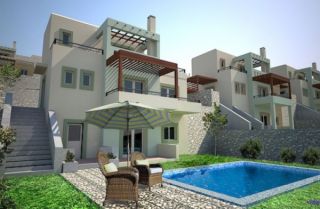
Construction firms in Greece are to switch to luxury homes in order to meet market demands.

Non-Greek property buyers account for 28 per cent of all transactions.

Greek construction firms are considering an investment switch to luxury homes to respond to the growing demand by non-European Union citizens for this category of properties that come with a residence permit.

While a number of European Union (EU) countries have similar investor visa schemes, whereby non-EU citizens who buy properties in Europe (in Greece’s case worth at least 250,000 euros) get a visa, the country’s share from this very promising market currently stands at less than 3 per cent, according to a recent survey by the association of Greek estate agents and chartered surveyors (EPPA). Greece joined this club 18 months ago by introducing a law to that effect, but the results to date have been disappointing.

The EPPA survey tracked residential property transactions conducted over the last few weeks across the country. Non-Greek property buyers accounted for 28 per cent of all transactions, with half of them (14 per cent) involving non-EU citizens, although only 22 per cent went for luxury houses worth at least 250,000 euros.

There are plenty of candidate buyers from countries such as China and Russia, but the main problem is the shortage of the appropriate product, even though it is estimated that the number of unsold houses in Greece exceeds 250,000, some 50,000 of which are holiday homes.

According to EPPA’s vice president Theologos Bosdas, “large-scale investments are required, in the order of 40-50 apartments or maisonettes, that can be promoted in an organised fashion to those buyers”. He adds that demand has been expressed for housing complexes of a significant size, comprising 40-50 units, aimed at creating communities of foreign owners. There are no such developments currently available in Greece, hence the slow purchase rate.

Now a series of property development companies and some major construction groups are eager to change that and are seeking plots for the development of major housing complexes. Listed construction group Ellaktor is examining the option of getting actively involved in this market, although, as group officials point out, no decision has been made for now as additional improvements to town-planning legislation are required for such large-scale investments.

An investment move could be in the works at Markopoulo in eastern Attica, as a group of architects and civil engineers have approached a Chinese construction group to discuss plans for a joint development project in an area of 100,000 square metres that is expected to be brought into the town-planning zone. Interest has come from the Chinese side, too, and the issue is likely to unfold in the coming months.

Chinese groups are mostly interested in the direct concession of plots around the country so they can move ahead with large-scale housing developments. Local property experts say that the overheating of the Chinese housing market has already led a number of companies to seek out investment opportunities abroad, especially in Europe. As a result, one of the countries being examined as a possible destination is Greece, thanks also to the increasing tourism flow from the world’s most populous country.

With this in mind, the visits by the Chinese premier and president scheduled for later this month represent a great opportunity for Greece to attract more potential investors to the local real estate market. After all, China State Construction Engineering Corporation, the country’s biggest construction group, is about to implement a series of investments around the world, and is said to be examining Greece too, as recent talks have shown.

Source: ekathimerini

Greek Australians for the Republic

greek%20australians%20for%20the%20republic

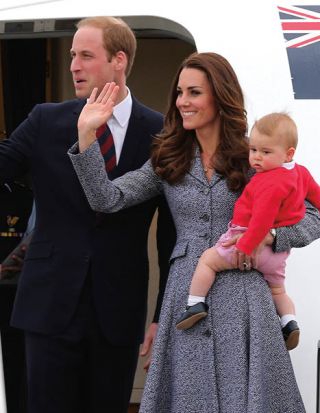
Prince William and Kate the Duchess of Cambridge wave goodbye to Australia as they board their flight, in April this year, together with their son Prince George. Photo: AP/Rob Griffith.

The community was visibly involved in the republican campaign.

The recent snap visit to Australia by Prince William, his wife and baby child, designed to bolster the monarchist ties with England through the parading of the new and nice looking royals, has certainly paid some short term dividends. But the issue of Australia becoming a republic is historically inevitable as the institutions of monarchy are relics of a bygone era. And even more so when the constitutional head of Australia is the monarch of another country whom an increasing number of Australians do not relate to. The real debate should not be only about monarchy versus republic but what kind of republican constitution we need , fundamentally one that vests real power to the people – the essence of democracy-, one that eliminates all references to racial discrimination, recognises indigenous people as the first citizens of this country and enshrines multiculturalism as the glue that binds the nation together.
This of course will not come about without ideological, and political struggle. And Greek Australians, as in the recent past, as the story below reminds us, will continue to play a major role.

Community members in support of an Australian republic

The campaign for an Australian republic, which led to the national referendum in 1999, found Greek Australians overwhelmingly in support. The only vocal exception was the torch carrier of Prime Minister Howard’s policies, Sophle Panopoulos, then a co-leader of the monarchist movement and later an arch-conservative MP.

Apart from the Greek Australian community’s involvement in the general republican movement, in Victoria the Greek Australians for the Republic were established, stating that: ‘as a multicultural society, it is no longer appropriate that our head of state is the English monarch. By becoming a republic we also affirm we are a democratic and independent nation. We also believe that a ‘yes’ vote should be the beginning of more fundamental changes in the Australian constitution that reflect and safeguard democratic, social and human rights and a just, multicultural society.’

Signatories, with their occupations at the time, included: Kyriakos Amanatidis (teacher), Steve Bakalis (senior lecturer, economics, La Trobe university), Dimitris Bairaktaris (computer engineer), Con Constantinou (GP), Nikos Dallas (tutor, chemistry, Melbourne University), Nick Economou (politics, Monash University), Christos Fifis (senior lecturer, Hellenic Studies, La Trobe University), Rena Fragioudakis (broadcaster and entertainer), Mark Georgiou (senior industrial officer, Association of Professional Engineers, Scientists and Managers), Eugenia Grammatikakis (Access & Equity Officer, Moreland City Council), Sotiris Hatzimanolis (editor, Neos Kosmos), Spyros Stamoulis (owner, Ta Nea), Mary Kalantzis (professor, education, RMIT), George Catsourakis (social worker, artist, president Greek Democritus League), Nick Koletsis (organiser, AMWU), George Lekakis (president, Ethnic Communities Council of Victoria), Voula Messimeris (social worker) Nikos Nomikos (poet, painter), Effy Papadopoulos (organiser, TCFU), Stathis Raftopoulos (poet), Mike Salvaris (senior research fellow, Swinburne University), Mimis Sophocleous (director, Greek Archive Centre, RMIT), Anastasios Tamis (director, National Centre for Hellenic Studies and Research, La Trobe University), Kostas Tsikaderis (composer), Maria Vamvakinou (teacher and political adviser), George Vassilakopoulos (lecturer, philosophy, La Trobe Universiry) and myself (president, Ethnic & Multicultural Broadcasters Council of Australia). Salvaris, Lekakis and I are also involved in the broader republican committees.

The October 1997 Greek Orthodox Community of Melbourne and Victoria AGM unanimously expressed whole-hearted support for the republic. It urged Greek Australians to vote for the republican representatives to the Constitutional Convention. Victoria had the highest ‘yes’ vote in the referendum. Many credit that result to the migrant and ethnic vote, Victoria being the most multicultural of all states. Their support for the republic has not diminished, nor their desire to see a new flag, free of the Union Jack, and a human rights constitution.

*George Zangalis is a former trade unionist and the secretary of Melbourne’s ethnic community radio station 3ZZZ.

source: Neos Kosmos