Monthly Archives: April 2016

Champion’s League:Manchester City ready for Real Madrid

_89430929_toure_reuters

Yaya Toure played on despite picking up an injury in Saturday’s win over Stoke

Manchester City midfielder Yaya Toure will miss Tuesday’s Champions League semi-final first leg against Real Madrid because of a thigh injury.

Toure, 32, was hurt late in Saturday’s 4-0 win over Stoke but stayed on as City had used their three substitutes.

But captain Vincent Kompany, who has only played 20 times this season for the club, says he is “100% fit” after recovering from repeated calf injuries.

Real hope Karim Benzema and Cristiano Ronaldo can play after injuries.

Ronaldo missed Saturday’s 3-2 win over Rayo Vallecano with a thigh injury, and fellow forward Benzema limped off in the first half of the game.

Coach Zinedine Zidane said: “They are absolutely fine at the moment, they have recovered really well.

“I think they will be fine, 100%. But we will test them. The idea is they’ll play.”

Toure has featured in all but one of City’s Champions League matches during a campaign that has seen them reach the last four for the first time.

City boss Manuel Pellegrini has not ruled the player out of next week’s second leg in Spain, saying the club will assess his fitness over the coming nine days.

Defender Kompany was rested for Saturday’s home win over Stoke but is ready to return and insists he and his team-mates are ready for the challenge of facing the 10-time European champions.

“There’s not a day in my life where I’m thinking these occasions are stressful or difficult,” said the 30-year-old Belgium international.

“I want this for myself – and at this level all players want this for themselves. You have to play against those players as many times as we can and try and beat those teams.

“That’s what’s going to make history for this club.

“For every single player in the team, if you’re not hungry tomorrow, then you’ll never be hungry in football.”

Asked what role City’s supporters could play in helping the team gain a first-leg advantage, he said: “The biggest.

“I have never seen a Manchester City team not turn up when the fans are up for it. It’s an appeal to them that they have to be as loud as they’ve ever been. Otherwise, what’s the point in buying your ticket to come in?”

The tie brings City’s outgoing manager Pellegrini up against the club that sacked him in 2010 after just one season in charge.

However, the Chilean, who is leaving City at the end of the season to be replaced by Pep Guardiola, said: “I don’t look back. I always prefer to think about what is happening now.

“I’m happy if we win the title, but I’m not wishing anything for my future.”

Pellegrini also called on his team to control their emotions after having players shown red cards in previous big European games.

They had a man sent off in both legs of the last-16 defeat by Barcelona in 2013-14, while Gael Clichy was dismissed in the first leg of last season’s loss to the same opponents at the same stage.

“We need to have a very hot heart but a cold mind, that’s a lesson we’ve learned,” Pellegrini added.

The stats you need to know

  • Manchester City and Real Madrid’s only previous competitive encounter was in the 2012-13 Champions League group stages. The Merengues won 3-2 at the Bernabeu before a 1-1 draw at Etihad Stadium.
  • For the sixth time in a row, Real Madrid will play the first-leg of a Champions League knockout tie away from home.
  • Manchester City have reached the semi-finals of the Champions League for the first time in their history. They have only won one of their four home games in the knockout stages, against PSG in this season’s quarter-finals (D1 L2).
  • Manchester City have only kept one clean sheet in their 10 Champions League games against Spanish opposition – a 3-0 away win against Villarreal in November 2011.
  • Manchester City are the only team left in the semi-finals who have averaged under 50% possession in the Champions League this season (48.6%).
  • Real Madrid have reached the semi-finals of the Champions League in each of the past six seasons, the longest current run. It is also their 27th appearance in the final four of the Champions League or European Cup, more than any other team.

source:bbc.com

Ο Ραφίκ Τζιμπούρ χτύπησε στο 88′ και έστειλε την ΑΕΚ τελικό

93940CF60705A17A122D29BD3BCE9090

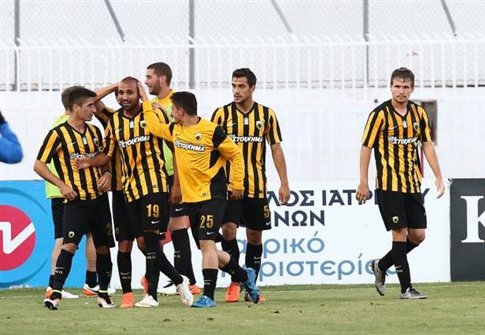
Το γκολ του Ράφικ Τζιμπούρ στο 88΄ έστειλε την ΑΕΚ στον τελικό του Κυπέλλου Ελλάδας (7 Μαΐου).

Στη ρεβάνς του ημιτελικού με τον Ατρόμητο που έγινε στο Περιστέρι η Ένωση απέσπασε ισοπαλία 1-1 από τους γηπεδούχους, που είχαν προηγηθεί στο 68΄ με το πέναλτι του Μπρίτο και μετά το 1-0 της περασμένης Τετάρτης στο ΟΑΚΑ εξασφάλισαν το «εισιτήριο» για το μεγάλο τελικό της διοργάνωσης.

Για πρώτη φορά μετά το 2011 η ΑΕΚ θα βρεθεί στον τελικό του Κυπέλλου, όπου λογικά θα παίξει με τον Ολυμπιακό (ο ΠΑΟΚ δεν θα κατέβει στην αυριανή ρεβάνς με τους «ερυθρόλευκους» στο Καραϊσκάκη) το βράδυ του μεθεπόμενου Σαββάτου.

Με πέντε αλλαγές σε σχέση με το ματς της περασμένης Τετάρτης παρατάχθηκε ο Ατρόμητος στο Περιστέρι. Αντί των Ουσέρο, Λε Ταλέκ, Γροντή, Ματέι και Κοντοέ ο Τραΐανός Δέλλας έριξε στο ματς τους Φυτανίδη, Σουμπίνιο, Στόιτσεφ, Κεϊτά και Παπαδόπουλο. Η εικόνα των γηπεδούχων ήταν σαφώς πολύ καλύτερη από αυτή του πρώτου ημιτελικού στο ΟΑΚΑ, ωστόσο, δεν ήταν αποτελεσματικοί στην τελική προσπάθεια.

Πριν συμπληρωθούν 30 δευτερόλεπτα στο ματς η ΑΕΚ πλησίασε στο γκολ μετά την κάθετη πάσα του Ντίντακ στον Αραβίδη, ο τελευταίος απέτυχε να κάνει το κοντρόλ και ο Βάργκας που ακολουθούσε έπιασε το δυνατό σουτ από πλάγια που έφυγε παράλληλα από την εστία του Μπάρκα.

Το ματς ήταν ανοιχτό από τα πρώτα λεπτά και στο 9′ ήρθε η «απάντηση» των γηπεδούχων στην ευκαιρία της Ένωσης στα πρώτα δευτερόλεπτα. Το σουτ του Μπρίτο μέσα από την περιοχή έδιωξε σε κόρνερ στη γωνία του ο Μπαρόχα, ενώ στο 12΄ το σουτ του Μάνταλου έστειλε τη μπάλα δίπλα από το αριστερό δοκάρι του Μπάρκα που έδειχνε να ελέγχει την φάση. Τεράστια ευκαιρία έχασε η ΑΕΚ στο 16΄ με τον Αραβίδη να αστοχεί από το σημείο του πέναλτι μετά τη σέντρα ακριβείας του Βάργκας.

Το πρώτο μέρος έκλεισε χωρίς τέρματα, αλλά με άλλες δύο πολύ καλές ευκαιρίες εκατέρωθεν. Αρχικά για την Ένωση στο 29΄ με το σουτ του Μπαρμπόσα από το ημικύκλιο της περιοχής να περνάει άουτ και στη συνέχεια για τους Περιστεριώτες στο 32΄, όταν ο Παπαδόπουλος απέτυχε να πιάσει την κεφαλιά εντελώς αμαρκάριστος.

Με την κορυφαία ευκαιρία στο παιχνίδι ξεκίνησε το δεύτερο μέρος. Την έχασαν οι γηπεδούχοι με τον Στόιτσεφ, ο οποίος βγήκε απέναντι από τον Μπαρόχα μετά την ασίστ του Σουμπίνιο αλλά το τελείωμά του δεν ήταν καθόλου καλό. Η εικόνα του αγώνα στην επανάληψη δεν ήταν διαφορετική από αυτή του πρώτου 45λεπτου, με τη μπάλα να παίζεται πάνω κάτω και τις δύο ομάδες να αναζητούν το γκολ για διαφορετικούς λόγους η καθεμία.

Τελικά το σκορ άνοιξε στο 68΄ ο Ατρόμητος. Η ομάδα του Δέλλα κέρδισε πέναλτι στο 66΄ σε χέρι του Ντίντακ στην περιοχή (σωστά ο Κύζας του έδειξε την κίτρινη κάρτα και όχι την κόκκινη όπως ζήτησαν οι γηπεδούχοι), το οποίο εκτέλεσε ψύχραιμα ο Μπρίτο κι έκανε το 1-0. Η ΑΕΚ που έχασε προς στιγμή τη συνοχή της και για περίπου 15-20 λεπτά δε μπορούσε να οργανωθεί στον αγωνιστικό χώρο, κατάφερε στο 88΄ να φτάσει στην ισοφάριση με το πλασέ του Τζιμπούρ μετά την ασίστ του Ντίντακ και να «σφραγίσει» την πρόκρισή της στον τελικό της διοργάνωσης (7 Μαΐου).

Διαιτητής: Κύζας (Δράμας)

Κίτρινες: Κυβρακίδης – Μπαρμπόσα, Ντίντακ, Κολοβέτσιος

ΑΤΡΟΜΗΤΟΣ (Τρ.Δέλλας): Μπάρκας, Μπίτολο, Λαζαρίδης, Φυτανίδης, Κυβρακίδης, Μπρίτο, Σουμπίνιο (76΄ Ματέι), Ούμπιντες, Στόιτσεφ, Κεϊτά, Παπαδόπουλος (81΄ Λε Ταλέκ).

ΑΕΚ (Στ.Μανωλάς): Μπαρόχα, Γκάλο, Λαμπρόπουλος, Κολοβέτσιος, Ντίντακ, Γιόχανσον, Σιμόες, Βάργκας (60΄ Τζιμπούρ), Μπαρμπόσα (90΄+2 Μπακάκης), Αραβίδης (90΄+1 Πέκχαρτ).

Πηγή:in.gr

Egyptians, Greeks and Anzacs

anzacs_egypt

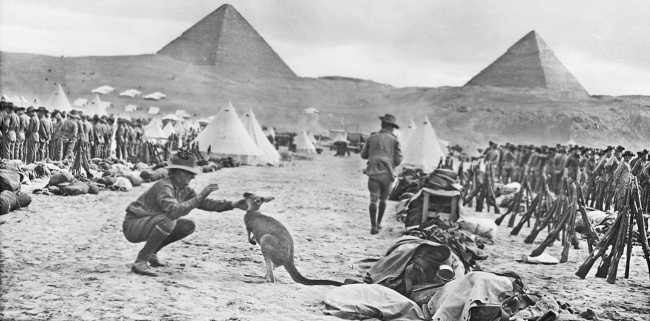
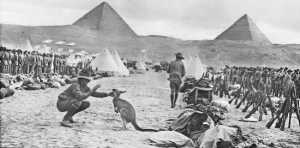
Australian troops at Mena Camp, Egypt, December 1914, looking towards the Pyramids. Many Australian units brought kangaroos and other Australian animals with them to Egypt, and some were given to the Cairo Zoological Gardens when the units went to Gallipoli.

It is hoped that the Coptic contribution to the ANZAC cause becomes more widely known and more broadly studied in years to come.

The Coptic Orthodox Church of Saint Mary in Kensington is holding a public breakfast, open to all members of the community, in honour of Anzac Day. This is a beautiful gesture which shows how a community, of Middle Eastern origin, that has ostensibly at least, no historical ties with one of the most enduring and hallowed of Australian commemorations, can integrate itself within the context of that commemoration, in a respectful and meaningful way, proving that one does not need to be of the same race as those who underwent the severe trials of Gallipoli, in order to pay tribute to the eternal human virtues of courage, loyalty and self-sacrifice. Our community institutions have much to learn from the Coptic approach which, at its heart is truly multi-cultural.

The word ostensibly is used above because the Copts do have a link with the ANZACs, one that like so many others is generally glossed over by an official public narrative that had until recently emphasized the role of certain key participants such as the British, the Australians, New Zealanders and Turk and is only now, gradually coming to acknowledge the role of other minor protagonists. One of these are the Copts, the native, non-Arab people of Egypt.

As a Christian minority that had been relegated to the inferior status of a dhimmi (non-Muslim) people under Islamic rule, the Copts felt a natural affinity towards the ‘Christian’ west and avidly supported Britain’s appropriation of Egypt in the latter part of the nineteenth century. With their western orientation and superior education, they were able to achieve important bureaucratic positions within the British administration.

Thus during World War I, Coptic community of Egypt held many fundraisers in order to assist the Allied war effort. As well, Coptic public servants played a key role in co-ordinating supplies, provisions and accommodation for ANZAC soldiers billeted in Egypt on the way to the front. Such a task was not always easy. Egyptian Nobel prize laureate Naguib Mahfouz describes in several of his works, the difficulty faced in controlling the rowdiness of Australian ANZAC soldiers, with their tendency to get drunk and become overly friendly with the local women, in violation of Egyptian social codes. Furthermore, vocal Coptic support of the Anzacs directly defied the call for jihad against the Allies, issued by the Ottoman sultan, who was also the caliph of Islam. Egypt was still technically a part of the Ottoman Empire and much of the muslim population of Egypt was sympathetic to the Sultan’s call. The fact that a subjugated minority had the temerity to defy this call and actively assist the perceived enemy did not go unforgotten or unpunished and Copts have over the years paid a terrible price for what is perceived to be, their western orientation.

It is hoped that the Coptic contribution to the ANZAC cause becomes more widely known and more broadly studied in years to come. In the meantime, local Greek community activists, including former members of Parliament Lee Tarlamis and John Pandazopoulos, along with the indefatigable military historian and honorary Greek Jim Claven, through the Lemnos Gallipoli Commemorative Committee have, after years of hard work, managed to raise increased awareness the Greek contribution to the ANZAC cause, especially with regards to Lemnos. This is of immense importance, as Lemnos was the major base of ANZAC operations, the place where the Anzacs practiced the landings, where the Australian nurses and medical staff established their hospitals, where the sick and injured soldiers returned for treatment and where the soldiers returned for brief periods of rest. It was also where the war that began at Gallipoli in 1915 ended in 1918, with the Armistice of Mudros, a bay of Lemnos. Joy Damoussi, in her recent book, Memory and Migration in the Shadow of War: Australia’s Greek Immigrants after World War II and the Greek Civil War, writes just how instrumental shared experiences of war were, in forging links between Greeks and Australians.

Furthermore, historians such as Panayiotis Diamandis in Sydney have, through their research, also highlighted the terrible human cost suffered by Greeks as a result of the ANZAC campaign. An estimated 15,000 native Greek inhabitants of the Gallipoli peninsula were forcibly removed and or ethnically cleansed by the Ottoman army, in their bid to secure the gateway to the Dardanelles. As well, he argues convincingly, that the order to intensify the deportation of Greeks and Armenians within the Ottoman Empire, which is considered to have constituted a genocide, was made as direct reaction to the ANZAC landing at Gallipoli. The Greek Australian community is thus inextricably woven into the warp and the weft of the ANZAC legend and we can and must do more to explore and commemorate that involvement and historical presence within the broader context of Australian ANZAC commemorations.

One aspect of Greek involvement in the ANZAC legend is generally overlooked sits in parallel with the Coptic experience. During World War I, a relatively large, wealthy and politically significant Greek community was resident in Egypt, especially around Alexandria and Cairo. The connection of that community with the ANZACs in a fascinating one because its wealthy leaders, industry and property magnates with political interests in Greece, variously aligned themselves with the royalist (anti-war) or Venizelist (pro-Allied) factions within that country, polarizing the Greek-Egyptian community in the process. Works of literature such as Dimitris Stefanakis’ epic ‘Days of Alexandria,’ («Ημέρες Αλεξάνδρειας»), portray just how riven by internecine strife the Greek community was at that period, with one half actively supporting the British, the wives of wealthy Greek businessmen holding fundraisers for the ANZAC troops and seeking to organize entertainment for them, (and indeed, some female members of the Greek-Egyptian community formed attachments of love with ANZAC soldiers) while the other half of the Greek community embroiled themselves in numerous arguments with their compatriots, dissolved friendships and on occasion, found themselves at odds with the British authorities as a result of their opposition to the Allied cause. It would be fascinating to study the considerations which led the Greeks of Egypt to actively support or oppose the ANZACs for in doing so, a microcosm of contemporary Greek society is revealed while contemporaneously providing one more link between our community and the ANZACs. Sadly, no such attempts have been made here in Australia to date and it would be of great benefit if the various Greek-Egyptian-Australian organizations that operate here, could turn their minds to such an important task. In the meantime, we should also do more to raise awareness of and celebrate the contributions of the small Greek-Australian community at the time, to the ANZAC effort.

One doesn’t have to be an Anglo-Australian to honour or appreciate the ANZAC legend. Nor does one have to be an imperialist, colonialist, or nationalist. One cannot help but admire the courage, steadfastness, loyalty and resourcefulness of the young Australian soldiers, who were placed in the most horrific of circumstances but nonetheless remained committed to sacrificing their lives for what they believed to be the greater good. There’s is a very human achievement, that reminds us that even in a place of utmost evil, love and friendship can endure. That the Greek people both within Greece and outside of it, and others, stood beside the ANZACs, cheered them on, tended to their wounds, fed them, provided them with comfort and held their hands as they died is something our community can be inordinately proud of. In all of these ways, ANZAC day is of vital importance to the Greek-Australian community.

It is OUR day, not only as Australians, but as Greeks as well and judging by the large number of Greeks attending my local RSL’s pre-Anzac day commemoration, these are sentiments which laudably, are shared by the majority of the Greek Australian community. On the 25 of April this year, and on every day thereafter, we the Greeks of Australia will remember them, and because we are an old people, with incredibly long memories, we will never forget.

*Dean Kalymniou is a Melbourne-based solicitor and freelance journalist.

source:Neos Kosmos

Turnbull responds to FYROM naming dispute

turnbull5

Australia will continue to use the official UN interim reference

A report published on 15 April by the Macedonian Information Agency quoting Prime Minister Malcolm Turnbull, who pledged to revisit the FYROM name issue, has caused turmoil among the Greek Australian community.

The aforementioned FYROM news agency reported that the statements were made during a meeting in Perth organised by Liberal MP Luke Simpkins, elected to the seat of Cowan in WA.

Answering a question posed by the Vardar Club’s (local FYROM Australian community) Goce Siljanovski, Mr Turnbull said that he will review the reasons for Australia’s “failure to recognise ‘Macedonia’ under its constitutional name”.

“I’ll take on board your concerns about it, but I don’t want to step on the toes of the foreign minister,” he explained, apologising for not having discussed the issue with Foreign Minister Julie Bishop prior to the meeting.

Meanwhile, in March 2015, Minister Bishop responded to a letter from the Macedonian association in Australia by saying that the government will continue, as a temporary measure, to use the interim reference, pending a resolution of the dispute between FYROM and Greece.

It is worth mentioning that Luke Simpkins is a staunch supporter of the Vardar Club, while a substantial number of citizens who hail from FYROM reside in Perth, and the event was part of his pre-election campaign.

Mr Siljanovski, emphasising the “sizeable” FYROM Australian community, asked the prime minister if he can promise his “fellow ‘Macedonians'” that the Coalition government will not continue to use the United Nation’s interim reference ‘the former Yugoslav Republic of Macedonia’ after the next election.

“As you know, it’s been a vexed issue but our relations with ‘Macedonia’ are excellent and the ‘Macedonian’ Australian community have played an enormously valuable part in Australia,” Mr Turnbull said, referring to FYROM as ‘Macedonia’.

“We do try as the Australian government to stay out of some of these issues and this is one of the reasons people come to Australia, to avoid these arguments,” he continued jokingly.

The online article, accompanied with video footage on YouTube featuring part of the meeting, caused a strong reaction among Greek communities in Australia.

In a letter sent to the prime minister by the Pan-Macedonian Association of Melbourne, signed by the president of the association Mr Peter Jasonides, members of the Greek community expressed their “great concern” apropos Malcolm Turnbull’s statements.

“Prime Minister, your knowledge of Classical Studies, no doubt, assists you to understand who were and who the Macedonians are. Given that you are also well-versed on the ‘naming dispute’, we find it concerning that you would make such comments about FYROM.

The naming of ‘Macedonia’ is a matter of cultural and historical identity for Greeks, and cannot be negotiated. It is also an issue of heritage that cannot be disputed or spared. The FYROM desires to be called ‘Macedonia’ and by usurping the name, it appropriates the Greek history and many other elements that go with the name such as identity, ancestry, culture, ethnicity, heritage and cohesiveness. As such, any reference to it in the context of which, what seemed to have been coercion from Mr Simpkins and his associated company, is considered to be an encouragement of irredentist territorial claims. Even its use to such ethnic groups is considered to be ‘adding fuel to the fire’.

In addition, to clear any false or misrepresentative figures by certain members of the FYROM community in Australia, it is important to note that there are approximately 140,000 Greek Macedonians living in Australia, in addition to another 550,000 Greeks and Cypriots. The Greeks in Australia do not oppose the right of those from FYROM to exist or to join the international community via diplomacy and legitimate channels, respecting, however, the historical and cultural rights of other nations.

Prime Minister, we note that the FYROM community in Australia has made numerous vexatious and illegitimate claims about our Australian politicians aligning themselves with this group’s agenda, and therefore we question the context in which you stated that you will look into “Australia’s failure to recognise ‘Macedonia’ under its constitutional name”. As one of the largest ethnic communities in Australia, it is our duty to remind you and all our Australian politicians of the Australian Government’s recognition of FYROM in 1994. The Government formally recognised Skopje’s independence with the Australian ambassador to Belgrade being provided with non-residence accreditation to Skopje. It was agreed then and still is to this day that the United Nations and its member states must use the nomenclature former Yugoslav Republic of Macedonia; a name that remains an interim measure in order to assist with the United Nations negotiations. As such, this is the policy that is followed by the Australian Government until any further agreements are made between Athens and Skopje.

In light of the above, and given the wider knowledge (and fact) about the levels of falsified claims made by the FYROM media, we respectfully request that you clarify your statements as well as your stance on this very important issue.”

The Pan-Macedonian Association sent the letter of complaint on Monday and has yet to receive a reply from the government.

Neos Kosmos considered necessary a request for further clarification from the Prime Minister’s Office regarding the incident, including the government’s policies on the issue. As the prime minister’s spokesperson stated, the Australian government will continue to use the official UN interim reference.

“The Australian government has been consistent in its use of the name ‘Former Yugoslav Republic of Macedonia’ since 1994. Australia will continue to observe this practice pending a mutually agreed resolution to the naming dispute.”

Source:Neos Kosmos

The truth behind ‘the business of Greece and Macedonia’

alana2

Dr Anastasios Panagiotelis and Dr Vasilis Sarafidis from the Australian Institute of Macedonian Studies respond to Alannah MacTiernan

In her recent SBS opinion piece ‘The Business of Greece and Macedonia’, Perth MP Alannah MacTiernan grossly misrepresents the official stance of Greek governments, both past and present.

By propagating a number of falsehoods she unfairly depicts Greece as a recalcitrant aggressor. By responding to her article we provide a more accurate account of this complex issue.

Ms MacTiernan characterises Greece’s diplomatic stance towards its northern neighbour as “trenchant opposition to the very existence of the Republic of Macedonia”. This is patently false, since Greece is the largest investor in FYROM, as Ms MacTiernan herself recognises.

For instance, in 2007, 17 of the 20 most sizeable investments in FYROM were financed with Greek capital, while roughly 20,000 (about 6 per cent of the workforce) were employed in Greek-owned enterprises.

Furthermore, according to statistics published by authorities in FYROM, in 2013 almost 28 per cent of the total foreign direct investment in FYROM came from Greece.

Despite unprecedented economic hardship, Greece continues to invest in FYROM, hardly the act of a nation that opposes the very existence of its neighbour.

Ms MacTiernan’s misrepresentation of Greece’s motives moves into truly absurd territory when she raises an old canard “that there were negotiations between the then-Greek government and Serbian war criminal Slobodan Milosevic to suppress the opportunities for Macedonians to fuel division in the country”.

Although former Greek PM Konstantinos Mitsotakis did claim that Slobodan Milosevic made such overtures towards Greece, the purpose of Mitsotakis’ statement was to declare that his government unequivocally rejected any actions that would destabilise FYROM.

The recent history of the naming issue is and remains controversial, however, Ms MacTiernan once again is guilty of a number of falsehoods here.
Greece did not “impose the absurd name The Former Yugoslav Republic of Macedonia”, nor do Greeks refer to citizens of the country as ‘FYROMians’.

Rather, the name ‘FYROM’ arose from Resolution 817/1993 of the UN Security Council as a mutually agreed but temporary solution to distinguish the former member of the Socialist Federal Republic of Yugoslavia from three major administrative regions in northern Greece, namely Western Macedonia,
Central Macedonia, and Eastern Macedonia. The latter three regions are part of the geocode standard developed by European Union and by far constitute the largest part of the geographical area of ‘Macedonia’.

There are 2.5 million people living in the Greek region of Macedonia nowadays, and they proudly identify themselves as both Greeks and Macedonians (Macedonian Hellenes).

The intent of the UN resolution was for both parties to negotiate and compromise on a name which respected both sides’ claims to a Macedonian identity.

The ascension of FYROM into NATO and the EU, both organisations of which Greece is a current member, would be contingent upon resolving this naming issue. In contrast to Ms MacTiernan’s claim, the EU does not recognise FYROM as the ‘Republic of Macedonia’.

Greece has a proven track record of a sincere desire to reach a viable and realistic solution on the naming issue with its neighbouring country.

Greece proposes that the name FYROM be replaced by a compound name with a geographical qualifier before the word ‘Macedonia’ to be recognised by all countries and for all purposes, whether internal or international.

In contrast, the government of FYROM has not budged from a position that it has held since the early 1990s, one that monopolises the use of the name Macedonia.

Ms MacTiernan concludes by asking “have we learnt nothing from Bosnia and Kosovo?”. The lesson that people in the Balkans have learnt from these conflicts is that trouble arises when state actors attempt to monopolise identities in a nationalistic and irredentist fashion. It is only in this context that one can understand the risks inherent in FYROM’s official attempts to claim the name and identity ‘Macedonia’ exclusively for themselves.

For example, during the past few decades, extremists, including the long-serving prime minister of FYROM Mr Nikola Gruevski, have promoted educational policies that attempt to link FYROM and its people to Alexander the Great.

However, the major and important sites during Alexander’s lifetime are part of Greek territory. These include Alexander’s birthplace and site of his father’s tomb Aigai, the city of Mieza where Alexander was tutored by Aristotle, and Dion, where Alexander worshipped the Twelve Gods of the Olympian canon with all other ancient Greeks.

If the modern identity of the citizens of FYROM is so heavily intertwined with Alexander the Great, how long until a demagogue from FYROM makes irredentist claims on these sites within sovereign Greek territory?

Greeks are proud of all of their notable historical figures, including Alexander the Great, whom historians and scholars recognise as having made a tremendous contribution towards advancing humanity, regardless of what Ms MacTiernan may think.

The name Macedonia is and will always be rooted within Greek history. The entire population of 550,000 Australian Hellenes are committed devotees of the Macedonian Hellenic legacies.

They object to the unilateral usage of a name which is well-related to their national identity and attested within their history.

Source: Neos Kosmos

Σκόνταψε η Τότεναμ, αγγίζει τον τίτλο η Λέστερ

71865C024695EAD6016FEE8CC6F1F71F

Η Λέστερ βρίσκεται όλο και πιο κοντά στο μεγάλο θαύμα, αφού μετά τη νίκη της την Κυριακή με 4-0 επί της Σουόνσι, είδε τη Δευτέρα τη Τότεναμ να μένει στο 1-1 με την Γουέστ Μπρόμιτς Άλμπιον, στον αγώνα που έριξε την αυλαία της 35ης αγωνιστικής της Premier League.

Στο 33′ τα Σπιρούνια πήραν κεφάλι στο σκορ με αυτογκόλ του Ντόουσον, αλλά ο ίδιος παίκτης τους… άρπαξε τη χαρά αφού χάρισε τον βαθμό της ισοπαλίας στην ομάδα του, αυτή το φορά σκοράροντας στο… σωστό τέρμα στο 73′.

Έτσι, η Λέστερ βρίσκεται στο +7 μόλις τρεις αγωνιστικές πριν από το φινάλε του πρωταθλήματος!

Τα αποτελέσματα και οι σκόρερ:

Μάντσεστερ Σίτι-Στόουκ 4-0
(35΄ Φερνάντο, 43΄ πεν. Αγουέρο, 64΄, 74΄ Ιενάτσο)

Αστον Βίλα-Σαουθάμπτον 2-4
(45΄+1,85΄ Γουέστγουντ – 15΄ Λονγκ, 39΄,71΄ Τάντιτς, 90΄+4 Μανέ)

Μπόρνμουθ-Τσέλσι 1-4
(36΄ Ελφικ – 5΄ Πέδρο, 34΄,90΄+1 Αζάρ, 71΄ Γουίλιαν)

Λίβερπουλ-Νιούκαστλ 2-2
(2΄ Στάριτζ, 30΄ Λαλάνα – 48΄ Σισέ, 66΄ Κόλμπακ)

Σάντερλαντ-Αρσεναλ 0-0

Λέστερ-Σουόνσι 4-0
(10′ Μαχρεζ, 30′, 60′ Ουγιόα, 85′ Ολμπράιτον)

Τότεναμ-Γουέστ Μπρομ 1-1
(33′ αυτ. Ντόουσον – 73′ Ντόουσον)

ΒΑΘΜΟΛΟΓΙΑ
B. Aγ

Λέστερ 76 35
Τότεναμ 69 35
Μάντσεστερ Σίτι 64 35
Άρσεναλ 64 35
————————
Μάντσεστερ Γιουν. 59 34
Γουέστ Χαμ 56 34
————————
Λίβερπουλ 55 34
Σαουθάμπτον 54 35
Στόουκ Σίτι 47 35
Τσέλσι 47 34
Έβερτον 41 34
Γουότφορντ 41 34
Μπόρνμουθ 41 35
Γουέστ Μπρομ 41 35
Σουόνσι 40 35
Κρίσταλ Πάλας 39 35
Σάντερλαντ 31 34
————————
Νόριτς 31 34
Νιούκαστλ 30 35
Άστον Βίλα 16 35 –ΥΠΟΒΙΒΑΣΜΟΣ

Πηγή:in.gr

Poll: 65 pct of Greeks doubt refugees can integrate

idomeni--3-thumb-large

Almost two in three Greeks doubt that the refugees who remain in the country will be able to integrate into local society, according to a new poll by Public Issue published Monday.

The telephone survey, conducted on behalf of Sunday’s Avgi newspaper, found that 65 percent think refugees would probably not be able to integrate, while 27 think they probably would. Half of the respondents said they feel that refugees are probably a threat to security in Greece, although 41 percent said that they pose no threat.

Three-quarters of those questioned said they believe that problems would result if refugees were permanently housed in their neighborhoods. Only 22 percent said this would not lead to any problems.

The survey also suggests that most Greeks are skeptical of the role played by nongovernmental organizations, possibly in the wake of volunteers being accused of inciting refugees. Public Issue found that 65 percent of Greeks have a negative view of NGOs, while 27 percent view them positively.

However, the most definitive answer of the poll came when the sample of 1,010 respondents were questioned about whether they thought Turkey would uphold its part of the refugee agreement with the European Union: 85 percent said they thought Ankara would probably not abide by the deal.

source:ekathimerini.com

Idomeni residents running out of sympathy for refugees

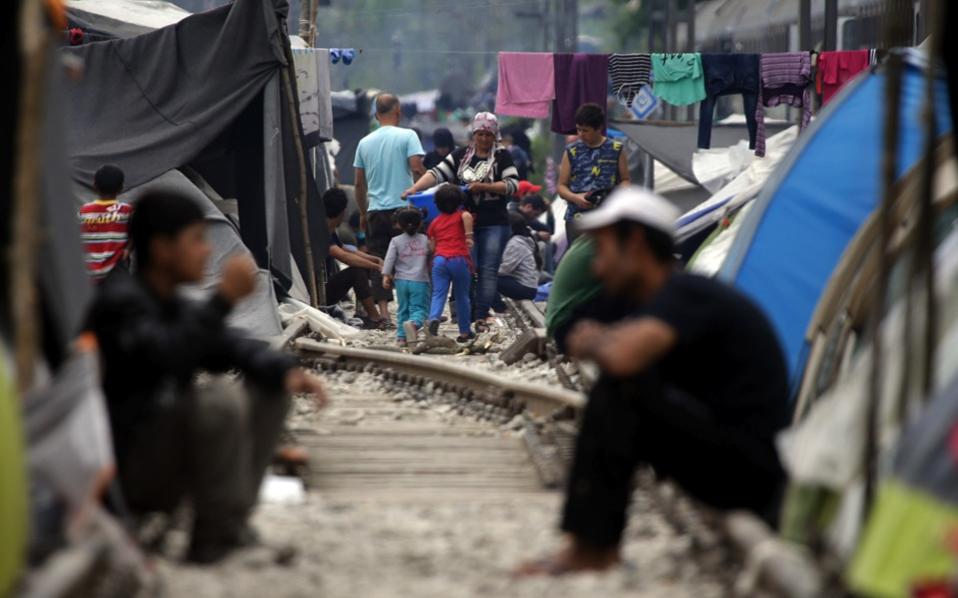
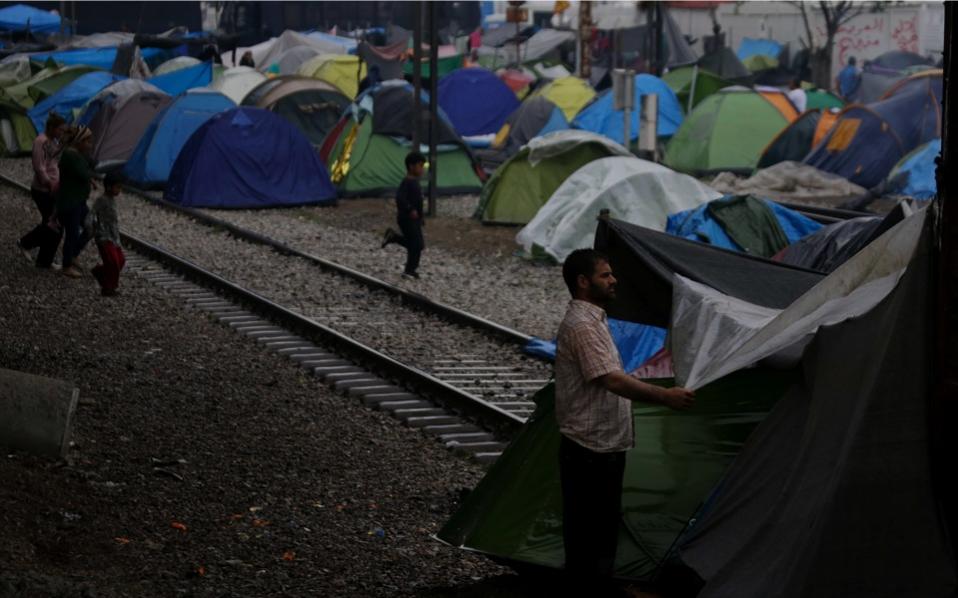
idomeni_rain-thumb-largeAs the government mulls ways of peacefully clearing a makeshift refugee camp near the village of Idomeni, close to the border with the Former Yugoslav Republic of Macedonia, residents in the broader area are running out of patience, with many planning protest action.

Residents of Idomeni are to meet on Wednesday to discuss their grievances and decide on a course of action. Last night, councilors of the Municipality of Paionia, to which Idomeni belongs, were set to discuss calls by many locals for protest rallies to demand the immediate closure of the camp.

Public opinion has soured in recent weeks following a series of acts of vandalism at local cemeteries which some locals have blamed on refugees while others suspect far-rightists trying to stir anti-migrant sentiment.

In the camp itself, the range of different ethnic origins is fueling tensions that often escalate into all-out brawls which have further unnerved locals.

source:ekathimerini.com

Australia:Crocodile attacks man near Katherine, escapes with puncture wounds

7356246-3x2-340x227

A 19-year-old man has survived a crocodile attack in the Douglas Daly region of the Top End, the Northern Territory Health Department says.

Katherine man Peter Rowsell told the ABC he was camping about 15 metres from Dorisvale crossing, southwest of Darwin, when he woke to something “shaking” at his right foot early on Anzac Day.

“I was down at Dorisvale, and at about 4:30 this morning, I was sleeping in a mozzie net, and … I woke up and there was something shaking my foot, and I woke up and had a look and it was three to four metres long,” Mr Rowsell said.

He said the crocodile let go of his foot after he struck the reptile on its head “once or twice” with his hand.

He was not sure whether the reptile had been a saltwater or freshwater crocodile.

Mr Rowsell said his sister and her partner had been sleeping in the tray of a ute when they heard his screams, and the party left the site about 5:00am for Katherine hospital.

He said he had puncture wounds and bruising, and was “still a bit sore”.

Mr Rowsell was being treated with IV antibiotics, which the health department said was standard for crocodile bites.

The man’s parents travelled back to the site to retrieve the camping gear, before returning to Katherine.

Jamie Rowsell, another sister who was not on the trip, said her brother was “bloody lucky” and was able to walk despite his injuries.

Crocodile specialist and Charles Darwin University’s Senior Research Associate Adam Britton said Mr Rowsell was camping too close to the water.

“If he’s camping 15 metres from the water, that is too close. And the official recommendation with croc-wise is 50 metres minimum,” he said.

“People break the 50-metre rule all the time. I mean I’ve done it myself in the past, but I don’t think I’d do it today, that’s for sure.

“Crocodiles are inherently curious animals, they really quite like to check things out. Sometimes that means they’re hungry and they want to check out what the food is, and sometimes they just want to have a stickybeak. Unfortunately that means you’re potentially going to get bitten.”

Source:abc.com.au


Police arrest partner as Bundeena mourns “delightful” Tina Kontozis

1461573738356

Tina Kontozis died in a suspected violent domestic attack. Photo: Instagram

Police have arrested the partner of Tina Kontozis, who was bashed to death with a cricket bat in her Bundeena home on Sunday.

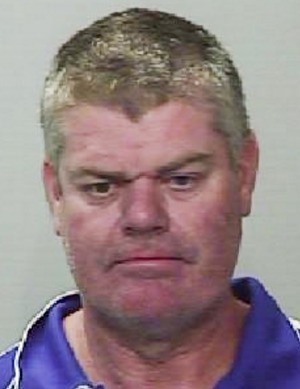
Stephen Boyd, 51, was arrested and taken into police custody at 4.55pm on Monday in Braidwood after police spotted him driving down the Kings Highway. 

Police were called to the home in Beachcomber Avenue about 3.30pm on Sunday after neighbours heard fighting and screaming. It is believed Ms Kontozis, 51, was bashed to death with a cricket bat.

Police set up checkpoints and conducted an air search of bushland in the surrounding Royal National Park.

Highway patrol officers spotted Mr Boyd’s car, a silver 2002 Holden Commodore sedan with NSW registration plates BZ 53 ZO, travelling along the Kings Highway at roughly 3.40pm. 

Police followed the car and eventually stopped Mr Boyd on Wallace Street, Braidwood.

He was treated by paramedics for minor facial injuries and was taken to Queanbeyan Police Station. 

More than 150 Bundeena locals gathered on Jibbon Beach on Monday evening in a moving candlelit vigil celebrating the life of Ms Kontozis.

12

Stephen Boyd, 51, of Bundeena. Photo: Supplied

“Tonight is Tina’s night and all about love and laughing,” said local Chrissie McCann, one of the organisers of the gathering. “We are bigger than what has happened and we will overcome this.”

As forensic officers gathered evidence from the home on Monday, those affected by Ms Kontozis’s death left bouquets of flowers by the police tape cordoning off the street. “RIP Tina, a beautiful flower cut down too soon”, one card read.

Handpicked flowers were also left outside the Goanna Patch Kindergarten, where Ms Kontozis cared for a generation of Bundeena’s children.

A neighbour, Michael Vink, said the small community had been shocked by the violence, and saddened by the death of a popular resident.

“I don’t think you would find anybody that had a bad word to say about Tina,” he said. “She was delightful. We have a nine-year-old daughter who was taught by her at the preschool, as were so many children in the town. She always remembered every child by name and always had a kind word and a smile.”

Detective Chief Inspector Terry O’Neill, the Sutherland Local Area Command Crime Manager, said Mr Boyd was known to police, but would not comment on whether there was a history of domestic violence in the case.

Earlier on Monday he urged Mr Boyd to contact police, saying they had concerns for his welfare.”We have made a number of visits to friends and acquaintances of Mr Boyd in an attempt to establish where he is,” he said.

Sutherland police detectives were on their way to speak to Mr Boyd, NSW Police tweeted at 5.30pm. 

Investigations are continuing. 

source:smh.com.au