Monthly Archives: January 2016

Schäuble to Tsipras: “It’s the implementation, stupid”

1453387565156k

Greek PM told deeper reforms needed as IMF also stresses need for debt relief.

Greek Prime Minister Alexis Tsipras was left in no doubt on Thursday at the World Economic Forum in Davos, Switzerland, that his government will have to produce deeper pension reforms to satisfy its lenders.

However, Tsipras was also given backing over his pursuit of debt relief from the International Monetary Fund, whose role in the Greek bailout he had publicly questioned recently.

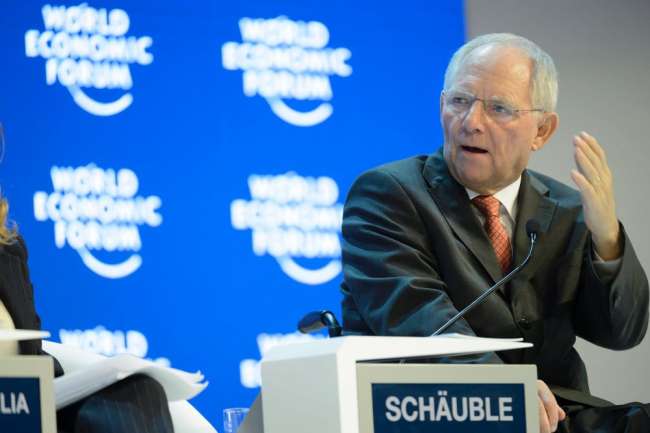
Tsipras met with IMF Managing Director Christine Lagarde and, earlier, with US Treasury Secretary Jack Lew. He also shared a panel with German Finance Minister Wolfgang Schaeuble.

During a 90-minute meeting described as “sincere” by the Greek side, Tsipras raised two key issues during his meeting with Lagarde. He asked for leaks from the IMF regarding its views on Greek proposals to stop and for the upcoming bailout review to be completed as quickly as possible.

In a statement issued after the meeting, the Fund made it clear that Tsipras would have to do more on pension cuts, while Greece’s European lenders would also have to be prepared to offer sizable debt relief to Athens.

“The managing director reiterated that the IMF stands ready to continue to support Greece in achieving robust economic growth and sustainable public finances through a credible and comprehensive medium-term economic program,” said the IMF.

“Such a program would require strong economic policies, not least pension reforms as well as significant debt relief from Greece’s European partners to ensure that debt is on a sustainable downward trajectory.”

Earlier, when he was part of a panel with Schaeuble, Tsipras said his government accepts the need to have the IMF on board in the bailout.

“There has been a long debate, we have heard different views,” he said. “Some partners asked that the IMF be involved and we agreed in order to have the agreement. Now we are doing all we can to implement this agreement,” he said.

Schaeuble said the German and other parliaments had agreed to aid Greece on condition that the IMF remained engaged in the program and it would be like “entering a room full of dynamite with a lighted candle” to ask the Bundestag to change that agreement.

Tsipras joked that he didn’t want Schaeuble to blow himself up so they needed to remove the dynamite before he entered that room.

The discussion was also notable for Tsipras arguing that apart from producing balanced budgets, European countries also had to focus on erasing inequalities such as divergent borrowing rates.

Schaeuble responded by saying that solidarity could only come from “respecting agreements.”

“It’s the implementation, stupid,” he added.

Source: Kathimerini

Aliens are silent because they’re dead, says new study

XFiles-2016_1024

New research into how life might have evolved elsewhere in the Universe has thrown up a rather depressing possibility – we haven’t found any aliens yet because they’re probably already dead.

The hypothesis is based on what we know about the first billion years or so after a new planet forms – its environments are extremely unstable, fluctuating in temperature and atmospheric composition so wildly that the chances of a new life form evolving quick enough to cope are very slim (which means give yourself a pat on the back, fellow human, we made it.)

“The Universe is probably filled with habitable planets, so many scientists think it should be teeming with aliens,” said lead researcher, Aditya Chopra from the Australian National University. “Early life is fragile, so we believe it rarely evolves quickly enough to survive.”

Chopra and his team reference the early environments on Venus and Mars – some 4 billion years ago when they first formed, they were likely fairly habitable, and there is a chance that life forms did in fact appear on their rocky surfaces.

But we have evidence to suggest that around a billion or so years after these planets had formed, Venus was well and truly on course to become the smouldering hothouse of death we know it as today, and Mars did the opposite – its temperatures plummeted, and any early life that might have formed on its surface was likely frozen out of existence.

So what makes Earth so special? Turns out, it’s us. Well, our earliest ancestors, at least. The researchers suggest that the success of life on Earth is down the fact that the earliest life forms actually had a stabilising effect on the rapidly fluctuating environment. “Most early planetary environments are unstable,” says Chopra. “To produce a habitable planet, life forms need to regulate greenhouse gases such as water and carbon dioxide to keep surface temperatures stable.”

The researchers simulated this scenario using a model they call the Gaian bottleneck, which basically means that if life can’t evolve fast enough to stablise its environment, it dies out. If we’re looking at examples such as Venus and Mars, the Gaian bottleneck states that if you don’t make it through that brief period of rough but possible habitability, you’ve probably missed your chance.

We know from previous research that life on Earth managed to evolve so fast, it ended up regulating greenhouse gas emissions on a planetary scale, and this appeared to have a favourable effect on what’s known as our planet’s albedo – the ratio of reflected radiation to absorbed radiation.

That’s important, because when Earth was just forming, the Sun was up to 25 percent less luminous than it is now, but all the evidence points to the oceans being liquid, or at least not completely frozen. This seemingly impossible scenario is known as the faint young Sun paradox.

Back in 2012, researchers in the US came up with a possible solution – the high concentrations of warming greenhouse gases, such as carbon dioxide (CO2), that were being regulated by early life likely kept the planet sufficiently warm before the Sun could. This ensured that Earth escaped the ‘snowball state’ that we see in the majority of rocky planets we know about today.

The interaction between these large patches of frozen and liquid water on the surface of Earth interacted with the radiation, and established the planet’s albedo, which ultimately determined its surface temperature.

“In extremely rare cases – like on Earth – the relatively rapid evolution from single- to multicellular organisms to complex life forms did not produce enough greenhouses gases to cause runaway negative feedback and heat the planet enough to evaporate all its liquid water,” explains Campbell Simpson at Gizmodo. “It’s that particular and so far unique quirk that has kept us alive, if the Gaian bottleneck explanation is accurate.”

The hypothesis, if we can somehow prove it, answers the problem posed by the Fermi paradox: if the Universe is a colossal space, filled with trillions upon trillions of potentially life-sustaining stars and habitable planets, why haven’t we found any aliens?

“The mystery of why we haven’t yet found signs of aliens may have less to do with the likelihood of the origin of life or intelligence and have more to do with the rarity of the rapid emergence of biological regulation of feedback cycles on planetary surfaces,” says one of the team, astronomer Charles Lineweaver.

The research has been published in the journal Astrobiology, and the team has also posted it here with free access, to encourage other scientists to come forth and scrutinise it. If what they’re proposing ends up matching what really happened all those billions of years ago, it’s a huge bummer that alien life probably died out before we ever had a chance to meet them. But it’s also incredibly humbling to think about how incredibly lucky we all are to exist. High fives all ’round.

source:sciencealert.com

Violent attack on nurse at Hunter Valley hospital raises security concerns

2816286-3x2-340x227

The union representing nurses says hospitals in regional areas of New South Wales are particularly vulnerable to violent incidents, and deserve special consideration.

Health Minister Jillian Skinner has agreed to a statewide audit of hospitals after a shooting at Sydney’s Nepean Hospital last week.

Mrs Skinner said she would consider integrating security staff into hospital emergency wards.

A meeting this week of nurses union delegates raised the issue of rising rates of violence against members in hospitals across the state.

NSW Nurses and Midwives Association acting general secretary Judith Kiejda said one of the most concerning stories was an incident at Scone Hospital in the NSW Hunter Valley in September.

“The police brought in a person under the influence of some substance or other, and they had no sooner left the place when he escalated and became extremely violent,” Ms Kiejda said.

“In that episode, he managed to remove an automatic door off its hinges, he just tore it off.

“He used that door to squash our nurse up against the wall and obviously she was quite injured.

“There was an investigation, but a small facility like Scone only has minimal staffing, so they only had two people in the emergency department on night duty.”

Ms Kiejda said action on the issue of hospital security was long overdue.

“We were gobsmacked by what we were hearing and particularly from rural and regional areas, where they have minimal staffing,” she said.

“They share their police with other towns, and have security that just happens to pop in on certain nights of the week. Other nights they have nothing.

“It’s just a recipe for disaster, so it is pleasing that the Minister is going to do an audit, but let’s do it quickly.

“Really the situation in NSW is just waiting for another disaster to happen.”

source:abc.net.au

Sydney weather: storms and rain set to hit for second day

untitled

A severe thunderstorm warning has been issued for Sydney, with heavy rain and damaging winds expected to extend from the Hunter region to the Illawarra and inland to Dubbo and Bourke.

The Bureau of Meteorology warned that the thunderstorms were likely to produce flash flooding for several hours.

The storm cell heading for Sydney is near Oberon and is one in a line of thunderstorms in the far west of the state.

“There is a chance it could be severe. Heavy rainfall is the main thing we will see and also possibly damaging wind gusts,” meteorologist Rob Taggart from the Bureau of Meteorology said.

Friday’s storms are forecast to be potentially more severe than those that hit the city late on Thursday afternoon, Weatherzone meteorologist Ben McBurney said.

The worst hit areas on Friday are expected to be in Sydney’s west, where rain arrived as early as 1pm.

See your ad here
Widespread rainfall of between 30 and 40 millimetres are forecast across the Sydney basin, Mr McBurney said.

“Today’s storms will be potentially on the stronger side [compared with Thursday’s].

“We have a bit more moisture around than yesterday, for starters, and also a stronger wind shear. They’re the two ingredients that encourage stronger storms,” Mr McBurney said.

“Yesterday’s storms were fairly strong in some areas but, while there was a lot of rain, most parts of Sydney didn’t see huge amounts of thunder or lightning.

“There was a bit of strong wind around yesterday but nothing clearly damaging. Today we have a heightened risk of those things.”

On Thursday evening, the heaviest falls were in North Parramatta, which recorded 48 millimetres, while temperatures provided another hot, humid and uncomfortable night in the city, dipping only to a low of 22.8 degrees at 2.30am.

But it felt considerably hotter; at 2.30am, it felt more like 25.1 degrees, the Bureau of Meteorology said. The humidity was above 85 per cent all night.

Mr McBurney said a southerly change would move through on Saturday, when a top of 28 degrees was forecast in the city and 30 degrees in the west, while on Sunday a top of 27 degrees was forecast in the city and 28 degrees in the west.

“With that southerly change [on Saturday], we could still see some showers and storms, with the best chance in the morning,” Mr McBurney said.

“Saturday could still be a bit on the damp side in some areas, but as we get into Sunday it should definitely be improving.”

source:theherald.com

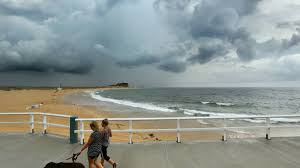
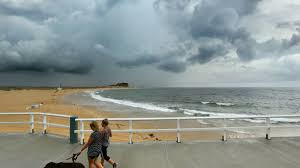
Newcastle bracing for thunderstorms

untitled

A SEVERE thunderstorm warning has been issued for parts of the Hunter.

The Bureau of Meteorology said the storms were likely to produce destructive winds, large hailstones and heavy rainfall that may lead to flash flooding for several hours from late Friday afternoon.

The bureau said locations which could be affected included Newcastle, Scone, Cessnock, Maitland, Wyong, Putty, Wollombi, Merriwa, Dungog, Murrurundi, Kulnura and Quirindi.

A large storm cell passed over Singleton after 4pm and was moving east.

source:theherald.com.au

Η Ρεάλ Μαδρίτης πάντα ο πλουσιότερος σύλλογος στον κόσμο

D360FBB8F6DAE8012FFF74526C095469

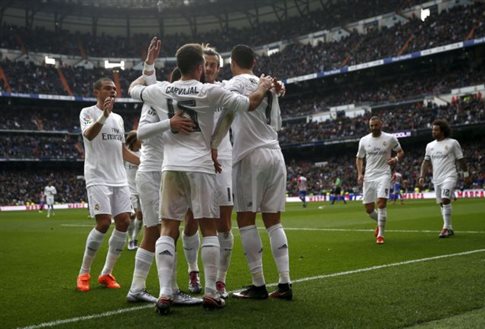
Η «βασίλισσα» λάμπει πάντα στο θρόνο της. Η Ρεάλ Μαδρίτης παρέμεινε ο πλουσιότερος ποδοσφαιρικός σύλλογος στον πλανήτη, για 11 συνεχή χρονιά, και ακολουθούν, όπως και την περασμένη χρονιά, η Μπαρτσελόνα και η Μάντσεστερ Γιουνάιτεντ, σύμφωνα με το στοιχεία, που έδωσε στη δημοσιότητα η συμβουλευτική οικονομική εταιρία «Deloitte».

Η συγκεκριμένη βρετανική εταιρία μελετά κάθε χρόνο τα συνολικά έσοδα από τα τηλεοπτικά δικαιώματα, τις πωλήσεις εισιτηρίων και τις χορηγίες και ανακοινώνει τα οικονομικά στοιχεία των ομάδων. Για μια ακόμη χρονιά, λοιπόν, η πρώτη 20άδα απαρτίζεται αποκλειστικά από ευρωπαϊκούς συλλόγους.

Αναλυτικά οι 20 πλουσιότεροι σύλλογοι του κόσμου, είναι οι εξής:

1. Ρεάλ Μαδρίτης 577 εκατομμύρια ευρώ

2. Μπαρτσελόνα 560.8

3. Μάντσεστερ Γιουνάιτεντ 519.5

4. Παρί Σεν Ζερμέν 480.8

5. Μπάγερν Μονάχου 474

6. Μάντσεστερ Σίτι 463.5

7. Αρσεναλ 435.5

8. Τσέλσι 420

9. Λίβερπουλ 391.8

10. Γιουβέντους 323.9

11. Ντόρτμουντ 280.6

12. Τότεναμ 257.5

13. Σάλκε 219.7

14. Μίλαν 199.1

15. Ατλέτικο Μαδρίτης 187.1

16. Ρόμα 180.4

17. Νιούκαστλ 169.3

18. Εβερτον 165.1

19. Ιντερ 164.8

20. Γουέστ Χαμ 160.9

Πηγή:in.gr

Furious Panathinaikos hit with fresh sanctions

gate_13_web-thumb-large

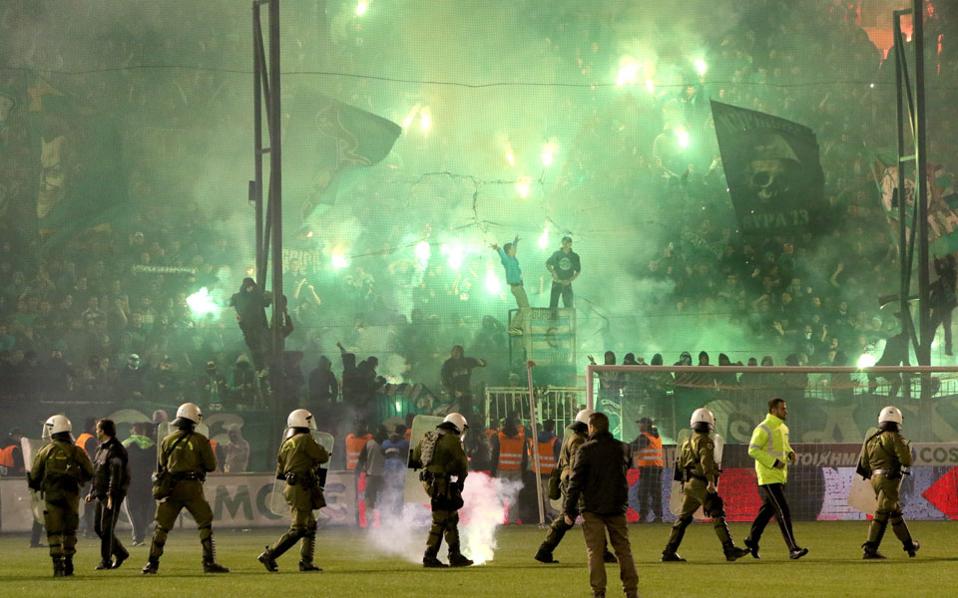
Panathinaikos accused Greece’s deputy sports minister Stavros Kontonis of strengthening “a corrupt system” on Tuesday after the government ordered the partial closure of the club’s stadium as a further punishment for crowd violence.

Kontonis’ ministry announced that Panathinaikos’ famous Gate 13 area of their Apostolos Nikolaidis stadium – occupied by around 5,000 of the club’s most fervent supporters – as well as nearby Gate 14, would be closed for the remainder of the regular season. The club was also fined 90,000 euros.

The decision was part of a state report on the crowd trouble which caused the Athens derby against Olympiakos Piraeus to be called off last November.

The Super League match was called off before kickoff due to crowd trouble inside and outside the stadium which resulted in three police officers being taken to hospital.

Panathinaikos had already been deducted three points, forfeited the match with a 0-3 scoreline, received a four-match supporter ban and been fined 190,000 euros by league authorities.

“The new punishment imposed by the deputy sports minister is unprecedented worldwide and is in fact predatory,” the club said in a statement.

“Unfortunately, Panathinaikos believed in last year’s statements from Mr Kontonis about restoring the credibility of the long-suffering football scene, but as it turns out, he is anything but interested in that, instead reinforcing the operations of the corrupt system.”

Panathinaikos added in the statement that the club would launch an appeal to “each and every competent body of the justice system in order to overturn this highly illegal decision”.

Panathinaikos is currently fourth in the Greek championship, 20 points adrift of leader and fierce rival Olympiakos after 18 matches.

source:ekathimerini.com

Η μεσογειακή διατροφή εμποδίζει τη συρρίκνωση του εγκεφάλου

food

Αναφέρουν επιστήμονες από το Πανεπιστήμιο Κολούμπια στη Νέα Υόρκη.

Η μεσογειακή διατροφή είναι απαραίτητη σε όσους θέλουν να διατηρούν νεανικό τον εγκέφαλό τους καθώς μεγαλώνουν, αναφέρουν επιστήμονες από το Πανεπιστήμιο Κολούμπια στη Νέα Υόρκη.

Σε μελέτη που πραγματοποίησαν διαπίστωσαν ότι η διατροφή αυτή σχετίζεται με μειωμένο ρυθμό ατροφίας του εγκεφάλου, η οποία οφείλεται στην απώλεια εγκεφαλικών κυττάρων

λόγω ηλικίας.

Προγενέστερες μελέτες έχουν δείξει ότι η μεσογειακή διατροφή μειώνει επίσης τον κίνδυνο εμφάνισης νόσου Αλτσχάιμερ και άλλων νευροεκφυλιστικών παθήσεων του εγκεφάλου.

Τα νέα ευρήματα βασίζονται σε 674 ηλικιωμένους (η μέση ηλικία τους ήταν τα 80 έτη) με φυσιολογικές νοητικές ικανότητες, οι οποίοι συμπλήρωσαν ειδικά ερωτηματολόγια για τις διατροφικές τους συνήθειες και υποβλήθηκαν σε μαγνητικές τομογραφίες εγκεφάλου.

Σε σύγκριση με όσους δεν ακολουθούσαν ιδιαίτερα τις επιταγές της μεσογειακής διατροφής, όσοι ακολουθούσαν συστηματικά τουλάχιστον πέντε από τις συστάσεις της είχαν μεγαλύτερο ολικό όγκο εγκεφάλου, καθώς και περισσότερη φαιά και λευκή ουσία.

Η μεσογειακή διατροφή περιλαμβάνει πολλά μη επεξεργασμένα (ολικής αλέσεως) δημητριακά, λαχανικά, ψάρια, όσπρια και φρούτα, ως κύριο λιπίδιο το ελαιόλαδο και μέτριες ποσότητες αλκοόλ, καθώς και χαμηλή πρόσληψη κορεσμένων λιπαρών οξέων, γαλακτοκομικών, κρέατος, πουλερικών και γλυκών.

Τα μεγαλύτερα οφέλη παρατηρήθηκαν στους εθελοντές της μελέτης που έτρωγαν τα περισσότερα ψάρια και το λιγότερο κρέας, γράφουν οι ερευνητές στην επιθεώρηση «Neurology», η οποία είναι το επίσημο επιστημονικό περιοδικό της Αμερικανικής Ακαδημίας Νευρολογίας (ΑΑΝ).

Μάλιστα ήταν τόσο σημαντικά, ώστε ήταν σαν να διέθεταν εγκέφαλο πέντε χρόνια νεότερο απ’ ό,τι ήταν η πραγματική τους ηλικία.

Τα ευρήματα αυτά ενισχύουν την άποψη πως ό,τι ωφελεί την καρδιά, ωφελεί και τον εγκέφαλο, σχολίασε η επικεφαλής ερευνήτρια δρ Γιαν Γκου, επίκουρη καθηγήτρια Νευροψυχολογίας στο Τμήμα Νευρολογίας του Κολούμπια.

Και πρόσθεσε: «Τα νέα ευρήματα είναι συναρπαστικά διότι εγείρουν την πιθανότητα ότι μπορούμε να αποφύγουμε την συρρίκνωση του εγκεφάλου και τις επιπτώσεις της γήρανσης σε αυτόν, κάνοντας κάτι τόσο απλό όσο το να προσέχουμε τη διατροφή μας.

»Με βάση τη μελέτη μας, απαραίτητο είναι να τρώμε τουλάχιστον 90 έως 150 γραμμάρια ψάρι την εβδομάδα και να αποφεύγουμε τα πολλά κρέατα, ενώ ακόμα κι αν ακολουθεί κανείς μόλις πέντε από τις συστάσεις της μεσογειακής διατροφής, προστατεύει τον εγκέφαλό του».

Πηγή:Νέος Κόσμος

Χωρίς Eλληνικά πανεπιστήμια η λίστα με τα πιο «διεθνή» ιδρύματα στον κόσμο

imagesW1R0YAYW

Περιλαμβάνει όμως 20 αυστραλιανά πανεπιστήμια

Ούτε ένα ελληνικό δεν περιλαμβάνεται στα 200 πιο «διεθνή πανεπιστήμια» του κόσμου, σύμφωνα με την αξιολόγηση του Times Higher Education (THE), εκπαιδευτικού ένθετου της βρετανικής εφημερίδας «Times» που κάθε χρόνο εκδίδει και μια λίστα με τα καλύτερα πανεπιστήμια του κόσμου.

Αντιθέτως η ίδια λίστα περιλαμβάνει 20 αυστραλιανά πανεπιστήμια! Καλύτερο αυστραλιανό πανεπιστήμιο αυτή τη φορά ανακηρύχθηκε το Australian National University της Καμπέρας που είναι 25ό στον κόσμο.

Η σχετική λίστα πάντως κρύβει εκπλήξεις, καθώς το πλέον εξωστρεφές πανεπιστήμιο για το 2016 ανακηρύχθηκε αυτό του Κατάρ, ενώ ακολουθούν τα πανεπιστήμια του Λουξεμβούργου και του Χονγκ Κονγκ. Τη δεκάδα συμπληρώνουν το ελβετικό École Polytechnique Fédérale de Lausanne, το Πανεπιστήμιο Γενεύης επίσης από την Ελβετία, το Πανεπιστήμιο Μακάου, τα ETH Zurich και Σεντ Γκάλεν και πάλι από την Ελβετία, το Εθνικό Πανεπιστήμιο Σιγκαπούρης και το βρετανικό Imperial College.

Τα κριτήρια που λήφθησαν υπόψη για την κατάρτιση της λίστας είναι το ποσοστό ξένων καθηγητών του ιδρύματος, το ποσοστό ξένων φοιτητών και το ποσοστό των δημοσιευμένων ερευνών στις οποίες τουλάχιστον ο ένας συγγραφέας είναι ξένος.

Βάσει αυτών των κριτηρίων, τα αμερικανικά πανεπιστήμια, τα οποία συνήθως κυριαρχούν στις λίστες με τα καλύτερα ιδρύματα, βρίσκονται πολύ χαμηλά στη λίστα με τα πιο διεθνή. Είναι χαρακτηριστικό ότι το περίφημο Τεχνολογικό Ινστιτούτο της Μασαχουσέτης βρίσκεται στην 90ή θέση. Από την άλλη πλευρά το πανεπιστήμιο του Κατάρ, που είναι και το πλέον διεθνές, ήταν στις θέσεις 601-800 στη λίστα του Times Higher Education με τα καλύτερα πανεπιστήμια.

Η Ευρώπη εκπροσωπείται με 125 πανεπιστήμια στη λίστα με τα πιο διεθνή, ενώ ανάμεσα σε αυτά είναι και το Πανεπιστήμιο Κύπρου, το οποίο βρίσκεται στην 150ή θέση. Η χώρα με τα περισσότερα διεθνή πανεπιστήμια (38) είναι η Βρετανία. Στις πιο εξωστρεφείς χώρες ακολουθούν η Αυστραλία, ο Καναδάς και η Ελβετία.

Πηγή: Νέος Κόσμος

Effie – The Virgin Bride tour

date%20with%20effie

The big-haired, fast-talking Greek beauty is taking her nuptials around the country this year.

We’ve been there for the ups and downs and believe it or not, the time has arrived for Effie to get married – and everyone is invited!

The big-haired, fast-talking Greek beauty is taking her nuptials around the country this year in February and March with the Effie – The Virgin Bride stage
spectacular.

There will be lots of music, dancing, multimedia and audience interaction, but Effie doesn’t want you to forget the real reason you’re all celebrating…well, her of course.

Tour dates and locations are as follows:

Thurs 4 – Sun 14 February Comedy Theatre, Melbourne
Fri 26 and Sat 27 February Astor Theatre, Perth
Fri 4 and Sat 5 March The Tivoli , Brisbane
Fri 18 – Sun 20 March Enmore Theatre, Sydney

* Note that the tour is recommended for patrons aged 15 and over and anyone under the age of 18 must be accompanied by a parent or legal guardian.

For more information and to purchase tickets, visit http://www.effievirginbride.com

When: 4 February-20 March, 2016

Where: Nationally

source:Neos Kosmos