Monthly Archives: January 2016

Sydney residents told to defer non-essential travel as big wet continues

1452067321419

Residents in Sydney and the Hunter are being urged to exercise extreme caution as the unseasonal big wet continues through to Wednesday night.

The stormy weather across Sydney eased at dusk, with the Bureau of Meteorology cancelled its severe weather warning for NSW and the ACT.

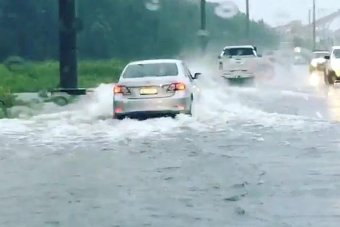
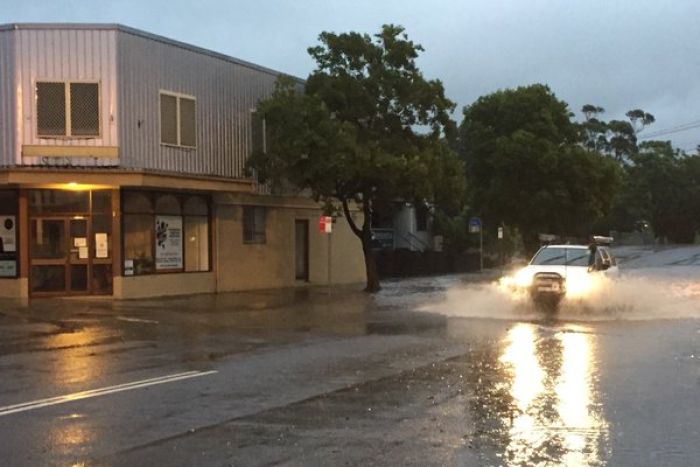
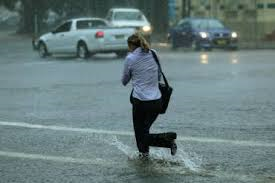
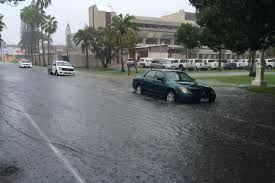
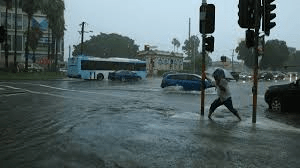
Earlier in the day, during the worst of the downpour, motorists were told to avoid any non-essential travel after flooding, crashes and fallen trees caused chaos on the roads.

Choppy waters are making for rough ferry trips in Sydney Harbour, with reports passengers are being told to hold on as they cross the heads.

A two car crash on Parramatta Road has caused heavy traffic conditions in Leichhardt at Phillip Street. Motorists should expect delays.

A crash on Victoria Road in West Ryde is also causing delays for eastbound traffic. Motorists should allow extra travel time.

Emergency services are at the scene and have advised motorists to exercise caution.

Two cars were damaged by a fallen tree on Darling Street in Glebe. Resident Nicky Woods, whose car windscreen was smashed, said she heard a “massive crash” from inside her home.

“I was in the kitchen and came running out and then just saw the tree,” she said. “And then I was just like, ‘that’s our car’.”

Another resident, who did not wish to be named, said the tree had been leaning quite severely and that it had been flagged with the local council. “I noticed it got worse recently,” she said.

Traffic lights are flashing on Ocean Street at Wallace Street in Woollahra. Traffic lights are also flashing in Earlwood at Homer Street and Bayview Avenue.

Low-level flooding in and around Sydney has prompted NSW Ambulance to warn motorists to take care, with paramedics called to 100 motor vehicle accidents since Tuesday.

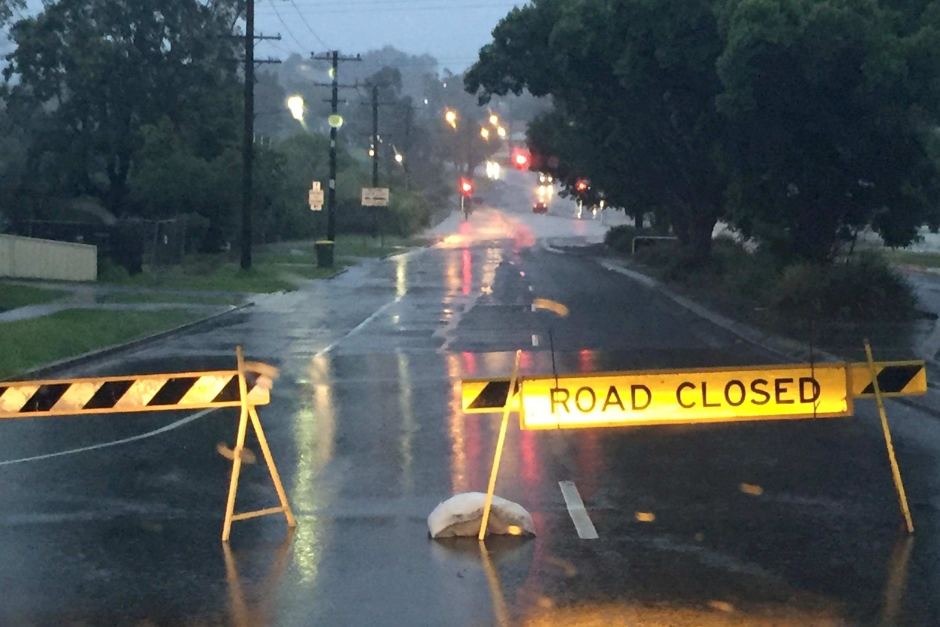
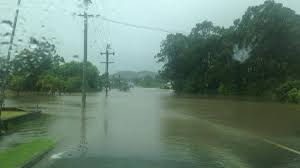
Flooding has closed Wakehurst Parkway, between Oxford Falls and North Narrabeen as well as roads in Rouse Hill, Schofields, Windsor and Cattai.

NSW Ambulance is also urging motorists to take care with low-level flooding in and around Sydney, with paramedics called to 100 motor vehicle accidents since Tuesday.

The Bureau of Meteorology has cancelled the severe weather warning for NSW and the ACT on Wednesday afternoon, saying the immediate threat has passed.

However, rainfall will persist into the evening.

“With the heavy rains predicted to continue, paramedics are calling on people to slow down and take extra care,” executive director service delivery Jamie Vernon said.

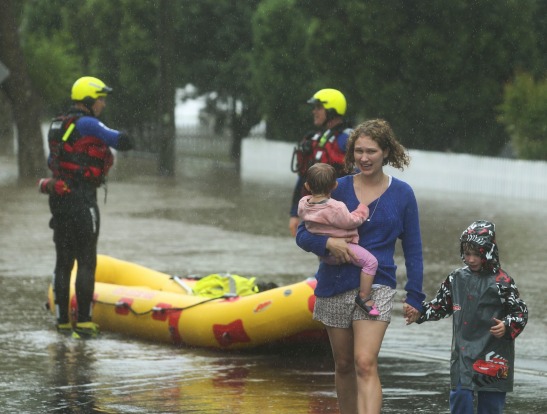
State Emergency Services have received over two thousand calls for assistance related to the flooding since Monday morning and have attended 28 flood rescue operations.

1452053811836

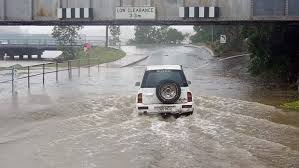
Emergency Services Minister David Elliot said most flood rescues were completely unnecessary as people ignore warnings and travel through floodwaters.

“Despite countless warnings, people are continuing to risk their lives and the lives of volunteers by crossing floodwaters,” Mr Elliott said.

Anyone who ignored the warnings could be fined $400 for negligent driving, he said.

Newcastle has seen its wettest three-day total in January on record, with 200.6mm since Monday 9am. The station opened in 1862.

The SES has received 1400 requests for assistance overnight; the Sydney suburbs of Blacktown and Hornsby as well as the Hunter towns of Newcastle and Maitland are among the worst affected areas.

An evacuation order is in place for parts of the Hunter township of Raymond Terrace.

50 people had evacuated to the Raymond Terrace senior citizens’ centre Wednesday afternoon.

Waters have subsided from the Dungog area and residents have been returning home today after evacuations Tuesday night.

SES volunteers and NSW Fire and Rescue firefighters were doorknocking 30 homes, telling residents they should leave as floodwater from the Hunter River has begun to inundate lower areas of the town.

The SES has also urged people in the Hunter and Sydney metropolitan regions to keep close watch on their children around flooded areas as the heavy rain is forecast to continue until Thursday.

The SES has over 350 volunteers and crew out attending to jobs, while police rescue is helping monitor the safety of residents and patrolling roads.

SES spokeswoman Jacqueline Rose said that motorists can get stuck in floodwaters when navigating unfamiliar roads.

She encouraged motorists to delay travel if possible and to pay attention to live traffic updates and ABC radio warnings to avoid driving into flooded areas.

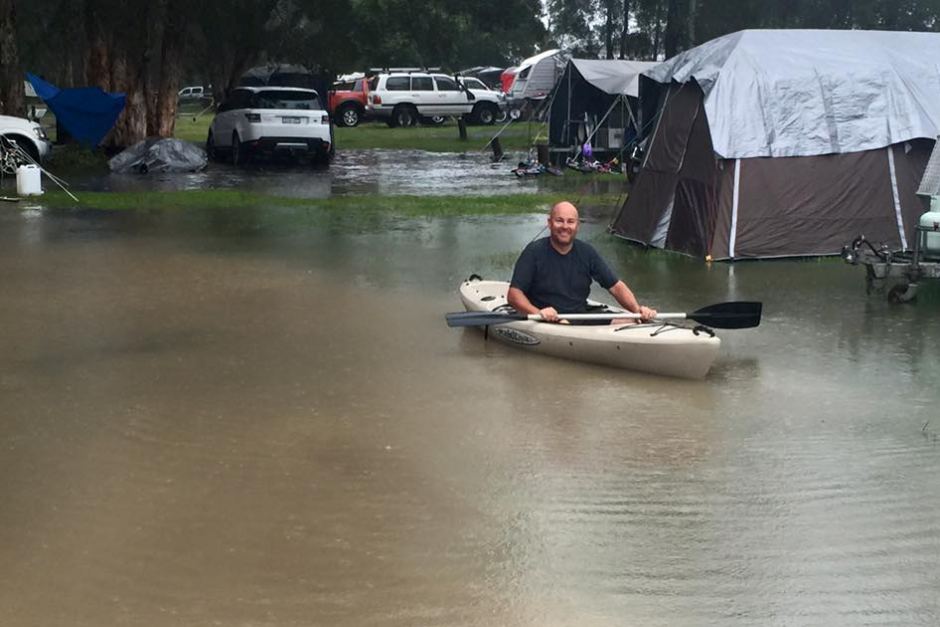
Police and national park authorities are monitoring camping grounds, saying campers should move to higher ground if danger arises.

source:smh.com.au

Newcastle:Warnings of heavy rain and flash flooding across Hunter as low pressure system forms

images 01

UPDATED, 8pm:​ ONE person was missing presumed drowned, scores were evacuated, hundreds became isolated and nearly one thousand needed help as record January rainfalls and massive seas lashed the Hunter.

As the East Coast Low which dumped a January record of nearly 300mm in less than 24 hours across parts of the Hunter began to move out to sea on Wednesday night, more than 80 Raymond Terrace residents were waiting for the predicted peak of the Hunter River floodwaters before discovering whether their homes were safe.

Emergency crews were needed for at least eight floodwater rescues, however the biggest emergency occurred several kilometres off shore when a middle-aged sailor was washed off a 12-metre yacht near Broughton Island and lost in raging seas.

Two helicopters and several vessels were searching a wide area north of Port Stephens trying to locate the man, who was not believed to be wearing a lifejacket.

The State Emergency Service remained busy with more than 800 calls for assistance across the Hunter as more than 500 residents became isolated at Torryburn and other remote Lower Hunter communities.

The rainfall to 9am on Wednesday was the highest for a January day in the Hunter on record, swelling rivers and keeping swift water rescue teams busy as they helped evacuate hundreds of people to dry land.

But the storm could have been worse, with small high tides and the failure of predicted gale-force winds to eventuate helping reduce the carnage.

“We have dodged a bullet in the sense that if this had happened on the weekend, when the really high tides were coming, places like Raymond Terrace would not have fared so well,’’ SES spokesman Phil Campbell said.
untitled 03

Despite the widespread forecast that major flooding would occur in parts of the region, only a handful of low-lying residences were inundated with floodwaters.

The forecast was for improved weather on Thursday as river levels abate, although some remote areas could remain isolated for days.

In Raymond Terrace, six low-lying streets were issued with emergency evacuation orders by the State Emergency Service on Wednesday, as the Hunter River broke its banks and flooded homes in Hunter Street.

As January rainfall records were eclipsed across the Hunter, Raymond Terrace copped the brunt of localised rainfalls –223 millimetres fell in 24 hours in Williamtown, 210 millimetres in Seaham – as well as downstream flooding from the Hunter River caused by an east coast low pressure system

Homes, cars, and the oft-flooded Riverside Park rotunda, were all inundated after heavy overnight rainfalls.

“We got a knock on the door by the SES at about 8.30am,” Kellie Dahl said.

Ms Dahl lives in Glenelg street with her partner Carl Soloman. They were still in their home after 5pm, despite their front and back yards being a few inches deep with water.

“We had to get all new carpeting in the place after the April storms and it’s literally only just been completed,” she said.
images 02

“It is seriously just like deja vu.”

Not everyone was happy with the evacuations. The Junction Inn Hotel, on the corner of Hunter and William Street, was ordered to leave by the State Emergency Service, proprietor Andrew Wedmaier calling it “over-kill”.

While most evacuated residents took shelter with family and friends, an evacuation centre was set up at the Senior Citizens Centre in Boomerang Park, where more than a dozen other Raymond Terrace residents took shelter.

Steve Smith, from Hunter Street, praised the police and emergency crews, but agreed they were being “extra precautions” after the unexpected force of the April storms.

“I had water through the house in April and we didn’t see anyone, emergency services or anything, for days, because no one could get to us,” he said.

“I understand why they’re doing what they’re doing.”

Six more streets were given evacuation warnings after 6pm, but the Bureau of Meterology predicted the river would peak by 7pm.

UPDATED, 4.30pm: SOME flooding is expected across low-lying areas within Raymond Terrace as residents eagerly await the forecast peaking of the Hunter River at 7pm.

Six streets have been issued with evacuation warnings – Bourke Street East, William Street, William Baily Street, Sturgeon Street North, Parkway Avenue and Carmichael Street – after about 80 people from 30 properties were earlier evacuated as rising floodwaters inundated streets and yards across six streets in the town.

At Maitland, the Hunter River is expected to peak at 7pm with minor flooding and the Wollombi Brook should peak at Bulga about 10pm .

More than 500 people are now isolated across the Hunter, including the 400 residents of Torryburn who again find themselves shut off after spending days on their own during the April super storm.

The State Emergency Service has taken more than 800 calls for assistance across the Hunter and about 2000 across the state as the low pressure system slowly moves north.

The rain to 9am on Wednesday broke the record for the wettest January day in the Hunter on record, with some areas copping nearly 300mm.
The number of flood rescues remains at eight, with authorities applauding residents for steering clear of floodwaters.
UPDATED, 1pm:

What we know so far:

– Six streets in Raymond Terrace have been issued evacuation warnings by the State Emergency Service, due to major flooding along the lower parts of the Williams and Paterson Rivers. Residents in the low-lying parts of Hunter, Glenelg, Swan, Port Stephens, King and Kangaroo Streets are all being evacuated.

– There have been more than 700 requests for assistance from the State Emergency Service across the Hunter since the fierce weather hit.

– There are four current flood warnings in the Hunter for the Hunter River, the Manning River, Bulahdelah, and the Paterson and Williams Rivers.

– Earlier the Wollombi Brook rose faster than expected causing major flooding in Bulga. It is expected to peak near 5.1 metres at about 10pm.

– The State Emergency Service evacuated 22 people from low-lying areas in Dungog overnight, including eight rescues. Heavy rain has fallen in the same areas that were severely damaged last April when three people drowned.

– Torryburn, the isolated township that had its bridge washed away in April, is again cut off. The new bridge is still two months from completion, and the detour is currently underwater.

– Torrential rainfall has occurred across the Hunter – In the 24 hours to 9am this morning, 255 millimetres fell at Bungwahl near Bulahdelah, including 80 millimetres in the hour to 7pm. 246 millimetres fell at Newcastle, 239 millimetres at Upper Chichester in the Barringtom Tops, and 219 millimetres at Williamtown.

– There is water on the road at a number of locations across the Hunter, and a number of road closures remain in place.

UPDATED, 11am: The State Emergency Service has issued an evacuation warning for Raymond Terrace as floodwaters continue to rise in parts of the Hunter.

The warning covers properties in the low-lying areas of Hunter, Glenelg, Swan, Port Stephens, King and Kangaroo streets.

Floodwater from the Hunter River has begun to inundate the lower areas on the Raymond Terrace central business district, with the levels predicted to rise when high tide hits about 3pm.

Authorities have predicted the flooding to be moderate to major, although the actual height was still unpredictable.

The SES was encouraging residents within these areas to maintain a vigilant watch on the situation and to prepare to evacuate.

The Bureau of Meteorology said the low continued to sit off Port Stephens with further rai8nfall of up to 100mm expected at some locations in the Hunter and mid-north coast.

In the 24 hours to 9am this morning, 255mm of rain fell at Bungwahl near Bulahdelah, including 80mm in the hour to 7pm, 246mm at Lookout Rd Reservoir (Newcastle), 239mm at Upper Chichester (Barrington Tops) and 219 mm at Williamtown.

The bureau is also predicting damaging winds with gusts up to 90kmh to hit the Hunter coast on Wednesday.

Locations which may be affected include Newcastle, Gosford, Maitland, Nelson Bay, Raymond Terrace, Wallsend, Toronto, Morisset, Wyong, The Entrance, Taree and Dungog.

The Wollombi Brook at Bulga was rising faster than previously expected where major flooding was current and river levels were rising.

Flood waters from Wollombi Brook and other tributaries were expected to cause minor to moderate flooding along the Lower Hunter River.

The small town of Torryburn has been isolated by floodwaters.

Train services have been suspended from Hamilton to Scone and Dungog because of flooding at Sandgate, with no replacement bus services to Dungog due to road flooding.

The runway at Newcastle Airport was expected to be reopened at midday with travellers asked to check with their airlines in regards to the status of their flight.

There has been very minor flooding at Carrington following the morning high tide.

Meanwhile, the heavy rain appears to have caused more damage to a Merewether construction site where parts of an adjoining bowling club was lost.

A perimeter fence next to an evacuated dental surgery has fallen into the flooded five-metre deep hole while a light pole was leaning precariously from the bowling club site.

UPDATED, 9am: Authorities have been forced to make eight rescues within floodwaters and evacuated residents from their low-lying homes at Dungog as the heavy rain continues to fall across the Hunter.

The State Emergency Service evacuated 22 people from low-lying areas in Dungog overnight, the same areas that were severely damaged last April when three people drowned.

SES spokesman Phil Campbell said the decision was made to clear the homes afer predictions of major flooding of the Myall Creek and Williams River.

However, the waters peaked at 1.15am at lower levels than predicted and no homes were inundated.

An evacuation centre set up in the town has since been closed.

The Paterson River was due to peak at the Gostwyck Bridge at 8am at 12.53 metres with major flooding predicted.

Mr Campbell said it could mean some low-lying areas around Raymond Terrace may flood around the high-tide mark about 3pm on Wednesday.

An evacuation centre has been set up at the senior citizens club at Boomerang Park.

The SES had received more than 320 calls for assistance across the Hunter by 8.15am on Wednesday.

Mr Campbell said authorities made eight flood rescues across the Hunter, including some residents who could not get out of their house at Dungog.

Crews were also needed to pull people from several cars caught in water at Lemon Tree Passage while a boat was needed to evacuate two residents from a house at Ferodale.

The low pressure system was off Nobbys Head about 8am and was slow moving, with the Bureau of Meteorology predicting further heavy rain and the possibility of flash flooding to eastern parts of the Hunter on Wednesday morning.

The low was expected to move slowly to the northeast during Wednesday afternoon with heavy rain extending to the southern parts of the mid-north coast.

Between 9am Tuesday and 7am on Wednesday, 254 mm of rain fell at Bungwahl near Bulahdelah, including 80 mm in the hour to 7pm, and 219 mm at Williamtown.

Since 9am Tuesday, Upper Chichester has received 230mm, Wallsend Bowling Club 215mm, Merewether 210mm and Maitland 162mm.

Meanwhile, the heavy rain appears to have caused more damage to a Merewether construction site where parts of an adjoining bowling club was lost.

A perimeter fence next to an evacuated dental surgery has fallen into the flooded five-metre deep hole while a light pole was leaning precariously from the bowling club site.

UPDATE, 9pm: THE Hunter has been hit by a 24 hour deluge that saw hundreds of millimetres of rain cause flooding from Wallsend to Bulahdelah.

Emergency service volunteers worked into the wee hours of Wednesday morning responding to hundreds of calls for assistance from Hunter residents caught up in sometimes frightening weather conditions.

Eight properties in Dungog were evacuated as the Bureau of Meteorology predicted minor flooding of the Williams River, and the Chichester Dam began to spill.

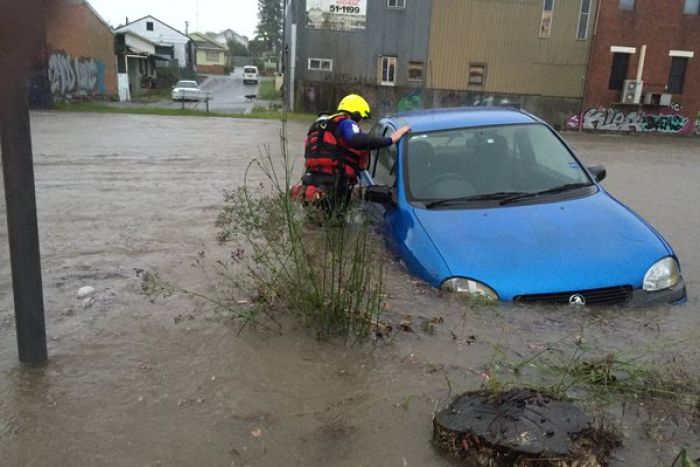
In Newcastle two people were rescued from a car by fire crews in Tighes Hill, and dozens of roads were closed due to flooding, including Industrial Drive at Mayfield, and University Drive at Waratah, where two cars were briefly underwater.

Between 30 and 60 millimetres of rain fell on parts of the city in less than half an hour on Tuesday afternoon, and 2200 homes lost power in Mayfield and Waratah.

In Wallsend, where the flash flooding was at its worst, Newcastle City Council send out evacuation alerts to residents warning of imminent flash flooding.

A number of low-lying streets in that suburb, including Nelson Street, were closed.

Cars were submerged on Maryland Drive, cricket grounds and skate parks inundated, and drains were transformed into rushing torrents of water.

State Emergency Services spokesman Phil Campbell said on Tuesday night that the majority of call outs had been for minor issues leak leaking roofs.

However, the Bureau of Meteorology flagged falls of as much as 200 millimetres of rain in some localised areas, as well as the potential for an east coast low pressure system to form off the coast, meaning conditions could worsen in the early hours of Wednesday.

Further north, heavy rain fell for most of the day in parts of the Myall Lakes and at Buladelah, where the main road had to be closed after more than 200 millimetres of rain fell in a 24 hour period.

Anthony Dorney lives on Markwell Road just north of Bulahdelah. He was up at 4am on Tuesday moving their cattle and horses to higher ground.

“I was wading through water about waist deep at 4am to get to them,” he said. “The paddocks they were in are under water now.”

A number of severe weather warnings and flood alerts remained in place overnight, with moderate flooding expected in the Hunter River at Bulga, and minor flooding of the Williams River at Dungog.

Two campers had to be rescued in the Myall Lakes, and five people clambered out of a car after it became stuck in about one metre of water at Pokolbin.

UPDATE, 7.30pm: THE State Emergency Service is responding to more than 200 calls for assistance across the lower Hunter on Tuesday night.

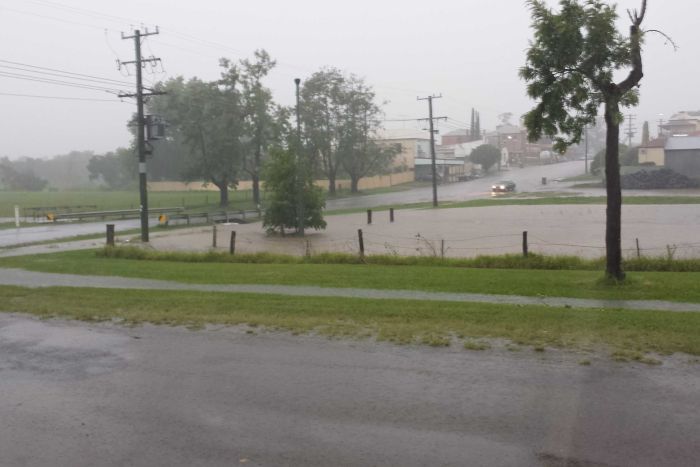
There were reports of flash flooding at a number of locations across Newcastle, with a number of roads inundated.

The majority of calls for assistance so far were in the lower Hunter in Newcastle and Maitland, the majority for minor roof leaks.

The Bureau of Meterology said that an average of 60 millimetres of rain has fallen in the past 24 hours to 6pm on Tuesday, with more forecast rain expected to cause minor flooding at Dungog and Mill Dam Falls later on Tuesday.

The Bureau said it was not possible to predict the flood peak because of uncertainty over how much more rain will fall.

However Dungog is expected to exceed the minor flood level of 4.9 metres at about 11pm on Tuesday, and Mill Dam Falls is expected to exceed the minor flood level of 6.1 metres at about 9am on Wednesday.

Phil Campbell from the State Emergency Services said the conditions were “no-where near” the April storms that swept through the Hunter, but predicted isolated rain falls of about 200 millimetres in some localised areas “could cause some issues”.

He said specialist crews had been placed at some areas including Dungog, and extra volunteers had been called in from Sydney.

While the majority of calls for assistance were for minor issues, there have been some rescues required.

Two campers were rescued by the State Emergency Services from a site at Myall Lakes, while at Tighes Hill firefighters reportedly rescued two people from a car caught in floodwater.
UPDATE, 6pm: TORRENTIAL rain has soaked parts of Newcastle on Tuesday afternoon, with some areas receiving between 30 and 60 millimetres in less than an hour.

There are currently flood warnings in place for Bulahdelah – where the main street is closed – and parts of the Hunter River near Bulga, while the Bureau of Meterology has also issued a flood watch for large swathes of the Hunter including Lake Macquarie and the Newcastle CBD.

Humid easterly winds are feeding into a trough on the NSW coast, generating widespread rain.

A small low pressure centre may form within the trough, most likely off the Hunter or Mid North Coast.

Widespread rain totals of 30 to 60 mm are likely during this time, and isolated falls of 200 mm are possible.

About 194 millimetres of rain fell on Bulahdelah between 9am on Monday and 9am on Tuesday.

Another 69 millimetres fell between 9am and 5pm.

Upper Chichester near Barrington Tops received 155 millimetres in that time, and Bungwahl copped 135 millimetres.

Closer to town the northern parts of Newcastle were the worst affected – with Wallsend among the worst, receiving 57 millimetres between 9am and 5pm.

The Bureau issued a flood warning for the Hunter River after as much as 105 millimetres of rain fell in the Wollombi Brook catchment area in the 24 hours to 4pm on Tuesday.

That’s expected to cause moderate flood levels of 3.7 metres in Bulga at about 8pm.

Further rain is likely, potential leading to high flood water levels.

The Bureau says that Singleton, Maitland and Raymond Terrace are likely to stay below the minor flood level.

source:theherald.com.au

NSW floods: SES receives more than 1,000 calls for help as heavy rain causes chaos in Hunter; Sydney braces for flash flooding later today

7069978-3x2-340x227

Flooding in the New South Wales Hunter region has led to evacuations, rescues and hundreds of calls for help as forecasters warn of more heavy rain and the prospect of flash flooding in Sydney.

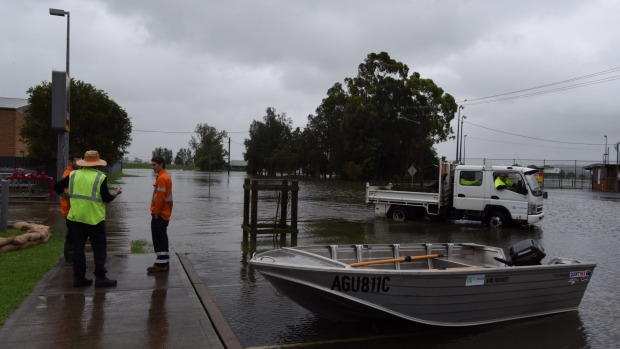
Newcastle roads were turned into rivers of fast-moving water as emergency crews dealt with more than 1,400 requests for assistance, including hundreds across the Hunter region.

Six streets in Raymond Terrace have been ordered to evacuate, with the Hunter River expected to exceed minor flood levels in the area in the hours ahead.

Across the state, rescue crews carried out more than 20 rescues from flood waters.

Overnight, residents were evacuated from low-lying parts of the flood-ravaged town of Dungog, where wild weather led to three deaths less than a year ago.

Several rivers reached their peak overnight and are now falling, including the Gloucester River, the Myall River at Bulahdelah and the Williams River at Dungog.

However, a major flood warning remains in place at Bulga and authorities warned five homes were at risk of flooding in the small community of Glen Martin, north of Newcastle, as the Williams River there continued to swell.

Bureau of Meteorology (BoM) duty forecaster Dimitry Danchuk said rainfall there was increasing rapidly.

“Effectively this area went from minor to moderate flooding to moderate to major flooding,” Mr Danchuk said.

“Some easing trend is likely to happen late in the day during the afternoon and evening, as we expect this low to gradually contract to the north east.”

Dozens of roads around the Newcastle and Hunter region are cut and motorists have been advised to avoid all unnecessary travel.

A New South Wales State Emergency Service spokesman said the small town of Torryburn was isolated by floodwaters.

7069888-3x2-700x467

Newcastle Airport has closed its runway at Williamtown, with floodwaters covering the low-lying area.

Wes, a resident of the Newcastle suburb of Carrington, said he was surprised by just how much rain was falling.

“This is the worst it’s been since I’ve been here in a couple of years,” Wes said.

“April storms were as bad as this but we’ve got a high tide so water just can’t get away. When the tide drops it will probably come down a bit.”

Farm country in the Tuross and Bega Valleys in the state’s south remain inundated, water levels in that area are receding.

The Bega and Moruya Rivers fell below the minor flood level overnight, despite more scattered showers.

A BoM statement said there was a severe weather warning in place for damaging winds and heavy rainfall in the mid north coast and Hunter districts.

The warning also said there was potential for dangerous flash flooding in Newcastle this morning.

“At the time of issue, flood warnings were current for Wollombi Brook, and the Colo, Myall, and Paterson and Williams Rivers.”

The BoM said between 9:00am on Tuesday and midnight, 254 millimetres of rain fell at Bungwahl near Bulahdelah, including 80 millimetres in the hour to 7:00pm.

Campers trapped by floodwaters

SES regional controller Greg Murphy said emergency workers would try to rescue campers cut off by floodwaters in Deua National Park, west of Moruya.

“We’ve got confirmed 21 people who are currently isolated at Bendethera and we will be looking at either resupplying or helping those people to get out of that area today,” Mr Murphy said.

He said there were no reports of injuries.

7070132-3x2-940x627
Mr Murphy said the SES would attempt to provide supplies for them or help them to leave the area, when weather conditions ease.

He said conditions should improve over the next few days.

“Around the mid-south coast and up into the highlands we are looking at a couple of days of sunshine. So I think the end of the week is looking a whole lot better than the front end of the week,” Mr Murphy said.

SES deputy commissioner Greg Newton said the majority of flood rescues involved people attempting to drive through floodwaters.

He said a pregnant woman was rescued from a property that was isolated by floods in the state’s south.

“That went very well. I believe she’s in hospital,” Mr Newton said.

“We’re also out and about looking for people, looking in areas where people may be at risk such as low-lying camp grounds.

“Many people are on holidays at the moment so may not be familiar with their area, so they need to take that extra care to be aware of what’s going on around them and be prepared to move if required.”

source:abc.net.au

Roads, rail in the Hunter: What’s open and what’s not Jan. 6, 2016, 7:15 a.m.

untitled

Trains have resumed between Hamilton and Fassifern on the Central Coast and Newcastle Line after a partial closure this morning due to flooding of the line at Cockle Creek.

Buses will supplement these services and passengers are advised to allow additional travel time and listen to station announcements as stopping patterns may change.

Buses continue to replace trains between Hamilton and Scone/Dungog due to flooding of the line at Sandgate.

As at 6:55am the following roads in the Newcastle/Hunter Region remain closed due to flooding:
•The Pacific Highway is closed between Lake Street and Oakdale Road in Gateshead with northbound motorists diverting via Newcastle Inner city Bypass and southbound motorists using Warners Bay Road and the Newcastle Inner City Bypass.
•Oakdale Road is closed between the Pacific Highway and Bulls Garden Road in Gateshead.
•Kalaroo Road is closed near Seasands Drive in Redhead
•Bulls Garden Road is closed near Oakdale Road in Gateshead.
•Raymond Terrace Road is closed between Government Road and Mcfarlanes Road in Thornton with motorists diverting via Government Road and Mcfarlanes Road.
•Sandgate Road is closed at Astra Street in Sandgate.
•Wallsend Road is closed at Rural Drive in Sandgate.
•Industrial Drive is closed westbound at Gross Street in Tighes Hill.
•Anderson Drive is closed between Glenwood Drive and Byron Street in Beresfield
•William Bailey Road is closed in both directions between Port Stephens Street and Fitzgerald Bridge in Raymond Terrace.
•Mitchell Avenue is closed between Railway Parade and Government Road in Kurri Kurri
•Allandale Road is closed at Kerlew Street in Nukulba and near Lovedale Road in Allandale.
•Bucketts Way is closed in both directions at Twelve Mile Creek.

As well motorists should use extreme caution on the following roads which are also affected by flooding but remain open:
•The Pacific Highway at Karuah, Bulahdelah, Ferodale and Possum Brush
•The Golden Highway at Whittingham.
•The New England Highway at Tarro
•Tourle Road in Kooragang
•Industrial Drive near Tourle Street in Mayfield West
•Tomago Road in Tomago
•Turton Road in Broadmeadow
•Maitland Road in Hexham
•Putty Road about 10kms north of Howes Valley
•Hilsborough Road in Warners Bay
•Allandale Road in Rothbury
•Allandale Road in Nulkaba near Kerlew Street as well as in Rothbury

source:theherald.com.au

NSW weather: Flash flooding in parts of Hunter, dam threat as deluge set to continue

7069530-3x2-700x467

A deluge of heavy rain has caused flash flooding in some parts of the New South Wales Hunter region and a dam to spill, as unseasonal rain continues to hit communities around the state.

A severe weather warning is in place for the mid north coast and Hunter districts, with heavy rain expected to continue through the week.

More than 200 millimetres of rain has fallen in Newcastle with up to 30 millimetres in one hour, leading to flash flooding, with more heavy rain expected going into Wednesday morning.

Authorities rescued two people from a car submerged in floodwaters in the Newcastle suburb of Tighes Hill, while there were reports of a further two cars submerged on University Drive at Callaghan.

NSW State Emergency Service spokesman Phil Campbell said there had been 227 calls for help in the Hunter and more than 150 of those were active.

North of Newcastle, a white alert evacuation warning was issued for properties near the Chichester Dam, upstream of Dungog.

“A white alert just means we want to warn people downstream in the local caravan park that water is spilling over the dam [and] that it’s still raining [so] there is a potential for further rises,” Mr Campbell said.

7069646-3x2-700x467

Dungog was declared a natural disaster zone in April last year after it was devastated by storms which claimed the lives of three people.

Dungog resident Ed Mobbs said the heavy rainfall had flooded some of the lower lying roads.

“The local field is under water,” Mr Mobbs said.

“The tennis courts, which have just been replaced, are in danger of washing away again.

“A lot of the place that actually got washed away in Dungog before — the houses that went missing and the retirement [apartments], Alison Court that was heavily flooded — all those sorts of areas are in grave danger at the moment.

“Looks like it might all be happening again.”

Mr Mobbs said residents would also be keeping an eye on Chichester Dam.

“Given the amount of rain, and the amount of rain that we’ve had in the last two days … a big overspill is definitely going to cause problems down the line,” he said.

Flood warnings are in place for the Wollombi Brook at Bulga, the Williams River at Dungog, the Myall River on the mid north coast and Mill Dam Falls in the Hunter.

SES deputy commissioner Greg Newton said there was an “uptick” in the amount of rain falling in the Newcastle area on Tuesday evening.

“There’s obviously been damage to properties through water ingress into roofs as blocked gutters have overflowed,” he said.

“In the course of the day we have had a number of flood rescues with people becoming trapped or isolated in floodwater.”

Mr Newtown said the rain was expected to carry on through Wednesday, possibly easing by the afternoon and into Thursday.

Areas affected by the heavy rain include Newcastle, Maitland, Wallsend, Toronto, Morisset, Dungog, Nelson Bay and Raymond Terrace in the Hunter.

Wyong, The Entrance and Gosford on the Central Coast will also be affected, and further north, Taree on the mid north coast.

Mr Newton said a number of properties had been inundated across the affected areas and there may be more isolated in rural areas.

“Some of our volunteers are currently heading into a group of isolated campers in the area west of Moruya, who have chosen to stay in the area rather than risk and come out through some of the flooded crossings on the roads there,” he said.

“We are also looking at evacuating campers in low-lying camp areas, particularly in the Hawks Nest area and areas around Mile Lakes which are seeing rises there which threaten those camp sites.”

Campers forced to move

The torrential rain and strong winds forced holidaymakers to abandon campsites across the Hunter and mid north coast regions.

7068160-3x2-940x627
Tracey Moore, manager of the Hawks Nest Beach Holiday Park north of Newcastle, earlier said campers were being forced to move on from the area.

“We’ve tried to relocate them in accommodation that we have available but others have also chosen to leave early,” Ms Moore said.

“We have 275 sites and every one of them is full.

“There is water everywhere — my husband has been out in the park and it’s even coming through the door in our office. It’s just full on at the moment.”

Crews at Eden on the NSW south coast have rescued children and animals, the SES’s Jacqueline Rose said.

“There was also a rescue today where five children needed to be rescued from a vehicle and they’re all safe now,” she said.

“There was an animal rescue where there was 15 sheep and three cows but they’re all safe.”

source:abc.net.au

Greek islands potential Nobel Peace Prize winner

Lesvos

A global campaign is seeking to have the Greek islands of the East Aegean nominated for their contributions to the refugee crisis

A campaign has been launched online in a bid to recognise the efforts of Greek locals on the islands of the East Aegean, namely Lesvos, for their unwavering assistance and generosity during the refugee crisis as recipients of the Nobel Peace Prize.

“The native populations of the Greek Islands in the Aegean Sea (and many other external, worldwide, non-profit organizations and diaspora Greeks) have done and are doing anything possible to help the displaced Syrian refugees and make them as comfortable as possible, although they themselves have very little to offer,” reads the global campaign on the Aveez website.

Set up by an American going by the name of Stephen K, once the campaign draws to a close the activist has plans to send the signatures to the Nobel Prize Committee.

Considered to be the biggest wave of mass migration since the second world war, of the estimated 900,000 migrants to have arrived in Europe last year, at least 750,000 have travelled through Greece, 60 per cent of which arrived on the shores of Lesvos.

Included amongst the numerous acts of kindness were locals scrambling to find dry clothes for those arriving on the shores, along with mothers and grandmothers from around the islands caring for babies and young children found unassisted and without parents.

Many churches have been converted into makeshift clinics with the assistance of volunteer nurses and doctors catering to the injured as hospitals and emergency services have been stretched to their limits.

While local authorities have been hard at work trying to track down the names of any refugees missing at sea.

Aside from their general willingness to assist the refugees with food, shelter and medical care, the campaign also endeavours to highlight that the influx of refugees occurred during a particularly difficult time for Greece, which has found itself at the centre of a harsh economic crisis barely able to assist and cater for its own people.

“Despite being subjected to a severe economic crisis for many years[,] they have shown their Christ-like behaviour with acts of filotimo, love, respect and filoxenia to those who are total strangers to them!” reads the campaign.

Stephen hopes these acts and sacrifices do not go unrecognised, stating that the actions of the Greeks have been “significant contributors to World Peace and Stability, and are clear examples of love for others in the world to use and to learn from.”

To date, the campaign has already attracted more than 43, 530 signatures, close to reaching its target of 50,000.

source:neos kosmos

Bodies of 21 asylum seekers, including children, found on Turkey’s Aegean coast, authorities say

6771606-3x2-340x227

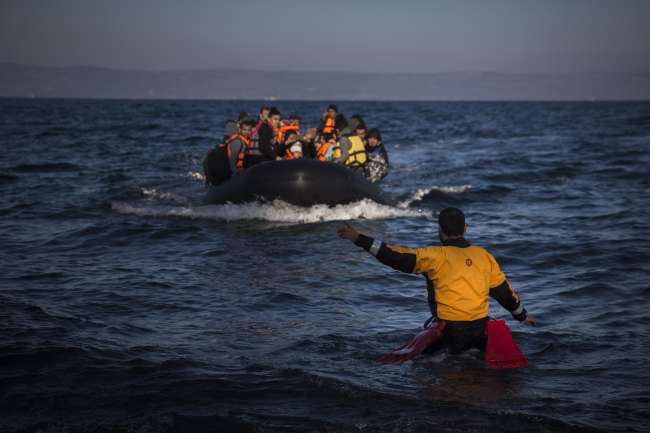
The bodies of 21 asylum seekers, three of them children, have washed up at two separate locations on Turkey’s Aegean coast, Turkey’s gendarmerie says, after their boat apparently capsized as they tried to reach the Greek island of Lesbos.

A gendarmerie official in the local headquarters told Reuters 11 of the bodies were discovered on the shoreline in the district of Ayvalik, while 10 others were found in the district of Dikili.

A coast guard official said three boats and a helicopter were searching for any survivors.

Images published by Dogan news agency showed the small corpses of children, fully dressed and wearing shoes, lying on the beach with their life-jackets still on.

There were no details on the nationality of the victims.

The images of the small lifeless bodies on the sand echo those of three-year-old Syrian refugee Aylan Kurdi, the pictures of whose corpse lying face down on a Turkish beach in September 2015 spurred Europe into greater action on the migrant crisis.

Turkey, which is home to some 2.2 million refugees from Syria’s civil war, has become a hub for those seeking to move to Europe, many of whom pay people smugglers thousands of dollars for the risky crossing

The UN refugee agency and the International Organization for Migration (IOM) have said more than one million asylum seekers and refugees reached Europe in 2015, most of them by sea.

The vast majority — more than 800,000 — landed in Greece, according to the figures.

The onset of winter and rougher sea conditions do not appear to have deterred the migrants, with boats still arriving on the Greek islands daily.

source:abc.net.au

Dick Smith enters receivership due to bad sales, banking woes

images

Electronics retailer Dick Smith has gone into receivership, with Ferrier Hodgson appointed to run the firm following a failure to secure adequate funding to support the business.

Dick Smith employs around 3,300 people across 393 stores in Australia and New Zealand, leaving those jobs at risk if a buyer for the business cannot be found.

The firm’s management said sales and cash generation were below expectations in the key December trading period, continuing a poor run in the later part of 2015.

Dick Smith said that, while confident in the long-term viability of the company, the directors were unable to secure support from the company’s bankers to provide finance for restocking to see it through the next month to six weeks.

That caused them to appoint McGrathNicol as administrators to run the firm while restructuring or sale options are explored.

However, after the appointment of administrators, Dick Smith’s lenders appointed receivers to run the firm and protect their financial interests.

The receivers – James Stewart, Jim Sarantinos and Ryan Eagle from Ferrier Hodgson – say that Dick Smith stores will continue to operate as usual while they evaluate restructuring or selling the group, or parts of it.

“Dick Smith is one of the best known brands associated with consumer electronics in Australia and New Zealand,” Mr Stewart said in a statement.

“We are immediately calling for expressions of interest for a sale of the business as a going concern.”

However, he also said that any outstanding gift vouchers held by customers will not be honoured and deposits will not be refunded.

Instead, consumers in those situations will have to stand in line with other unsecured creditors of the company and may only get a small fraction of their money back.

The first creditors’ meeting will be held next Thursday, January 14, at the Wesley Centre in Sydney.

The company had halted trade in its shares on Monday as the company sought to refinance its debt.

They last traded on December 31, 2015 at 35.5 cents.

Poor Christmas sales the final straw

Shares in Dick Smith plunged 83 per cent over 2015, largely due to profit downgrades in October and November.

In November, the retailer slashed the value of its inventories by $60 million, or some 20 per cent.

An analyst at financial firm IG, Evan Lucas, said the company’s cash flow problems have not improved since then.

“Clearly their syndicate loan leads, being NAB and HSBC, saw the numbers and were not impressed with what they saw and called in their loan, which net debt sits around $40 million for Dick Smith,” said Mr Lucas.

“It’s a very sad situation for shareholders, it obviously means they won’t be able to get out of the company and they may only get cents back in the share.”

Dick Smith shares opened on the market at $2.20 when it was floated by private equity firm Anchorage Capital Partners in December 2013, valuing the company at $520 million.

Anchorage bought the business from Woolworths for about $20 million in cash upfront just a year earlier – in total the private equity firm ended up paying around $115 million.

Dick Smith Electronics was started by its namesake as a car radio installation business on Sydney’s North Shore in 1968.

Australian retail giant Woolworths took a majority stake in the business in 1980 and full ownership two years later as the electronics chain expanded nationally, before selling it to Anchorage in 2012.

Dick Smith: What went wrong?
Private equity group Anchorage Capital bought Dick Smith from Woolworths in 2012 for an initial payment of just $20m.

Anchorage then “dressed the company up to look good for just one thing – to persuade people to buy shares,” according to analysts from Forager Funds Management.

Anchorage “wrote down the value of the inventory, took provisions for future onerous lease payments, wrote down the value of the plant and equipment and liquidated a lot of the inventory as quickly as they possibly could to throw off cash,” according to Forager’s Steve Johnson.

The cash was then used by Anchorage to effectively make Dick Smith ‘buy itself’.

The writedowns inflated profits, a key factor in enticing investors into the company.

For example: a stock item that may have been bought for $100 may have been in the books at $60 after the writedowns, which meant an extra $40 profit on every sale.

The writedown of plant and equipment lowered depreciation charges, also boosting the bottom line.

“But when they liquidated all that inventory to pay for the purchase price, they didn’t replace it,” according to Forager’s Steve Johnson.

“And the new owners of the business, since it’s been listed on the stock market, have had to put in a lot more money to fund the increase in inventory.”

source:abc.net.au

Newcastle:Warnings of heavy rain and flash flooding across Hunter as low pressure system forms

untitled  2

UPDATE, 9pm: THE Hunter has been hit by a 24 hour deluge that saw hundreds of millimetres of rain cause flooding from Wallsend to Bulahdelah.

Emergency service volunteers worked into the wee hours of Wednesday morning responding to hundreds of calls for assistance from Hunter residents caught up in sometimes frightening weather conditions.

Eight properties in Dungog were evacuated as the Bureau of Meteorology predicted minor flooding of the Williams River, and the Chichester Dam began to spill.

In Newcastle two people were rescued from a car by fire crews in Tighes Hill, and dozens of roads were closed due to flooding, including Industrial Drive at Mayfield, and University Drive at Waratah, where two cars were briefly underwater.

Between 30 and 60 millimetres of rain fell on parts of the city in less than half an hour on Tuesday afternoon, and 2200 homes lost power in Mayfield and Waratah.

In Wallsend, where the flash flooding was at its worst, Newcastle City Council send out evacuation alerts to residents warning of imminent flash flooding.

A number of low-lying streets in that suburb, including Nelson Street, were closed.

Cars were submerged on Maryland Drive, cricket grounds and skate parks inundated, and drains were transformed into rushing torrents of water.

State Emergency Services spokesman Phil Campbell said on Tuesday night that the majority of call outs had been for minor issues leak leaking roofs.

untitled
However, the Bureau of Meteorology flagged falls of as much as 200 millimetres of rain in some localised areas, as well as the potential for an east coast low pressure system to form off the coast, meaning conditions could worsen in the early hours of Wednesday.

Further north, heavy rain fell for most of the day in parts of the Myall Lakes and at Buladelah, where the main road had to be closed after more than 200 millimetres of rain fell in a 24 hour period.

Anthony Dorney lives on Markwell Road just north of Bulahdelah. He was up at 4am on Tuesday moving their cattle and horses to higher ground.

“I was wading through water about waist deep at 4am to get to them,” he said. “The paddocks they were in are under water now.”

A number of severe weather warnings and flood alerts remained in place overnight, with moderate flooding expected in the Hunter River at Bulga, and minor flooding of the Williams River at Dungog.

Two campers had to be rescued in the Myall Lakes, and five people clambered out of a car after it became stuck in about one metre of water at Pokolbin.

UPDATE, 7.30pm: THE State Emergency Service is responding to more than 200 calls for assistance across the lower Hunter on Tuesday night.
There were reports of flash flooding at a number of locations across Newcastle, with a number of roads inundated.

The majority of calls for assistance so far were in the lower Hunter in Newcastle and Maitland, the majority for minor roof leaks.

The Bureau of Meterology said that an average of 60 millimetres of rain has fallen in the past 24 hours to 6pm on Tuesday, with more forecast rain expected to cause minor flooding at Dungog and Mill Dam Falls later on Tuesday.

The Bureau said it was not possible to predict the flood peak because of uncertainty over how much more rain will fall.

However Dungog is expected to exceed the minor flood level of 4.9 metres at about 11pm on Tuesday, and Mill Dam Falls is expected to exceed the minor flood level of 6.1 metres at about 9am on Wednesday.

Phil Campbell from the State Emergency Services said the conditions were “no-where near” the April storms that swept through the Hunter, but predicted isolated rain falls of about 200 millimetres in some localised areas “could cause some issues”.

He said specialist crews had been placed at some areas including Dungog, and extra volunteers had been called in from Sydney.

While the majority of calls for assistance were for minor issues, there have been some rescues required.

Two campers were rescued by the State Emergency Services from a site at Myall Lakes, while at Tighes Hill firefighters reportedly rescued two people from a car caught in floodwater.
UPDATE, 6pm: TORRENTIAL rain has soaked parts of Newcastle on Tuesday afternoon, with some areas receiving between 30 and 60 millimetres in less than an hour.

There are currently flood warnings in place for Bulahdelah – where the main street is closed – and parts of the Hunter River near Bulga, while the Bureau of Meterology has also issued a flood watch for large swathes of the Hunter including Lake Macquarie and the Newcastle CBD.
Humid easterly winds are feeding into a trough on the NSW coast, generating widespread rain.
A small low pressure centre may form within the trough, most likely off the Hunter or Mid North Coast.

Widespread rain totals of 30 to 60 mm are likely during this time, and isolated falls of 200 mm are possible.

About 194 millimetres of rain fell on Bulahdelah between 9am on Monday and 9am on Tuesday.

Another 69 millimetres fell between 9am and 5pm.

Upper Chichester near Barrington Tops received 155 millimetres in that time, and Bungwahl copped 135 millimetres.

Closer to town the northern parts of Newcastle were the worst affected – with Wallsend among the worst, receiving 57 millimetres between 9am and 5pm.

The Bureau issued a flood warning for the Hunter River after as much as 105 millimetres of rain fell in the Wollombi Brook catchment area in the 24 hours to 4pm on Tuesday.
That’s expected to cause moderate flood levels of 3.7 metres in Bulga at about 8pm.
Further rain is likely, potential leading to high flood water levels.

The Bureau says that Singleton, Maitland and Raymond Terrace are likely to stay below the minor flood level.

source:theherald.com.au
Αυστραλία:Μέχρι και $200 την ημέρα για να πάει το παιδί παιδικό σταθμό

untitled

Πρωτοχρονιάτικη… πίκρα για τους γονείς

Νέα στοιχεία δείχνουν ότι το ημερήσιο κόστος φύλαξης και φροντίδας των παιδιών στους παιδικούς σταθμούς, θα ανέλθει στα $200. Αυτό θα συμβεί πολύ νωρίτερα από τις αλλαγές που προωθεί το ομοσπονδιακό Υπουργείο Εκπαίδευσης με την σχετική προτεινόμενη νομοθεσία που αναμένεται να τεθεί σε ισχύ τον Ιούλιο του 2017.

Το Εθνικό Κέντρο Κοινωνικής και Οικονομικής Πολιτικής, έπειτα από ανάλυση στοιχείων, συμπάρανε ότι σε προάστια που υπάρχει υψηλή ζήτηση για φύλαξη παιδιών το κόστος θα φτάνει τα $210 την ημέρα.

Ο ομοσπονδιακός υπουργός Εκπαίδευσης, Simon Birmingham, δήλωσε ότι οι γονείς θα πρέπει να κάνουν έρευνα αγοράς πριν επιλέξουν την μονάδα φύλαξης των παιδιών του.

Η εκπρόσωπος της αντιπολίτευσης για θέματα εκπαίδευσης, Kate Ellis, δήλωσε ότι μία στις τέσσερις οικογένειες θα επιβαρυθμούν από τις αλλαγές που προωθεί η ομοσπονδιακή κυβέρνηση, και ότι αυτό θα επηρεάσει στο σύνολό τους τα αυστραλιανά νοικοκυριά. “Πρόκειται για αύξηση του κόστους φροντίδας κατά 14% και μάλιστα προτού ξεκινήσει η ισχύς της νέας νομοθεσίας που πέρασε η κυβέρνηση για τον Ιούλιο του 2017” συμπλήρωσε η κ. Ellis.

Η εκπρόσωπος του Δικτύου Υποστήριξης Κέντρων Φροντίδας της Βικτώριας, Nasra Ahmed, δήλωσε ότι η πρόθεση της κυβέρνησης να μειώσει τις επιδοτήσεις, θα αναγκάσει τους γονείς να εγκαταλείψουν τα σημερινά κέντρα φροντίδας που στέλνουν τα παιδιά τους. “Οι γονείς θα αναγκαστούν να αναζητήσουν άλλες εναλλακτικές και φτηνές λύσεις για τη φροντίδα των παιδιών τους. Αυτό που τους συμβουλεύουμε είναι να βεβαιωθούν ότι τα παιδιά τους θα αισθάνονται ασφαλή και άνετα εκεί που θα τα στέλνουν” είπε η κ. Ahmed.

Επίσης, δήλωσε ότι το υπουργείο δεν ζήτησε την συμβουλή του για το θέμα.

Πηγή:Νέος Κόσμος