Daily Archives: December 17, 2014

Guangzhou rivalry ignited with AFC draw


Guangzhou rivalry ignited with AFC draw

Western Sydney Wanderers in for a tough battle.

The group stage of next season’s AFC Champions League will see reigning champions Western Sydney Wanderers take on rivals Guangzhou Evergrande.

Asian champion Western Sydney Wanderers has been drawn alongside bitter rival Guangzhou Evergrande in the group stage of next season’s AFC Champions League, while Brisbane Roar faces opponents from Korea Republic and Japan.

The Wanderers knocked 2013 champion Guangzhou out at the quarter-final stage of this season’s tournament.

In 2015 Western Sydney will also face the winner of a yet to be determined playoff and Japan’s third entrant.

Brisbane Roar was drawn alongside South Korean powerhouse Suwon Bluewings and Japan’s second qualifier as well as the winner of a playoff.

Central Coast Mariners will face either China’s Guangzhou R&F, Myanmar’s Yadanarbon or Singapore’s Warriors FC in a one-off playoff on 17 February to qualify for the group stage.

If the Mariners progress they will be grouped with Korean side Seongnam FC, Japanese champion Gamba Osaka and Thai side Buriram United.

The exact dates for the group matches are yet to be decided.

source: Neos Kosmos

Manolas, Torosidis, Holebas Melbourne bound

Manolas, Torosidis, Holebas Melbourne bound

Former Olympiakos player Kostas Manolas booked to visit Melbourne.

With Roma announced as the third team to come for the International Champions Cup next year, three Greek players will be in tow.

reek defenders Konstantinos Manolas, Vasilis Torosidis and José Holebas will be coming to Melbourne next year as their club Roma books a spot for the International Champions Cup.

All three are Greek national team players, with German-born Greek Jose Holebas a recent addition thanks to Fernando Santos’ World Cup selection.

The trio will come with a packed Roma squad to play international giants Real Madrid and Manchester City in the three team friendly competition.

Already Roma chief executive Italo Zanzi has said how keen he is to bring the team to Australia and meet the local fans.

“We had an excellent experience in last year’s ICC in the United States and are confident this tournament will also be a great success with top-notch competition,” Mr Zanzi said. “We very much look forward to playing in Melbourne and interacting with fans in the city, Australia and the region.”

The state government has pledged in excess of $10m to bring the heavyweights to Melbourne, and expect bumper crowds similar to the 95,000 fans that packed the MCG to see Liverpool play Melbourne Victory.

For the last two years, the USA has been hosting the Cup, with around eight teams participating including Liverpool, Real Madrid and AC Milan. If Melbourne is successful in keeping the Cup, we could be seeing Greek giants Olympiakos make it down for the tournament in the future after they played this year for the 2014 ICC.

The tournament will kick-off with Real Madrid facing Roma on July 18, followed by Manchester City against the Italians three days later.

It wraps up with City playing Real Madrid on July 24.

source: Neos Kosmos

Μόνο 5 λευκοί ρινόκεροι απέμειναν στον κόσμο. Πέθανε ο 44χρονος Ανγκαλίφου στην Καλιφόρνια

WHITE RHINOS 

Μόνο πέντε λευκοί ρινόκεροι του Βορρά απομένουν στον κόσμο, μετά τον θάνατο του λευκού ρινόκερου του στον ζωολογικό κήπο του Σαν Ντιέγκο, στην Καλιφόρνια.

Ο ρινόκερος με το όνομα Ανγκαλίφου, ηλικίας περίπου 44 ετών, πέθανε από γηρατειά την Κυριακή, όπως ανακοίνωσε η εκπρόσωπος του ζωολογικού κήπου Ντάρλα Ντέιβις.

Οι άλλοι επιζώντες εκπρόσωποι του είδους βρίσκονται άπαντες σε αιχμαλωσία. Σ’ αυτούς περιλαμβάνονται ένας ηλικιωμένος θηλυκός ρινόκερος στον ίδιο ζωολογικό κήπο του Σαν Ντιέγκο, τρεις στην Αφρική και ένας στην Τσεχική Δημοκρατία.

Οι φύλακες του ζωολογικού κήπου του Σαν Ντιέγκο είχαν προσπαθήσει ανεπιτυχώς να ζευγαρώσουν τους δύο ρινόκερούς τους.
Ένα άλλο αρσενικό του είδους αυτού ικανό για αναπαραγωγή, ονόματι Σούνι, είχε πεθάνει τον Οκτώβριο στο καταφύγιο Ολ Πεζέτα της Κένυας.

Αυτά τα επιβλητικά χορτοφάγα ζώα, τα οποία κατάγονται από την κεντρική και την ανατολική Αφρική, αποδεκατίσθηκαν από τους λαθροθήρες για τις αφροδισιακές ιδιότητες που υποτίθεται πως έχει το κέρατό τους, το οποίο θεωρείται πολύτιμο για την ασιατική φαρμακοποιία.

Το υποείδος έχει σχεδόν εξαφανισθεί εξαιτίας επίσης των πολέμων στην Αφρική, σύμφωνα με το Παγκόσμιο Ταμείο για τη Φύση (WWF).

Πηγή:huffingtonpost.gr

Australia:Rate cut possible, not recession: OECD

images

THE probability of an interest rate cut in Australia next year has increased, but the chance of a recession is small.

THOSE are the thoughts of a senior economist at the Organisation for Economic Co-operation and Development.

Commentating on the OECD’s biennial economic survey of Australia, Phil Hemmings says the downside risks for the economy have become a reality with the decline in commodity prices.

“In many ways this adjustment in the commodity market is something that has been expected, but it is the speed and depth that is catching people out,” he told AAP.

And the main risk is more of the same in the coming year. As such, it poses risks to the OECD’s and the federal government’s growth forecasts and raises the possibility of an interest rate cut.

“But I don’t think that it is a sure thing by any means,” he said. The Reserve Bank has held the cash rate at an all-time low of 2.5 per cent since August 2013. The OECD’s survey released on Wednesday is forecasting Australian economic growth of 2.5 per cent in 2015 and three per cent in 2016, similar to those of the Treasury in this week’s mid-year budget review.

Mr Hemmings, who has responsibility for Australia at the Paris-based institution, believes that while the economy faces downside risks it is not about to end 23 years of uninterrupted economic growth.

A recession, as gauged by two quarters of economic contraction, is not easy to see in current projections, he says. However, persistent weakness in the economy could see the unemployment rate even higher than the 6.5 per cent Treasury is now forecasting.

The jobless rate was 6.3 per cent in November.

OECD’S KEY AUSTRALIAN ECONOMIC FORECASTS GDP

2015 – 2.5 PER CENT

2016 – 3.0

CPI

2015 – 2.3

2016 – 2.6

Unemployment

2015 – 6.2

2016 – 5.9

source:news.com.au

Sydney siege: Iran says it ‘requested extradition’ of gunman Man Haron Monis in 2000

Man Maron Monis in Sydney.

Iranian police had requested the extradition of Man Haron Monis, the gunman who was shot dead in the Martin Place siege, 14 years ago but Australian authorities would not hand him over, Iran’s police chief has claimed in comments to reporters.

Monis had committed a number of “violent” and fraud-related offences before he fled the country “in disguise” in 1996, according to Iran’s chief of police, General Ismail Ahmadi Moghaddam.

At the time, Monis went by the name of Mohammad Hassan Manteqi. He fled first to Malaysia in 1996 and then to Australia, General Moghaddam claimed.

Monis applied for, and was in 2001 granted, refugee status in Australia.

General Moghaddam told the Iranian Mehr News Agency that Monis posed as a cleric at the time to gain political asylum. Earlier Monis had  been the manager of a travel agency in Iran, authorities there said.

General Moghaddam said Iranian police spent four years collecting evidence against Monis, before seeking his extradition to Iran from Australia.

But that request was knocked back, General Moghaddam claimed.

“It lasted four years to collect evidence on Manteqi’s [Monis’] identification documents and we reported this to the Australian police but since Australia has no extradition treaty with Iran, they didn’t extradite him,” General Moghaddam told the Mehr News Agency.

Once the Australian government granted asylum to Monis, it would have been in breach of the Refugee Convention to send him back to Iran, unless it was proved that he had obtained that status through fraud.

The government would also have been highly unlikely to send him back while his asylum application was pending, though it might have had to consider evidence provided by Iran of alleged crimes carried out by Monis in his native country.

Monis, 50, was shot dead when police stormed into the Lindt Chocolat Cafe just after 2am on Tuesday, more than 16 hours after he entered the cafe armed with a gun and held 17 customers and staff hostage.

At the time, Monis was before the courts on two separate and serious matters: more than 40 sexual assault charges involving seven alleged victims and as an accessory to the murder of his former wife.

The NSW government has called for an investigation into why Monis “slipped through the cracks” of the judicial system and was released from custody.

General Moghaddam said Iranian authorities were prepared to work with Australian police to investigate his past.

“Our position is clear in this regard; all countries should co-operate to avoid such issues if there is international organised crime today,” General Moghaddam said.

The Department of Foreign Affairs and Trade is being contacted for comment.

After years of diplomatic isolation from the West, Shiite-dominated Iran and the Western world have found areas of agreement such as battling so-called Islamic State militants. Ongoing discussions about limits on Iran’s nuclear program have made Iran more sensitive about its image on the world stage.

source:smh.com.au

Τα παιδιά του Εμφυλίου στο σινεμά

Το μαρτυρικό οδοιπορικό κάποιων από τα 60.000 παιδιά που οδηγήθηκαν σε Ιδρύματα

Το μαρτυρικό οδοιπορικό κάποιων από τα 60.000 παιδιά που οδηγήθηκαν σε Ιδρύματα Πολιτικών Προσφύγων σε χώρες της ανατολικής Ευρώπης ή στις «Παιδοπόλεις» εντός Ελλάδας παρουσιάζεται στην ταινία «Γιοι της Ελλάδας»

O τίτλος είναι δανεισμένος από τη δραματική έκκληση συναδέλφωσης που είχε απευθύνει με τηλεβόα στον Εθνικό Στρατό ο Γάλλος ποιητής Πολ Ελυάρ.

Μια σκοτεινή πλευρά της ελληνικής Ιστορίας που η συλλογική μνήμη έχει απωθήσει, τις τραγικές συνέπειες που είχε ο Εμφύλιος Πόλεμος για χιλιάδες παιδιά τα οποία αναγκάστηκαν να εγκαταλείψουν βίαια τα σπίτια τους, «φωτίζει» ο Διονύσης Γρηγοράτος μέσα από τη νέα του ταινία «Fils De Grece» («Οι γιοι της Ελλάδας» – Παιδομάζωμα ή Παιδοσώσιμο), η οποία αναμένεται να βγει στις κινηματογραφικές αίθουσες μέσα στον Φλεβάρη.

O τίτλος είναι δανεισμένος από τη δραματική έκκληση συναδέλφωσης που είχε απευθύνει με τηλεβόα στον Εθνικό Στρατό ο Γάλλος ποιητής Πολ Ελυάρ, για τα παιδιά του Εμφυλίου Πολέμου, κατά τη διάρκεια της μυθιστορηματικής ανάβασής του στο Γράμμο το 1949.

Πρόκειται για μια ταινία μυθοπλασίας, η οποία, ωστόσο, στηρίζεται σε πλούσιο αρχειακό υλικό, μέρος του οποίου παρουσιάζεται για πρώτη φορά. Όπως, για παράδειγμα, τα ντοκουμέντα από την παρουσία του Ελυάρ στον Γράμμο, αλλά και οι σκηνές από το μαρτυρικό οδοιπορικό κάποιων από τα 60.000 παιδιά που οδηγήθηκαν σε Ιδρύματα Πολιτικών Προσφύγων σε χώρες της ανατολικής Ευρώπης ή στις «Παιδοπόλεις» που ίδρυσε, εντός της χώρας, η βασίλισσα Φρειδερίκη.

Μέσα από τα οδοιπορικά αυτά διαφαίνονται τα σοβαρά ψυχολογικά προβλήματα που απέκτησαν τα παιδιά αυτά, τα οποία στην ουσία δεν έζησαν την παιδική τους ηλικία και που σήμερα, λόγω της κρίσης, στερούνται και ένα ακόμη κομμάτι της ζωής τους, την τρίτη ηλικία.

Αξίζει, δε, να σημειωθεί ότι δύο από τους κεντρικούς ήρωες της ταινίας είναι υπαρκτά πρόσωπα τα οποία έχουν βιώσει όλα αυτά τα τραγικά γεγονότα και θέλουν να μιλήσουν για την ιστορία τους. Η παρουσία τους ωστόσο εντάσσεται στη μυθοπλασία και δεν έχει μορφή συνεντεύξεων.

«Η ταινία δεν έχει καμία σχέση με ντοκιμαντέρ. Ακόμη και τα ντοκουμέντα με τα υπαρκτά πρόσωπα -κάποια από τα οποία γνωστά πολιτικά πρόσωπα- έχουν ενταχθεί στο πλαίσιο της εξέλιξης της πλοκής», ξεκαθαρίζει ο Διονύσης Γρηγοράτος, ο οποίος δούλεψε σκληρά για επτά ολόκληρα χρόνια, μελετώντας ιστορικά αρχεία, αναζητώντας ντοκουμέντα, γράφοντας και κάνοντας γυρίσματα για να μπορέσει να πραγματοποιήσει αυτό το νέο κινηματογραφικό του όνειρο.

«Πληροφορήθηκα αυτή την ιστορία σε μεγάλη ηλικία και το θέμα της με ιντρίγκαρε πολύ. Αποφάσισα λοιπόν μόνος μου, βήμα-βήμα, να κάνω ένα καινούργιο πράγμα στο ελληνικό σινεμά ενσωματώνοντας το αρχειακό υλικό στη μυθοπλασία ως άρρηκτο κομμάτι της. Σε αυτό βέβαια με βοήθησε πολύ το γεγονός ότι βρήκα αρχειακό υλικό το οποίο διαθέτει και δραματικές πτυχές» μας λέει ο ίδιος.

Ιδού λοιπόν η πλοκή της ιστορίας: Αθήνα 2008. Στο κατασκότεινο πάρκο, το περιπολικό της Αστυνομίας, που ψάχνει για ένα κοριτσάκι, θύμα απαγωγής, εντοπίζει στην παιδική χαρά μια γιαγιά πεσμένη κάτω από τις κούνιες, σε ημικωματώδη κατάσταση. Αργότερα, στο νοσοκομείο, ο γιος και η εγγονή της που καταφτάνουν φωτίζουν κάπως τα πράγματα όταν εξηγούν στην Αστυνομία και την Αντιτρομοκρατική πως πρόκειται για πολιτική πρόσφυγα από την πρώην Σοβιετική Ένωση που εδώ και χρόνια βρίσκεται σε κώμα ή σε «συνειδητή» κατάσταση να κοιμάται και να μη μιλάει.

Όταν, μετά 7 μέρες, ξαναφέρνουν τη γιαγιά σπίτι, συνδεδεμένη μέσω ενός λάπτοπ με τον εγκεφαλογράφο του νοσοκομείου -κατά σύσταση του νεαρού γιατρού που φλερτάρει την εγγονή- βγαίνουν στην επιφάνεια πολλά, που της πυροδοτούν την επιθυμία να μάθει περισσότερα. Και για το «Παιδομάζωμα» ή «Παιδοσώσιμο» γενικά και για την περιπέτεια της γιαγιάς.

Επηρεασμένη και από τη δουλειά της ως επεξεργαστής αρχειακού υλικού, διαλέγει να μπει στην μπλογκόσφαιρα «με κείμενα και αρχειακό υλικό», επιδιώκοντας επαφές και πληροφορίες. Και δεν πέφτει έξω. Σχεδόν αμέσως καταφτάνουν δύο σχόλια.

Από έναν πανεπιστημιακό που κάνει διατριβή στο θέμα και από έναν άλλο που οργανώνει παράσταση για την επέτειο των 60 χρόνων. Ο οποίος, μάλιστα, προτείνει και συνεργασία με τη μέθοδο «work in progress».

Πράγμα που υλοποιείται άμεσα, μετά την επιτυχία της εγγονής να εντοπίσει δύο παιδιά από τους τρεις φίλους της γιαγιάς. Την Ολυμπία που είχε οδηγηθεί εκτός Ελλάδος κι έφτασε να γίνει χορεύτρια και χορογράφος στα Μπολσόι και τον Γιώργο που είχε κλειστεί στις «Παιδοπόλεις» και κατέληξε εναερίτης – ηλεκτρολόγος. Η «work in progress» αρχίζει, με πρωταγωνιστές-υποβολείς την Ολυμπία και τον Γιώργο, αλλά και τη γιαγιά -με την εύγλωττη σιωπή της στο Laptop-Εγκεφαλογράφο-, αλλά και τη διακριτική παρακολούθηση της Αντιτρομοκρατικής. Σιγά σιγά, μέσα από το σασπένς της έρευνας και το θρίλερ της απόκτησης κρυμμένων στοιχείων, φωτίζεται το οδοιπορικό των παιδιών στη γενικότητά του, αλλά και των τεσσάρων παιδιών ατομικά.

Στην ταινία πρωταγωνιστούν οι ηθοποιοί Τζένη Σταυροπούλου και Πέτρος Γιασεμής.

Η ΜΑΖΙΚΗ ΜΕΤΑΚΙΝΗΣΗ ΚΑΙ ΟΙ ΠΑΙΔΟΠΟΛΕΙΣ

Το 1948 60.000 παιδιά απομακρύνονται μαζικά από τις εστίες τους, στις περιοχές όπου μαίνεται ο Εμφύλιος πόλεμος. Περίπου 30.000 απ’ αυτά οδηγούνται από τον Δημοκρατικό Στρατό εκτός Ελλάδας, σε ιδρύματα των χωρών της Ανατολικής Ευρώπης, ενώ άλλα τόσα μεταφέρονται από τον Κυβερνητικό Στρατό στις 52 «Παιδοπόλεις» που στήνονται αιφνιδιαστικά εντός Ελλάδας, με αμερικανική βοήθεια. Τα παιδιά αυτά ζουν εκεί από το 1948 έως το 1953 με πολλά προβλήματα τόσο στον τομέα της εκπαίδευσής τους όσο και ψυχολογικά.

ΑΝΑΜΟΡΦΩΣΗ

Από το 1953 έως το 1960 κλείνουν σταδιακά όλες οι «Παιδοπόλεις» και οι «φιλοξενούμενοί» τους προωθούνται σε τεχνικές σχολές μετά από πολιτική αναμόρφωση. Κατά τη δεκαετία 1955?1965 τα παιδιά αυτά, με τη βοήθεια του Διεθνούς Ερυθρού Σταυρού και της Οργάνωσης των Ελλήνων Πολιτικών Προσφύγων του Εμφυλίου Πολέμου, αναζητούν τους γονείς τους στην Τασκένδη του Ουζμπεκιστάν.

Ακολουθούν οι προσπάθειές τους να αποκατασταθούν επαγγελματικά, οι δυσκολίες όμως που έχουν να αντιμετωπίσουν είναι πολλές. Όσοι βρίσκονται έξω δεν έχουν το δικαίωμα να επιστρέψουν στην πατρίδα τους για πολιτικούς λόγους. Αλλά και εκείνοι που μεγάλωσαν στις ελληνικές «Παιδοπόλεις» θα βρίσκονται για χρόνια υπό επιτήρηση. Το τέλος του Εμφυλίου Πολέμου δυστυχώς δεν φέρνει τη λύτρωση γι’ αυτά τα παιδιά που έχουν πλέον μεγαλώσει. Οι πληγές τους είναι πολύ βαθιές για να κλείσουν…

Πηγή:Νέος Κόσμος

The next stop is: Stis Pargas ton Aniforo!

The next stop is: Stis Pargas ton Aniforo!

Greek traditional music along the Frankston train line.

The ‘Multicultural Express’ has secured a grant through the Unity Through Partnerships Program, which is funded by the Office of Multicultural Affairs and Citizenship.

Greek traditional music travelled along the Frankston train line this month, together with musicians Joseph Tsompanopoulo, John Kostaraki, Dimitri Hoplaro and the dancing teacher of the Greek Community of Melbourne Nick Papaefthimiou, as they sang Greek traditional songs and played gaida, lyra and kaval, koutalia and ntahare on the first occasion and on the second occasion violin, lute, koutalia and ntahare.

The ‘Multicultural Express’ has secured a grant through the Unity Through Partnerships Program, which is funded by the Office of Multicultural Affairs and Citizenship. The goal is to celebrate diversity along the Frankston train line by showcasing community-based music, food, dancing and cultural experiences.

According to Nick Papaefthimiou, the passengers reacted in a positive way; on the first occasion an Asian schoolgirl returning from her music lesson pulled out her violin and joined in and a young guy, who initially looked a little intimidating, asked to play the toumberleki.

As Nick describes: “He was fantastic, he was half Greek, half African. We had another young schoolgirl, a Russian Jewish girl with her mother, also join in on toumbeleki. On the second outing we had a teenage girl with an intellectual disability jump up and dance and had the whole train carriage clapping. We have had over 30,000 views of the videos on Facebook and the videos have been shared by many people. Two young girls from Greece commented that they want to move to that city.”

Over the last four weeks, many alternative cultural events have taken place to help promote Greek culture to broader Australian society.

The First Friday Dance Club, held at Queensbridge Square at Southbank Boulevard, is an initiative of the City of Melbourne’s Arts and Participation program and is supported by Outer Urban Projects.

The program provides opportunities for people to come together to learn, share and experience dance. Each month a different dance genre is presented. Ιn 32 degree heat on a Friday afternoon, dozens of people, all of whom were non-Greek, danced in the street under the instructions of dancing teacher Nick Papaefthimiou, who showed them more than forty dances and drank litres of water while dancing in his Greek traditional costume. People were exposed to music and dances from all regions of Greece and were able to experience the diversity of Greece folk traditions.

In another event, as part of the Thessaloniki-Melbourne sister city 30 year celebrations, the dancing groups started Sunday’s festivities at Federation Square with musicians and dancers playing music and dancing along the street from Melbourne Town Hall to Federation Square.
“The atmosphere was fantastic, with people of all ethnicities joining in,” says Nick.

“Unfortunately,” he states, “a vast majority, if not all of Melbourne’s Greek events are aimed at first and second generation Greeks. When dance groups do perform at other events there is generally no opportunity for the audience to jump in and participate.

“With Bollywood and Latin dance classes they are full of people from other ethnicities – this is something that has not been achieved by the Greek community. With examples like this we can see that we can showcase our traditions authentically and not modernised in a tacky fashion and they will still appeal to non-Greeks.”

Nick Papaefthimiou is very passionate about Greek culture and has been studying the Greek folk tradition and dancing for many years. For the past ten years he has been teaching dancing at the Greek Orthodox Community of Melbourne and Victoria as well as working closely with the Adelaide Greek Community (GOCSA).

“They started with fewer than 10 people,” he says, “but now have multiple age divisions, and have invested over $70,000 on costumes. Each year we go over and assist in their concert, also giving young musicians a chance to learn and play more songs. I have also worked with the Canberra Greek community dance group for a number of years.”

Each year at the Antipodes Festival, Nick and his dancing group try to showcase things that have not been seen before, such as Apokriatika traditions, Thracian dances from the Black Sea, dances from Asia Minor and the islands. For next year, he reveals they have been working on various forms of tsamika, many of which don’t resemble what we refer to as ‘normal tsamika’.

“In general,” he says, “most people know the zorba dance and that’s about it. But we as dancing teachers, executive producers of radio stations or presidents of associations have big responsibilities to keep well informed and stay in touch, to collaborate and share ideas with other people from the association down the street, other states and countries, in order to come up with better ideas and new things.

“Every day you hear of Greek associations that are closing down. Is anyone wondering why? Is anyone doing anything?” he wonders.

“The light at the end of the tunnel may be the new Cultural Centre at the Greek Community in Melbourne. We hope that with the new wave of migrants a fresh injection of life will come into the community. We were lucky to have had Dimitri Hoplaros here for four years.”

“Once upon a time,” Nick continues, “children fitted in around parents’ lives and kids had either soccer or dancing as activities. Now parents fit their lives around their children and their multiple activities, which if they are lucky include one day of Greek school where, in three to four hours, they are expected to learn the language and dancing.

“If kids don’t fit in with the traditional or folk type of being Greek then they say ‘O Ellinismos den me ekfrazi emena’ (‘Greek does not identify me’) and they become Aussies. They visit Mykonos, Santorini, Paros and Ios when they go to Greece, they go to the Full Moon Party in Bali and they have no idea about the River Party in Nestorio Kastorias, the Houdetsi festival in Crete and countless summer outdoor concerts in every region of Greece.”

Our conversation makes me wonder, though, about the final destination … hopefully non-stop culture (and lots of work!).

source: Neos Kosmos



Australia donates a whole Acropolis to Greece!

acropolis

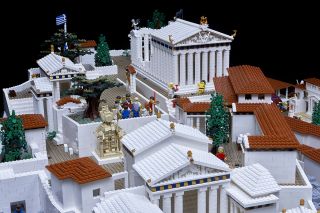
The model features the Parthenon, the Temple of Athena Nike, the smaller Erechtheion temple and the site’s monumental gateway, the Propylaea.

Lego Oedipus, Lego Lord Elgin and Lego Sigmund Freud are in Greece, part of an extraordinary gift from the University of Sydney’s Nicholson Museum to the Acropolis Museum in Athens.

The figures are a small part of a Lego Acropolis built by Ryan McNaught, the only Lego-certified professional in the southern hemisphere.

Faithfully recreated in gleaming white bricks, the model features the Parthenon, the Temple of Athena Nike, the smaller Erechtheion temple and the site’s monumental gateway, the Propylaea.

It also contains hilarious modern and ancient scenes using Lego mini-figures. In the small Odeon, Theseus winds his way through a labyrinth to face the Minotaur. In the Odeon of Herodes Atticus, Elton John gives a concert to modern-day tourists. Lord Elgin and his crew make off with the Parthenon marbles, while Freud, who visited the Acropolis in 1904, looks on.

Michael Turner, senior curator at the Nicholson Museum, says the Acropolis Museum emailed him “out of the blue” asking if it could borrow the model to attract younger visitors.

“This could only happen in my wildest dreams,” Turner says. “After a largely sleepless night, I got back to the museum and said no, they couldn’t borrow it … we’d give it to them.”

“The British Museum refuses to return the Parthenon Marbles; the Nicholson Museum and University of Sydney donates a whole Acropolis!” Turner joked.

source: Neos Kosmos

Greek Recipes: Stuffed calamari

Stuffed calamari

A great seafood wow dish for the dinner table.

Leftover stuffing can be used to make a pilaf

NOTE: if you have leftover stuffing add some orange zest and serve as a pilaf, it might need a little more cooking with a little more water.

Ingredients:
1 kilo of medium sized calamari
1 cup rice for stuffing
1 ½ cups olive oil
2 medium sized onions, grated
1 ripe tomato, peeled and grated or finely diced
salt and pepper
1 level tablespoon sugar
pinch cinnamon
½ bunch of parsley, very finely chopped
a handful of black currants
a handful of pine nuts

Method:
1. Wash and clean calamari and remove the backbone. Dice up the tentacles to put aside and use in the stuffing.
2. Wash the rice and put aside together with the tentacles.
3. In a large, deep frypan heat the oil and sauté the onions until translucent.
4. Add the tentacles, rice, seasonings, sugar, currants, pine nuts and a small glass of water and cook on slow heat.
5. When the water has evaporated, remove pan from the burner and add parsley.
6. Stuff the calamari half way and thread the opening with a toothpick.
7. Line up the stuffed calamari in a saucepan and cover with the tomato and simmer for 20-25 minutes until tender.

source: Neos Kosmos

Greek Recipes: Octopus and mushrooms ‘lemonata’

Octopus and mushrooms ‘lemonata’

A recipe perfect for those fasting or keeping to a vegetarian diet

Remember to include some lemons on the side.

*All cephalopods (octopus/squids/calamari) are allowed during fasting, as they do not contain blood.

Ingredients:
1.5 kilo fresh octopus cooked in its juices (you can add vinegar)
¼ cup extra virgin olive oil
1 chopped onion
1 tbsp spice mixture
1 tsp roasted garlic
10 button mushrooms sliced
2 bay leaves
½ cup of sauvignon blanc wine
2 ripe limes cut in slices
1 cup water
salt (optional)
1 handful of finely chopped parsley
1 tsp freshly ground black pepper

Method:
1. Put the saucepan to heat and add the octopus. Mix until the juices are pink-ish and cook it in its juices until that liquid has evaporated.
2. Remove the octopus and cut it into small pieces.
3. Add olive oil to the pot and sauté the onion until it’s translucent. Add the spice mixture, roasted garlic and mushrooms and sauté for a couple of minutes.
4. Add the octopus and then add the wine and stir for 2 -3 minutes until the alcohol evaporates.
5. Add the bay leaves and the lemon slices. Bring to a boil, lower heat and cook for about 15 minutes, until the onion becomes soft. Remove the bay leaves.
6. Add 1 cup of water and bring to a boil. Add the salt and pasta and lower heat. Cover and simmer for twenty minutes while stirring.
7. Serve with finely chopped parsley and cracked pepper on top.

source: Neos Kosmos