Daily Archives: September 24, 2014

Australia: “Ethnic” clubs not wanted

Gallop: football's future is not about ethnic ties

South Melbourne Hellas under coach Ange Postecoglou in the old NSL days. Photo: South Melbourne FC.

FFA CEO David Gallop has acknowledged the legacy of Greek Australian clubs, but won’t be changing his stance on cutting ethnic branding in clubs

Football Federation Australia (FFA) CEO David Gallop has stuck to the federation’s harsh line on teams with an ethnic affiliation.

Neos Kosmos voiced the community’s concern over the new policy that forbids new and existing clubs to include any ethnic, national, political, racial or religious connotations in their name or branding.

The ruling, passed in July, was made to reflect on the future of football in Australia Mr Gallop says.

“We recognise the rich history of those [Greek] clubs, but a decision was taken quite a long time ago to move Australian football to a phase where it’s inclusive on all cultural heritages and all backgrounds and so while we recognise that history, the future is to be multicultural and not allow branding that’s about one background,” he told Neos Kosmos.

The Greek Australian community, who were a major part of the National Soccer League for decades, saw both the good and the bad of having ethnically charged play, but feel like the new rulings force long running clubs to wipe their history.

One reader, Nick Mangafas, told Neos Kosmos he feels the ruling is a slippery slope.

“The FFA will be telling the players to change their names to ones that indicate no ethnic, national, racial or religious connotations,” he says.

“No history allowed. No wogs allowed.”

The new policy was also approved by the member federations who also identified a need for a holistic national policy.

Only new clubs or clubs hoping to revise their logos or names will be affected by the policy.

For existing Greek clubs, many took the hint a while back and changed their clubs’ names, foreseeing the change in tone.

At least history wont forget that South Melbourne was once called South Melbourne Hellas or Heidelberg United was once Heidelberg Alexander.

source: Neos Kosmos

Greece: Searching for looted antiquities

Searching for looted antiquities

Larger exhibits in Greece’s National Archaeological Museum were buried in the ground during World War II.

The only written source concerning antiquities looted in World War II is an incomplete tome from 1946.

On 30 March 2013, engineer Ronald Obermeier went to the post office of his hometown of Rimsting, Germany, holding a parcel that he had put a lot of consideration into before posting it.

He had carefully wrapped its contents the previous night: 73 ancient relics dating from the Hellenistic period to the 4th century AD. He remembered these objects displayed throughout his childhood in a glass cabinet in the family’s living room and his father telling him the fascinating tale of how they ended up there.

“I grew up with them, but one day I decided it was time for those antiquities to go back where they belong,” Obermeier told Kathimerini. He sent the parcel to the Archaeological Museum of Kos, the eastern Aegean island where his father had served as a German naval correspondent in 1942, when the Nazis occupied Greece.

“A building that served as a museum was commandeered to serve as the local headquarters,” he said. “They threw the exhibits out the window. My father gathered a few of the objects and coins and brought them to Germany. After his death in 1996, these came to me and I would now really like to return them to a museum in Kos.”

The looting of this small museum is one of hundreds of stories that unfolded during the occupation of Greece and would never have come to light had Obermeier not taken the initiative.

The only written source concerning antiquities looted during World War II is a 165-page tome from 1946 recounting hundreds of stories of illegal excavations and destruction carried out by all three occupying forces – the Germans, Italians and Bulgarians.

In the prologue, the minister of education and religion, who ordered some of the most prominent archaeologists of the time to compile this record, notes that it is incomplete.

It is this list that formed a springboard more recently for the Culture Ministry’s Department of Documentation and Protection of Cultural Heritage. A group of six archaeologists and historians took the initiative last year to create a fresh record of missing antiquities as well as those that were returned to Greece following the end of the war.

“The list from 1946 was the starting point but we now have the opportunity to use the German archives, which were opened this last decade and provide a plethora of information regarding the events of those years, as well as many other sources,” explained Suzanna Houlia, head of the department.

The ministry has also recently sought the help of Interpol to trace at least 100 of the most precious items found on the list.

The search has already started on the websites of major museums around the world, with a particular focus on exhibits that are of “unknown provenance from World War II”.

The priority has been placed on those objects for which there is solid proof regarding what they are and how they were stolen. Among these are two clay female figurines taken by two Italian officers from a local man on the island of Sifnos, who had been hiding them in his home together with other valuable finds from an excavation in 1935, and two marble grave steles removed by the Germans in 1943 from a collection in Kissamos, Crete.

Any one of these objects that is found will join the list of just 26 successful recoveries, the first of which were made in the summer in 1948.
The first expedition

On May 18, 1948, archaeologist Spyridon Marinatos set off for Rome to retrieve stolen antiquities on the orders of the Ministry of Education and Religion.
As an archaeology professor who “spoke three foreign languages, was well-travelled, with studies in Berlin, and a patriot, he had all those elements that made him the country’s chief archaeologist at the time”, explained Eleni Matzourani, a history professor who, together with Marinatos’ daughter, Nanno, recently wrote a biography of his life using stories and archival material referring to that trip that had never been published before.

Marinatos had the list drawn up in 1946, enough money – in US dollars – and carte blanche to follow his investigation wherever it took him. The most important thing he had with him, however, was the uniform of an army major, a rank he was awarded in an expedited fashion a few months earlier in order to facilitate contact with the allied forces in the search for the stolen antiquities and the negotiations regarding their return.

His trip lasted 75 days and he ran into numerous obstacles, including failing to make the stop he had planned in Berlin as the allied powers invoked all sorts of bureaucratic obstacles to his entry. In Rome and at his other scheduled stop, Graz in Austria, he also had problems gaining the trust and cooperation of army men and even archaeologists.

Marinatos toured museums and universities looking for the objects on the list and thanks to his acquaintances in the international academic community was able to find many, as well as information concerning the whereabouts of others.

His aim in Rome was to find dozens of antiquities stolen from Rhodes in 1940 and to include them in a large archaeological exhibition that was to take place in Naples.

Graz was his second stop and he arrived there in July 1948. He wanted to visit the small Austrian town because it was the home of the notorious Austrian Nazi General Julius Ringel, whose headquarters in 1941 were located at the Villa Ariadne in Knossos, Crete, and who pillaged both the sites of Knossos and Gortyna of a plethora of antiquities which he then shipped to Germany.

When Marinatos arrived there after experiencing the disappointment of Berlin he was dealt another blow: Ringel had fled the town and was wanted for war crimes. His mansion had also been ransacked by Russian troops, who also made off with all of the antiquities.

Marinatos, however, did not give up his inquiries and learned that some of the loot from Knossos had been donated by Ringel to the local university, and he was thus able to trace a number of items. He packed them into three large crates and shipped them to Greece. In September, 1948, he joined these antiquities on their final journey back to the archaeological site of Knossos.

Museums hide exhibits

Shortly after his 1948 trip, Marinatos was appointed Greece’s director-general of antiquities.

As well as the repatriations he also faced the gargantuan task of reorganising the country’s museums, which had been closed down during the occupation and their contents hidden away to protect them from bombardments and looting occupation forces.

Using funds from the Marshall Plan, he hired people for just this job.

The operation to hide the artefacts had started on November 11, 1940, when the management of every museum in the country received a circular containing detailed instructions about how to store and protect their exhibits.

“Early in the morning, before the moon set, everyone tasked with the job would gather at the museum and work all through the day,” the late Semni Karouzou, a member of the committee responsible for salvaging the country’s cultural treasures, wrote, describing the situation at the National Archaeological Museum, where the operation lasted for six months.

Smaller objects were placed in crates and stored in the basements, while larger exhibits, such as the 3-metre Kouros of Sounio, were buried in the ground.

Similar operations were taking place all over the country – objects were hidden in caves on the Acropolis, in ancient tombs, in gardens and even in crypts. Some statues were transported to other parts of the country for safekeeping and the catalogues of every museum’s treasure were sealed in vaults in the Bank of Greece.

So when the Nazis first started to arrive in Greece in April 1941, they found the country’s museums either closed or empty. Throughout the occupation, a special service set up by the German military for the protection of art pushed for the museums to be reopened. The only case in which the Greek side bowed to its demands was at the Archaeological Museum of Kerameikos, where the reasoning given was that it had been built with German funding.

The result of this decision was that during a tour of high-ranking Nazi officers of the premises on November 9 1941, a black-figure plate depicting a dead man was stolen, and remains missing to this day.

* This is an edited version of an article first published in the Greek daily Kathimerini.

source: Neos Kosmos

Samaras tells Merkel Greece is ready to go it alone

Samaras tells Merkel Greece is ready to go it alone

German Chancellor Angela Merkel, right, and Prime Minister of Greece Antonis Samaras, left, in Berlin. Photo: AP/Michael Sohn.

Greek Prime Minister Antonis Samaras says his government is committed to producing primary budget surpluses.

Greece is ready to stand on its own feet, Prime Minister Antonis Samaras said after a meeting with Chancellor Angela Merkel in Berlin, where he set out how Athens could exit its adjustment program at the end of the year, forgoing the remaining loans from the International Monetary Fund.

“Greece will soon put forward its own framework for continuing reforms in the years ahead,” said Samaras, adding that his government is committed to producing primary budget surpluses.

The European involvement in Greece’s program is due to end in December but the IMF still has more than 15 billion euros of loans to disburse to Athens. Samaras said his government is now in a position to turn down these instalments and end the monitoring of the Greek economy.

“I believe this cooperation will be completed ahead of schedule,” said Samaras in response to a question about whether Greece is seeking a “divorce” from the IMF. “If that happens, it would be a success, not a divorce,” he added, citing the examples of Ireland and Portugal also exiting their programs.

Samaras pointed to the expected return of growth in the second half of this year and the gradually falling unemployment rate as signs that Greece is turning the corner. Merkel also dwelt on this point.

“I can only say, especially to the Greek people, that I know what a difficult time the country is going through, how many people are still unemployed,” she said.

“But the first tender shoots of success from these efforts are visible and we will do everything from the German side to support this.”

Samaras did not go into detail about debt relief apart from saying that he expects the maturity of Greece’s loans from the eurozone to be extended and some other steps, which he did not describe, to also be taken. Merkel said there would be negotiations “regarding the next steps in the coming weeks.”
The impression left by her comments suggests that Berlin will wait for the latest troika review of the Greek program, due to start at the end of this month, to be completed before any decisions are taken.

Opposition parties reacted to the scant results of the meeting in Berlin with scathing criticism.

Leftist SYRIZA declared that the outcome of the talks “deprived the prime minister of the ability to create a pre-election narrative,” a reference to mounting speculation about early elections in view of the leftists’ stated intention to block the coalition’s candidate for president early next year. In a harshly worded statement, SYRIZA referred to the “prime minister’s pathetic image,” which, it said, “undermined himself and the country.”

Independent Greeks leader Panos Kammenos, for his part, condemned Samaras as a “fawning politician” while the Communist Party (KKE) said the premier’s meeting with Merkel “proved once again that any negotiation within the framework set by the memorandum… will yield painful results for the people.”

Source: Ekathimerini

Far right violence in Greece

Far right violence in Greece

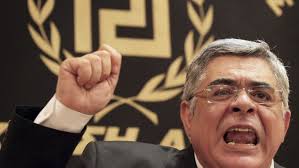
Golden Dawn members in Greece.

5th Century BC: In Greece the principle of democracy is born, and perfected in Athens.

21st Century AD: Greece faces a severe economic crisis; its political institutions are challenged and violent incidences take place against immigrants, people of different race, religion, culture, sexual orientation, as well as against those who support their rights.

Experts who try to analyse this violent phenomenon from a political standpoint, as well as the media, correlate it with the existence and rise of ‘neo-Nazism’, ‘the far right’, ‘fascism’, ‘the extreme right’, or ‘the populist right’ in Greece. These terms are used interchangeably, and though there are ongoing academic debates both on the accuracy and historical correctness of the terms, as well as their scholarly application, this does not change the facts.

Violence is being perpetrated in Greece and it has special characteristics: organised violent attacks, groups that operate as quasi-military units and the use of hate speech, Nazi totalitarian regime symbols and gestures. Foreigners and people of ‘non-Greek blood’ are targeted because they are conceived as subhuman and a menace to the ‘purity’ of the Greek nation. In addition, there is an ongoing judicial investigation against members of the Greek parliament belonging to a certain political party (characterised by the press, scholars and other political groups as far right or neo-Nazi), who are accused of involvement in violent criminal activity. Despite the accusations and the pre-trial detention of the party’s members, its electoral support is rising.

As in other European countries, violent extremist crimes inspired by far-right neo-Nazi principles in Greece don’t occur out of the blue. Relevant social, economic, and political developments have taken place and the country has undergone changes. Greek society was silent and neglected or refused to see the problem of extremism. Even politicians, one could say, were blind to the danger.

One reason for this was that such extremism is a strange development in the country’s history, culture and tradition. Neo-Nazi salutes and support in a country that paid one of the highest victim tolls during World War II, that had whole villages destroyed and burnt to the ground with their population massacred, seemed absurd. Violently attacking and killing immigrants in a country where nearly every family has an immigrant relative living in the US, Canada, Australia, Germany or Sweden seemed an unlikely eventuality. The rhetoric of hate against people who are different in race, colour, religion, political ideas, or sexual orientation in a society that has been traditional, but where part of this tradition has been tolerance, solidarity, sacrifice and collaboration, did not appear feasible. Against all the odds, what seemed absurd and a dim possibility, actually happened, and it is taking on new dimensions that pose a threat to public security.

Addressing this phenomenon can be tricky for many reasons and lots of problems seem to arise. First of all, extremist violence must be countered, but at the same time freedom of ideology and speech should remain intact in a democratic state and society. Violence as a criminal activity is dealt with through the jurisdiction of law enforcement and justice. This means in-depth police investigations, successful operations, and speedy (and fair) trials, so that criminal cases are solved, and perpetrators arrested and convicted without delay. The message must be that the Greek legal order does not tolerate violence and responds accordingly, and at the same time the legal response must be independent from the political arena and expediency.

Perpetrators of assaults should be punished for their violence (physical or verbal) and breaking the law, not for their ideas (regardless of their absurdity). Political party competition as well as electoral interests must be distanced from the justice system. This will ensure that the prosecuted do not present themselves as ‘heroes’, persecuted for their beliefs, and that citizens will trust the justice system in its integrity.

However, apart from prosecutions, the response to extremism must also take a political form. The whole spectrum of political parties should work to re- establish trust in Greece’s institutions and should approach citizens with care regarding their needs and their serious problems.

In addition, the Orthodox Church is a very influential institution and its appeal is wide-reaching in the Greek population. Debunking and deconstructing the ideology of hate, discrimination and violence using the Church’s authority and validity (putting forth the humanistic, non-nationalistic teachings of the Gospel and the non-discriminatory practice of orthodox life) can have an impact. Especially considering that far right movements set out to lure and recruit members from ‘conservative’ parts of the population, who traditionally attend church and are religious.

The phenomenon of far-right extremism is complex and it should be addressed on several levels. It is important to look at the people behind the phenomenon. There are those who perpetrate violence either as a result of their extreme right ideological affiliation, inspired by it or using it as an excuse. These people must be stopped and the role of the police, the law, prosecution authorities and the judiciary is crucial in these cases.
Then there are those who believe in the extreme right ideology (and may not even strongly condemn incidents of extreme violence), but themselves would never cross the line and take illegal action; these people cannot be classified as criminals and their political views cannot and should not be a matter of concern for the justice system.

Nevertheless, they may be considered the oxygen of the violent far right, and are the platform that supports their existence. This group of people poses the biggest challenge for the democratic state. While far right and Nazi ideology opposes every aspect of democracy, the very essence of democracy is to avoid criminalisation and persecution simply because of (even adverse) ideologies. Freedom of thought and ideology are the essence of democracy.
The weapons against extremism must be political education, dialogue and the re-enforcing of social bonds. This is the path we must take to address a final category of citizens: the circumstantial voter or supporter. These are citizens who feel trapped inside the political system, who suffer real grievances and vote for or support far right or neo-Nazi parties as a form of protest.

They do not agree with the far right rhetoric, and they do not see themselves as affiliated to the ideologies, yet they choose such parties as an alternative and a protest against (in their eyes or objectively) the failed political system. In their case too, more democracy and power to the people is a good starting point.

Democracy is not weak or defenceless in Greece. As the meaning of its name tells us (demos means ‘people’, cratos means ‘power’) it is the power of the people and in those people rests its power. Greek citizens who know their history, who are a living part of the social tissue, who are active in building a better future for Greece and aware of the country’s developments, are the best defence and combat mechanism against any kind of violent extremism. It is time for Greeks to awaken, take responsibility and realise that in democracy there is no place for any type of extremism and fascist violence.

*Maria Alvanou is a criminologist and an expert on terrorism and extremist violence. This article was first published in Open Democracy.

 source: Neos Kosmos

Australia:Condemnation of Golden Dawn visit continues

imagesPQOKQBIA

Unions and more Greek Australian organisations denounce planned visit of GD MEPs to the Antipodes.

The opposition to the planned visit to Australia of two Golden Dawn Members of the European Parliament grows by the day.

Last week, ten of the most influential trade unions in Australia co-signed the statement denouncing Golden Dawn which was signed earlier on this month, as was reported by Neos Kosmos, by the ACTU president Ged Kearney, the president of the Federation of Ethnic Communities’ Councils of Australia Joe Caputo, the president of the Greek Orthodox Community of Melbourne and Victoria Bill Papstergiadis and others. That statement was not signed by the Greek Orthodox Archdioceses of Australia as was reported initially, since the honorary secretary of the Greek Orthodox Archdiocesan Council Nicholas Pappas signed as an individual.

The Australian Unions wrote to the federal minister of Immigration and Border Protection this week stating that they endorse the statement which called on all Australians to unite and to demonstrate their detestation of the message of hatred and violence being propagated by Golden Dawn.

The unions who join in the condemnation of Golden Dawn are the Australian Manufacturing Workers Union, the Australian Nursing and Midwifery Federation, the NSW Nurses and Midwives’ Association, the Communications Workers Unions, the Community and Public Sector Union, the Construction and General Division of the Construction, Forestry, Mining and Energy Union (CFMEU), the Maritime Union of Australia, the National Tertiary Education Union, the National Union of Workers and the Textile, Clothing and Footwear Union of Australia.

In the meantime, the Federation of Greek Worker’s Progressive Associations of Australia, comprising ‘Democritus’ in Melbourne, ‘Atlas’ in Sydney, ‘Platon’ in Adelaide and ‘Socrates’ in Newcastle, with a public statement issued this week also condemned the planned visit to Australia by ‘Golden Dawn’ Members of the European Parliament sometime next month, and called upon the federal government to refuse entry into Australia to the Golden Dawn MEPs.

“We Greeks and Cypriot immigrants have experienced and fought racism and discrimination. We do not forget the racist attacks, threats and challenges faced for decades, by all immigrants in this country and in other countries,” says amongst others the Federation of Greek Worker’s Progressive Associations of Australia, which goes on to call upon communities, associations, federations, trade unions and other mass organisations in the country, to take action and not only not to allow the Golden Dawn Members of the European Parliament to set foot here in Australia but also to isolate politically their local representatives.

Other organisations who came out publicly recently strongly condemning the planned visit to Australia by Golden Dawn representatives are the Greek Orthodox Community of South Australia, the Panepirotic Federation of Australia and the Darebin Ethnic Communities’ Council in Melbourne.

source: Neos Kosmos

Μαρί Σκαλιστή:αξίζει τη στήριξη της παροικίας

Η 18χρονη Μαρί Σκαλιστή

Η 18χρονη Μαρί Σκαλιστή

Η 18χρονη Μαρί Σκαλιστή, μαθήτρια τρίτης Λυκείου, έχει επιλεγεί να αντιπροσωπεύσει την Αυστραλία στο 47ο Διεθνές Συνέδριο Νεολαίας

Η 18χρονη Μαρί Σκαλιστή, μαθήτρια τρίτης Λυκείου, έχει επιλεγεί να αντιπροσωπεύσει την Αυστραλία στο 47ο Διεθνές Συνέδριο Νεολαίας της Χάγης όπου θα πάρουν μέρος πάνω από 4.000 απεσταλμένοι από 90 διαφορετικές χώρες.

Εκεί οι σύνεδροι θα συζητήσουν και θα πάρουν αποφάσεις σε διάφορα διεθνούς χαρακτήρα θέματα. Οι αποφάσεις που θα παρθούν θα σταλούν στον γενικό γραμματέα, Ban Ki – moon.

H Mαρί έχει πάθος με τα θέματα των ανθρωπίνων δικαιωμάτων και επιθυμεί να συνεχίσει τις σπουδές της στο Πανεπιστήμιο Monash.
«Ελπίζω μια μέρα να μπορέσω ίσως να εργαστώ ως νομικός ανθρωπίνων δικαιωμάτων ή στο διπλωματικό κλάδο και να μπορέσω να ασχοληθώ με τη σωρεία των θεμάτων που αντιμετωπίζει ο κόσμος. Θα ήθελα τόσο πολύ να εργαστώ σε μη κυβερνητικούς οργανισμούς και να μου δοθεί η ευκαιρία να πάω στο εξωτερικό να συναντηθώ με τους αντιπροσώπους τους. Πραγματικά είναι ένα όνειρο που θα ήθελα τόσο πολύ να γίνει πραγματικότητα».

Η Μαρί ζει με τον παππού και τη γιαγιά της, που και οι δύο είναι συνταξιούχοι και δεν έχουν τη δυνατότητα να πληρώσουν το εισιτήριό της για να πάει στο συνέδριο της Χάγης. Η ίδια για να εξοικονομήσει μέρος των εξόδων δουλεύει παρτ τάιμ σε σουπερμάρκετ.

«Έχω μαζέψει μερικά χρήματα, δεν είναι, όμως, αρκετά. Θα ήθελα τόσο πολύ να πάω στο συνέδριο αυτό που είναι ευκαιρία ζωής!».
Θα προσθέσει ότι η ευγνωμοσύνη της θα είναι μεγάλη αν τη στηρίξει χρηματικά η ελληνική παροικία.

Όποιος επιθυμεί να βοηθήσει την Μαρί μπορεί να καταθέσει στον τραπεζικό της λογαριασμό.

Account name: Maree Skalistis
BSB 013 – 326
Account number 28989 1659.

Πηγή: Νέος Κόσμος

O φόβος του… τρόμου σκεπάζει την Αυστραλία

PARLIAMENT HOUSE TERROR SECURITY

Ο νέος αντιτρομοκρατικός νόμος δίνει υπερεξουσίες στην Aστυνομία.

Υπερεξουσίες στην αστυνομία δίνει η βελτιωμένη αντιτρομοκρατική νομοθεσία που πρόκειται να κατατεθεί στην ομοσπονδιακή Βουλή αυτή την εβδομάδα.
Ο λόγος που η συντηρητική κυβέρνηση του Τόνι Άμποτ αποφάσισε πριν ένα δίμηνο να ενισχύσει περαιτέρω την υπάρχουσα αντιτρομοκρατική νομοθεσία, που είχε καταθέσει και προωθήσει η κυβέρνηση του Τζον Χάουαρντ πριν 12 χρόνια, είναι, γιατί σύμφωνα με τις Αρχές αυξήθηκαν οι πιθανότητες να δεχτεί τρομοκρατικό χτύπημα η χώρα.

Για τους ίδιους λόγους, αναβαθμίστηκε πριν ένα δεκαήμερο και το επίπεδο συναγερμού.
Η νέα αντιτρομοκρατική νομοθεσία που προωθεί η Oμοσπονδιακή Aστυνομία προς ψήφιση στη Βουλή θα δίνει τη δυνατότητα στην Aστυνομία να συλλαμβάνει χωρίς ένταλμα των δικαστικών Aρχών όποιον θεωρεί ύποπτο, χωρίς να είναι υποχρεωμένη να παρουσιάσει στοιχεία για την «ενοχή» του υποψήφιου τρομοκράτη.
Η σύλληψη του υπόπτου θα επαφίεται στην κρίση του αστυνομικού, ο οποίος και θα τον συλλαμβάνει.

Παράλληλα, η Aστυνομία θα μπορεί να κρατά έναν ύποπτο για πολύ μεγαλύτερο χρονικό διάστημα χωρίς να χρειάζεται η έγκριση του αρμόδιου δικαστηρίου.
Σύμφωνα με την ισχύουσα μέχρι τώρα αντιτρομοκρατική νομοθεσία, η Aστυνομία μπορούσε να συλλάβει κάποιον όταν «πίστευε» ότι υπήρχαν σοβαροί λόγοι.
Τώρα ένας αστυνομικός θα έχει το δικαίωμα να συλλαμβάνει κάποιον όταν «υποψιάζεται» ότι υπάρχουν σοβαροί λόγοι να προβεί σε κάποια τρομοκρατική ενέργεια.
Τώρα αν, τελικά, αποδειχτεί ότι το άτομο που συνελήφθηκε κατά την κρίση της Αστυνομίας είναι ένοχος είναι μια άλλη ιστορία που δεν «έχει σημασία».
Κατά της νέας νομοθεσίας τάχθηκαν αρκετοί ηγέτες της μουσουλμανικής κοινότητας της Αυστραλίας οι οποίοι ζήτησαν από την κυβέρνηση Άμποτ να τους διαβεβαιώσει ότι δεν πρόκειται να στραφούν αποκλειστικά κατά των μουσουλμάνων πολιτών της χώρας.

Για το ίδιο θέμα, ο δικηγόρος, Stephen Keim, από το Κουίνσλαντ δήλωσε ότι η ομοσπονδιακή κυβέρνηση βιάζεται πάρα πολύ να προωθήσει την τροποποιημένη αντιτρομοκρατική νομοθεσία στη Βουλή.

Στο μεταξύ η αντιτρομοκρατική υστερία που επικράτησε την περασμένη εβδομάδα στα Μέσα Ενημέρωσης, είχε ως αποτέλεσμα να εξοργιστούν αρκετοί Αυστραλοί πολίτες, ορισμένοι μάλιστα από τους οποίους στράφηκαν κατά των μουσουλμάνων συμπολιτών μας απειλώντας τους και βρίζοντάς τους για το «κακό που θέλουν να κάνουν σε μια χώρα που τους φιλοξενεί».

Αυτοκίνητα μουσουλμάνων, στο Σίδνεϊ, κυρίως, που το όλο κλίμα είναι πιο βαρύ, υπέστησαν ζημιές, μουσουλμάνοι εξυβρίστηκαν στους δρόμους χωρίς κανένα λόγο και αρκετές γυναίκες δέχτηκαν φραστικές επιθέσεις για τον τρόπο που ήταν ντυμένες.
Άγνωστοι έστειλαν επίσης απειλητικές επιστολές σε ηγέτες της μουσουλμανικής παροικίας ιδιαίτερα μετά τις επιδρομές της αστυνομίας σε 12 προάστια του Σίδνεϊ και τη σύλληψη 15 ατόμων μουσουλμανικής καταγωγής.

Παράλληλα, φωτιά πήραν και τα μέσα κοινωνικής διαδικτύωσης όπου δόθηκε η ευκαιρία στον κάθε πικραμένος και καθυστερημένο χρήστη της νέας τεχνολογίας να βγάλει τα ρατσιστικά του απωθημένα.

Κάποιος έγραψε ότι ο μόνος τρόπος να απαλλαγούμε από τους μουσουλμάνους είναι να τους πιάσουμε και να τους αποκεφαλίσουμε όλους», άλλος σημείωνε «καιρός να τους πληρώσουμε με το ίδιο νόμισμα» και κάποιος άλλος πρότεινε να ανατινάξουν τα προάστια Parramatta και Bankstown όπου και μένουν αρκετοί μουσουλμάνοι.

ΤΙ ΠΡΟΓΗΘΗΚΕ

Ο πρωθυπουργός της Αυστραλίας, Τόνι Αμποτ, ανακοίνωσε την περασμένη Πέμπτη πως οι διωκτικές αρχές της Αυστραλίας απέτρεψαν τον δημόσιο αποκεφαλισμό πολίτη επί αυστραλιανού εδάφους, από τζιχαντιστές που συνδέονται με την οργάνωση Ισλαμικό Κράτος στο Ιράκ και στη Συρία (ISIS).

Οι μυστικές υπηρεσίες της Αυστραλίας είχαν συγκεκριμένες πληροφορίες σύμφωνα με τις οποίες τζιχαντιστές θα αποκεφάλιζαν δημοσίως έναν τυχαίο Αυστραλό πολίτη και στη συνέχεια θα δημοσιοποιούσαν το σχετικό βίντεο μέσω Διαδικτύου, σε αντίποινα για τη συμμετοχή της χώρας στον διεθνή συνασπισμό εναντίον του ISIS, που προσπαθούν να οικοδομήσουν οι Ηνωμένες Πολιτείες.

«Δεν μιλάμε για υποψίες, αλλά για πραγματική πρόθεση», δήλωσε ο Αμποτ, για να προσθέσει: «Η παρότρυνση ήρθε από έναν Αυστραλό που κατείχε ανώτερη θέση στα δίκτυα υποστήριξης που διατηρεί το ISIS στο εσωτερικό της χώρας».

Την Πέμπτη τα χαράματα, περισσότεροι από 800 αστυνομικοί πραγματοποίησαν τη μεγαλύτερη αντιτρομοκρατική επιχείρηση στα χρονικά της Αυστραλίας, συλλαμβάνοντας 15 υπόπτους στο Σίδνεϊ και το Μπρίσμπεϊν.

Σύμφωνα με τον γενικό εισαγγελέα Τζορτζ Μπράντις, τζιχαντιστής γεννημένος στο Αφγανιστάν, ο οποίος είχε ζήσει επί κάποια χρόνια στην Αυστραλία και σήμερα δραστηριοποιείται σε επιχειρήσεις του ISIS στη Μέση Ανατολή, διέταξε τους Αυστραλούς οπαδούς της οργάνωσης να προχωρήσουν σε αποκεφαλισμούς και να βιντεοσκοπήσουν το μακάβριο έργο τους. Μεταξύ των συνωμοτών φέρεται να περιλαμβάνεται ο 33χρονος Μοχάμεντ Αλί Μπαριαλέι, πρώην μπράβος νυχτερινού κέντρου στο Σίδνεϊ, ο οποίος θεωρείται αρχηγός του δικτύου του ISIS στην Αυστραλία. Οι Αρχές πιστεύουν ότι ο Μπαριαλέι ανέθεσε στον 22χρονο Ομαριάν Αζάρι, έναν εκ των συλληφθέντων, να δολοφονήσει έναν οποιονδήποτε Αυστραλό πολίτη. Υπολογίζεται ότι περί τους 60 Αυστραλούς πολεμούν στις γραμμές του ISIS και άλλων ακραίων ισλαμικών οργανώσεων, στη Συρία και στο Ιράκ, ενώ άλλοι 15 έχουν ήδη σκοτωθεί σε τρομοκρατικές ενέργειες. Κυβερνητικές πηγές στην Καμπέρα εκτιμούσαν ότι γύρω στους 100 Αυστραλούς στελεχώνουν το δίκτυο τοπικής υποστήριξης του ISIS.

Στο μεταξύ, το ISIS ανάρτησε στο YouTube νέο βίντεο στο οποίο εμφανίζεται, με πορτοκαλί στολή, ο Βρετανός φωτορεπόρτερ Τζον Κάντλι, ο οποίος έχει κατά καιρούς συνεργαστεί με τις εφημερίδες Sunday Times, Sun και Sunday Telegraph, όπως και με το Γαλλικό Πρακτορείο. Στο διάρκειας τριών λεπτών βίντεο, ο Κάντλι δηλώνει ότι αιχμαλωτίστηκε από το ISIS στη Συρία τον Νοέμβριο του 2012, εκφράζει την απογοήτευσή του για το γεγονός ότι η κυβέρνησή του τον «εγκατέλειψε» στην τύχη του και αναγγέλλει ότι θα αποκαλύψει «την αλήθεια» για το ISIS σε επόμενα βίντεο.

«Ύστερα από δύο καταστροφικούς και καθόλου δημοφιλείς πολέμους στο Αφγανιστάν και το Ιράκ, γιατί πρέπει η κυβέρνησή μας να αναμειχθεί σε άλλη μία σύγκρουση που δεν μπορεί να κερδηθεί;», διερωτάται ο Κάντλι, ο οποίος προηγουμένως είχε αναγνωρίσει ότι μιλάει «με ένα πιστόλι στον κρόταφο», καθώς είναι αιχμάλωτος των τζιχαντιστών.

ΑΠΑΓΟΡΕΥΣΕΙΣ ΣΤΗ ΓΑΛΛΙΑ

Στο Παρίσι, η Εθνοσυνέλευση ενέκρινε νέο αντιτρομοκρατικό νόμο που προβλέπει ταξιδιωτικές απαγορεύσεις για άτομα που βαρύνονται με υποψίες ότι επιθυμούν να λάβουν μέρος σε τρομοκρατικές ενέργειες στο εξωτερικό και επιτρέπει στις Αρχές να επιβάλλουν απαγόρευση πρόσβασης σε ιστοσελίδες που εξυμνούν την τρομοκρατία.

Πηγή: Νέος Κόσμος

Greek Australian singer, Lady Gaga’s support act in Athens

Lady Gaga's choice

Lady Gaga’s concert in Athens was also a premiere for Kavvadias’ new single Hello.

Greek Australian singer Alex Kavvadias was chosen as the opening act of Lady Gaga’s concert in Athens

It was Sydney-born rock artist Alex Kavvadias who was honoured to perform as the opening act at Lady Gaga’s concert last Friday at OAKA stadium in Athens.

Winner of the Cosmote Jumping Fish competition, and finally chosen as the opening act by the management people of Lady Gaga herself, for Kavvadias the experience was also a chance to première his new single, Hello.

The talented Greek Australian artist started his career after moving to Greece from Australia, firstly as a model, but more recently and importantly, as a rock artist.

Once ‘the most talented high school student’, Alex Kavvadias comes from a musical family – his grandfather used to sing recreationally for the tourists in Crete. The musical gene is one that Alex himself inherited, as he told Neos Kosmos in an interview last year.

His decision to go to Greece for a holiday in 1999 changed his life in many ways, and fifteen years later, he is still there.

He entered the music scene professionally, as lead singer of the band Matisse. The band became famous with singles like Today, a theme song for the TV comedy series Mila Mou Vromika. The band was twice nominated as ‘Best Greek Act’ at the MTV Europe Music Awards.

Alex’s involvement with the band eventually came to an end when he decided to pursue a path that didn’t match the band’s aspirations.

As Kavvadias’ Australian publicist Helen Kavadas told Neos Kosmos, after getting to meet Lady Gaga as an opening act to her long awaited performance in Athens, the singer now hopes it will be easier to walk through the doors of the international music scene.

source: Neos Kosmos

Greece ranked last in social justice index


Greece ranked last in social justice index

A table from the Bertelsmann report.

German survey findings put the country at the bottom of the European Union.

A report has found that Greece ranks last among the European Union (EU) 28 members in terms of social justice and has urged the government to do more to concentrate its efforts not only on returning to a stable path of growth, but also on improving participation opportunities for a broader portion of the population.

Published by the German Bertelsmann Foundation, the report said while Greece, along with Spain and Italy, has a comparably high GDP per capita, it performed “far worse” in the social justice index rankings, which measures performance in poverty prevention, access to education, access to the labour market, social cohesion, non-discrimination, health and intergenerational equity.

“Greece is at the bottom of the ranking, with a youth unemployment rate of nearly 60 per cent, a rapid increase in the risk of poverty, particularly among children and youth, a health care system badly undermined by austerity measures, discrimination against minorities as a result of strengthened radical political forces, and an enormous mountain of debt that represents a mortgage on the future of coming generations,” the report found.

“The resulting diminution of prospects for broad swathes of society represents a significant danger to the country’s political and social stability. These developments illustrate that the cuts induced by the crisis are not administered in a balanced way throughout the population,” it noted.

Of the six indicators measured in the report, Greece came last in four: access to education, access to the labour market, social cohesion and non-discrimination and intergenerational equity.

It said that from a social justice perspective, “it is particularly important that to the extent possible, a student’s socioeconomic background has no effect on his or her educational success”, noting that Finland and Estonia were the most successful EU countries in this regard.

The report also said that “given the lack of prospects for young people” in Spain and Greece due to the high youth unemployment rate, “this must be regarded as a lost generation”.

Some 31.6 per cent of people between the ages of 20 and 24 are so-called Neets, meaning they are neither in employment or participating in training or further-education programs. “In Greece, the Neet rate nearly doubled between 2008 and 2013,” it found.

In terms of equality, the study found that Greece, along with Croatia, Hungary, Malta, Romania and Slovakia, shows the most significant deficiencies in the EU with respect to protection from discrimination. “In these countries, minority elements occasionally face systematic discrimination,” the report said.
Pointing out that generational justice keeps families and senior citizens alike in focus and seeks a balance between the interests of the young and old, the report said that Greece and Italy displayed “the greatest shortcomings with regard to intergenerational justice”.

It urged that while budgetary consolidation must be prioritised in the interest of future generations, “to the greatest degree possible, care should be taken in the course of this fiscal consolidation to maintain investment in policy areas that are particularly relevant to the future”.

The Bertelsmann Foundation said that the findings underlined the dangers facing the EU project.

“The growing social divide between member states and between the generations can lead to tensions and a considerable loss of trust. Should the social imbalance last for long or increase even more, the future of the European integration project will be threatened,” warned Dr Jörg Dräger, from the foundation.

Calling for social justice to take a place at the centre of the European political agenda, the foundation noted that “EU’s own efforts to create a more socially just Europe, however, have remained rather feeble, at least as perceived by the general public”.

Source: enetenglish

Sydney FC score 3-1 win over Sydney United in keenly-contested FFA Cup clash

Tense affair: Sydney FC striker Alex Brosque is fouled by a Sydney United player.

Tense affair: Sydney FC striker Alex Brosque is fouled by a Sydney United player. Photo: Brendan Esposito

It’s been more than a decade since Edensor Park was rocking like this. For one night only, the old days – the glory days – felt like they’d never left.

There is no cloaking the fact the FFA Cup has brought the historical schisms of the game, crudely termed old soccer and new football, into an uncomfortable proximity. Face-to-face with in the in-laws.

No clubs reflect the divide better than Sydney United and Sydney FC, two clubs diametrically opposed in almost every sense. Geographically, historically, financially. But, cliched as it sounds, this is the magic of the cup.

And when United drew level on the brink of half-time, through Stjepan Paric, the home side suddenly believed in the impossible. How they brought the house down: a raw, guttural outpouring, some ten years in the making.

For that moment, Sydney United were as good as the A-League’s best. They’ve always felt that way, if we’re honest.

No club in Australia has produced anywhere near as many Socceroos. It took two incredible long-range efforts, both from Chris Naumoff, to see them off. Ali Abbas’s third in injury time made the 3-1 scoreline a touch flattering.

United’s fans came out in great numbers, too. If they weren’t wearing Sydney United gear – and there was plenty of retro, NSL-era jerseys on show – they wore the Croatian checks.

With the Croatian community in Melbourne similarly gathered at Knights Stadium to watch St Albans play Perth, the nationalistic sentiment on the night was as fierce as the coals which grilled the cevapis in the well-patronised canteens.

They didn’t miss the opportunity to rip into Sydney’s Serbian contingent, either. When Nikola Petkovic bravely volunteered for two corners in the first half in front of the vocal home fans, the reception, to say the least, was colourful. They otherwise chanted relentlessly for the motherland until the 90 minutes were up.

Yet while the atmosphere was edgy, it was never unsafe. Both sets of supporters backed their sides with vigour, not violence, and both mounted claims to being the loudest on the night. A split decibel decision.

It seemed as though the occasion frightened the home side in the opening 20 minutes, repeatedly having to repel dangerous attacks. Corey Gameiro was playing at the point of Sydney’s attack but it was it Bernie Ibini, deployed on the right but drifting inboard, who looked the most likely.

However, it was neither of those two who opened the scoring. Naumoff, who saw glimpses of first team action last year, let fly with a cracking, 25-yard effort that seared past United goalkeeper Anthony Costa.

Frustrated, United hit back, literally in the first instance as Chris Triantis went right through Ibini. Gameiro grabbed the arm of referee Kris Griffiths-Jones to protest; he earned a yellow and so did Triantis.

They then made it count on the scoreboard. Perhaps rattled by the jibes from the stands, Petkovic bungled a regulation clearance. His air-swing opened the door for Paric, who squeezed his effort home.

The mood of hope that enveloped Edensor at half-time was palpable. They started to believe in their unlikely band of part-timers.

Unfortunately for the hosts, Naumoff had other ideas, and after being fed by the lively Ali Abbas, he took a touch before firing home a delightful effort from an acute angle.

Not that United would give up. The sting remained to the end. Sydney goalkeeper Vedran Janjetovic, who once called this place home, was given a yellow-card for man-handling Ibrahim Haydar.

The fiery Mirjan Pavlovic, previously of Newcastle and Wellington, wanted some of the action too and before long a melee ensued.

The crowd was loving it, at least until Abbas found himself in the clear, tucking home and sealing the Sky Blues’ place in the quarter finals.

The draw for the quarter-finals was also announced on Tuesday night: Sydney FC v Adelaide United, Perth Glory v Melbourne Victory, Palm Beach Sharks v Central Coast Mariners, Bentleigh Greens v Adelaide City.

source: smh.com.au