Daily Archives: September 8, 2014

Ο Χατζηγιάννης, η καριέρα και η Ζέτα

zet

Στις 18 Οκτωβρίου ο δημοφιλής καλλιτέχνης εμφανίζεται στο Sidney Myer Music Bowl, στο πλαίσιο του Φεστιβάλ Μελβούρνης .

Στα 15 του ήταν το παιδί-θαύμα της Κύπρου, λίγα χρόνια μετά θα γίνει και ο τραγουδοποιός-θαύμα της Ελλάδας. Πλατινένιοι δίσκοι, υπέρογκες αμοιβές, αποθεωτικές συναυλίες, διακρίσεις και συνεργασίες με την αφρόκρεμα της δισκογραφίας συνθέτουν τα συστατικά μιας μεγάλης καριέρας. «Η επιτυχία είναι ευχή και κατάρα. Είναι δώρο και τιμωρία μαζί, είναι ο παράδεισος και η κόλαση» δηλώνει ο Μιχάλης Χατζηγιάννης σε κάποιες από τις συνεντεύξεις του. Κι εκείνος το ξέρει από πρώτο χέρι -ειδικά τις τελευταίες μέρες.

Η οδός Μυκόνου στου Ζωγράφου είναι ένας μικρός ανηφορικός δρόμος, κάθετος στην Ηρώων Πολυτεχνείου και στη Γεωργίου Ζωγράφου, πολύ κοντά στην Πολυτεχνειούπολη και στη φοιτητική εστία. Στην αρχή του στενού, μία 18χρονη φοιτήτρια του Παντείου από τη Λευκωσία της Κύπρου, η Διαμάντω, είχε ήδη νοικιάσει το ισόγειο διαμέρισμα των 80 περίπου τετραγωνικών, στο οποίο περίμενε να συγκατοικήσει, έπειτα από δύο χρόνια, με τον τότε σύντροφό της, φαντάρο ακόμη στην πράσινη γραμμή της Κύπρου και ένα χρόνο μεγαλύτερό της, Μιχάλη Χατζηγιάννη.

Στην Αθήνα κανείς δεν γνώριζε ακόμη τον Μιχάλη. Μόνο τη φωνή του. «Εδώ δεν με ξέρει κανείς!» συνήθιζε να λέει σε φίλους του την πρώτη περίοδο παραμονής του στην Αθήνα. Φαινόταν να το απολαμβάνει πολύ, αφού το παιδί-φαινόμενο της Κύπρου αισθανόταν πως ίσως και να μπορούσε να ξαναζήσει στα 20 του πια, σε μια μεγαλούπολη, τα χαμένα ανέμελα χρόνια που του είχε στοιχίσει η μεγάλη αναγνωρισιμότητα στη Μεγαλόνησο. Να κάνει ό,τι επιθυμούσε χωρίς το βάρος της μεγάλης, σαρωτικής ίσως, διασημότητας. Για πρώτη φορά στη ζωή του. Μόλις στα 16 του, τραγουδούσε ρεμπέτικα σε ένα κέντρο της Κύπρου, μέχρι τα 18 του είχε ήδη τρεις πλατινένιους δίσκους, ενώ η σύγκριση με τη φωνή του Νταλάρα ως μέγας έπαινος στις φωνητικές του ικανότητες έδινε κι έπαιρνε από τους επαΐοντες. Μεγάλοι έπαινοι, μεγάλο το βάρος και η φουσκοθαλασσιά για το μυαλό ενός εφήβου, που ως ασπίδα προστασίας προέτασσε την αγάπη του για τη μουσική, εκείνη που έβγαλε το όνομα Μιχάλης Χατζηγιάννης από την ανωνυμία και το εκτόξευσε στα ύψη της διασημότητας. Τα όνειρα και οι φιλοδοξίες του δεν χωρούσαν στα όρια της Κύπρου. Στην Αθήνα θα ανοίξει τα φτερά του και θα διακτινιστεί στα ουράνια.

ΤΑ ΠΡΩΤΑ ΒΗΜΑΤΑ ΣΤΗΝ ΑΘΗΝΑ

Ήδη το «Άγγιγμα ψυχής», το πρώτο CD στο οποίο συμμετείχε στην ελληνική δισκογραφία με δύο τραγούδια, το ομότιτλο και το «Σώμα που ζητάς», ακουγόταν πολύ από τα ραδιόφωνα. Ο ίδιος ονόμαζε τον Γιώργο Χατζηνάσιο «δάσκαλό» του, ενώ είχαν ήδη ξεκινήσει να συνεργάζονται στο «Taboo» (στη δεύτερη σεζόν του επιτυχημένου τότε σχήματος προστέθηκε η Αλέξια και ο Πέτρος Γαϊτάνος). Παρ’ όλα αυτά, δεν συνεχίστηκε η συνεργασία τους στο πρώτο του ολοκληρωμένο CD, την «Παράξενη γιορτή», αν και ήταν κάτι που επιθυμούσε πολύ ο συνθέτης και, όπως λένε, απογοητεύτηκε πολύ από τον «μαθητή» του. Αντ’ αυτού, ο νεαρός τότε φέρελπις στην Αθήνα τραγουδιστής επέλεξε να συνεργαστεί με τον Λάκη Παπαδόπουλο, τη Σάννυ Μπαλτζή, τον Κυριάκο Ντούμο (στέλεχος και δεξί χέρι του Σταμάτη Μαλέλη στο STAR και σήμερα στον τηλεοπτικό ΣΚΑΪ) και να διασκευάσει τραγούδια της Λένας Πλάτωνος και του Μάνου Χατζιδάκι. Πολλοί ήταν εκείνοι που απόρησαν πώς ο γιος του σπουδαίου συνθέτη, Γιώργος Θεοφανόπουλος-Χατζιδάκις, επέτρεψε τη διασκευή του «Θάλασσα πλατιά» σε έναν νέο, άγνωστο ακόμη στην Ελλάδα τραγουδιστή. Η μουσική προίκα όμως και τα διαπιστευτήρια που ήδη έφερε από την Κύπρο μόνο σε έναν άλλο, πιο έντεχνο μουσικό δρόμο παρέπεμπαν και όχι στο μετέπειτα σουξέ και μεγαλύτερή του μέχρι σήμερα εμπορική επιτυχία, το «Χέρια Ψηλά».

Μέχρι την κυκλοφορία του πρώτου του CD στην Ελλάδα, το 2000 από την τότε BMG, o Μιχάλης στην Κύπρο ήταν ήδη σταρ: από τα 15 του, στην τηλεοπτική εκπομπή «Αφετηρίες» όπου πρωτοεμφανίστηκε, τότε που τραγούδησε «Αν υπάρχει λόγος» και ταυτίστηκε η δική του φωνή με εκείνη του Γιώργου Νταλάρα. Στην κριτική επιτροπή ήταν τότε και ο Δώρος Γεωργιάδης (γνωστός από την επιτυχία που είχε κάνει στην Ελλάδα με το «Αν ήμουν πλούσιος»), με τον οποίο συνεργάστηκε στο δεύτερο CD του «Ο Μιχάλης Χατζηγιάννης τραγουδά Δώρο Γεωργιάδη». Ο Μιχάλης ήταν ήδη, χωρίς καμία αμφιβολία, ο μεγαλύτερος σταρ κάτω των 18 που είχε γεννήσει ποτέ η Κύπρος. Αν και τα τοπικά έντυπα του νησιού και οι «μουσικοί κύκλοι» αναφέρονταν σε μια «χαριτωμένη» κόντρα του ίδιου με τον Κωνσταντίνο Χριστοφόρου, κανείς δεν μπορούσε να αμφισβητήσει τη δυναμική και το τεράστιο εκτόπισμα του νεαρού τότε Χατζηγιάννη.

ΠΡΟΣΦΥΓΕΣ ΑΠΟ ΤΗΝ ΚΕΡΥΝΕΙΑ

Με καταγωγή από την Κερύνεια, οι γονείς του Γιάννης και Ρένα, ως πρόσφυγες, είχαν χάσει τα πάντα αμέσως μετά την τουρκική εισβολή του 1974 και προσπαθούσαν να κάνουν μια νέα αρχή στο ενοικιαζόμενο σπίτι τους, στην οδό Λυκαβηττού του Δήμου Αγλατζιάς, κοντά στη Λευκωσία, με τα δύο τους παιδιά. Αρκετά χρόνια αργότερα βέβαια, στην ίδια περιοχή, η οικογένεια Χατζηγιάννη θα αγόραζε μία μονοκατοικία στην οδό Τερψιχόρης, όπου θα χτιζόταν το νέο σπίτι, τριών ορόφων, στο οποίο σήμερα διαμένουν, στο ισόγειο οι γονείς του τραγουδιστή, στον πρώτο όροφο η μεγαλύτερη αδελφή του Μελίνα, η οποία εργάζεται ως δασκάλα, μαζί με τον σύζυγό της και το παιδί τους, ενώ ο τελευταίος όροφος προορίζεται αποκλειστικά για τον ίδιο τον τραγουδιστή.

Ήδη ο Μιχάλης είχε αλλάξει. Και σίγουρα δεν ήταν το μικρό εκείνο αγόρι που τραγουδούσε την πρώτη του μεγάλη δισκογραφική επιτυχία «Η αγάπη δεν φοβάται» στο πρώτο του (κυπριακό) CD με τίτλο «Σενάριο», σε μουσική του Άντρου Παπαπαύλου και στίχους του καλού του τότε φίλου Λεωνίδα Μαλένη (είναι ο ποιητής που έγραψε το «Χρυσοπράσινο φύλλο», τον «δεύτερο εθνικό ύμνο της Κύπρου» όπως τον αποκαλούν κάποιοι, σε μουσική του Μίκη Θεοδωράκη), με τον οποίο, όπως λένε όσοι τον ξέρουν καλά, χάθηκαν στην πορεία. «Όλοι μας έχουμε κάνει κακά πράγματα στη ζωή μας και έχουμε συμπεριφερθεί με τρόπο που δεν μας κάνει περήφανους. Ασφαλώς και θα ήθελα να ζητούσα συγγνώμη από κάποιους ανθρώπους. Κι όσο κι αν η μνήμη μου θέλει να είναι επιλεκτική, δυστυχώς δεν μπορώ να μην τα θυμάμαι. Γιατί η ψυχή βλέπει και το καλό και το κακό και δεν διαγράφει τίποτα», είχε πει κάποτε ο ίδιος, με σαφείς αναφορές στην πορεία του, όπου ενδεχομένως σάρωσε και κάποιους που δεν έπρεπε στο πέρασμά της.

Η συνέχιση της καριέρας του στόχευε μόνο στην κορυφή: σπουδαίες συνεργασίες με την Αλεξίου, τη Γαλάνη, τον Νταλάρα, τον Τερζή κ.ά., οι δίσκοι του ξεπερνούν σε πωλήσεις κάθε άλλο προηγούμενο της ελληνικής δισκογραφίας, με αποκορύφωμα το «Κρυφό φιλί», την «Ακατάλληλη σκηνή» και το «Φίλοι και εχθροί». Δεν είναι τυχαίο που πήρε το ειδικό βραβείο «Best Selling Artist of the Decade» κάνοντας πωλήσεις πάνω από 3.500.000 αντίτυπα από το 2000 έως το 2010, με sold out συναυλίες και χιλιάδες θαυμαστές και θαυμάστριες. Θα σκεφτόταν κάποιος πως δεν υπάρχει πουθενά ρωγμή σε αυτή την ξέφρενη, ιλιγγιώδη πορεία του κατευθείαν στο Νο 1. Όλα καλά.
Ο Μιχάλης, όπως λένε όσοι τον ξέρουν καλά, δεν εμπιστεύεται εύκολα ανθρώπους. Ακόμη και τις επαγγελματικές του αποφάσεις ή το χειρισμό της δημόσιας εικόνας του -συνεντεύξεις σε έντυπα και εμφανίσεις σε τηλεοπτικές εκπομπές-, παρόλο που συνεργάζεται πολλά χρόνια με ένα-δυο συγκεκριμένους ανθρώπους, τις λαμβάνει πάντα ο ίδιος. Δεν επηρεάζεται εύκολα από τρίτους και σίγουρα δεν υπήρξε ποτέ υποχείριο κανενός.

Κι αν ήταν από την αρχή γεννημένος σταρ, ως πολύ έξυπνος άνθρωπος γνώριζε πως αυτό θα είχε και το τίμημά του. Δικαίως. «Έχω απαλλαγεί από τον Μιχάλη Χατζηγιάννη, δεν τον θέλω, δεν είμαι πια ο Μιχάλης Χατζηγιάννης» δήλωνε τον Δεκέμβριο του 2013, προσπαθώντας ίσως να αποποιηθεί το brand name του. Σαν να ήταν κι αυτό ένα κομμάτι των αγαπημένων του δικαστικών ταινιών που έβλεπε μικρός, με δικηγόρους, διαβόλους, ενόχους και αθώους, κάτι που τον έκανε για μεγάλο χρονικό διάστημα να θέλει να ασχοληθεί με σπουδές Νομικής, αν και δεν πραγματοποιήθηκε ποτέ. Το προέβλεπε άλλωστε με δηλώσεις του. Ίσως για αυτοπροστασία. Μπορεί και από ένα διαβολικό ένστικτο που είχε και που άλλοτε τον ανέβαζε ως «καλύτερο τραγουδιστή της δεκαετίας» και άλλοτε τον γκρέμιζε ως «καριερίστα σε κρίση»: «Το να ανακαλύπτεις από την αρχή τον εαυτό σου, να αλλάζει η οπτική γωνία σου και να αναδύονται από μέσα σου καινούρια πράγματα μόνο χρήσιμο μπορεί να είναι. Ανακάλυψα ότι μπορώ να είμαι έντονα ευαίσθητος, ότι μπορώ να θυμώσω. Έπρεπε να ξεπεράσω πολλά όρια» δήλωνε. Δεν είχε και άδικο. Ήξερε πια ότι η αναγνωσιμότητα έχει μεγάλο τίμημα, όπως ήξερε ότι ο επόμενος δρόμος μετά την κορυφή είναι η κατάβαση. Ότι οι κύκλοι ανοίγουν και κλείνουν κι αν ποτέ μπει λουκέτο στην επιχείρηση «Χατζηγιάννης», ο Μιχάλης θα πρέπει να έχει φροντίσει για τις δικλίδες ασφαλείας του. Η αυτογνωσία ήταν πάντοτε ένα από τα μεγάλα του πλεονεκτήματα.

Η ΖΩΗ ΠΡΟ ΚΑΙ ΜΕΤΑ ΖΕΤΑΣ

«Ο ανώτερος κριτής είναι η ψυχή μας και η ψυχή δεν λέει ποτέ ψέματα» συνηθίζει να λέει ο ίδιος. Αν ήταν κάτι που έσωσε τον Μιχάλη από μία «περίεργη», ίσως και «εκτός ορίων» εποχή της ζωής του, κάτι σαν ξέσπασμα από την εφηβεία που δεν κατάφερε ποτέ να ζήσει και η οποία συνέπεσε με την περίοδο της απόλυτης επιτυχίας του, αυτό ήταν η σχέση του με τη Ζέτα Μακρυπούλια. Για κάποιους η συγκεκριμένη σχέση υπήρξε «λάθος κίνηση» για τον εσωστρεφή μέχρι τότε τραγουδοποιό, που τον έφερε ξαφνικά στην πρώτη γραμμή της δημοσιότητας «για τους λάθος λόγους». Είχε προηγηθεί βέβαια μία κοινή φωτογράφηση για εξώφυλλο μηνιαίου περιοδικού με την τότε σύντροφό του Δέσποινα Ολυμπίου, αλλά κανείς δεν μπορεί να συγκρίνει το μιντιακό εκτόπισμα των δύο γυναικών. Για άλλους, όμως, ήταν η Ολυμπίου «η γυναίκα που έπρεπε να έχει πλάι του», στην οποία, όπως ο ίδιος λέει στις ελάχιστες αναφορές που έχει κάνει μέχρι τώρα σε εκείνη, θαυμάζει την καλοσύνη της, την ψυχή της, την προσωπικότητά της. Μέχρι τότε δήλωνε σε συνεντεύξεις του: «…Σε μία πορεία με κεκτημένη ταχύτητα δεν είχα τον χρόνο να ασχοληθώ με άλλα πράγματα. Φυσικά, υπήρξαν άνθρωποι στη ζωή μου που ήταν αρκετά σημαντικοί. Και για να μην το γενικεύω, υπήρξε ένας άνθρωπος στη ζωή μου που ήταν πολύ σημαντικός γιατί ήταν κοντά μου με πολύ αγνές και ανιδιοτελείς προθέσεις. Απλά εγώ ήμουν σε άλλη φάση…». Και αλλού: «Με τον έρωτα δεν συμπορευτήκαμε ποτέ. Ήταν πάντοτε σε δεύτερη μοίρα στη ζωή μου. Σιγά-σιγά βέβαια ανακαλύπτεις πως το νόημα της ζωής δεν είναι μόνο η καριέρα αλλά κι άλλα πράγματα, όπως ο έρωτας…». Και τον βρήκε στα μουσικά βραβεία MAD του 2010, όπου γνωρίστηκε με τη Ζέτα Μακρυπούλια.

Έκτοτε οι δυο τους συνηθίζουν να γιορτάζουν τη συγκεκριμένη ημέρα του Ιουνίου ως μέρα γνωριμίας. Είναι η πρώτη φορά που ο Μιχάλης θα βάλει την καριέρα σε δεύτερη μοίρα στη ζωή του. Και θα αφεθεί. Πρωτόγνωρα για εκείνον, τον άλλοτε μεθοδικό, χωρίς δεύτερες σκέψεις.

Η Ζέτα, όπως παραδέχονται όλοι όσοι τους ξέρουν, θα φέρει αλλαγές στη ζωή του Μιχάλη που δεν φανταζόταν κανείς μέχρι τότε: Ξεκίνησε να ξυπνάει νωρίς, να τρέφεται υγιεινά και σωστά -συνήθως του μαγειρεύει η ίδια η Ζέτα-, να γυμνάζεται, να αποβάλλει από τη ζωή του ανθρώπους και παρέες που ίσως να του θύμιζαν μια άλλη εποχή της ζωής του, πιο «σκοτεινή» και, σίγουρα, πολύ μοναχική.
Σήμερα ο Μιχάλης είναι πια 35 χρόνων (στις 5 Νοεμβρίου θα γίνει 36). Και το μόνο που δεν έκανε μέχρι σήμερα στη ζωή του ήταν να πουλήσει φτηνά κάτι από τον πολύτιμο εαυτό του.

Κανείς δεν γνωρίζει ακριβώς το μέγεθος της περιουσίας του Μιχάλη. Σίγουρα, πάντως, αυτό που δεν μπορούν να του καταλογίσουν οι «εχθροί» του είναι ότι δεν δούλεψε σκληρά για ό,τι έχει σήμερα στην κατοχή του.

 Πηγή: Νέος Κόσμος

Have you seen Angelika?

angelika%2002

Missing: Angelika Peters, mother of Arna and Jessica Dionysopoulos.

Police launch hunt for Ascot Vale mum, missing since Thursday

A 45-year-old woman who walked out of her Melbourne home last Thursday and has not been seen since is the subject an intense police search.

Angelika Peters is 5’9″, has light brown hair, blue eyes and a slim build. When she was last seen she was wearing a blue top and dark trousers, and she may also be wearing a blue and red coat.

Speaking to Neos Kosmos, her daughter Arna Dionysopoulos (25), said she was extremely concerned about her well-being.

“I’m really scared. This is uncharacteristic of her, she’s never been a person to run away from an issue.”

“If anyone’s seen her, we just want to know she’s ok,” said Ms Dionysopoulos.

“I’m trying to be strong, but I’m fearful”

Ms Dionysopoulos said that her mother had recently had to retire on medical grounds from a 20-year career as a nurse.

Victoria Police will brief media on their investigation on Tuesday.

Anyone with information about Angelika’s whereabouts should call Crime Stoppers on 1800 333 000.

source: Neos Kosmos

Sinodinos to front ICAC again

skynews_img_1200_745

Liberal senator Arthur Sinodinos is due to reappear before the NSW corruption watchdog’s cash-for-favours probe.

Senator Sinodinos stood aside from his role as assistant treasurer in March while the Independent Commission Against Corruption investigated his time as a director of the Eddie Obeid-linked Australian Water Holdings.

On Monday counsel assisting the commission, Geoffrey Watson SC, said Senator Sinodinos will be added to Tuesday’s witness list.

The ICAC is investigating allegations a front organisation, the Free Enterprise Foundation (FEF), was used to funnel banned donations to NSW Liberal fighting funds ahead of the 2011 state election.

It’s also looking at whether MPs, including former NSW cabinet ministers Chris Hartcher and Michael Gallacher, “solicited and received donations from prohibited donors”.

So far 11 Liberal party members have been caught up in allegations before the watchdog.Senator Sinodinos first appeared before the ICAC in April.

Hearings are expected to finish this week.

source: skybews.com.au


The third pappou

diatribe_pappou%20Manoli_01

Pappou Manoli as an evzone.

When pappou Manoli’s son discovered the cache of five dollar notes in his father’s shaving equipment, he contrived of a fitting way to ensure his father’s legacy.

There are mysteries, and mysteries within mysteries, especially with regard to our progenitors who, having given us life, assume in our eyes Olympian, pre-historic dimensions, given that they existed at a time when we did not. The first mystery of pappou Manoli pertained to his name. When his abashed son gingerly approached him with the prospect of shortening his surname to something more euphonious to the Australian professional ear, rather than the storm of disapprobation he was bracing himself for, he was treated to his father nonchalantly shrugging his shoulders: “That’s fine,” he remarked to his astonished son. “It’s not our real surname anyway. It was your grandfather’s nickname in Smyrna and it stuck.”

The second mystery related to a cryptic note found in pappou Manoli’s wallet by his son after his recent passing away. The note read: “In my shaving gear, there is a lot…” Now when pappou Manoli was in hospital, he continuously asked after his shaving bag, to the consternation of his family, who could not understand why the seemingly insignificant bag was so important to him. Examining pappou Manoli’s bag, his son discovered a false bottom. Opening it, he was astounded to find it lined with a mass of five dollar notes. This, in itself, solved yet another of pappou Manoli’s mysteries.

For years, pappou Manoli would send his wife to the bank to fetch him five dollar notes, to the bemusement of the tellers at his local branch. These, as it turned out, were carefully secreted in the false compartment of his shaving gear and distributed to the children of his neighbourhood, who would often come to visit him. So beloved by the neighbourhood children was he that one of them, brokenhearted upon hearing the news of his passing, referred to him as his “third pappou”.

Among his papers, pappou Manoli’s son discovered a page upon which was written the sentence: “I would like, at some stage to note down the story of my life.” Chances are that unless you are a member of the Monash Greek Macedonian Elderly Citizens Club, the name Emmanuel Georgiefendis means little, for pappou Manoli never got to commit his life story to writing. In many ways, this is fitting, for someone who preferred to be judged by his deeds rather than his words. Yet tantalising crumbs remain. The finding of a chance photograph of pappou Manoli as a young man, dressed as an evzone in the Royal Guard, attests to a life of service and commitment. And yet pappou Manoli refused to display the photo and never discussed his time as an evzone, as he did not want to “show off”. It is from minute clues such as these that all those who loved pappou Manoli are now compelled to construct a mosaic of a thoroughly selfless, self-effacing man who, without ever being exposed to the community limelight, made a remarkable contribution to his local community.

Being a son of refugees from Smyrna and growing up in rural Drama in the thirties ensures that adulthood is reached uncomfortably earlier than usual. For pappou Manoli, the process is accelerated when his father, the mayor of his village, dies and he, at the age of thirteen, assumes the role of provider for his mother and other siblings. That tradition of service and protection is continued while an evzone and later, as an ‘agrofylakas’, or rural policeman, guarding the land and livelihood of his fellow villagers.

Arriving in Australia and settling initially in Richmond, pappou Manoli’s life ostensibly mirrored that of a myriad of other migrants, focusing as it did upon settling in a new land and creating a comfortable life for his family. As a linesman at PMG, he, like my grandfather, learned Italian in order to communicate with his co-workers, in a practical application of multiculturalism the way it should have worked, as a mosaic of cultural exchange, rather than a melting pot of mono-culture.

Very soon, however, pappou Manoli began to establish a reputation for sagacity, discretion and dependability. Streams of newly arrived migrants would come to him, seeking help with family, financial or other issues and many were the marriages and relationships that survived solely as a result of his sage advice. At a time when the Greek community was close knit but also self-righteous and judgmental when it came to people’s personal lives, pappou Manoli was able to look beyond convention and see only a human being in need, protecting the persecuted, succouring the destitute and sheltering those who had no place to go.

Pappou Manoli’s humanitarian mission extended to his beloved Monash Greek Macedonian Elderly Citizens Club, where he contributed time and effort and it is especially there that his name will be lovingly remembered. Yet pappou Manoli’s sense of community extended far beyond ethnic considerations, as his Asian neighbours came to discover one day while in their garden, attempting to prune their trees. Hard at work, they heard a cry:
“Stop! That’s not how you prune!” And there was pappou Manoli, with trusty pruning shears at the ready, waiting to show them how it is done. Over the years, these neighbours would glean much horticultural lore from the vast repository of pappou Manoli’s life experience, for he had a pleonasm of advice to spare and, most importantly, an inordinate love of trees and order. Pappou Manoli evidently had no qualms in approaching strangers and introducing himself, despite his basic English. Possessed of his secret weapon, a smile that would break out from beneath his heavily mustachioed countenance, his charm offensive would render even the most anti-social of people powerless to his ministrations. All his other neighbours and many other ‘strangers’ thus also benefited from his care, advice and intervention, for pappou Manoli’s love for the members of his community was boundless.

Just before pappou Manoli left this earth at the venerable age of 86, wracked by the pain of an operation, he did not neglect to smile and thank the nurses and carers who were looking after him. It is this basic human dignity, so important now more than ever before in an increasingly isolated, fragmented, technological world that remains as an example to us all. If measured by the yardstick of modern success, pappou Manoli’s passing should have left us all unmoved, a mere passage of one more elderly Greek member of the community to its terminal point. Pappou Manoli never became rich, never achieved the pinnacle of his career or assumed the public limelight. Yet it is his commitment to the care of others that constitutes the real binding element of our community, more so than any building, festival or dinner dance and it is his example that shall prove to be inexorably enduring.

When pappou Manoli’s son discovered the cache of five dollar notes in his father’s shaving equipment, he contrived of a fitting way to ensure his father’s legacy. Taking the money down to the school of his local parish, where pappou Manoli was a stalwart, he arranged for each child to be given a five dollar note and a photograph of pappou Manoli, ensuring that their ‘third pappou”s generosity and example of dignity and humanity will endure, even beyond the grave.

*Dean Kalimniou is a Melbourne solicitor and freelance journalist.

 source: Neos Kosmos

‘Working’ holidays – Greek style

nia%20vardalos%2002

Vardalos with her husband Ian Gomez.

Greek Canadian actress Nia Vardalos visited Greece recently with her family, for work-related holidays and some Greek inspiration.

Whether taking a relaxing break before getting ready for My Big Fat Greek Wedding 2 or looking for inspiration, Nia Vardalos and her husband Ian Gomez have been spotted on Greek islands in previous weeks.

Vardalos didn’t try to play it like a celebrity and hide from fans, as she shared the photos of her family on different locations in Greece, including Athens and the island of Antiparos.

In her social media posts, the Greek Canadian actress was hinting at the idea that she’s not just visiting Greece for fun, with hashtags like “#WorkTrip #Greece.”

Alongside her actor husband Ian Gomez and her daughter Ilaria, Vardalos visited the Cycladic Museum in Athens and jokingly tweeted that her shoes were baptised by ‘Parthenon dust’.

She also got to catch up with her co-star from the movie My life in ruins, Alexis Georgoulis, posting a selfie of themselves with Athens as a backdrop.

In May, Vardalos officially announced on Facebook that a sequel to the hit film My Big Fat Greek Wedding is in the works.

The Greek Canadian wrote the first and has scripted the second instalment, which will star John Corbett – her groom in the original romantic comedy.

source: Neos Kosmos


Early elections would be suicide, says Samaras

samaras%20tif

Greek Prime Minister Antonis Samaras delivers his state of the economy speech at the 79th Thessaloniki International Fair. Photo: EPA/NIKOS ARVANITIDIS.

Prime Minster Antonis Samaras used the presidential issue as a platform for an attack on SYRIZA, which he accused of craving instability.

Prime Minister Antonis Samaras warned that Greece would be committing “political suicide” and risking a “return to chaos” if it fails to elect a new president early next year and has to hold early national elections instead.

Samaras’s speech at the Thessaloniki International Fair (TIF) focused on three main themes: Greece’s economic recovery, tax cuts and the danger of failing to elect a successor to President Karolos Papoulias in March. Samaras used the presidential issue as a platform for an attack on SYRIZA, which he accused of craving instability.

“Greece is gradually finding its feet… but there are those who would do whatever they can so nothing changes,” the prime minister said in reference to the opposition party. “They are not even afraid to play with the Constitution.

“They failed to bring down the government from the sidewalks so now they will try with the presidential election.”

Samaras insisted that a growing number of people believe the government’s candidate will be able to attract the minimum number of 180 votes needed in Parliament to be elected. Nevertheless, he argued that a failure to achieve this target would be disastrous for Greece.

“An early trip to the ballot box would be political suicide,” said Samaras, describing as “dangerous” those who “want to lead the country into the worst possible situation at the worst possible moment.”

“Who wants to take this risk? And to achieve what? A return to chaos?”

Samaras said that Greece should seek to be a beacon of stability when so many countries in the wider region are suffering serious problems. “In Greece, which is so close to the volcano, instead of protecting our stability, safeguarding the security offered by the European Union and NATO, are we going to risk elections, a new round of instability and new friction with our partners?”

The prime minister also argued that with the first signs of growth emerging, Greece’s public debt would soon be deemed sustainable.

“Although debt is still high, it has started to ease marginally and the drop will soon be even greater when measured against gross domestic product,” he said.

Samaras also pledged to cut the cost of electricity for businesses and to create, with EU backing, a special economic zone in Thessaloniki to help keep firms from moving to neighboring Balkan countries, where labour costs and overheads are cheaper.

The New Democracy leader also announced significant taxation plans. First on the list was his declaration that the consumption tax on heating oil would be reduced by 30 per cent. He said the heating fuel benefit would remain in place, which should mean that those receiving the handout this winter pay no more than around a euro per litre for their fuel.

The prime minister also pledged that the unified property tax (ENFIA) and solidarity tax on incomes would be reduced. More details are expected in the 2015 national budget, which is due to be drafted over the next few weeks. He further indicated that taxpayers owing money to the state would be granted more instalments in which to pay it back. The latter is still being discussed by the Greek government and the troika, with the former aiming for an agreement on 72 to 100 instalments.

Samaras said that it his ultimate aim to reduce the top income tax rate to 32 per cent and for business to pay no more than 15 per cent.

Source: Ekathimerini

Greeks at higher risk of eye disease

Dr%20Alex%20Ioannidis

Melbourne ophthalmologist Dr Alex Ioannidis. Photo Supplied.

Genetic predispositions to eye disease that might lead to blindness is prevalent in the Greek community.

Greece born and Melbourne based Vision Eye Institute ophthalmologist Dr Alex Ioannidis says there is evidence to suggest genetics play a part in the development of eye disease, specifically, pseudoexfoliation syndrome.

The disease is characterised by the formulation of microscopic white or grey protein clumps. The granular-like material can build up within many layers of ocular tissue that can block the normal drainage of fluid from the eye.

“There is a high prevalence of people with pseudoexfoliation glaucoma who are of Greek descent,” he says. “As an ophthalmologist of Greek descent, this is of particular interest to me.”

“If a family member is diagnosed with pseudoexfoliation syndrome, it’s crucial that everyone – brothers, sisters, sons and daughters – tell their optometrist about this and follow up with regular check-ups.”

Approximately 50 per cent of people diagnosed with pseudoexfoliation syndrome will develop this potentially blinding disorder.

Dr Ioannidis is keen to get the message out that regular testing is so important in the Greek community. “Pseudoexfoliation syndrome is often an age-related issue (average age over 60 years), and as with many ocular disorders the sooner it is diagnosed, the more successful the treatment outcomes can be. And we do have good treatments now for this disease.”

There are few early signs of the disease, so those with a family history should have regular eye examinations.

This systemic disorder and has also been associated with an increased risk of systemic hypertension, heart disease, hearing loss and strokes.

The increase in eye pressure caused by pseudoexfoliation syndrome can in turn lead to glaucoma. And glaucoma – sometimes called ‘The Sneak Thief of Sight’ – is concerning because it can cause permanent vision loss without the affected person being aware of any problem.

Dr Ioannidis advised that pseudoexfoliation syndrome can also lead to a greater prevalence of complex cataracts.

“Cataract surgery in eyes with pseudoexfoliation can present complications and challenges requiring careful planning and care,” Says Dr Ioannidis.

“This is crucial to ensure safe surgery and successful postoperative – so the main message is: the sooner pseudoexfoliation is diagnosed and treatment started, the better.”

source: Neos Kosmos

Talking about my father

Adamis01

Vasilios Adamis with Taygetos mountain behind. Photo Supplied.

Ex-Australian military serviceman and commentator Peter Adamis reflects upon his relationship with his father Vasilios.

I would like to dedicate this article to my old man. A bloke with whom I never saw eye to eye as I was growing up and never understood until I was 64.

Mind you, he is still alive, bless his soul, but I felt compelled to write my thoughts down for no particular reason on this day. Over the years I have recorded his stories and yarns and written extensively on my parents’ hardships and struggles without publishing them.

This brief article touches only the boundaries of my parents and I am hoping that it is the start of many other articles based on their lives.

I am a product of my earlier youthful experiences and those Greek Civil War experiences my father passed onto me and my young brother Phillip. This may explain why I enlisted in the Australian Defence Force and why I chose a particular Australian political party.

My right wing conservatist views are those of basic human rights, a respect for our elderly, institutions, to those who hold office on our behalf, protection of our youth, support to our family, contribution to society, economic and physical security to a nation we all call home, Australia.

These right wing conservative values were embedded into my psyche at an age when most children were out playing. My Dad would hang me with my two arms clasping the bough of an olive tree at the age offour, insisting upon me not to give up. It was his way of hardening me and preparing me for life’s experiences, whatever they were to be. My father, who had fought with the ‘HITTES’ (Χηττεσ – right wing irregulars) during the Greek Civil War, post WW2, became hardened to the horrors he witnessed and as such instilled in his children the following:

“Never give up in the face of adversity”.

From the age of 15 to 20 years old he witnessed many horrors that he wished he never had to face or overcome. It was at a time when there was no real government in Greece and brother killed brother, relative against relative, father against son and village against village. Despite his right wing views he never did subscribe to any extremist party left or right, as both ideologies left no room for the other to breathe. He knew that the right wing was created as a bulwark against the communists, who were growing in numbers during WW2, and he also knew that sooner or later he would be called upon to do his bit.

When a group of communists came to the village Dad was almost killed by one of their members for being in the wrong place at the wrong time. It was only through sheer luck that a relative of dad’s was in the vicinity and saved his life. This same relative (bless his soul), at great risk to his life, put his arm up against the communist’s weapon just when he was about to shoot my father dead. The weapon discharged harmlessly into the air and missed Dad. After this incident my father ran away as fast as he could outside the village. After hiding out until dark, Dad made his way into the mountains where one of his elder cousins, who was with the right wing forces, was hiding. After his near-death incident Dad became a full time member of the ‘HITTES’, fighting against the communists.

I must also add that despite my father fighting the communists, he never had a bad word to say against them but recognised that many Greeks were forced to make choices depending on which side was superior at that time and location. Education and up-to-date communication was poor which also led to the diverse nature of the communist and the right wing forces. My Dad did say that they were just as bad as each other and that atrocities in some cases was for profit and not for any ideological reasons. In fact, one chap my father met again on his first trip to Greece was a man who sold the weapons to the other side for profit. When this man recognised my father he went pale and disappeared quick smart never to be seen in the village.

Another alleged fighter killed people in cold blood for the fun of it and incidents like these turned my father into the man we knew. I guess with time I will write upon his civil war experiences.

Some 64 years later when dad was 85, I took him back to Greece for a two month holiday in order to breathe some new life into him, visit his remaining relatives and enjoy the tranquillity of his birth place. It was to be exhilarating, exhausting and very profitable from a relationship point of view, and we finally got to know each other. During the day for the next two months, Dad and I fought verbally every day and on each occasion we got to know each other a lot better than we had known each other for the past 64 years.

We shared stories, jokes, life experiences, hurts, griefs, dreams, past ambitions, the future and personal matters that only a father and son share. Neither of us gave each other an inch and I realised where my stubbornness and never give up attitude came from. At night, however, it was different, we would sit and watch the local television stations and talk in an amicable manner as if nothing had occurred between us during the day. Dad would sit on the couch and I at his feet either cross legged or lounging length ways, looking up at him occasionally when discussing the future.

One of the taxi drivers was the grandson of a famous Laconian Communist fighter who was renowned for his leadership and fighting abilities, whom my father knew of. I took a photograph of the grandson with my father for posterity. The young bloke was eager to hear of his grandfather from a fighter of the opposite side. It appeared that this young bloke was trying to find out as much as he could about his grandfather. It was a chance meeting but well worth the experience for both.

In 1949 Dad married my mother, whose elder brother had joined the communists and who my father saved from being shot by the ‘HITTES’ who had captured him. It was this uncle’s daughter Helen (my first cousin) from whom I purchased the land with the olive tree adjacent to my parents’ home. Talk about love overcoming all barriers.

During my time with him, Dad had many visitors to the home, all of whom had come to pay their respects to him and to pass on the news of the past, present, of the future. It was also through them that I finally realised that there was a complete other side to my father, a side that I and my young brother Phillip never knew or were privy to. I found that he was a very compassionate, loving, overly generous and forgiving person who hid behind a veil of granite in not wanting to show his soft side.

It reminded me of a story my mother confided to me in late December 1973. I had just returned back to Australia from my posting with the 6th Battalion, The Royal Australian Regiment in Malaya and Singapore.

My mother told me that my father was like a block of granite that many people over the years had tried and failed in their attempts to topple and bring him down. She said that my father always stood up for what was right no matter what adversities and challenges he faced. My mother then lowered her voice as if she did not want anyone else to hear, and said to me softly that she alone knew what my father had faced and went on to say that if you went closely to that granite rock, “you could see the scratch marks and the damage left by those who tried to bring down your father”.

This year Dad, by Greek standards, turns 87 and by Western standards he is 86 years old. He is strong physically, his mind is alert, still a stubborn bastard and occasionally will smile that smile which so often evaded us during our childhood. I hope that in 2015 he is still fit enough for another trip to Greece. Although I am now 64 years old, and have been in Australia since 23 July 1954, I call Australia home. Having said that, I still yearn for the mountains of Taygetos in Laconia, Greece, with its many meadows, flowers and trees, and the tranquillity that it brings.

source: Neos Kosmos

Pontians raise $4100 for Lemnos Memorial

Lemnos01

L-R: Lee Tarlamis, MLC and LGCC president, Jenny Mikakos Victorian Shadow Minister, John Rerakis from the Cretan Association of Melbourne and Victoria and Jim Claven LGCC secretary and public officer. Photo Supplied.

Melbourne’s Pontiaki Estia Club $4,100 and sold hundreds of dollars worth of Lemnos Gallipoli Commemorative Committee badges and posters for the Lemnos Memorial

The Committee and members of Melbourne’s Pontiaki Estia Club in Brunswick organised a fundraising event last week on behalf of the Lemnos Gallipoli cause.

The well-attended function provided a night of quality musical entertainment, traditional dancing, food and enjoyment and managed to raise a total of $4,100, in addition to hundreds of dollars raised as a result from the sale of the Lemnos Gallipoli Commemorative Committee (LGCC) badges and posters.

The night was held to promote the link between Lemnos and Australia’s Gallipoli story and to help raise funds for the memorial statue in Port Melbourne and various related book projects. The participants in the event also recalled the memory of Private Peter Rados, a digger from Asia Minor, who was killed during the Gallipoli campaign and is buried at Anzac Cove.

In a statement after the fundraiser, the Lemnos Gallipoli Commemorative Committee expressed its sincere thanks to the Committee and the members of Melbourne’s Pontiaki Estia Club for their efforts and to all the musicians who volunteered their time and performance.

source: Neos Kosmos


Archaeologists unearth two Caryatids in Ancient Amphipolis dig

03

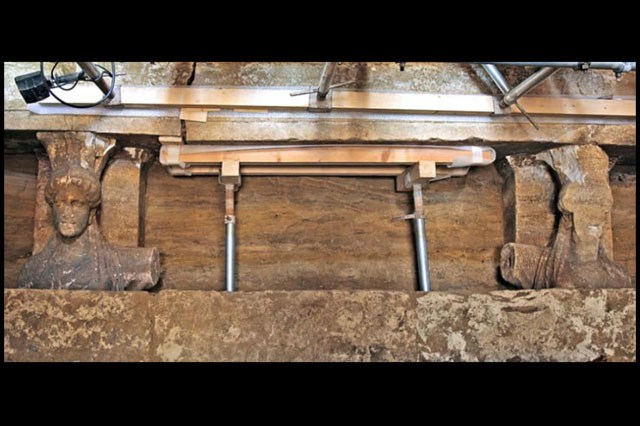
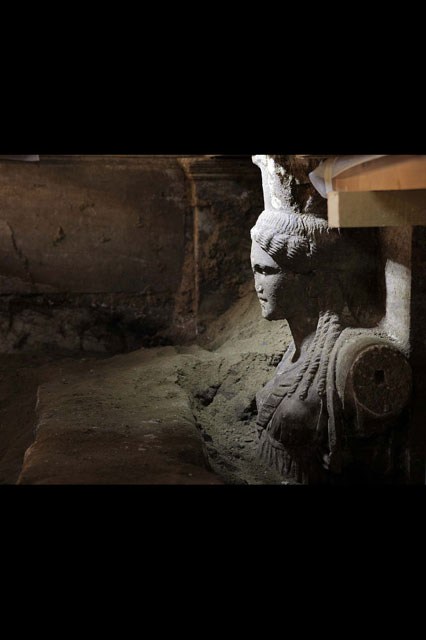
With thick curls covering their shoulders the Caryatids support an inner entrance into the tomb.

Archaeologists have unearthed two sculpted female figures, known as Caryatids, as they slowly make their way into an ancient tomb recently discovered in Greece’s northeast, the country’s culture ministry said on Sunday.

05

They mark a significant new finding in the tomb on the Amphipolis site, about 100 km (65 miles) from Greece’s second-biggest city Thessaloniki, which archaeologists have hailed as a major discovery from the era of Alexander the Great.

special

The figures made of Greek marble were unearthed on Saturday, the ministry said in a statement.

02

The Caryatids, with thick curls covering their shoulders, support an inner entrance into the tomb and feature the same sculpting technique used for the heads and wings of two sphinxes found guarding the main entrance of the tomb in August, according to the statement.

09

“The structure of the second entrance with the Caryatids is an important finding, which supports the view that it is a prominent monument of great importance,” the Culture Ministry said.

08

The face of one of the Caryatids is missing, while both figures have one hand outstretched in a symbolic move to push away anyone who would try to violate the tomb.

06

Archaeologists have said that the Amphipolis site appeared to be the largest ancient tomb to have been discovered in Greece.

07

Excavations, which began in 2012, have not yet determined who was buried in the tomb but culture ministry officials have said that the monument appeared to belong to a prominent Macedonian from the 300-325 B.C. era.

Source: Reuters