
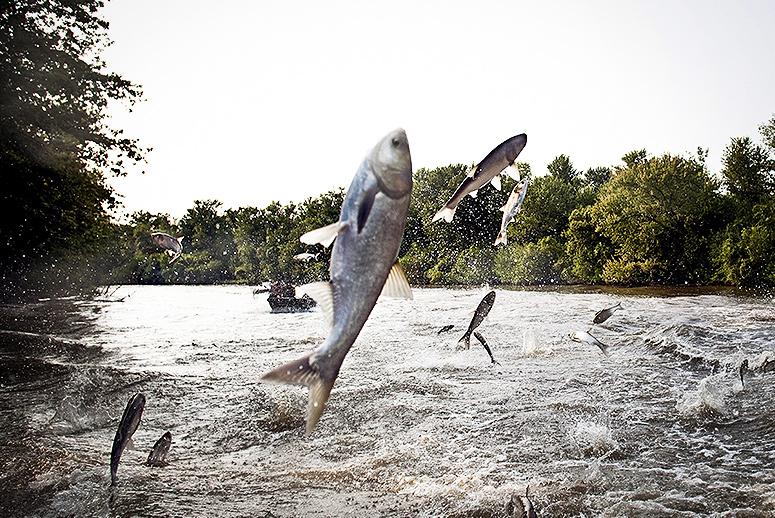
Asian carp are on the move in Illinois, and that could spell bad news for the Great Lakes.
from the United States Fish and Wildlife Service (FWS) discovered two small Asian silver carp—an invasive species brought into the country in the last century— in the Marseilles Pool of the Illinois River, marking a 12-mile advance toward Lake Michigan in just one month.
Since the beginning of the year, juvenile carp have moved 66 miles closer to the lake, according to the FWS.
“It’s the furthest we’ve seen in sampling of juvenile carp going back 12-to-15 years,” said Charlie Wooley, FWS deputy regional director. “In past years we’ve seen very little movement of this caliber. This is a really big jump in just one year. It’s a big concern.”
If the carp finally reach Lake Michigan, they could severely impact native species, Wooley said, including threatened and endangered fish, mollusks, plants, mammals, insects, and reptiles.
The presence of juvenile fish mean the carp are successfully spawning closer and closer to the lake.
Wooley said conditions have become more favorable for Asian carp to spawn recently, including higher water levels, longer lasting flood conditions, and warmer water temperatures.
Once they mature, the fish have no natural predators in U.S. waters. Asian carp reach seven feet in length and weigh 110 pounds, though the average size is around 30-to-40 pounds. Asian bighead and silver carp consume as much as 20 percent of their body weight daily—mostly algae and other microscopic organisms—which form the base of the food web for larger fish and other species. Black carp, another Asian species, feed on mollusks, threatening native mussel, and sturgeon populations.
The carp can also damage property and injure people. Silver carp are startled by boat motors, causing them to leap up to 10 feet in the air, slamming into vessels and the people on them.
Asian carp were imported from Southeast Asia to the southern United States by fish farms. Flooding allowed them to escape into the Mississippi River system, where they migrated into the Missouri and Illinois rivers.
Fortunately, the carp face several obstacles before they can traverse the 76 miles remaining between their current location and Lake Michigan. These include locks and dams, and underwater “electric dispersal barriers” designed to stun fish and prevent them from moving upstream.
But those efforts might not always work.
Small fish have been found to contort their bodies to get past electric barriers, Wooley said. And government researchers experimenting with golden shiner fish found they can take refuge between barges or within niches in their hulls, successfully bypassing locks, dams and electric barriers. One possible solution currently under study: Blasting the water with motorboat sounds to scare the fish away.
The carp could also reach the lakes if they are used as live bait by fishermen, or if fish processors and wholesalers transport them to nearby markets, resulting in accidental or intentional release, according to the government website Asiancarp.us.
So far, there is no evidence of any sustainable Asian carp populations above the electric barriers or in Lake Michigan, according to the FWS.
According to the FWS, once they reach the lake, “Eradication of any established population of Asian carp might be difficult and expensive, if possible at all.”
source:yahoo.com








 STUDIO 3 NEWCASTLE AUSTRALIA