Daily Archives: September 15, 2014

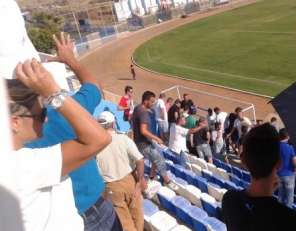
Football fan dead after clashes in Crete

017b768059aafe96c44ac2d2206a80b8

Police arrested a 27-year-old man and two more people in relation to the attack on a 46-year-old football fan.

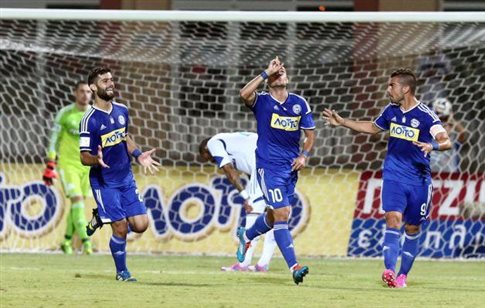
A 46-year-old soccer fan was pronounced clinically dead on Sunday evening in Crete as violence between supporters of third division clubs Irodotos and Ethnikos Piraeus came to a tragic conclusion.

As the match at Iraklio was drawing to a close, Irodotos fans reportedly attacked the travelling supporters of Ethnikos at the stands.

One of the Ethnikos fans, who has lived at Hania on western Crete for the last 20 years, received several blows on his head and was carried unconscious to the local hospital, where the doctors pronounced him clinically dead. Two more Ethnikos fans were reported injured.

Police announced the arrest of a 27-year-old man in relation to the attack on the 46-year-old. Two more arrests were made for the clashes.

Ethnikos president Alexis Angelopoulos alleged that the referee insisted on finishing the game after the stoppage from the clashes, even going as far as asking the match doctor to stay at the stadium for the game to go on. Angelopoulos added that it took half an hour for the ambulance to arrive.

Source: Ekathimerini

From love story to Arabian nightmare

Symeonidou

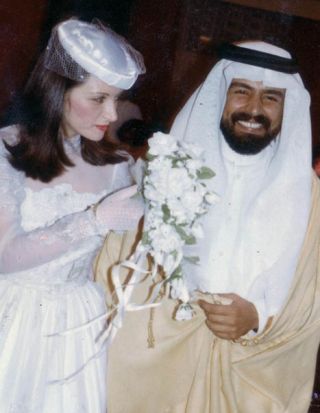
Paris-educated Alexandra Symeonidou was a stewardess at Saudi Arabian Airlines when she fell in love with her pilot colleague. The years of torture she endured are now depicted in her book Nightmares in the Saudi Arabian Desert, recently released in English.

Alexandra Symeonidou’s book is her real life story, as hard as it is to comprehend once you flip through its pages.

Written years after her harrowing experience, for the author the book was a cure, her way of finally cutting off the chain that connected her, for a decade, to her turbulent past.

A Greek student in Paris, in the late ’80s, Alexandra Symeonidou didn’t want an ordinary life. When she was given a choice of working at the European Commission in Luxembourg or accepting the position of a stewardess at Saudi Airlines, it was her never-resting spirit that took Alexandra to the more tempting job of a flight attendant.

It turned out the years to follow would be much more tempting than Alexandra had ever planned or wished for.

Flattered by the noble past of her pilot colleague, from a Saudi family, and charmed by his personality, she fell in love.

For a loving couple, the mixed marriage of east and west, of Orthodoxy and Islam, of Greek and Arab didn’t pose a problem.

For the groom’s family, however, Alexandra was never going to be one of them.

With a special permission – one that only four per cent of the population have the privilege of getting – he was allowed to marry his Athenian bride.

But behind the closed doors of their home in Saudi Arabia, life had turned nasty on the 23-year-old Alexandra.

“He didn’t want me to work anymore at Saudi Airlines – that was the first step. We got married in Greece, as you can’t go to Saudi Arabia if you are not a contractor or married with a special permission. After we settled in Saudi Arabia, he started showing his real face.

“As I wasn’t Muslim, and I wasn’t from an Arabic country, the question was what our children would become. One of the first conditions, that I had to accept even before we got married, was if we got divorced or something happened to me, the children would stay with him, they would be Muslim, and I wouldn’t have any rights to take them back,” Alexandra tells Neos Kosmos.

From a sweet and caring partner, influenced by his mother who didn’t approve of a stranger in her family, Alexandra’s husband had soon become a tyrant.

Alexandra now says she received all the oppressive deficits of a system of a religious culture, targeting to unbrace her mental being, to degrade her, to trivialise her human dignity, transforming her from an intelligent being to an ‘object’.

“First decorating, then as a procreation machine and then the final rejection were the basic causes which made me revolt in my way, submitting myself in unspeakable hardships, in order to keep struggling.

“It wasn’t a way of dressing and covering that was bothering me as long as I could be happy with him.”

But that wasn’t going to happen. Alexandra was tortured both psychologically and physically, suffered the cruellest violence in, as she describes them, Homeric fights, that would drag from one day into another.

“The Arab world is so much different from ours. Their rules are made for men. My prince had a dominant mother who did not like a ‘stranger’ bringing the first male heir of her family to life.

“When I got pregnant he became a tyrant. He wanted me to be forced to a miscarriage. He hit me, he threw me down. My life became a living nightmare. My marriage had turned into a prison. I could not escape. For anything I wanted to do, I needed the written consent of my owner,” she remembers.

It was Alexandra’s dynamic mother who had travelled to see her daughter that would save her life and get her out of the paws of a tyrant.

Having lived the nightmare on her daughter’s side, she finally persuaded her to escape. As Alexandra remembers today, travelling from one end of the house to the exit seemed like a journey that lasted forever.

“We ran into the desert, without any direction, and finally reached a grocer store. The owner, a kind Egyptian man, helped us and hid us under some food cans and locked us in the shop for a few hours, until he brought support. A van took us to the Greek Embassy.”

But the story wasn’t to end here. Out of the home prison, but still under the imprisonment of Sharia law, Alexandra wasn’t allowed to leave the country without the consent of her husband.

In the end, she made it, and alongside her mother and pregnant, they left the country.

Alexandra’s son is 25 now, and the hero of her third book in a Saudi trilogy, entitled Saudi’s Son.

Having since written ten books and translated three from French to Greek for theatre, Alexandra’s first book and a bestseller in Greece, Nightmares in the Saudi Arabian Desert has recently been released in English.

She is now an avid writer for Huffington Post about women’s rights in Islam. It was her autobiographical book that helped Alexandra escape the nightmare and reclaim her right to life.

“I never though about writing a book before, but it was a big necessity for me just to break the chain that connected me with this country and this person.

It was a pure psychological treatment. A cure to me because I was completely disconnected only after I wrote this book – before that I was trapped. The book helped me let go and put a full stop to this period of my life.”

The book Nightmares in the Saudi Arabian Desert is part of Alexandra Symeonidou’s autobiographic trilogy. The two other books, Merciless Struggle and Saudi’s Son are not available in English yet. Since its release in English the book has already made it to the Top 10 list on Middle Eastern affairs, on Amazon.

Alexandra Symeonidou’s book Nightmares in the Saudi Arabian Desert is now available in English on Amazon www.amazon.com.au. To purchase an eBook in Greek, visit Cosmote Books http://bit.ly/1nK4ynR

source: Neos Kosmos

Fighting homophobia in Greece

GR-homophobia01

Athens-based community group Colour Youth, gives victims of attacks a chance to discuss their experiences openly.

A recent outing came to a horrible end for a gay couple when they fell victim to a homophobic attack. It was 6.00 am and the two 20-year-olds were walking to Kerameikos metro station in Gazi, one of the capital’s most popular night spots, to meet four friends, all women. “You’re in for it, you faggots!” yelled a man in another group who seemed close to their age.

“Sorry about the language. I’m just telling you what they said,” said S.T., one of the two men. Both were punched in the face, with S.T. requiring stitches near his eye and his boyfriend suffering a broken nose.

“It was one of the guys in the group who launched the attack,” the 20-year-old student told Kathimerini. “One of his friends tried to stop him, but the other two guys, as well as the girlfriend of one of them, were egging him on. The more I think about it, the more I am shocked by the girl’s attitude. Isn’t she worried that her boyfriend’s violence may not always be restricted to strangers? When I managed to open my good eye I saw him dragging my boyfriend by the hair through a pool of blood.”

S.T. and his friends called the police after being attacked.

“We waited two-and-a-half hours, with three of us taking turns to call every half-hour,” said S.T. “If they had come sooner they would have caught the assailant. He stood there admiring his work for quite a while.”

According to S.T., when the police did turn up they took brief statements about the incident and advised the six youngsters to call if they ever saw the assailant again.

S.T. and his partner took themselves to the hospital, where they met up with representatives of Colour Youth, a group founded in 2012 to change negative perceptions of gay people and promote rights.

“Just a few years ago Gazi was extremely hospitable to the gay community,” said Constantinos Pantikiou, head of human resources and fundraising at Colour Youth. He said that the group has received reports of 15 serious attacks in various parts of the capital since the start of the year.

In 2013, the Racist Violence Recording Network compiled some 20-30 reports of homophobic attacks, some in busy parts of the capital such as Gazi, Exarchia and Panepistimiou metro station, as well as in other parts of the country (Ioannina, Alexandroupoli, Komotini) and especially in Thessaloniki.

“We encourage victims to report attacks but we also understand their reluctance, as any publicity could have an impact on their personal and private lives at a time when they are vulnerable,” Pantikiou noted.

An initiative by Colour Youth (www.pestosemas.com) launched in April, where victims of attacks can discuss their experiences openly, is funded by the EEA Grants Greek NGO Program ‘We are all citizens’. The Bodossaki Foundation is the fund operator of this program.

“We are also preparing an initiative to inform [groups such us ours] on how to work with victims in Thessaloniki, Ioannina, Patra and Iraklio, while we hope to use part of the funding we’ve received to cover the legal costs in at least 10 cases that have gone to court,” explained Pantikiou.

The website already has dozens of entries.

“The people who write to us are mainly teenagers and young people who became victims of domestic violence after coming out at home,” said Pantikiou. “Violence can be in the form of a beating or the cessation of financial assistance or even eviction from the family home.” The biggest problem in terms of the law, he added, is that victims are not considered as such if the violence comes from a parent.

S.T. gave us a brief profile of his assailant.

“From a distance he looked like the kind of macho poser you see everywhere. He didn’t look like a member of Golden Dawn, but he seemed to know martial arts,” he said, making reference to the Greek neo-Nazi party, a number of whose supporters have been implicated in homophobic attacks, including a recent assault on August 23 against two gay men in the Athenian neighbourhood of Pangrati.

Source: ekathimerini

Plug pulled on community TV

Malcolm%20Turnbull

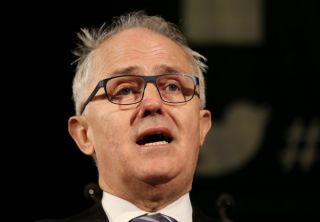
Minister for Communications Malcolm Turnbull will not renew licences beyond 2015.

The federal government has announced that it is effectively ‘switching off’ community television stations, suggesting to broadcasters that if they wish to continue with their programming they will have to do so via the internet.

Minister for Communications Malcolm Turnbull said that stations will only be licensed until the end of 2015.

The announcement will affect community broadcasters C31 in Melbourne and Geelong, 31 in Brisbane, TVS in Sydney, 44 in Adelaide and WTV in Perth.

That means for people fond of community programming, like Vasili’s Garden to Kitchen, which has been welcomed by a lot of yiayiathes and pappouthes over the years, will now miss out, or if the programmers choose to, can continue watching their favourite programs on the internet.

Australian Community Television Alliance secretary, and general manager of C31, Richard McLelland, said that the decision is the “death knell of community television in Australia”.

McLelland was frustrated by the government’s decision.

“He [Turnbull] seems to have a view that community television is not worth having in this country,” he said.

But Mr Turnbull said that community television will be better served online.

“The government believes that the best outcome for community television is that, in the future, it uses the internet as its distribution platform,” he said.

“It will deliver wider audiences at less cost on a wider range of devices.”

Community television has produced a number of household names, with the likes of Corinne Grant, Rove McManus, and Hamish and Andy starting out on the platform.

Source: ABC News


Melbourne now home to Greek treasures

hellenic%20benaki%20opening%2006

Official opening of the exhibition ‘Gods, Myths and Mortals’ marks the start of a great collaboration of Melbourne’s Hellenic and Athens’ Benaki Museums.

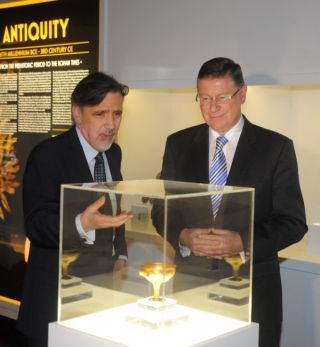
Eight thousand years of Greek civilisation are now on display at Melbourne’s Hellenic Museum, as on Wednesday Victorian Premier Denis Napthine officially opened the exhibition ‘Gods, Myths and Mortals: Greek Treasures Across The Millennia’, on loan from Athens’ Benaki Museum.

In the presence of Ms Irini Geroulanou, deputy director of the Benaki Museum, and former Greece Minister for Culture and Tourism, Mr Pavlos Yeroulanos – great-grandchildren of the famous Benaki Museum’s founder, Antonis Benakis – a priceless Greek collection that will call Melbourne home for a decade opened its doors to the audience, with artefacts such as a more than 2,000 year old luminous golden wreath and a famous gold kylix as its crowning treasures.

The chair of the Hellenic Museum, Harry Stamoulis, acknowledged the support of the Benaki Museum, Greek state, Victorian government and all those involved in bringing the priceless collection to the Hellenic Museum, enabling his late father’s dream – to have a showcase of Greek culture in Melbourne, through the Hellenic Museum – come true.

The Hellenic Museum was founded in 2007 by Melbourne businessman Spiros Stamoulis and is housed in one of the city’s most elegant colonial buildings, the Royal Mint.

Addressing the large audience at the crowded Hellenic Museum, Premier Denis Napthine congratulated the organisation of the collaborative exhibition and stressed the point that Melbourne is the capital city of Hellenism in Australia and perhaps in the wider Greek diaspora.

“The theme of the exhibition is a journey, and that journey is a Greek history,” Premier Napthine said.

Deputy director of the Benaki Museum Ms Irini Geroulanou introduced the nature of the collaboration with the Hellenic Museum, and thanked the teams of both the Hellenic and Benaki Museum, its curators and conservators.

“This collaboration means a lot to us, as Benaki Museum is fond of organising exhibitions and sending exhibitions all over the world. There are a lot of Greeks here in Melbourne, and with this collection we are giving them the opportunity to learn all these charming stories that are in Greek civilisation,” Ms Geroulanou said.

Made up of 200 pieces on loan from the Benaki Museum, the collection is a snapshot of the main collection of the Benaki Museum.

“The exhibition we brought to Melbourne is a small Benaki, it’s like a snapshot of Benaki Museum, that tells a charming story of Greek civilisation and shows its continuity and its relation with other civilisations.”

Close to 15 items of the Benaki Museum permanent collection, that hardly ever leave the museum’s glass boxes, were sent to Melbourne to feature at the Hellenic Museum exhibition for the next ten years.

“We thought that we shouldn’t keep everything for ourselves. So we didn’t send ‘spare parts’, we sent very good pieces.

“There were people crying when the objects were leaving for 10 years. It was very emotional,” Ms Geroulanou said.

Featuring treasures that bring 8,000 years of Greek civilisation to Melbourne’s doorstep, the collection includes pieces from each major period of Greek history, from the Pre-Historic era through to the formation of the modern Greek State: from neolithic pottery to Minoan figurines; from Byzantine icons to post-Byzantine secular art and costumes; and Neo-Hellenic art and weaponry, including ornate swords and pistols belonging to Greek revolutionary heroes Kolokotronis and Mavromichali.

Hellenic Museum CEO John Tatoulis said the exhibition is a journey through time, which provides a holistic experience of Greek art and Greek treasures across millennia.

The fact that Benaki Museum is the only one of its kind in Greece, spanning thousands of years of Greek history regardless of theme or era, was a determining factor to initiate the collaboration with Benaki, he said.

Apart from the main collection, as part of the collaboration with the Benaki Museum in the years to come, the Hellenic Museum will also host smaller exhibitions, featuring Benaki’s Chinese, Islamic, Coptic and other collections.

Addressing the audience at the official launch of the opening of the exhibition, former Greek minister for culture and tourism, Pavlos Yeroulanos, said that the legacy of Greek people is their commitment to build on the values their ancestors gave to the world.

“Our legacy is not our DNA. Our legacy is our commitment to preserve and to create, to build on the values that our ancestors gave to the world: all the values that we Greeks believe in today and through history; feeling proud of our contribution no matter how big or how small. No culture might ever reach what our ancestors gave to the world. But we have created everything in between that links us to them.

“We are proud of our culture not as fragmented accounts of moments of brilliance but as a brilliant continuum of creativity and influence. That is what Benakis believed in. And that is what his museum is all about”.

Benaki Museum was founded in 1930 by a Greek of the diaspora, Alexandrian Antonis Benakis. A visionary, Antonis Benakis started collecting Islamic art while still in Egypt. Upon his return to Greece in 1925-30 he started collecting Greek art. He is believed to be one of the first Greeks who went to Oxford.

Proud of her family and the legacy of her great-grandfather Antonis Benakis, Ms Geroulanou told Neos Kosmos it wasn’t the family connection that brought her to Benaki Museum.

“I never met Antonis Benakis which means that I was never influenced by his character and his passion. On the contrary, I heard stories that he wasn’t the best of fathers, nor the best of grandfathers – as is normally the case with people so passionate about other things that they don’t have time for their family,” Ms Geroulanou says with a laugh.

“I actually fell in love with the Benaki Museum through its director, Professor Angelos Delivorias. Although my family was a bit sceptical, Professor Delivorias trusted me and since the age of 24 I have been involved with the museum.”

To this day, the Benaki Museum remains one of the Greek museums that receives the most donations from the public. Museums from around the world approach Benaki Museum on a daily basis, and single items from its collections are sent to exhibitions abroad.

The ten-year collaboration with the Hellenic Museum is a precedent for both museums.

The exhibition ‘Gods, Myths & Mortals: Greek Treasures Across The Millennia’ is on display at the Hellenic Museum, 280 William Street, Melbourne, Tuesday to Sunday, 10.00 am to 4.00 pm. For more information, visit www.hellenic.org.au

source: Neos Kosmos

Australia’s house prices second-highest in world

Article%20Lead%20-%20wide6125716110ceni1410743354509_jpg-620x349

Australian house prices are among the world’s most expensive when measured against incomes and rents, according to the Bank for International Settlements, but it also finds real price growth in the country has been flat once adjusted for long-term trends.

According to the BIS’s latest quarterly review of global housing, Australia was the second most expensive market on a seasonally and inflation-adjusted index of advanced economies, behind Norway and ahead of Great Britain and Sweden. Australia scored 200 points, where the base, representing the average of the full sample of countries, is 100.

On a price-to-rent ratio, which assesses the theoretical ability of rental yield to cover mortgage costs, Australia is also among the world’s highest-cost housing markets. The Basel-based BIS, which acts as a central bank to the world’s central banks, puts Australia’s ratio at around 150, which is 50 points above the historical average of the sample group, behind only Sweden, Canada and Norway.

<P>Photo: BIS

The same goes for the price-to-income ratio, which reflects affordability. Australia comes in at 140 points, just behind highest-rated Belgium but on the same line as Canada and New Zealand.

These metrics, according to BIS, could point to a reversal or moderation of recent growth, or a further sliding in prices. Highly-placed markets on the price-to-income index also looked vulnerable, the BIS said.

“While for most countries the current ratio implies that price movements are not diverging from rental values in ways that imply unsustainability, for a number of other countries current property prices are much higher than those implied by the historical relationship to rents,” the BIS said.

It said in these markets – which include Australia – there “could be a reason to expect a price correction in the future”. This was despite recent moderation in year-on-year price increases in Australia when adjusted for long-term averages.

On this metric, Australian prices are flat over the past three years, despite recent domestic data suggesting sharp price increases in Melbourne and Sydney over the last 12 months.

The data suggests that Australian property markets are already cooling, and will continue to do so.

Although this might come as a surprise to investors and home-owners piling in to what they see as a hot market, it will provide some relief to the Reserve Bank of Australia, which is trapped between using interest rates to address the high dollar and economic weakness and fears of stoking further house price inflation.

source: smh.com.au


Australia PM accused of ‘blindly following’ US into Iraq

australia_raises_terrorism_alert_level_403133515

The Australian Labor Party has given bipartisan support to the deployment of Australian troops into the Middle East.

The deployment, announced yesterday, will include up to eight Super Hornet combat aircraft and a contingent of Special Forces military advisers.

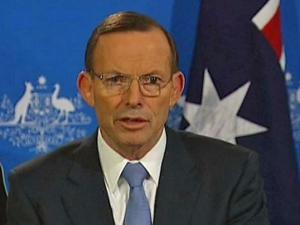
However, the Greens have condemned the move as “mission creep” and accused Prime Minister Tony Abbott of “blindly” following the US into Iraq.

With tens of Australians known to be fighting with terrorist groups in the Middle East, Mr Abbott said the decision was as much about domestic security as international security.

Australia’s objective in any conflict would be the defeat of Islamic State in Iraq, he said.

“If the Iraqi government is once more reasonably capable of maintaining control over its own territory, maintaining internal security, that will be certainly a success,” he said.

He also rejected suggestions that Middle Eastern countries were unwilling to get involved in Iraq.

“Jordan, Bahrain and the UAE are committed to military action and there a number of other Middle Eastern countries that are preparing to commit to military action,” Mr Abbott said.

source: tvnz.nz

Ένας «οικονομικός εκτελεστής» αποκαλύπτει: Έτσι χτύπησαν την Ελλάδα

perkins-ektelestis

Ήταν ξεκάθαρο από την πρώτη στιγμή ότι η Ελλάδα έπεσε θύμα των “οικονομικών εκτελεστών”, λέει ο John Perkins, συγγραφέας του βιβλίου “Confessions of an Economic Hit Man”.

Στο βιβλίο του, ο Perkins αποκαλύπτει πώς διεθνείς οργανισμοί, όπως το ΔΝΤ και η Παγκόσμια Τράπεζα ισχυρίζονταν δημοσίως ότι “έσωζαν” χώρες και οικονομίες από τα οικονομικά προβλήματά τους, την ώρα που στην πραγματικότητα, έπαιζαν ένα παιχνίδι με τις κυβερνήσεις τους: Τους υπόσχονταν εντυπωσιακή ανάπτυξη, ολοκαίνουργια έργα υποδομών και ένα μέλλον οικονομικής ευημερίας. Με την προϋπόθεση, ωστόσο, ότι θα έπαιρναν τεράστια δάνεια από τους οργανισμούς αυτούς. Αντί να επιτύχουν την τεράστια οικονομική ανάπτυξη και επιτυχία, οι χώρες αυτές έπεφταν θύμα ενός ισοπεδωτικού και μη βιώσιμου χρέους.

Και εκεί παρενέβαιναν οι “οικονομικοί εκτελεστές”. Φαινομενικά κανονικοί άνδρες, ταξίδευαν στις χώρες αυτές και επέβαλαν τις σκληρές πολιτικές λιτότητας που υπαγόρευε το ΔΝΤ και η Παγκόσμια Τράπεζα. Άνθρωποι σαν τον Perkins ήταν εκπαιδευμένοι να “ξεζουμίζουν” κάθε σταγόνα πλούτου και πόρων από τις οικονομίες αυτές και συνεχίζουν να το κάνουν έως σήμερα.
Στη συνέντευξή του, που δημοσιεύεται στο αμερικανικό site Truthout, ο Perkins εξηγεί τι συνέβη με την Ελλάδα.

“Ουσιαστικά, η δική μου δουλειά ήταν να εντοπίζω τις χώρες που είχαν τους πόρους που ήθελαν οι επιχειρήσεις μας. Είτε επρόκειτο για πετρέλαια, ή αγορά, ή συστήματα μεταφορών”, λέει. “Μόλις εντοπίζαμε τις χώρες αυτές, κανονίζαμε να τους δοθούν τεράστια δάνεια, αλλά τα χρήματα δεν πήγαιναν ποτέ στις χώρες. Αντ΄ αυτού, πήγαιναν στις δικές μας επιχειρήσεις, για να χτίσουν έργα υποδομών στις χώρες αυτές, όπως εργοστάσια παραγωγής ενέργειας και αυτοκινητοδρόμους, που ωφελούσαν λίγους πλούσιους αλλά και τις δικές μας επιχειρήσεις, αλλά όχι την πλειοψηφία του κόσμου (…), οι οποίοι απέμεναν με το τεράστιο χρέος, όπως αυτό που έχει η Ελλάδα”.

Σε αυτό το σημείο, παρεμβαίνει το ΔΝΤ -στην περίπτωση της Ελλάδας, η τρόικα- με τεράστιες απαιτήσεις για αυξήσεις φόρων, μειώσεις δαπανών, ιδιωτικοποιήσεις, λέει ο Perkins. Οι χώρες αυτές γίνονται σκλάβοι των επιχειρήσεων, του ΔΝΤ και των υπόλοιπων οργανισμών, που ουσιαστικά είναι εργαλεία των μεγάλων εταιρειών.

“Στην περίπτωση της Ελλάδας, η άμεση αντίδρασή μου ήταν: ‘Χτυπούν την Ελλάδα’. Δεν υπάρχει αμφιβολία για αυτό”, λέει ο Perkins. Στη χώρα συμβαίνει ό,τι συνέβη και στη Λατινική Αμερική ή την Ασία, και σε τόσα άλλα μέρη του κόσμου.

“Σίγουρα, η Ελλάδα έκανε λάθη, οι ηγέτες σας έκαναν κάποια λάθη, αλλά ο κόσμος δεν έκανε λάθη, και τώρα του ζητούν να πληρώσει για τα λάθη των ηγετών”.

Και συνεχίζει εξηγώντας ότι μέρος του παιχνιδιού είναι να πείσουν τους λαούς ότι έκαναν λάθος, ότι είναι κατώτεροι. “Η επιχειρηματο-κρατία είναι πολύ καλή σε αυτό, είτε πρόκειται για τον Πόλεμο του Βιετνάμ, όπου έπεισε τον κόσμο ότι οι Βιετναμέζοι ήταν κακοί, είτε πρόκειται, όπως σήμερα, για τους Μουσουλμάνους. Είναι η πολιτική του ‘αυτοί εναντίον μας”. Εμείς είμαστε καλοί, είμαστε σωστοί, κάνουμε τα πάντα σωστά. Εσείς είστε λάθος. Και σε αυτή την περίπτωση, όλη αυτή η ενέργεια στρέφεται προς τον ελληνικό λαό, που του λένε: Είσαι τεμπέλης, δεν έκανες το σωστό, δεν ακολούθησες τις σωστές πολιτικές’, ενώ στην πραγματικότητα, μεγάλο μέρος της ευθύνης εντοπίζεται στη χρηματοοικονομική κοινότητα που ενθάρρυνε την Ελλάδα να ακολουθήσει αυτό το δρόμο”.
Ο Perkins παραδέχεται πως τα προηγούμενα χρόνια δεν είχε συνειδητοποιήσει ότι οι μεγάλες επιχειρήσεις δεν θέλουν μια ενωμένη Ευρώπη. Είναι ικανοποιημένες με το κοινό νόμισμα, αλλά δεν θέλουν ενιαίους κανόνες. Αντίθετα, εκμεταλλεύονται το γεγονός ότι κάποιες χώρες της Ευρώπης έχουν πολύ πιο επιεικείς φορολογικούς νόμους, κάποιες έχουν πιο χαλαρούς περιβαλλοντικούς και κοινωνικούς νόμους.
Ποια είναι η συμβουλή του Perkins προς τους Έλληνες; “Θα ενθάρρυνα τους Έλληνες να αντισταθούν: Μην πληρώσετε αυτά τα χρέη. Κάντε τα δικά σας δημοψηφίσματα. Αρνηθείτε να πληρώσετε και βγείτε στους δρόμους”.

Πηγή: epixirimatias.gr

Η Καλλονή κέρδισε 1-0 τον Παναθηναϊκό

2128D41CA936BCBBCF4F28E1FCDEABCB
Η Καλλονή έκανε τη μεγάλη έκπληξη της 3ης αγωνιστικής κι επικράτησε με 1-0 του Παναθηναϊκού στη Μυτιλήνη.

Η πρώτη ήττα «πρασίνων» στο πρωτάθλημα της Σούπερ Λίγκας προήλθε από το γκολ του Λεοζίνιο στο 35ο λεπτό, χάρις στο οποίο το συγκρότημα του Γιάννη Ματζουράκη διατήρησε το αήττητο που έχει από το ξεκίνημα της περιόδου (δύο νίκες, μία ισοπαλία).

Με 10 παίκτες τελείωσε το ματς η Καλλονή, λόγω αποβολής του Μανούσου στο 86΄.

Τέσσερα 24ωρα πριν την αναμέτρηση με τη Ντιναμό Μόσχας στους ομίλους του Γιουρόπα Λιγκ, οι «πράσινοι» έδειξαν τις αδυναμίες τους στην άμυνα, ενώ η απουσία του Μπεργκ στη γραμμή κρούσης είναι κάτι από παραπάνω εμφανής.

Όπως και στα δύο προηγούμενα ματς πρωταθλήματος με Λεβαδειακό και Πανιώνιο η ομάδα του Γιάννη Αναστασίου βρέθηκε πίσω στο σκορ, αλλά αυτή την φορά δεν κατάφερε να αντιδράσει.

Ο Παναθηναϊκός ήταν καλύτερος στα πρώτα 20 λεπτά του παιχνιδιού, διάστημα στο οποίο διαμαρτύρεται δικαιολογημένα για την φάση του 9ου λεπτού, όταν ο Κλωναρίδης προσπάθησε να μπει μετωπικά στην περιοχή, αλλά ανατράπηκε έξω από αυτή από τον Χογκ χωρίς να υποδειχθεί καν φάουλ από τον Τριτσώνη.

Παράβαση που εάν διδόταν από τον Αθηναίο ρέφερι θα μπορούσε να επιφέρει και την αποβολή του τερματοφύλακα της Καλλονής.

Ένα διάστημα περίπου 10 λεπτών μετά το 25΄, που οι γηπεδούχοι ανέβασαν το ρυθμό τους, σε συνδυασμό με τη νευρικότητα και τα λάθη των «πρασίνων» έδωσαν την ευκαιρία στην Καλλονή να προηγηθεί στο 35΄ με το εκπληκτικό σουτ του Λεοζίνιο.

Ο ίδιος παίκτης, ακριβώς στην εκπνοή του 45λεπτου, εκτέλεσε φάουλ κι έστειλε τη μπάλα στο δεξί δοκάρι του Κοτσόλη.

Στο δεύτερο μέρος ο Παναθηναϊκός είχε την καθολική υπεροχή στο ματς, αλλά ο Πέτριτς ήταν σε καλή βραδιά, σε αντίθεση με τον Χογκ που όταν χρειάστηκε έδειξε την κλάση του.

Η αποβολή του Μανούσου στο 86΄ δεν επηρέασε τους γηπεδούχους, οι οποίοι εκμεταλλεύτηκαν τη νευρικότητα των φιλοξενούμενων και με μαζική άμυνα κράτησαν τη μεγάλη νίκη.

Διαιτητής: Στ.Τριτσώνης (Αθηνών)

Κίτρινες: Λεοζίνιο, Μανούσος, Χογκ, Χωριανόπουλος – Μπούι, Μπαϊράμι, Λαγός, Μπούρμπος, Κλωναρίδης

Κόκκινες: Μανούσος (86΄ δεύτερη κίτρινη)

ΚΑΛΛΟΝΗ (Γ.Ματζουράκης): Χογκ, Αναστασιάδης, Βαλιός, Αντέγιο, Γιορέντε (70΄ Πιπίνης), Καλτσάς, Κεϊτά (66΄ Μπαρέρα), Λεοζίνιο (86΄ Χωριανόπουλος), Μανούσος, Ναβάρο, Χουάνμα

ΠΑΝΑΘΗΝΑΪΚΟΣ (Γ.Αναστασίου):
Κοτσόλης, Μπούρμπος, Κουτρουμπής (46΄ Λαγός), Σίλντενφελντ, Νάνο, Μέντες, Ζέκα, Ατζαγκούν (70΄ Καρέλης), Μπούι (46΄ Μπαϊράμι), Κλωναρίδης, Πέτριτς

Newsroom ΔΟΛ, με πληροφορίες από ΑΠΕ-ΜΠΕ

Man Utd – QPR 4-0:New signings return smiles to Old Trafford

original

A new-look Manchester United recorded their first competitive win under Louis van Gaal with a comprehensive 4-0 victory over Queens Park Rangers.

Marcos Rojo and Daley Blind were handed starting berths by Van Gaal, while Radamel Falcao, who moved to Old Trafford on a season-long loan from Monaco on transfer deadline day, also made his debut as a second-half substitute. However, the show was stolen by another new recruit as Angel di Maria delivered a wonderful display on his maiden home outing for United.

Di Maria opened the scoring with his first goal in a United shirt midway through the opening half before playing a part as Ander Herrera and Wayne Rooney made the points safe before half-time.

Rooney’s strike made him the joint-third top-scorer in Barclays Premier League history with 175 goals, and United, using a back four for the first time in the league this season, pulled further clear when Di Maria set up Juan Mata for a fourth after 58 minutes.

Falcao’s arrival in the 67th minute did not prompt the final flurry that United fans hoped, but there is likely to be a renewed optimism that the club can improve upon last season’s seventh-place finish.

United made a fast start to proceedings and threatened in the seventh minute when Mata shot well over the crossbar from the edge of the area.

QPR, with Sandro and Niko Kranjcar in their team for the first time since their deadline-day moves, appeared to have weathered the storm as some of the early intensity vanished from United’s play, but in the 24th minute Van Gaal’s men found the breakthrough their dominance of possession merited.

Clint Hill was penalised for a foul on Herrera and visiting goalkeeper Robert Green was beaten as an inswinging free-kick from Di Maria 40 yards out evaded everyone and bounced into the far corner.

United had clear control of the encounter but Harry Redknapp’s side were almost gifted an equaliser in the 31st minute by David de Gea. The United goalkeeper rushed off his line in an attempt to clear a long ball forward and was grateful for a diving block from Jonny Evans that prevented Matt Phillips from scoring.

QPR went further behind 10 minutes before half-time when former Athletic Bilbao man Herrera drove a low strike beyond the despairing Green to double United’s lead. Di Maria was heavily involved in the goal, surging down the left before slipping a neat pass into Rooney, who laid the ball off for Herrera to open his account after the England striker had seen his initial shot blocked.

Rooney got another in the 44th minute, rounding off a neat move involving Herrera and Mata with a powerful finish.

Redknapp threw on Armand Traore for Hill at half-time and the move almost paid instant dividends as the substitute pulled the ball back for Kranjcar to bring a fine save from De Gea’s foot.

Yet QPR could not prevent United adding further gloss to a superb display. A cross-shot from Di Maria cut out three players and left Mata with the simple task of firing high into the net from close range.

Falcao was brought on to rapturous applause from the home supporters, yet it was one of QPR’s debutants that almost cut the deficit, striker Eduardo Vargas firing narrowly wide after being played through down the right.

A glittering showing from Di Maria came to an end as he was withdrawn with an apparent case of cramp before the Old Trafford crowd were denied a fitting end to an encouraging afternoon when Falcao was thwarted by Green, who also saved from replacement Adnan Januzaj in the 90th minute.

Manchester United manager Louis van Gaal: “When you have a result of 4-0 then you can be happy as a coach but you always have points you can improve. I am very happy because of the result and the way we have played. We were very dominant and scored goals and kept a clean sheet.

“In ball possession we have lost the ball too much previously. We were more direct and that I like. Also, we have created a lot of chances, although we didn’t score enough of them. We have always to analyse what we have done. The result is fantastic but we can get much better. This is a good start.”

QPR manager Harry Redknapp: “A few minutes before half-time we were 1-0 down and still bang in the game. To come in at 3-0 down, when our ‘keeper has not had a shot to save…

“If you have ever played in a team 3-0 down at half-time it is very difficult. You have to make sure you don’t get beat by six or seven. [It was] a difficult day, I expected it and we got one.

“Leroy Fer is not fit, Sandro got a bit of cramp where he’s not played many games. [But] I still feel confident we will be OK.”

source: premierleague.com