Daily Archives: September 9, 2014

Australian submarines: Bill Shorten says Japan could pose a national security threat

shorten

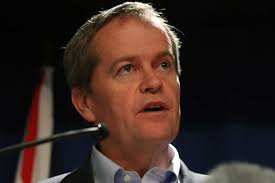
BILL Shorten believes Australia’s national security could be put at risk if the Abbott government decides to have the country’s new submarine fleet built in Japan.

Palmer United Party Senator Jacqui Lambie has also warned the Coalition against shipping the contract offshore and breaking its election commitment.

This comes two days after News Corp Australia broke the news that the next generation of Australian subs was all but certain to be built in Japan.

The Japanese built Soryu Class submarine comes closer to Australia’s needs than any other conventional boat in the world today.

Defence Minister David Johnston is the only foreign government official to tour one of the boats and he came away from his visit earlier this year “mighty impressed” with what he had seen, particularly its air independent propulsion system.

That allows the boat to remain submerged for much longer periods than other diesel-electric vessels such as the Collins Class.

The major shortcoming of the boat is its lack of range.

Ms Lambie said while there might be savings in cost there would be a loss in job opportunities and skills.

“I don’t think that’s the right avenue and they can say it may save a few billion dollars but what it does is it takes away our trade skills for the future,” the former soldier told Sky News this morning.

“What I don’t want to see is anymore lies coming out of the Liberal party.”

Industry Minister Ian Macfarlane this morning insisted no decision has yet been made about the next generation of submarines.

“We want to ensure that defence has the best submarine available at the best possible price and that that decision will be based on the advice of defence,” he told ABC Radio.

“So at the moment no decision has been made and we are looking at all the options.”

Unseaworthy ... the Australian Collins Class submarines are not able to be sent to sea. P

Unseaworthy … the Australian Collins Class submarines are not able to be sent to sea. Picture: News Corp Australia. Source: News Limited

The Opposition Leader, who will today visit the Adelaide headquarters of naval shipbuilding company ASC, accused the government of lying.

“Tony Abbott and David Johnston have looked South Australians in the eye and lied to their faces.

“This will be yet another broken promise from a Government that is addicted to lying — and South Australians will pay the price.”

Mr Shorten also warned there could be other consequences if the 12 new submarines are bought from Japan.

“Buying submarines from overseas will devastate South Australia and could irresponsibly put our national security at risk as a maritime nation,” he said in a statement.

New option ... a Soryu class submarines docked in a Japanese port. Picture: Kikuchi Masay

New option … a Soryu class submarines docked in a Japanese port. Picture: Kikuchi Masayuki Source: Supplied

“In uncertain times, the last thing the Abbott Government should be doing is destroying our home grown submarine and shipbuilding industries.

“No one can predict every threat or future conflict. But we do know that Australia will remain an island nation and submarine and ship building is a strategic asset that we can’t let wither and die.”

Tony Abbott yesterday argued that the “Australian work on the new submarines will be centred on the South Australian shipyards in Adelaide”.

But the Prime Minister said the “precise nature” of how Australia will “do our next generation of submarines is still subject to a whole range of further decisions”.

Hi-tech ... Soryu class submarine at sea off the Japanese coast. Picture: Kikuchi Masayuk

Hi-tech … Soryu class submarine at sea off the Japanese coast. Picture: Kikuchi Masayuki Source: Supplied

“The most important thing is to get the best and most capable submarines at a reasonable price to the Australian taxpayer.

“As I’ve stressed all along, we should make decisions here based on defence requirements, not on the basis of industry policy on the basis of regional policy.”

The biggest attraction for the government is the $20 billion price-tag for 10 boats and avoiding the need to extend the life of the Collins at a cost estimated at greater than $2 billion.

NSW RSL President Don Rowe said that apart from a few diehards he didn’t expect any backlash against the decision from his members.

“We don’t want to see another submarine debacle so it is important that it is the best boat available,’’ he said.

“We bought German (Leopard) tanks because they were the best.”

source:news.com.au
Abbott behind in polls after only a year…

0dcb97b6-37ac-11e4-b22c-16413492db2c_TRHkg10094165--646x363

The federal government has suffered a sustained and significant loss in its primary and two-party preferred polling after one year in power, with the signals on any possible recovery mixed.

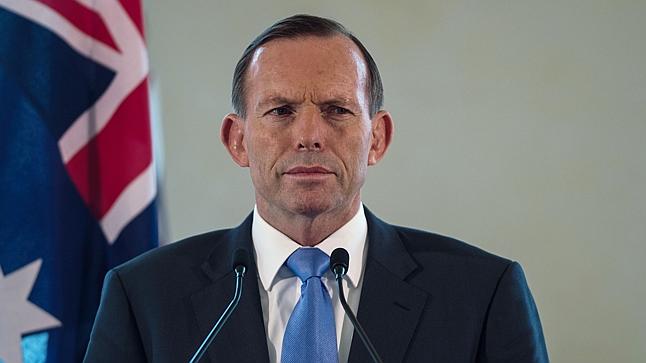
Voters are also unimpressed with the leaders of both main parties, with the dissatisfaction ratings of Prime Minister Tony Abbott and Opposition Leader Bill Shorten rising since last year.

A Newspoll, published on Tuesday in The Australian, shows the Coalition losing ground, with its two-party preferred polling down one point since the last such poll two weeks ago to 48 per cent and Labor up one point to 52 per cent.

A rival Roy Morgan poll shows the government making up some ground in the past fortnight, with its two-party preferred polling up one point to 47 per cent, while Labor is down one point to 53 per cent.

The polls, both based on preference flows at the election, mean a swing against the government since the 2013 election of at least 5.5 points.

This is enough of a swing to, theoretically, put Labor back into power if an election were held now.

The primary polling looks even worse for the government.

The Coalition won the 2013 election with 45.6 per cent of the primary vote.

Primary polling now puts that vote at between 38 per cent (Roy Morgan) and 39 per cent (Newspoll), a swing against the government of between 6.6 and 7.6 points.

Labor’s primary vote at the election was a dire 33.4 per cent. This has recovered slightly to between 35 per cent (Newspoll) and 37 per cent (Roy Morgan), a swing towards the federal opposition of between 1.6 and 3.6 points.

Labor is helped by the jump in the primary polling for the Greens.

The Greens received 8.6 per cent of the vote at the 2013 election, but the party’s primary polling has now increased to between 10.5 per cent (Roy Morgan) and 14 per cent (Newspoll).

The Palmer United Party had a primary vote of 5.5 per cent in the election and is now at 4.5 per cent, according to Roy Morgan. Newspoll does not split out the PUP vote.

The party polling shows that even though the government has achieved its headline promises to abolish the carbon and mining taxes and “stop the boats”, voters are still unhappy.

This is despite strong support for the government’s military action in Iraq, with 62 per cent of voters supporting the action taken so far by Prime Minister Tony Abbott, according to Newspoll.

Mr Abbott’s personal standing has recovered slightly in the past fortnight but remains well below the electorate’s initial assessment of him last year.

The first post-election Newspoll, published last October, found almost half of voters (47 per cent) were satisfied with the then new PM’s performance. This compared to 34 per cent who were not satisfied and the one in five, or 19 per cent, who were uncommitted.

Newspoll now has only 35 per cent of voters satisfied with Mr Abbott’s performance. More than half (54 per cent) are dissatisfied with his performance and fewer voters – 11 per cent – are uncommitted.

Mr Shorten’s standing has also deteriorated in the past year, with a hardening of the views of many uncommitted voters.

Mr Shorten’s satisfaction has increased from 32 per cent last October to its current 36 per cent.

But his dissatisfaction rating has jumped 19 points from 24 per cent in to 43 per cent, with the percentage of uncommitted voters dropping from 44 per cent to 21 per cent since last October.

Mr Abbott is now on equal footing with Mr Shorten as preferred prime minister, with both men preferred by 37 per cent of voters.

Tellingly, more than one-quarter of voters remain uncommitted as to which man would be the better prime minister.

source: afr.com

Another broken promise: Australian subs to be built in Japan!

images2M5RHKHF

Prime Minister Tony Abbott said value for taxpayers must outweigh local job-creation considerations as he all but confirmed the government would break a pre-election promise to build new submarines at ASC in Adelaide, sparking a brawl with the South Australian government.

Mr Abbott appeared to close the door on Adelaide ahead of a hardline speech on Tuesday by Industry Minister Ian Macfarlane, who will say ­Australia needs to take a “hard look” at itself and move away from traditional manufacturing where it cannot hope to compete with international rivals, to a more competitive and less-subsidised future.

The submarine contract is likely to go to a Japanese bid, which would be about half the $40 billion cost of designing and building in Australia, although maintenance could be carried out in South Australia.

The cost of building 10 submarines in Japan is believed to be about $20 billion.

“The most important thing is to get the best and most capable submarines at a reasonable price for the Australian taxpayer,” Mr Abbott said.

“We should make decisions here based on defence requirements, not on the basis of industry policy, on the basis of regional policy.”

The impending decision was slammed by the SA government, which was banking on the submarine contract to alleviate the imminent closure of the car industry and much of the automotive component sector.

South Australian Premier Jay Weatherill said that it was a broader issue than his state because any demise of shipbuilding and submarine ­construction would hit Victoria and Western Australia.

“This is not just South Australia,’’ he said.

The Australian Industry Group said buying overseas rather than building here raised “significant issues for the government-owned ASC, the SA economy and for the many small businesses across the country which are potential suppliers to domestically built naval vessels’’.

“These issues are exacerbated by the preparations businesses have been making on the basis of previous ­undertakings by the federal government that submarines would be built in Adelaide,” chief executive Innes Willox said.

Mr Macfarlane will tell the Sydney Institute “Australia’s economy is now in its third wave”, built around industries based on innovation, research and a high-skilled workforce.

The first wave was built around farming and agriculture and the second was heavy-manufacturing and ­commodity based industries, he will say. The “clearest and most prominent example” of the transformation to the “third wave” was the decline of car manufacturing.

“Australia has two choices: we can continue to meander along with a business-as-usual approach, condemning ourselves to mediocrity and a decreasing share of global markets as we become increasingly less competitive in traditional manufacturing sectors where we are outpriced by our competitors with lower wages and lower standards of living.”

Mr Macfarlane will say that while governments will have a role to assist industry to adapt, that should not extend to interference or using subsidies and handouts. “Australia must move decisively to focus on the industries of the future,” he said.

He said the new approach was not akin to “picking winners.”

Before the federal election, the Coalition promised unambiguously to build the new submarines at ASC.

The Australian Financial Review reported in late August that Adelaide-based ASC had built its last submarine and the two countries were in advanced discussions on building Australia’s next generation of submarines in Japan. Sources close to the project suggest the cost is about half that of an Australian design and build, and an announcement could be made as early as the G20 leaders’ talks in November when Mr Abbott meets Japanese Prime Minister Shinzo Abe.

Mr Weatherill said the subs would have been an example of high-tech manufacturing. He said federal Liberal Party MPs in the state would feel the wrath of voters if the election promise was broken.

“That’s going to be a matter for the Commonwealth to answer should they ever take that course,’’ he said.

He also said that $250 billion of jobs and contracts in shipbuilding and submarine construction over the next 30 years moving overseas would not sit well with most Australians.

Mr Weatherill said he held a meeting with Federal Defence Minister David Johnston late last month and he had “accepted that the freezing out of the SA Defence Minister and [Liberal defector] Martin Hamilton-Smith had gone on far too long and agreed to meet with him in Perth and that meeting’s been arranged”.

Mr Hamilton-Smith, a former state Liberal leader in SA, stunned the party when he defected in May this year to become part of Mr Weatherill’s Labor State cabinet including taking on the role of state defence minister. Mr ­Hamilton-Smith has been ostracised by former federal Liberal colleagues.

South Australian Labor Senator Penny Wong said “the government made a really clear commitment to South Australia and they’re walking away from it”.

“This is a government that doesn’t appear to care about manufacturing jobs, let alone SA jobs.”

State shadow treasurer Rob Lucas said senior SA Liberals were continuing to lobby both publicly and privately for the work to remain in SA, but if a ­decision was made to end submarine manufacture then the next most important element was to maximise the work that would remain in SA.

“It may well be that we as a state need to move to Plan B”.

“If the decision goes against South Australia in that respect we need to maximise the job benefit to South Australia to the extent that we can,” he said.

Defence sources suggest the process has been entirely managed out of the Prime Minister’s Office and effectively overrides the consideration of contenders that has been going on within that department.

Any deal would effectively shut out European contenders from bidding for the project including German-based TKMS, France-based DCNS and ­Swedish-based Saab.

Pre-election commitment

Mr Willox said Australian businesses were not seeking public sector procurement “to provide a blank cheque” but such procurement “should take full account of through-life costs and the advantages offered by domestically based service and parts suppliers”.

He said “contrasting make-or-buy was overly simplistic and even when major defence equipment is purchased from abroad, careful planning with domestic industry is needed to ensure that the capabilities required for adaptation, fit-out, maintenance and repair are adequately developed and nurtured.”

source: afr.com


Australia 3-2 Saudi Arabia: Scratchy Socceroos hold on

453663_heroa

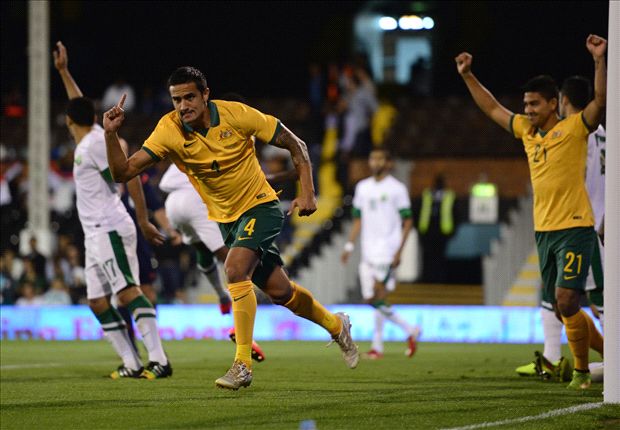
The Socceroos did not impress but ended a run of seven games without victory with Tim Cahill, Mile Jedinak and Bailey Wright scoring the goals

Australia have edged out Saudi Arabia 3-2 in London, ending their losing streak but failing to produce a convincing performance against their Asian rivals.

The Socceroos had lost their previous five games and were faced with setting a new record run of defeats but managed to overcome the Saudis at Craven Cottage on Tuesday morning (AEST), despite conceding twice in the second half.

Australia sprinted into a 2-0 lead through Tim Cahill and captain Mile Jedinak but had to endure a nervous finale, as debutant Bailey Wright scored for the Socceroos between strikes from Hassan Muath and Taisir Al Jassim for the Middle East-based team.

The display, however, raised more questions than it answered for Australia, as they struggled to create against a woeful Saudi back four, while defensive lapses again cost the Socceroos goals.

Coach Ange Postecoglou made four changes to the starting XI that took on Belgium in Liege on Friday morning (AEST), with Wright making his Socceroos debut in central defence, while Massimo Luongo earned his maiden start, playing in the hole.

Midfielder Joshua Brillante and goalkeeper Mitch Langerak were also promoted, while Mark Bresciano, Trent Sainsbury, Mark Milligan and Mat Ryan sat on the bench.

After a shaky start where they conceded two free-kicks in as many minutes, Australia hit the front with their first attack, Cahill spreading the play on the counter-attack to Tommy Oar start the move.

Oar then found Mathew Leckie in the box but the FC Ingolstadt forward couldn’t score and neither could Luongo before Cahill bundled the ball into the net from less than a metre.

It was 2-0 just four minutes later with Jedinak rising unmarked to nod Joshua Brillante’s free-kick home, less than a minute after Alex Wilkinson was subbed off with a strained gluteal muscle, replaced by Sainsbury.

While the scoreboard looked promising, the performance was less so, with the Socceroos struggling to hold onto the ball early and failing to find new routes to goal.

Cahill’s goal was his seventh in the Postecoglou era, while Jedinak was maintaining his record as the only other player to have scored in green and gold under the former Brisbane Roar and Melbourne Victory coach.

Otherwise it appeared that complacency had infiltrated Postecoglou’s side with sloppy passes, particularly in Australia’s defensive half, letting Saudi Arabia back into the match.

Sainsbury and Jedinak were arguably the main culprits, while the Socceroos struggled for cohesion amongst the front four of Oar, Leckie, Cahill and Luongo, although the latter again showed he has a bright future with some impressive moments.

Australia failed to test Saudi goalkeeper Waleed Abdullah after Jedinak’s goal, although the Socceroos’ skipper and Cahill both sent efforts wide of the mark, while Saudi Arabia tried a couple of long-range drives that did not trouble Langerak.

Postecoglou’s men started the second half brightly but should have conceded in the 49th minute, only for the unmarked Yasir Al Shahrani to spray his shot wide from the edge of the six-yard box.

The Socceroos looked much more poised in possession up until the hour mark, although they did not create much, with their best move seeing Leckie chip to a surging Luongo, who could not keep his header down.

Saudi Arabia got back into the contest in the 70th minute with Langerak conceding a penalty on Mukhtar Fallatah, after the ball fell fortuitously to the substitute forward.

Langerak was lucky to stay on the pitch before Muath converted from the spot and suddenly the Saudis looked inspired.

The Socceroos restored their two-goal cushion just seven minutes later when Wright scored, after Saudi Arabia failed to clear an Australian set-piece, but the Gulf nation scored again soon after, with Al Shahrani teeing up Al Jassim, who took advantage of some lax marking from the Socceroos.

Australia held on, however, claiming just their second victory under Postecoglou’s tutelage.

source: goal.com