Daily Archives: September 2, 2014

Australia: The rising star of George Perris

perris

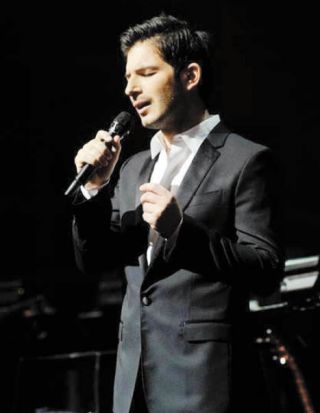
Dubbed ‘the European Michael Buble’, George Perris has been sure of his career path for a very long time.

International pop crooner, George Perris is in Australia, touring with Tina Area to promote his new album. Deciding he wanted to be a star at age three, the Greek French singer is living his dream.

Born to a French mother and Greek father, George Perris took the best from the two cultures – or, at least, the elements he liked most. Born in Athens, from morning till afternoon everything was Greek – Greek school, Greek friends. But as soon as he would come home, the mode switched to French – food, music, kids’ stories.

“Everything was divided in two. It might appear it was a little unstable – but in the opposite way it doesn’t make me someone with no roots, quite the contrary. It makes me someone who has had the chance to choose the elements of both cultures,” George tells Neos Kosmos.

The exciting, young international pop crooner is now in Australia, touring as a special guest alongside Tina Arena on her national Reset tour, and promoting his debut English language album ‘Picture This’, which was released in early August.

Recorded in Los Angeles, New York, London, Prague, Montreal and Athens, the album showcases some of the world’s best talents coming together for one of the year’s most anticipated releases.

Having previously released three albums in Greek and one in French, for the multilingual Perris an English album came as a natural progression.

And with his uniquely powerful yet pure voice as the perfect instrument to interpret the genuine emotion of his songs, it wasn’t hard to conquer world audiences.

Now dubbed ‘the European Michael Buble’, Perris has been sure of his career path for a very long time.

While still a toddler, only three years old, he was determined – or stubborn enough, as he puts it – to decide and announce to his mother that one day he would be a big singer and star. He didn’t fall out too far on this one.

“She laughed – ‘go tidy your room for now and we’ll see about that’. But she was very wise, because the next day she took me to the music school and said – if you want to be a singer you have to learn music. I was presented to all instruments, to choose from. At some point someone told me – ‘and this is the king of all instruments’. It was the piano.

“As soon as I heard the word ‘king’, that was it,” George says with a laugh.

It was George’s three idols who would play a big role in influencing his choices along his career path.

Oddly enough, he says, they were all women.

Greek singer Nana Mouskouri, Greek opera legend Maria Callas and Lara Fabian.

“I had a crazy passion for the opera. When I was 12 I decided I wanted to be an opera singer. I started to study all the classical opera roles. But then a little later on, when I was 16, when I started writing my own songs and lyrics, I realised there was a small part of freedom of expression that I wouldn’t be able to have, if I was a classical singer.

“I decided I wanted to go into pop music and then I discovered Lara Fabian. Little did I know that Lara would become one of my best friends – we sang together, toured together, and are now very close friends.”

As with Lara Fabian, George Perris seems to have a magical ability to have as mentors and work with people that he once looked up to.

People like Alkistis Protopsalti, and now Tina Arena.

Up until now, there have been many turning points in the career of the only 30-year-old George. At the age of just 17, he was discovered by legendary Greek composer Mimis Plessas, then 84, who also discovered Mouskouri in 1956.

“I auditioned for him and he told me ‘you are the final singer that I want to suggest to Greek audiences’.

“We went touring together and we did more than 45 concerts around Greece and Cyprus,” he tells.

It was Perris’ first contract with EMI in Greece and the release of his first album in 2006 that gave him the chance to become a part of the musical family in Greece, where people started discovering him little by little.

“The other big moment was three years later when I worked with my idol Lara Fabian. She opened the doors for me outside of Greece, alongside with another good friend Greek tenor Mario Frangoulis.

“In 2012 I got to do two amazing things – I released a French album, for the first time outside of Greece, in Canada. That same year I got the chance to play at the Odeon of Herodes Atticus in Athens, underneath the Acropolis, something that has always been my dream.

“It’s a magical theatre, with a particular energy, and just the fact that it has been there for 2,000 years, that so many people have set foot on that stage – from ancient to recent times – Maria Callas, Placido Domingo, Nana Mouskouri, Jose Carreras, Montserrat Caballe – it’s a huge responsibility and it makes you really, really nervous.

“The last moment is now, with this last record and the fact that I am touring with Tina Arena, who has been one of my favourite singers for more than a decade. I discovered her in France, and now I’m very happy and touched that I got to tour with her,” George says.

With his music often described as pop with influences of classical music, George stayed faithful to his style in his first English album, ‘Picture This’. And if you ask him to describe and categorise his latest album – something that he is not that passionate about doing – he will tell you it’s simple pop songs that speak to the hearts of people, with lyrics that have a meaning and hit straight to the sentiment of the listener.

“I wouldn’t say that it’s a new beginning, but it’s a continuation, the next step for me. My previous albums were a little more acoustic – this one has the lusciousness of the symphony orchestra, but it’s still a pop record. Even though I don’t like labels – music has no barriers, you should explore as many styles of music as you like – I would say that this album is a pop album with a magical touch of classical music.”

‘Picture This’, Perris’ first collaboration with a host of global producers, writers, arrangers and mixers including Mark Portmann, Marco Marinangeli, Simon Hale and others, in its fresh approach to adult pop features the participation of The Prague Symphony Orchestra. Out of 14 tracks, three are co-written by Perris himself.

“When you want to sing the way that I want to sing – outside the barriers of your country and travelling the world, the most natural thing to do is to sing in English; that opens doors for you. I grew up speaking English, I’m trilingual, so it was the most natural thing to do. I was given the chance to work with some amazing producers and songwriters, and the most thrilling part was having the Prague Symphony Orchestra.

“I had goosebumps and tears in my eyes while recording with them – I could not believe the warmth and the dexterity of the strings, giving flesh and blood to my songs.”

While dividing his life between New York and Athens, where he is based, George spends most of his time with a suitcase as his home.

“When you do this job the way I do it, you don’t spend more than three weeks in one place. But I’m not complaining because it’s all I ever wanted in my life.

“I get to travel the world with my songs and I’m very grateful for that. Music, for me, knows no nationalities, no barriers, no frontiers. Because music has its own language, the language of love, of freedom, but above all, hope.

“I was looking at the opera house in Sydney the other day, and couldn’t believe that I was in Australia – I am grateful to this wonderful big blue sky for what it has offered me,” George says modestly.

And while making his way to the stars, George doesn’t forget he is an ambassador of his homeland, whose white and blue colours he carries with pride.

“I carry my country everywhere. I always say I’m 51 per cent Greek and 49 per cent French, there is just that little bit of me that is more Greek than French.
“I’m very well aware of the fact that I’m also an ambassador for my country now, so I’m very careful what I say and do, especially now when it’s going through such a rough time. I’m very proud to be Greek, to carry its colours with me wherever I go. It’s a wonderful feeling to be able to offer that to your own country.”

George Perris’ album ‘Picture This’ is out now through Decca Records, Australia. He is now touring around Australia as a special guest on Tina Arena’s Reset Tour. For tickets and dates, visit http://georgeperris.com/tour/
 source: Neos Kosmos

Melbourne: Sidiropoulos gets pride of place in town hall

sidiropoulos

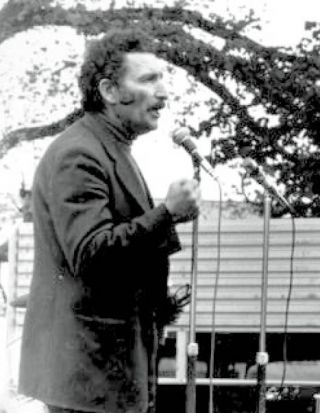
Councillor Theo Sidiropoulos making a speech at the anti-freeway demonstration on Alexandra Parade. Photo: The Melbourne Times.

Former Collingwood mayor and Labor MP Theo Sidiropoulos will be remembered at the Collingwood Town Hall with a room dedicated to his memory.

Just as you enter Collingwood Town Hall in Melbourne, right near reception, you will now find a public room with a small plaque at the entrance.
It says: “A leader both locally and in the Greek community, with a strong belief in social justice, Theo Sidiropoulos stood up and spoke out for migrants and minorities.”

The Theo Sidiropoulos room, newly minted after the Collingwood Town Hall finalised its renovations, honours the legacy of its former mayor.

The late Theo Sidiropoulos was quite a figurehead in the inner city suburbs of Melbourne, always fighting for migrant rights and supporting the Greek community.

Working as a tram conductor for a number of years and becoming a small businessman taking care of take away shops and milk bars like many Greek migrants at the time, Theo’s ideologies would push him to a life of public service.

He eventually became Collingwood’s mayor in 1977, the first that spoke English as a second language. A friendly man and always up for a chat, Theo campaigned for everyone, but especially for those disenfranchised or neglected by those in power. Nothing was above or beneath him.

Numerous migrants came to him with their problems even if it was out of the jurisdiction of the council. People would ask for help with their monthly electricity bills, filling out taxation returns, passport application and immigration issues, even filling out papers to register their pets. Theo’s door was never closed.

He was a Collingwood councillor for ten years, and became an even bigger personality when he was elected as the member for Richmond, for the Victorian Legislative Assembly in 1978, where he would serve for the next 11 years before retiring.

Current councillor for the City of Yarra council, Phillip Vlahogiannis had Theo as his local member of parliament when he was growing up in Richmond.

Today he is inspired by Theo’s tenacity and willingness to help his fellow man and his community.

“What Theo Sidiropoulos’ legacy is about and the way I reflect upon it is, there was a person who was trying to build those bridges of those sections of the community of which he himself was part,” Cr Vlahogiannis tells Neos Kosmos.

“He contributed not only to the Greek community broadly, but the local community especially, back in a time when a very large proportion of the community was of non-English speaking background.”

He realised how important it is to have someone who is of the people representing the people.

For Cr Vlahogiannis, he’s seen that just having a foreign name has helped his local members open up.

“Recently I had a woman call me and she was a bit tentative at first, and she asked ‘are you Greek?’ and I said yes and all of a sudden, she just opened up and without hesitation was able to discuss with me her concerns,” he says.

Looking back at Theo’s mayorship, Cr Vlahogiannis says it would have been a huge help having a migrant represent a community that was mostly made up of working class migrants.

“I think it helped having a member with an ethnic background, because sometimes it’s just familiarity,” he says.

Theo took on the role of a multicultural spokesperson seriously. As a local member, he campaigned tirelessly to bridge the gap between the local Australian community and the migrants of the time.

He himself saw the inadequacy of multicultural services, of a system that sometimes hindered the rights of migrants thanks to lack of language services.

Coming to Australia in 1955, Theo was sent to the Bonegilla migrant reception centre, a place that gave him the first taste of what it was like to be
considered foreign in a new country.

That experience would have certainly stayed with him and would have encouraged him to seek office.

He was the first to change the look and make up of Victorian parliament, drawing attention to the plight of migrants and calling for respect for all. His legacy remains in a special memorial park next to the Town Hall. A special commissioned artwork created by Jenny Steiner was unveiled in 2007 that has the word ‘freedom’ in multiple languages including Greek.

As a fighter in the Greek resistance and a military officer, Theo understood the deep need for freedom and championed that right in his political life.

Now taking pride of place in Collingwood Town Hall, Theo’s legacy will act as a cautionary reminder to keep championing the rights of minorities.

“It’s a fitting tribute, but it’s a very important reminder that there are also older immigrants and new ones who need services that are culturally and linguistically specific,” Cr Vlahogiannis says.

The Theo Sidiropoulos room will be officially opened in a special closed event at Collingwood Town Hall on September 2.

Theo’s wife Popi and daughter Andrea will be given a tour of the town hall and will open the room.

source: Neos Kosmos


Prime Minister Abbott’s flying the flag comments

diatribe-30_8%20(2)

Greek Australian students proudly holding the Greek and Australian flags during the celebrations of Greek Independence day in Melbourne this year. Photo: Kostas Deves.

Prime Minister Abbott’s unfortunate comments convey sentiments that have the ability to undermine many integrated communities’ confidence in their own place within Australian society

Something strange happens to me whenever I see the Greek flag, especially the variant without the stripes, which has been the flag of that country for most of its existence and which now is taken to be the flag of the people, rather than the nation. I become suffused with a warm glow, my cheeks redden and the hairs of my arms stand on end. All at once, my brain becomes flooded with a myriad of thoughts, images and inherited memories. This flag is the flag of my ancestors. It is a tangible manifestation of a faith in something higher than the paltry needs of daily existence that unites all of us. It is a symbol of the survival of the Greek people through centuries of persecution, degradation and even genocide, at the hands of a conqueror who treated them as second class citizens by virtue of their religion. As such, it is a reminder that no matter how desperate times can be, there is always hope of rebirth and justice. It is a manifesto of democracy and equality, kindness and compassion; ideals that are inextricably interwoven within the warp and the weft of the modern Greek identity. This is not the flag of a nation, but rather of a way of life and of a free people who take the values of fairness and liberty with them wherever they go.
When the flag of the Greek people flies, as it did on the 25th of March in Federation Square this year, I notice how the blue and white cross already exists within the Union Jack of the Australian flag, and marvel at how symbolic this is of the manner in which the aforementioned Greek ideals also exist within and form the foundation of the core values of Australia.

I am reminded of the times when Greeks and Australians fought or struggled together side by side, each under their own flags or each others, such as during the Gallipoli campaign, when Greeks nursed Australian soldiers on Lemnos, while 15,000 of their compatriots were ethnically cleansed from Gallipoli in order to make the area secure from attack by the Allies, or during the Second World War, when doughty Greek villagers, with limited or no knowledge of Australia, risked their lives to protect and harbour Australian soldiers, purely out of a sense of decency, compassion and heroism. When I look upon the Australian flag, then, I am filled with pride and wonder, not only at the place of my birth and my home but also in the way a place has been found for my own unique cultural identity within it.

It is for this reason that Prime Minister Tony Abbott’s recent comments about flag flying are disturbing. Quoth he: “I don’t know what the legal position is but frankly the only flag that should be flying is the Australian national flag.” He went on to say “everyone has got to put this country, its interests, its values and its people first, and you don’t migrate to this country unless you want to join our team”, clarifying his position thus: “If people want to be flying other flags – a corporate flag for instance – fine, but the Australian national flag should always be part of it.”

One must of course point out that the prime minister’s comments were made in the context of allegations that Australians were flying the flag of the heinous Islamic State here, a flag that has become synonymous with genocide, intolerance and some of the worst depravities ever witnessed this century, committed by beings purporting to be human. The support by small sections of the local community for the Islamic State and its bloody doctrine of intolerance and extreme brutality is of course gravely disquieting. For if Australian citizens not only condone the massacre, rape and persecution of innocent people who just happen to be of another religion or ethnicity, but in some isolated cases, travel to the scene of the crime in order to take part, then it is logical to draw the inference that such persons do not share the values of tolerance, democracy and freedom of speech that characterise the Australian way of life.

Yet in the hype and hysteria surrounding the small section of the community that supports ISIS in Australia, comments by the prime minister that imply that no other flag but the Australian flag should be flown, and that even corporate flags should be accompanied by the Australian national flag are not helpful and appear to directly oppose everything that multiculturalism is about. For it is but a short step from these comments, abjuring Islamic fundamentalism, to creating suspicion and a climate of disapprobation against all expressions of cultural or ethnic affiliation. One would hate to deduce from the prime minister’s remarks that as a result of the activities or opinions of a tiny minority, ethnic communities such as the Greek one, which has integrated itself harmoniously and without incident within the broader fabric of Australian society, making lasting contributions to it, while simultaneously proudly maintaining its sense of diversity, need to feel wary of ever again making manifest expressions of their culture, lest they be accused of being un-Australian.

The multicultural ideal was one where all persons could feel free to maintain and express their ethnic, cultural and religious identity as long as they did not impinge upon anyone else’s rights to do so. Rather than being a threat to ‘Team Australia’, multiculturalism is purported to be of immense benefit to the country, enriching it socially and transforming Australia from a Anglo-Celtic colony to a thriving cosmopolitan modern nation. The fact that the prime minister of such a multicultural country is made so insecure by the deluded few who support the crimes of the Islamic State, so as to feel the need to issue an opinion which in effect calls for a blanket on the free flying of ALL flags, or at least their buttressing by an Australian flag, suggests that multiculturalism, at least in the way it is seen by the dominant group, is more fragile than previously thought and that, in keeping with the excellent theory of multiculturalism developed by George Vassilacopoulos and Toula Nicolacopoulou in their ground-breaking study: ‘From Foreigner to Citizen: Greek Migrants and Social Change in White Australia 1897-2000′, we are once more, by virtue of some of our co-citizens’ inability to espouse humanitarian ideals, to be branded as foreigners and potentially subversive.

Undoubtedly, this was not the prime minister’s intention. Yet his unfortunate comments convey sentiments that have the ability to undermine many integrated communities’ confidence in their own place within Australian society, conveying the suspicion that whatever their contributions to Australia, as ethnic minorities they are answerable and responsible for the actions of other such minorities. Unlike the flag of the Islamic State, which represents not a nation or a people but rather a band of murderers, the ethnic flags of the people who live in Australia form a small component of the broader mosaic of the Australian identity and the control of their display should not even be countenanced, let alone expressed in public. Instead, the requisite inquiries should be made into the reason why the deluded few Australians espouse doctrines of violence, religious repression and brutality in the first place. Further, it should be far beyond the prime minister ever to seek to equate flag waving by the Greek community with a lack of commitment to ‘Team Australia’. After all, we built ‘Team Australia’, sometimes under circumstances of bigotry that we are all too happy to forget.

*Dean Kalimniou is a Melbourne solicitor and freelance journalist.

 source: Neos Kosmos

Olympic FC: Stealing the limelight

FFA

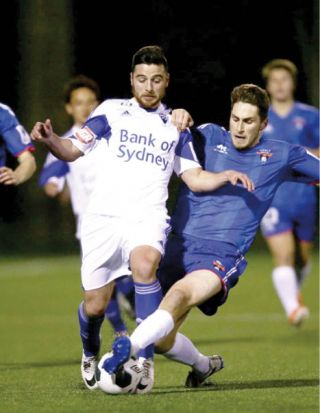
Sydney Olympic very happy to be hosting the first FFA Cup Greek derby. Photo: FFA Cup.

Olympic FC coach Jim Bellas says he was secretly hoping to come up against a Greek Australian team instead of champions Central Coast Mariners. He proves it’s not all about the A-League clubs in Australian football.

The way the FFA Cup was marketed was that anyone could have the ‘honour’ of going up against an A-League club.

But for Queensland’s Olympic FC, who will come up against Graham Arnold’s newly minted side Central Coast Mariners, the draw is a little bittersweet.
Olympic FC Coach Jim Bellas he says he was secretly hoping to come up against a Greek Australian team.

“Deep down I really wanted to play a Greek side, like Sydney Olympic or Bentleigh,” he tells Neos Kosmos. “That would have been fantastic.”

Bellas’ view isn’t a one-off; it is in fact what many of the Greek sponsored clubs are thinking.

There is one Greek derby booked for the round of 16 – Sydney Olympic and Bentleigh Greens. The match will most probably trump other A-league club matches for crowd numbers.

Sydney Olympic coach Grant Lee says he is quite excited to be playing the Melbourne team, and isn’t disappointed Olympic missed out on an A-League opponent.

He sees the match as the best chance to progress in the Cup by playing against equals.

“I was happy with the draw, it’ll be nice with another Greek club,” he tells Neos Kosmos. “Coming from interstate it gives both of us an opportunity to progress to the next round.”

The view of both coaches shows just how deep the community spirit is in the sport.

Many Greek Australian teams have outlasted and sometimes outshone their professional counterparts.

Their teams go back decades and they’ve nurtured some of the best players in the country. It’s no wonder the A-League clubs come sniffing.

One of the main goals in creating the National Premier League was to create clearer pathways for progression, and to rightfully compensate lower league clubs for their contribution when a player is poached.

Bellas says from the NPL and the FFA Cup exposure, four of his players have already been snapped up by the top clubs.

Just after their round of 32 match against Melbourne Knights, Bellas had to say goodbye to another player, signed to the youth teams of Brisbane Roar.

This season, Bellas has seen three others move to the Roar and one player sign to Melbourne Heart’s youth squad.

It’s left his team quite depleted, but he’s happy to get the club’s prowess noticed.

“We still want to be competitive, and be up higher on the ladder, but the club sees the development of players, and sending them to the A-League … it’s the best thing for the club because that means everyone wants to come play for Olympic,” he says.

Knowing his team’s deficiencies, in the next three weeks Bellas will be putting all he can into training up his younger players, to at least give the Mariners a run for their money.

“The thing that’s concerning us is that we’ve got a lot of games in the next three weeks,” he says. “Our squad is not that deep, and if two people get suspended or injured then we’ll be really struggling.

“We’re looking at it positively; I think we’re in with a shot, we’ve come so far.”

The minute he got the draw, Bellas has been chasing as much insider knowledge as he can about the Mariners.

“I’ve spoken to one of the coaches down there who knows their coach and he says he’s a bit weary and he’s sending his best 11 up to play us,” he says with a laugh.

Sydney Olympic is using their finals series as the best road test for a player formation against Bentleigh.

One thing concerning Lee is that if the team makes it to the grand final, they’ll have to battle match fitness two days later for their FFA Cup match.

The fixture for all local teams is one of the most concerning things.

Deep in the final legs of the NPL, most will be watching their players closing and keeping others in reserve.

Lee says he won’t be too cautious with his players, saying that it’s better for the team to be overloading on matches rather than overloading on training.

“It can be a bit of a minefield if you go down that path if you try and protect them too much,” he says. “It’s better for them to be playing.”

The other Greek sponsored team to make it through the round of 16 and defy all odds is Melbourne lower league side South Springvale (Aris).

Thankfully the team will be going up against Queensland’s Palm Beach Sharks, giving them much more of a chance to progress.

source: Neos Kosmos

Small businesses gain ground in Greece

GR-Coops03

Perivolaki is another cooperative cafe located in Kato Petralona, Athens.

Shared enterprises are becoming a trend in crisis-hit Greece

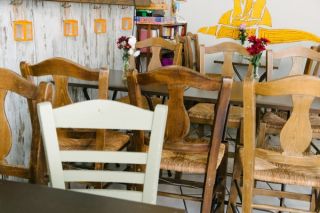
If you’re in Ano Petralona and thirsting for a refreshing cup of iced cinnamon tea and a watermelon salad while quietly enjoying a book of poetry, 6 is the place for you, just one of the many cooperative cafes that have been cropping up all over Athens in the past few years.

Here, on a quiet corner in the off-centre Athens neighbourhood, a group of six residents – led by Iota, Clio and Maria – opened a cafe a year-and-a-half ago at 11 Trion Ierarchon Street with the intention of offering something different to the run-of-the-mill cafe fare. Today, this is where the neighbourhood’s student residents bring their laptops to study, loners read their books, singles have lunch and people who can’t afford to pay for a drink get one for free, as 6 is one of the first businesses of its kind to cooperate with Schedia (Life Raft), a local street magazine sold by the homeless.

The enterprise has also offered a lifeline to its owners, who split all costs and revenues equally.

Iota is 40 and used to work as a seamstress, mainly hemming curtains.

“My business gradually declined because of the crisis and then stopped entirely,” she told the Greek daily Kathimerini while preparing sausage souvlaki for the evening menu. Looking for a new line of work in 2013, Iota discovered that the owners of cooperative businesses are exempt from paying social security contributions to the fund for freelancers and self-employed professionals, OAEE.

“We did some market research and rented an affordable space in Petralona, which is where most of us live,” Iota explained. “There is no point starting a business like this in a neighbourhood you are not familiar with.”

She was also attracted to the idea by the fact that she has two children in their teens and does not want to work too far away from home.

Iota was one of the founders of 6 and has now taken over the kitchen as well as serving.

“Every morning I think about the menu of the day, two or three dishes, just as I would do for my family,” said the skilled cook, who hails from the island of Lesvos. “As far as products are concerned, I have set certain rules: we buy fruit and vegetables from our local grocers, beer from small Greek breweries, tsipouro from a producer in Domokos, raki from Crete, wine from Santorini, and so on.”

The six partners meet once a month to make joint decisions regarding the running of the cafe, while they have also hired three assistants. Each of the partners has had a hand in making 6 the success that it is.

“Putting together a small library was Clio’s idea. We all brought some books from home and then some of our customers began adding to the collections,” said Iota, noting that poetry seems to be particularly popular among the patrons.

Another cooperative cafe doing brisk business is Beaver, in the nearby district of Rouf (46 Megalou Vasileiou & Andronikou).

“We knew each other from older initiatives with collective feminist groups and collective kitchens,” explained Areti, one of Beaver’s eight co-founders.

“Our aim on the one hand was to make a living and on the other to form a new space where people could come together,” she added.

The eight women, two of whom are architects, have created a space that is warm and welcoming, as well as wheelchair-friendly.

“A friend who is wheelchair-bound checked all of the constructions before we opened,” explained Areti. “However, it is still impossible to get here from the metro station at Kerameikos, so people in wheelchairs have to drive over or take the bus.”

The decor consists mainly of furniture that the eight women rescued from the trash and revamped. Beaver hosts film screenings, poetry nights and book presentations, while its menu mainly comprises products purchased from cooperative farmers and stores.

“They didn’t know us in the neighbourhood when we first started and the older residents were especially sceptical,” said Areti. “Now many of them spend their mornings here. People often come in alone and sit next to strangers. Soon they’re chatting, joking around and making friends.”

The principles of fair trade, according to experts, not only benefit workers but can also work toward improving labour rules. With this in mind, a mechanical engineer, a chemical engineer, an art restorer and a telecoms engineer founded the Alternative Trade Network a year ago.

“In Greece, 94 per cent of producers are small scale and as such are at the mercy of the middlemen, while the consumer cannot check the product’s source or the production process,” Lina Mourgi, one of the group, said. The result is that no one is happy.

The aim of the network, she explained, is to create a local version of the international fair trade movement, which helps address the chaos between consumers and producers by introducing a new business and consumer culture. There are rules for businesses wanting to join the network: they must meet quality standards, there must be an equal partnership between employer and employees with the latter enjoying all privileges granted by labour rights, the production process must be transparent and promote environmental protection standards, and the business must contribute to the local community while also being viable.

Mourgi and her partner Elena Tzamouranou travel all over Greece to meet with producers and get acquainted with the way they do business.

“Ten small-scale producers have already joined the network. Just five of them are in the food production sector, while the others make toys, handbags and traditional costumes,” said Tzamouranou. The biggest challenge these producers face, she added, is that they lack the money, time and know-how. “You can’t be in the office, in the store and in the field at the same time,” she said.

The network’s members help the producers to deal with bureaucracy and product promotion while creating an online presence, and then buy and resell their products at trade fairs, festivals and cooperative events to help them increase their exposure.

The network’s website, alternative-trade.com, is set to go online soon.

Source: ekathimerini

Greece: Deputy Education Minister quits for ‘personal reasons’

koukodimos

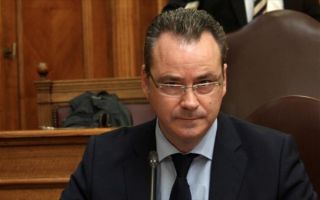
Deputy Education Minister Costas Koukodimos. Photo: Ekathimerini.

Deputy Education Minister Costas Koukodimos leaves parliament for “purely personal” reasons

Deputy Education Minister Costas Koukodimos resigned from his post this week citing personal reasons while reports indicated that his struggling businesses in Pieria, northern Greece, were the actual reason for his departure.

In a letter to Prime Minister Antonis Samaras, Koukodimos said his reasons for quitting were “purely personal.” He said he would continue to back the government and Samaras’ “huge effort to regenerate the country.”

As Koukodimos is not giving up his seat as a New Democracy MP, the coalition’s representation in the House will not be affected.

Education Minister Andreas Loverdos said the resignation was “unexpected” though he admitted he had been aware that Koukodimos had “personal issues.”

Loverdos described the departure as a “great loss,” particularly for school sports, in which the two men had “an excellent cooperation.”

Source: Ekatimerini

Athens condemns Erdogan’s Cyprus comments

erdogan

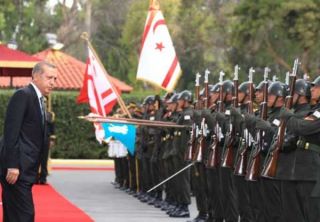
Turkish President Tayyip Erdogan inspects the honor guard during a visit to the occupied north of Cyprus this week. Photo: Ekathimerini.

Turkish President Recep Tayyip Erdogan says Greece is not doing it’s “duty”.

Athens reacted angrily to calls by Turkish President Recep Tayyip Erdogan for a “two-state” solution to the Cyprus problem and claims that Greece is not “doing its duty” as a guarantor power, saying the comments were “disappointing” and “simply confirm Ankara’s persistence in its aggressive policy” on Cyprus.

Addressing a joint news conference in the Turkish-occupied north of Nicosia with Turkish-Cypriot leader Dervis Eroglu, Erdogan opposed the prospect for a settlement based on a bicommunal, bizonal federation.

Sources said Erdogan denied receiving a letter from Cyprus President Nicos Anastasiades, which was delivered to him at his inauguration ceremony in Ankara last week by Greek Foreign Minister Evangelos Venizelos.

On arriving in the occupied north of the island, Erdogan said Turkey would “not allow Turkish Cypriots to be incorporated within the Greek-Cypriot state as a minority” and called on Greece and Britain to intensify efforts to break the deadlock, claiming that “the Cyprus problem will be solved very quickly if Greece does its duty as a guarantor power as Turkey has done.”

He added that Ankara would allow the reopening of a former Greek Orthodox seminary near Istanbul if Athens permitted the construction of traditional mosques with minarets in the capital and allowed Muslim communities in Thrace, northern Greece, to directly appoint muftis.

In a strongly worded statement issued in response, Greek Foreign Ministry spokesman Constantinos Koutras accused Erdogan of trying to “equate certain of Greece’s international obligations with Turkey’s heavy burden of responsibility regarding the Cyprus issue” and described the parallel as “historically and legally groundless and, thus, politically unacceptable.”

Source: Ekathimerini.

Perceptions of Australia in Greece

KK-oped-Melbourne%2001

Australia is now portrayed as the ‘Promised Land’ by the Greek Media. The distorted description for the land Down Under has helped create unrealistic expectations.

Since the onset of the economic crisis in Greece, articles and misinformation about the Promised Land, Australia, began to appear with an increasing frequency in the mainstream as well as the fringe Greek media, ‘over there’.

Unconfirmed and exaggerated data in relation to the wave of Greek migration to Australia began to be published and, not so significant or widespread success stories for several Greek newcomers in Australia were highlighted again and again. A repeated and distorted narration for the land Down Under helped create unrealistic expectations about the prospects and the quality of life in the Promised Land, for most of the Greeks in the far away and crisis hit country. If only they could find a way to migrate to Australia…

Yes, Australia, which is approaching more and more the individualistic way of life in the USA, by disbanding at the same time its welfare state, has a lot to offer, but,this can happen only if…

If you are a businessperson, if you have skills above average, if you exercise a profession where vacancies exist, if you already have a support network in place, for example Australian citizenship or family ties, and if you are destitute, down and out in Greece.

Australia might have more than 20 years of continuous growth, or an unemployment rate significantly lower than most crisis hit European countries, however…

The acquisition of a home, for example, a ‘fundamental’ right in Greece, where home ownership is way above the European average, is a very difficult and expensive exercise. No one tells the Greeks, over there, that houses, apartment real estate property in general are seen nowadays mostly as an investment, and that their median prices have risen a lot more than the average weekly or monthly earning of the vast majority of working Australians.

Another comparison. A good education in this country is quite expensive, and 30 per cent of students in primary and secondary education attend private schools. Furthermore, Australia’s universities charge tuition fees amounting to several thousand dollars per year, and these fees, as we all know, are expected to increase substantially even further, after the recent budget from the Coalition government. This widely available knowledge and information is unknown territory, even for the so called credible media in Greece, let alone the people. Readers are reminded that education in Greece is free for all, and the numbers of students attending expensive private schools are not all that significant.

Yes, the health system in Australia is good and the health infrastructure impressive, as described in various surveys such as The Economist and others, but … the waiting periods in various hospital emergency departments or the waiting lists for a treatment or for an operation, for non-life-threatening situations, are also impressive, for an advanced country.

Yes, Melbourne was declared for another year as the most or as one of the most liveable cities in the world, but this good fortune applies for its residents who live near the centre of the urban sprawl, and enjoy all the extras in infrastructure, facilities and options available to them. This is not the case though for outer suburban Melburnians…

Another characteristic example from everyday life in this great Babylon of the South called Melbourne, which is ‘unknown’ or forgotten by many in Greece, is the way people move around. Public transport in Melbourne and other Australian cities, at least during off peak hours, is much worse than in Athens or Thessaloniki. At the same time, many working people in Australia need to travel for two hours and more to and from their work places, something which is unheard of for many in Greece.

On the other hand of course…

We need to acknowledge that Australia is a country that is geographically and economically ideally located in the Asian 21st century.

We need to acknowledge that this country is a place where its citizens enjoy the benefits of private space, and where regularity, order and rules of engagement define the parameters of everyday life and make most people’s lives easier and on many occasions better.

However…

Life in Australia in 2014 is not as easy as implied by almost all Greek media. Media which have created for their readers, listeners and viewers a distorted image of Australia and of the prospects that an ‘ordinary’ Greek migrant might have in this land, if they manage or choose to pursue their dreams here.

source: Neos Kosmos

Greek style yoghurt conquers global markets

FAGE%20yogurt

Greek dairy manufacturer FAGE pioneered the strained type of yoghurt in the US.

Australian factories are expanding to meet growing demand in Asia, while record sales are being recorded in the US, UK and Germany.

Greek-style yoghurt sales around the world are sky-rocketing.

Yoghurt company Chobani Australia whose factories are in Dandenong South in Victoria has seen strong demand for it’s product locally and overseas and just recently started exporting the product to Singapore and Malaysia.

The company has also recently expanded in factory to meet growing demand in Asia.

“Every market is unique, but what is consistent so far is that all early indicators show strong demand for Chobani Greek Yoghurt in Asia,” Peter Meek, Managing Director, Chobani Australia said.

In the US, sales shot up from just 1 per cent in 2007 to 49 per cent this year, according to a report by Bernstein Research.

Greek consular authorities in Washington estimate total turnover in the US grew to $2.66 billion last year from just $35.4 million seven years before.

Fage, the Greek dairy manufacturers who pioneered the strained type of yoghurt in the US, now face strong competition from companies such as Chobani, General Mills and Danone. The firm expects that an investment in Johnstown, New York, will expand its capacity from 85,000 tons to 160,000 tons annually by the end of September. It has also started producing for private label distributors.

According to data compiled by Nielsen, the turnover of Greek-style yoghurt in the UK rose to 265.4 million euros last year from 150.7 million in 2011. After a two-year litigation in that country, FAGE obtained a court ruling forbidding Chobani from using the term ‘Greek yoghurt’.

According to a survey by GfK, 7.23 million German households bought Greek-style yoghurt between June 2012 and June 2013, up 37 per cent from the year-earlier period.

Source: Ekathimerini

Manchester Utd sign Falcao: a panic buy?

imagesCA8FXMOS

With £150m of attacking talent already at his disposal, few expected Manchester United manager Louis van Gaal to dip back into the transfer market for another forward.

But the Dutchman did exactly that on transfer deadline day – snapping up Monaco striker Radamel Falcao on a season-long loan deal.

The Colombian, 28, is generally considered as one of the world’s most lethal attackers, having scored 104 goals in 139 league games for Porto, Atletico Madrid and Monaco since moving to Europe in 2009.

Manchester United’s summer signings

Player Signed from Position Fee
Ander Herrera Athletic Bilbao Central midfield £29m
Luke Shaw Southampton Left-back £27m
Marcos Rojo Sporting Lisbon Left-sided defender £16m
Angel Di Maria Real Madrid Attacking midfielder £59.7m
Daley Blind Ajax Defence/midfield £13.8m
Radamel Falcao Monaco Forward Season-long loan

“Falcao totally came out of the blue. I don’t think anyone woke up on Monday and thought he was going to Manchester United,” says former Red Devils defender Phil Neville, who also served as a coach under David Moyes last season.

“It is a ‘wow’ signing.”

But where will he fit into Van Gaal’s plans? That is one of the many questions surrounding Falcao’s arrival, and United’s near-£150m summer spending spree, tackled here by ex-England international Neville.

Should Van Gaal have prioritised other areas?

Louis van Gaal

Louis van Gaal has spent about £150m on new players since taking over at Old Trafford

Phil Neville: “They need a centre-back and they need a central midfielder. But Falcao is a world class player.

“Who are the centre-backs out there that United could buy today? There are not many.

“I don’t think the quality is out there – we have seen that by some of the defending throughout Europe football. I was out every week last season scouting – we looked at Eliaquim Mangala, Thomas Vermaelen and Mats Hummels.

“Mangala – who ended up joining Manchester City – is young, raw, quick, but is the fourth choice centre-back for France. He has the attributes to go higher but for that money I thought he wasn’t up it.

“Hummels is captain of Borussia Dortmund and they said he wasn’t leaving. United tried for Vermaelen, who went to Barcelona, and ended up with Marcos Rojo who was probably second choice.”

Is Falcao a statement of intent or a panic buy?

Phil Neville: “I knew he was coming to Manchester – but not to Manchester United. I thought he would end up at Manchester City. It is a ‘wow’ signing.

“United did not need run of the mill signings. They needed world class signings and Falcao is world class. When that news came through every Manchester United fan would have been cheering.

“And the knock on effect has been incredible, with Javier Hernandez going to Real Madrid and Danny Welbeck going to Arsenal. ***ADD LINKS WHEN CONFIRMED

Javier Hernandez

Falcao’s arrival allowed Javier Hernandez to join European champions Madrid on a season-long loan

“It’s great that world class players like Falcao are coming to the Premier League. We lost Luis Suarez, we lost Gareth Bale and you just thought that maybe the pull of La Liga or the Bundesliga was greater than the Premier League.

“But I think we’ve proven now that this probably still is the greatest league in the world and it’s great that the best players are coming to England.”

Where will he fit into Van Gaal’s starting XI?

Manchester United sign Falcao

Phil Neville has paired Falcao up front alongside Robin van Persie in his Manchester United starting XI. His substitutes’ bench would be: Lindegaard, Herrera, Mata, Januzaj, Rojo, Smalling, Rafael.

Phil Neville: “It’s going to be so exciting now for Man United fans to see how they are going to fit all these Galacticos into the same team.

“Because there’s been a big turnaround of players and the nucleus of a new team being built I think it’s going to take time. Louis Van Gaal has said that.

“He needs time to integrate these new players into his team, into the club, but more importantly into the system that he’s playing.

“People are saying ‘where is Falcao going to fit in?’ Well, who cares, just fit him in and let him score goals.”

Will Van Gaal stick with three at the back?

Daley Blind joins Manchester United

Daley Blind started all seven of the Netherlands’ matches at the 2014 World Cup under Van Gaal

Phil Neville: “I think he will persevere with the three at the back system. He seems like someone who wants to teach his players his system and also show that he can win the Premier League playing three at the back.

“Daley Blind is a good signing because he can play in a number of positions and he was Van Gaal’s trusted man for the Dutch in the World Cup.

“He can play left wing-back, left centre-back and in midfield, and is someone who Van Gaal will trust to imprint his philosophy on the other players in the side.

“Three at the back is a system I need convincing on. The history of the club is four at the back but he wants to do it his own way and the players he is bringing in suggests he will stick with three at the back.”

Should Mata be fearing for his future?

Juan Mata signs for Manchester United

David Moyes signed Juan Mata for £37.1m five days before the January deadline.

Phil Neville does not think so. But, as you can see by his predicted starting XI, he believes that the Spain attacking midfielder will have to get used to the bench after the arrivals of Angel Di Maria and Radamel Falcao.

“I don’t think Mata will have worries about his future at Old Trafford. But, because United are not involved in the Champions League or League Cup, he will struggle for game time.

“There is competition for places and without being in Europe there could be problems further down the line for Van Gaal.”

What qualities will Falcao bring to the team?

Radamel Falcao

Phil Neville: “People say Falcao is not needed but the philosophy of Manchester United is to attack and score goals. Now they won’t be short of goals.”

South American football writer Tim Vickery:

“This is not a player with the virtues of versatility than Louis van Gaal prizes so highly. The Colombian is an out and out centre forward, one of the best penalty area predators in the business. Attacking the ball, front to goal, he is a force of nature. In his time in Europe he has become more confident, powerful and effective. Outside the box, though, he does not offer anything like as much. Colombia, for example, found it very hard to play him up front on his own.”

Does United’s late movement indicate a frenzied approach since Ferguson left?

Phil Neville: “There is a recruitment process in place. United made a couple of signings that if David Moyes was still in charge then he would have made them. There are other signings which weren’t on our radar, who we didn’t explore or fancy. Louis van Gaal is picking players to fit his system and philosophy.

“Rojo is one and Blind is another who I think will be utilised more in midfield than on the left hand side. Di Maria has been bought for a certain job and time will tell where Falcao fits in.

“The other signings, I think, were already on their radar before Van Gaal came in. Luke Shaw was a given – he will probably be the best left-back in England if not Europe. Ander Herrera was watched 20 or 30 times last year and we were told he would be next main Spanish midfielder. They are young signings and fit into philosophy of the club so I don’t think that would have changed.”

Marouane Fellaini

Manchester United paid £27.5m for Marouane Fellaini on last summer’s deadline day

Is United’s near-£150m spree a measured response to last season’s failure?

Phil Neville: “At the start of the summer United vice-chairman Ed Woodward said Manchester United could still attract the world’s best players – and they have done that.

“Sometimes you have got to forget the price tags. There was money there to spend and when a club like Manchester United goes in for a player they have to pay big money. It’s a given.

“But it is not a gamble signing Angel Di Maria or Falcao.”

source: bbc.com