Monthly Archives: August 2014

Mihalis Hatzigiannis detained over car theft report

mihalis%20hatzigiannis%2001

The singer’s car troubles have gotten a lot worse.

The pop singer’ and his accountant detained over falsifying a police report.

Pop singer Mihalis Hatzigiannis and his accountant were detained on charges of submitting a false statement after the latter allegedly reported to police that the license plates of the singer’s Ferrari had been stolen.

According to the accountant’s statement, which was submitted to police earlier this week, the car had been parked in the southern suburb of Glyfada when unknown thieves removed the plates. But a police probe revealed that the car has been in a showroom, with its license plates removed, since 2009.

Hatzigiannis is alleged to have acquired the vehicle in 2008 but to have had payments pending.

Both the singer and the accountant were released pending further investigation.

Source: Ekathimerini

Scholarship open for research in Greece

AAIA%20scholarship%2001

The scholarship includes a return airfare to Greece and $4000.

Applications are now open for the biennial scholarship offered by the Australian National University (ANU) Canberra Friends of the Australian Archaeological Institute at Athens (AAIA) and supported by the Hellenic Club of Canberra.

The scholarship is designed to assist a research student or scholar, or an artist, whose research requires a period in Greece.

ANU is one of 10 universities who are members of the AAIA, which aims to promote the study of ancient, mediaeval and modern Greece in both Greece and
Australia, and is the focal point for Australian research and excavations in Greece.

The Friends groups, which are all around Australia, support the AAIA and offer scholarships for students to visit Greece to pursue either their research projects or take part in the AAIA’s excavations.

With generous support from the Hellenic Club of Canberra, the Canberra Friends of the AAIA award a scholarship every 2 years, for a student or other scholar from the ACT to spend between two and 12 months working on a research project in Greece.

The generous scholarship offers a return airfare to Greece and a $4,000 contribution to expenses while conducting research in Greece. The scholarship must be taken up in 2015.

For further information about the scholarship please contact Elizabeth.Minchin@anu.edu.au or tracyhennessey@hotmail.com

source: Neos Kosmos

Private Bill – In Love and War

private_bill

Barrie Cassidy with wife Heather and daughter Caitlin in Mykonos.

ABC Insiders host Barrie Cassidy visited Crete to retrace his father’s capture in WWII following the Battle of Crete

In 1941, two years into World War II, Crete formed the final Greek stumbling block for the Axis powers, as they looked to take control of the Mediterranean.

A sensational battle ensued on the island, with an unsuccessful Commonwealth-led defensive trying to protect it from falling into Nazi hands. Reports claim that Adolf Hitler blamed, in part, the fall of his empire to the unexpected heavy losses it faced in Crete. Australia formed part of that Commonwealth defensive, and ABC political commentator and host Barrie Cassidy is writing a book detailing the life of his father, Australian Private William (Bill) Cassidy, who served in the Battle of Crete. Private Cassidy was captured (in a sense), following its eventual German capture, and transported to Stalag XVIII-A prisoner-of-war camp in Wolfsberg, southern Austria, via Thessaloniki, where he served for four years.

The book, titled Private Bill – In Love and War, is set to be released in late October, and details his father’s journey, from his departure in Australia through to Europe’s liberation in 1945.

Despite the heroics of Commonwealth soldiers, the eventual fall of Crete to the Germans was one of epic proportions, brought about by never before seen measures, including large scale parachute invasions by the fallschirmjäger (‘parachute hunters’).

Barrie’s journey began in Askifou, a small village in Sfakia, southern Crete, where he visited a museum littered with artefacts from the war. The museum is owned by local Andreas Hatzidakis, whose father George witnessed the effects of the war, and at age 14 set about assembling his collection in its entirety, at the defeat of Nazi Germany.

Andreas, who maintains his museum without the help of Greek authorities, and relies on the generosity and assistance of passers-by, was the starting point for Barrie, his wife Heather and their daughter Caitlin, as they set out to recollect his father’s steps.

“In Crete it was essentially filling in the gaps and seeing for myself first hand the geography of the battlefields and particularly outside of Herakleion, just beyond the airport. The Allies were camped there to protect the airport and there are two cone shaped hills and dad had described these hills and told me exactly where he was when the parachute invasion happened.

“It’s quite remarkable to get there and say ‘wow, there they are, exactly as described’. It’s an experience that I wanted to see for myself so I could then describe it accurately in the book.”

The Insiders host says that “the Battle of Crete is one of the most under-appreciated battles of World War II”. Notably because of large scale “ferocious civilian resistance” against the Axis invaders, the fallschirmjäger, and because of remarkably unprecedented circumstances that saw Allied and Axis
personnel share a Red Cross hospital in Adele, eight kilometres east of Rethymno.

“To this day I’ve spoken to a lot of war historians and none of them have been able to identify another example where a hospital was genuinely shared by the two competing sides.

“It came about almost by accident. The Allied troops stumbled on this German Red Cross centre and they were talking about the battle in the valley beyond Rethymno, and it just made sense to them that they shared this Red Cross facility, and they did.”

“Depending on where you were in the queue, whether you were German or Australian or English or whatever, you might get a German surgeon or an Australian surgeon or an English surgeon.”

His father was taken to the hospital after being wounded in two places by shrapnel and a bullet, and shared a tent with an Englishman and two German soldiers. There he found himself engaged in extensive dialogue with the enemy about Adolf Hitler’s objectives.

“He [his father] asked one of the Germans whether he ever believed that they could successfully invade England, and the German said to him ‘if that’s the Führer’s will, then we’ll do it’. He took away from that that this guy was a fanatic.”

His father had told him about the hospital, but Barrie was sceptical due to the circumstances that his father found himself in.

“Because dad’s recollection was slightly vague I was never satisfied that he didn’t in some way become confused – he was wounded after all – and that he might have been confused by who was really running the hospital.”

“But I’ve since been able to establish that. It certainly existed and it existed in those circumstances.”

Barrie pointed out that the events leading to his father’s capture were unique, because it wasn’t so much a capture as a transfer – from hospital patient to war prisoner.

“Most people’s vision of how somebody becomes a PoW is that they’re captured in the field. Dad’s circumstances were exceptional again because after the
Allies evacuated the island, a group of Germans walked into the hospital one day and said ‘your mates have left the island, you’re now prisoners of war’.”
Remnants of the hospital still remain in Adele. A lone white building with a Red Cross sign can be located, which locals believe formed the basis of the hospital.

“To walk away from Crete with that confirmation, knowing 100 per cent that that’s the way it operated, and to find the location, was one of the most satisfying things that I did.”

His father’s treacherous seven-day journey to Austria following his capture was one of survival of the fittest. His passage led him through former Yugoslavia on a “cattle train”, with very limited food and water. Barrie puts his father’s survival down to the fact that he had been nursed back to health in the hospital beforehand, and had recovered from his injuries. He spent the next four years in various roles in Austria as a PoW until Europe’s liberation in 1945.

Barrie explains that the title of the book Private Bill with its subheading In Love and War, is more than just a tale of the world’s greatest armed conflict. His father was both a private in the army, and also a very private person, who did not openly discuss his experiences with family and friends. The subheading, he details, was due to a life changing event, sparked 50 years after the Battle of Crete. Barrie’s mother received a letter from a lady who wrote to her saying
‘I understand you’re my mother and I want to meet you’. Consequently his father had to confront the realities of war again, and the fact that his wife had had an affair and adopted out a child.

“This created all sorts of tensions within the family, and so the book picks up on that theme. To the extent that, the impact of war never leaves you. Here’s my father in his 80s having to deal with the impact of the war and then partly as a result of that [the affair], but also because of what he had experienced through the war, in his 80s he suffers post-traumatic stress disorder.

“So it’s a lifetime story, it’s not just a war story, and that’s what picks up the subheading In Love and War.”

source: Neos Kosmos

Greece grapples with grey tourism

Greek%20Tourism01

Turning tide: after six years of recession Greece is attracting holidaymakers at record-breaking rates. Photo: Mykonos/visitgreece.com

Unlicensed owners fined over holiday rentals as new internet platforms raise issues for the industry.

While Greece basks in what will be its most profitable summer since before the economic crisis hit, Tourism Minister Olga Kefalogiannis has warned property owners who rent out unlicensed holiday accommodation that their tax-free days are numbered.

In July the Confederation of Greek Tourism Enterprises (SETE) revised its projections for 2014 – from 18.5 million to 19 million arrivals (excluding 2.2 million on cruise ships). Airline bookings are up 25 per cent, with island airports reporting major increases in traffic.

As the season reaches its peak this month, Kefalogiannis says her ministry is ramping up efforts to rein in rogue landlords, and that a new wave of inspections – coupled with clearing the backlog of violations – has already raised over €2m.

Owners who make properties available for rent without a licence face fines of up to €50,000.

“We have accelerated the process of collecting fines…” said the minister, but she added inspections alone were not enough.

“The most important thing is to cultivate a good work ethic among everyone involved in tourism. We must finally reach a stage of maturity.”

Meanwhile the Greek Hoteliers Association estimates that about 45,000 unlicensed tourist residences in Greece (made up of villas, apartments and rooms) are on average 23 per cent cheaper than similar licensed accommodation, and will earn around €1 billion in 2014; none of which will be taxed.

Speaking to Neos Kosmos, Roslyn Geronikolas, owner of three upmarket (and licensed) hotels in Rhodes and Kastelorizo, said that the letting of unlicensed accommodation undermines not just the Greek state, but the industry and its customers.

“Licensed hotels are continually checked by the authorities to ensure they comply with health and safety regulations, where it’s doubtful that non-licensed establishments comply,” said the Perth-born Geronikolas.

While home-owners renting out rooms away from the prying eyes of regulation is a global phenomenon, Geronikolas says it’s particularly noticeable on Greek islands like Kastellorizo. “They don’t declare, and of course they don’t pay taxes,” she said.

Fellow Aussie operator Nick Geronimos, owner of Athens Studios and Backpackers in Makrygianni – a stone’s throw from the Acropolis – says unlicensed accommodation in Greece has had a new lease on life since websites like Airbnb and WIMDU appeared, which allow independent travellers to rent private homes and rooms direct.

“The issue isn’t only in Greece, it’s a worldwide problem,” says Geronimos.”

“These websites have created a shadow hotel industry, leading to a loss of tax revenue to the government and a diminution of standards.”

The Athens hotelier says issues around service, cleanliness and security in the unlicensed sector should be of concern to everyone, and that he applauds the Greek government’s efforts to clean up the industry.

“All legitimate operators in Greece are subject to regular checks to ensure health and safety of clients and staff, and we have to compete with people who don’t pay tax, and who in many cases, have a very low quality product.”

Most concerning of all, he says, are the new generation of internet services such as the Couchsurfin’ website – a combination of accommodation exchange and social networking portal. “Using this service is at a high personal risk,” warns Geronimos.

“Travel like a local, stay in someone’s home and experience the world in a way money can’t buy”, promises the sales pitch of US-owned Couchsurfing company, but with a number of incidents involving criminal activity, the unregulated status of accommodation offered might well give you an experience you could do without.

With the Greek government encouraging the creation of a ‘mature’ tourism industry, wrestling with virtually unregulatable effects of globalised peer-to-peer platforms is a trickier proposition altogether.

source: Neos Kosmos

Malaysia Airlines Flight 370 Search: Phone Call Offers New Clue

BN-EH404_malays_G_20140828003018

Australian Deputy Prime Minister Warren Truss, right, and Malaysian Transport Minister Liow Tiong Lai sign a Memorandum of Understanding at Parliament House in Canberra, Australia, on Aug. 28. European Pressphoto Agency

CANBERRA, Australia—Australian authorities believe Malaysia Airlines Flight 370 turned south earlier than previously thought based on an attempted phone call to the plane after it vanished, providing a new clue to the jetliner’s possible location in the southern Indian Ocean.

Australia’s Deputy Prime Minister Warren Truss said the assessment was based on fresh analysis that included being able to trace the satellite phone call by Malaysia Airlines ground staff, which wasn’t successful in contacting the plane after it disappeared on March 8.

“The detailed research that is being done now has been able to identify, or trace, that phone call and help to position the aircraft and the direction it was traveling,” Mr. Truss said Thursday.

Australia recently selected the Dutch oil-and-gas consulting firm Fugro to lead a rebooted search for Flight 370 in the Indian Ocean. The search effort in an area spanning 20,000 square miles could take up to a year, following its restart next month.

Mr. Truss said the new analysis won’t lead to a shift in the search area. “But some of the information we now have suggests that areas a little further to the south within the search area may be of particular interest,” he said in Canberra after meeting with Malaysian Transport Minister Liow Tiong Lai and Chinese Transport Minister He Jianzhong.

Investigators have continued to adjust their assumptions about what happened to Flight 370, which disappeared en route to Beijing from Kuala Lumpur with 239 people on board, mostly Chinese citizens. Central to the conclusion that the plane crashed somewhere in the Indian Ocean after running out of fuel are a series of ping transmissions between Flight 370 and an Inmarsat  PLC telecommunications satellite.

However, the investigation remains fluid and relies more on educated guesswork than physical data.

In late June, Australian authorities said that they believed someone onboard Flight 370 likely switched on the cockpit’s autopilot system deliberately, putting the plane on a direct path to the southern Indian Ocean. They also said the end of Flight 370 was best explained by all passengers and crew becoming unresponsive, possibly after being deprived of oxygen, based on the plane’s steady altitude, its loss of radio communications, and other factors.

Searchers have so far surveyed more than 87,000 square kilometers of undersea topography ahead of a renewed hunt for the plane expected to cost more than 52 Australian million dollars (US$49 million). The search will straddle an arc drawn from a final ping transmission between Flight 370 and the Inmarsat telecommunications satellite.

Mr. Truss said the survey work had revealed a dramatic and deeper-than-expected undersea landscape containing dormant volcanoes. In places, ocean depths plunged quickly from only a few thousand feet to more than 21,000 feet, compounding the difficulties for Fugro when it deploys its towed sonar devices.

On Thursday, the Australian and Malaysian governments signed an agreement on sharing costs for the coming search effort, while China’s government said it would soon send technical experts.

Investigators have completed the first stage of the probe into what caused Flight 370 to deviate from its original flight path, which centered on collecting factual information and records, and interviewing relevant individuals and agencies. They have now moved on to analyzing this information.

Still, Mr. Liow said the mystery of Flight 370 wouldn’t be solved until the wreckage of the aircraft had been located and the flight data recorders, known as black boxes, had been recovered from the seabed.

source: wsj.com

New markets for Greek tourism

GR-alternative%20tourism_Livadas_China_1

China is an increasingly important tourism market for Greece.

Visitors from Asian and South American countries on the rise

Thanks to its improved image, Greece seems to be attracting an increasing number of visitors from emerging economies. Furthermore, tourism industry officials say that Brazilians, Koreans, Filipinos, Indians and Mexicans, among others, often spend more money than those from the so-called ‘traditional’ origin countries.

Santorini is a case in point. Mayor Anastasios-Nikolaos Zorzos says the island has for years been a magnet for visitors from Asia throughout the year. The island expects about 20,000 Asian tourists this winter. Apart from the Chinese, Koreans also represent a growing clientele, reflected in the fact that a Korean film was partly shot on Santorini between July 22 and 25. Another film, Beijing Love Story, also shot on Santorini, opened at movie theatres in China on
February this year.

Athens is also a growing pole of attraction for visitors from emerging markets. Brazilians and Mexicans stop in the Greek capital while on cruise trips and stay up to three nights. They spend considerable sums on food and drinks in the hotels as well as on souvenirs. Brazilians and Mexicans also show a particular preference for trips that include the ‘classic tour’ of Mycenae, Epidaurus and Olympia. Most Latin American tourists are aged 50-plus.
Indians usually travel with family as part of groups. They are demanding customers and prefer their own cuisine.

A group of 29 Filipino travel agents were in Athens last week to be briefed and possibly to design tours for the Greek destination.

Attracting visitors from Asia is seen as the biggest challenge for destinations around the world, including Greece. According to a study titled ‘Winning the
Next Billion Asian Travellers – Starting with China’, carried out by Tripadvisor and Boston Consulting, more than 50 per cent of the increase in global tourism traffic up to 2030 will come from the Asia-Pacific region. A billion people are projected to have annual earnings of US$15,000 or more by then and the vast majority will come from China, India, Indonesia, Japan and South Korea.

The Chinese are projected to make 1.7 billion trips in the intervening period and their spending is seen shooting up to US$1.8 trillion. They are distinct in that they prefer to travel in February, May and October, which are low-season months for many Western destinations.

Source: ekathimerini

Three Aussie companies Thessaloniki bound

moke

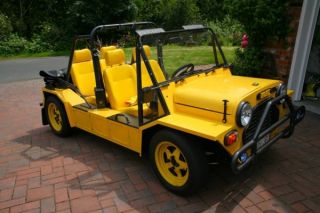
The only new company to go is Moke, who are bringing a car for the fair.

A migration lawyer, a novelty car company and a freight company will join HACCI at this year’s Thessaloniki Trade Fair.

In a much smaller contingent this year, the Hellenic Chamber of Commerce and Industry (HACCI) will be joined by three Australian companies to hold a presence at the Thessaloniki International Trade Festival.

Two companies are back on board – ITM Freight and migration lawyers Stojanovic and Associates – but the economic atmosphere of Greece and the slow political process in trying to fix it has scared off many companies.

After organising the first ever Australian contingent last year, HACCI has seen a steep drop in interest, with only two of the nine companies last year jumping on board again.

Director of trade for HACCI, George Iliopoulos, says the drop is a direct reaction to the economic situation of Greece and budgetary constraints.

“I think people are waiting,” Mr Iliopoulos says.

“There are still big opportunities in Greece, in real estate, in business, however, people from the diaspora are still waiting to see thing stabilised.

“What they’re saying is ‘I’ll give it another year and see how things pan out and then we’ll be ready’.”

A company that was promising to join the Australian contingent from last year was shoemakers UGG, but once again they’ve declined after not allocating enough funds to the fair.

“We spoke to UGG, obviously what they do these companies, they have budget allocated for various events and Greece wasn’t in it for 2014,” Mr Iliopoulos says.

“Their aim is for 2015.”

Mr Iliopoulos says UGG is very keen to explore options in Greece, after they’ve seen demand grow in the country.

A new company launching its international interest via the Thessaloniki International Trade Fair is Mini Moke, the yellow two-seater open air cars commonly
found in seaside tourist locations.

Greek Australian Jim Markos holds the global rights for the cars (now manufactured in China) and hopes to bring the car to Europe.

“He’s sent a vehicle to Thessaloniki, so it’s going to be on display there,” Mr Iliopoulos says.

“Already people there are waiting to meet him, from car rental companies to hotels, and there will be a meeting with the minister of tourism, they want to talk to him.”

In his trip to the fair, Mr Iliopoulos will be meeting with a number of government figures to increase trade ties.

“I’m catching up with the general secretary of the Ministry of Tourism, I’m going to meet the new Australian ambassador in Greece who’s just taken over
Jenny Bloomfield’s position, John Griffin, and I’ll be meeting the minister for Thessaloniki and Macedonia and Thrace,” he says.

Although they can’t talk about policy issues like working visas, HACCI are keen to pose an increase in trade options for the two countries.

“Trade figures coming out of Greece are very low when you consider there’s 600,000 Greek Australians,” Mr Iliopoulos says.

“We need to improve that.”

The Thessaloniki International Fair is the only trade and consumer exhibition in Greece and attracts more than 800 exhibitors. It will take place over nine days from September 6 to September 14 in Thessaloniki.

The fair also coincides with the celebration of the 30 year anniversary between the sister cities, Melbourne and Thessaloniki.

source: Neos Kosmos

QANTAS suffers a record $2.84bn loss

615413-6015c2c2-2e41-11e4-9f4a-be5853a7239e

IT’S the massive loss everyone was expecting. Qantas has just announced a full year after tax loss of $2.84 billion.

The loss is in the wake of the airline’s profit-draining battle with rival Virgin and another poor performance from its international division. The airline posted a bottom line net loss of $2.84 billion for the year to June 30, compared to a $1 million profit a year ago.

Excluding the writedown and other one-off costs, Qantas made an underlying pre-tax loss of $646 million, compared to a $186 million profit a year ago.

Qantas is attributing its massive loss to its $2 billion ‘Transformation’ program as well as a $2.6 billion writedown on the value of its fleet.

The Qantas ‘Transformation’ program made national headlines when chief executive Alan Joyce announced in February a restructure which included cutting 5000 jobs from its workforce.

Meanwhile, the airline has ruled out selling or floating its profitable frequent flyer business, Qantas Loyalty in order to fund its turnaround.

“After careful consideration, our judgment was that Qantas Loyalty continued to offer major profitable growth opportunities, and there was insufficient justification for a partial sale,” Mr Joyce said.

 The airline’s international division remained the biggest drag on the company, suffering an underlying loss of $497 million for the year, more than double the $246 million loss it posted a year ago.Qantas attributed the result to increased competition from other carriers and record fuel costs.

Its discount carrier, Jetstar, made a $116 million loss after losses from its Asian operations offset profits from its Australian division.

Qantas domestic saw its underlying earnings slump from $365 million to $30 million as a result of a bruising capacity war with rival Virgin.

The airline has been increasing capacity in an effort to maintain its 65 per cent market share against a challenge from Virgin.

Fuel costs across the company’s operations climbed by more than $250 million to $4.5 billion, and Qantas expects them to remain around the same level during the first half of 2014/15.

Qantas ruled out any new Jetstar ventures in Asia while it tries to get itself back to profitability, but Mr Joyce was confident of the future of its operations in Singapore and Japan.

“In the world’s fastest growing aviation market, this is a major long-term opportunity that we continue to believe in,” he said. “No new Jetstar ventures will be established while the group is focused on transformation, but we know that substantial value exists across the Jetstar airlines and we will realise that value over time.” In some positive news, Qantas will not be making job cuts beyond the 5,000 already announced as part of its $2 billion three-year restructuring plan.

Mr Joyce said: “I foreshadowed today’s result at our half-year announcement in February, declaring it was unacceptable. There’s no doubt that today’s numbers are confronting. But they represent the year that is past, and we have now come through the worst.

“With our accelerated Qantas Transformation program, we are already emerging as a leaner, more focused, and sustainable Qantas Group. Our work is on track and we will see accelerating benefits in the coming year.”

Ambitiously, Qantas expects to return to profit by the end of the year. The company said it plans to do this based on $300 million worth of savings from its ‘Transformation’ program to be realised in the six months to December 2014. It’s also expecting the market will stabilise as growth capacity slides.

It’s also flagged that fuel costs should remain the same as financial year 2014 and expects there will be savings from the repeal of the carbon tax and reduced depreciation costs.

Tim Harcourt, J.W. Nevile Fellow in economics at the UNSW Business School, described the result as “pretty grim in some areas”, but said Qantas could potentially turn its fortunes around by working on its innovation, quality and service.

“There’s still a lot of brand equity in Qantas,” Mr Harcourt told news.com.au. “They can turn it around but they’ve been hitting the perfect storm of low-cost Asian carriers such as Singapore Airlines and Etihad.

“Qantas has the unusual situation with the Sale Act where they have to be free market but are expected to face competition with essentially the governments of other countries with virtually unlimited funds.”

Mr Harcourt said job cuts were not the only way to fix Qantas. “You should never declare war on your own workforce. I think generally Qantas employees want to look after their company, they love it. I would use the goodwill of the staff.”

At a press conference this morning Mr Joyce thanked the employees of Qantas. He said 2500 of the 5000 redundancies had already taken place, and predicted 4000 would be complete by the end of 2015.

“I want to thank the employees of Qantas,” he said. “The transformation of our business is a difficult process and they have responded with courage. We still have more to do, but we have gone through the worst and we have a clear view of a brighter future.”

Asked whether people would be calling for his head following the results, Mr Joyce said: “There are always people after my head, I don’t think that’s changed. From our perspective we are as a management team focused on turning this airline around, coping with the environmental challenges we have and getting the airline back into profitability.”

 source: news.com.au

Champion’s League: Στους ομίλους Άρσεναλ και Μπιλμπάο

alexis

Η Νάπολι προηγήθηκε στο “Σαν Μαμές” αλλά η Μπιλμπάο νίκησε 3-1 και προκρίθηκε στους ομίλους του CL, όπως και οι Άρσεναλ, Λεβερκούζεν και Μάλμε.

ε γκολ του Αλέξις Σάντσες η Άρσεναλ νίκησε 1-0 την Μπεσίκτας και προκρίθηκε στους ομίλους του Champions League, ενώ την ακολούθησε και η Μπιλμπάο, αν και βρέθηκε να χάνει στο “Σαν Μαμές” από τη Νάπολι και το γκολ του Χάμσικ.

Η ομάδα του Ερνέστο Βαλβέρδε έκανε ανατροπή και επικράτησε με 3-1, έχοντας πάντως και τύχη, καθώς το δεύτερο γκολ προήλθε από τραγικό λάθος της ιταλικής άμυνας, ενώ το 3ο δεν έπρεπε να μετρήσει για οφ-σάιντ, όχι του σκόρερ Ιμπάι Γκόμεθ, αλλά του Αντούριθ που μέχρι και την τελευταία στιγμή κινούνταν κανονικά προς την μπάλα!

Η Λεβερκούζεν απέκλεισε την Κοπεγχάγη με συνολικό σκορ 7-2, καθώς μετά το 3-2 στην Δανία νίκησε με 4-0 στην Γερμανία.

Η γκολάρα του Έρικσον

Η Μάλμε για πρώτη φορά στην ιστορία της προκρίθηκε στους ομίλους, νικώντας με 3-0 την Ζάλτσμπουργκ. Δύο γκολ πέτυχε ο Μάρκους Ρόσενμπεργκ, αλλά αυτό του Έρικσον ενδιάμεσα ήταν ΓΚΟΛΑΡΑ (δείτε videos στο τέλος του κειμένου).

Οι συνθέσεις

ΜΠΙΛΜΠΑΟ: Ιραϊθόθ, Ντε Μάρκος, Γουρπέγκι, Λαπόρτ, Μπαλενθιάγα, Ιτουράσπε, Μίκελ Ρίκο, Μπενιάτ (58′ Ιμπάι Γκόμεθ), Σουσαέτα (72′ Ουνάι Λόπεθ), Μουνιαΐν (85′ Σαν Χοσέ), Αντούριθ.

ΝΑΠΟΛΙ: Ραφαέλ, Μάτζο, Ραούλ Αλμπιόλ, Κουλιμπαλί, Γκουλάμ (56′ Μπρίτος), Ζορζίνιο, Γκαργκάνο, Χάμσικ (70′ Ινσίνιε), Καγιεχόν, Μέρτενς (77′ Ντουβάν Σαπάτα), Ιγκουαΐν.

ΑΡΣΕΝΑΛ: Στσέσνι, Ντεμπισί, Μέρτεζακερ, Κοσιελνί, Μονρεάλ, Φλαμινί, Καθόρλα, Γουίλσιρ, Όξλεϊντ-Τσάμπερλεϊν, Μεσούτ Εζίλ (76′ Τσέιμπερς), Αλέξις Σάντσες.

ΜΠΕΣΙΚΤΑΣ: Τολγκά Ζενγίν, Ισμαΐλ Κοϊμπασί, Φράνκο, Ερσάν Γκιουλιούμ, Ραμόν Μότα, Χάτσινσον, Βελί Καβλάκ (77′ Νετσίπ Ουισάλ), Ογκουζχάν Εζιακούπ, Μουσταφά Πεκτεμέκ (87′ Τσενκ Τοσούν), Ολτσάι Σαχάν (63′ Γκιοκχάν Τερέ), Ντεμπά Μπα.

*κόκκινη 75′ Ντεμπουσί

ΛΕΒΕΡΚΟΥΖΕΝ: Λένο, Γέβντα, Σπάχιτς, Εμέρ Τοπράκ (54′ Κυριάκος Παπαδόπουλος), Μπένις, Γκονσάλο Κάστρο, Ρόλφες (65′ Ράιναρτς), Μπελαραμπί, Σον Χέουνγκ-Μιν, Χακάν Τσαλχάνογλου, Κίσλινγκ (73′ Ντρμιτς).

ΚΟΠΕΓΧΑΓΗ: Άντερσεν, Χέγκλι, Άντονσον, Ματίας Γιόργκενσεν, Μπένγκτσον, Ντιλέινι, Κλαουντεμίρ, Αμανκούα (75′ Πουριέ), Τουτού (58′ Γκίσλασον), Καντρί, Κορνέλιους (46′ Ντε Ρίντερ).

ΜΑΛΜΕ: Όλσεν, Τίνερχολμ, Γιόχανσον, Χέλαντερ, Κονατέ, Αντού, Χάλστι, Τέλιν (72′ Μεχμέτι), Φόρσμπεργκ, Έρικσεν (73′ Κρουν), Ρόσενμπεργκ.

ΖΑΛΤΣΜΠΟΥΡΓΚ: Γκουλάσι, Σβέγκλερ, Αντρέ Ραμάλιο, Ίλσανκερ, Χίντερεγκερ, Λάιτγκεμπ (78′ Λάτσαρο), Ναμπί Κεϊτά (46′ Άνκερσεν), Καμπλ, Μάσιμο Μπρούνο (66′ Ζάμπιτσερ), Χόναταν Σοριάνο, Αλάν.

ΛΟΥΝΤΟΓΚΟΡΕΤΣ: Στογιάνοφ, Ζούνιορ Καϊσάρα, Τερζίεφ, Μότσι, Μίνεφ, Ντιάκοφ, Φάμπιο Εσπίνιο, Μίσιτζαν (85′ Βάντερσον), Αλεκσάντροφ (77′ Ντάνι Αμπάλο), Μαρσελίνιο, Μπέζιακ (77′ Γιουνές).

ΣΤΕΑΟΥΑ: Αρλάουσκις, Ράπα, Σουκάλα, Βαρέλα, Λατοβλέβιτσι (67′ Παρβουλέσκου), Πρεπέλιτσα, Μπρίφελντ, Αντριάν Πόπα, Τανάσε (5′ Στάντσιου), Σανμαρτεάν (83′ Φιλίπ), Κεσέρου.

Τα αποτελέσματα των ρεβάνς των play-offs:

Τρίτη

Ζενίτ – Σταντάρ Λιέγης 3-0 (30′ Ροντόν, 54′ πέν. και 58′ Χουλκ) [1-0]

ΑΠΟΕΛ – Όλμποργκ 4-0 (29′ Βινίσιους, 43′ Ντε Βινσέντι, 64′ Αλωνεύτης, 75′ Σέρινταν) [1-1]

ΜΠΑΤΕ – Σλόβαν Μπρατισλάβα 3-0 (41′ Γκόρντεϊτσουκ, 84′ Κρίβετς, 85′ Ροντιόνοβ) [1-1]

Πόρτο – Λιλ 2-0 (49′ Μπραχιμί, 69′ Τζάκσον Μαρτίνες) [1-0]

Σέλτικ – Μάριμπορ 0-1 (75′ Μάρκος Ταβάρες) [1-1]


Τετάρτη

Μάλμε – Ζάλτσμπουργκ 3-0 (11′ πέν. και 84′ Ρόσενμπεργκ, 19′ Έρικσον) [1-2]

Λουντογκόρετς – Στεάουα Βουκουρεστίου 1-0 (90′ Βάντερσον) [0-1] (ΠΑΡΑΤΑΣΗ ΣΕ ΕΞΕΛΙΞΗ)

Άρσεναλ – Μπεσίκτας 1-0 (45’+1 Αλέξις Σάντσες) [0-0]

Λεβερκούζεν – Κοπεγχάγη 4-0 (2′ Σον Χέουνγκ-Μιν, 7′ Τσαλχάνογλου, 31′ πέν. και 66′ Κίσλινγκ) [3-2]

Μπιλμπάο – Νάπολι 3-1 (61′ και 66′ Αντούριθ, 74′ Ιμπάι Γκόμεθ / 47′ Χάμσικ) [1-1]

Πηγή:sport24.gr

Το μεγάλο όνειρο του ΟΦΗ με Ντελ Πιέρο

Del+Piero

Μία είδηση που αν επαληθευτεί θα προκαλέσει μεγάλη αίσθηση αναπαράγει ο Τύπος της Ουγγαρίας, καθώς ο Τζενάρο Γκατούζο φέρεται να έχει επικοινωνήσει με τον Ντελ Πιέρο προκειμένου να συνεχίσει την καριέρα του στον ΟΦΗ.

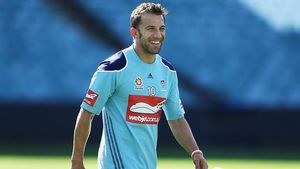
Ο Αλεσάντρο Ντελ Πιέρο στα 39 του και μετά την πετυχημένη παρουσία του στη Σίδνεϊ FC δεν σκοπεύει να αποσυρθεί από την ενεργό δράση.

Ο άλλοτε σταρ της Γιουβέντους βρίσκεται σε προχωρημένες επαφές με την ουγγρική Χόνβεντ, η οποία αναζητεί χορηγούς για να καλυφθεί το ακριβό συμβόλαιο του, δίχως όμως ο Ντελ Πιέρο να έχει ενδώσει.Την ίδια στιγμή υπάρχει η εναλλακτική λύση της Ντιναμό Δελχί με τον “Μεγαλέξανδρο” του ιταλικού ποδοσφαίρου να μην έχει πεισθεί.

Οι Ούγγροι υποστηρίζουν πως στο παιχνίδι της απόκτησης του έχει μπει ο ΟΦΗ, με τον προσωπικό του φίλο Τζενάρο Γκατούζο να έχει αναλάβει το “ψηστήρι”.Ο Γκατούζο συνδέεται με φιλία τόσο με τον Αλεσάντρο Ντελ Πιέρο, όσο και με τον αδερφό του Στέφανο που εκτελεί χρέη μάνατζερ.

Πηγή:contra.gr