Monthly Archives: April 2015

If Greece falls, no one wants their prints on the murder weapon

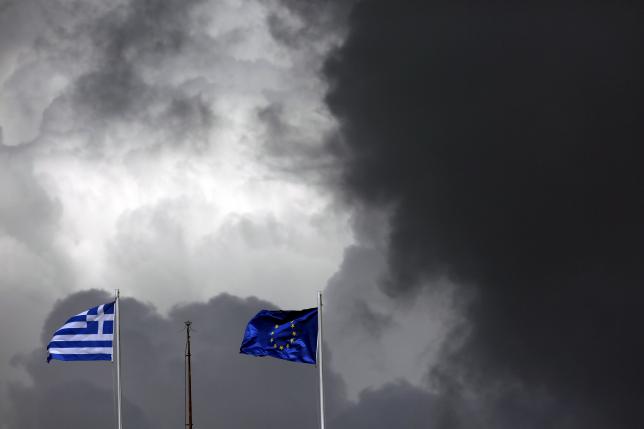
A European Union flag and a Greek national flag flutter atop a building in central Athens

«We’re going bust.» «No, you’re not.» «You’re strangling us.» «No we’re not.» «You owe us for World War Two.» «We gave already.”

The game of chicken between Greece and its international creditors is turning into a vicious blame game as Athens lurches closer to bankruptcy with no cash-for-reform agreement in sight.

Europe’s political leaders and central bankers and Greek politicians agree on only one thing: if Greece goes down, they don’t want their fingerprints on the murder weapon.

If Athens runs out of cash and defaults in the coming weeks, as seems increasingly possible, no one wants to be accused of having pushed it over the edge or failed to try to save it.

Greece’s leftist government has already identified its culprit of choice – Germany, Europe’s main paymaster, accused of having inflicted toxic austerity policies on Greeks, causing a «humanitarian crisis».

Euro zone governments are preparing the ground to blame the novice government of Prime Minister Alexis Tsipras for having blustered, obstructed, failed to meet commitments and evaded hard choices while Athens burned.

“We are doing everything we can to save Greece from itself, but in the end, it’s up to them,» is the message pouring out of Berlin, Brussels and IMF headquarters in Washington.

Tsipras and outspoken Finance Minister Yanis Varoufakis tried at first to mount a coalition against Berlin, touring France, Italy, Britain, Brussels and media studios after their election. They found no allies outside the media.

Tsipras revived demands for reparations for the Nazi German occupation of Greece in 1941-44, which his government put at 279 billion euros ($303.5 billion) – more than its 240 billion euro bailout from the euro zone and the International Monetary Fund.

Berlin responded that it had already compensated victims and a 1990 agreement with the four victorious World War Two powers on German unification had put an end to war claims.

German Chancellor Angela Merkel has been careful to express goodwill and tried to build a relationship of trust with Tsipras while insisting Greece must meet its lenders’ reform conditions, which include fiercely resisted pension cuts and labor reforms.

“Everything must be done to prevent» Greece running out of money, she said after talks with Tsipras last week. «On the German side, we are prepared to provide all the support that is asked of us. But of course reforms must be done,» she added.

Investors briefly hoped her pledge might be a turning point, similar to European Central Bank President Mario Draghi’s 2012 vow to do «whatever it takes to preserve the euro».

But Merkel’s comments could also be interpreted as an exercise in pre-emptive blame avoidance. Unlike Draghi, she did not say who should do everything to stop Greece going bust.

Her finance minister, Wolfgang Schaeuble, is openly sceptical of whether Athens can avoid crashing out of the euro zone.

Angry euro zone finance ministers made clear they were far from a deal with Greece, rejected Varoufakis’ plea for early cash in return for partial reform and told him they would not even discuss longer-term funding and debt relief until Greece signed and implemented a full reform plan.

While Greece’s leaders insist Europe must heed and respect the democratic will of the Greek people, its creditors reply that they too have democratic mandates from their voters.

In Varoufakis’ narrative, euro zone countries did not lend all that money to save Greece in the first place but to protect their own banks, which had imprudently lent Athens billions.

Nonsense, say euro zone officials. Those banks took losses in 2012 when Greek debt to private bondholders was restructured.

Varoufakis has widened the circle of blame to the ECB, accusing it of «asphyxiating» Greece by starving its banks of liquidity and severely limiting their short-term lending to the government.

That prompted an indignant response from ECB President Mario Draghi, who told the European Parliament the central bank’s support for Greece amounted to some 110 billion euros, but it was barred by treaty from monetary funding of governments.

For weeks Greek officials have been telling their euro zone counterparts they have run out of money, only to find spare cash to make the next debt payment. «They have cried wolf so often that when they are really going bust, no one will believe them,» one EU negotiator said on condition of anonymity.

Insiders say the ECB is determined that the central bank will not be the institution that pulls the plug. If it considers support for Greek banks is no longer tenable, it will seek a political decision by European Union governments.

“This is not something unelected central bankers should decide,» a source in the Eurosystem of central banks said.

European Commission President Jean-Claude Juncker is eager to hold Tsipras’ hand until the last minute in the hope that he will impose an unpalatable economic reform deal on left-wingers in his Syriza party before it is too late.

For Juncker, one of the fathers of Europe’s single currency, the departure of a single member from the 19-nation euro zone would be a grievous blow to the bloc’s global standing and could set a dangerous precedent, encouraging investors to speculate against other member states in future crises.

Even if it stayed in the euro zone, a Greek default on other European governments or the ECB would be one of the most acrimonious moments in the history of the European Union.

Amid mutual recrimination over ruined Greek savers and cheated European taxpayers, some fear demonstrations by Greek pensioners or hospital patients and violence in Athens.

If it happens, there will be plenty of blame to go around, but no one to take responsibility.

source:ekathimerini.com

Merkel, Tsipras agree to stay in touch to reach debt deal

ekso2-thumb-large-thumb-large

Greek Prime Minister Alexis Tsipras and German Chancellor Angela Merkel agreed in a phone conversation on Sunday to maintain contact during talks between Athens and its lenders to reach a debt deal, a Greek government official said.

“During their communication, they expressed their common will for a steady communication throughout the course of negotiations in order to have a mutually beneficial solution soon,» said the official, who declined to be named.

Shut out of international markets and locked in talks with its European Union and International Monetary Fund creditors over its proposed reform-for-cash deal, Greece risks running out of cash within weeks.

But during a regular meeting at the Latvian capital of Riga on Friday, euro zone finance ministers warned its government that it would get no fresh aid until it agreed to a complete economic reform plan.

The official said that the technical teams from Greece and its creditors — the so-called Brussels Group — would hold a teleconference on Monday and convene on Wednesday to speed up negotiations.

Three months of fruitless negotiations have raised tensions between Greek Finance Minister Yanis Varoufakis and euro zone colleagues in Riga on Friday.

Euro zone ministers – the so-called Eurogroup – bemoaned talks they felt «were going nowhere» and one minister said that maybe it was time governments prepared for the plan B of a Greek default.

Responding to reports that he was isolated in debt talks, Varoufakis tweeted a quotation by American statesman Franklin Roosevelt on Sunday which read «they are unanimous in their hate for me; and I welcome their hatred.”

Varoufakis said the quote expressed his feelings in recent days.

source:ekathimerini.com

Melbourne Victory has become the first A-League side to win three Premiers’ Plates.

ALEAGUE VICTORY MARINERS

The league’s biggest club ended their longest wait for a trophy on Sunday night when Melbourne Victory claimed the A-League Premiers’ Plate.

Six years on from their last minor premiership, Victory are again top of the league, lifting the Premiers’ Plate on the final day of the A-League regular season.

In defeating Central Coast Mariners 3-1, Kevin Muscat’s side finished with 53 points, three clear of second-placed Sydney FC who won 2-1 over Wellington earlier on Sunday.

Muscat, who captained the club to the 2008/09 minor premiership and championship double, said he was “over the moon” after steering Victory to the Premiers’ Plate in his first full season as manager.

As a veteran of English football, which does not have finals series, Muscat suggested there was a temptation to relish this occasion more than a grand final win.

But Muscat said his eyes are set on finals glory.

“If you ask any traditionalist, they’d put these nights … down as the biggest nights,” he said.

“Australian sport loves grand finals and so do I.

“It was a very good night for us, a massive night for the football club.”

Victory now have a week off from finals due to their ladder position, with Muscat saying the players would celebrate with gusto.

“You’ve got to enjoy the good times and tonight is certainly a good time,” he said.

“We’ve won the most games, scored the most goals, conceded the least goals.

“It’s a massive achievement and the playing group should be really proud of themselves.”

Daniel Georgievski, Archie Thompson and Besart Berisha scored Victory’s goals, with Eddy Bosnar netting in reply.

Sydney also have a week off, pushing Wellington to fourth with their win in New Zealand.

On Saturday, Adelaide United surged to third place with a 4-1 demolition job of Melbourne City.

The results confirm the first week of the A-League finals series, with matches to be hosted in Adelaide and Wellington.

On Friday, Brisbane will travel to play Josep Gombau’s Adelaide United.

The Phoenix host Melbourne City in New Zealand on Sunday.

Winners from week one will play Victory and Sydney FC in week two for a place in the A-League grand final.

Mariners coach Tony Walmsley said while Victory’s strong attacking finish to the regular season makes them justified favourites to win the grand final, the others are still a good chance.

“It’s finals football, it could go anywhere,” he said.

“I’d say Melbourne Victory but I’m not a punter so very hard to say.”

A-LEAGUE FINALS: WEEK ONE

Friday May 1 – Adelaide (3rd) v Brisbane (6th) at Adelaide Oval – 7:00pm local, 7:30pm AEST

Sunday May 3 – Wellington (4th) v Melbourne City (5th) at Westpac Stadium – 7:00pm local, 5:00pm AEST

A-LEAGUE FINALS: WEEK TWO

Saturday May 9 – Sydney FC (2nd) v highest placed qualifier at Allianz Stadium – 7:30pm local and AEST

Melbourne Victory (1st) play the lowest ranked qualifier. If that is Melbourne City, they will play on Friday May 8 at Etihad Stadium – 7:30pm local and AEST. If it is Wellington or Brisbane, they will play on Sunday May 10 at AAMI Park – 5:00pm local and AEST.

source:au.news.yahoo.com


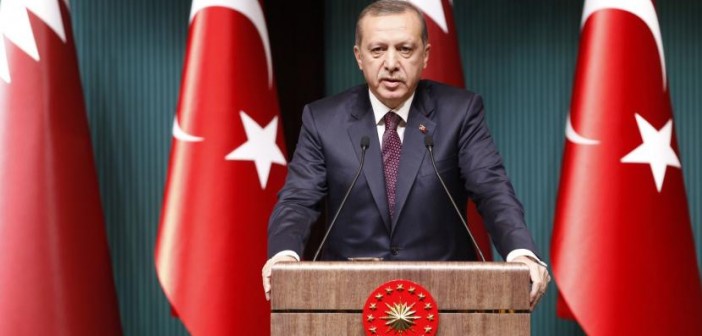
Ερντογάν: «Οι τελευταίες χώρες που μπορούν να μιλάνε για γενοκτονία είναι η Γερμανία, η Ρωσία και η Γαλλία»

erdogan-2-702x336

Ο πρόεδρος της Τουρκίας Ρετζέπ Ταγίπ Ερντογάν επανέλαβε σήμερα τις επικριτικές δηλώσεις κατά ξένων ηγετών και της Ευρωπαϊκής Ένωσης που χαρακτήρισαν «γενοκτονία» τις σφαγές των Αρμενίων από την Οθωμανική Αυτοκρατορία το 1915.

Κατά τη διάρκεια διάσκεψης επιχειρηματιών στην Κωνσταντινούπολη, ο Ερντογάν κατηγόρησε τους προέδρους της Γαλλίας, της Γερμανίας και της Ρωσίας, οι οποίοι χρησιμοποίησαν τον όρο «γενοκτονία» κατά τις τελετές μνήμης, ότι «υποστηρίζουν τις θέσεις που βασίζονται στα αρμενικά ψέματα».

«Θα προτιμούσαμε να μην έχουν έρθει στην Αρμενία ούτε ο (πρόεδρος της Ρωσίας Βλαντίμιρ) Πούτιν, ούτε ο (πρόεδρος της Γαλλίας Φρανσουά) Ολάντ, αναφερόμενος στην παρουσία των δύο προέδρων στην χθεσινή τελετή, κατά την οποία τόσο ο Ολάντ, όσο και ο Πούτιν κάλεσαν την Τουρκία να αναγνωρίσει την αρμενική γενοκτονία.

«Οι τελευταίες χώρες που μπορούν να μιλάνε για γενοκτονία είναι η Γερμανία, η Ρωσία και η Γαλλία», είπε ο Ερντογάν καλώντας τους «να καθαρίσουν τους λεκέδες της δικής τους ιστορίας».

Την προηγουμένη ο πρόεδρος της Τουρκίας είχε… περιλάβει τον πρόεδρο της Γερμανίας Γιοακίμ Γκάουκ και τον Βλαντίμιρ Πούτιν για την χρησιμοποίηση εκ μέρους τους του όρου «γενοκτονία». Ήταν η πρώτη που φορά που Γερμανός πρόεδρος αναγνώρισε την αρμενική γενοκτονία.

Ο Ερντογάν κατηγόρησε επίσης την Ευρωπαϊκή Ενωση ότι «δεν λέει την αλήθεια», μετά την έκκληση που απηύθυνε το Ευρωκοινοβούλιο στις 15 Απριλίου προς την Τουρκία να αναγνωρίσει την αρμενική γενοκτονία.

«Ε, Ευρωπαϊκή Ενωση, δεν έχουμε ανάγκη τις σκέψεις σας, κρατείστε τις για σας… Έχουν αυτιά που δεν ακούν, μάτια που δεν βλέπουν και γλώσσες που δεν λένε την αλήθεια», είπε.

ΠΗΓΗ : TO ΠΟΝΤΙΚΙ

Migrant boat crisis: the story of the Greek hero on the beach

Boat-migrant-being-rescue-008

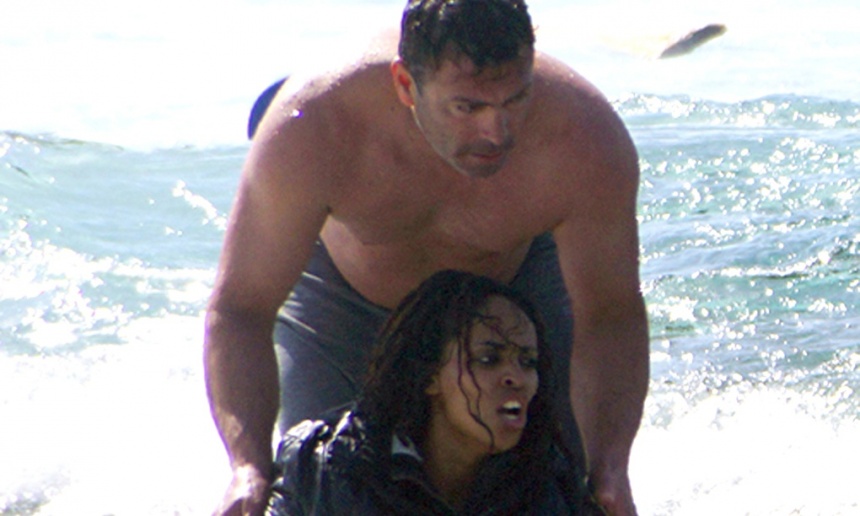
Antonis Deligiorgis saving Wegasi Nebiat: ‘I was having trouble lifting her out of the sea, then instinctively, I put her over my shoulder.’ Photograph: Argiris Mantikos/AP

It was an image that came to symbolise desperation and valour: the desperation of those who will take on the sea – and the men who ferry human cargo across it – to flee the ills that cannot keep them in their own countries. And the valour of those on Europe’s southern shores who rush to save them when tragedy strikes.

Last week on the island of Rhodes, war, repression, dictatorship in distant Eritrea were far from the mind of army sergeant Antonis Deligiorgis. The world inhabited by Wegasi Nebiat, a 24-year-old Eritrean in the cabin of a yacht sailing towards the isle, was still far away.

The boat disintegrated in a matter of minutes. It was as if it was made of paper
Antonis Deligiorgis

At 8am on Monday there was nothing that indicated the two would meet. Stationed in Rhodes, the burly soldier accompanied his wife, Theodora, on the school run. “Then we thought we’d grab a coffee,” he told the Observer in an exclusive interview recounting what would soon ensue. “We stopped by a cafe on the seafront.”

Deligiorgis had his back to the sea when the vessel carrying Nebiat struck the jagged rocks fishermen on Rhodes grow up learning to avoid. Within seconds the rickety boat packed with Syrians and Eritreans was listing. The odyssey that had originated six hours earlier at the Turkish port of Marmaris – where thousands of Europe-bound migrants are now said to be amassed – was about to end in the strong currents off Zefyros Beach.

For Nebiat, whose journey to Europe began in early March – her parents paid $10,000 for a voyage that would see her walk, bus and fly her way to “freedom” – the reef was her first contact with the continent she had prayed to reach. Soon she was in the water clinging to a rubber buoy.

“The boat disintegrated in a matter of minutes,” the father-of-two recalled. “It was as if it was made of paper. By the time I left the café at 10 past 10, a lot of people had rushed to the scene. The coastguard was there, a Super Puma [helicopter] was in the air, the ambulance brigade had come, fishermen had gathered in their caiques. Without really giving it a second’s thought, I did what I had to do. By 10:15 I had taken off my shirt and was in the water.”

Deligiorgis brought 20 of the 93 migrants to shore singlehandedly. “At first I wore my shoes but soon had to take them off,” he said, speaking by telephone from Rhodes. “The water was full of oil from the boat and was very bitter and the rocks were slippery and very sharp. I cut myself quite badly on my hands and feet, but all I could think of was saving those poor people.”

In the chaos of the rescue, the 34-year-old cannot remember if he saved three or four men, or three or four children, or five or six women: “What I do remember was seeing a man who was around 40 die. He was flailing about, he couldn’t breathe, he was choking, and though I tried was impossible to reach. Anyone who could was hanging on to the wreckage.”

I’ve never seen anything like it, the terror that can haunt a human’s eyes.
Babis Manias, fisherman

Deligiorgis says he was helped by the survival skills and techniques learned in the army: “But the waves were so big, so relentless. They kept coming and coming.” He had been in the water for about 20 minutes when he saw Nebiat gripping the buoy. “She was having great problems breathing,” he said. “There were some guys from the coastguard around me who had jumped in with all their clothes on. I was having trouble lifting her out of the sea. They helped and then, instinctively, I put her over my shoulder.”

On Friday it emerged that he had also rescued a woman who gave birth to a healthy baby boy in Rhodes general hospital. In a sign of her gratitude, the Eritrean, who did not want to be identified, told nurses she would name her son after him. While Deligiorgis’s heroism has raised the spirits of a nation grappling with its worst economic crisis in modern times, he is far from alone. All week there have been stories of acts of kindness, great and small, by islanders who rushed to help the emigrés. One woman stripped her own child to swaddle a Syrian baby, hundreds rushed to donate food and clothes.

“They are souls, like us,” said Babis Manias, a fisherman, breaking down as he recalled saving a child.

“We couldn’t believe it at first. We thought it was a tourist boat, what with all the hotels along the beach. I’ve never seen anything like it, the terror that can haunt a human’s eyes.” Forget the ‘war on smuggling’, we need to be helping refugees in need.

The incident has highlighted the extraordinary sacrifice people on the frontline of Fortress Europe will often make as the humanitarian disaster unfolding on the continent’s outer reaches becomes ever more real. Last week close to 2,000 migrants were reported entering he country with the vast majority coming through its far-flung Aegean isles. Most were said to be Syrian students and other professionals able to afford passage to the west.

“As long as there are crises in their own countries and desperation and despair, they will look to Europe,” said Giorgos Tsarbopoulos, who heads the United Nations refugee mission in Athens. “And as long as there are no legal alternatives they will take these great risks to get here.”

Like other passengers, Nebiat, who would spend most of the week in hospital being treated for suspected pneumonia, has no desire to stay in Greece. Sweden is her goal. And on Thursday she boarded a ferry bound for Piraeus, the continuation of a journey that began in the Eritrean capital of Asmara, took her to Sudan and from there to Turkey travelling on a fake passport. “I am lucky,” she said as she was reunited with those who made the journey with her. “Very lucky to be alive.”

Deligiorgis falls silent at the mention of heroism. There was nothing brave, he says, about fulfilling his duty “as a human, as a man”. But recounting the moment he plucked the Eritrean from the sea, he admits the memory will linger. “I will never forget her face,” he says. “Ever.”

source:theguardian.com

Η λίστα με τα 14 πιο παράξενα χωριά του κόσμου, με την Μονεμβάσια στην δεύτερη θέση

Ένα χωριό μέσα σε ένα κρατήρα ηφαιστείου, σπίτια χτισμένα από πυλό κρυμμένα κάτω από την γη, μια μικρή πόλη στην μέση του πάγου, και άλλα πολλά χωριά που συγκαταλέγονται στην λίστα με τα 14 πιο παράξενα του κόσμου. Την δεύτερη θέση έχει η Μονεμβάσια Λακωνίας. Σύμφωνα με την Daily Mail αυτοί είναι οι μαγευτικοί οικισμοί σε μαγευτικούς προορισμούς.

1. Aogashima, Θάλασσα Φιλιππίνων

Ίσως το τελευταίο μέρος που θα περίμενε κανείς να βρει μια ζωντανή κοινότητα μέσα σε ένα τροπικό ηφαιστειογενές νησί στη Θάλασσα των Φιλιππίνων. Στην καρδιά του κρατήρα του ανενεργού ηφαιστείου, βρίσκεται ένα από τα πιο όμορφα χωριά, όπου ζούνε 200 γενναίοι χωρικοί.

2. Μονεμβασιά, Ελλάδα

Η Μονεμβασιά είναι ένας οικισμός που κρύβεται πίσω από ένα τεράστιο βράχο στη Λακωνία στην Ελλάδα. Το νησί χωρίστηκε από την ηπειρωτική χώρα το 375 μ.Χ. από σεισμό, όπου με ένα μικρό διάδρομο γίνεται η εύκολη πρόσβαση. Η θέα στο κόλπο της Παλαιάς Μονεμβάσιας είναι συγκλονιστική.

3. Μονή Phugtal, Ινδία

Το κρυφό χωριό στο γκρεμό της Phuktal ή Μονή Phugtal είναι ένα από τα πιο απομονωμένα μοναστήρια στη βόρεια Ινδία. Κατασκευασμένο από λάσπη και ξύλο, βρίσκεται στην είσοδο μιας σπηλιάς πάνω σε ένα βράχο που «κοιτάει» στην νότιο-ανατολική Zanskar στην περιοχή Λαντάκ.
Μοιάζοντας με μία γιγαντιαία «κηρήθρα μελλισών» ιδρύθηκε στις αρχές του 12ου αιώνα, αλλά παρέμεινε ένα κρυμμένος θησαυρό, μέχρι το 1800, όταν ο Αλέξανδρος Cosmo ντε Κόρος επισκέφθηκε τον τόπο, και έμεινε εκεί για ένα χρόνο.

4. Isortoq, Γροιλανδία

Με 64 κατοίκους, το χωριό Isortoq της Γροιλανδίας, βρίσκεται κάπου στην μέση του πουθενά του χιονιού και του πάγου.Οι κάτοικοι Inuit όπως ονομάζονται, είναι αναγκασμένοι να επιβιώσουν μόνο με βάση το κρέας, αφού οι πολικές θερμοκρασίες δεν επιτρέπουν την ανάπτυξη φυτών.

5. Gásadalur Village, Δανία

Το απομονωμένο χωριό της Gásadalur βρίσκεται στη δυτική πλευρά του Vágar στις Νήσους Φερόε. Την συγκλονιστική θέα στο Ρεύμα του Κόλπου του Βόρειου Ατλαντικού βλέπουν καθημερινά μόνο 16 κάτοικοι που έχουν επικοινωνία με τον «έξω» κόσμο μέσω μιας σήραγγας που χτίστηκε μέσα στα βουνά το 2004.

6. Huacachina, Περού…

Πηγή: newsone.gr

Διάγνωση ελονοσίας με τεστ αναπνοής από Αυστραλούς επιστήμονες

index

Αυστραλοί επιστήμονες ανακάλυψαν ότι με ένα απλό τεστ αναπνοής μπορεί να γίνει διάγνωση της ελονοσίας.

Στα άτομα που έχουν ελονοσία συγκεντρώνονται κάποιες χημικές ουσίες στη μύτη, που με το τεστ μπορούν να ανιχνευτούν και να γίνει διάγνωση της ασθένειας. Μέχρι σήμερα ακολουθείται η παραδοσιακή μέθοδος με το μικροσκόπιο με το οποίο ανιχνεύονται τα παράσιτα που αναπτύσσονται στο αίμα.

«Αυτό που είναι συναρπαστικό για εμάς τους ερευνητές είναι ότι η αύξηση αυτών των χημικών ουσιών είναι μεγάλη στα πολύ πρώιμα στάδια της λοίμωξης, αλλά πολλές άλλες μέθοδοι δεν ήταν μέχρι σήμερα σε θέση να εντοπίσουν το παράσιτο στο ανθρώπινο σώμα» δήλωσε ο καθηγητής Stephen Trowell, επικεφαλής ερευνητικής ομάδας στο ερευνητικό κέντρο CSIRO. Η επιστημονική ομάδα εργάζεται τώρα για την παρασκευή φτηνών και αποτελεσματικών αισθητήρων αναπνοής.

Πηγή:Νέος Κόσμος

Aυστραλία:«Γιατί δεν μπορούμε να επενδύσουμε στην Ελλάδα»

index

Έχει προοπτικές, αλλά υπάρχει αβεβαιότητα, δηλώνει επικεφαλής αυστραλιανού επενδυτικού ομίλου.

Με τίτλο «Γιατί δεν μπορούμε να επενδύσουμε στην Ελλάδα», η εφημερίδα «The Australian Financial Review» δημοσίευσε στην πρώτη της σελίδα αποκλειστική συνέντευξη του Πολ Μουρ, επικεφαλής του επενδυτικού ομίλου PM Capital Investment, ο οποίος δραστηριοποιείται στον τομέα της αγοράς ακινήτων, διερευνώντας επενδυτικές ευκαιρίες τόσο στις ΗΠΑ όσο και στην Ευρώπη και κυρίως σε χώρες που έχουν πληγεί από την οικονομική κρίση.

Ο κ. Μουρ -που επισκέφθηκε πρόσφατα την Ελλάδα-, αναφέρεται εκτενώς στη συνέντευξή του στην εμπειρία του στις ΗΠΑ, ενώ σε ό,τι αφορά τη μεσιτική αγορά στην Ευρώπη καταγράφεται αναλυτικά η περίπτωση της Ιρλανδίας και της Ισπανίας.

Σε ό,τι αφορά τη σύντομη αναφορά στην ελληνική περίπτωση, εκφράζει «επιφυλάξεις» για την πραγματοποίηση επενδύσεων, καθώς διατείνεται ότι «δεν είναι εγγυημένη η παραμονή της χώρας στην ευρωζώνη, εξαιτίας των χειρισμών της νέας κυβέρνησης», μολονότι δηλώνει «πραγματικά εντυπωσιασμένος» από τις προοπτικές που διαγράφονται για την ανάκαμψη της ελληνικής οικονομίας.

Πηγή: Νέος Κόσμος

Αυστραλία:Σφοδρή επίθεση Εφορίας στις πολυεθνικές

images

Συνεχίζεται η έρευνα για τις Apple, Microsoft και Google που φοροδιαφεύγουν.

Σε έντονη επίπληξη προς τις πολυεθνικές εταιρίες Apple, Google και Microsoft, προχώρησε ο Επίτροπος της Αυστραλιανής Εφορίας, Chris Jordan. Δήλωσε σε ειδική ακρόαση της Γερουσίας, ότι οι εταιρίες αυτές παρείχαν μερικώς μόνο στοιχεία για τις λογιστικές τους κινήσεις.

Είπε ότι οι εταιρίες υποστηρίζουν ότι δήθεν τους επιτρέπεται να έχουν περισσότερα έσοδα και πληρώνουν μικρότερο. Ο επίτροπος ανέφερε ότι η Apple υποστηρίζει ότι όλα τα έσοδά της από την πώληση των προϊόντων, φορολογήθηκαν στην Αυστραλία.

Η εταιρεία, ωστόσο, είχε προσφύγει σε γνωστή λογιστική πρακτική: να μοιράζει τα έσοδά της στις θυγατρικές της ώστε να αποφεύγει τη φορολόγηση. Ομοίως, η Microsoft δήλωσε ότι τα $2 δις κέρδη της από την αυστραλιανή αγορά πήγαν στη Σιγκαπούρη και μόνο $100 εκατ. παρέμειναν στην Αυστραλία. Όμως, η έρευνα έδειξε ότι τα κέρδη δεν έμειναν στη Σιγκαπούρη, αλλά μεταφέρθηκαν στο φορολογικό παράδεισο των Βερμούδων.

Τέλος, η Google είχε δώσει αποδείξεις ότι τα έσοδα από τις διαφημίσεις της στην Αυστραλία πήγαν στη Σιγκαπούρη, όπου και φορολογήθηκαν.

Ο κ. Jordan, σε σχετική ερώτηση, δήλωσε ότι οι πρόσφατες απολύσεις στην Αυστραλιανή Εφορία δεν επηρέασαν το έργο της. Ανησυχίες εκφράστηκαν σχετικά με το γεγονός ότι η υπηρεσία έχει χάσει σημαντικό κομμάτι της τεχνογνωσίας της αφού πολλά πρώην ανώτερα στελέχη της βρήκαν απασχόληση σε μεγάλα λογιστικά γραφεία.

Πηγή: Νέος Κόσμος

Πάνω από 1 εκ. Αυστραλοί στα νύχια της φτώχειας

vmpoverty

Η εικόνα των αστέγων δεν είναι σπάνια στους δρόμους των αυστραλιανών πόλεων

Το γεγονός πιστοποιεί έρευνα η οποία διεξήχθη από την Επιτροπή Οικονομικής Ανάπτυξης Αυστραλίας.

Kεραυνός εν αιθρία η προχθεσινή είδηση ότι 1-1,5 εκ. Αυστραλοί ζουν κάτω από το όριο φτώχειας, έχουν, δε, μικρή, αν όχι μηδαμινή ελπίδα να ξεφύγουν από αυτήν.

Το γεγονός πιστοποιεί έρευνα η οποία διεξήχθη από την Επιτροπή Οικονομικής Ανάπτυξης Αυστραλίας και δημοσιοποιήθηκε την Τρίτη, λίγες εβδομάδες πριν την ανακοίνωση του ομοσπονδιακού προϋπολογισμού, ζητά, δε, από την κυβέρνηση “να ξεφύγει από τα τετριμμένα” προκειμένου να αντιμετωπίσει το πρόβλημα της παγιωμένης φτώχειας.

Ο πρόεδρος της επιτροπής καθηγητής Stephen Martin, υπογραμμίζοντας ότι η Αυστραλία βρίσκεται αυτή τη χρονική στιγμή στο 24ο έτος ομαλής οικονομικής ανάπτυξης, εξέφρασε την άποψη ότι “είναι ντροπή” ένας τόσο μεγάλος αριθμός συμπολιτών μας να ζουν κάτω από το όριο φτώχειας. Ο ίδιος τόνισε ότι όλες οι κυβερνήσεις, χωρίς εξαίρεση, δεν προσέγγισαν το πρόβλημα όπως θα έπρεπε. Βασίστηκαν υπερβολικά στη μέθοδο της “αγίας ράβδου”, επιδιώκοντας να αυξήσουν τον αριθμό των εργαζομένων, πράγμα το οποίο δεν έχει το ποθούμενο αποτέλεσμα, αν οι άνθρωποι δεν έχουν αρκετά προσόντα ή βρίσκονται σε χαμηλόμισθες εργασίες.

“Δεν πρόκειται για κάποια δακρύβεχτη, αριστεράς ιδεολογίας άποψη. Ούτε είναι απλώς μόνο ένα κοινωνικό φαινόμενο. Είναι οικονομικό θέμα”.

Στην έρευνα, με τίτλο “Addressing Entrenched Disadvantage” (“Aντιμετωπίζοντας την Παγιωμένη Μειονεκτικότητα”), χρησιμοποιούνται δύο μέθοδοι προκειμένου να καθοριστεί το όριο της φτώχειας. Η μία επικεντρώνεται στο αν και κατά πόσον οι οικογένειες έχουν πρόσβαση στα αγαθά και τις υπηρεσίες που θεωρούνται απαραίτητα, όπως, για παράδειγμα, ένα πλήρες γεύμα τουλάχιστον μια φορά τη μέρα, πρόσβαση σε ιατρική περίθαλψη, αν χρειαστεί, και ένα ξεχωριστό κρεββάτι για κάθε παιδί.

Η άλλη μέθοδος εξετάζει τoν αποκλεισμό του ατόμου από επτά χώρους, μεταξύ των οποίων, τον εργασιακό, των υλικών αγαθών και της υγείας.

Σύμφωνα με τα πορίσματα της έρευνας, η φτώχεια είναι ένα μακρόχρονο πρόβλημα, ενώ το ένα τέταρτο περίπου αυτών που εξέρχονται από τη φτώχεια, επιστρέφουν σ’ αυτήν μέσα σε δύο περίπου χρόνια.

Εκείνοι οι οποίοι βρίσκονται για μεγάλο διάστημα κάτω από το όριο της φτώχειας, είναι συνήθως άτομα τα οποία δεν ολοκλήρωσαν τις γυμνασιακές τους σπουδές, Αβορίγινες Αυστραλοί, ηλικιωμένοι άνω των 65 χρόνων, εκείνοι που αντιμετωπίζουν για μεγάλο διάστημα προβλήματα υγείας ή αναπηρίας και εκείνοι που είναι μέρος οικογένειας ανέργων.

ΠΡΟΤΑΣΕΙΣ

Μεταξύ άλλων, προτείνονται: Έγκαιρη αντιμετώπιση ψυχικών ασθενειών, συμπεριλαμβανομένων γονιών και παιδιών, ισότητα ευκαιριών στον εκπαιδευτικό χώρο, έκλειψη διακρίσεων κατά των αυτοχθόνων στον εργασιακό χώρο.

Πιο συγκεκριμένα, η Ann Hampshire, από τον φιλανθρωπικό οργανισμό Smith Family, η οποία πήρε μέρος στην εν λόγω έρευνα, δήλωσε ότι απαιτείται μεγαλύτερη προσοχή και προσπάθεια προκειμένου να εντοπιστούν και να βοηθηθούν οικογένειες τα παιδιά των οποίων αντιμετωπίζουν προβλήματα εκπαιδευτικής φύσης.

Η ίδια επεξηγεί, ότι αν οι οικογένειες δεν έχουν τη στοιχειώδη οικονομική άνεση, τότε είναι δύσκολο να εξασφαλίσουν ένα περιβάλλον μέσα στο οποίο τα παιδιά μπορούν να έχουν καλές επιδόσεις στο σχολείο”.

Το ότι απαιτούνται διαρθρωτικές κυβερνητικές μεταρρυθμίσεις, προκειμένου να αντιμετωπιστεί με επιτυχία το πρόβλημα της φτώχειας στην Αυστραλία, τονίζουν και άλλοι παράγοντες.

Ο Georgie Harmen, διευθύνων σύμβουλος του Beyondblue, δήλωσε ότι “το σύστημα ψυχικής υγείας βάζει τους ανθρώπους στην τροχιά της κρίσης και της νοσοκομειακής φροντίδας, αντί να τους στηρίξει να βρουν μια καλή εργασία, ώστε να μπορέσουν να βγουν από μια ζωή φτώχειας και μιζέριας”.

Από την πλευρά του, ο διευθύνων σύμβουλος του οργανισμού Mental Health Australia, Frank Quinlan, απαντά: “Είναι γεγονός ότι η εργασία είναι συχνά ο καλύτερος δρόμος που οδηγεί έξω από τη φτώχεια. Ωστόσο, γεγονός παραμένει το ότι τα φράγματα στον εργασιακό χώρο δεν τα θέτει ο άνεργος, αλλά αυτοί οι εργασιακοί χώροι οι οποίοι δεν είναι κατάλληλα εξοπλισμένοι για να αντιμετωπίσουν με επιτυχία άτομα τα οποία αντιμετώπισαν δύσκολες καταστάσεις για μεγάλο χρονικό διάστημα”.

Μελέτη του φιλανθρωπικού οργανισμού Brotherhood of St. Laurence, με τίτλο “Need to Succeed”, στην οποία πήρε μέρος και ο ομογενής Δρ. George Myconos, καταλήγει στο συμπέρασμα ότι, νέοι που φεύγουν από το σχολείο πριν ολοκληρώσουν τις σπουδές τους, συχνά αντιμετωπίζουν σοβαρά εμπόδια που δεν εντοπίζονται μόνο στο σχολικό χώρο αλλά και έξω από αυτόν. Μεταξύ των σοβαρότερων είναι φτωχή απόδοση στα μαθήματα -κυρίως ανάγνωσης και γραφής- έλλειψη αυτοεκτίμησης και στήριξης από το οικογενειακό περιβάλλον. Η έγκαιρη εντόπιση των προβλημάτων αυτών από το σχολείο, καθώς επίσης και η επαρκής χρηματοδότηση των εκπαιδευτηρίων από την πολιτεία, υπογραμμίζονται ως ζωτικοί παράγοντες για την αναχαίτιση του προβλήματος.

Να τονιστεί, επίσης, ότι η μελέτη της Επιτροπής Οικονομικής Ανάπτυξης Αυστραλίας, ανακοινώνεται τη στιγμή που η κυβέρνηση προετοιμάζει ένα σύνολο μεταρρυθμίσεων του συστήματος κοινωνικής πρόνοιας. Αναμένεται, το λιγότερο, να υποχωρήσει, τουλάχιστον κατά ένα μέρος, από την πολιτική “όχι επίδομα για έξι μήνες για τους άνεργους κάτω των 30 χρόνων”, καθώς επίσης και στις περικοπές που προγραμμάτιζε στις φοροαπαλλαγές οικογενειών και αλλαγές στη σύνταξη γήρατος.

Εκτιμάται ότι δεν θα υπάρξουν μεγάλες εκπλήξεις, στον επόμενο οικονομικό προϋπολογισμό, γεγονός εντούτοις παραμένει ότι πάνω από ένα εκατομμύριο άνθρωποι να ζουν κάτω από το όριο φτώχειας στην “Τυχερή Χώρα”, δεν είναι απλά “επαίσχυντο”, αλλά και παράλογο.

Πηγή:Νέος Κόσμος