Monthly Archives: April 2015

State debts to third parties growing by the month

tax_evasion

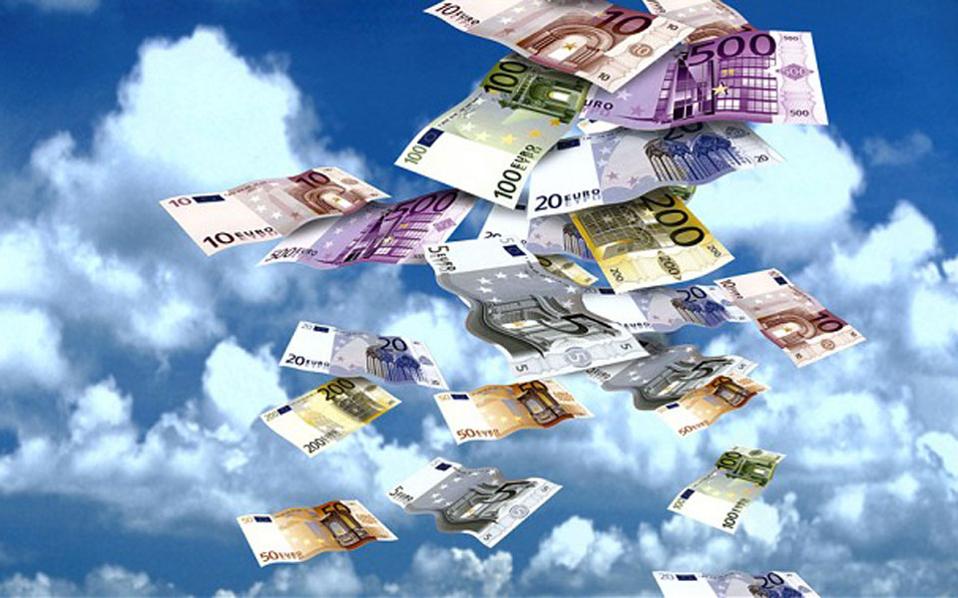
The state’s debts to third parties, such as suppliers, are growing by the month, according to data released on Tuesday by the General State Accounting Office. In the year’s first couple of months the state’s unpaid dues were up 232 million euros on last December.

At the end of February the entities in the broader public sector, including social security funds, hospitals and local authorities, among others, had total expired obligations of 3.245 billion euros, compared to 3.013 billion at end-December.

The increase in February alone amounted to 146 million euros, and the situation is likely to deteriorate further given the cash crunch the government has been up against.

The general government’s primary surplus in the year to end-February amounted to 1.017 billion euros, compared to 3.17 billion euros in the same period last year. The general government debt is down 11.7 billion euros year-on-year, at 312.8 billion euros.

source:ekathimerini.com

As talks drag, no deal in sight

maximosflags

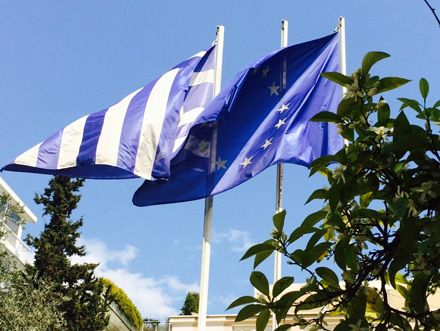
As Greece’s cash reserves continue to dwindle, European officials indicated Tuesday that a lack of progress in negotiations between the Greek government and the country’s creditors meant it was unlikely a deal could be reached in time for a Eurogroup summit scheduled for April 24.

European Commission Vice President Valdis Dombrovskis told Germany’s Handelsblatt that next Friday’s Eurogroup in Riga, Latvia, will not approve aid for Greece. “There will only be a look at the progress in talks,” he said, adding that Athens should submit a list of updated reform proposals by April 20. The head of the European Stability Mechanism (ESM), Klaus Regling, struck a similar note in comments to Portuguese media, saying the government has not yet submitted a “coherent” list of proposals and noting that the country’s “liquidity buffers are becoming very, very small.”

European Economic and Monetary Affairs Commissioner Pierre Moscovici also underlined that creditors were awaiting a list of “precise reforms” from Greece.

Greece appears to be far from fulfilling that demand, with officials said to be resisting calls for proposals on how to reduce spending, restart a stalled privatizations program and overhaul an overburdened pension system. Representatives of Greece’s creditors are said to be frustrated with what they regard as “unilateral actions” as most reforms the government has pushed into law, such as the poverty benefits which were detailed Tuesday, involve public spending. Labor Minister Panos Skourletis insisted Tuesday that Greece will not cut pensions while Alternate Finance Minister Dimitris Mardas indicated that value-added tax might be raised on some goods.

Finance Minister Yanis Varoufakis is to travel to Washington on Wednesday, where he is to have several important meetings, notably with US President Barack Obama on Thursday. On Friday, Varoufakis is to meet European Central Bank President Mario Draghi, US Treasury Secretary Jack Lew and Italian Finance Minister Pier Carlo Padoan.

The visit comes at a critical time for Greece as speculation that Greek authorities are preparing for snap elections or bankruptcy, and a eurozone exit, have dominated the foreign media.

ECB Governing Council member Klaas Knot warned that a Greek default may have a contagion effect. “The already shaky liquidity position of Greek banks will worsen if deposits continue to flow out,” Knot said in the Dutch central bank’s semi-annual Financial Stability Report. “An unhoped-for bankruptcy of the government would heavily derail the Greek economy,” he said, adding that “the impact of such an event on other countries in the euro area is still uncertain.”

The EU’s foreign policy chief Federica Mogherini said Europe must show flexibility in dealing with the Greek debt crisis “not just out of a sense of solidarity but most of all for sake of the common interest.” “If one falls, the whole system falls, I’m very much convinced of that,” she said. German Foreign Minister Frank-Walter Steinmeier meanwhile advised against “frivolous” talk of a Greek eurozone exit.

source:ekathimerini.com

Τη Δευτέρα ξεκινά η δίκη της Χρυσής Αυγής

Τη Δευτέρα ξεκινά η δίκη της Χρυσής Αυγής

Η δίκη της Χρυσής Αυγής, η οποία ξεκινά το πρωί της Δευτέρας 20 Απριλίου, αποτελεί ιστορική διαδικασία που αντίστοιχή της δεν έχει υπάρξει στην Ελλάδα και σε παγκόσμιο επίπεδο, καθώς για πρώτη φορά μετά τον Β’ Παγκόσμιο Πόλεμο καλείται να λογοδοτήσει για δράση εγκληματικής οργάνωσης ένα κόμμα που εκπροσωπείται στη Βουλή.

Η επιλογή του χώρου διεξαγωγής της δίκης στη δικαστική αίθουσα των φυλακών Κορυδαλλού ήδη έχει πυροδοτήσει αντιδράσεις, τόσο από τις τοπικές Αρχές, όσο και από δικηγόρους και δημοσιογράφους, καθώς η αίθουσα που επελέγη δεν μπορεί να καλύψει τις πρακτικές ανάγκες, σε χώρο και υποδομές, για την ομαλή και απρόσκοπτη άσκηση των καθηκόντων τους και την ανάγκη δημοσιότητας της διαδικασίας.

Ο προβληματισμός δικηγόρων, αλλά και των Ελλήνων και ξένων δημοσιογράφων που θα βρεθούν στον Κορυδαλλό για την ιστορική δίκη, σχετίζεται με τον μεγάλο αριθμό των παραγόντων της υπόθεσης. Οι κατηγορούμενοι είναι 69, οι συνήγοροι υπεράσπισης ενδέχεται να υπερβαίνουν τους 100, πολυάριθμοι θα είναι και οι εκπρόσωποι της Πολιτικής Αγωγής, ενώ μόνο οι μάρτυρες κατηγορίες είναι περίπου 130.

Οι 69 κατηγορούμενοι για τη δράση της εγκληματικής οργάνωσης, μεταξύ των οποίων η προηγούμενη Κοινοβουλευτική Ομάδα του κόμματος, θα βρεθούν την ερχόμενη Δευτέρα ενώπιον του Τριμελούς Εφετείου Κακουργημάτων, το οποίο θα κρίνει εάν τελικά το κόμμα της Χρυσής Αυγής αποτελεί ένα ναζιστικό μόρφωμα με συντονισμένη παράνομη δραστηριότητα, απόφαση που ενδέχεται να δρομολογήσει εξελίξεις και σε πολιτικό επίπεδο αν το κόμμα κηρυχθεί παράνομο, ή εάν οι εγκληματικές ενέργειες μελών του «Λαϊκού Συνδέσμου» αποτελούν «μεμονωμένα περιστατικά» άσχετα με τις κομματικές επιλογές.

Η έδρα

Η έδρα του δικαστηρίου που κληρώθηκε να δικάσει τα στελέχη και τα μέλη της Χρυσής Αυγής έχει ως εξής: Πρόεδρος του δικαστηρίου θα είναι η Μαρία Λεπενιώτη, με αναπληρώτρια πρόεδρο την Μαρία Βάρκα. Μέλη του δικαστηρίου, οι εφέτες Ανδρέας Ντόκος και Γεσθημανή Τσουλφόγλου, με αναπληρωματικό μέλος τον Δημήτρη Ανέστη. Εισαγγελέας κληρώθηκε η Αδαμαντία Οικονόμου, με αναπληρωτή εισαγγελέα τον Στέλιο Κωσταρέλλο.

Στο εδώλιο του Τριμελούς Εφετείου Κακουργημάτων θα καθήσουν με αλαφαβητική σειρά οι:

  • Ιωάννης Άγγος,
  • Διονύσης Αγιοβλασίτης,
  • Δημήτρης Αγριογιάννης,
  • Χρυσοβαλάντης Αλεξόπουλος,
  • Αναστάσιος Μάριος Αναδιώτης,
  • Κυριάκος Αντωνακόπουλος,
  • Γεώργιος Αποστολόπουλος,
  • Νικόλαος Αποστόλου,
  • Μιχαήλ Αρβανίτης Αβράμης,
  • Χρήστος Γαλανάκης,
  • Σάββας Γαρουφαλλάκης,
  • Γεώργιος Γερμενής,
  • Αντώνιος Γρέγος,
  • Αριστόδημος Δασκαλάκης,
  • Γεώργιος Δήμου,
  • Μάρκος Ευγενικός,
  • Ελένη Ζαρούλια,
  • Πολύβιος Ζησιμόπουλος,
  • Παναγιώτης Ηλιόπουλος,
  • Ιωάννης Καζατζόγλου,
  • Ελπιδοφόρος Καλαρίτης,
  • Γεώργιος Καλπιτζής,
  • Ηλίας Κασιδιάρης,
  • Ιωάννης Καστρινός,
  • Ιωάννης Βασίλειος Κομιανός,
  • Κωνσταντίνος Κορκοβίλης,
  • Νικόλαος Κούζηλος,
  • Δημήτρης Κουκούτσης,
  • Ιωάννης Λαγός,
  • Διονύσης Λιακόπουλος,
  • Θωμάς Μαριάς,
  • Αρτέμης Ματθαιόπουλος,
  • Εμμανουήλ Μαυρικάκης,
  • Μαργαρίτα Μικελλάτου,
  • Αναστάσιος Μιχάλαρος,
  • Νίκος Μιχαλολιάκος,
  • Νικόλαος Μίχος,
  • Θωμάς Μπαρέκας,
  • Κωνσταντίνος Μπαρμπαρούσης,
  • Νικολέτα Μπενέκη,
  • Αντώνιος Μπολέτης,
  • Ευστάθιος Μπούκουρας,
  • Ηλίας Παναγιώταρος,
  • Αναστάσιος Πανταζής,
  • Νικόλαος Παπαβασιλείου,
  • Κωνσταντίνος Παπαδόπουλος,
  • Χρήστος Παπάς,
  • Γεώργιος Πατέλης,
  • Γεώργιος Περρής,
  • Γεώργιος Πετράκης,
  • Βενετία Πόπορη,
  • Γεώργιος Ρουπακιάς,
  • Σταύρος Σαντοριναίος,
  • Βασίλης Σιατούνης,
  • Γεώργιος Σκάλκος,
  • Θεώνη Σκαρπέλη,
  • Θέμις Ευαγγελλία Σκορδέλη,
  • Γεώργιος Σταμπέλος,
  • Χρήστος Στεργιόπουλος,
  • Θεόδωρος Στέφας,
  • Αθανάσιος Στρατός,
  • Γεώργιος Χρήστος Τσακανίκας,
  • Λέων Τσαλίκης,
  • Αθανάσιος Τσόρβας,
  • Νικόλαος Τσόρβας,
  • Χρήστος Αντώνιος Χατζηδάκης,
  • Αναστάσιος Χιλιός,
  • Αριστοτέλης Χρυσαφίτης,
  • Εμμανούηλ Ψυλλάκης

Τρεις από τους κατηγορούμενους δεν είναι υπόλογοι για το βασικό αδίκημα που αφορά την εγκληματική οργάνωση. Πρόκειται για τη σύζυγο του δράστη της δολοφονίας του Π. Φύσσα, Γ. Ρουπακιά, Μαργαρίτα Μικελάτου, η οποία κατηγορείται μόνο για ψευδορκία, τον Θεόδωρο Στέφα, ο οποίος αντιμετωπίζει το αδίκημα της παράνομης οπλοκατοχής, και τον Αν. Χιλιό, που θα λογοδοτήσει για απλή οπλοκατοχή, προμήθεια και κατοχή ναρκωτικών για ιδία χρήση.

Δύο από τα, κατά το κατηγορητήριο, ηγετικά στελέχη της οργάνωσης, oι Στάθης Μπούκουρας και Χρυσοβαλάντης Αλεξόπουλος, στην πορεία των ανακρίσεων διαφοροποιήθηκαν από το κόμμα και ανεξαρτητοποιήθηκαν από την Κοινοβουλευτική Ομάδα, αποκηρύσσοντας τις βίαιες πρακτικές των πρώην συντρόφων τους στη Χρυσή Αυγή.

Ωστόσο, αυτές οι κινήσεις τους δεν επηρέασαν την κρίση των δικαστών, οι οποίοι στο παραπεμπτικό βούλευμα θεωρούν τον μεν Στ. Μπούκουρα «επικεφαλής των ταγμάτων εφόδου της Κορίνθου» με ρόλο εντολέα ρατσιστικών επιθέσεων, τον δε Χρ. Αλεξόπουλο «εκφραστή των θέσεων» της Χρυσής Αυγής με «δημόσια ρητορική μίσους» κατά του δημοκρατικού πολιτεύματος, αλλά κατά των ομάδων ή των ατόμων που έχει στοχοποιήσει η οργάνωση ως «φυλετικούς ή πολιτικούς της εχθρούς».

Το χρονικό μετά τη δολοφονία Φύσσα

Η δράση της Χρυσής Αυγής τέθηκε στο μικροσκόπιο των δικαστικών Αρχών μετά την εν ψυχρώ δολοφονία του Παύλου Φύσσα, τα ξημερώματα της 18ης Σεπτεμβρίου 2013, από το μέλος της Χρυσής Αυγής, Γιώργο Ρουπακιά. Οι έρευνες που ξεκίνησαν μετά το έγκλημα στο Κερατσίνι άρχισαν να αποκαλύπτουν συντονισμό στελεχών και μελών της οργάνωσης το επίμαχο βράδυ, όταν ο δολοφόνος του μουσικού ειδοποιήθηκε να μεταβεί στο σημείο που βρισκόταν ο Π.Φύσσας με φίλους του.

Μετά από επιστολή του τότε υπουργού Δημόσιας Τάξης, Νίκου Δένδια, προς την εισαγγελέα του Αρείου Πάγου, Ευτέρπη Κουτζαμάνη, η Εισαγγελία του Ανώτατου Δικαστηρίου ξεκίνησε προκαταρκτική εξέταση για σωρεία ρατσιστικών επιθέσεων που είχαν καταγραφεί και λίμναζαν ως μεμονωμένες δικογραφίες σε όλη την Ελλάδα.

Το πέρας της έρευνας, που διενεργήθηκε από τον αντεισαγγελέα του Αρείου Πάγου, Χαρ. Βουρλιώτη, άνοιξε ουσιαστικά τον φάκελο «Χρυσή Αυγή» και αποτέλεσε το έναυσμα των δικαστικών εξελίξεων που ακολούθησαν. Ο κ. Βουρλιώτης, στο πόρισμά του, χαρακτήρισε τη Χρυσή Αυγή «ενεργή ναζιστικού τύπου εγκληματική οργάνωση που δρα από το 1987 μέχρι σήμερα με στρατιωτική δομή, ιεραρχία και διακλαδώσεις σε όλη τη χώρα» και απέδωσε στον γραμματέα του κόμματος, Νίκο Μιχαλολιάκο, ρόλο αρχηγού στα πρότυπα του «Führerprinzip» και στον Χρήστο Παππά ρόλο υπαρχηγού.

«Η βία για τη Χρυσή Αυγή είναι το μήνυμα και όχι το μέσον επίτευξης των επιδιώξεών τους» ανέφερε ο εισαγγελικός λειτουργός.

Οι συλλήψεις

Η άσκηση ποινικής δίωξης για εγκληματική οργάνωση, στα τέλη Σεπτεμβρίου 2013, οδήγησε στις συλλήψεις του Νίκου Μιχαλολιάκου και στελεχών του κόμματος και στις πρώτες προφυλακίσεις.
Η πολύμηνη ανάκριση για την υπόθεση ολοκληρώνεται το περασμένο καλοκαίρι και λίγους μήνες μετά έρχεται η πρόταση του εισαγγελέα Εφετών, Ισ. Ντογιάκου.

Ο εισαγγελικός λειτουργός, που ήταν δίπλα στις ανακρίτριες, οι οποίες επί ένα χρόνο χειρίστηκαν την υπόθεση της παράνομης δράσης της Χρυσής Αυγής, μέσα στις 700 σελίδες της πρότασής του, περιγράφει μία «εγκληματική οργάνωση», η οποία, υπό τον «μανδύα κόμματος», λειτουργεί ως μία καλά οργανωμένη στρατιωτική ομάδα για τη διάπραξη παράνομων ενεργειών.

Η υπόθεση της Χρυσής Αυγής εισάγεται σε δίκη με βούλευμα του Συμβουλίου Εφετών που περιέχει τη μειοψηφία του εισηγητή της υπόθεσης, εφέτη Νίκου Σαλάτα, ως προς το εάν στοιχειοθετείται ή όχι το αδίκημα της εγκληματικής οργάνωσης, μειοψηφία που αναμένεται να οπλίσει τη φαρέτρα των συνηγόρων υπεράσπισης των κατηγορουμένων, οι οποίοι από την αρχή αμφισβήτησαν την κατηγορία που αποδόθηκε στο κόμμα.

Στο παραπεμπτικό βούλευμα καταγράφεται η δράση της εγκληματικής οργάνωσης, με κορυφαία ενέργεια τη δολοφονία του Παύλου Φύσσα, η οποία έδωσε το έναυσμα για την πολύμηνη έρευνα της Δικαιοσύνης για τη Χρυσή Αυγή.

Το δικαστήριο που θα δικάσει την υπόθεση θα κληθεί να κρίνει και άλλες ενέργειες της εγκληματικής οργάνωσης, όπως η δολοφονία του εργάτη από το Πακιστάν, Λουκμάν Σαχζάτ, για την οποία δύο κατηγορούμενοι έχουν, ήδη, καταδικαστεί για ανθρωποκτονία, η επίθεση σε μέλη του ΚΚΕ στο Πέραμα, η επίθεση σε αιγύπτιους ψαράδες, οι επιθέσεις στους κοινωνικούς χώρους Αντίπνοια και Συνεργείο στην Ηλιούπολη, οι επιθέσεις σε αλλοδαπούς εργάτες στην Κρήτη κ.ά.

Στο βούλευμα και στην εισαγγελική πρόταση τονίζεται η ναζιστικού τύπου δομή της οργάνωσης και ο ρόλος του γραμματέα της Χρυσής Αυγής, Νίκου Μιχαλολιάκου, ως «απόλυτο και κυρίαρχο» πρόσωπο. Σύμφωνα με τους εφέτες, η Χρυσή Αυγή «από το 2008 παίρνει μορφή εγκληματικής οργάνωσης, ενώ από το 2012, όταν δηλαδή η Χρυσή Αυγή μπήκε στη Βουλή, κορυφώνεται η δράση της».

Πηγή:in.gr

Defence Minister Kevin Andrews unable to name Islamic State leader

1429008657169

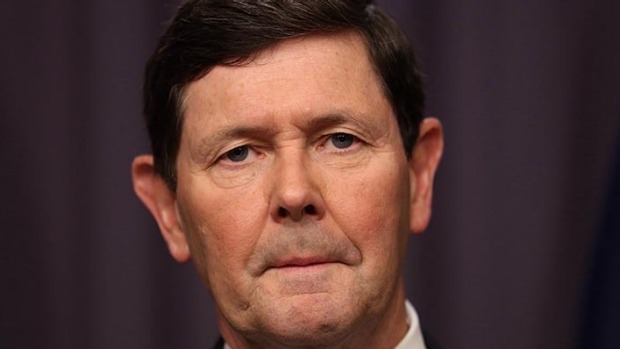
Defence Minister Kevin Andrews was unable to name the leader of the Islamic State terror group in an embarrassing gaffe on the day the government committed additional troops to Iraq.

In an interview on ABC’s 7.30 program on Tuesday night, Mr Andrews was asked repeatedly by host Leigh Sales to identify the Islamic State group’s head.

He repeatedly avoided answering directly, insisting that the leadership was complex and shifting.

1429008892895

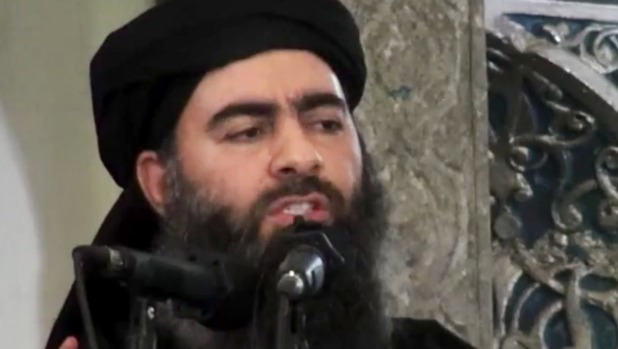
This is partly true, however the Islamic State’s leader is universally recognised as Abu Bakr al-Baghdadi, who has declared himself the Muslim world’s Caliph, is solely named leader by Islamic State supporters and is regarded as the leader by Western countries.

Ms Sales initially asked: “Who is the top leader and what sort of focus is there on his capture?”

Mr Andrews first said there was a “cadre” of leaders of the Islamic State, also known as ISIL or Da’esh.

When pressed, he said he was “not going to go into operational matters”.

He added there was “fluidity between groups” and there as “not just one person involved”.

Despite being asked four times, he was unable to name al-Baghdadi.

The gaffe came on the day that Mr Andrews and Prime Minister Tony Abbott announced that the first of 330 additional Australian troops would leave this week for Iraq to train local forces in the fight against Islamic State.

In making the announcement, Mr Abbott said Iraq was a “dangerous place” and the mission was not “risk free” though the troops will remain on a base.

The US government has a $10 million bounty on al-Baghdadi. While the self-declared Caliph remains reclusive, he caused a significant stir when he appeared last July at a mosque in the Iraqi city of Mosul to lead Friday prayer.

After the interview, Mr Andrews told Fairfax Media: “Focussing on individuals ignores the threat that extremist organisations present. We remain firm in our resolve to defeat Da’esh.”

source:smh.com.au

Kangaroo cull in Canberra’s nature parks to target almost 2,500 eastern greys

images

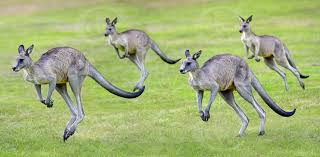
The number of eastern grey kangaroos in the territory will be reduced by almost 2,500 during a controversial annual cull, the ACT Government has announced.

Parks and Conservation director Daniel Iglesias said 2,466 kangaroos would be culled across Canberra’s nature parks between April 30 until August 1.

That number is up almost 1,000 animals on last year’s target of 1,600 kangaroos.

Mr Iglesias said after successive years of culling some areas like Mulligans Flat now had sustainable kangaroo numbers, but this year culling would also take place in Gungaderra Nature Reserve, resulting in a higher target number.

“There isn’t a need to cull in those areas at all this year, so what we’ve done is we’ve incorporated some priority nature reserves which we haven’t culled in before,” he said.

Mr Iglesias said the majority of the extra quota was accounted for by culling at Gungaderra Nature Reserve.

“Culling of overabundant kangaroos is currently the most humane method of population control available to the ACT Government as a responsible land manager,” he said.

“However we are continuing to explore alternative, non-lethal options to reduce the population of kangaroos and protect the biodiversity of Canberra’s nature reserves.”

In July the Government will begin a two-year trial into the effectiveness of contraceptive darts to control kangaroo numbers across Canberra.

The drug, GonaCon, has been used overseas to stop female deer, bison and boar from producing young, but the ACT trial on about 200 kangaroos will be an Australian first.

The annual culls have been marred by various protests and legal challenges over the past six years, with animal activists arguing there was no scientific evidence to prove reducing kangaroo numbers helped the environment.

The Government has consistently argued that heavy grazing by kangaroos threatened the survival of some grassland sites and species.

But last year Animal Liberation ACT took legal action to try to stop the kangaroo culls and also opposed fertility control measures.

As a result, 1,519 animals were shot during 2014’s winter at eight reserves, just short of the target of 1,600 after court action slowed the start of the annual cull.

This year Callum Brae Nature Reserve, Crace Nature Reserve, Goorooyarroo Nature Reserve, Gungaderra Nature Reserve, Kama Nature Reserve, Mount Painter Nature Reserve, Mulanggari Nature Reserve, Wanniassa Hills Nature Reserve and the Pinnacle Nature Reserve will be closed during the evening between Thursday April 30 and Friday August 1.

source:abc.net.au

Omura’s whale: Rare carcass washed up on WA beach to shed light on biology of little-known species

6391756-3x2-700x467

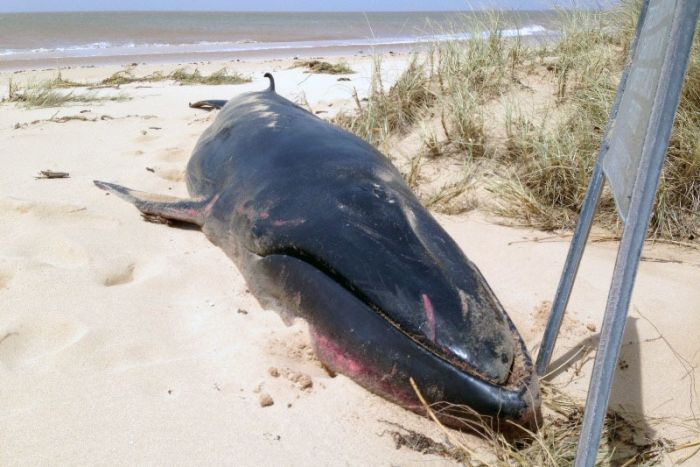
A rare Omura’s whale has been found washed up on a West Australian beach, giving scientists a chance to learn more about the species.

The rarely sighted whale was discovered on a remote beach at Exmouth, at the tip of the state’s North West Cape, after Tropical Cyclone Olwyn tore through the area last month.

It is the first sighting of the species in WA and only the second in Australia.

Identifying the 5.68-metre juvenile female was difficult for Department of Parks and Wildlife staff, but DNA profiling confirmed it was an Omura’s whale.

WA Environment Minister Albert Jacob said the find was “highly significant” for whale scientists because very little was known about the species.

“Omura’s whale was only described in scientific journals for the first time in 2003 and is apparently restricted to tropical and subtropical waters,” he said.

“The knowledge we gain from this whale will help to improve field identification guides to better understand the whale’s regional distribution.”

The species is usually found in Indonesian waters, the Philippines and the Sea of Japan.

Second ever sighting in Australia

Department of Parks and Wildlife officer Doug Coughran said it was the first recorded sighting of the species in Western Australia and only the second nationally.

He said the discovery was extremely valuable to the scientific community.

“It’s a species that has similarities to others but nothing that was obvious other than that hooked dorsal fin and there’s not a lot known about how they look in the field because there’s so few records and very little in the literature about key identifying features and that’s what we’re trying to establish and this will help,” Mr Coughran said.

“Collectively we’ve written a manuscript to a journal for peer review and once it gets through that process it then contributes to the extension of the range.

“It was not thought to be that far south in the eastern side of the Indian Ocean – it was only known from the waters north of the equator and down as far as the Indonesian waters and across to New Guinea.”

Mr Coughran praised the work of those near Exmouth who helped get him DNA samples so soon after the cyclone hit.

“What’s likely to have happened was it’s brought up, dumped by its own weight and died during the dark hours of the night and wasn’t found until the morning,” he said.

“The fact that they [the residents] all came out of their cyclone shelters that morning and the first phone call they got I think was from me asking them to bolt up there and find it and then get hold of a sample … they did a terrific job when you consider all the debris all around.”

Omura’s whales have a sleek body shape and several unique skeletal features, including 53 vertebrae and four digits on each pectoral fin.

The carcass has been buried and the skeleton will be recovered in a few years for further scientific investigation and possibly for public display in museums.

source:abc.net.au

Russia to deliver S-300 missiles to Iran as sign of ‘good will’ over nuclear talks

index

The $800 million deal to supply Iran with the sophisticated S-300 air defense system had been frozen for years amid objections from the United States and Israel. Both nations objected Monday.

Russia informed Iran Monday it would soon make good on the long-overdue delivery of a sophisticated air defense system, a sign that Tehran is already reaping the benefits of international negotiations over its nuclear program.

For Iran, the lifting of international sanctions is central to the high-stakes diplomatic standoff over curbing its nuclear ambitions. While an agreement is supposed to be finalized by June 30, how and when to lift the sanctions remains a stubborn sticking point.

But for Russia, the interim agreement reached earlier this month in Lausanne, Switzerland between Iran and the so-called P5+1 world powers was all it needed to abolish a ban on supplying Tehran with the sophisticated S-300 missile system, which is designed to intercept warplanes and ballistic missiles at a range of up to 150 kilometers (93 miles).

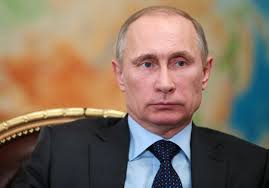
Russian President Vladimir Putin signed a decree lifting the ban Monday, Reuters reported. The move, which significantly bolsters Iran’s military capability, also may signal Moscow’s push for a head start in the race to benefit from the possible opening up of the Islamic republic.

“It was done in the spirit of good will in order to encourage progress in talks,” Russian Foreign Minister Sergey Lavrov said in a televised statement. “We are convinced that at this stage there is no longer need for such an embargo, specifically for a separate, voluntary Russian embargo.”

The $800 million deal to supply the S-300 missile system, which is similar to the US Patriot missile system, was signed in 2007.

In 2010, then-President Dmitry Medvedev called off the deal because of tightened UN sanctions on Iran and strong objections from the United States and Israel. The two nations feared it could be used to protect Iranian nuclear sites from air strikes.

Israeli officials expressed similar concerns following the announcement Monday. Israeli Intelligence Minister Yuval Steinitz denounced Russia’s decision to lift the ban as proof of Tehran’s newfound “legitimacy” following the nuclear talks, Agence France Presse reported.

“This is a direct result of the legitimacy that Iran is receiving from the nuclear deal that is being prepared, and proof that the Iranian economic growth which follows the lifting of sanctions will be exploited for arming itself and not for the welfare of the Iranian people,” Mr. Steinitz said in a statement.

According to the White House, US Secretary of State John Kerry raised objections over the move in a phone call Monday with Mr. Lavrov.

Russia is a main supplier of arms to Middle Eastern countries, including to governments that don’t recognize the Jewish state. Israeli leaders have long tried to persuade Moscow to scale down its cooperation with Iran and Syria.

Russian arms sales have plummeted in recent months, in part because of Western sanctions over the conflict in Ukraine. The country sold $5.98 billion worth of military equipment worldwide in 2014, down from $8.46 billion the previous year, according to the Stockholm International Peace Research Institute (SIPRI). In comparison, the United States, the world’s largest arms exporter, sold $10.2 billion worth of equipment last year.

Lavrov didn’t say when Moscow would deliver the S-300 missile system to Iran, according to the Associated Press. But he was quoted by Interfax, the state-run Russian news agency, as saying that the Kremlin was ready to supply it “promptly.”

Iran was the16th largest buyer of Russian arms last year, purchasing $4 million in missiles, according to SIPRI.


source:csmonitor.com

Joe Hockey hits back at Peter Costello

889446-0953e17c-e22c-11e4-a040-21c719ecae94

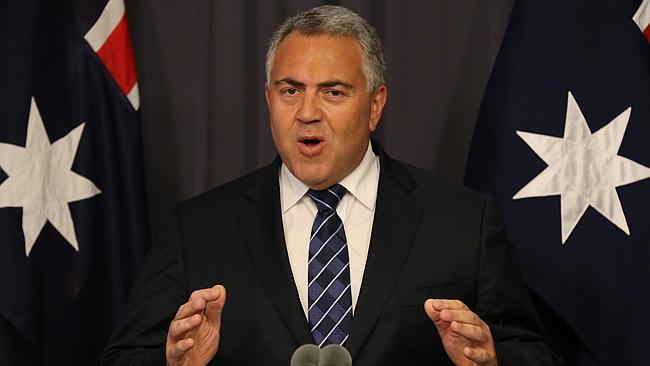
Treasurer Joe Hockey at a press conference at Parliament House in Canberra following his meeting with State and Territory Treasurers in search of a greater slice of the GST pie. Source: News Corp Australia

Opposition Leader Bill Shorten has ridiculed Treasurer Joe Hockey’s war of words with Peter Costello and Western Australia over the GST, citing it as evidence of a government “in disarray’’ with “no Plan B’’ to manage collapsing iron ore prices.

Joe Hockey lashed out at Mr Costello after the former treasurer accused the Abbott government of launching a “debased” tax discussion that could create “poverty traps” and damage the economy.

At a press conference in Sydney, Mr Shorten said the government’s “budget mess, dishonesty and incompetence” were undermining consumer and business confidence.

“It is a complete joke, what we are seeing at the moment. We are seeing former Liberal treasurers attack current Liberal treasurers, you’ve got the states begging for crumbs from the bowl of Joe Hockey and Tony Abbott all because Joe Hockey and Tony Abbott cut $80 billion from state-funded hospitals and schools in their last budget,’’ Mr Shorten said.

“This is a government in disarray. If Peter Costello is right, Joe Hockey is a joke — but Australians stopped laughing a long time ago.”

Mr Shorten said the Coalition had “no plan B” to manage collapsing iron ore prices.

“The transition from the mining sector to the non-mining sector is underway, and experts have been looking at this for two years. And what’s Joe Hockey and Tony Abbott’s plan? They don’t have one,” he said.

The Treasurer, speaking from the New York Stock Exchange early this morning, said he would consider freezing Western Australia’s plummeting GST revenue but demanded Perth commence the “absolutely necessary structural reforms” of privatisation and business deregulation.

Earlier Mr Costello described the government’s commitment to “lower, simpler, fairer” taxes as a “morbid joke”, noting the Coalition had foreshadowed possible tax increases on banks, multinational companies and superannuation accounts.

The senior Howard government minister argued the government should be cutting income taxes to alleviate bracket creep, rather than pushing up taxes.

Mr Hockey said Mr Costello’s analysis was “wrong” and urged him to stop “longing for yesterday”.

“I really wish that I had the tax revenue that Peter Costello had when we were last in government because if we had the same level of tax collections I’d be collecting an extra $25 billion today,” Mr Hockey told Sky News, saying the falling revenues had compounded increased spending under Labor.

“Everyone’s entitled to give free advice and frankly that’s what it’s worth; it’s free advice.

“I would suggest that people stop looking back to what was and focus on the challenges of today and the challenges of tomorrow. No matter who they are, we’ve got to look to the future rather than longing for yesterday.”

Mr Hockey also said it was “certainly” an option to freeze WA’s collapsing GST revenue if the other states agreed.

“I think the other states are putting appropriate pressure on Western Australia to undertake the sort of difficult but absolutely necessary structural reform in the West Australian economy that is necessary for it to continue to strengthen over time,” Mr Hockey said.

“When NSW has just gone through a very tough political fight over the sale of poles and wires, Western Australia still owns its TAB and still owns its poles and wires and at the moment has no intention of going down the road of microeconomic reform that other states have taken.”

“Western Australia has antiquated laws in relation to retail trading hours and in relation to retail. For example they have restrictions on the sale of lights at night time, which creates real problems for lighting suppliers who I think are allowed to sell light bulbs at night but not light fittings.”

In Western Australia, hardware stores are allowed to open before 11am on Sundays if they stock light bulbs. However they are not permitted to sell light fittings until after 11am.

As South Australia threatens to introduce a long-abolished tax on financial transactions to compensate for federal cuts, Mr Hockey conceded “any state is entitled to introduce its own taxes”.

Writing in The Daily Telegraph, Mr Costello urged the Coalition to deal with “a tax problem”.

“High taxes can be unfair taxes when they take away a person’s justly earned income and reduce the reward for effort.

“As people lose benefits and pay higher taxes … this creates a huge disincentive to work. It creates poverty traps. And, it heightens the incentive to ‘hide’ additional income.

“Another thing curiously absent from this “conversation” is any assessment of how these new taxes will affect economic growth and job creation. Taxes reduce economic activity.

“The Abbott government has already increased the top marginal tax rate to its highest level in 25 years. That did nothing for the economy. It made no difference to the budget deficit.”

source:theaustralian.com.au

Japan to push ahead with Antarctic whale hunt plans

Three minke whales dead on deck the Japanese ship Nisshin Maru in the Southern Ocean in January last year.

Three minke whales dead on deck the Japanese ship Nisshin Maru in the Southern Ocean in January last year. Photo: AFP/Sea Shepherd

Japan is to push on with its attempt to revive Antarctic whaling, after independent experts found it had failed to justify a new hunt.

A plan for a revamped “research whaling” program killing nearly 4000 whales was rejected by an Expert Panel of the International Whaling Commission in a report released on Monday night.

The report will go before the IWC’s full scientific committee next month,  and Japan’s IWC Commissioner, Joji Morishita, said it would try to convince the committee to approve the plan.

But Mr Morishita cautioned that might not be easy.

“The scientific committee is more political than the panel,” he told Associated Press.

“I won’t be surprised if we face some countries that oppose our plans, not because of science.

“But we hope to work toward a resumption (of whaling) at the end of the year.”

The plan, called NEWREP-A was put forward by Japan after its previous program was outlawed by the International Court of Justice in a case brought by Australia.

Australia told the court that the “research” was disguised commercial whaling, in breach of a global moratorium.

Under NEWREP-A, Japan proposes taking 330 minke whales annually in a 12-year program, for a total kill of 3996 – on top of the nearly 10,000 already taken under its previous scientific permits.

Its scientists set two broad objectives for NEWREP-A: obtaining more precise information on minkes should the moratorium ever be lifted; and investigating the Antarctic marine ecosystem.

But the IWC expert panel said in its report that Japan had failed to provide enough information to determine whether killing more minke whales was necessary to meet the research objectives.

“Therefore, the current proposal does not demonstrate the need for lethal sampling to achieve those objectives,” the panel concluded.

The IWC expert panel said considerable work had been undertaken to develop NEWREP-A.

“However … the present proposal contains insufficient information for the panel complete a full review,” its report said.

It proposed a new work program by the Japanese, which might take several years,  to provide more scientific information before a full review of the program could be completed under IWC rules.

Japanese Prime Minister Shinzo Abe has re-committed the country to pursuing Antarctic whaling after the ICJ decision.

“Japan, looking at international law and scientific grounds, will engage in research of whaling in order to collect the indispensable scientific information in order to manage the whale resources,” Mr Abe said on his visit to Australia last year.

Lobbyists from the International Fund for Animal Welfare celebrated the Expert Panel’s decision.

“It’s 2015. You don’t need to be a scientific expert to know there’s no need to slaughter whales in the Southern Ocean,” said Patrick Ramage, global whales program manager for IFAW.

source:smh.com.au

Peter Greste delivers warning on Q&A: ‘If we ignore it, it will come back to bite us’

The star panellist of <i>Q&A</i> was journalist Peter Greste, third from left, who is as gently spoken as he is persuasive.

The star panellist of Q&A was journalist Peter Greste, third from left, who is as gently spoken as he is persuasive. Photo: ABC

Peter Greste had many thoughtful things to say on Monday night’s Q&A, but perhaps his most essential was this: “If we ignore it, it will come back to bite us in the arse.”

It was not intended as a universal admonition to Australians – he was talking specifically about the implications of the recent university massacre in Kenya – but coming from Greste it might as well have been a broader warning to be careful what you vote for.

When you’ve spent 400 days locked in an Egyptian prison for the crime of doing your job, you come decorated with a certain assumed moral authority. A tougher task is to wear that garb well. Peter Greste – as gently spoken as he is persuasive of view – carried the garlands effortlessly. He commanded the field so easily that once again you wondered why Q&A had not dispensed with its five-panel tradition and handed the floor to its star attraction.

He showed that when one’s recent life experiences put one’s beliefs to the test, gratitude only goes so far. Greste has recently been effusive in his thanks for the efforts made towards his release by politicians – notably and correctly, to Foreign Minister Julie Bishop, whose face-to-face diplomacy on his behalf he compared a few weeks back to her counterparts being “hugged by the Terminator”.

Of course, Greste’s fight for freedom was a bipartisan issue – as bipartisan, for example, as the debate over data retention. Or, for another example, the fight against terrorism being summoned as justification for almost anything. Or, for yet another bipartisan embrace of a focus group winner, the dog-whistle demonisation of a particular religious group.

Whatever their support for him personally, Greste was not about to give either major party a free pass on these shortcomings, even if he didn’t make reference to either in his answers. The implication of his experience brought the weight.

He was at his most powerful in response to an audience question on the Koran and its alleged influence on terrorist acts.

His opening line dispatched the obvious but necessary: “I think if you dig around the Bible you’ll find plenty of excuses as well.”

Then he went on.

“Look, there are 1.5 billion Muslims in the world today, 23 per cent of the world’s population is Islamic. We’re not at war with 23 per cent of the world’s population,” he said.

“We can dig around and find all sorts of excuses. To my mind this is one of the biggest problems. This is not a clash of civilisations.”

Greste argued eloquently against the recently legislated collection of metadata – “we’re creating a lot of dark spaces within government” –  and warned against falling into line a behind policy built around what host Tony Jones called “the T word”.

Did Greste think Australia was exempt from politicians invoking it to justify their agenda?

“No, I don’t,” Greste replied.

“I think terrorism is clearly a big issue  … but I think there is a real danger that terrorism is used as a kind of scare tactic, as this way of government taking it as an opportunity to impose all sorts of draconian restrictions and limitations which it would never get away with under other circumstances.”

Greste’s presence had his two fellow panellists from the federal parliament – the Coalition’s Mitch Fifield and Labor’s Alannah MacTiernan – scrabbling to find areas of agreement with their heroic Q&A desk partner.

Fifield tried this, on the question of a global code of governance for the rights of journalists: “We’ve got to acknowledge that Peter has earned the right through his unique commitment to freedom of the press to have any proposition that he puts forward seriously looked at.”

But Fifield, like MacTiernan, was pushing the proverbial uphill, as when the Labor MP tried to have it both ways on Labor’s support for the metadata bill. As Jones told her: “That sort of begs the question as to why you voted for it.”

Indeed it did, and it was a question she couldn’t properly answer. It made you wonder, how would your run-of-the-mill Aussie pollie answer other questions, such as this one to Greste: just how did he get through those 400 days?

If you’d told him what awaited beforehand, “I’d have thought I’d go mad”, he admitted. But when asked to answer the challenge, he’d learned: “I’m tougher than I thought I was.”

And that summed it up: in Greste’s presence, the politicians were left to wonder what a really tough question looks like.

source:smh.com.au