Daily Archives: April 20, 2015

Μήνυμα Ιερώνυμου για την προσφυγική τραγωδία: «Αρκετά!»

Μήνυμα Ιερώνυμου για την προσφυγική τραγωδία: «Αρκετά!»

«Αρκετά! Η αγανάκτηση μας συμπυκνώνεται σε αυτή τη λέξη. Η ευθύνη για όσους επιτρέπουν να συμβαίνουν αυτές οι τραγωδίες, είτε προκαλώντας τις, είτε μη αντιμετωπίζοντάς τις, είναι τεράστιες» τονίζει, με αφορμή τη νέα τραγωδία με πρόσφυγες στη Μεσόγειο, ο Αρχιεπίσκοπος Ιερώνυμος.

«Ποια έκτακτη Σύνοδος έγινε για τους χιλιάδες ανθρώπους που χάθηκαν στη Μεσόγειο» ρωτά και ζητά να αναληφθεί δράση από όλους για την αντιμετώπιση αυτού του τεράστιου προβλήματος «που συνιστά, πια, ντροπή για τον ανθρώπινο πολιτισμό».

«Τριακόσια, τετρακόσια… επτακόσια. Δεν πρόκειται για δισεκατομμύρια που πρέπει να ανευρεθούν. Ούτε αριθμούς που αφορούν εθνικές οικονομίες ή όσα καθημερινά καθορίζουν οι “αγορές”. Μιλάμε για ανθρώπινες ψυχές» αναφέρει ο Αρχιεπίσκοπος και συμπληρώνει:

«Για ανθρώπους, πατεράδες, μανάδες, παιδιά, ακόμη και βρέφη που πνίγηκαν, μόλις πριν λίγες ώρες, στη θάλασσα της Μεσογείου. Ανθρώπους που έψαχναν ένα ασφαλές καταφύγιο στην Ευρώπη. Γιατί γνώριζαν, είχαν ακούσει, τους είχαν υποσχεθεί αυτοί οι δουλέμποροι, ότι εκεί που γεννήθηκε ο δυτικός πολιτισμός η ανθρώπινη ζωή είναι σεβαστή και προστατεύεται και, μάλιστα, της δίδεται απόλυτη προτεραιότητα. Τι απ’ όλα συνέβη προχθές; Πρόσφατα στο Αιγαίο; Πριν από μερικούς μήνες στη Λαμπεντούζα; Τίποτα. Απολύτως τίποτα.

»Αρκετά! Η αγανάκτηση μας συμπυκνώνεται σε αυτή τη λέξη. Η ευθύνη για όσους επιτρέπουν να συμβαίνουν αυτές οι τραγωδίες, είτε προκαλώντας τις, είτε μη αντιμετωπίζοντάς τις, είναι τεράστιες.

»Ποια έκτακτη σύνοδος έγινε για τους χιλιάδες ανθρώπους που χάθηκαν στις θάλασσες της Μεσογείου; Πόσοι αρχηγοί κρατών μέσα στο σαββατοκύριακό τους ενδιαφέρθηκαν γι’ αυτή την τραγωδία;

»Πόσοι επικοινώνησαν μεταξύ τους, πόσοι ξαγρύπνησαν σε “συνόδους κορυφής” για να βρουν λύση σε αυτό το πρόβλημα και να εξετάσουν τρόπους να φιλοξενήσουν ανθρώπους που φεύγουν με σαπιοκάραβα από την αφρικανική ήπειρο για την ευρωπαϊκή γη;» αναφέρει ο Ιερώνυμος και συμπληρώνει:

«Οι δηλώσεις συμπάθειας, τα συλλυπητήρια τηλεγραφήματα, τα ρεπορτάζ των διεθνών ΜΜΕ δεν αρκούν, δεν σώζουν ζωές. Ήρθε ο καιρός να σηκώσουμε όλοι μας τα μανίκια, να βρούμε όλοι μαζί τη λύση που απαιτείται για να σταματήσουν αυτές οι τραγωδίες.

»Σταματήστε τους δουλέμπορους που υπόσχονται ταξίδια χωρίς επιστροφή σε γονείς που ψάχνουν ένα καλύτερο μέλλον για τα παιδιά και τα βρέφη τους. Σταματήστε τους πολέμους που προκαλούν τα κύματα προσφύγων. Σταματήστε όσους κερδοσκοπούν στην πλάτη απελπισμένων φτωχών ανθρώπων που επενδύουν το βίος τους για μία ελπίδα που καταλήγει να μην έχει αντίκρυσμα και τους κοστίζει τη ζωή τους.

»Δεν ψάχνουν πλούτη αυτοί οι άνθρωποι. Δεν αναζητούν ανέσεις. Ελπίζουν σε μία ήρεμη ζωή, μακριά από το κυνήγι που περνούν στις πατρίδες τους. Μία ζωή με ασφάλεια, χωρίς κινδύνους. Αυτά τα “λίγα” ζητούν. Έστω, το ένα δέκατο, της φυσιολογικής και ήρεμης ζωής που ζούμε εμείς οι Ευρωπαίοι. Με τα καθημερινά μας άγχη και με τις αγωνίες μας.

»Ούτε ένα πιάτο φαγητό, ούτε μία κουβέρτα αρκεί για να αντιμετωπιστούν τα κύματα των προσφύγων και των μεταναστών. Δεν χωρούν πολιτικά παιχνίδια και “ισορροπίες” για βάρκες που πλημμυρίζουν από ανθρώπινες ψυχές και δεν προφταίνουν καν να απομακρυνθούν από τις ακτές της Μεσογείου.

»Χρειάζεται τόλμη, αποφασιστικότητα και να αναληφθεί δράση από όλους όσοι μπορούν να συμβάλλουν στην αντιμετώπιση αυτού του τεράστιου προβλήματος που συνιστά, πια, ντροπή για τον ανθρώπινο πολιτισμό.

»Ενώνουμε τις προσευχές μας για την ανάπαυση των ψυχών αυτών των θυμάτων. Ας ενώσουμε, επιτέλους, και τις προσπάθειές μας για να είναι τα τελευταία θύματα που χάνονται σε αυτό το ταξίδι. Για ένα καλύτερο αύριο αυτών των ανθρώπων, ώστε στην αντίπερα όχθη να τους περιμένει η ελπίδα και να μην καραδοκεί ο θάνατος» καταλήγει ο Αρχιεπίσκοπος Ιερώνυμος.

Πηγή:in.gr
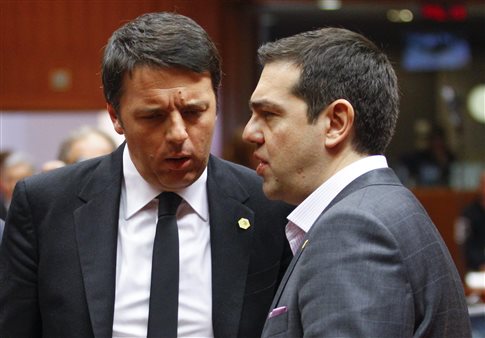
Επικοινωνία Τσίπρα-Ρέντσι για την αντιμετώπιση της μεταναστευτικής κρίσης

7B20BA9222A7EB9DA4CBA00F7BCE97A9

Τηλεφωνική επικοινωνία είχαν αργά το απόγευμα της Κυριακής ο Αλέξης Τσίπρας και ο Ματέο Ρέντσι, στη σκιά της μεγαλύτερης προσφυγικής τραγωδίας στη Μεσόγειο. Ο Έλληνας πρωθυπουργός συντάσσεται με το αίτημα του Ιταλού ομολόγου του για σύγκληση έκτακτης Συνόδου Κορυφής της ΕΕ για την μεταναστευτική κρίση, ζητά άμεση αντιμετώπιση του ζητήματος και προτείνει σχέδιο τριών σημείων.

«Η ΕΕ δεν μπορεί να επικαλείται την υπέρτατη αξία της ανθρώπινης ζωής αν δεν κινητοποιηθεί για να σταματήσει αυτή η συνεχιζόμενη τραγωδία» τόνισε.

Σε δήλωσή του, μετά την επικοινωνία με τον Ματέο Ρέντσι, ο Αλέξης Τσίπρας απηύθυνε «επείγουσα έκκληση στις κυβερνήσεις των χωρών μελών της ΕΕ για την άμεση διαμόρφωση ενός συνεκτικού σχεδίου προκειμένου να αντιμετωπιστεί η ανθρωπιστική κρίση με την οποία είμαστε αντιμέτωποι».

Όπως εξήγησε, το σχέδιο πρέπει να κινηθεί σε τρία επίπεδα:

α) Αναβάθμιση των δομών διαχείρισης της μετανάστευσης και της έρευνας και διάσωσης στη Μεσόγειο
β) Στήριξη των ευρωπαϊκών μεσογειακών χωρών που υποδέχονται έναν κύμα μεταναστών και προσφύγων πολύ μεγαλύτερο από τις δυνατότητες τους, με δίκαιη κατανομή των βαρών σε επίπεδο οικονομικής βοήθειας και φιλοξενίας
γ) Ανάληψη διπλωματικών πρωτοβουλιών για ειρηνική επίλυση των συγκρούσεων στη Συρία, στο Ιράκ και στη Λιβύη, καθώς και για την αποτελεσματική αντιμετώπιση του Τζιχαντισμού.

Ο πρωθυπουργός σημείωσε: «Να σταματήσει η Μεσόγειος να είναι μια θάλασσα-νεκροταφείο και οι Ευρωπαϊκές χώρες του Μεσογειακού Νότου αποθήκες ανθρώπινων ψυχών. Η Μεσόγειος ήταν και πρέπει να ξαναγίνει μόνο κοιτίδα πολιτισμού, εμπορείου επικοινωνίας, ανθρωπιάς».

Επισήμανε, δε, πως δεν υπάρχει χρόνος για χάσιμο, καθώς «η αργοπορία κοστίζει ανθρώπινες ζωές».

Κατά την τηλεφωνική επικοινωνία που είχε με τον Ιταλό ομόλογό του, ο Αλέξης Τσίπρας εξέφρασε στον Ματέο Ρέντσι την θλίψη του για τους εκατοντάδες πρόσφυγες που έχασαν τη ζωή τους όταν ανατράπηκε το αλιευτικό στο οποίο επέβαιναν. Παράλληλα, εξέφρασε την υποστήριξή του στο αίτημα του Ρέντσι για έκτακτη σύγκληση Συνόδου Κορυφής. Ο Ιταλός πρωθυπουργός ενημέρωσε τον Έλληνα ομόλογό του για την πορεία των ερευνών.

Η ελληνική κυβέρνηση επεξεργάζεται ήδη έναν οδικό χάρτη τον οποίο θα συζητήσει με τις χώρες που έχουν παρόμοιους προβληματισμούς, όπως η Ιταλία, η Ισπανία, η Κύπρος και η Μάλτα, με στόχο να υπάρξει μια κοινή θέση η οποία θα συζητηθεί με τους υπόλοιπους εταίρους στην ΕΕ.

Σε αυτό το πλαίσιο, ζητείται τόσο από την πλευρά της Ιταλίας, όσο και από την πλευρά της Ελλάδας η σύγκληση έκτακτης Συνόδου Κορυφής.

Ο πρόεδρος του Ευρωπαϊκού Συμβουλίου της ΕΕ Ντόναλντ Τουσκ εξετάζει το ενδεχόμενο σύγκλησης έκτακτης Συνόδου Κορυφής με θέμα την μεταναστευτική κρίση στη Μεσόγειο και θα λάβει τη σχετική απόφαση κατόπιν διαβουλεύσεων, ανακοίνωσε ο εκπρόσωπός του.

Ήδη, όπως έγινε γνωστό, τις αμέσως επόμενες ημέρες θα πραγματοποιηθεί έκτακτο και διευρυμένο Συμβούλιο των υπουργών Εσωτερικών και Εξωτερικών της ΕΕ, προκειμένου να δρομολογηθεί ένα νέο πλαίσιο αντιμετώπισης της ανθρωπιστικής κρίσης στην περιοχή που προκαλεί μεγάλα μεταναστευτικά-προσφυγικά κύματα.

Στην απόφαση αυτή, σύμφωνα με πληροφορίες, συνέβαλε και η ελληνική κυβέρνηση και οι άλλες κυβερνήσεις του ευρωπαϊκού νότου, ενώ η ύπατη εκπρόσωπος για την εξωτερική πολιτική και ασφάλεια Φεντερίκα Μογκερίνι, θα θέσει το θέμα στο Συμβούλιο Εξωτερικών Υποθέσεων της Ευρωπαϊκής Ένωσης, που θα πραγματοποιηθεί στο Λουξεμβούργο τη Δευτέρα.

Πληροφορίες ξένων μέσων ενημέρωσης αναφέρουν ότι η ΕΕ καταστρώνει τη νέα στρατηγική για τη μετανάστευση που πρόκειται να υιοθετηθεί στα μέσα Μαΐου.

«Η Μεσόγειος, από θάλασσα – δίαυλος των πολιτισμών, έχει μετατραπεί σε υγρό τάφο για χιλιάδες ψυχές που επιχειρούν να ξεφύγουν από τις φλόγες του πολέμου» σημείωσε σε ανακοίνωσή του ο κυβερνητικός εκπρόσωπος Γαβριήλ Σακελλαρίδης.

Ο κυβερνητικός εκπρόσωπος κάλεσε την Ευρωπαϊκή Ένωση να αναλάβει τις ευθύνες της για τα κύματα των προσφύγων. Παράλληλα, εξαπέλυσε βολές κατά της αντιπολίτευσης, κάνοντας λόγο για λαϊκισμό στην αντιμετώπιση ενός διεθνούς ανθρωπιστικού ζητήματος.

Το ζήτημα αναμένεται να συζητηθεί κατά τη συνεργασία που θα έχει τη Δευτέρα ο Αλέξης Τσίπρας με τον υπουργό Δημόσιας Τάξης και Προστασίας του Πολίτη Γιάννη Πανούση.

Πηγή:in.gr

Greece:The price of compromise

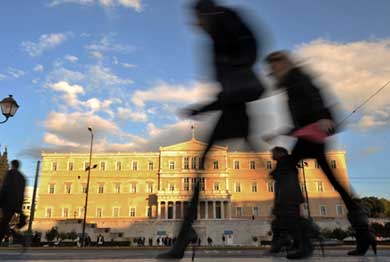
parliament_people_walking

The representatives of the middle-class political world made plenty of compromises over the years and now we are paying the price. The current government’s appointment of failed politicos, unionists and party officials to crucial posts in health, education and other sectors is annoying. To be fair, this is nothing new. During George Papandreou’s tenure as premier, there was OpenGov on the one hand, while on the other fitness instructors were appointed hospital directors through the back door. The tradition was kept alive by the ND-PASOK coalition, which appointed unbelievable characters to pivotal posts in the public sector. The same is happening now with the SYRIZA-Independent Greeks administration. The only thing that’s different is the formula and the CVs of those being appointed. In the old days they used to feature some kind of working experience, while now it’s all about party allegiance.

The middle-class establishment began making concessions with institutions and the quality of the people hired to run them. It lowered the bar, legitimized populism and the idea that someone else is always to blame. What we are experiencing now is the climax of the entire post-dictatorship malaise. The middle-class political world was unable to make the necessary reforms and get rid of its bad DNA. Costas Karamanlis was ready to break the eggs in education and elsewhere, but never got round to making the omelet. George Papandreou envisioned Greece becoming the Denmark of the South while the Socialist party’s apparatchiks ruled around him. Antonis Samaras suffered from intense bipolar disorder, which turned him into a stubborn leader one day and an obsessive local governor the next. Even that one rare moment of major consensus with regard to changes in education through legislation from Anna Diamantopoulou was not allowed to conclude without barbaric concessions. And now it’s full speed backward, an attempt to see the common denominator slide even further.

I don’t know how I would react to all this if I were 30 years younger. I would be angered that the change of regime announced by Alexis Tsipras did not bring about meritocracy or genuine reform in education. I would be left wondering, however, what the alternative would be, besides leaving the country, or who knows what else. A solution would be for the creative youth to rise up from the couch and get into politics and public dialogue. Perhaps at the end of the day it all has to do with a generation change. But let’s not forget this: SYRIZA did not win the election on the back of its charm and powers of persuasion. The party filled the void left behind by the middle-class world, which was unable to firmly stand its ground during the great crisis.

source:ekathimerini.com

Unclear strategy has everyone puzzled

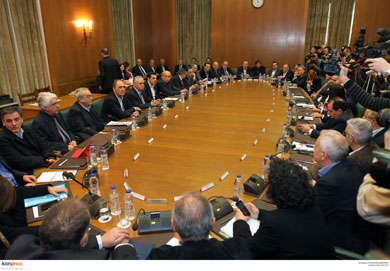
cabinet_390_1904

Some expect the gov’t to back down, others expect it to hold on to its red lines even if that leads to default.

The government says it wants an honorable compromise with the creditors, who are in turn demanding a credible reform list. However, the distance separating the two sides remains large as the progress in negotiations is slow, allowing the ugly scenarios of default and “Grexit” to be assigned higher probabilities by analysts and others. The end of this standoff will depend on the government’s intentions, strategy and cash reserves and the stance of the official creditors. At this point, the impasse looks set to continue despite Greece’s pressing liquidity needs.

It is widely known that the general government’s cash buffers are running out. The Greek state paid 194 million euros in interest to bondholders last Friday and is expected to make another interest payment of 80 million euros to the ECB on Monday. As far as next month’s debt payments are concerned, the key dates are May 1 and 12 when the state is due to pay 200 million euros in interest and 746.6 million in a tranche to the IMF. Also, it has to refinance maturing T-bills worth 1.4 billion euros on May 8 and 1.4 billion on May 15, of which 150 million euros belong to foreign funds, before getting into June, where the debt repayment schedule is heavier. It should be noted that the dependence on internal sources to meet debt payments is having an adverse impact on liquidity but has also reduced the country’s gross public debt.

Nevertheless, the state may still be able to meet its basic obligations in May. This could be the case if tax revenues do well, more expenditures are postponed (building up arrears), and all general government entities are mandated to transfer their cash deposits to the central bank, making them available for state financing, some government officials think. An estimated 2 to 3 billion euros could be transferred provided the ECB allows Greek banks to replenish this amount by getting more loans via emergency liquidity assistance (ELA), according to pundits. Alternate Finance Minister Dimitris Mardas referred to the latter solution, saying there is a law dating to 1951 which allows this transfer, pointing out that similar laws exist in other EU countries such as the Netherlands. Of course, the day of reckoning could be delayed further if Greece was able to get a loan from another country. Germany’s Der Spiegel mentioned Russia on Saturday.

Of course the government would like to get EU bailout funds instead of mobilizing the last domestic resources and squeezing domestic liquidity further, but this does not look likely judging from a series of statements made by Greek, EU and German officials over the last few days. The government’s so-called red lines on labor market reforms, pensions, value-added tax and the development of public property, outlined by Prime Minister Alexis Tsipras to Reuters, seem to be the red lines of the official creditors as well. This has created a deadlock, and while government officials appear optimistic that an agreement in principle is possible before the end of April, the odds do not look good at this point.

So it does not surprise that 2-year Greek bond yields surpassed 27 percent last week, the 10-year yield surged toward 13 percent, pointing to a possible default, and the general index of the Athens Stock Exchange lies at a multi-decade low. Talking to market participants here and abroad, one comes to two conclusions. First, investor interest in Greece is much lower now than it was back at the peak of the crisis in 2012. This reflects both the fact they have considerably reduced their exposure to Greek assets and the firewalls erected by the EU since then, decreasing the risk of the crisis spreading to other EU periphery members. Second, the strategy of the Greek government is not clear to them. They cite conflicting statements by ministers on reforms, other statements about German war reparations and allowing jihadists to go to the rest of Europe if the crisis gets worse, and they wonder how all this helps Greece’s negotiating position.

Others are also puzzled by the government’s tactics and strategy so far. Although its message is clear – that is, no more austerity – its view on structural reforms diverges considerably from that of the lenders. The leftist-led government has tried to put aside the differences on reforming pensions, the labor market and others and play up the fight against corruption and tax evasion in the last couple of months. But the reforms have caught up again and the differences have resurfaced.

Pragmatists expect the government to bow and implement some of the reforms sought by the lenders just before it runs out of money, either in May or June. They cite its retreat in February when the state coffers were empty and the risk of capital controls was high.

However, others disagree, expecting it to hold on to its red lines even if it leads to a default within the euro. At this point, the administration looks as if it is trying to buy more time for negotiations by mobilizing all available resources. Some say the goal may be to include the pending reforms in a new, more attractive agreement, containing debt relief measures. The government could take this deal to the people via a referendum or even call new elections.

All in all, the government’s strategy is not clear to the market and others. Whether this is intentional and part of the strategy or not remains to be seen. What is certain is something else. The strategy will be judged by the final outcome.

source: ekathimerini.com

Aston Villa’s Fabian Delph ruins Steven Gerrard’s Liverpool FA Cup dream

Aston Villa v Liverpool - FA Cup Semi Final

The restorative powers of Tim Sherwood know no bounds. A first FA Cup final in 15 years awaits an Aston Villa side that was in fear of its Premier League status when their new manager breezed into the club two months ago.

For Brendan Rodgers, Steven Gerrard and Liverpool, however, the so-called dream farewell lies in tatters.

So much has been said and written about Gerrard’s glorious Liverpool career ending with the FA Cup on his 35th birthday on 30 May that Villa were almost relegated to a sideshow in the build-up to this semi-final. Instead, Liverpool froze, Rodgers was tactically outwitted by Sherwood and it was the Villa midfield of Fabian Delph, Jack Grealish and Tom Cleverley who dominated Gerrard and company. Grealish exited to a standing ovation.

Gerrard left Wembley for the final time with sporting handshakes and congratulations to the better team throughout.

There was a controversial finish with the Liverpool substitute Mario Balotelli having a late equaliser wrongly disallowed for offside but no one could dispute the merits of Villa’s place against Arsenal next month. Without an unlikely reprieve in Champions League qualification, Rodgers may find himself under serious examination following this display.

But for a brief spell that produced the opening goal for Philippe Coutinho, the 25 points and 10 places that separated the semi-finalists in the Premier League appeared an illusion with Villa by far the more confident, vibrant and purposeful team. The side mired in relegation trouble all season had a clear understanding of what their manager wanted. Liverpool were subdued and confused by contrast, outnumbered and overrun in central midfield from the opening whistle with their defence allowed little time to build from the back. Villa’s front three pressed to the same telling effect as Manchester United and Arsenal did in their recent league wins over Rodgers’ side.

Sherwood suffered disruption before and during the tie with Gabriel Agbonlahor failing to recover from a hamstring injury sustained last weekend at Tottenham Hotspur, where the liberating effect of Villa’s 1-0 win resonated at Wembley. In the absence of Agbonlahor, Grealish and Charles N’Zogbia complimented the power of Christian Benteke with tireless, creative performances in attack. The 19-year-old Grealish in particular relished the occasion, driving at Emre Can throughout and posing a constant threat around the Liverpool area.

Simon Mignolet produced the first save of the match from N’Zogbia after Benteke and Delph combined to invite the French midfielder to shoot from 18 yards. N’Zogbia almost returned the favour to the in-form Benteke but Dejan Lovren made a vital interception to prevent the striker running clear on goal. All Liverpool had to offer in the opening 25 minutes was an optimistic penalty claim. Delph caught Raheem Sterling’s heel as the 20-year-old, initially leading his side’s attack in place of the absent and unreliable Daniel Sturridge, raced into the area, but the referee, Michael Oliver, was rightly unmoved.

It took another injury blow for Villa and an overdue tactical switch from Rodgers to inject menace and urgency into Liverpool’s performance. Nathan Baker was only recalled to the heart of defence due to Ciaran Clark’s knee problem but the brittle defender’s first start since Liverpool’s 2-0 win at Villa Park in January lasted all of 25 minutes. Jores Okore had to replace Baker after he pulled up having beaten Joe Allen in an aerial challenge.

Seconds later the Liverpool manager abandoned his three-man defence and the experiment of Gerrard operating anonymously behind Sterling to go to 4-3-3. Suddenly Liverpool had the impetus and the lead.

Coutinho had been the driving force behind Liverpool’s run to the semi-final and started the move by picking out Jordan Henderson’s run into the penalty area. The midfielder’s cross should have been routine for Okore but Villa’s fourth choice centre-half dwelled too long on the ball, Delph was also unable to clear, and Liverpool regained possession on the edge of the box. Sterling switched the play into Coutinho’s darting run and the Brazilian, under pressure from three Villa defenders, tucked a shot beyond Shay Given via Okore’s right knee.

Villa’s momentum and belief, however, could not be checked and they were level within six minutes. Delph had a commanding game in central midfield and, having sprinted down the left before exchanging passes with Grealish, delivered an inviting pass into Benteke lurking with intent just inside the Liverpool area. The Belgium international stroked a confident finish out of Mignolet’s reach for his ninth goal in seven games.

Rodgers introduced Balotelli at the interval in the search for Liverpool’s waylaid threat but the flow of the game remained unchecked.

Alarmingly for the Liverpool manager, his team’s defending deteriorated and Delph took full advantage to put Villa deservedly ahead from a fine team goal. The Villa captain broke from the centre circle and found Benteke, his back-heel found Grealish who spotted that Delph had continued his run into the area. Collecting Grealish’s measured pass, Delph cut back inside the flat-footed Lovren and Can before beating Mignolet from close range.

The response from Liverpool was minimal until the final moments and Villa had chances to extend their lead only for Kieran Richardson to shoot wastefully over and Leandro Bacuna to pick the wrong pass into Benteke with N’Zogbia completely unmarked. Finally the men in yellow stirred to set up a tense finale. Lovren put a free header over from Gerrard’s corner, Richardson cleared off the line from the Liverpool captain’s header at a Coutinho corner and then came a moment of huge controversy. Balotelli latched onto Gerrard’s raking pass out of defence, controlled superbly on his chest and sent a cool finish past Given. Villa were spared by an offside decision that never was and, seconds later, Liverpool were on their knees and out.

source:theguardian.com