Monthly Archives: January 2015

Κέντρο Ευρωπαϊκής Πολιτικής: H ανταγωνιστικότητα είναι το πρόβλημα

Κέντρο Ευρωπαϊκής Πολιτικής: H ανταγωνιστικότητα είναι το πρόβλημα

Παρά την στήριξη δισεκατομμυρίων και τις μεταρρυθμίσεις, «η Ελλάδα μπορεί να πληρώσει σήμερα τα χρέη της λιγότερο από ό,τι πριν από την διάσωση» (φωτ. Ν.Παλαιολόγος/ SOOC)

Παρά την στήριξη δισεκατομμυρίων και τις μεταρρυθμίσεις που έγιναν, «η Ελλάδα μπορεί να πληρώσει σήμερα τα χρέη της λιγότερο από ό,τι πριν από την διάσωση» γράφει το περιοδικό Focus, επικαλούμενο έρευνα του Κέντρου Ευρωπαϊκής Πολιτικής (CEP) που δημοσιεύεται στη γερμανική εφημερίδα Welt am Sonntag.

«Μια έξοδος της Ελλάδας από την Ευρωζώνη τρομάζει σήμερα λιγότερο από ό,τι πριν από τρία χρόνια», επισημαίνεται στο δημοσίευμα και τονίζεται ότι, σύμφωνα με την μελέτη του CEP, «η Ελλάδα είναι σήμερα λιγότερο σε θέση να αποπληρώσει το εξωτερικό της χρέος από ότι ήταν το 2010» και ότι «η πιστοληπτική ικανότητα της χώρας συνεχίζει να πέφτει ασταμάτητα».

«Οι μεταρρυθμίσεις των περασμένων ετών και η τεράστια οικονομική βοήθεια ύψους 234 δισεκατομμυρίων ευρώ δεν άλλαξαν τίποτα σε αυτό» αναφέρουν οι ερευνητές και προσθέτουν ότι η πιστοληπτική ικανότητα της χώρας πέφτει και πάλι από το 2013, ενώ προηγουμένως είχε βελτιωθεί από το 2010 μόνο για μία χρονιά.

Στην έρευνα που δημοσιεύεται στην Welt am Sonntag επισημαίνεται ότι κύριος λόγος για την κατάσταση είναι η απελπιστική κατάσταση των επιχειρήσεων. «Η ελληνική οικονομία παραμένει μη ανταγωνιστική και οι μισθοί κατά 10% πολύ υψηλοί», αναφέρει ο Ματίας Κούλας, ένας από τους ερευνητές που συνέταξαν την έρευνα.

Σημειώνεται ακόμη ότι από το 2010 έπεσαν οι τιμές για πολλά προϊόντα, αλλά αυτό δεν έγινε μέσω χαμηλότερων μισθών, αλλά μέσω απολύσεων. Για να μειωθεί η υψηλή ανεργία στη χώρα, θα έπρεπε να μειωθούν και οι μισθοί, συγκριτικά με την διεθνή πραγματικότητα, τονίζεται.

Επιπλέον, οι συντάκτες της μελέτης αμφισβητούν την χρησιμότητα ενός νέου «κουρέματος» του ελληνικού χρέους: «Ένα κούρεμα χρέους θα αφορούσε μόνο το υπάρχον δημόσιο χρέος. Δεν θα μπορούσε όμως να παραμερίσει την κεντρική αιτία της ελληνικής δυστυχίας, δηλαδή το έλλειμμα ανταγωνιστικότητας και θα απάλυνε τα ελληνικά προβλήματα μόνο βραχυπρόθεσμα» αναφέρουν οι ερευνητές.

Πηγή:in.gr

Euroleague triumphs for Reds and Greens

Olympiakos extended its perfect record in the second round of the Euroleague with a 74-68 triumph at Fenerbahce in Turkey on Friday, while Panathinaikos produced one more emphatic home win, this time over Zalgiris Kaunas with a 77-58 score.

The Reds have three wins out of three as they outplayed Fenerbahce, the team of Greece point-guard Nikos Zisis and former Panathinaikos coach Zeljko Obradovic.

Olympiakos showed more confidence and determination in key parts of the game, such as the end of each half: It overturned Fener’s Q1 lead of 22-16 to advance 43-36 at half-time, and came back from 68-65 down to score nine unanswered points at the end of the game, including a decisive Vassilis Spanoulis triple.

Matt Lojeski scored 18 points to eclipse Spanoulis’s 16.

In Athens Panathinaikos welcomed back its former star Sarunas Jasikevicius, who is now the assistant coach of Zalgiris, but left the Lithuanians no chance through an impressive defensive performance and a great all-around effort by the Greeks.

The host stormed into the game advancing by up to 13 points, and responded to Zalgiris’s good spell that shortened the distance to six (39-33) with a good finish to the first half (46-33).

In the second half the Greek champion ran away with the game, reducing it to an opportunity for some new faces to feature on the court.

Panathinaikos had six players score at least 10 points each, led by Nikos Pappas with 14 and James Gist with 13.

That was the second win for the Greens in three games in the top-16.

On Wednesday PAOK performed a second impressive comeback in four days to beat Italy’s Cantu 78-77 for the Eurocup in Thessaloniki.

source: ekathimerini.com

Grexit the only way out of ‘valley of tears,’ says Hans-Werner Sinn

Head of the Institute for Economic Research argues eurozone should allow Greece orderly temporary departure.

German economist Hans-Werner Sinn has consistently argued in favor of Greece’s exit from the eurozone. The head of the Munich-based Institute for Economic Research (Ifo) considers it his personal mission to explain and interpret in simple terms the European credit crisis, both for his own compatriots and Europeans in general, often drawing accusations of oversimplification and populism.

In an e-email interview with Kathimerini, Sinn explains why he considers the best solution for the Greek conundrum to be a debt writedown and a temporary exit from the common currency as a means of improving the cash-strapped country’s competitiveness.

You believe the solution lies in a Greek eurozone exit followed by a haircut. Have you considered the consequences for Greece and how, for example, it would be able to basics like fuel given its low production base?
I have proposed that in this case Greece could receive funding from the international community to pay for vital imports like medicine and fuel. A return to the drachma and the devaluation of the currency would, even without this assistance, have the advantage that Greece would stop buying foreign agricultural products. The majority of consumers would turn to domestic producers, who would in turn see a boost in production and be able to generate jobs. Greece could develop its agricultural sector with the same level of success already achieved by Israel, which exports products all over Europe. Furthermore, there would be a repatriation of deposits by wealthy Greeks who have transferred at least 100 billion euros abroad in order to safeguard it. Once everything becomes cheaper they will want to invest in their country again. This would lead to a fast recovery in the construction sector, which could also create new jobs quickly, within a year or two. Finally, in the medium term it would make it possible to rebuild the industries that Greece once had; only this time around they would be modern and adapted to the needs of a new era.

Almost every credit crisis in the world is dealt with through haircuts and national currency devaluations, and I do not see why Greece should be an exception. The Greek people, who are suffering from mass unemployment at the moment, would be the biggest winners of such a devaluation. The present course benefits only big investors in Greece and abroad, while placing additional burdens on the Greek people.

Do you believe that the eurozone could deal with the effects of a Greek exit? A number of your colleagues have recently reconsidered the consequences of such a turn of events, estimating that it would cost the bloc tens of billions of euros.
With a haircut European states would simply be writing off future claims, which they won’t be able to collect in any case. This is a separate issue to the question of a Greek exit from the eurozone. The sooner that creditors face the truth, the better. Only a Grexit can make Greece competitive once more and allow the country the possibility of getting back on its feet and recovering without generating new debt.

Do you think that the German government will be able to come to some sort of compromise with a left-wing government in Greece in the event that SYRIZA wins the January 25 elections?
Yes, of course. There is always room to explore a compromise.

Do you support Chancellor Angela Merkel’s current policy in regard to Europe or do you support a change in strategy? Pressure for change is coming from Italy, Greece and Spain. Do you believe Merkel should give in to it?
Chancellor Merkel agreed to the mutuality of the investment risk through the bailout packages and the actions of the European Central Bank. This protected investors all over the world, and especially French banks, as well as German banks and insurance companies. The result, however, was a drop in interest rate spreads. This creates the temptation to generate new debt, which means the problem is aggravated rather than alleviated. Europe is at risk from a huge mountain of debt that threatens to crush it as the limitations on debt have proved ineffective. There is only one principle that leads to debt discipline: the mutualization of the debt by creditors. This is precisely why I believe there needs to be a European summit on the debt aimed at offering relief to countries, to private banks and central banks, as well as an overhaul of the eurozone.

Do you believe that Greece’s membership of the eurozone was a mistake?
Greece did itself a lot of harm by joining the eurozone because the introduction of the euro caused an inflationary credit bubble that stripped the country of its competitiveness. Unemployment rates of around 50 percent among young people and 25 percent of the general population are the terrifying consequences. And the people responsible for that are the politicians both in Greece and Germany.

Do you believe that the Europhobic Alternative for Germany has any influence on government decisions?
I personally have no ties to this particular party nor to any other. Nevertheless, I do believe that this new party will influence the decisions of the German government, which is trying to hold onto votes.

How do you imagine the eurozone in five years’ time? In your last book, “The Euro Trap,” you predicted several decades of crisis ahead. What can we do to prevent that?
I think it wise to preserve the eurozone. But we need the abovementioned summit. Above all else, however, we need the euro to become more flexible. A monetary union that foresees only entries and no exits is a prison. I would like to see reforms that would allow a country to exit the euro in an orderly fashion and devaluate its currency. After a period of a few years, during which it could stabilize or change course, create new economic structures and implement reforms, the same country should have the option of rejoining the eurozone. In fact, if it was up to me, I would ensure that this country could have a limited participation in the board of the ECB. The prospect of reinclusion in the eurozone would enhance the country’s reform drive. Trying to boost competitiveness from within the eurozone, through a long period of stagnation and reductions in salaries and prices, would be a long walk through a valley of tears that would destroy Greek society.

Would a small euro area composed only of the core countries be more effective than what we have today?
Monetary union makes sense by definition but it needs to be based on strict discipline on the issue of debt, which can only be achieved through its mutualization by creditors. Think of the US. There, neither the federal government nor the Federal Reserve would offer economic assistance to troubled states like Illinois or California. That is why American federalism works. I have repeatedly warned of the danger of breaking up or shrinking the eurozone. Such a radical solution would be as bad as making it impossible for a country to leave the bloc. Ideological extremism cannot save the eurozone; it needs flexible solutions that can be applied on a case-by-case basis.

source: ekathimerini.com

ECB holds key to Greek developments

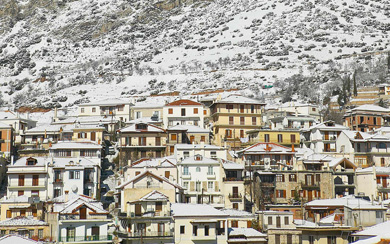
arachova

Frankfurt can control the flow of cash in the domestic credit system and therefore the state’s liquidity.Greece is preparing to go to the polls next Sunday with the two larger political parties sharpening their exchanges and making more promises in a bid to boost their election chances. Regardless of who wins and forms a government next week, the key to economic developments in the next few weeks, and perhaps months, is held by the European Central Bank (ECB) – and even more so if the new government is led by the leftist SYRIZA party.

Greece has been unable to collect a total of about 7.3 billion euros from bailout loans and revenue from Greek bonds held by the ECB because the last review of the economic policy program was not successfully concluded on time. Nevertheless, the state has managed to operate smoothly for months because it has tapped domestic liquidity sources.

Indeed, the state has been kept afloat by intra-governmental borrowing through repo (repurchase agreements) operations to the tune of 9 billion euros according to government sources. The central administration uses state assets as collateral to draw on this excess liquidity from general government subsectors, i.e. social security funds, state organizations etc, which amounted to about 13 billion euros last September.

If the repayment of this borrowing is rolled over, this repo framework will become an actual funding source in 2015-2016. The central administration could also use idle cash resources deposited in local commercial banks by the same or other parts of the general government for liquidity purposes. The exact amount of these cash resources has not been made public. When asked, one official put it a 2 billion euros, while another spoke of “several billion euros.”

In addition, the state had borrowed temporarily some 2.5 billion euros out of about 11.3 billion left over from the recapitalization of the Greek banking system, according to one of officials.

Nevertheless, the stalemate with the official lenders could go on longer if no new government is formed and the country holds a second round of elections within a month or a new government is formed and enters into lengthy negotiations with the country’s creditors. Although the first outcome is possible, the second is more likely. Especially if a SYRIZA-led government takes over and refuses to negotiate with the troika, seeking instead “political negotiations,” with all issues back on the table.

SYRIZA officials have repeatedly said they reject the program and will not honor it. Whether this is simply a pre-election tactic to win over more voters fed up with years of austerity or the main policy plank remains to be seen. We believe these officials express the party’s line on the issue. In that case, the state will not be able to count on more bailout loans to keep on going and will have to rely more on domestic borrowing or/and higher taxes.

Since the available cash resources will be fully utilized in February, according to experts, and help from the fiscal side, namely the primary surplus, will likely be limited, the new government will have to turn to the banks for extra funding.

SYRIZA officials have hinted at issuing more T-bills to satisfy borrowing needs, if necessary, as long as negotiations with the lenders go on.

Of course, there is an agreement that the outstanding stock of T-bills cannot exceed the amount of 15 billion euros. Nevertheless, the ECB allowed this limit to be surpassed by 3 billion or more in August 2012 to help Greece repay maturing bonds mostly held by the ECB at the time. So, it is possible to see a repetition of that this summer when other Greek bonds held by the Eurosystem expire.

However, the state will likely have greater borrowing needs in the meantime and may want to sell more T-bills to local banks to pay part of its bills. That’s where the ECB comes in. Although it will be impossible for the governing council of the European Central Bank to refuse Greek banks access to loans from the Bank of Greece’s emergency liquidity assistance (ELA), it can impose an upper limit on the amount of T-bills each local bank holds.

Bankers say the ECB could send a letter to each of the local credit institutions to that end and they certainly know more about this issue. It is reminded the ECB has been the regulator of Greece’s four largest banks since last November.

Bankers say that the ECB is entitled to do this if it thinks there is a risk management issue. Still, this is a politically sensitive issue in our view. It is estimated the four major banks hold Greek government debt to the tune of 20 billion euros or so, which is not far from their total share capital.

Something like this could change the landscape since the state could not count on extra T-bill issuance to cover its funding needs.

Undoubtedly, this is more likely if the Greek program is not extended and is more important than buying bonds from Greek banks when the awaited QE (Quantitative Easing) scheme is announced on Thursday. This is why we say the ECB holds the key to future economic and other developments in the country.

source: ekathimerini.com

Socceroos Asian Cup semi-final won’t be moved to Sydney despite Hunter Stadium limitations

Hunter Stadium, which hosted the Japan v Palestine match earlier in the tournament, is operating at the reduced capacity of 23,000 for the Asian Cup

Hunter Stadium, which hosted the Japan v Palestine match earlier in the tournament, is operating at the reduced capacity of 23,000 for the Asian Cup Photo: Ryan Osland

A potential Asian Cup semi-final involving Australia appears certain to remain in Newcastle instead of Sydney despite Hunter Stadium’s already limited capacity being reduced by nearly a third for the tournament.

The Asian Football Confederation has an exclusive tenancy deal with Stadium Australia for the duration of the tournament and would be free to move a high-profile semi-final involving the host nation to the 83,000 capacity venue. The  local organising committee in conjunction with the AFC have not looked into the possibility of moving a semi-final involving the Socceroos to Stadium Australia to accommodate up to 60,000 more fans in what would likely be a sell-out fixture.

After finishing second in their group to South Korea, Australia will play China in the quarter-final where they will have a chance to play either Japan, Iran or the UAE in a semi-final held at Newcastle, where capacity restrictions are in place. In accordance with FIFA World Cup regulations, the AFC have so far prevented the local organising committee from selling tickets to the two non-seated hills behind the goals at Hunter Stadium, which reduces the capacity of the venue from 33,000 to approximately 23,000.

Should the two organising committees of the tournament move a potential Australia semi-final to ANZ Stadium, it would likely provide the local organising committee about $500,000 in additional gate takings as well as the opportunity to allow more fans to watch a historic match. However, the short turnaround of just five days between the quarter-final and the semi-final are proving a deterrent to  moving what could be the biggest match of the competition, a potential clash between Australia and Japan, or Australia and Iran.

The local organising committee claims it would be a logistical nightmare to rearrange issues of ticket exchanges, broadcasting, travel arrangements, accommodation, staff and other requirements in just five days.

Questions have been raised as to why the Hunter Stadium  – the smallest stadium by capacity for the tournament – will host potentially the most high-profile match of the Asian Cup. The state governments were invited to bid for games in packages, with NSW purchasing the rights for all semi-finals, the third v fourth play-off and the Asian Cup final. The Victorian government did not bid for anything further than a quarter-final due to hosting the Australian Open, which clashes with the latter stages of the Asian Cup. The Queensland government did not battle NSW for the rights to host the final four games of the tournament.

“We had an agreement with governments that we would have a rotating draw so teams travelled, that was fundamental to the funding agreement. We made a decision to take 4 games to Newcastle, and we had 11 at Sydney, as NSW paid the most money to have the games at this tournament,” Asian Cup 2015 chief executive, Michael Brown, said.

It was decided not to host more than 11 games at ANZ Stadium due to venue congestion and the organisers confirmed they did not plan for Australia to finish second in their group and face playing a semi-final in Newcastle. However, if Australia does reach that stage, the local organising committee might construct temporary seating on the hills behind both goals to increase the capacity for a match where demand will exceed supply.

“We’re looking at every option for the two grass areas at Newcastle we can put temporary seating on. We’re working with a couple of companies  to work out costs, food, toilets, disabled seating, sight restrictions, and we have to work out if it’s going to be beneficial. We’ll be working through that, I’m not sure if we would have needed them if Australia doesn’t beat China,” Brown said.

source:brisbanetimes.com.au

Την οργή των Ελλήνων της Αυστραλίας προκαλεί η νέα ταινία του Ρ.Κρόου

Την οργή των Ελλήνων της Αυστραλίας προκαλεί η νέα ταινία του Ρ.Κρόου

Από την ταινία του Ράσελ Κρόου «The Water Diviner»


Αντιδράσεις προκαλεί στις τάξεις της ομογένειας της Αυστραλίας η νέα ταινία του Ράσελ Κρόου. Ο λόγος είναι ότι η ταινία του The Water Diviner που αναφέρεται στην εκστρατεία των ΑΝΖΑΚ (ακρωνύμιο του εκστρατευτικού σώματος Αυστραλών και Νεοζηλανδών) στην Καλλίπολη, παρουσιάζει τους Έλληνες ως βάρβαρους και αιμοβόρους κατακτητές.

Ο ηθοποιός έκανε το σκηνοθετικό του ντεμπούτο με την ταινία, η οποία έκανε την πρεμιέρα Χριστούγεννα στην Αυστραλία.

Ο Κρόου ερμηνεύει τον κεντρικό χαρακτήρα, έναν αυστραλό αγρότη, ο οποίος στις αρχές της δεκαετίας του ’20, αφήνει την πατρίδα του και ταξιδεύει στην Κωνσταντινούπολη, αναζητώντας τα ίχνη των τριών αγοριών του που χάθηκαν στη μάχη της Καλλίπολης.

Εκεί θα ακούσει από Τούρκους κυρίως αξιωματούχους τι συνέβη στους ΑΝΖΑΚ, όταν τους απέκρουσαν οι τουρκικές δυνάμεις υπό τον Κεμάλ, συνεπικουρούμενες από γερμανικά και αυστριακά στρατεύματα.

Σύμφωνα με τον Δρ. Παναγιώτη Διαμαντή, Καθηγητή Ιστορίας (ειδικευόμενο στις γενοκτονίες) στο πανεπιστήμιο του Σίδνεϊ, ο Κρόου και ο σεναριογράφος του Άντριου Αναστάσιος (στο βιβλίο του οποίου στηρίζεται η ταινία), στην προσπάθειά τους να δημιουργήσουν ένα αντιπολεμικό μήνυμα «κατέληξαν να εμφανίζουν τα θύματα ως θύτες και τους σφαγιαζόμενους ως βαρβάρους».

Κι αυτό γιατί τόσο οι Αρμένιοι της περιοχής, όσο και οι ντόπιοι Έλληνες απεικονίζονται ως βάρβαροι κι αιμοβόροι κατακτητές, κι όχι ως ιθαγενείς που αμύνθηκαν στην εκστρατεία της Οθωμανικής Αυτοκρατορίας του 1914.

Σύμφωνα με το δημοσίευμα που υπογράφει ο Δρ. Διαμαντής στην αγγλική έκδοση του «Νέου Κόσμου», οι Έλληνες στην ταινία χαρακτηρίζονται ως «Ο Στρατός του Σατανά», ως εχθροί και προδότες των Αυστραλών και οι ορθόδοξες εκκλησίες απεικονίζονται ως στρατόπεδα συγκέντρωσης και φυλακές.

Ο Ράσελ Κρόου είχε δικαιολογήσει την απόφασή του να πει την ιστορία της Καλλίπολης αλλιώς, θέλοντας να δικαιώσει τους γηγενείς κατοίκους που αμύνθηκαν εναντίον των ΑΝΖΑΚ.

«Νομίζω ότι 100 χρόνια μετά, οι Αυστραλοί έχουν την ωριμότητα να ακούσουν και την αντίθετη γνώμη για το πώς έγιναν τα γεγονότα».

Σύμφωνα με τον Δρ. Διαμαντή όμως, τα «γεγονότα» του Κρόου είναι διαστρεβλωμένα.

«Πρώτα από όλα κανένας Αυστραλός δε θα μπορούσε να περιηγηθεί στην Ανατολία το 1921, όταν η Τουρκία ήταν ένας εξαιρετικά εχθρικός κι επικίνδυνος τόπος για τους ξένους. Δεύτερον, ποιος είπε ότι οι Έλληνες των περιοχών αυτών δεν ήταν ιθαγενείς; Ο κύριος Κρόου θα πρέπει να ξεκινά την ταινία ζητώντας συγγνώμη από τους Αρμένιους, τους Ασσύριους και τους Έλληνες καθώς ξεκάθαρα δεν γνωρίζει ότι κατοικούσαν εκεί επί χρόνια. Τρίτον, οι Έλληνες ήταν σύμμαχοι των Αυστραλών και Νεοζηλανδικών δυνάμεων. Πάρα πολλοί επιζώντες έχουν ομολογήσει ότι κρύφτηκαν σε σπίτια Ελλήνων, φυγαδεύτηκαν από Έλληνες…»

Πηγή: in.gr

Εντός έδρας δοκιμασίες για Ολυμπιακό και ΠΑΟΚ

Εντός έδρας δοκιμασίες για Ολυμπιακό και ΠΑΟΚ

Δεύτερο πιάτο στην πρεμιέρα του Β’ γύρου της Σούπερ Λιγκ με τον πρωτοπόρο Ολυμπιακό να υποδέχεται τον Παναιτωλικό και να είναι το λογικό φαβορί για την νίκη, όπως και ο ΠΑΟΚ που θα φιλοξενήσει τον Πλατανιά.

Ο Ατρόμητος θα πάρει «ξεκούραστα» τρεις βαθμούς, καθώς ο αγώνας με την -αποχωρήσασα- Νίκη Βόλου ματαιώθηκε, ο ΠΑΣ Γιάννινα έχει προβάδισμα -λόγω έδρας- για τη νίκη υποδεχόμενος τον Πανθρακικό, ενώ ο Αστέρας Τρίπολης δοκιμάζεται στην έδρα του Λεβαδειακού σε μία δύσκολη αναμέτρηση.

Το πρόγραμμα (σ.σ. όλοι οι αγώνες θα καλυφθούν τηλεοπτικά από την NOVA) και η βαθμολογία, έχουν ως εξής:

Σάββατο 17 Ιανουαρίου

Βέροια – ΟΦΗ 4-1
Κέρκυρα – Ξάνθη 0-0
Πανιώνιος – Παναθηναϊκός 1-1

Κυριακή 18 Ιανουαρίου

15:00 Λεβαδειακός – Αστέρας Τρίπολης
17:15 ΠΑΟΚ – Πλατανιάς
17:15 ΠΑΣ Γιάννινα – Πανθρακικός
19:30 Ολυμπιακός – Παναιτωλικός

Δευτέρα 19 Ιανουαρίου

19:30 Εργοτέλης – Καλλονή

ΒΑΘΜΟΛΟΓΙΑ (σε 18 αγώνες)

1. Ολυμπιακός 42
2. ΠΑΟΚ 40
3. Παναθηναϊκός 37 -19αγ.
4. Αστέρας Τρίπολης 32
5. Παναιτωλικός 31
6. Βέροια 30 -19αγ.
7. Ατρόμητος 29 -19αγ.
8. Ξάνθη 27 -19αγ.
9. ΠΑΣ Γιάννινα 26
10. Καλλονή 23
11. Κέρκυρα 22 -19αγ.
. Πλατανιάς Χανίων 22
13. ΟΦΗ 20 -19αγ.
14. Λεβαδειακός 18
15. Πανθρακικός 17
16. Πανιώνιος 16 -18αγ.
17. Εργοτέλης 11 -17αγ.
18. Νίκη Βόλου 7 -19αγ.

Πηγή:in.gr

Καλαμάρι – Γίγας ξέβρασε η θάλασσα στο Κατάκολο

Καλαμάρι - Γίγας ξέβρασε η θάλασσα στο Κατάκολο

Δεν πίστευαν στα μάτια τους οι  κάτοικοι του Κατάκολου στην παραλία. Ένα καλαμάρι- γίγας, το οποίο είχε ξεβράσει η θάλασσα.

Οπως γίνεται εύκολα κατανοητό το εύρημα τράβηξε το ενδιαφέρον του κόσμου, που έσπευσε να το φωτογραφίσει, καθώς το μήκος του ξεπερνούσε το ένα μέτρο.


Μάλιστα, σύμφωνα με το ilialive, το συγκεκριμένο δεν ήταν το μοναδικό, καθώς κι άλλοι πολίτες ανέφεραν ότι είδαν αντίστοιχου εντυπωσιακού- για την περιοχή- μεγέθους καλαμάρια, τα οποία είχε ξεβράσει η θάλασσα.

Πηγή: madata.gr

Απίστευτο: Μωρό γεννήθηκε 18 κιλά!

Απίστευτο: Μωρό γεννήθηκε 18 κιλά!

Πριν τρεις μέρες ήρθε στον κόσμο το μεγαλύτερο μωρό που έχει γεννηθεί ποτέ. Ζυγίζει 18 κιλά και παρά το αφύσικα μεγάλο βάρος του, γεννήθηκε υγιέστατο.

Στις 14 Ιανουαρίου οι γιατροί του νοσοκομείου Perth’s King Edward Memorial στην Αυστραλία αντιμετώπισαν ένα ασυνήθιστο περιστατικό, όταν μία γυναίκα 270 κιλών έφτασε στο νοσοκομείο ετοιμόγεννη. Λίγο μετά την εισαγωγή της, γέννησε με καισαρική ένα αγοράκι 18 κιλών και μέσα σε λίγες ώρες η είδηση είχε κάνει το γύρο του κόσμου.

Αν και είναι πολύ μεγαλύτερο από κάθε άλλο νεογέννητο, δεν φαίνεται να αντιμετωπίζει κάποιο πρόβλημα υγείας. Το προσωπικό του νοσοκομείου δεν είχε αντιμετωπίσει κάτι παρόμοιο, ευτυχώς όμως όλα πήγαν καλά! Οι γιατροί παρακολουθούν την κατάσταση υγείας του μικρού αγοριού και προκειμένου να αποφευχθούν μελλοντικά προβλήματα υγείας, συνιστούν την προσεγμένη διατροφή του όσο ακόμα είναι μωρό.

«Έχω ξεγεννήσει πολλές γυναίκες που αντιμετωπίζουν προβλήματα παχυσαρκίας, αλλά αυτό το περιστατικό θα μου μείνει αξέχαστο! Ειλικρινά, πίστευα ότι εκεί μέσα υπήρχαν δύο ή τρία μωρά, τελικά όμως ήταν μόνο ένα αγοράκι! Προφανώς θα κάνει λαμπρή καριέρα ως παίκτης ράγκμπι!» είπε στα ξένα μέσα ο μαιευτήρας του νοσοκομείου.

Μέχρι πρότινος το μεγαλύτερο μωρό που είχε γεννηθεί ποτέ, ήταν ένα μωρό από τη Νότιο Αφρική που γεννήθηκε το 1839, ζύγιζε 17,5 κιλά και σε ηλικία 18 χρόνων είχε ύψος 2,26!

Ακόμα και σήμερα όμως, συγκλονίζει η ιστορία του αγοριού από την Κολομβία που σε ηλικία 8 μηνών ζύγιζε 20 κιλά, όσο δηλαδή ένα παιδί 5 ετών. Το απίστευτο σε αυτήν την ιστορία είναι ο λόγος που το μωρό αυτό είναι υπέρβαρο. Οι ευθύνες βαραίνουν αποκλειστικά τη μητέρα του, η οποία όπως δήλωσε, από όταν γεννήθηκε ο γιός της  έκλαιγε συνέχεια και ο μόνος τρόπος να τον ηρεμεί ήταν το φαγητό. Αρχικά το γάλα όσο ήταν βρέφος και στη συνέχεια και φαγητό. Παραδέχθηκε μάλιστα ότι απέφευγε να βγάζει το παιδί έξω βόλτα γιατί ήταν πολύ βαρύ.

Το 17 μηνών σήμερα αγοράκι έχει ήδη παρουσιάσει προβλήματα υγείας λόγω του βάρους του και προκειμένου να αντιμετωπίσει την παχυσαρκία, απομακρύνθηκε από τη μητέρα του και μεταφέρθηκε σε ειδικό κέντρο. Ας ελπίσουμε ότι και τα δύο αγόρια θα μπορέσουν να ελέγξουν το βάρος τους όσο ακόμα είναι μικρά για το καλό της υγείας τους.

Η διατροφή είναι το Α και το Ω για την ανάπτυξη ενός παιδιού και αν είναι προσεγμένη προλαμβάνει πολλά και σοβαρά προβλήματα υγείας.

Πηγή:madata.gr

ΣΥΝΕΝΤΕΥΞΗ ΒΑΓΓΕΛΗ ΙΩΑΝΝΙΔΗ ΔΙΚΗΓΟΡΟΥ ΓΙΑ ΤΙΣ ΠΟΛΙΤΙΚΕΣ ΚΑΙ ΟΙΚΟΝΟΜΙΚΕΣ ΕΞΕΛΙΞΕΙΣ ΚΑΙ ΤΙΣ ΕΚΛΟΓΕΣ ΤΗΣ 25 ΙΑΝΟΥΑΡΙΟΥ 2015 ΣΤΗΝ ΔΗΜΟΣΙΟΓΡΑΦΟ ΘΩΜΑΗ ΑΔΑΜΟΥ

Πηγή: studio3newcastle.com