Monthly Archives: August 2014

Four Greek sponsored teams will contest the FFA Cup in the round of 16

john%20anastasiadis

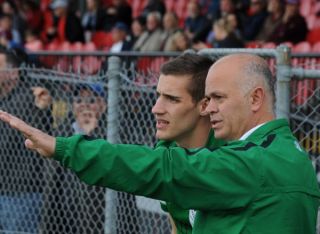
Football is the “biggest sport for our community” John Anastasiadis believes. Photo: Kostas Deves.

With Bentleigh Greens’ win last week, four Greek sponsored teams will contest the FFA Cup in the round of 16, showing just how important the sport is to the community.

As the fourth and final Greek sponsored team to make it into the round of 16 for the FFA Cup, the feat isn’t lost on Bentleigh Greens coach John Anastasiadis.

A player in the NSL days and a legend in the Greek Australian football community, seeing his team and Sydney Olympic, Aris, and Olympic FC make it to the top 16 of the nation shows just how deep the love of football still is in the community.

“It’s the biggest sport for our community, no doubt about it,” Anastasiadis tells Neos Kosmos.

“The Greek community has been a leader in the sport of football in Australia and it continues to be so.

“It’s dropped off a little bit with the generational changes, but I still think there’s a strong bond between our community and soccer.”

Bentleigh Greens managed to upset local team Blacktown City this week to make it through to the next round.

Travelling up to Sydney, it seemed like the Greens brought the weather with them, as rain pelted down on the synthetic pitch, giving them quite an advantage.

City have been known to falter with inclement weather, and as the first droplets fell before the match, the local team weren’t feeling as confident.

Tipped as the best thing out of the A-League, City struggled to get a hold of the game, as they were unable to get past the Bentleigh defence, and get a good enough position for a strike.

After Greens striker David Stirton kicked the lone goal of the match, City came back with a vengeance, desperate to equalise.

Goalkeeper Alastair Bray kept the onslaught at bay and made several outstanding saves to keep the Greens ahead.

No one is prouder of the team’s efforts than coach Anastasiadis.

“They really put the pressure on us, but the boys held out, and they got their just rewards,” he says.

Currently, Bentleigh are in a bit of a comeback, not conceding a game in three matches.

Their NPL race continued Friday night, when the team took on fellow Greek team Port Melbourne Sharks.

Anastasiadis rested a couple of players, giving some players suffering from ‘niggly’ injuries a chance to recuperate.

Travelling interstate will have given the boys a real taste of professional football, but their opponents last night have the luxury of a full week of uninterrupted training.

Anastasiadis says the full fixture can work in the team’s favour.

“Sometimes playing a lot of games is good for the players because they don’t have to do a lot of training, no one likes training, so they’d rather keep playing all the time,” he says.

Bentleigh Greens will find out who their opponents for the next FFA Cup match when the final round 32 matches are played.

source: Neos Kosmos

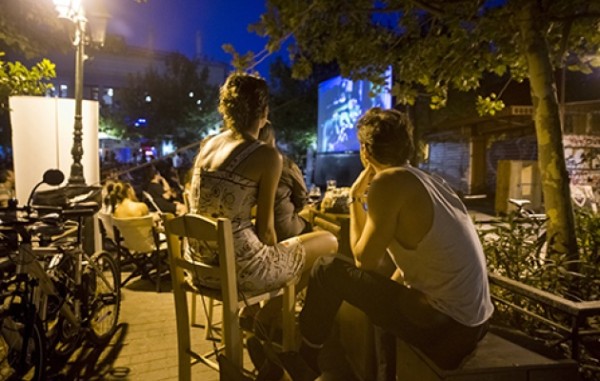
Athens in August has a lot to offer its visitors in the last month of summer

GR-Athens%20in%20August

Turquoise seas, impressive mountains, scrumptious food and crisp wine are among the things that brought 17 million tourists to Greece in 2013.

More are expected this year but Athens will not feature high up on their list of destinations during the summer. In fact, the Greek capital feels a somewhat lonely place in August as locals and tourist scamper off to the islands. In some ways this makes the height of summer the best time of the year to be in Athens to enjoy its myriad attractions, even though the city’s intensity drops a few notches under the searing August sun.

The heat means that mornings are the best time to visit the sites. The Acropolis is open from sunup to sundown. With a 6 euro ticket for students (12 for adults), you will be able to see the Ancient Agora, the Parthenon, the Temple of Zeus and the Roman-era Herod Atticus Theatre. Tours can be relatively cheap and informative. The walking tour with Athens Backpacker organisation, for instance, is only 6 euros and lasts three hours. In general, tours range from 10 euros to 40 euros and usually include a tour of all the archeological sites that are within metro and walking distance.

The Acropolis Museum is included in some of these tours but if not it should definitely be part of your itinerary. For only 5 euros, you will be able to see some of the most fascinating artefacts the world has to offer. You can also enjoy an air-conditioned break at the museum’s restaurant. The Acropolis Museum will also be hosting a special event for the full moon on August 10.

You may also want to check out sites like www.alternative-athens.com and www.bigolive.org for alternative and unique tours. Alternative Athens specialises in giving tours of a different nature, ranging from cool food tours to street-art and bar-hopping walks. These tours usually last for three hours and cost about 40 euros per person. Big Olive focuses more on art, architecture and literature tours that last about two hours and cost around 40 euros per person.

If you want to experience Athens on your own, you can head to Monastiraki or Syntagma square to enjoy some shopping, or relax at a cafe or restaurant.

The Athens Flea Market by Monastiraki metro station is a long pedestrian street filled with quirky shops full of handmade leather sandals, jewellery, instruments and many souvenirs. The long pedestrian Ermou Street, which connects Monastiraki and Syntagma, is home to international brands and has great sales during the summer. For even more up-market shopping, head to Kolonaki, where there are also numerous cafes and eateries.

If you want to sink your teeth into something traditional, then Thanasis and Bairaktaris, located on Monastiraki Square, are among the most famous kebab and souvlaki joints in Athens. If you are in the mood for fish or seafood, Mikrolimano, near Piraeus port, provides a picturesque backdrop for some finer dining. For a more modern (and expensive) take on Greek cuisine, you can try Funky Gourmet in Kerameikos, which has received rave international reviews.
Classics such as Strofi and Dionysos at the foot of the Acropolis are also on the pricey side but offer great views as part of the package.

For a quiet evening, head up Mount Lycabettus, which offers great views over the city and wonderful sunsets. If you decide to walk up the hill, you can reward yourself with an cold beer at the restaurant at the top. Other cafes with beautiful views of the city are A for Athens (part of a hotel) and 360, both on Monastiraki Square. The side streets around Syntagma, home of the Greek Parliament, are also full of side streets with bars and cafes such as the Thea Terrace Bar and Baba Au Rum (which has the largest selection of rum from all over the world), among other selections. Gazi and Psyri are also hubs for nightlife, home to many popular and alternative bars.

If you are in the mood for a late night, Athens has numerous nightclubs that stay open into the early hours of the morning and are mainly concentrated on the southern coast.

Beating the heat is not hard to do as the greater Athens area is surrounded by dozens of beaches. They range from small, rocky secluded beaches to popular sandy stretches with beach bars and sun loungers. Rafina, Porto Rafti, Mati, Schinias and Loutsa (Artemida) are on the eastern coast of Attica.

Many public and private buses leave from the Aghia Paraskevi Square and the Nomismatokopio metro station. If you want to stay closer to the city, Glyfada, Voula and Vouliagmeni on the southern coast are easy to get to but many organised beaches along this part of the coast charge an entrance fee. You may have to pay separately for umbrellas and sun loungers. The tram from Syntagma Square stops at several beaches along the southern coast, including Glyfada and as far as Voula. Public buses go to Varkiza and Vouliagmeni, while there are also regular routes to areas such as Sounio, where you can combine a swim with a visit to the Temple of Poseidon.

Even in August, when many of the city’s residents have headed off on their holidays and visitors are usually just passing through, Athens offers a wide range of things to do. It’s no coincidence that most of these popular attractions are in practically every guidebook about Athens – after all, they offer a glance at the history, beauty and uniqueness of the city. In fact, you wonder why more tourists don’t stick around.

Source: ekathimerini

Australian ISIS supporter who stormed off SBS Insight, arrested!

external

A MUSLIM teenager who sparked a wave of controversy after storming off the set of SBS Insight has been arrested after racially abusing a cleaner, it has emerged.  

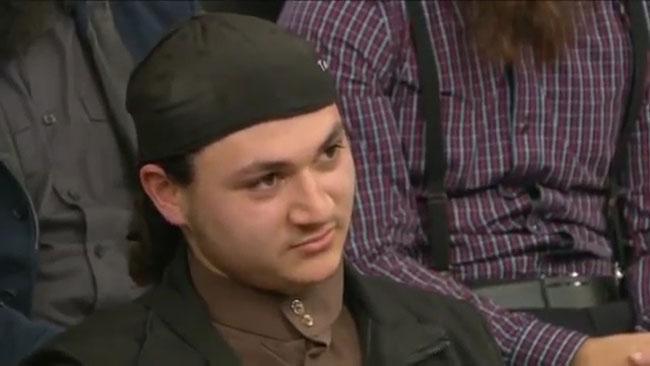
The teen, named by Fairfax as Abu Bakr, allegedly abused the cleaner in an attack last weekend at a Western Sydney shopping centre.

Bakr, 19, who attracted headlines over his fiery performance on the SBS show last week, allegedly threatened and intimidated another man in Bankstown.

The teenager walked off the SBS set after being questioned over his passport being revoked as well as his support for Islamic State fighters.

Abu Bakr, who had his Australian passport cancelled on security grounds, arrived at the SBS studio wearing an Islamic State flag on his jacket.

Police confirmed the teenager was charged with affray and intimidation following the incident last Sunday.

Police said a 43-year-old cleaner at a shopping centre on North Terrace in Bankstown was approached by two men, one of whom allegedly verbally abused and intimidated him.

Bakr and a friend were allegedly kicked out of the centre but returned an hour and a half later and began abusing the man again.

The cleaner contacted security after becoming “fearful” and the men were escorted from the centre.

Police were contacted a short time later and launched an investigation.

The Bankstown teenager was arrested on Friday and police are treating the incident as a hate crime.

Bakr was given strict bail conditions to appear at Bankstown Local Court on Wednesday 10 September 2014.

source: news.com.au

Australia’s biggest oil discovery in 30 years

1408328600057_jpg-300x0

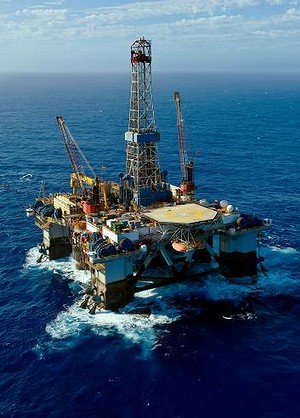
Apache claims it has found the largest Australian oil deposit discovered in decade offshore in WA’s Canning Basin. Photo: Source: Apache

US oil and gas player Apache has made what is being heralded as the country’s largest oil discovery in the last 30 years, and the first in the offshore part of Western Australia’s Canning Basin.

Shares in Australian company Carnarvon Petroleum, a junior partner in the venture, instantly more than doubled on the news.

Apache’s executive vice president and chief operating officer for the international business, Thomas Voytovich, described the result as “exciting”, while cautioning that the results were still in the early stage of evaluation.

Even so, he said the qualities of the reservoir found “point to a commercial discovery”.

Advertisement

The Phoenix South-1 well found oil in at least four different sections of the hole, and testing has shown the reservoir to be productive, with potentially up to 300 million barrels of oil in place, Apache reported on Monday.

“If these results are borne out by further appraisal drilling, Phoenix South may represent a new oil province for Australia,” Mr Voytovich said.

Carnarvon Petroleum one of the three junior partners in the Apache-led venture, described the result as “one of the most significant developments in Australian oil and gas in recent times”.

Carnarvon managing director Adrian Cook said the find was “the most significant new oil play in the North West Shelf since the Enfield discovery opened up the Exmouth Basin almost 20 years ago.”

“The implications on the rest of our acreage are still being assessed but the potential is extraordinary,” Mr Cook said.

Carnarvon shares, which closed Friday at 8.1¢, surged as high as 20¢.

Carnarvon owns 20 per cent of the WA-435-P drilling venture, as do Japan’s JX Nippon and unlisted Finder Exploration, while Apache owns 40 per cent and is the operator.

source: smh.com.au


Greece: German couple arrested at airport smuggling amphora

imagesCA0N11FL

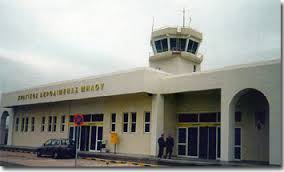
Two German nationals were arrested at Milos airport after an ancient amphora was discovered in their luggage were to face charges over the weekend of illegally trading in antiquities.

The two Germans, a 34-year-old man and a 33-year-old woman, were detained by police at the airport on the Aegean island after one of their bags was found to contain the amphora, which is 32 centimetres in height with a tapered base. The artefact is believed to date to the Roman period, according to archaeologists who examined it but who did not provide an estimate of its value.

The amphora is to be sent to Culture Ministry authorities for further assessment.

Meanwhile the case file of the two alleged smugglers was submitted to a prosecutor on the island of Syros, the administrative capital of the Cyclades group of islands.

Source: ekathimerini.

Greece: Property prices continue to slide

GR-ENFIA

“The property market’s recovery is expected to be relatively delayed, as it mainly depends on a normalisation of the taxation regime, but also on the restoration of confidence in the prospects of the economy’s recovery and growth, on a steady strengthening of household incomes and a significant rise in stable employment,” Alpha Bank’s analysts said in its weekly economic bulletin.

“Overall, the significant slowdown in the downward trend for apartment prices in the first half of 2014 also signals a slowdown in prices for the year as a whole, at around -6.3 per cent. The prospects of apartment prices stabilising are significantly strengthened from 2015, particularly if the forecast for real GDP growth of 2.9 per cent proves correct,” the report continues.

Despite the steep drop in prices and the significant number of homes for sale – often at prices below the actual value – transactions continue to dwindle, as sellers have begun anticipating that the value of their property will not fall any further, while buyers appear to be expecting a further slide, according to the report.

The average waiting period before houses are sold was estimated at about a year in the first months of 2014, against around five months in 2009. The number of transactions carried out with the help of banks fell to 3,003 in the second quarter of 2014, from 4,008 in the first quarter and 5,121 in the second quarter of 2013.

Such figures contrast dismally with 148,100 in 2007 and 30,900 in 2012.

Rents recorded a cumulative rise of 42.9 per cent in the 2000-11 and began falling in 2012 (-2.1 per cent), while the slide gathered pace in 2013 (-6.8 per cent) and the first half of 2014 (-8.9 per cent, y-o-y). However, the pace of decline in rents slowed down to 7.3 per cent on an annual basis in July from 9.7 per cent in January.

Alpha Bank draws attention to the fact that the prices of prime real estate for business premises have stabilised this year and the forecasts for upmarket properties in the tourism sector are even more positive due to the tourist boom.

On the whole, the market continues to be marked by especially low demand and excess supply.

Source: ekathimerini

Φιλικό: Νίκη Βόλου – ΑΕΚ 1-2

aek_exw

Με γκολ των Αραβίδη και Μάνταλου (πέναλτι) η ΑΕΚ επικράτησε 2-1 της Νίκης Βόλου στο “Πανθεσσαλικό” στο τέταρτο φετινό φιλικό της. Ο Σκούρτης το γκολ για τους “νεοφώτιστους” Θεσσαλούς που έδειξαν ανέτοιμοι ενόψει της πρεμιέρας τους στη Super League.

Πηγή: contra.gr

HACCI Young Professionals: Bridging the gap, uni to the workforce

social%2016

The HACCI Young Professionals Network aims to help Greek Australians stay engaged in the community after they leave university.

As a former president of the Melbourne University Greek club, Ashley Nasiakos found it odd that no other group existed for Greek Australians to follow their group activities when they enter the workforce.

An idea was born, and with the help of the Hellenic Australian Chamber of Commerce and Industry (HACCI), the HACCI Young Professionals Network was created.

Launching the group Wednesday night, Mr Nasiakos said it’s important to provide young Greeks with the chance to talk and collaborate with like-minded
people once they enter the workforce.

“There’s an expiry point, they fall off the radar,” he said about the lack of groups for young Greeks.

“From Greek school, to uni, there’s nothing. It’s the most important time to build them up.”

Mr Nasiakos said the network has been created to give working Greek Australians a unified voice, help them collaborate and meet people in their industry while also giving talented Greeks a chance to be mentored.

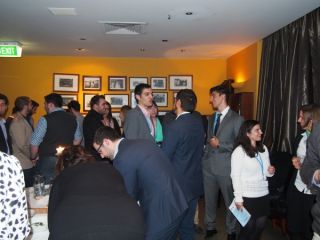
More than 60 young Greek Australians packed the function room at Kri Kri restaurant in Melbourne, intrigued and happy to be a part of the initiative.

Those attending came from a wide variety of industries, including lawyers, pharmacists, librarians and accountants, all hoping to get some tips on how to better navigate themselves through the business world.

Keynote speaker and author of Adventures of a Ballooning Career, Despina Karatzias used her own story of working in the travel industry for more than 10 years to give the audience more of an idea of how to seize moments and get over the fear of networking.

She said it’s in our blood to be good networkers due to the fact our parents had to be much more extroverted to survive in a foreign land.

“We’re predisposed to leadership, we’re here because it takes courage to leave a place and come to a place that’s all uncertainty,” she said.

“Networking started early for us after feeling left out in a foreign country.”

Ms Karatzias also spoke of the three Ps of business: passion, people and profit, and included a networking tip called the elevator pitch. The pitch is a way to summarise a person’s career objective in less than a minute in a palatable way to get people interested.

She implored everyone in the room to speak to three new people at the event.

After the launch, the network hopes to provide a series of events for its members, from more casual meet ups to more serious workshops and industry nights.

Already on the cards for the network are two special events with brand strategist Peter Economides.

In a special four hour workshop on September 13, Peter Economides will tutor 36 participants on how to brand their business.

Then the network will host a branding for start ups lecture with Mr Economides in conjunction with Swinburne University on September 15.

Piggybacking from already successful events HACCI hosts, the network will also host a cocktail gala ball in the early months of next year.

HACCI hopes to use its already established mentoring and internship program to give more members a chance at getting a foot in the door of their preferred industry.

source: Neos Kosmos

Uni fee wars: Battle lines drawn over meeting the costs of higher education

uni students

In a week that saw Labor harden its opposition to the ­Abbott government’s university funding cuts and deregulation of course fees, the political division is widening over higher education reform.

Speaking last Tuesday, Opposition Leader Bill Shorten appealed to students direct to oppose the planned 20 per cent cuts to course funding, fee deregulation (that will see universities decide their own course fees in 2016) and an increase in student loan interest rates.

“30 to 40 years ago there was an argument that it should not be about how much money your parents have, it shouldn’t be your credit card limit that determines your education,” said Mr Shorten, who has signed a pledge – joining forces with the National Union of Students – to ­oppose the changes.

Victorian Federal Labor MP Maria Vamvakinou has backed her leader’s position, telling Neos Kosmos that fee deregulation will mean greater debt for students and introduce a serious disincentive.

“Government should be about encouraging young people to get an education, it should not be about financial barriers,” she said.

“I can’t believe that the Minister for Education Chris Pyne could be so shortsighted, and I question his understanding of the values of higher education.”

Meanwhile Mr Pyne describes the reforms as “essential for the future prosperity of the nation”, impervious to criticisms that the Coalition’s policies will damage the prospects of a generation of young Australians.

To get a sense of the views held by some of those at the sharp end of the debate, Neos Kosmos spoke to two students at the University of Melbourne.
23-year-old Yiannis Kallianis, a commerce graduate half way through his Juris Doctor postgraduate course at the Melbourne Law School, says his reaction
is mixed to the competing ideologies.

“There is some merit as to the goals of the reforms – including making universities and their degrees more valuable for our future careers,” says Kallianis, who believes increased competitiveness will force universities to innovate.

As a student who will graduate with significant HECS debt, Kallianis says he’s “slightly sceptical and concerned about what the implications [of the reforms] could be.”

Kallianis – who says the HECs system “strikes a reasonable balance between encouraging tertiary education and budgetary concerns,” welcomes the plan to assist disadvantaged students, but feels that fee deregulation will discourage enrolments.

“The Government should be doing all it can to encourage more Australians to complete tertiary education,” says the former president of the the Melbourne University Greek Association,

Fellow student Jiannis Tsaousis (20) has begun a Bachelor of Commerce and Diploma in French at Melbourne uni, and sitting on the fence isn’t one of his extra-curricula activities.

Tsaousis tells Neos Kosmos that he’s supportive of the Government’s reforms “as they pave the path for our universities to become truly world class.
“Given university students earn around $1 million over their lifetime more than non-university graduates, it is only fair they contribute more,” he says.

“With a shrinking tax base and an ageing population, universities cannot rely on government funding – students will need to pay more for their courses to sustain and improve the quality of our universities.”

But the youthful and strident Tsaousis does have some concerns – specifically the changes to the HECS interest rate, which will be tied to the long-term government bond rate.

“As the rich pay off their HECS debt faster, the poor will have to pay even more over their lifetime in interest on their HECS debt.

“This is something the government should reconsider,” he says.

As an existing student, the reforms won’t increase Tsaousis’ fees, but if he undertakes a post graduate course, the new system would kick in. Isn’t that a disincentive?

“Individually, I will be disadvantaged,” he says, “but from a social viewpoint, this is healthy, because the reforms will correct the imbalance in several courses where there is an excess of graduates such as Law, relative to the jobs available in that industry.

“Students will be ‘incentivised’ to study courses where they are likely to find a job and this can only be a good thing.”

The fate of the Government’s reform package, which includes extending support to students at TAFEs, private colleges and sub-bachelor degree programs, will be decided by the Senate later this month.

While Clive Palmer has said the PUP will not support the deregulation of university fees, the government need the support of at least two senators from the PUP/Australian Motoring Enthusiast Party alliance to pass the higher education package.

Last week, Chris Pyne said that the fact that Mr Palmer had not said he would stand in the way of the reforms generally, was heartening ”If you haven’t said no, then we’re a long way from ending the siren, as they say,” he told reporters, before adding that he believed the Coalition and the PUP would work out a deal.

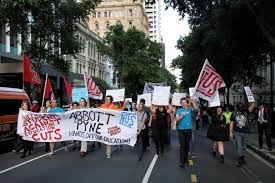
Meanwhile university vice-chancellors’ worst fear is that fee deregulation will be blocked, while a 20 per cent cut in course funding remains. Another ‘national day of action’ organised by the NUS in state capitals will protest the Government’s plans on August 20.

Μηχανή του Χρόνου: Ο Γ. Ζαμπέτας στη φυλακή, επειδή είχε “ατιμάσει” τη γυναίκα του

GAMOS_4_9_1952-Copy-2

Ο Γιώργος Ζαμπέτας είχε λόγο σοβαρό να απεχθάνεται τις πεθερές.

Ο Γιώργος Ζαμπέτας διηγείται:

Έχω κάνει φυλακή στην Αεροπορία. Τέσσερις μήνες πειθαρχικό. Οχτώ μήνες είχα φάει. Χέσ’ τα κι ασ’ τα. Γιατί είχα γ……..ει τη γυναίκα μου.

Με πήγε η μάνα της στο δικαστήριο και στο δικαστήριο μου λέει ο πρόεδρος, γιατί ξηγήθηκες έτσι; Πως θέλετε να ξηγηθώ; Οχτώ μήνες φυλακή. Δεν θα την πάρεις;

Να πάτε να γα….τε! Και με χώσανε φυλακή. Τι να τους πω; Να τους χαιρετήσω κιόλας;

Η Κατερίνα Ζαμπέτα (κόρη του Γ. Ζαμπέτα) διηγείται:

Ο πατέρας γνώρισε τη μητέρα μου το ’45. Εκείνη ήταν μόλις 15 ετών. Γεννήθηκε στις 13 Οκτωβρίου του 1930. Η μητέρα ήταν γειτονοπούλα και φίλη με τις αδελφές του πατέρα. Ο πατέρας, οι αδελφές του και οι γονείς τους, έμεναν στο πατρικό τους, στην Ιερά Οδό. Η μητέρα έμενε πολύ κοντά τους, Έβρου και Αριστείδου. Τα βράδια, την έπαιρναν μαζί τους για διασκέδαση. Η μητέρα ήταν όμορφη. Είχε πλούσια, μακριά, καστανόξανθα μαλλιά, που τα άφηνε ανέμελα να χαϊδεύουν τους λεπτούς της ώμους. Ήταν κοντή και λεπτή σαν μινιατούρα.

Πολύ εύκολο να τραβήξει το ενδιαφέρον του πατέρα. Παρά το γεγονός ότι τότε είχε δεσμό με μια άλλη γυναίκα, οκτώ χρόνια μεγαλύτερή του. Την Ευρυδίκη. Η δέσμευση αυτή, βέβαια, δεν τον εμπόδισε να φλερτάρει την Αργυρώ.

Χρόνια μετά -μεταξύ αστείου και σοβαρού- ο ίδιος συνήθιζε να λέει: «Εγώ ρε ποτέ δεν είχα μία γκόμενα. Είχα πάντα τρεις. Την πρώτη την είχα «για φούντο», τη δεύτερη «για καβάντζα» και την τρίτη «στο ψηστήρι». την προκειμένη περίπτωση, είχε την Ευρυδίκη «για καβάντζα» και τη μητέρα «στο ψηστήρι». Την έπαιρνε και έβγαιναν μαζί με τις αδελφές του.

Η Αργυρώ Ζαμπέτα σε νεαρή ηλικία

Τον καιρό που οι γονείς μου έβγαιναν μαζί, ο πατέρας γύρναγε τα βράδια στα κουτουκάκια, με σκοπό να «σπουδάσει» τη μουσική, όπως έλεγε. Κάποιες φορές έπαιζε ως θαμώνας, άλλοτε του ζητούσαν να παίξει. Η μητέρα της Αργυρώς, η γιαγιά μου η Κατίνα, δυσανασχετούσε. Δεν ήθελε η κόρη της να σχετίζεται με άνθρωπο της νύχτας. -Πάλι μ’ αυτόν τον αλήτη γυρίζεις; της φώναζε. Μ΄ αυτόν που κάνει παρέα με όλους τους χασικλήδες; Χαΐρι και προκοπή δε θα δεις από δαύτονε! Φαίνεται, όμως, ότι η Αργυρώ τον είχε ερωτευτεί τον πατέρα. Αρχικά βέβαια, τον κρατούσε σε απόσταση, γεγονός που τον τρέλαινε. -Κοίτα το μικρό, έλεγε ο πατέρας κοροϊδευτικά. Κοίτα «κόνξες». Έχω ρίξει τόσες και τόσες και μου αντιστέκεται το νιάνιαρο.

Η Αργυρώ ήθελε πρώτα να σιγουρευτεί για ‘κείνον. Για να τη ρίξει αναγκάστηκε… να της τάξει γάμο.

-Γουστάρεις να τραβηχτούμε και να πορευτούμε μαζί;

-Δηλαδή να παντρευτούμε;

-Ναι ρε!

-Μου λες αλήθεια;

-Στο λόγο της τιμής μου!

-Μου ορκίζεσαι;

-Στη μαγκιά μου, στο αντριλίκι μου. Εμένανε ο λόγος μου είναι συμβόλαιο.

Για τον πατέρα, βέβαια, μάλλον όλοι τούτοι οι όρκοι ήταν… λόγια που ταξιδεύουν στον άνεμο, σαν τα φύλλα του φθινοπώρου. Όταν μετά από χρόνια μιλούσαν για τις πρώτες τους στιγμές, ο πατέρας έκανε την αυτοκριτική του: «Είπα εγώ τέτοιες μα….ες; Αυτά είπα ο πού….ης; Πως μου βγήκανε;

Φαίνεται όμως ότι τα είπε τα λόγια αυτά. Ήταν μια μοιραία βραδιά, που είχανε βγει με τη μητέρα. Είχαν πάει σε ένα κουτουκάκι και είχαν πιει. Μες στη θολούρα του κρασιού και του ερωτικού του πόθου, διέπραξε το μεγάλο λάθος. Κοιμήθηκε με την Αργυρώ. Ενώ αυτή ήταν ακόμη ανήλικη.

Την εποχή εκείνη, η «τιμή» του κάθε θηλυκού ήταν κάτι ιερό. «Ατίμασες μια κοπέλα»; Έπρεπε να επανορθώσεις το συντομότερο δυνατόν. Η μητέρα γύρισε στο σπίτι, μετά την ερωτική της νύχτα, αναμαλλιασμένη και έπεσε πάνω στην αγριεμένη μητέρα της.

-Τι ώρα είναι αυτή Ρούλα; Με ποιον ήσουνα; Τι χάλια είναι αυτά; Μίλα!

Η μητέρα αρχικά σάστισε και δεν απαντούσε. Η γιαγιά όμως άρχισε να «βγάζει αφρούς». Όρμησε πάνω της σα λυσσασμένη τίγρης.

-Με ποιον ήσουνα μωρή; Μίλα! Θα σε γδάρω ζωντανή.

-Με τον Γιώργο. Τον Γιώργο τον Ζαμπέτα.

-Σε ατίμασε; Κόρη ανήλικη; Θα σε παντρευτεί αμέσως, ακούς; Αμέσως!

Την επομένη, η Κατίνα χτυπούσε την πόρτα του Ζαμπετέικου, αποφασισμένη να ζητήσει τα δίκια της θυγατέρας της.

-Κυρ Μιχάλη θα σε ρωτήσω κάτι. Αν κανείς «χαλούσε» καμία από τις θυγατέρες σου, τι θα έκανες;

-Θα τον σκότωνα, απάντησε αμέσως ο παππούς.

-Λοιπόν, ο γιος σου δεν είναι εντάξει.

-Γιατί το λες αυτό κυρά Κατίνα; -Γιατί ατίμασε την κόρη μου, γι’ αυτό. Ντροπή του να ξεπλανέψει το ανήλικο.

-Ο Γιώργος την κόρη σου; Αδύνατον.

-Αυτό που σου λέω εγώ. Ο γιος σου τη «χάλασε» την κόρη μου κυρ Μιχάλη. Μου το ομολόγησε η ίδια. Σωστό λοιπόν, είναι ο γιος σου να την αποκαταστήσει. Να ξεπλύνει την τιμή του κοριτσιού μου.

Ο παππούς έγινε θηρίο ανήμερο, σαν έφυγε η Κατίνα. Πέντε κόρες είχε. Δε θα ήθελε να πάθει τα ίδια. Ο πατέρας εκείνη την εποχή υπηρετούσε στην αεροπορία. Μέχρι να βγει, ο παππούς συνάντησε πρώτα την Ευρυδίκη.

-Ευριδίκη, ξέρω πως τα χεις με το γιο μου. Σε παρακαλώ απάντησε μου σε κάτι που θα σε ρωτήσω. Μήπως σε πείραξε;

-Όχι κυρ Μιχάλη.

-Δόξα τω Θεώ. Τουλάχιστον έκανε με μια τη λαδιά.

-Δηλαδή;

-«Πήγε» με την Αργυρώ. Όπως καταλαβαίνεις κοπέλα μου, πρέπει να κάνεις πίσω. Χρέος του είναι να την παντρευτεί.

-Το ‘χα καταλάβει από καιρό, πως κάτι έτρεχε μ’ αυτήν. Την έβλεπα να πηγαίνει με τις κόρες σας στο εργοστάσιο και μου μπήκανε υποψίες. Έκανα στον Γιώργο σκηνές. Δεν ήθελα να τον χάσω.

-Λυπάμαι κορίτσι μου, μα το σωστό, σωστό. Ο γιος μου χρωσταέι τώρα στην Αργυρώ. Με αυτήν έκανε την «κουτσουκέλα», αυτή οφείλει να αποκαταστήσει, καταλαβαίνεις.

-Αφού είναι έτσι, μουρμούρισε η Ευρυδίκη με πίκρα.

Κάποια στιγμή, βγήκε ο πατέρας με άδεια. Και είχε κανονίσει να πάει σε γλέντι με τον διοικητή του. Μόλις μπήκε στο σπίτι, τον περίμενε ο παππούς μου, με όψη φουρτουνιασμένη.

-Πανάθεμά σε, είπε μόλις τον είδε. Τι παρτίδες έχεις εσύ με την Αργυρώ;

-Δεν έχω κάνει τίποτα. Πρέπει να φύγω τώρα. Με περιμένει απ’ έξω ο διοικητής με το τζιπ. Παίρνω κάτι και φεύγω. Άνοιξε ένα κομοδίνο, που το κλείδωνε πάντα, πήρε κάτι κι έφυγε. Μες στη βιασύνη του όμως, ξέχασε ξεκλείδωτο το κομοδίνο. Ο παππούς, που τον έζωναν τα φίδια, το αντιλήφθηκε. Πλησίασε το κομοδίνο και το άνοιξε. Και βρίσκει μέσα φυλαγμένο το εσώρουχο της Αργυρώς. Έγινε έξαλλος. Άρχισε πάλι να ωρύεται. Μάταια η καημένη η γιαγιά Μαρίκα αγωνιζόταν να τον ηρεμήσει.

Και η γιαγιά Κατίνα, όμως, δεν περιορίστηκε στον παππού. Πήγε στο στρατόπεδο, στην αεροπορία και εκεί επιτέθηκε στον πατέρα.

-Εγώ για γαμπρό μου δε σε ήθελα ποτέ! Αλλά έτσι που τα ‘κανες, ή θα την πάρεις τώρα, ή θα σε αναφέρω.

-Θα την πάρω, αλλά όχι τώρα. Να τελειώσω πρώτα.

-Τώρα. Αλλιώς σε έκαψα.

-Και πως θα τη ζήσω κυρά Κατίνα;

-Δε με νοιάζει. Αν θες να γλιτώσεις τη φυλακή, θα την παντρευτείς αμέσως.

-Δε γίνεται.

-Καλά, θα σε κανονίσω εγώ, είπε η Κατίνα. Και δεν έμεινε στις απειλές. Το ‘πε και το ‘κανε. Έκανε καταγγελία. Ο διοικητής κάλεσε τον πατέρα μου και του ζήτησε εξηγήσεις.

-Τη Ρούλα την αγαπώ και θα την παντρευτώ, υποσχέθηκε ο πατέρας. Μόλις όμως τελειώσω τον στρατό. Τώρα πώς να την πάρω; Που να την πάω;

Με το περιστατικό αυτό, όμως, συνέπεσε και άλλο στο στρατόπεδο. Ένα βράδυ που ο πατέρας φύλαγε σκοπιά, είχε πιεί παραπάνω. Έχασε τον έλεγχο και έριξε μερικές βολές στον αέρα. Έρχεται και η καταγγελία της Κατίνας. Να τονε στη φυλακή. Για τέσσερις μήνες. Γενικά, ο πατέρας ήταν εξαιρετικά νομοταγής. Και σίγουρα δεν ήθελε να έχει λερωμένο ποινικό μητρώ. Όμως, μάλλον τον είχε πεισμώσει η συμπεριφορά της γιαγιάς.

Από τότε, νομίζω, του έμεινε απωθημένο με τις πεθερές. Ίσως γι’ αυτό αργότερα, στις ελληνικές ταινίες που είχαν ως θέμα τις πεθερές, έβγαζε όλο του το άχτι. Και πολύ συχνά τραγουδούσε στα κέντρα το «από μια τέτοια στρίγκλα πεθερά». Ο Γιώργος και η Αργυρώ παντρεύτηκαν τελικά τον Σεπτέμβριο του 1952 και έμειναν μαζί μέχρι το τέλος της ζωής τους.

Πηγή: news247.gr