Daily Archives: June 22, 2015

Pope proposes all Christians celebrate Easter on one day

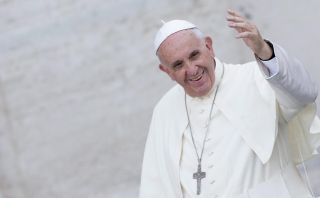
Pope%20Francis%2001

What will the Greek Orthodox Church respond?

In a recent appearance, Pope Francis publicly announced that he would be open to the selection of a common date for all Christian denominations to celebrate Easter on the same day.

Although this may be seen as a harmless and practical move for some, others completely disagree with the proposal.

Well-known Russian theologian Protodeacon Andrey Kurayev took to the internet to express his thoughts on the matter, describing the suggestion as “prospectless” and “unrealistic”.

“The Pope’s proposal to designate a single all-Christian Easter day is unrealistic,” wrote Father Andrey on his blog.

“For the Catholics, the Pope’s decision is self-sufficient, whereas the Orthodox Christians are still tied by their tradition, or to be more precise, the decision of the First Ecumenical Council [in 325 AD].”

Though many remain uncertain as to why the resurrection is celebrated on different dates, there is a reason that stems back thousands of years.

Each denomination follows one of two calendars, Orthodox Christians having adopted the Julian and the Catholics follow the Gregorian.

With Easter celebrated on spring’s equinox day, the date naturally changes from year to year making it a moveable holiday.

Earlier this year Neos Kosmos conducted a poll, asking our readers whether they would prefer that Greek Easter coincide with the Catholic holiday, with 56 per cent voting for it to remain unchanged.

Pope Francis is not the first to propose the idea of a common date.

Pope John Paul II also put forward a similar suggestion, while in 1965 the Second Vatican Council also offered Christians the option to celebrate Easter on the second Sunday of April.

Although the Greek Orthodox Church has yet to release an official comment regarding the matter, based on the conference of Orthodox churches in Moscow in 1948 that ruled Easter and all other movable feasts must be in accordance with the Julian Calendar, it is predicted the church will not agree.

Neos Kosmos has contacted the Greek Orthodox Archdiocese of Australia for comment.

source: Neos Kosmos

Greece says now up to lenders to move on an agreement

maximos_390

Greece’s latest proposal submitted to creditors is proof of its willingness to reach a deal and it was now up to European and International Monetary Fund lenders to make the next move, a Greek government official said on Monday.

“Greece has proven that it wants a substantial solution,” the official said. “The ball is now in the institutions’ court.”

Athens sent a revised version of its reform proposals to Brussels, offering gradually to raise the Greek retirement age to 67 and to streamline various exceptions to the system.

The offer also sets the main rate of the value-added-tax at 23 percent, reserves a reduced rate of 13 percent for energy and basic foods and an exceptional rate of 6 percent only for medicine and books.

source:ekathimerini.com

EU welcomes 11th-hour Greek proposals

European flags are seen outside the European Commission headquarters in Brussels June 30, 2010. REUTERS/Thierry Roge

European flags are seen outside the European Commission headquarters in Brussels June 30, 2010. REUTERS/Thierry Roge

The European Union welcomed new proposals from Greek Prime Minister Alexis Tsipras as a “good basis for progress” at talks on Monday where creditors want 11th-hour concessions to haul Athens back from the brink of bankruptcy.

EU chief executive Jean-Claude Juncker’s chief-of-staff spoke of a “forceps delivery” as officials worked late into the night to produce a deal ahead of a summit of eurozone leaders in Brussels that they hope can keep Greece in the currency bloc.

Giving no detail of a proposal he said was also received by the European Central Bank and International Monetary Fund, German EU official Martin Selmayr tweeted: “Good basis for progress at … Euro Summit. In German: ‘eine Zangengeburt’.”

After four months of wrangling and with anxious depositors pulling billions of euros out of Greek banks, Tsipras’s leftist government showed a new willingness at the weekend to make concessions that would unlock frozen aid to avert default.

It was not immediately clear how far the new proposal yielded to creditors’ demands for additional spending cuts and tax hikes, but the offer was a ray of hope that a last-minute deal may yet be wrangled before Athens runs out of cash.

Tsipras spent much of Sunday holed up in a marathon cabinet meeting and discussed the new offer with the leaders of Germany, France and the European Commission by phone.

“The prime minister presented the three leaders Greece’s proposal for a mutually beneficial agreement that will give a definitive solution and not a postponement of addressing the problem,” a statement from Tsipras’s office said.

He will meet European Commission President Juncker, ECB President Mario Draghi, IMF head Christine Lagarde and eurozone finance ministers chairman Jeroen Dijsselbloem at 11 a.m. (0900 GMT), an EU spokeswoman said.

Eurozone finance ministers are due to meet 90 minutes later and a summit of eurozone prime ministers and presidents is scheduled at 7 p.m. (1700 GMT).

U.S. stock futures jumped in early Asian trade on Monday on hopes for a deal. The euro also ticked up against the dollar.

European ministers have played down the prospect of a final agreement on Monday but hope a political understanding can be reached in time for a full deal by the end of June.

Elected on a pledge to end austerity, Tsipras has defiantly resisted demands to cut pension spending and is pushing strongly for debt relief in return for any concessions.

But Greek officials have said Athens may be willing to consider raising value-added taxes or other levies to appease the lenders, who want concrete assurances that demanding budget targets will be met.

“There is no time to lose. Every day counts. Talks and negotiations must continue so that an agreement is reached,” French President Francois Hollande told a joint news conference with Italian Prime Minister Matteo Renzi.

Locked out of bond markets and with bailout aid frozen since summer last year, Athens is quickly running out of cash. The deputy finance minister on Sunday confirmed Athens had enough money to pay public sector wages and pensions this month.

But Athens also urgently needs access to funds to avoid defaulting on a 1.6 billion euro IMF loan that falls due at the end of the month. As the crisis gets pushed from one meeting to the next, each side has put the responsibility on the other’s shoulders for finding a deal.

Money has drained out of Greek banks after a breakdown in talks last weekend, and Greece might have to impose capital controls within days if there is no breakthrough.

Underlining the pressure to stem the flow of withdrawals, Bank of Greece Governor Yannis Stournaras met senior bankers on Friday and told them to brace for a “difficult day” on Tuesday if no deal is reached, two bankers at the meeting told Reuters.

Sources in Frankfurt and in Brussels said the European Central Bank’s board would discuss the liquidity of Greece’s banking sector at 0830 GMT on Monday. The sources said Greek pre-orders for deposit withdrawals for Monday had already reached 1 billion euros – after savers pulled over 4 billion euros out of their banks last week.

No to blackmail

For a deal to work, Tsipras will need a solution that is acceptable to his party or else may be pushed to call a snap election or a referendum to secure a mandate for an agreement.

Supporters of his SYRIZA party rallied in Athens on Sunday to send “a loud message of resistance” against demands for more cuts and tax hikes in a country battered by years of recession.

Under austerity measures imposed by the IMF, EU and ECB in two bailouts, Greece’s economic output has fallen by a quarter, wages and pensions have been slashed and unemployment is running at 25 percent.

The Greek government has argued the austerity imposed on the southern European country had made the crisis worse. A senior SYRIZA lawmaker said on Sunday that previous ideas put forward by Juncker would have led to a “social holocaust”.

“Democracy cannot be blackmailed, dignity cannot be bargained,” the Syriza party said in a statement on Sunday, announcing its planned protest.

“Workers, the unemployed, young people, the Greek people and the rest of the peoples of Europe will send a loud message of resistance to the alleged one-way path of austerity, resistance to the blackmail and scaremongering.”

But the mood has also hardened in Germany, which has contributed more money than any other country to bailing out Greece. German Chancellor Angela Merkel is under pressure from within her ranks not to give in to Greek demands, even if that means contemplating Greece leaving the eurozone.

Merkel’s Bavarian allies warned against giving in to Greece, with senior Christian Social Union lawmaker Hans Michelbach saying he saw no realistic chance of an agreement on Monday.

“If the EU lets the government in Athens get away with its intransigence, we can bury the euro,” Michelbach said in a statement on Sunday.

“Either Greece declares itself willing for a viable solution or the country must leave the euro. The eurozone could cope with the consequences of a Greek exit,” he said.

source:ekathimerini.com

As Deadline Looms, European Central Bank Plays Key Role in Greek Crisis

Depositors waited at a bank in Athens on Friday. Credit Thanassis Stavrakis/Associated Press

 ATHENS — As Greece’s standoff with its creditors enters the final stretch, the European Central Bank finds itself in the awkward position of being both the country’s savior and its scold.

Europe’s central bank has been the lender of last resort for Greece, keeping its banking system — if not the country itself — from collapse. But the E.C.B. has also been among the most recalcitrant of its creditors, pushing Greece to the verge of default by refusing to offer relief on its heavy debts.

This tension in many ways mirrors Europe’s broader dilemma of how to handle Greece.

Should lending lines to the country be renewed, in the interest of keeping the eurozone intact? Or should Greece, having demanded too much from Europe, not be bailed out again?

On Monday, this will be the chief topic of discussion when eurozone heads of state gather in Brussels for an emergency summit meeting. Greece delivered a new set of proposals for a bailout deal to the top European leaders over the weekend.

But time is running out.

Frantic depositors were yanking over a billion euros a day from the country’s banks late last week, leading the E.C.B. on Friday to bolster the banking system for the second time in three days. Greek bankers say that the banks will soon have to close if this uncertainty continues.

Greece is just about broke and must pay $1.8 billion to the International Monetary Fund by June 30. So far, it has refused European demands that it cut spending and amend its labor laws in return for a release of frozen funds.

The E.C.B.’s exposure to Greece now stands at 150 billion euros, or $170 billion, according to Deutsche Bank. Of that, €122 billion is propping up the banking sector through an emergency lifeline and other funding, and €27 billion comprises longer-term Greek bonds.

At 83 percent of the gross domestic product of Greece, the bet is substantial. Relative to the size of their economies, it is larger than the lifelines doled out to other bailed-out countries such as Cyprus and Ireland, and it underscores the lengths to which Europe has gone to keep Greece afloat.

“The E.C.B. is playing a critical role,” said Mark Wall, the chief economist at Deutsche Bank in London. “It is the primary financier of the Greek banking system — which is the pressure point for Greece as a whole. Without the E.C.B., there is nothing to avert a collapse of the Greek banks.”

But in the eyes of the near bankrupt Greek government, the E.C.B. has been less the firefighter putting out a blaze than the executioner ready to deliver a final ax blow.

That is a result of the hard line taken by the E.C.B. over the Greek government bonds it bought five years ago. They were not included in the 2012 restructuring for private sector bondholders, meaning the Greek government is still making full payment on the debt.

To keep from defaulting on these bonds, Greece must pay €6.7 billion to the European Central Bank by the end of August, starting with a €3.5 billion installment on July 20. One of the core areas of disagreement between Greece and its creditors is over these obligations.

The Greek finance minister, Yanis Varoufakis, has on several occasions asked the president of the European Central Bank, Mario Draghi, to grant Greece relief on these debts.

Other European countries and the I.M.F. have shown some flexibility in terms of Greece’s debt obligations. The E.C.B. and Mr. Draghi have shown none, arguing instead that debt relief on their part would violate eurozone rules that forbid the financing of government deficits.

Greek government officials also fear that the E.C.B. will do what it did in Cyprus in 2013 when it threatened to stop supporting the nearly bust Cypriot banks unless the government agreed to a bailout with Europe. This threat alone forced Cyprus into a bailout where banks were shut down, depositors were given so-called haircuts and strict capital controls were put in place.

From his very earliest days as finance minister, Mr. Varoufakis has said that he believes this so-called Cyprus solution has been the ultimate goal of his counterparts in Brussels and Berlin. Such an outcome would have dire political consequences and would likely lead to the fall of Greece’s left-leaning Syriza government.

“It would be very punitive,” said Stavros A. Zenios, a Cypriot economist who has written several papers on that country’s bailout. “And it would not solve anything, because in Cyprus we had a banking crisis, and in Greece it’s the sovereign that is the problem.”

Unlike central banks in the United States, Britain and Japan, the E.C.B.’s status as a lender of last resort is circumscribed and conditional, the result of strict European rules that outlaw money printing as a means to bail out broke governments. That means the central bank leadership in Frankfurt can quickly shift from a stance of propping up a banking system to allowing it to implode.

For the moment at least, analysts expect Mr. Draghi to remain supportive, as long as there is a chance of some broader deal being reached between Greece and its creditors before the end of June.

But tension between Greece and the European Central Bank could rapidly escalate over the huge credit line that is keeping the country’s banks afloat.

As the impasse with creditors has dragged on since the Syriza-led government came into power in January, Greeks have yanked about €35 billion from their banks. Bankers in Athens now estimate that total deposits stand at €126 billion, down from around €230 billion in 2009.

To replace that lost money, the Greek banks have had to borrow from a special E.C.B. credit line, known as emergency liquidity assistance, or E.L.A. The Greek central bank actually creates the euros that are lent under this facility, but the E.C.B.’s Governing Council has to approve its use.

While nearly $85 billion has been lent through the emergency credit line, Mr. Draghi has put limits on the support. On Friday, he approved close to €2 billion in additional funding, although bankers say that the Greek central bank had requested more.

The emergency credit line could become a flash point if Greece took steps to leave the euro and adopted a new currency.

Greece would in theory be on the hook for the billions of euros borrowed through the credit line, but it may not be able to pay them back — or want to. Most of the euros borrowed through the emergency credit line would most likely be out of the reach of the European Central Bank after having been transferred to other countries.

“It’d be very difficult to get those euros back,” said Guntram B. Wolff of Bruegel, a think tank in Brussels.

And if Greece did not pay back the amount, the E.C.B. and the national central banks of Europe would ultimately end up taking the financial hit. This could further inflame anger toward Greece among politicians in other countries who have criticized the Syriza government.

Still, the prospect of losing billions of dollars on the emergency credit line could make European leaders think twice about putting Greece in a position where it might have to default and leave the euro.

“The cost of Grexit may be higher than keeping Greece in,” Alberto Gallo, head of macro credit research at the Royal Bank of Scotland, said, using a term for a Greek exit from the euro. “It’s a lot of loss.”

source:nytimes.com

Παρέμβαση Ομπάμα σε Τσίπρα σε περίπτωση ναυαγίου της συμφωνίας

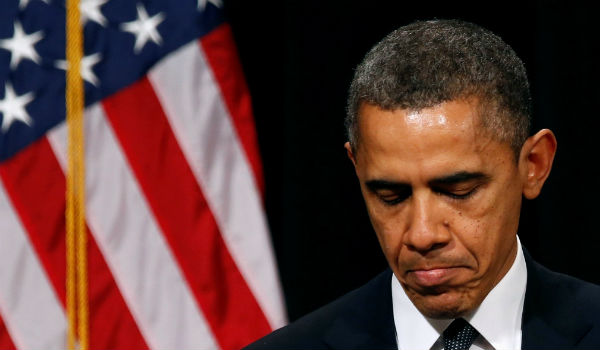
obama600_469180540

Παρέμβαση προς τον Αλέξη Τσίπρα είναι έτοιμος να κάνει ο Μπαράκ Ομπάμα τις επόμενες ώρες στην περίπτωση που οι επαφές που έχει ελληνική πλευρά στο παρά πέντε της Συνόδου Κορυφής με Μέρκελ-Ολάντ καθώς και με τον πρόεδρο της Κομισιόν, Ζαν Κλοντ Γιούνγκερ, δεν βγάλουν «λευκό καπνό» και δεν κλειδώσει μια συμφωνία για το ελληνικό ζήτημα.

Σύμφωνα με πληροφορίες του Real.gr, ο Αμερικανός πρόεδρος ενημερώνεται συνεχώς για την πορεία της διαπραγμάτευσης από την πρεσβεία των ΗΠΑ στην Αθήνα και τα στελέχη του αμερικανικού υπουργείου Οικονομικών που βρίσκονται εγκατεστημένα μόνιμα στις Βρυξέλλες τους τελευταίους μήνες. Όπως ανέφερε Αμερικανός αξιωματούχος στον Real .gr, υπάρχει «μια συνεχής ροή πληροφοριών προς τον Λευκό Οίκο και ένα συγκεκριμένο σχέδιο δράσης σε περίπτωση εμπλοκής των διαπραγματεύσεων».

Ο Μπαράκ Ομπάμα, αναφέρουν οι πληροφορίες από τον Λευκό Οίκο, προτίθεται να παρέμβει σε περίπτωση αδιεξόδου προς τον Έλληνα πρωθυπουργό και η παρέμβαση αυτή θα είναι καταλυτική και με την μορφή τελεσιγράφου σε πολιτικό επίπεδο. Η Ουάσιγκτον τις τελευταίες ημέρες εμφανίζεται πολύ ενοχλημένη για την διαπραγματευτική τακτική της ελληνικής κυβέρνησης αλλά και από τις δημόσιες δηλώσεις των αξιωματούχων της κάτι που μετέφερε στον Αλέξη Τσίπρα ο υπουργός Οικονομικων Τζακ Λιού την περασμένη Τρίτη στην μεταξύ τους τηλεφωνική επικοινωνία.

Ο Λευκός Οίκος αντιλαμβάνεται περισσότερο από τους Ευρωπαίους την αναγκαιότητα εξεύρεσης μιας λύσης διότι συνεκτιμά εκτός από τις οικονομικές συνέπειες και την γεωπολιτική διάσταση ενός αδιεξόδου. Η προσέγγιση της Αθήνας με την Μόσχα έχει δυσαρεστήσει την Ουάσιγκτον, ανεξαρτήτως του γεγονότος ότι το πρόζεκτ με τους αγωγούς βρίσκεται ακόμα σε αρχικό στάδιο.

Πηγή:madata.gr

Συγκέντρωση αλληλεγγύης προς την Ελλάδα στην «καρδιά» της ΕΕ

F3C125B1F88B0B4CC401BA62F3830473

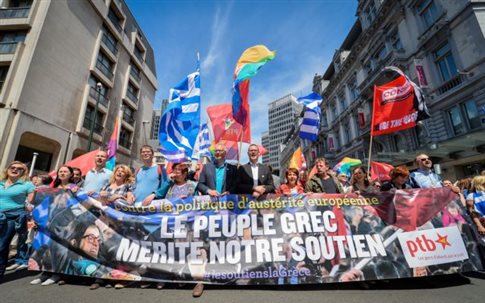
Σε εξέλιξη βρίσκεται από νωρίς το απόγευμα της Κυριακής συγκέντρωση αλληλεγγύης προς την Ελλάδα στο κέντρο των Βρυξελλών. Στη συγκέντρωση συμμετέχουν περισσότερα από 5.000 άτομα.

Πρόκειται για την μεγαλύτερη κινητοποίηση στήριξης στην Ελλάδα που γίνεται από το 2012, όταν ξεκίνησαν να διοργανώνονται στο Βέλγιο παρόμοιες διαδηλώσεις.

Οι συγκεντρωθέντες με ελληνικές σημαίες στα χέρια φωνάζουν συνθήματα αλληλεγγύης στην Ελλάδα και κατά της λιτότητας.
Προσκλητήριο στη διαδήλωση απηύθυναν τα μεγαλύτερα συνδικάτα και κόμματα απ’ όλο το φάσμα της Αριστεράς και της Οικολογίας ενώ συμμετέχουν αντιπροσωπείες απ’ όλα τα κόμματα της ευρωομάδας της Αριστεράς και των Πρασίνων καθώς και εκλεγμένοι σε τοπικό επίπεδο από τα βελγικά κόμματα.

Πηγή:in.gr