Category Archives: Uncategorized

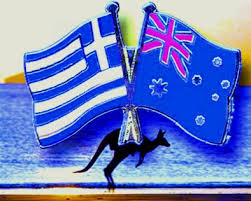
Ικανοποιημένη η Κοινότητα Μελβούρνης για την «Work and Holiday Visa»

VISA

Με τη συμφωνία θα διευκολύνονται νέοι ηλικίας ως 30 ετών

Ικανοποίηση για τις τελευταίες εξελίξεις στο θέμα της διακρατικής συμφωνίας Αυστραλίας-Ελλάδας για την έκδοση σε νέους τουριστικής βίζας με δικαίωμα εργασίας στις δύο χώρες, εκφράζει το Διοικητικό Συμβούλιο της Ελληνικής Κοινότητας Μελβούρνης, καθώς η συμφωνία αυτή που πραγματοποιήθηκε με πρωτοβουλία της Κοινότητας και άλλων ομογενειακών οργανισμών, αναμένεται να επικυρωθεί σύντομα από το Ελληνικό Κοινοβούλιο.

Με τη συμφωνία θα διευκολύνονται νέοι ηλικίας ως 30 ετών από την Ελλάδα και την Αυστραλία να πηγαίνουν για διακοπές στις δύο χώρες αντίστοιχα και να έχουν δικαίωμα εργασίας έως και 12 μήνες.

Σε ανακοίνωση της Ελληνικής Πρεσβείας στην Καμπέρα, αναφέρεται ότι ο υφυπουργός Εξωτερικών, κ. Ιωάννης Αμανατίδης, θα παρουσιάσει τη Δευτέρα, 7 Δεκεμβρίου 2015, στο Ελληνικό Κοινοβούλιο για επικύρωση τη συμφωνία «Work and Holiday Visa», που υπεγράφη στην Καμπέρα, στις 14 Μαΐου 2014, μεταξύ Ελλάδας και Αυστραλίας.

Σημειώνεται, ότι εκ μέρους της Ελλάδας τη Συμφωνία υπέγραψε η πρώην υπουργός Τουρισμού κ. Όλγα Κεφαλογιάννη, κατά τη διάρκεια επίσκεψής της στην Αυστραλία.

O πρόεδρος της Κοινότητας, κ. Βασίλης Παπαστεργιάδης, δήλωσε ικανοποιημένος από την εξέλιξη αυτή, λέγοντας ότι «οι συνεχείς προσπάθειες και τα διαβήματα της Ελληνικής Κοινότητας έχουν τελικά θετική κατάληξη, παρά τις δύσκολες μέρες που διέρχεται η πατρίδα μας».

Η ανακοίνωση της Πρεσβείας έχει ως ακολούθως:

«Η Πρεσβεία της Ελλάδος ευρίσκεται στην ευχάριστη θέση να ανακοινώσει κατόπιν οδηγιών του Διπλωματικού Γραφείου του κυρίου Υφυπουργού των Εξωτερικών ότι ο Υφυπουργός Εξωτερικών κύριος Ιωάννης Αμανατίδης πρόκειται να παρουσιάσει τη Δευτέρα 7 Δεκεμβρίου 2015 στο Ελληνικό Κοινοβούλιο προς κύρωση το Μνημόνιο Κατανόησης Work and Holiday Visa, το οποίο υπεγράφη στην Καμπέρα στις 14 Μαΐου 2014 μεταξύ Ελλάδος και Αυστραλίας.

Η υπογραφή του Μνημονίου αυτού απετέλεσε αίτημα και πρωτοβουλία της ελληνικής ομογένειας και αναμένεται να φέρει με την εφαρμογή του εγγύτερα τη νεότητα των δύο φίλων χωρών, της Ελλάδος και της Αυστραλίας».

Σημειώνεται ότι η Αυστραλία έχει υπογράψει συμφωνία για τουριστική βίζα με δικαίωμα εργασίας με δεκάδες άλλες χώρες, αλλά όχι με την Ελλάδα.

Στις αρχές του 2011, με πρωτοβουλία της Κοινότητας, σχηματίσθηκε Επιτροπή για να εξετάσει διάφορους τρόπους αντιμετώπισης της αυξημένης μετακίνησης Ελλήνων πολιτών προς τη Μελβούρνη και την Αυστραλία και τη διευκόλυνση εκείνων που επιθυμούσαν να μεταναστεύσουν λόγω της οικονομικής κρίσης στην Ελλάδα.

Αντιπροσωπεία της Κοινότητας, στην οποία συμμετείχαν και στελέχη άλλων οργανισμών και υπηρεσιών, είχε επισκεφθεί την Καμπέρα την Τετάρτη, 15 Ιουνίου 2011, και συναντήθηκε με τον πρώην υπουργό Μετανάστευσης, κ. Κρις Μπόουεν, και συζήτησαν το θέμα της μετανάστευσης Ελλήνων πολιτών στην Αυστραλία, καθώς και την υπογραφή της εν λόγω Συμφωνίας.

Η συνάντηση είχε ρυθμιστεί με τη συνεργασία της ομοσπονδιακής βουλευτή, κ. Μαρίας Βαμβακινού, η οποία βοήθησε σημαντικά στις σχετικές επαφές με την ομοσπονδιακή κυβέρνηση.

Η αντιπροσωπεία που συναντήθηκε με τον κ. Μπόουεν, αποτελείτο από τους Βασίλη Παπαστεργιάδη (πρόεδρο της Ελληνικής Κοινότητας Μελβούρνης), Κώστα Μάρκο (γενικό γραμματέα της Ελληνικής Κοινότητας Μελβούρνης), Σάκη Ζαφειρόπουλο (πρόεδρο του Διοικητικού Συμβουλίου κοινοτικής τηλεόρασης Κανάλι 31 και πρόεδρο της Fronditha Care), Ελισάβετ Χατζηεφραιμίδη (ανώτερη σύμβουλο της BWP Consulting) και τον Παναγιώτη Ιασωνίδη (πρόεδρο του Αυστραλιανού Ελληνικού Συμβουλίου).

Ο κ. Παπαστεργιάδης ανέφερε ότι η Συμφωνία έγινε πραγματικότητα, με τις πρωτοβουλίες και τα συνεχή διαβήματα της Κοινότητας στις κυβερνήσεις της Αυστραλίας και της Ελλάδας, και ιδιαίτερα από την θετική ανταπόκριση του κ. Μπόουεν, που προώθησε τις εισηγήσεις της Κοινότητας και υλοποίησε τα όσα συμφωνήθηκαν, μεταξύ των οποίων ήταν και η διοργάνωση ενημερωτικής έκθεσης (SkillsExpo) στην Αθήνα, το Σαββατοκύριακο, 8-9 Οκτωβρίου 2011, για την ενημέρωση όσων ενδιαφέρονταν να εργασθούν στην Αυστραλία και σε τομείς όπου υπήρχε ζήτηση.

Στο πλαίσιο της συνάντησης στην Καμπέρα, η Επιτροπή υπέβαλε προς τον υπουργό και έκθεση για τη Μετανάστευση που είχε προετοιμάσει η Κοινότητα, με την επιμέλεια του κ. Κώστα Μάρκου, η οποία περιείχε πληροφορίες και στοιχεία σχετικά με το θέμα της μετανάστευσης από την Ελλάδα προς την Αυστραλία, καθώς και σειρά εισηγήσεων.

Στη συνέχεια, η Κοινότητα είχε συναντήσεις για το ίδιο θέμα και με άλλους υπουργούς, όπως τον επίσης πρώην υπουργό Μετανάστευσης της Αυστραλίας, κ. Τόνι Μπερκ, και την κ. Όλγα Κεφαλογιάννη.

Αναφερόμενος στις προσπάθειες της Κοινότητας για την υπογραφή και εφαρμογή της Συμφωνίας, ο κ. Παπαστεργιάδης έκανε ιδιαίτερη αναφορά στις αμέτρητες επιστολές που έστειλε ο κ. Μάρκος κατά τα τελευταία τέσσερα χρόνια προς τις αρμόδιες κυβερνητικές Αρχές της Αυστραλίας και της Ελλάδας για την ολοκλήρωση της Συμφωνίας. Mόλις τον περασμένο μήνα, η Κοινότητα, με επιστολή της προς τις αρμόδιες ελληνικές κυβερνητικές Αρχές, ζήτησε να ενημερωθεί σε ποιο στάδιο βρίσκεται η Συμφωνία και πότε πρόκειται να επικυρωθεί από την Ελληνική Βουλή.

«Παρά τις καθυστερήσεις και τις δυσκολίες, η Κοινότητα δεν εγκατέλειψε τις προσπάθειες για την υπογραφή και την εφαρμογή της συμφωνίας» δήλωσε.

«Κάναμε συνέχεια διαβήματα στις δύο κυβερνήσεις και ιδιαίτερα προς την Ελλάδα. Αυτό αποδεικνύει ότι η Ελληνική Κοινότητα, σε συνεργασία με τους άλλους παροικιακούς οργανισμούς, μπορεί να επηρεάσει την αλλαγή της κυβερνητικής πολιτικής εδώ και στην Ελλάδα. Ενωμένοι, όλοι μαζί, μπορούμε να επιτύχουμε πολλά. Ιδιαίτερα ευχαριστώ τον πρώην υπουργό Μετανάστευσης, κ. Kρις Μπόουεν, την κ. Μαρία Βαμβακινού, και όλα τα μέλη της Επιτροπής που συμμετείχαν στη συνάντηση της Καμπέρας».

Τέλος, ο κ. Παπαστεργιάδης ευχαρίστησε όλους τους παροικιακούς οργανισμούς που ανταποκρίθηκαν στις προσκλήσεις της Κοινότητας για να συζητηθούν το θέμα της μετανάστευσης και τρόποι βοήθειας προς τους νεοαφιχθέντες από την Ελλάδα, καθώς και διάφορους ειδικούς σε μεταναστευτικά θέματα, όπως τη σύμβουλο μετανάστευσης, κ. Πένυ Δημοπούλου, που συμμετείχαν στην επιτροπή μετανάστευσης που σχηματίσθηκε. Επίσης, ευχαρίστησε και όλα τα ελληνόφωνα μέσα μαζικής ενημέρωσης, όπως το «Νέο Κόσμο», «Τα Νέα», το Ράδιο 3ΧΥ, το ελληνικό πρόγραμμα της SBS και τον «Ελληνικό Κήρυκα», για τη συνεργασία και τη συνεχή στήριξή τους στις προσπάθειες που γίνονταν για την υπογραφή της Συμφωνίας.

Πηγή:Νέος Κόσμος
Περισσότεροι Έλληνες αναμένονται στην Αυστραλία

imagesHKX4V991

Ξεκίνησε η υλοποίηση του προγράμματος Στήριξης των Νεοφερμένων Ελλήνων.

Tον επόμενο χρόνο ενδέχεται να παρατηρηθεί αύξηση του αριθμού των Ελλήνων που θα μεταναστεύσουν στην Αυστραλία.

Η εκτίμηση αυτή ομογενειακών παραγόντων, στηρίζεται στο γεγονός ότι η ελληνική οικονομία παραμένει σε τέλμα, με την ανεργία να κυμαίνεται σε ύψη-ρεκόρ.

Εξάλλου, την πρόβλεψη ότι στο επόμενο εξάμηνο θα αυξηθεί -και πάλι- ο αριθμός των Ελλήνων που μεταναστεύουν στην Αυστραλία, εκφράζει και ο ταμίας της οργάνωσης των νεοφερμένων της Μελβούρνης, Hellenic Australia Community Support Group, Ευάγγελος Πλοκαμάκης.

Ο κ. Πλοκαμάκης, με την ευκαιρία εκδήλωσης που οργανώνεται το προσεχές Σάββατο για τη συμπλήρωση δύο χρόνων από την ίδρυση του φορέα που εκπροσωπεί, δήλωσε ότι τον τελευταίο χρόνο είχε μειωθεί το κύμα μετανάστευσης προς την Αυστραλία, αλλά τελευταία όλο και περισσότεροι εκδηλώνουν ενδιαφέρον να εγκαταλείψουν την Ελλάδα.

«Από το ενδιαφέρον που εκδηλώνεται, καθώς πολλοί ψάχνουν να δουν αν μπορούν να έρθουν εδώ, εκτιμώ ότι σύντομα θα σημειωθεί νέα αύξηση» μας είπε.

Βεβαίως, οι περισσότεροι από αυτούς θα είναι -και πάλι- άτομα που έχουν ήδη την αυστραλιανή υπηκοότητα.

Για τους Έλληνες νέους που δεν είναι Αυστραλοί πολίτες, σε κάποιες περιπτώσεις ίσως αποδειχθεί «σωτήρια» και η αναμενόμενη επικύρωση της Διακρατικής Συμφωνίας Ελλάδας-Αυστραλίας για έκδοση τουριστικής βίζας για νέους ηλικίας 18-30 ετών με δικαίωμα εργασίας έως ένα χρόνο. (Διαβάστε σχετική είδηση στη σελίδα 3).

Αυτή τη φορά, η παροικία θα είναι καλύτερα προετοιμασμένη για να βοηθήσει τους νεοφερμένους και ήδη η Αυστραλο-Ελληνική Πρόνοια ξεκίνησε την εφαρμογή ειδικού προγράμματος.

ΠΡΟΓΡΑΜΜΑ ΣΤΗΡΙΞΗΣ ΤΩΝ ΝΕΟΦΕΡΜΕΝΩΝ ΕΛΛΗΝΩΝ

Συγκεκριμένα, από την Αυστραλο-Ελληνική Κοινωνική Πρόνοια λάβαμε την ακόλουθη ανακοίνωση, που σχετίζεται με το εν λόγω θέμα:

«Η Αυστραλο-Ελληνική Κοινωνική Πρόνοια ξεκίνησε την υλοποίηση του προγράμματος Στήριξης των Νεοφερμένων Ελλήνων για το οποίο πρόσφατα χρηματοδοτήθηκε από την Πολιτειακή Κυβέρνηση της Βικτώριας. Με την ευκαιρία αυτή εκφράζουμε τις ευχαριστίες μας προς την Κυβέρνηση της Συνέχεια από σελ. 1

Βικτώριας για τη χρηματοδότηση του προγράμματος για τα επόμενα τέσσερα χρόνια. Η σημαντική αυτή χρηματοδότηση θα ενισχύσει και θα διευρύνει την ικανότητα της Πρόνοιας να ανταποκριθεί στις ανάγκες του μεγάλου αριθμού νέο-αφιχθέντων από την Ελλάδα οι οποίοι χρειάζονται βοήθεια στην αντιμετώπιση των πολύπλευρων προκλήσεων κατά τη διαδικασία εγκατάστασης και προσαρμογής τους στην Αυστραλία.

Είμαστε στην πολύ ευχάριστη θέση να ανακοινώσουμε την ιδιαίτερη συνεργασία της Πρόνοιας με την Ελληνική Ορθόδοξη Κοινότητα Μελβούρνης και Βικτώριας (ΕΟΚΜΒ) όσον αφορά αυτό το πρόγραμμα , μέσω της απόσπασης ενός υπαλλήλου, μία ημέρα την εβδομάδα, στο νέο κτήριο της ΕΟΚΜΒ στο Lonsdale Street, από όπου θα παρέχεται η υπηρεσία.

Στα πλαίσια αυτού του προγράμματος, η Πρόνοια θα προσφέρει υπηρεσίες κοινωνικής υποστήριξης, προγράμματα εκπαίδευσης και κατάρτισης, ενημέρωση και παραπομπή σε άτομα που αναζητούν βοήθεια, και θα προσπαθήσει να αναπτύξει διασυνδέσεις σε όλες τις περιοχές όπου ζουν και εργάζονται οι νεοφερμένοι Έλληνες.

Η υπάλληλος της Πρόνοιας, υπεύθυνη του Προγράμματος Εγκατάστασης και Προσαρμογής, θα έχει ως έδρα και θα προσφέρει υπηρεσίες από τα κεντρικά γραφεία της Πρόνοιας στο Brunswick, και μια ημέρα την εβδομάδα, την Τρίτη, θα είναι αποσπασμένη στην ΕΟΚΜΒ για την διεκπεραίωση προγραμμάτων εκπαίδευσης, κατάρτισης και κοινωνικής υποστήριξης καθώς και άλλων πρωτοποριακών δραστηριοτήτων.

Για περισσότερες πληροφορίες σχετικά με τις υπηρεσίες, επικοινωνήστε με την Αυστραλό-Ελληνική Κοινωνική Πρόνοια τηλεφωνώντας στον αριθμό 9388 9998».

Πηγή:Νέος Κόσμος

Greek Food & Wine Festival

market

Delicious food and wine, delivered in a spirit of philoxenia; it doesn’t get more Greek than that.

Sydney is set to receive another dose of Greekness, with a fresh new Greek festival.

Helping to organise the Greek Food and Wine Festival, Billy Billis of marketing agency VJB Group is excited to be on board.

The concept follows a recent trip to Greece, where the 21-year-old was exposed to the everyday hardships being faced by many Greeks, and in particular “Greek producers who suffer from the cost of production, and the low income stream of Greeks whom they are reliant on to make money”.

But amongst the devastation, Billis also stumbled upon a thriving scene of food and wine, rich in culture and flavour.

“The quality of what the Greeks produce is outstanding, it is some of the world’s best,” Billis observes.

“Visiting the local marketplace in the outskirts of Athens was an amazing experience. The smell of the produce, the amazing cooked goods, and the array of products readily available was incredible.”

With this vision in mind, he returned to Australia inspired to recreate a similar experience Down Under for all Australians to enjoy, with an aim to help promote the many and diverse food products and culinary skills of Greeks both in Greece and abroad.

Since entering the market, the marketing group has been supporting the Greek community, having raised more than $350,000 to date for a number of charities and organisations.

Now they’re throwing themselves behind the festival, where a love of sharing, giving and helping will culminate in one large-scale event.

While the event will pay homage to the older generation of Greeks, Billis says festivalgoers are best to have fusion in mind, posing the question “have you ever had Greek sushi?”.

I know I haven’t, but I’d sure be keen to try!

Applications are currently open for business owners who want to come on board, with organisers personally hand-picking the very best with an encouraging call out for all Hellenes to get involved, no matter in which part of the world they reside.

The festival is expected to take place next autumn in May, and though a location is yet to be announced, the inner-city suburb of Redfern is a current favourite.

While the festival is a celebration of food and wine, Billis says it all comes down to the generosity of Greece and the philoxenia they are renowned for around the globe, citing the baker on the island of Kos who wakes up at 5.00 am to deliver fresh bread to the refugees along the shore.

“The gods have blessed the Greeks with an assortment of delicious food and decadent wine to satisfy every epicurean,” he says.

“It is simple really; we want to promote the culinary skills of Greeks, friends of Greeks and the produce from Greece. It’s about time we talk about the positives.”

For more information on the Greek Food & Wine Festival, visit http://www.greekfoodandwinefestival.com

source:Neos Kosmos


Arsenal to play friendlies against Sydney FC and Western Sydney Wanderers

1449572499367

The wave of high-profile European clubs touring Australia continues with English Premier League title candidates Arsenal set to play two games in Australia.

For the first time in 40 years, Arsenal will make the long trip to Australia to play friendly games against Sydney FC and Western Sydney Wanderers, likely at ANZ Stadium in July 2017.

The pre-season matches for all three clubs will be among the highest profile games to be played in Australia in recent years, given the popularity of the north London club and their reluctance to make long trips for international friendlies.

They broke the ice with a tour of Vietnam in 2013 and are now set to make the longer flight to Sydney where Australian fans will have a glimpse of coach Arsene Wenger in pre-season mode, building up for the 2017-18 English Premier League campaign.

Australians will be given a chance to watch the likes of Alexis Sanchez, Jack Wilshere, Olivier Giroud and Petr Cech in action when the Gunners play games against the A-League sides.

More than 150,000 supporters could walk through the turnstiles to gain the first glimpse of Arsenal Down Under since 1977, when they beat the Socceroos 3-1.

The two games are set to be officially announced later this week to continue the recent blockbuster friendlies played by international football giants in this country. Already this year, Sydney has hosted two friendlies against Chelsea and Tottenham, while Liverpool, Real Madrid, AS Roma and Manchester City played exhibition games around the country.

Despite the games with Sydney FC and Western Sydney Wanderers being more than a year away, both parties and the NSW Government are understood to be eager to lock in the series early given the popularity of Australia as a destination for touring clubs.

Arsenal’s tour will also be the first time Western Sydney Wanderers have hosted a high-profile foreign club in a home friendly game.
source:smh.com.au


Five ticking time-bombs keep Grexit on the radar

pensioner_bank_hand-thumb-large

Remember the Greek crisis? Last time we checked in, a newly mandated Greek government reached an agreement with creditors and the country was on its way to recovery, or at least stability. Well, not exactly.

Several days in Athens spent talking with investors, business leaders and government officials last week made it clear to me that the chances of a fatal misstep remain high. While Prime Minister Alexis Tsipras got approval for his 2016 budget – narrowly, after 153 lawmakers backed the budget, with 145 parliamentarians voting against and two abstentions – the challenges ahead make his previous Houdini acts (especially ignoring the result of his own referendum) look easy.

The budget calls for selling state-owned assets, reforming public-sector wages, dealing with bad loans at the nation’s banks and fixing a broken pensions system. Any one of these could prove unpalatable to the Greek parliament and trigger a renewed crisis. Trying to pin officials down on precise dates for implementing these reforms is an exercise in futility. So here are five ticking time-bombs that lie ahead for Greece in the coming weeks.

  1. Non-performing loans

The percentage of Greek loans that aren’t being repaid, including mortgages, consumer debt and company loans, is more than 48 percent, according to an October report by the European Central Bank. No wonder Greek bank stocks have lost 95 percent of their value this year.

The government plans to introduce laws that will allow banks to outsource the management of their non-performing loans, and establish a structure so that they can be sold off in bundles to third parties. “There are a lot of private equity funds visiting Greece,” Aristides Xenofos, who heads the Hellenic Financial Stability Fund that’s responsible for keeping the banking system afloat, told me. “They do realise there is some hidden value in the NPL books of the banks.”

That sounds promising, although it’s not clear whether the laws have to be in place by the middle of this month (as Greece’s creditors seem to want), or whether concrete proposals suffice (according to Greek officials). When the ruling Syriza party was in opposition, it vehemently opposed allowing debts to be transferred to what it called “vulture funds,” leaving some to wonder if there will be foot-dragging now. Moreover, even though banks won’t be able to sell mortgages on primary residences, it’s likely there will be a storm of protest at the prospect of third parties harrying homeowners to meet their obligations.

  1. Pension reforms

Everyone agrees that with Greek unemployment averaging more than 25 percent this year, the current pensions system is unsustainable. There aren’t enough people paying in, and a jobless rate that’s been above 20 percent for more than four years risks creating an underclass of people who’ve never contributed and will never qualify. Many households are currently dependent on the pension income of a single family member to stay financially afloat.

A senior government minister told me that rather than cut benefits, the proposed solution is to ask existing workers and employers to increase their contributions. He acknowledged that there’s already a big problem with employers failing to register workers whom they pay under the table, to avoid meeting pension obligations; nevertheless, he says the government isn’t willing to cut payments to pensioners and risk stoking political instability.

The official insisted that the terms of its most recent bailout demand only that it achieve savings worth 1 percent of gross domestic product, with no requirement to overhaul the system. That hardly seems to reflect the spirit of what’s needed, even if it technically follows the letter of the accord.

  1. Privatizations

In July, the government promised a “significantly scaled-up privatization program” to generate 50 billion euros ($54 billion) of proceeds. Thus far, there’s little evidence of progress, although officials insist that agreements on selling ports and local airports are on the verge of completion.

Giorgos Chouliarakis, Greece’s alternate minister of finance, says the government will produce a “detailed action plan” on state asset sales by the middle of this month, but that the rules will forbid what he called “fire sales.” Unfortunately, given the state of the Greek economy, all asset sales are effectively fire sales.

Moreover, Chouliarakis suggested a model that would set the value of state-owned assets at what they would be worth if the economy wasn’t in a tailspin. That’s unrealistic in the current climate. If the government doesn’t lower its expectations, the pace of privatizations will continue to disappoint its creditors.

  1. Capital controls and the banks

An American I met in Athens last week was joking about how many Greek bank shares he could buy for the price of a New York subway ticket. But if you’re a Greek taxpayer, it’s not funny; the money the government put into the banks has effectively disappeared. Shares of Piraeus Bank, for example, trade at 65 euro cents; a year ago, they were worth 134 euros apiece. Its market capitalization is 39 million euros, down from more than 8 billion euros.

At their September 2009 peak, Greek banks held customer deposits worth almost 240 billion euros. Since the crisis erupted, almost half of that money has fled the financial system, disappearing either under mattresses or into overseas accounts. Unless a chunk of that money returns, the banking system will remain fractured and fragile.

The government has just completed the third round of recapitalizations for the banks; officials say they hope more capital won’t be needed, but none of those I encountered sounded very sure. With capital controls about to be lifted, depositors will vote with their euros as to whether they’re willing to trust the domestic financial system with their money.

  1. Debt relief

The good news is that Greek officials are being pragmatic about what’s achievable on the debt-relief front. The not-so- good news is they’ll still want to come back from Brussels with something they can sell to their voters. Rather than pushing to write off some of the face value of the debt – a “haircut,” in bond market jargon – Greece’s government is likely to accept delayed repayment of principal, although it also wants even lower interest rates. (One senior Greek minister even says that the International Monetary Fund is doing Greece a disservice by harping on about haircuts.)

Provided progress on bad debts, state asset sales and pensions can be achieved, Greece’s lenders should concede the point. But if renewed hostilities break out between the county and its creditors, the government may have to accept that further debt relief won’t be forthcoming – and somehow persuade its already disenchanted electorate to accept that failure.

For most financial market participants, the risk of another Greek crisis is high on the list of “known unknowns” for 2016. It may all be fine; it’s certainly clear that Greek officials have looked into the abyss and have decided they prefer the constraints of euro membership. But with so many policy measures to implement in such a short space of time, it would be premature to retire the word “Grexit” just yet.

Source:ekathimerini.com

Droudis ‘besotted’ with Monis


droudis_0

Amirah Droudis was a Greek Orthodox before she met Man Haron Monis and became a Muslim

The former partner of Sydney siege gunman Man Haron Monis believed he was “spiritually superior” and was so besotted with him, she killed his ex-wife to please him, NSW prosecutors will allege.

Amirah Droudis, 36, has pleaded not guilty to the murder of Monis’ former wife Noleen Pal, who was stabbed and set alight at a Werrington apartment block in Sydney’s west in 2013.

The NSW Supreme Court heard allegations on Thursday that Monis instigated the murder and that Droudis, his then girlfriend, was the killer.

The judge-only trial is expected to begin next August but the case returns to court on Friday for a specific start date to be determined.

Source:Neos Kosmos

Αυστραλοί επιστήμονες “τα βγάζουν” για καλό σκοπό!

11

Στόχος των παιδιών είναι να ευαισθητοποιεί το κοινό απέναντι σε ένα τεράστιο πρόβλημα που ταλανίζει την Αυστραλία και τον αγροτικό κόσμο, την ξηρασία: για να στηρίξουν τους αγρότες, προσπαθούν με αυτό το τρόπο να μαζέψουν ένα σημαντικό ποσό

Φωτογραφίζονται σε γραφικό τοπίο της αυστραλιανής υπαίθρου.

Φοιτητές του Πανεπιστημίου Σίδνεϊ τα πέταξαν όλα για καλό σκοπό: για να στηρίξουν τους αγρότες που πλήττονται από την ξηρασία, προσπαθούν με αυτό το τρόπο να μαζέψουν ένα σημαντικό ποσό.

Η φωτογράφιση είναι άκρως επαγγελματική και δεν έχει να ζηλέψει τίποτε από ημερολόγια κορυφαίων εταιριών και brand.

Στο όνομα της φιλανθρωπίας, οι φοιτητές μάς δείχνουν με τον πιο καλαίσθητο τρόπο τα κορμιά τους.

Στόχος των παιδιών είναι να ευαισθητοποιεί το κοινό απέναντι σε ένα τεράστιο πρόβλημα που ταλανίζει την Αυστραλία και τον αγροτικό κόσμο.

«Η Αυστραλία είναι εγκλωβισμένη από την καταστροφική ξηρασία. Θέλουμε να κάνουμε ό,τι καλύτερο μπορούμε για να βοηθήσουμε τους αγρότες» σχολιάζει ένας φοιτητής.

Η φωτογράφιση για το ημερολόγιο κράτησε δύο ολόκληρες εβδομάδες.

«Ήταν διασκεδαστικό. Καθένας από εμάς, περίμενε ποιος θα κάνει την πρώτη κίνηση και να βγάλει τα ρούχα του. Δεν υπήρχαν στιγμές αμηχανίας. Όλοι ήμασταν χαλαροί» λέει ένας άλλος σπουδαστής.

Για το ημερολόγιο επέλεξαν ένα γραφικό τοπίο της υπαίθρου, σε ένα άκρως εντυπωσιακό φυσικό περιβάλλον.

Τέτοιου είδους πρωτοβουλίες από βιοεπιστήμονες για φιλανθρωπικούς σκοπούς έχουν γίνει παράδοση.

Πηγή:Νέος Κόσμος
Celebrations from Thessaloniki to Melbourne

Fed%20Square%2003

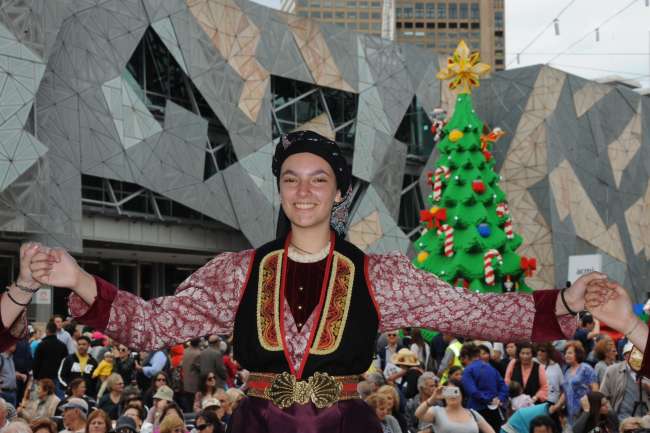
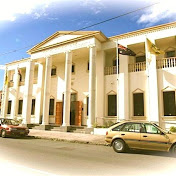
A Christmas tree made of Lego took centre stage amongst festivalgoers as a reminder of the fast-approaching festive season.

Thessaloniki Association The White Tower held its annual festival in conjunction with the city of Thessaloniki last weekend.

Thousands from across Victoria turned out on Sunday to celebrate the event’s 31st anniversary at Federation Square in Melbourne’s CBD.

The vibrant atmosphere was set with live music, and young men and women dressed in traditional costumes taking to the stage to showcase traditional Greek dances from Macedonia, Pontos, Laconia and Crete.

Among those gathered, were a number committee members and official guests including chair of the Victorian Multicultural Commission Helen Kapalos and vice-chair Spiros Alatsatas; Minister for Multicultural Affairs Robin Scott; Deputy Lord Mayor of Melbourne Susan Reilly; and State Member for Oakleigh Steve Dimopoulos MP.

An official dinner also took place the night prior, hosted at Thornbury’s ​Normandy House, where a live band entertained guests with traditional Greek favourites throughout the night.

In attendance were Ms Kapalos and Mr Alatsas, along with Consul General of Greece in Melbourne Christina Simantiraki and president of the Greek Community Bill Papastergiadis, among other guests.

source:Neos Kosmos

Varoufakis proud to be Australian

Varoufakis%2001

The former finance minister was the star attraction at the Festival of Questions.

One thing is for certain, the former Greek finance minister knows how to work a crowd.

In his appearance last Saturday at Melbourne’s Athenaeum Theatre as part of The Wheeler Centre’s Interrobang: Festival of Questions, Yanis Varoufakis stood before the packed venue with his Australian passport in hand.

Having lectured in economics at Sydney University in the 1990s, he made it clear to all that he was proud to be affiliated with Down Under.

He also spoke about the recent appointment of Malcolm Turnbull as the Australian prime minister, and said he was extremely impressed with what he had seen of his efforts so far, and believes Mr Turnbull has the ability to make a real difference.

Unsurprisingly, a large portion of the segment was dedicated to the Greek economic crisis and state of affairs, during which Mr Varoufakis controversially referred to the efforts of the Europeans to save Greece from bankruptcy as an “economic Gallipoli” on par with the failed Gallipoli campaign of World War I.

In an interview with The Australian, he warned that if European institutions don’t quickly address issues such as public debt, under-investment and rising poverty, the eurozone could face a “Soviet-style break-up”.

Teamed up with journalist Mary Kostakidis, it was clear the former finance minister was the star attraction, speaking for more than 40 minutes in response to questions sent in by the public.

source:Neos Kosmos

Greece to ratify working holiday visa

ratify

More than 20 years after it was first conceived, a working holiday visa agreement between Australia and Greece will go before the Greek parliament next week.

As Ambassador Haris Dafaranos concludes his term of duty, it was confirmed this week that the legislation necessary to introduce the long-awaited Work and Holiday sub-class 462 visa will be presented to the Greek parliament on Monday 7 December.

Eighteen months after former Greek tourism minister Olga Kefalogianni put pen to paper with the then minister for immigration, Scott Morrison, once ratified by the Greek parliament the deal will allow 500 young Greeks and Australians a year to live and work in each other’s country.

Ambassador Dafaranos said he was delighted that Greek parliamentarians would have the opportunity to make the agreement a reality.

“This is good news,” said the ambassador. “The Deputy Foreign Minister, Mr Ioannis Amanatidis is very much supporting it, so I am happy that before the end of 2015 it will be able to take off.

“We have been reminding them, but it is to the credit of the Deputy Foreign Minister that he pushed it personally.”

The idea of working holiday visas operated as a reciprocal agreement between the two countries dates back to the mid-1990s, when the then Labor minister for immigration and ethnic affairs, Nick Bolkus, first initiated discussions with the Greek government led by Prime Minister Costas Simitis.

Mr Bolkus, who today runs a corporate consultancy business with Alexander Downer, told Neos Kosmos his reaction to hearing of the visa agreement’s imminent ratification was one of “relief and of satisfaction”.

“It’s taken as long as it took to build the Acropolis, but it’s good to finally get it done,” said the former South Australia senator.

“Even though it should have happened 22 years ago, the timing is right even now, such cross fertilisation in both countries advances both countries. It’s high time and it’s very welcome”.

source:Neos Kosmos