Monthly Archives: July 2016

Remos to sing for the elite

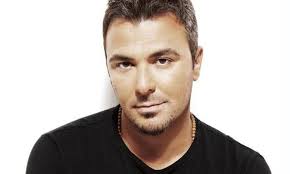
imagesY1MO994Z

The singer’s annual performance in Mykonos’ lush seaside restaurant ‘Nammos’ sparked controversy, the moment the ticket prices were revealed

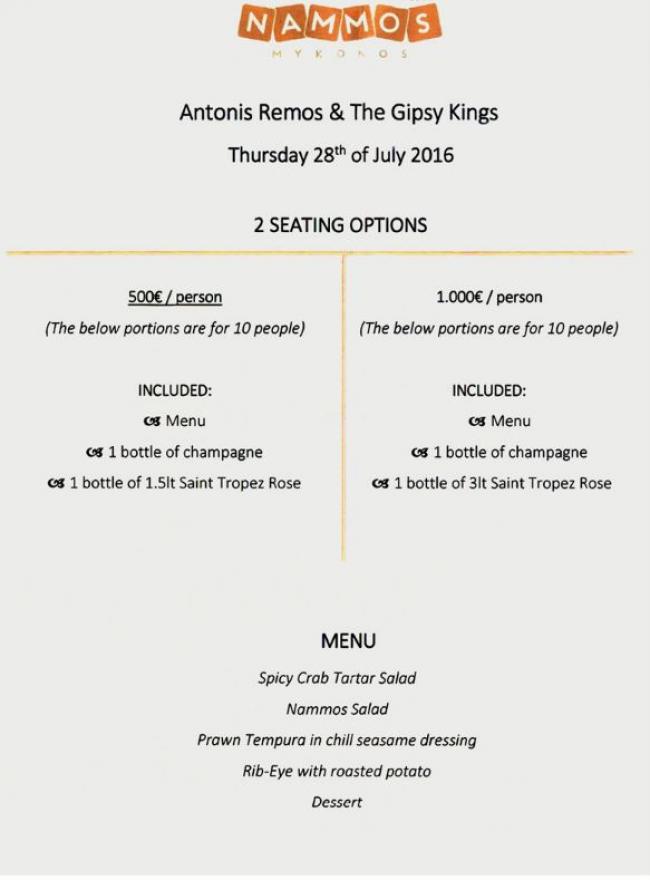
How much would you pay to see Antonis Remos? Apparently, the answer depends on the location. Tickets to his recent Melbourne show sold at $69, $89, $99 and $110. But in order to see him perform at Nammos, the famously lush seaside restaurant in Mykonos, one should expect to fork out at least €500 ($729). Granted, the price includes a five-course meal (crab salad, prawn tempura, rib-eye steak, dessert), a bottle of champagne and a 1.5lt bottle of Rose Wine. For double the price (i.e. €1000/ $1460), there’s a 3lt. bottle of wine on offer for the 10-party company – because, it has to be noted that these two options are not tailored per person, but per table, accomodating up to ten patrons, so there are parties that will be charged either €500 or  €1000, regardless of how many will be actually sitting on the table and sharing the bill. It should also be noted that the entertainment is not limited to the popular Greek singer, as the event, which will take place on Thursday 28 July, features another act billed along; world music perennial favourites Gipsy Kings, whose songs “Bamboleo”, “Djobi Djoba” and their cover of “Volare” were very popular in Greece – in the late 1980s.  

Even so, this price is far from seeming even remotely close to what one would think as “value for money”. But this does not preoccupy the patrons of Nammos, who are flocking to see Remos live in what is now an annual event. The concert is tailored to the tastes and habits of a small elite of Greek and international businessmen, celebrities and socialites, notoriously spending as though things are “business as usual” in Greece. Past events were reported as being poor excuses of tasteless extravagance, with drunk patrons engaging in food wars – with thousand dollar worth of lobster as ammunition.

NFremos

If such behaviour is seen as a hubris in a country where 40% of the population lives in poverty and in which one in two young people have no prospect of finding employment, some argue that in a free country and in a free economy, people can spend their money as they please, provided they pay their taxes. But it has been reported that this same elite that glaringly participates in these events, comprises of infamous tax-avoiders and businessmen who have declared bankruptcy, all the while ensuring their personal fortunes in tax havens around the world. And it was Antonis Remos himself who added insult to injury, when in 2014, while performing for the same crowd at the same place, he seized the opportunity to make a speech against the ‘foreign-inflicted austerity’ that has crippled Greece. Who knows what he has to say this time round. 

source:Neos Kosmos

Disastrous Battle of Fromelles remembered

untitled

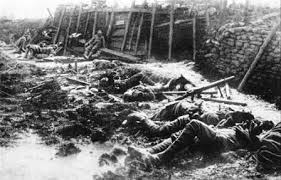
Barbara Martin says her father didn’t talk about the Great War and it was only by reading his letters after he died that she realised the horrific experience he went through.

That included surviving the disastrous Australian action at Fromelles on July 19, 1916 – the worst day in Australian military history.

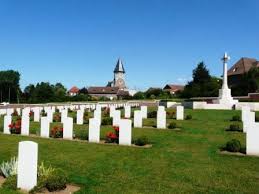
The 82-year-old Ms Martin was at the Pheasant Wood War Cemetery in the northern French village on Monday on the eve of a commemorative service marking the centenary of the 14-hour battle that cost more than 1900 Australian lives.

It was the first major action involving Australian troops on the Western Front in World War I and the Australian death toll was almost a quarter of that lost over eight months at Gallipoli.

Ms Martin, from Camberwell in Victoria, said it really hit home when she walked the ground where her father fought and was injured during the Australian offensive against well-prepared German defenders.

Her father lost an arm in later fighting and after he died in 1978 at the age of 88 the family found a letter to his brother describing the battle at Fromelles and instructing him not to show it to their mother.

“It was a very graphic letter of what happened, the slaughter that occurred,” Ms Martin told AAP.

“He described it with great feeling, the men who were coming back crying for their mothers.

“He said physical wounds will heal but these wounds won’t.”

She said she hadn’t realised how much empathy and understanding he had, given that the war appeared to have added “a bit of hardness and lack of emotion” to him.

At Fromelles, Australian troops advancing against experienced German troops alerted to the attack were cut to pieces by shellfire and mowed down by machine-gun fire, with no real gains made.

The Pheasant Wood cemetery was the first created by the Commonwealth War Graves Commission since World War II after a graveyard of 250 mainly Australian troops was discovered in the area in 2009-10 and their remains recovered and reburied.

Of those, the remains of 149 Australian soldiers have been identified thanks to personal items found and DNA testing involving living relatives.

Tuesday’s commemorative event will include the rededication of six headstones at the cemetery following the latest identifications.

Commission spokesman Peter Francis was involved in the recovery and told AAP that as archaeologists carefully removed the bodies it was clear they had been carefully buried by the Germans.

“They hadn’t been thrown into these graves, they’d been buried by their German foes side by side, certainly with some reverence.

“It was something that really touched me, it broke down the statistics of the battle and gave it a human face.”

Mr Francis said the artefacts recovered during the excavation included personal items such as good-luck charms and French phrase books including such terms as ‘Don’t shoot, I’m an Australian”.

“One thing that had us all in tears was a return train ticket, which one soldier tucked into the rubber bit of his gas mask.

“It was a return ticket from Fremantle to Perth and of course that young man never got to use that ticket.”

source:news.com.au


The successful Greek Australians of Queensland

papadakis1018

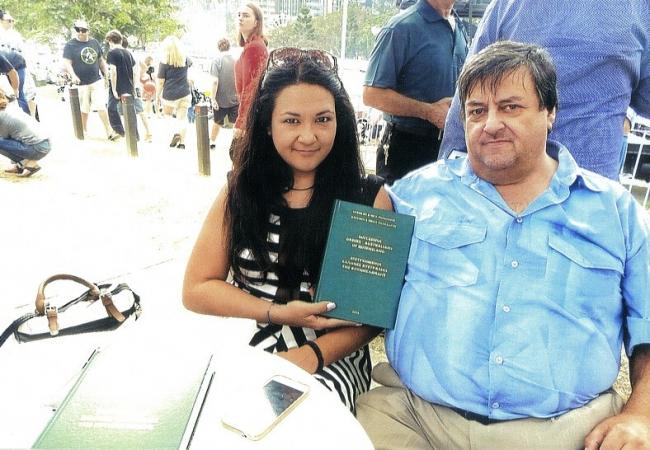
Co-authors, (R-L) Vasiliki and Nick Papadakis.

A book documenting and celebrating the stories of 148 Greek Australians across the sunny state

It’s no secret that Australia is home to a number of successful Greek Australians, and journalist Nick Papadakis has made it his mission over the last three decades to ensure that they are honoured and remembered.

In 1987 he released a book on the Successful Greek Australians of Victoria, followed by an equivalent for those in NSW in 1992, and this time around it’s Queensland’s turn.

“Through this project, the aim is for the next generations to be able to see what the first comers from Greece in Australia have done, and to know how they educated their kids, acquired property, and everything else the Greeks have done in Australia,” Mr Papadakis told Neos Kosmos.

A self-funded project, his criteria for compiling Successful Greek Australians of Queensland was simple; at the end of each interview he would ask his subject who they identified as being a successful Greek Australian, which led to an impressive database to work with.

“When I had three matches or more, I would contact them. So the people in the book chose the rest of the people,” he explains.

The book, which features 148 Greek Australians across the sunny state, is predominantly made up of first and second generation migrants, with their stories delving into how they ended up living Down Under, their back stories revealing the intimacy of their lives.

“We also found a few third and fourth generation, and the first comers were in the 1900s. So they told us as much as they could about their great-grandparents, which was probably the most interesting part; learning about who the first ones were,” tells Mr Papadakis.

Officially launched last month at Brisbane’s Greek Club, the event was opened by Honorary Secretary of the Greek Consulate in Brisbane, Tsambico Athanasas.

A four-minute video was projected, showing the Patris on one of its many trips of the 1960s from Piraeus Port to Australia, before Professor of Ancient Greek Bob Milns took to the floor to speak about the impressive contribution Greeks have made in Australia.

Vasiliki Papadakis also addressed those gathered, having worked alongside Mr Papadakis on the project as a co-author.

She praised the book as ‘a university of life’, having had the chance to meet a number of highly-qualified people through the experience, who despite adverse circumstances managed to thrive and excel.

“Through your true stories, I felt the emotion – sadness, happiness, affection, love and respect. For all these feelings, I want to tell you that it was an honour to get to know you and to understand the true meaning of Australia’s Hellenism,” she said.

To purchase Successful Greek Australians of Queensland, contact Nick Papadakis directly on 0410 383 535.

Source:Neos Kosmos

UK MPs introduce bill to return Parthenon Marbles to Greece

Mark-Williams-MP-by-LIberal-Democrats

Welsh Liberal Democrat MP Mark Williams. Photo: The Welsh Socialist Democratic Party.

Led by Welsh Liberal Democrat MP Mark Wiliams, the motion might pave the way for a historic turn of events

A brief history of the Parthenon Marbles Looting
The ancient temple – arguably the most important standing monument of classical Greece – had stood intact as a functioning building for centuries, but was ruined during the siege of Athens in 1687, when Francesco Morosini, captain-general of the Venetian forces, used a cannon on the site, which was used as a munitions store by the Ottomans. The explosion caused the marble roof, most of the walls, 14 columns from the north and south peristyles and carved metopes and frieze blocks to collapse, scattering ruined artwork which could be easily grabbed by looters. Morosini himself tried to remove large sculptures, but the device used broke, dropping them downhill and breaking them into pieces.

The most notorious looter was Thomas Bruce, 7th Earl of Elgin and 11th Earl of Kincardine, who served as ‘Ambassador Extraordinary and Minister Plenipotentiary of His Britannic Majesty to the Sublime Porte of Selim III, Sultan of Turkey’ between 1799 and 1803. In this capacity, in 1800, he commissioned skilled artists and modellers to make drawings and casts of the ancient monuments of Athens.

In 1801, Lord Elgin received a controversial firman from the Porte which allowed his agents not only to ‘fix scaffolding round the ancient Temple of the Idols [the Parthenon] and to mould the ornamental sculpture and visible figures thereon in plaster and gypsum’, but also ‘to take away any pieces of stone with old inscriptions or figures thereon. Due to the loss of the original firman, it isn’t sure that the translation is correct, though an existing original Italian translation dispels the claim that this is an official document by any means.

It is now believed that Lord Elgin bribed local Ottoman authorities into permitting the removal of about half of the Parthenon frieze, 15 metopes, and 17 pedimental fragments, in addition to a caryatid and a column from the Erechtheion, upon his departure from the Ottoman Empire in 1803. Lord Elgin’s agents performed excavations on the site, retrieving sculptures, but the actual removal was a decision taken on the spot by Philip Hunt, Elgin’s chaplain (and temporary private secretary, i.e. representative, in Athens), who persuaded the voivode (governor of Athens) to interpret the terms of the firman very broadly.

The excavation and removal went on after Lord Elgin’s departure and was completed in 1812; it cost him about £70,000. At first, he used the antiquities to decorate his mansion in Scotland, but later on, as his fortune waned, he tried selling them to the British Museum, to no avail. Then, on 11 July, 1816, the House of Commons granted the purchase of the ‘Marbles’ by Great Britain for £35,000, considerably below their cost to Elgin, and deposited them in the British Museum. Many opposed the British parliament thus sanctioning the improper removal, not least among them Lord Byron, who deemed Lord Elgin a “vandal”.

Talks for the return of the ‘Parthenon Marbles’ to Greece began in the aftermath of the creation of the modern Greek state, to limited support. A consistent campaign for the return of the ‘Parthenon Marbles’ to its rightful place has been ongoing for decades, becoming the official Greek government stance since 1983, when then Minister of Culture Melina Mercouri committed to the cause.

After the opening of the new and widely acclaimed Acropolis Museum in Athens, which hosts most of the original sculptures (they are replaced on site with high quality replicas, for fear of further corrosion), the campaign has gained momentum. Supporters of the cause seem to think that the time has come for the Parthenon Marbles to return to Greece – and the ongoing crisis has only augmented the voices of support, as this is regarded as something that would boost the economy.

The full text of the draft legislation is as follows:

Parthenon Sculptures (Return to Greece) Bill

CONTENTS
1 Return of the Parthenon Sculptures
2 Amendment of the British Museum Act 1963
3 Other artefacts
4 Short title and commencement

A BILL TO Make provision for the transfer of ownership and return to Greece of the artefacts known as the Parthenon Sculptures, or Elgin Marbles, purchased by Parliament in 1816; to amend the British Museum Act 1963 accordingly; and for connected purposes.

BE IT ENACTED by the Queen’s most Excellent Majesty, by and with the advice and consent of the Lords Spiritual and Temporal, and Commons, in this present Parliament assembled, and by the authority of the same, as follows:

1 Return of the Parthenon Sculptures
(1)Ownership of the collection of artefacts known as the ‘Parthenon Sculptures’, or the ‘Elgin Marbles’, is transferred to the government of the Hellenic Republic, subject only to subsections (2) and (4).

(2)The artefacts comprising the collection in subsection (1) shall be determined by the Secretary of State by regulation.

(3)Before making a determination under subsection (2), the Secretary of State must consult—
(a)the Trustees of the British Museum,
(b)representatives of the Government of the Hellenic Republic, and
(c)any other person, body or institution that the Secretary of State believes to be appropriate.

(4)Subsection (1) has effect on the coming into force of an agreement between the Government of the United Kingdom and the Government of the Hellenic Republicin which terms are agreed relating to—
(a)arrangements for the suitable transportation of the collection determined under subsection (2);
(b)responsibility for the costs of such transportation;
(c)arrangements and conditions for the maintenance and display of the collection; and
(d)access to the collection for:
(i)experts
(ii)students, and
(ii)members of the public.

(5)The power to—
(a) make regulations under subsection (2), or
(b) enter into an agreement under subsection (4)
is exercisable by statutory instrument which may only be made after a draft of the instrument has been laid before, and approved by a resolution of, each House of Parliament.

2 Amendment of the British Museum Act 1963
(1)In section 5 of the British Museum Act 1963 (disposal of objects), after subsection (4) insert—
“(5)Nothing in this section may be interpreted as applying to an artefact that—
(a)has been determined to be part of the collection under section 1(1) of the Parthenon Sculptures (Return to Greece) Act 2016, or
(b)is under active consideration by the Secretary of State for determination as to whether or not the artefact is part of that collection.”

(2)In section 9 of the British Museum Act 1963 (transfers to other institutions) after subsection (1) insert—
“(2)Nothing in this section may be interpreted as applying to an artefact that—
(a)has been determined to be part of the collection under section 1(1) of the Parthenon Sculptures (Return to Greece) Act 2016, or
(b)is under active consideration by the Secretary of State for determination as to whether or not the artefact is part of that collection.”

3 Other artefacts
Nothing in this Act shall be interpreted as applying to any artefact forming part of a collection within a national museum or gallery other than the artefacts mention in section 1.

4 Short title and commencement
(1)This Act may be cited as the Parthenon Sculptures (Return to Greece) Act 2016.

(2)This Act comes into force on the day after the day on which it receives Royal Assent.

Source: Neos Kosmos

Juventus bring B-team to Australia

1468788035365

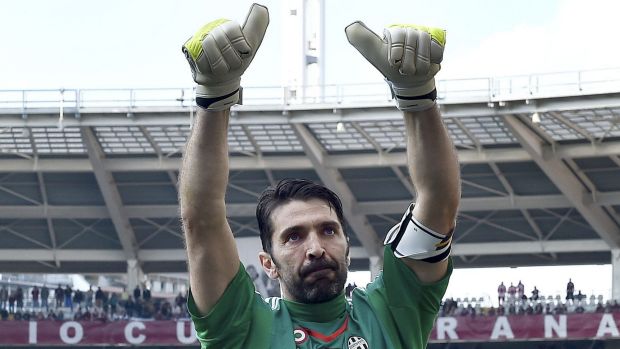
Italian champions Juventus have spared 13 players the trip to Australia for the International Champions Cup following their European Championship exploits.

Italy skipper Gianluigi Buffon and France midfielder Paul Pogba are among those given an extended break by the Serie A giants, thus missing their two Melbourne dates this month.

It means Argentina striker Paulo Dybala, on-loan Moroccan defender Medhi Benatia and Bosnian midfielder Miralem Pjanic will spearhead their side for matches against Melbourne Victory (July 23) and Tottenham Hotspur (July 26) at the MCG.

The absences are not surprising given the taxing schedule of Juve players over the last 12 months.

From the club’s first pre-season match in July 2015 through to the end of the European Championships this month, seven Italian internationals were eligible for 71 matches for club and country.

Giorgio Chiellini, Simone Zaza, Andrea Barzagli, Leonardo Bonucci, Stefano Sturaro and Claudio Marchisio – have stayed home following their involvement in France.

So too have German midfielder Sami Khedira, Croatian striker Mario Mandzukic, Swiss captain Stephan Lichtsteiner and France left-back Patrice Evra.

New signing from Barcelona Dani Alves will also not travel according to Juventus’ website.

With 13 players, including Bayern Munich two-year loanee Kingsley Coman, in action at Euro 2016, Juventus provided more players than any other club.

They will still provide a stern test for Victory and English Premier League Tottenham – who finished third last season – their highest spot since 1989/90.

Dybala, 22, scored 23 goals for Juventus if his first campaign for the club and is widely considered to be one of the next global superstars of the sport.

Pjanic returns to Melbourne in black and white stripes after turning out last year in the red and gold of Roma.

JUVENTUS SQUAD FOR INTERNATIONAL CHAMPIONS CUP

Alex Sandro, Asamoah, Audero, Benatia, Blanco, Cerri, Coccolo, Del Favero, Dybala, Hernanes, Kastanos, Lemina, Lirola, Loria, Macek, Marrone, Neto, Padovan, Parodi, Pereyra, Pjanic, Rosseti, Rugani, Severin, Vitale.

source:smh.com.au

MH17: Malaysia Airlines reaches settlement with families

untitled

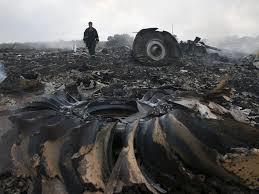
Amsterdam: Malaysia Airlines has struck a deal to settle damages claims for most victims of its MH17 flight that was shot down over eastern Ukraine two years ago, Dutch national broadcaster NOS has reported.

NOS cited Veeru Mewa, a lawyer representing Dutch victims.

Under the Montreal Convention, airlines must pay damages of up to about $A189,366 to victims’ families, regardless of the circumstances of a crash.

All 298 passengers and crew, including 27 Australian nationals, were killed when the Malaysia Airlines flight was hit, with a report from the Dutch Safety Board saying it was brought down by a Russian-built missile fired from an area where Russian separatists were operating.

Foreign Minister Julie Bishop said earlier this week – ahead of yesterday’s two-year anniversary of the disaster – that the federal government was committed to ensuring families received justice.

Eight Australian families, including lead applicant Perth woman Cassandra Gibson, whose mother Liliane Derden was among those killed on the plane, have filed a class action against Malaysia Airlines

“I am very aware of the poignancy of this date and the grief it will continue to bring for families of those who were killed in this incident, Ms Bishop told reporters.

“The Australian government will continue to do all we can to hold those responsible for this atrocity to account.”

The government was awaiting the findings of the joint investigation taskforce, of which Australia is one of five countries involved, Ms Bishop said.

“It has been thorough, it has been done with integrity and I look forward to reading the detail of it,” she said.

“We can then determine what steps, what action we can take in the interests of finding justice for those who were killed and for their families.”

Source:smh.com.au

Fromelles disaster remembered 100 years on

imagesZ8JYEPIX

A hundred years ago next Tuesday, Australian soldiers launched their first major attack in France, a disastrous action which left almost 2000 dead for no gains whatsoever.

This was the Battle of Fromelles, now regarded as the worst day of Australian military history.

From the evening of July 19, 1916 Australian troops attacked German lines, held a small section overnight and were expelled, with casualties of 5533, including 1917 dead and 470 prisoners.

For some people today, the connection is more immediate – it was their DNA which has allowed identification of 150 Australian soldiers whose bodies were found in mass graves on the Fromelles battlefield in 2008. Another 100, mostly Australians but some British, remain unidentified.

Fromelles will be marked by significant commemorations.

In France, a service for re-dedication of headstones of the recently identified will be held at the Pheasant Wood Military Cemetery at 1pm (France time) on July 19.

That’s followed by the main national commemorative service at 5.15pm (France time) at the VC Corner Cemetery and Memorial where more than 400 Australians killed in this battle are interred.

Services will be broadcast live on the ABC.

The Australian War Memorial will mark this tragic initiation to war on the Western Front at the Last Post Ceremony on July 19.

That will recall the lives of Privates David and Colin Barr, brothers from Melbourne who enlisted together, joined the AIF’s 60th Battalion and participated in the Battle of Fromelles.

David Barr, 25, was hit and died in no-man’s land, his body never recovered. Colin Barr, 19, was struck by a shell fragment and died in hospital in England more than a month later.

Of more than 800 men in the 61st Battalion at the start of the battle, just four officers and 61 soldiers were present at the subsequent roll call.

source:news.com.au

Melbourne weather: Victorians wake to frosty morning with more wild weather forecast

1468357748339

Unstable weather patterns continue Wednesday. Road and wind warnings are in place for tomorrow’s icy airflow across Victoria. Vision courtesy Seven News Melbourne.

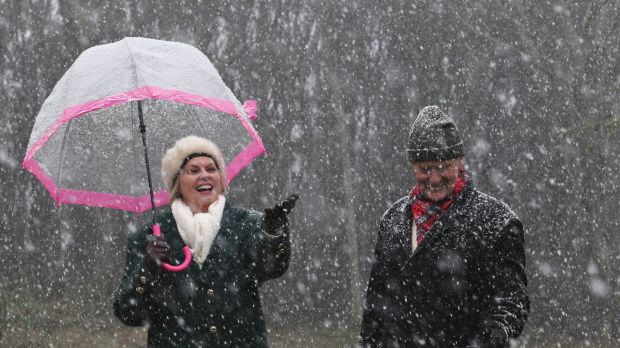
Temperatures have plummeted across Victoria and winds have picked up, leaving the state freezing and wild on Wednesday morning.

Winds of about 90km/h have thrashed bayside suburbs, and paramedics attended two crashes in which trees fell across over the road overnight.

A car hit a tree on Seven Mile Road at Nar Nar Goon just before 5am Wednesday morning, the female driver was flown to hospital in Melbourne with head and back injuries after she was trapped in her car for an hour.

Eight hours earlier a man was injured when his car hit a tree on the Murray Valley Highway at Koetong, he was taken to Albury Base Hospital in a stable conditions.

“Paramedics urge drivers to take care and adjust their driving to the conditions, given the potential for fallen trees, black ice and snow on the roads,” an Ambulance Victoria spokesperson said.

By 6am Wednesday, Melbourne was at its minimum of 5 degrees – while Frankston was at 6.7 degrees – though it felt like -4 degrees.

source:theage.com.au

Παγκόσμιο Χρυσό για κρασί Έλληνα παραγωγού από Αυστραλία

paAward1

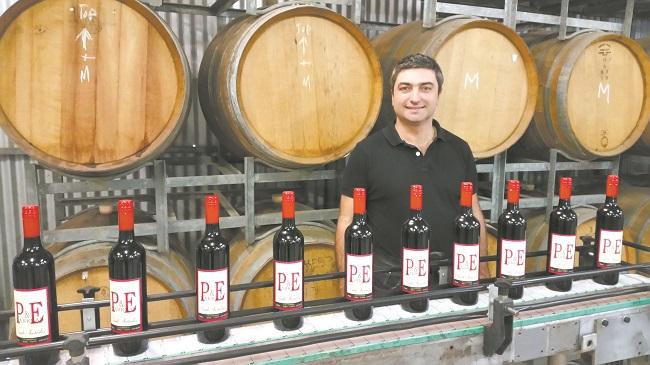
O Δημήτρης Μαρκέας με ένα από τα βραβευμένα κρασιά του, P&E Markeas Shiraz

Υψηλότατες διακρίσεις για κρασιά της οικογένειας Μαρκέα από την Νότια Αυστραλία

Ήταν η πέμπτη συνεχή χρονιά που τα κρασιά της οικογένειας Μαρκέα από την Νότια Αυστραλία απέσπασαν σημαντικότατες διακρίσεις διεθνές διαγωνισμό κρασιού. 

Η ποικιλία Chardonnay της χρονιάς 2016 της οινοποιίας Mallee Estate του ελληνικής καταγωγής οινοπαραγωγού Δημήτρης Μαρκέας απέσπασε το Χρυσό Βραβείο στον Διεθνή Διαγωνισμό Οίνου της Νέας Υόρκης. Η συγκεκριμένη ποικιλία είναι από αμπέλια που φυτεύτηκαν το 1978 στο οικογενειακό αμπελώνα. 

Επιπλέον, οι ποικιλίες Cabernet Sauvignon του 2014 και P&E Shiraz του 2010 απέσπασαν τα αργυρά βραβεία στον ίδιο διαγωνισμό. 

Τα κρασιά της οινοποιείας Μαρκέα έχουν συμμετάσχει επανειλημμένα στους Διαγωνισμούς Οίνου στη Νέα Υόρκη, σχεδόν κάθε χρόνο από το 2010 μέχρι σήμερα και έχουν λάβει υψηλές βαθμολογίες. 

Ο κ. Μαρκέας διαχειρίζεται το οινοποιείο Mallee Estate Winery, το οποίο ίδρυσαν οι γονείς του Παναγιώτης και Ελένη Μαρκέα το 1969. Η οικογένεια κατάγεται από την Καρδαμύλη Μεσσηνίας και εγκαταστάθηκε στην εύκρατη ηλιόλουστη περιοχή του ποταμού Murray της Νότιας Αυστραλίας. 

Το 1998 η οικογένεια αγόρασε ένα μεγάλο κομμάτι γης στην ίδια περιοχή και την ίδια περίοδο ο Δημήτρης αποφασίσει να ακολουθήσει σπουδές Οινολογίας στο Πανεπιστήμιο Charles Sturt της Νέας Νότιας Ουαλίας. Μαζί με τον αδερφό του, Θανάση, κατάφεραν να μετατρέψουν τους αμπελώνες σε ένα πρότυπο οινοποιείο. 

Η επαρχία Riverland είναι σήμερα η μεγαλύτερη σε έκταση περιοχή παραγωγής κρασιού στην Αυστραλία. Το κλίμα είναι ζεστό ηπειρωτικό και η μέση θερμοκρασία το χειμώνα φτάνει τους 16 βαθμούς και το καλοκαίρι τους 30. Η περιοχή θεωρείται το «μηχανοστάσιο» παραγωγής κρασιού στην Αυστραλία καθώς εκεί παράγονται μερικά από τα πιο δημοφιλή κρασιά της χώρας. Η οινοποιεία σήμερα εξάγει ποσότητες κρασιού στις ΗΠΑ και στην Κίνα. 

Πηγή:Νέος Κόσμος

Old vines and new wines: Greek grapes making a splash in Australia

wine-tasting

A whiskey and beer enthusiast sold on Greek wine at a Japanese dinner

Venue: Supernormal, 180 Flinders Lane, Melbourne

So this is what it has come to. A delegation of Greek winemakers, here in Australia, finest wares in tow, matching their potations to a selection of Asian fusion cuisine. Could there be a more apt city than Melbourne for such a clash of west-meets-east? Given the enormous Greek and Asian populations present, it’s a surprise this isn’t a more frequent occurrence.

And here I am. A half-Asian (less so “fusion”, more so “confusion”) and sometime-contributor to a Greek publication, who admittedly has a stronger inclination to whisky and craft beer, and whose main experiences with Greek libations have been less-than-ideal encounters with ouzo during a European backpacking trip. Can an old dog learn new drinks?

New Wines of Greece is an initiative of the Greek wine industry supported by the European Union and the Greek government (I think we can agree that wine is the great unifier), with the campaign making its second visit to Australian shores in June for a series of tastings, masterclasses and dinners. The venue for this evening was Supernormal, the Flinders Lane establishment that is decidedly Japanese in aesthetics but whose culinary scope extends far beyond.

I find myself seated next to Effie, an oenologist who also happens to be the export face of Lyrarakis Wines, one of the largest producers in Crete. She explains that the Lyrarakis Plyto, accompanying the starters, has been selling particularly well in Japan over the past six months, but she is yet to venture to the far east to investigate further. Thus, it seems fortuitous that Supernormal was chosen for the evening’s nosh; whether it be beer, sake, whisky or otherwise, Japanese tastes (without wanting to generalise here too broadly) often lean towards styles that show sufficient restraint in palate and alcohol in order to complement the fresh and subtle flavours within many of their local dishes, but also possess enough depth to be an experience of their own. 

Many of the Greek wines up for tasting this evening certainly meet this criteria.

As it turns out, the grassy citrus character of Lyrarakis Plyto paired up wonderfully with a series of light and tangy starters including pickled vegetables, oysters, kingfish and marinated cuttlefish – but so too did a renowned varietal in the form of Troupis Winery’s “Fteri” Moschofilero, delivering a crisp, mineral flavour enveloped in a rosy bouquet.

Following on, the entree contained one of Supernormal’s iconic dishes – the straightforward but devilishly moreish New England lobster roll, together with the reputable and reliable prawn and chicken dumplings. The Ktima Pavlidis “Thema” White blend of 50 per cent assyrtiko and 50 per cent sauvignon blanc added a dollop of fresh fruitiness to the palate, and is a great option for those who would usually reach for a NZ white blend full of melon and passionfruit.

From listening in to conversation amongst the attendees and sampling the offerings, it’s something of a mystery that Greek wines haven’t carved out a bit more real estate amongst the shelves of Australia’s liquor retailers and in the minds of consumers, especially with a history of winemaking dating back more than 6000 years. As Australians we obviously look to local and Kiwi producers when seeking bang for buck, and when we’re feeling a bit adventurous we often turn to the usual suspects in Western Europe and South America.

Greek wines may face competition purely from a cost perspective, but when you lay down your cash you know you will be getting something different, something set apart from a global varietal homogeneity, something distinctly Greek.

Anyway, following some vigorous discussion around the table on topics such as the merits of organic wine, the main course took us to inland China for a handsome slab of slow-cooked Szechuan lamb, falling apart with the barest of effort, accompanied by spring onion pancakes and coriander paste.

Flying the flag for Greece were a number of reds, including one that was certainly one of my evening’s highlights – the Boutari Grande Reserve Naoussa, a rich (but not needlessly heavy) 100 per cent xinomavro full of woods and red fruits, and enough spice and acidity to hold its own alongside the meat. Another one to rock my proverbial boat was the Theopetra Estate Limniona, possessing an earthy spice but softer on the tannins and acidity than the Boutari.

Admittedly I was looking forward to one of the the dessert wines; specifically, the Domaine Sigalas Vinsanto, composed of 75 per cent assyrtiko and 25 per cent aidani from old, old vines and aged for 24 months in oak barrels. Simply exquisite. Domaine Sigalas happens to be located near the town of Oia in northern Santorini, yet despite spending a week lazing around in Oia in 2014 I was somehow foolish enough to overlook a visit to their grounds – certainly a missed opportunity to be rectified on a future occasion.

The evening ended with something of a curious treat. Peter Barry, manager of Jim Barry Wines, distributed tastings of his 2015 Assyrtiko, having started the crop on his Clare Valley estate a few years ago with cuttings taken from a single Santorini vine. Whilst somewhat still in its infancy, over time it will interesting to see how the grapes take to the local climate, and to compare the results to that of its homeland. And just to outdo himself, Peter produced a 2002 bottle of The Armagh to ration out amongst the table. Even a self-professed beer-guzzling philistine like myself had reason to pause and acknowledge the heft of this indulgence. In short, I absolutely rue the fact that I was so woefully ignorant on the breadth, depth, and distinctness of Greek wines prior to this event. 

Whilst innumerable winemakers across the globe will continue to produce readily available mainstays such as riesling, shiraz, and pinot noir, there is a place out there in everyone’s cellar and on everyone’s table for xinomavro, moschofilero, plyto, and so on; this is a slice of pure Greece. Peter Barry lamented that it’s “a story and a world of complexity that nobody knows about” – well, hopefully the New Wines of Greece campaign will ensure those words no longer hold true in the near future.

For more information on the New Wines of Greece campaign and Greek wines in general, head to: www.newwinesofgreece.com

Source:neos kosmos