Monthly Archives: June 2016

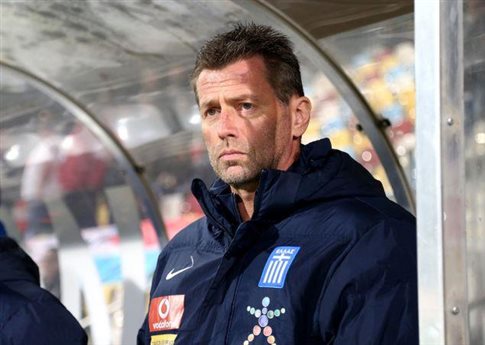
Σκίμπε: «Καλύτερη η Αυστραλία, κοιτάζουμε το ματς της Μελβούρνης»

7CB8CEE61EB389EF77EA29E460BBFFFB

Ο τρόπος της ήττας από την Αυστραλία στο φιλικό του Σίδνεϊ, δηλαδή με γκολ στο τελευταίο λεπτό των καθυστερήσεων, δεν άρεσε καθόλου στον προπονητή της Εθνικής ομάδας, Μίχαελ Σκίμπε.

Ο Γερμανός εκλέκτορας παρατήρησε πως οι διεθνείς ήταν φανερά πιο κουρασμένοι από τους αντιπάλους τους, παραδέχθηκε ότι οι socceroos είχαν περισσότερες ευκαιρίες, αλλά έδωσε και σύνθημα ανασύνταξης για τον αγώνα που έπεται, στη Μελβούρνη.

«Θέλω να συγχαρώ την Αυστραλία για τη νίκη στο τελευταίο λεπτό. Δημιούργησαν πολλές ευκαιρίες και μερικές φορές ήμασταν τυχεροί που δεν δεχθήκαμε γκολ νωρίτερα. Από την άλλη, είμαστε στεναχωρημένοι για το γκολ στο τελευταίο λεπτό» δήλωσε ο Σκίμπε.

«Η Αυστραλία πίεσε πολύ με το παιχνίδι της, ειδικά στο πρώτο ημίχρονο που η ομάδα μου φάνηκε κουρασμένη. Στο δεύτερο ημίχρονο ήμασταν καλύτεροι και μέχρι το 80΄ ήταν ένα ισορροπημένο παιχνίδι. Στα τελευταία 10 λεπτά υπήρχε αρκετή πίεση και τελικά δεχθήκαμε το γκολ» πρόσθεσε.

«Ο αγωνιστικός χώρος και ο καιρός δεν μας βοήθησαν, αλλά από την άλλη γνωρίζαμε ότι θα υπήρχαν πολλές μάχες. Τώρα συγκεντρωνόμαστε στο ματς που θα γίνει στη Μελβούρνη» κατέληξε ο Σκίμπε.

Μπάρκας αντί του Καρνέζη…

Χωρίς τον Ορέστη Καρνέζη θα παραταχθεί στον δεύτερο φιλικό αγώνα με την Αυστραλία η Εθνική ομάδα, στις 7 Ιουνίου στη Μελβούρνη. Ο τερματοφύλακας της Ουντινέζε, ο οποίος τραυματίστηκε στη διάρκεια του σημερινού παιχνιδιού στη διάρκεια του πρώτου ημιχρόνου και αντικαταστάθηκε από τον Στέφανο Καπίνο, μετέβη σε νοσοκομείο του Σίδνεϊ συνοδευόμενος από τον γιατρό της ομάδας, Οδυσσέα Παξινό, όπου και υποβλήθηκε σε εξετάσεις.

Τα αποτελέσματά τους έδειξαν ότι έχει υποστεί κάκωση των αριστερών πλάγιων κοιλιακών από χτύπημα που δέχθηκε, κι ως εκ τούτου δεν μπορεί να συμμετάσχει στις προσεχείς υποχρεώσεις του αντιπροσωπευτικού συγκροτήματος. Ο ομοσπονδιακός προπονητής, Μίχαελ Σκίμπε, απηύθυνε πρόσκληση στον τερματοφύλακα του Ατρόμητου, Βασίλη Μπάρκα, ο οποίος θα ταξιδέψει από την Αθήνα για την Αυστραλία αύριο και θα ενσωματωθεί στην αποστολή της Εθνικής το απόγευμα της Δευτέρας 6 Ιουνίου.

Πηγή:in.gr

H Aυστραλία 1-0 την Ελλάδα στον πρώτο αγώνα του Σίδνευ

151446

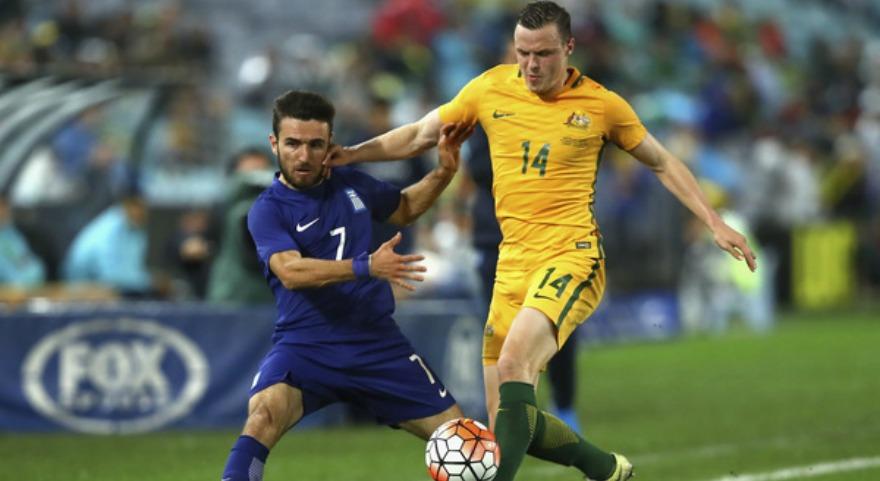
Με ξεκάθαρο στόχο το μηδέν στην άμυνα παρατάχθηκε η Eθνική Ελλάδα κόντρα στην Αυστραλία στο Σίδνεϊ, με τον Μίχαελ Σκίμπε να θέλει να δοκιμάσει διαφορετικά πράγματα απ’ ό,τι στα προηγούμενα φιλικά και τα κατάφερε, αλλά μόνο για 93’.

Η καλύτερη στη μεγαλύτερη διάρκεια του αγώνα, Αυστραλία, δεν σταμάτησε να ψάχνει το γκολ της νίκης μπροστά στους 40.000 φιλάθλους στο «AZN Stadium» και τελικά δικαιώθηκε στο 94’ με το τέρμα του Λέκι που έπιασε ένα εξαιρετικό σουτ από το ύψος της μεγάλης περιοχής.

Η Ελλάδα με εξαίρεση τα πρώτα 10 λεπτά του αγώνα δεν κατάφερε να φανεί απειλητική και προσπάθησε περισσότερο να διαχειριστεί την ορμή των γηπεδούχων και έως ένα βαθμό τα κατάφερε, δείχνοντας αν μη τι άλλο μεγαλύτερη αμυντική συνέπεια σε σχέση με τα τελευταία φιλικά.

Στα αξιοσημείωτα περιλαμβάνεται ο τραυματισμός του Ορέστη Καρνέζη στο 14’, με τον εξαιρετικό Καπίνο να παίρνει τη θέση του, αλλά και το ντεμπούτο του Τάσου Μπακασέτα με τη φανέλα της εθνικής Ανδρών. Από πλευράς Αυστραλών αγωνίστηκε ως βασικός ο Γιάννου, που αντικαταστάθηκε στο 72’.

Το ματς

Κάθε άλλο παρά «τρακαρισμένοι» παρουσιάστηκαν οι παίκτες του Μίχαελ Σκίμπε στα πρώτα 25 λεπτά του ματς, αφού μπορεί να μην είχαν την κατοχή της μπάλας, αλλά μπόρεσαν να διαχειριστούν πολύ εύκολα την πίεση που προσπαθούσαν να πιέσουν οι Αυστραλοί.

Μόλις στο 3’, μάλιστα, ο Βέλλιος έχασε πολύ μεγάλη ευκαιρία να βάλει μπροστά στο σκορ την Ελλάδα, όταν έπιασε το σουτ μέσα στην περιοχή, αλλά η μπάλα πήρε ύψος και πέρασε πάνω από την εστία του Ράιαν. Ωστόσο, για την Εθνική δεν έλειψε μια πολύ άτυχη στιγμή, καθώς στο 14’ ο Καρνέζης αντικαταστάθηκε από τον Καπίνο λόγω τραυματισμού, όταν σε μια φάση διαρκείας, τρεις Αυστραλοί έπεσαν πάνω του για να εκμεταλλευτούν μια ασταθή επέμβασή του και τελικά τον έθεσαν νοκ-άουτ για το υπόλοιπο του ματς.

Μετά το πέρας το πρώτου μισάωρου, η Αυστραλία προσαρμόστηκε στις συνθήκες και στην αμυντική λειτουργία της Ελλάδας και άρχισε να δημιουργεί ευκαιρίες, όπως στο 33’ και το 38’ με τον Καπίνο να έχει τις «απαντήσεις» στα σουτ του Μίλιγκαν, όπως το ίδιο συνέβη και στο 45’, με τον γκολκίπερ του Ολυμπιακού να λέει «όχι» σε νέο σουτ του Αυστραλού διεθνή. Πρέπει να σημειωθεί ότι στο 44’ θα μπορούσε να δοθεί και πέναλτι υπέρ των «καγκουρό» σε ανατροπή του Τοροσίδη στον Κρούζε, αλλά ο ρέφερι της αναμέτρησης δεν υπέδειξε την παράβαση.

Στο β’ μέρος η ομάδα του Μίχαελ Σκίμπε κατάφερε να ρίξει και πάλι το ρυθμό, φέρνοντας εκ νέου το ματς στα μέτρα της Εθνικής, μετά το «εφιαλτικό» τελευταίο τέταρτο του πρώτου ημιχρόνου και δεν κινδύνευσε ιδιαίτερα.

Οι μόνες απειλητικές στιγμές που μπορούσαν να δημιουργήσουν οι γηπεδούχοι προέρχονταν μόνο με σουτ εκτός περιοχής με εκφραστές τους Γέντινακ, Ρόντιγκ και Μίλιγκαν, αλλά είτε η μπάλα περνούσε άουτ, είτε ο Καπίνο βρισκόταν πάντα σε καίρια θέση και ετοιμότητα.

Έχοντας φέρει το παιχνίδι εκεί που θέλει, η Ελλάδα άρχισε να βγαίνει από τα καρέ της, θέλοντας έστω και υποτονικά να αναζητήσει ένα γκολ και έφτασε πολύ κοντά να το πετύχει στο 74’, αλλά η μπάλα από την κεφαλιά του Τοροσίδη έπειτα από το φάουλ του Χολέμπας, πέρασε πάνω από την εστία του γκολκίπερ των Αυστραλών, Ράιαν.

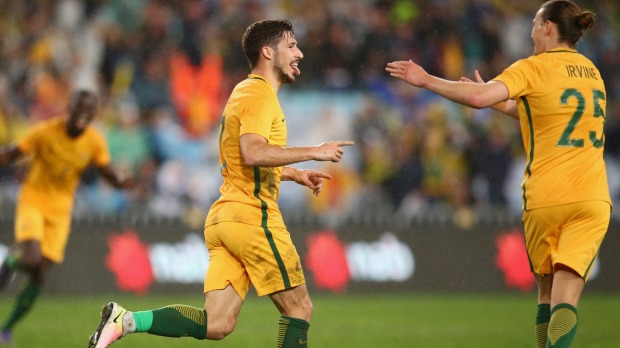
Παρ’ όλα αυτά, η Αυστραλία δεν συμβιβάστηκε με τίποτα λιγότερο από τη νίκη και για αυτό ανταμείφθηκε. Συγκεκριμένα, μπορεί στο 81′ ο Σένσμπουρι να σημάδεψε το δοκάρι της εστίας του Καπίνο και στο 90′ να μην καταλογίστηκε γκολ του Κέιχιλ, αλλά στο 94′ ο Λέκι με δυνατό σουτ από το ύψος της μεγάλης περιοχής έγραψε το 1-0 με ένα γκολ που αποτέλεσε και «buzzer beater», καθώς η Εθνική δεν πρόλαβε να κάνει ούτε σέντρα.

Αυστραλία: Ράιαν, Γκέρια, Μίλιγκαν (83’ Ίρβιν), Ντέγιενεκ, Κρούζε (60’ Λέκι), Μόουϊ (61’ Ρόγκιτς), Σμιθ (82’ Γκέρσμπαχ), Γιέντινακ, Μπερνς (72’ Οικονομίδης), Σένσμπουρι, Γιάννου (72’ Κέιχιλ)

Ελλάδα: Καρνέζης (15’ Καπίνο), Οικονόμου, Σταφυλίδης, Παπασταθόπουλος, Τοροσίδης, Μανιάτης, Γιαννιώτας (73’ Αραβίδης), Χριστοδουλόπουλος (46’ Μπακασέτας), Σάμαρης (56’ Ταχτσίδης), Βέλλιος, Διαμαντάκος (46’ Χολέμπας)

Πηγή:sport-fm.gr

Late Matthew Leckie goal helps Socceroos seal a dramatic 1-0 friendly win over Greece

1465048927399

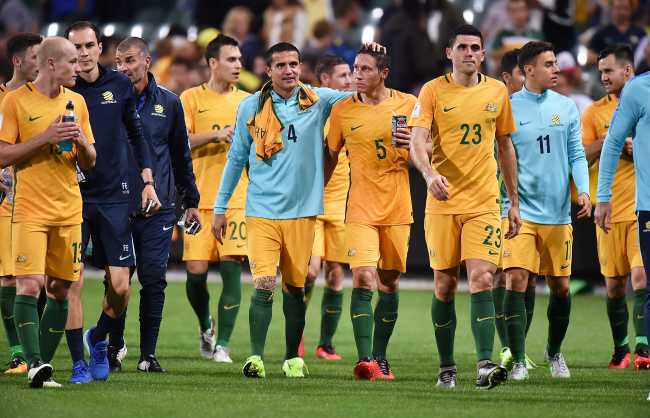
The Socceroos clinched a dramatic win over Greece in a rain-soaked ANZ Stadium after Matthew Leckie scored with the last kick of the match.

Greeks have a history for many things but unfortunately for fans hoping for a whitewash, there was neither tragedy nor comedy in their backline. Instead  was something that is becoming classical by their own standards – their renowned deep, defensive wall. For 89 minutes, it appeared Australia could not breach it before Leckie broke through with cracking strike to seal the 1-0 win.

Against a side as aggressive and attacking as Australia, it was quickly reinforced from a three to five-man unit minutes after kick-off and threatened to render a promising clash into a forgettable evening. The torrential conditions in Sydney didn’t help and only justified the tactics of the 2004 European champions.
Their coach promised to offer little more going forward than what they could on the counter. Michael Skibbe said he would retain their defensive fortitude from the past, one that’s suffocated many strong football nations in the hopes of taming the aggressive and attacking Socceroos.

It looked to have worked, until Ange Postecoglou’s men showed some of their greatest attacking ingenuity in recent friendlies.

For 35 minutes Greece’s backline was a phalanx, until Australia produced some of its best. Quick exchanges and frenetic movement through the middle of the park left the nippy Greek midfielders in their wake and resolute defenders chasing shadows and when Robbie Kruse played Nathan Burns into the box, a special goal looked certain.

In a match so cagey, perhaps it was the extraordinary time and space inside the box that Burns struggled to adjust to, scuffing a shot from close range.

The best chance for Australia in the first half didn’t come from one of their own but a nasty deflection from a Greek defender. A looping clearance from a cross was destined to drop under the cross bar for what would have been an embarrassing own goal before Kapino pulled-off a brave save, putting himself at risk of crashing into the upright in the process.

Kapino was at his best again to deny Mark Milligan on the stroke of half-time when a well-worked move looked like it would finally break the deadlock. A cut back found Milligan surging but his placed shot was blocked by a superb diving save from the Olympiacos reserve goalkeeper.

The hosts were cursing another spurned chance after the restart when Apostolos Giannou should have scored against the nation he made his international debut for, missing from close range before being flagged for offside.

It was to be his last contribution before being substituted for Tim Cahill, whose entrance sparked the biggest cheer of the night from the 38,682 fans.

Defender Trent Sainsbury came even closer when his shot cannoned off the upright in the 80th minute before the breakthrough finally arrived with a minute to play. Cahill rose highest from a corner to rattle the back of the net with the goal Australia deserved before ripping his shirt off in celebration. It was cruelly cut short however after the assistant referee flagged for the corner having crossed the goal ever so slightly en-route to the forehead of Cahill.

It appeared to be one of those nights for Australia, and a trademark one for the defensive Greeks until Leckie finally broke through. With the last kick of the ball, Leckie fired a fierce shot from the edge of the box that neither the officials, upright or Kapino could stop.

source:smh.com.au

Ο Κρις Καλαντζής θα βραβευτεί στο φιλικό της Αυστραλίας με την Ελλάδα

kalatzis

Η παλιά δόξα Ολυμπιακού και Παναθηναϊκού

Ένα από τα πρόσωπα που θα έχουν την τιμητική τους στο φιλικό παιχνίδι Αυστραλίας–Ελλάδας που θα διεξαχθεί στο Σίδνεϊ στις 4/6 είναι και ο Κρις Καλαντζής, που έγραψε τη δική του, ξεχωριστή ιστορία στα ελληνικά γήπεδα με τη φανέλα τόσο του Ολυμπιακού όσο και του Παναθηναϊκού. 

Ο ομογενής μεσοεπιθετικός που διέπρεψε από το 1987 έως το 1997 στα ελληνικά γήπεδο θα τιμηθεί στο ημίχρονο της φιλικής αναμέτρησης που θα διεξαχθεί στο Σίδνεϊ, για την παρουσία του στην Αυστραλία και την Ελλάδα. 

Ο Κρις Καλαντζής μίλησε, μάλιστα, για την τιμή που θα έχει στο φιλικό, δηλώνοντας στο «socceroos.com.au» ότι είναι κάτι πολύ μεγάλο για τον ίδιο. 

«Είναι πολύ μεγάλη τιμή και κάτι πολύ μεγάλο για μένα. Έφυγα από εδώ όταν ήμουν πολύ νέος και έχοντας ελληνικό υπόβαθρο, έπαιξα εκεί για 10 χρόνια, για να επιστρέψω τελικά πάλι εδώ. Αυτό που συμβαίνει τώρα είναι πολύ μεγάλο για μένα. Έχει περάσει αρκετός καιρός, νόμιζα ότι θα με έχουν ξεχάσει. Πολλοί Έλληνες ετοιμάζονται να πάνε στο παιχνίδι, επειδή αγαπούν το ποδόσφαιρό τους, έτσι θα είναι μία ξεχωριστή βραδιά». 

Παράλληλα, ο Κρις Καλαντζής αποκάλυψε ότι όταν ήταν παίκτης του Παναθηναϊκού έγιναν προσπάθειες να αγωνιστεί με την εθνική Ελλάδας, αλλά κάτι τέτοιο δεν κατέστη εφικτό. 

«Όταν ήμουν στον Παναθηναϊκό, οι άνθρωποι εκεί προσπαθούσαν να με φέρουν στην εθνική ομάδα στην Ελλάδα. Προσπαθούσαν να το κάνουν να συμβεί, αλλά ήταν πολύ δύσκολο. Προσπαθήσαμε όμως. Ήταν σαν να πηγαίναμε στον πόλεμο. Όταν έχεις παίξει μια φορά για μία χώρα, δεν μπορείς να πας στον πόλεμο για μία άλλη». 

Τέλος, ο Κρις Καλαντζής έκανε και την πρόβλεψή του για το φιλικό της 4ης Ιουνίου: «Θα πω ισοπαλία. 1-1 ή 2-2. Η Ελλάδα είναι μια ομάδα που τεχνικά είναι στο ίδιο επίπεδο με τους Ιταλούς. Βασίζονται στην πολύ καλή ομαδική προσπάθεια, παρά στον καθένα ξεχωριστό. Έχουν μερικούς καλούς παίκτες, αλλά και η Αυστραλία. Θα είναι ένα πολύ καλό παιχνίδι. Πραγματικά ανυπομονώ».

Πηγή:Νέος Κόσμος

‘Mixed emotions’ as new Socceroo prepares to face former country

apostolosgiannou_web--2-thumb-large

Striker Apostolos Giannou said he expects “mixed emotions” if he plays for Australia in Saturday’s friendly against Greece – six months after briefly representing the Greek national team.

China-based Giannou, who was born in Greece but grew up in Australia, played for the former European champions in November but was allowed to switch to the Socceroos because his appearance was in a friendly.

Giannou represented both Greece and Australia at youth level but he was persuaded to commit his future to the Asian title-holders by a visit from Greek-born Socceroos coach Ange Postecoglou.

“I guess, it’s mixed emotions for me,” the 26-year-old Guangzhou R&F forward told Australian broadcaster ABC.

“When Ange came to Greece to talk to me about playing for Australia he didn’t want to force me to do anything.

“I have a few friends in the Greek national team that’s for sure. It will be fun.”

Giannou made his Australia debut in March but his lone appearance for Greece, a 0-0 draw with Turkey, was shrouded in controversy.

The Greek FA was later fined and forfeited the match 3-0 for not submitting the required paperwork for Giannou, who made his Australia debut in the 7-0 win over Tajikistan in March.

Greece captain Andreas Samaris, a former national youth team-mate of Giannou, said he rated the striker highly from his days in Greek domestic soccer.

“I really like him as a player. He’s strong, he’s tall, he’s fast. I believe he was one of the best strikers in the Greek league and [now] for China,” Samaris said on Friday.

Giannou’s emergence comes at a time when Australia are searching for a successor for their record goal-scorer Tim Cahill, who is in the twilight of his career at 36.

Postecoglou has forwards Cahill, Nathan Burns, Matthew Leckie and Giannou available after they missed the 2-1 loss to England in Sunderland last month.

Greece, who failed to qualify for Euro 2016, have no injury concerns but coach Michael Skibbe left Benfica striker Kostas Mitroglou out of his squad.

The two sides will also meet in Melbourne on Tuesday.

source: ekathimerini.com

Socceroos v Greece: Failure to provide perfect pitches a national disgrace, says Ange Postecoglou

the-caltex-socceroos-celebrated-their-empathic-result-in-front-of-over-35000-fans-at-full-time_1twh87m7ln4gd1fm57mwsm0i07

Socceroos coach Ange Postecoglou says the time has come for Australian venues to provide “world-class” pitches for the national team, claiming the prospect of patchy fields in Sydney and Melbourne for their upcoming matches against Greece is unacceptable.

Postecoglou admitted he was fearing the state of the ANZ Stadium surface in the lead-up to Saturday’s first international after the venue played host to a typically bruising State of Origin encounter on Wednesday. 

In particular, the national coach was taken by the care afforded the pitch in Sunderland, where Australia was beaten  2-1 by England last Friday night.

Postecoglou even suggested that the nation’s politicians should promise that the Socceroos won’t be subjected to substandard conditions in Australia.

You play in a place like England and I understand [football] is their sport, but they take pride in what they present. We played on the pitch in Sunderland and the groundsman, who’s probably been there 100 years, took great pride in presenting a top-class pitch. I want us to feel the same,” he said. “I don’t want to serve up something that ‘looks’ green and looks OK and can be disrupted by a rugby league or a union or an AFL game.

“It’s nothing against those sports but they all have an oval ball that doesn’t have to roll on the [pitch]. It’s common sense. There’s an election promise I’d like to see – that a politician comes out and says we’ll provide a world-class venue for our national team.”

What Postecoglou seemed to find most disturbing was that Australian venue operators and other administrators still didn’t seem to think it was an issue.

“World football has progressed. The days of watching games on muddy pitches in the English Championship are long gone,” he said. “We’re probably one of the last bastions of that mentality, that you don’t need good grass. Football’s played on good pitches in the poorest of countries. Yes, there are areas here in Asia where we have issues but that’s often for economic reasons as much as anything else.

“In the football world a good pitch is standard. People come to a game wanting to watch quality football and that can’t happen when the working conditions are unacceptable.”

But one thing that slightly underwhelmed Postecoglou about the England match was the intensity on offer – feeling the home side sat back too much and that he would look to face opponents willing to play at a higher intensity in the future.

“Even in the England game, we didn’t get the pressure on our game that I thought we would. I kind of want that as it’s what we need to go to the next level,” he said. “The end game is to go to a World Cup and make an impact. Everything we do [in friendlies] is to ask whether it would stack up against the world’s best.”

With a crowd of just 45,000 tipped to come on Saturday – less than half of the 95,000 who witnessed Greece face Australia at the MCG a decade ago – Postecoglou said the nation seemed to be struggling with the idea of no longer being the underdog.

“Even when we were great with our golden generation, what we liked about it was that we were punching above our weight as a nation. We revelled in that,” he said. “We’re uncomfortable if all of a sudden I’m telling people we don’t want to be the underdog anymore, maybe that confuses people a little bit, but we’ve got to get to that point, to achieve great things beyond what we’ve already achieved.”

With South Korea getting beaten 6-1 by Spain this week and Japan no longer an invincible Asian force, Postecoglou wondered whether the region’s apparent stall had been caused by the need to constantly seek external validation.

“I think Asian football suffers from what we were talking about – a real struggle with self identity. When I see Japan and Korea, in particular, but some of the others as well, there’s no difference between their technical players and anywhere else in the world,” he said. “But they all employ foreign managers, they all think there are gaps in what they do, so you’re already admitting you’re not good enough. At some point someone from outside Europe and South America will win the World Cup and from then on it will be open slather because we won’t have to feel inferior.

“With professionalism now there isn’t a great deal of difference, whereas before it was ostensibly an amateur game around the world. We’re so obsessed with what we’re missing that we’ve covered over what we’ve got. I don’t think there’s a quality problem in Asia, just a self-belief issue.”

As such, Postecoglou says he has no choice but to think Australia will not only qualify for the next World Cup but perform admirably in Russia.

“It’s not about qualifying – I want us to do so in a certain manner. If the end goal is qualification, we did for the last World Cup and it cost the manager [Holger Osieck] his job. That can’t be the motivation – the motivation has to be to go to a World Cup and make an impact,” he said.

“It’s a tough group. We sat down a few months ago and mapped out the next 12 months, and we’ve got some really challenging trips. The boys fly back here to play Iraq and then go straight to the Middle East to play the UAE in very challenging conditions.

“Then there’s Saudi [Arabia] in October when the European and Asian boys will have to fly in and then return to Australia immediately to play again. So I’m under no illusions it will be tough. But I expect us to qualify and I expect us to do well.”

source: theage.com.au

Ενθουσιασμός στα Ελληνόπουλα του Σίδνεϊ για τα παιχνίδια της Ελλάδας

ethniki

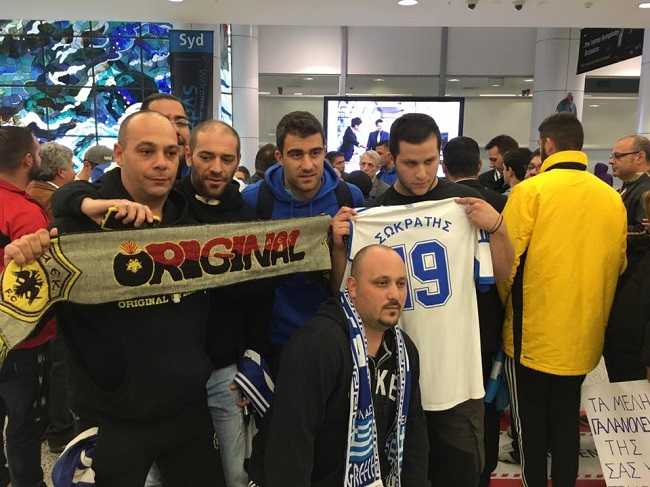
Πανηγυρική υποδοχή ετοίμασαν ομογενείς φίλαθλοι για την εθνική ανδρών της Ελλάδας που έφτασε την Πέμπτη το βράδυ στον διεθνή αερολιμένα Σίδνεϊ, στο πλαίσιο της περιοδείας της για τα δύο φιλικά παιχνίδια με τους Socceroos.

Στις τάξεις της ομογένειας επικρατεί ενθουσιασμός και είναι χαρακτηριστικό ότι τα παιχνίδια αυτά αποτελούν αντικείμενο συζήτησης όχι μόνο ανάμεσα στους μετανάστες Έλληνες, αλλά και στα Ελληνόπουλα τρίτης και τέταρτης γενιάς ιδιαίτερα στο Σίδνεϊ, που σπεύδουν να προμηθευτούν εισιτήρια.

Άλλωστε, το ελληνικό συγκρότημα έχει να έρθει στο Σίδνεϊ 36 χρόνια. Η τελευταία φορά ήταν τον Ιούνιο του 1978 και η αναμέτρηση τότε με τους Αυστραλούς είχε λήξει ισόπαλη 1-1.

Σύμφωνα με καλά ενημερωμένες πηγές, οι παράγοντες του ελληνικού εθνικού συγκροτήματος δεν επιθυμούν οι παίκτες να αναλωθούν σε επισκέψεις σε οργανισμούς και εκδηλώσεις, αλλά να αφοσιωθούν στους δύο αγώνες, να αποδώσουν καλά και να προσφέρουν χαρά στους ομογενείς.

Την Πέμπτη το πρωί μέλη της αποστολής της Ελλάδας πήγαν στην σύσκεψη του επιχειρηματικού συνδέσμου Australian Greek Business Forum.

Επίσης, την ίδια μέρα έγινε και η πρώτη προπόνηση των παικτών επί αυστραλιανού εδάφους σε γήπεδο των νοτίων προαστίων της πόλης.

Σήμερα το πρωί δόθηκε συνέντευξη Τύπου πριν τον αγώνα, σε ξενοδοχείο της περιοχής The Rocks, και απόψε της Παρασκευής θα γίνει η δεύτερη προπόνηση, αυτή τη φορά στο Ολυμπιακό Στάδιο στο Homebush, όπου και θα διεξαχθεί ο αγώνας το Σάββατο, στις 8μμ.

Την Κυριακή το πρωί, η Εθνική θα αναχωρήσει για τη Μελβούρνη, για το δεύτερο παιχνίδι με τους Socceroos, την Τρίτη το βράδυ.

Όσον αφορά το στρατόπεδο των Αυστραλών, διεθνείς παίκτες επισκέφθηκαν χθες δημοτικά σχολεία της πόλης, ενώ η χθεσινοβραδινή τους προπόνηση έγινε στο Leichhardt Oval, έδρα παλαιότερα και του Olympic Sydney.

Πηγή:Νέος Κόσμος


Αγώνες Ελλάδας – Αυστραλίας: η ιστορία δείχνει απόλυτη ισορροπία!

200

Παρ΄ ότι η παρουσία του Eλληνικού στοιχείου στα ποδοσφαιρικά δρώμενα της Αυστραλίας ήταν πάντα έντονη και καθοριστική, οι επαφές σε επίπεδο εθνικών ομάδων ήταν σχετικά λιγοστές.

Μπορεί κατά καιρούς να επισκέφθηκαν την Αυστραλία ελληνικές ομάδες σε επίπεδο συλλόγων, οι οποίες έπαιξαν με αντίπαλο την Εθνική Αυστραλίας, αλλά αυτές οι συναντήσεις δεν προσμετρώνται σαν συναντήσεις σε επίπεδο εθνικών ομάδων άσχετα αν την Αυστραλία την εκπροσωπούσε η εθνική ομάδα της χώρας.

Επίσημες συναντήσεις σε επίπεδο εθνικών ομάδων έχουν γίνει συνολικά εννέα. 

Η iστορία ξεκινά στις 20 Ιουλίου 1969 με την τελευταία αναμέτρηση να λαμβάνει χώρα στις 25 Μαΐου 2006. Η Εθνική Αυστραλίας έχει να επιδείξει τρεις νίκες σε αυτούς τους αγώνες. Τρεις νίκες έχει και η Εθνική Ελλάδας ενώ τα υπόλοιπα τρία παιχνίδια έληξαν ισόπαλα. Ας ξεκινήσουμε λοιπόν αυτή την ιστορική αναδρομή στο χρονικό αυτών των συναντήσεων:

20 Ιουλίου 1969, Αυστραλία – Ελλάδα 1-0 

Ο αγώνας αυτός έγινε στο Sydney Cricket Ground παρουσία 30.000 θεατών και ήταν ο πρώτος της σειράς τριών αγώνων που έδωσε τότε η Εθνική Ελλάδας στην Αυστραλία. Το νικητήριο τέρμα της Αυστραλίας πέτυχε με πέναλτι ο Αμπόνι στο 60′. 

Η Ελλάδα εκείνη την εποχή διέθετε μια ομάδα που ξεχείλιζε από ταλέντο και διεκδικούσε την πρόκρισή της στο Παγκόσμιο Κύπελλο του Μεξικού του 1970. Η πρόκριση χάθηκε τότε στο τελευταίο παιχνίδι με τη Ρουμανία στο Βουκουρέστι, όπου η Εθνική έπρεπε να πάρει νίκη για την πρόκριση αλλά περιορίστηκε σε ισοπαλία.

Προπονητής της Εθνικής Ελλάδας ήταν ο «εκκεντρικός» Νταν Γεωργιάδης, ενώ την τεχνική ηγεσία της Αυστραλίας είχε ο Τζο Βλάσιτς, μεγάλη προσωπικότητα της εποχής, ο οποίος είχε διατελέσει και προπονητής της Ελλάς Μελβούρνης.

Μια ματιά στους παίκτες που αγωνίστηκαν στο παιχνίδι αυτό για την Ελλάδα, δείχνει καθαρά ότι η ομάδα εκείνη ήταν μια από τις καλύτερες που είχε ποτέ παρουσιάσει η Ελλάδα σε διεθνές επίπεδο: Χρηστίδης (τερματοφύλακας), Χαρ. Ιντζόγλου, Τόσκας, Σπυρίδων, Θανάσης Ιντζόγλου, Σαράφης, Δέδες, Χάιτας, Αιδινίου, Κρητικόπουλος, Καραφέσκος, Χατζηιωάννογλου, Παπαϊωάννου και Σαραλιώτης (τερματοφύλακας).

23 Ιουλίου 1969, Αυστραλία–Ελλάδα 2-2

Ο αγώνας αυτός έγινε στο Brisbane Exhibition Ground παρουσία μόλις 3.000 θεατών. Τα γκολ του αγώνα σκόραραν για την Αυστραλία οι Βόιτεκ (48′) και Μπάαρτζ (62′), ενώ για την Ελλάδα σκόραρε ο Δέδες (19′ και 46′). 

Η Ελλάδα χρησιμοποίησε τους ακόλουθους ποδοσφαιριστές: Σαραλιώτη (τερματοφύλακας), Χαρ. Ιντζόγλου, Σπυρίδωνα, Τόσκα, Θανάση Ιντζόγλου, Καραφέσκο, Χάιτα, Δέδε, Παπαιωάννου, Κρητικόπουλο, Χατζηιωάννογλου, Δαβουρλή. 

26 Ιουλίου 1969, Αυστραλία–Ελλάδα 0–2

Στο παιχνίδι αυτό που έγινε στο Ολύμπικ Παρκ της Μελβούρνης μπροστά σε 25.000 θεατές, η Εθνική Ελλάδας πετυχαίνει την πρώτη της νίκη επί της Αυστραλίας.

Τα γκολ της νίκης πέτυχαν οι Δέδες (22′) και Παπαϊωάννου (55′). 

Με την Ελλάδα αγωνίστηκαν οι: Χρηστίδης (τερματοφύλακας), Χαρ. Ιντζόγλου, Σπυρίδων, Τόσκας, Θανάσης Ιντζόγλου, Χάιτας, Δέδες, Σαράφης, Κρητικόπουλος, Καραφέσκος, Χατζηιωάννογλου, Παπαϊωάννου, Αιδινίου.

17 Νοεμβρίου 1970, Ελλάδα–Αυστραλία 1–3

Το 1970, η Εθνική Αυστραλίας στα πλαίσια μιας περιοδείας στην Ευρώπη, επισκέφθηκε στην Ελλάδα και συναντήθηκε με την Εθνική μας στο γήπεδο της Λεωφόρου Αλεξάνδρας παρουσία 12,000 θεατών. Την τεχνική ηγεσία της Ελλάδας είχε πλέον αναλάβει ο Λάκης Πετρόπουλος, ενώ προπονητής της Αυστραλίας ήταν ο γνωστός σε όλους Ρέιλ Ράσικ. 

Η ομάδα της Αυστραλίας έκανε την έκπληξη για τα δεδομένα της εποχής, κερδίζοντας σχετικά άνετα με σκορ 3–1. 

Τα τέρματα πέτυχαν για την Αυστραλία οι Άλστον (11′), Μακέι (21′) και Μπλου (79′) και ο Ελευθεράκης (19′) για την Ελλάδα.

Για την Ελλάδα αγωνίστηκαν οι: Οικονομόπουλος (τερματοφύλακας), Καμάρας, Σκρέκης, Ελευθεράκης, Δομάζος, Κούδας, Δέδες, Τόσκας, Σταθόπουλος, Σταυρόπουλος, Γιούτσος, Χάιτας, Παπαϊωάννου.

11 Ιουνίου 1978, Αυστραλία–Ελλάδα 1–2

Το 1978 η Εθνική Ελλάδας επισκέπτεται πάλι την Αυστραλία για μια σειρά τριών αγώνων. Αυτή τη φορά το τιμόνι της Ελλάδας έχει ο Αλκέτας Παναγούλιας, ενώ στην τεχνική ηγεσία της Αυστραλίας ήταν ο Τζιμ Σόουλντερ. 

Στο παιχνίδι που έγινε στο Ολυμπικ Παρκ της Μελβούρνης παρουσία 28.000 θεατών η Ελλάδα επικρατεί με 2 – 1. Και τα δύο τέρματα για την Ελλάδα έβαλε ο Χρήστος Υφαντίδης (63′ και 77′), ενώ για την Αυστραλία σκόραρε ο άσος του Αλέξανδρου Γκάρι Κολ (62′). 

Η Ελλάδα παρέταξε τους Χρηστίδη (τερματοφύλακα), Καψή, Κυράστα, Ραβούση, Τερζανίδη, Γκέσιο, Υφαντίδη, Καραβίτη, Κοντογιωργάκη, Λιάκο, Πάλλα, Ζιάκο, Αλεξιάδη, και Ξανθόπουλο.

14 Ιουνίου 1978, Αυστραλία–Ελλάδα 0–1

Νικηφόρα συνεχίστηκε η περιοδεία της Εθνικής Ελλάδας που νίκησε για δεύτερη φορά την Αυστραλία στο στάδιο Χάιντμαρς της Αδελαΐδας με 1–0. Σκόρερ για την Ελλάδα ήταν και πάλι ο Χρήστος Υφαντίδης (71′). Τον αγώνα παρακολούθησαν 9.500 θεατές.

Με την Ελλάδα αγωνλιστηκαν οι: Χρηστίδης (τερματοφύλακας) Καψής, Κυράστας, Ραβούσης, Τερζανίδης, Ξανθόπουλος, Γκέσιος, Υφαντίδης, Κοντογιωργάκης, Λιάκος, Πάλλας, Καραβίτης και Ζιάκος.

17 Ιουνίου 1978, Αυστραλία–Ελλάδα 1–1

Η περιοδεία της Εθνικής Ελλάδας έκλεισε στο Σίδνεϊ με ισοπαλία (1 – 1) στο παιχνίδι που έγινε στο Cricket Ground παρουσία 15,000 θεατών. Τα τέρματα του αγώνα πέτυχαν οι Καραβίτης (12′) για την Ελλάδα και Μπαρνς (77′) για την Αυστραλία. 

Στο παιχνίδι αυτό για την Ελλάδα παρατάχθηκαν οι: Χρηστίδης (τερματοφύλακας), Καψής, Κυράστας, Ραβούσης, Τερζανίδης, Ξανθόπουλος, Υφαντίδης, Καραβίτης, Κοντογιωργάκης, Λιάκος, Πάλλας, Ζιάκος, Αλεξιάδης και Τσιβόγλου.

Να σημειώσουμε ότι για την Αυστραλία μπήκε στο παιχνίδι ως αλλαγή στο 66′ ο ελληνικής καταγωγής Γιάννης Καρασπύρος.

11 Νοεμβρίου 1980, Ελλάδα–Αυστραλία 3–3

Το 1980 η Εθνική Αυστραλίας περιοδεύει πάλι την Ευρώπη και συναντάται με την Ελλάδα στο γήπεδο της Λεωφόρου Αλεξάνδρας μπροστά σε 15,000 θεατές. Στο τιμόνι της Ελλάδας εξακολουθεί να βρίσκεται ο Αλκέτας Παναγούλιας ενώ τεχνικός οδηγός της Αυστραλίας ήταν ο Ρούντι Γκούντεντορφ. Με την Αυστραλία αγωνίστηκε ο ελληνικής καταγωγής Σελεμίδης που μπήκε ως αλλαγή συο 65′.

Τα γκολ του αγώνα πέτυχαν για την Ελλάδα οι Δαμανάκης (25′), Δομάζος (72′) και Δεληκάρης (89′). Για την Αυστραλία σκόραραν οι Γκάρι Κολ (23′), Μπάρνς (85′) και Σελεμίδης (88′)

Για την Ελλάδα αγωνίστηκαν οι Κωνσταντίνου (τερματοφύλακας), Γούναρης, Ραβούσης, Δαμανάκης, Κούδας, Μπαλής, Δομάζος, Χαραλαμπίδης, Παραπραστανίτης, Παράσχος, Ζήνδρος, Ξανθόπουλος, Μαυρομμάτης και Μουκέας (τερματοφύλακας).

25 Μαΐου 2006, Αυστραλία–Ελλάδα 1–0

Πέρασαν 26 χρόνια μέχρι την επόμενη συνάντηση Αυστραλίας – Ελλάδας. Στο διάστημο αυτό πάρα πολλά άλλαξαν και για τις δύο ομάδες. Στην Αυστραλία το ποδόσφαιρο είχε αρχίσει πια να βρίσκει το δρόμο του και να καταλαμβάνει τη θέση που του έπρεπε στο αθλητικό στερέωμα της χώρας. Η εθνική ομάδα της Αυστραλίας, υπό την καθοδήγηση του Γκούους Χίντινγκ, είχε καταφέρει να προκριθεί στο Μουντιάλ της Γερμανίας, όπου έκανε καλή εμφάνιση. Η Ελλάδα δεν είχε καταφέρει να προκριθεί στην διοργάνωση αυτή, αλλά είχε ακόμα νωπές τις δάφνες της κατάκτησης του Ευρωπαϊκού Πρωταθλήματος το 2004 υπό την καθοδήγηση του Ότο Ρεχάγκελ.

Ο αγώνας έγινε στο MCG παρουσία 95.000 θεατών! Το γκολ της νίκης για την Αυστραλία πέτυχε ο Σκόκο στο 16′. 

Με την Ελλάδα αγωνίστηκαν οι Νικοπολίδης (τερματοφύλακας), Δέλλας, Κυργιάκος, Σεϊταρίδης, Μπασινάς, Φύσσας, Γιαννακόπουλος, Καραγκούνης, Κατσουράνης, Χαριστέας, Σαμαράς, Σαλπιγγίδης, Ζαγοράκης, Ανατολάκης, Λαγός, Αμανατίδης και Γκέκας.

Με την Αυστραλία αγωνίστηκε και ο ελληνικής καταγωγής Λαζαρίδης, που μπήκε ως αλλαγή στο 73′.

Πηγή:Νέος Κόσμος

Michael Skibbe: Moving forward Down Under

skibbe-national-greek-gerard

Without several of his star players, Michael Skibbe looks to learn more about the supporting cast at his disposal, during the Greek national team’s footballing trip to Australia

The jury is still very much out on Michael Skibbe, the current manager of the Greek national football team. With very little evidence to judge him on, press and fans alike remain undecided about the German coach, whose patchwork of a career hardly makes for exciting reading.

A relative unknown in Greece, especially when compared to previous coaches Otto Rehagel and Fernando Santos, Skibbe was a surprise choice to take on the role of national football manager, after the blink-and-you’ll-miss-them tenures of Premier League Renaissance man Claudio Ranieri and Uruguayan Sergio Markarian.

A man of few words so far, Skibbe seems to have at least understood that in its current transitional state, the national team needs a specific course of action, not a series of (more) words concerning past glories. Though he is yet to truly settle on a formation, his real and ultimately most vital challenge will be to win over a group of players who appear to be a talented but highly splintered group of individuals, especially after the disastrous qualifying run for this summer’s Euro 2016.

With the old guard of Karagounis, Katsouranis and co now firmly out of the picture, the national team has found it difficult to discover and build around a new core. Though arguably technically superior compared to their predecessors, the current crop of players seems to lack both the direction and the drive that was prevalent in previous teams.

The raw materials are surely there however: in Socratis Papastathopoulos and Kostas Manolas, who looks set to make the jump to the Premier League this summer, with both Chelsea and Manchester United vying for his signature, Greece has a fine central defensive pairing that combines experience, pace and positional nous. In the midfield engine room, Petros Mandalos of AEK Athens, and more so Kostas Fortounis of Olympiakos, are two excellent on-the-ball schemers, capable of grabbing games by the scruff of the neck and up front, Kostas Mitroglou continues to refine his striking game, with a league-winning season with Benfica highlighting just how far he’s come from his days as a talented but hilariously insubordinate hotshot at Olympiakos.

That being said, for their trip to Australia and their games in Sydney and Melbourne (on 4 and 7 June respectively), the Greek national team – and the aforementioned playing ‘core’ – will not be at full strength.

High-profile players feeling the strain of an intense footballing season like Manolas, Mitroglou and playmaker Kostas Fortounis will not be making the trip, although Socratis Papastathopoulos – who will surely have added defensive responsibilities at Dortmund next season, with Matts Hummels swapping his Borussia shirt with that of Bayern Munich – will be lining up in defence, after personally asking Skibbe to join the squad.
So, with some of Greece’s most important playing cards missing from Skibbe’s deck, what can we expect to see from the team, when it gets the ball rolling on Australian soil?

Well naturally, these matches will be a great chance for Skibbe to experiment with formations, but more importantly, have a closer look at some players that have had a stellar or breakout season this year, individuals that could very well get the chance to stand up and be counted in time for the start of Greece’s qualifying campaign for the 2018 World Cup, kicking off on 7 October.

One of the players that will surely be looking to impress in Australia will be Tasos Bakasetas, the shining light in a Panionios team that punched way above its weight throughout the entire season and is currently fighting for European qualification in the Superleague play-offs. A player who started his career as a winger at Asteras Tripolis, this season has seen him switch to the centre of the park, with Panionios coach Marinos Ouzounidis dragging him away from the byline and placing him ‘in the hole’, somewhere between a number 10 and a support striker, where Bakasetas can fully take advantage of his shooting and passing abilities, which were wasted during his days on the wing.

Directly in front of him, Skibbe could look to field Apostolos Vellios, a powerhouse of a striker, who after failing to settle at Everton, Blackpool and Lierse over a seven-year period, came back to the Greek Superleague with Iraklis at the start of the season and quickly caught the eye of heavyweights Panathinaikos, Olympiakos, PAOK and AEK Athens with his goalscoring and all-round forward play. Finding the net 13 times, Vellios offers the national team another attacking option in the Mitroglou mould, with the Iraklis marksman, however, providing even more of an aerial threat and muscular presence in the opposition box.

Rounding out an eye-catching trio is 24-year-old Nikos Karelis, the ex-Panathinaikos winger/striker who is now making a name for himself at Racing Genk, but is still looking to carry his impressive club form on the international stage. Possibly still waiting for an international coach to pair him with attacking partners that he could ‘click’ with, the all-action style of Karelis requires a stern managerial hand to stop it from being a pointless expression of wasted energy. Used wisely and with an attacking ‘pillar’ to spin and work around, Karelis could well provide the match-winning injection of attacking pace that is in short supply in this Greece team.

There is little doubt that the Greek national footballing side is a team very much in flux. As a group of athletes still trying to exit the long shadows of the Rehagel-Santos era, they have found confidence hard to come by and patience from the Greek public even more so. Whether Skibbe can find a new formula capable of providing Greece with its missing groove is still unknown, but if Greece can return from Australia having gained a few more players that the team can count on, then the German will surely look upon the trip as a success.

And that will certainly do for now. October, though worryingly closer than this team would like, can wait.

Source:Neos Kosmos

Postecoglou’s Socceroos squad facing Greece

talis

The evolution continues

The two-match friendly series against Greece, beginning this Saturday in Sydney, gives Socceroos boss Ange Postecoglou a final chance to test his game plan against high-quality European opposition ahead of the last phase of World Cup qualifiers beginning in September. Together with last week’s friendly loss against England, it also gives him the chance to experiment with his system and give untried players the opportunity to play with the senior Socceroos.
In 29 games since his appointment in October 2013 on a five-year contract, Postecoglou has guided the Socceroos to a famous Asian Football Championship in 2015, and has navigated the squad into the final group stage of World Cup qualifiers.
Over that period of time he has capped more than 50 players and continues to blood new young players, consistent with his stated aims of developing the depth of his squad and improving the quality of his team’s performance so that they can take on and beat the best in the world.
Two of the recent new additions to the squad are forwards Apostolos Giannou and Chris Ikonomidis.
More than any player on the field, Giannou most typifies the divided allegiances many of the fans attending the two matches will feel. Greek Australian supporters would understand better than most the difficulty Giannou will have faced in choosing which country to play for.
Faced with a choice of playing for either Greece or Australia, Giannou ultimately committed with the Socceroos. It’s likely he’ll enter the matches against Greece with mixed emotions. Although his junior development took place in Melbourne, much of his senior career and experience has been in Greece, where his goalscoring form last season attracted the interest of overseas clubs and resulted in a move earlier this year to Chinese Super League club Guangzhou R&F. It also earned him a cap for the Greek national team in a friendly against Turkey last year, just before Postecoglou persuaded him to swap sides where he made his debut against Tajikistan in March this year.
While most fans will be urging him on, hoping he can take up the Tim Cahill baton, if he scores his first international goal for Australia against the country of his birth, any celebration by the player himself may be muted.
Ikonomidis, who is on Lazio’s books, is currently on loan to Serie B club Salernitana, where he recently scored his first goal. The 21-year-old winger recently reflected on how playing regular football in the strong Italian league has helped his development.
“The last six months (in Italy) have been crucial for my development. I’ve continually played 90 minutes on a regular basis in a quite difficult league. So it’s been fantastic for me, both character-wise and ability-wise, to put myself up against some great players in Europe. Getting my first goal a few weeks ago was also fantastic as well.”
“It would be fantastic for me to run out there if I’m given a chance against Greece, as that’s my grandparents’ heritage. It would be fantastic at home in front of friends and family. And they’re still a quality opposition so we’ll have our work cut out for us, but I think it will be a great experience altogether.”
Looking towards the Greece games after the England match, Postecoglou said: “Our performance against England was further proof that we are capable of matching it with the best teams in the world both individually and collectively and now we will push ahead and look forward to playing another high-level European team, this time in front of our own fans in Sydney and Melbourne.

“As a team we are looking to continually evolve and improve, but what is encouraging for me is that we are doing it by playing our brand of football, which is exciting for our fans to watch. Greece will be tough but we will play our game, take the match to them and hopefully give our fans a performance that gets them off their seats when we go forward. We did that in the first round of World Cup qualifiers around Australia and I’m sure a similar performance will see the Sydney fans create the tremendous atmosphere and occasion.”

Possible Line-Up for the Socceroos: 4-3-3 Formation

GK: Matt Ryan is Postecoglou’s first choice between the sticks, but also in the squad are Mark Birighitti and Adam Federici. Ryan’s lack of recent game time at club level at Valencia may sway Postecoglou on relying on him for the bulk of the keeping duties against Greece.
Defenders: The full back positions appear to be Postecoglou’s least settled positions, with a number of players having been tried.
RB: Josh Risdon and Ryan McGowan may get to share this position over the two legs with Victory’s Jason Geria in line for a debut as back up.
CB: In Matthew Spiranovic’s absence, Bailey Wright appears to get the nod to partner Trent Sainsbury in the centre of defence with Mark Milligan as back up if required.
LB: Liverpool full back Brad Smith has been Postecoglou’s left back of choice lately. Youngster Alex Gersbach may get some game time for his first cap.
Midfielders: DM: In a three-man midfield, skipper Mile Jedinak is first choice for the holding mid role. The skipper has earned a rest after a Cup final and the friendly against England, so Milligan and he may share the position over the two legs.
AM: Aaron Mooy and Tom Rogic are first choice here in the absence of Massimo Luongo.
Wingers: Postecoglou’s need for speed in the front third is well satisfied with the options available including Robbie Kruse, Matthew Leckie and Chris Ikonomidis.
Strikers: Cahill is still first in line, but there’s plenty of back up in Giannou, Nathan Burns and Jamie McLaren.

source:Neos Kosmos