Monthly Archives: March 2016

H Νία Βαρδάλος στη Μελβούρνη

anastasia_nelly

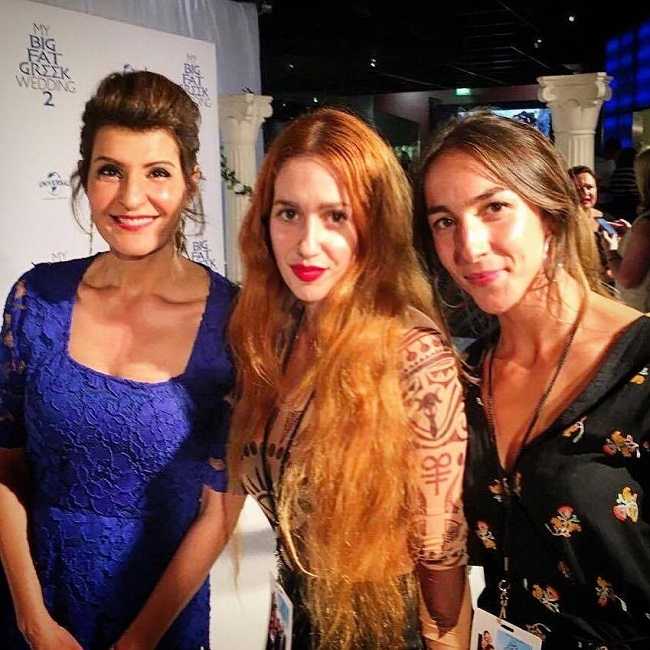
Από αριστερά η Νία Βαρδάλος με τις συντάκτριες του «Νέου Κόσμου», Νέλλυ Σκουφάτογλου και Αναστασία Τσιρτσάκη

Η σεναριογράφος και πρωταγωνίστρια μιλά στο «Νέο Κόσμο» στην πρεμιέρα του «Γάμος α λα Ελληνικά 2»

Η εφημερίδα μας συνάντησε την Ελληνοαμερικανίδα ηθοποιό και σκηνοθέτη, Νία Βαρδάλος, το βράδυ της Τρίτης, 7 Μαρτίου, πριν από την επίσημη πρεμιέρα της ταινίας της «Γάμος α λα Ελληνικά 2», στη Μελβούρνη.

Η διάσημη σταρ μίλησε για την επιστροφή της στον κινηματογράφο, η οποία, όπως τόνισε, οφείλεται αποκλειστικά στην υιοθεσία της κόρης της.

«Η πρώτη ταινία μου έκλεισε, με την Τούλα να γίνεται μαμά. Δεν μπορώ να γράψω για κάτι που δεν ξέρω, άρα, δεν μπορούσα να γράψω τη συνέχεια» είπε, εξομολογούμενη ότι είχε εξαντληθεί ψυχολογικά από τις προσπάθειές της να γίνει μητέρα.

«Όλη μου η προσοχή, καθώς και του συντρόφου μου ήταν στραμμένη στο να αποκτήσουμε παιδί. Όταν πια η κόρη μας μπήκε στη ζωή μας, όλα άλλαξαν. Ξαναβρήκα το νόημα, ξαναβρήκα τον εαυτό μου και ήμουν έτοιμη να επιστρέψω πιο δυναμικά από ποτέ».

Η φανερά ανανεωμένη και ευδιάθετη Νία Βαρδάλος, σε άπταιστα ελληνικά μας είπε ότι δεν μετάνιωσε στιγμή για την απόφασή της να αποτραβηχτεί από τα φώτα της δημοσιότητας και να αφοσιωθεί στην προσωπική της ζωή.

«Δεν ήθελα να κάνω κάτι άλλο μέχρι να προσαρμοστεί η κόρη μας και δεν μετάνιωσα ποτέ ούτε για μια στιγμή, όπως εξηγώ και στο βιβλίο μου “Instant Mom”».

«Σε ό,τι αφορά τα κοινά χαρακτηριστικά μου με την Τούλα, αν και στην πρώτη ταινία ένιωθα ότι ενσαρκώνω απλώς έναν χαρακτήρα, τώρα θα παραδεχθώ, ότι, ναι, είμαι η Τούλα, είμαι η μάνα μου, είμαι η τυπική Ελληνίδα μάνα».

Γελώντας η πρωταγωνίστρια συνέχισε, τονίζοντας ότι ως παραδοσιακή Ελληνίδα μαμά, μπορεί να γίνει ασφυκτική καθώς δεν μπορεί να διανοηθεί να μην ξέρει ανά πάσα στιγμή πού βρίσκεται και τι κάνει η κόρη της.

«Εντάξει, η δική μου είναι μικρή ακόμη, αλλά παίζοντας την Τούλα κατάλαβα ότι δεν θα διαφέρω και πολύ από εκείνη όταν μεγαλώσει το παιδί μου. Κάπως έτσι με φαντάζομαι».

«Από τώρα την στέλνω στον παιδικό σταθμό με ταπεράκι γεμάτο μουσακά. Δηλώνω ένοχη, αλλά έτσι αγαπάμε εμείς».

Τέλος, όταν ρωτήθηκε τι θα απαντούσε σε όσους θεωρούν πως η ταινία ενισχύει με υποτιμητικό τρόπο το στερεότυπο του Έλληνα μετανάστη είπε «Κατ’ αρχάς, κανένας δεν ήρθε να μου πει ποτέ πως βρήκε την πρώτη ταινία υποτιμητική ή προσβλητική. Επίσης, είναι σάτιρα, είναι κωμωδία. Είμαι εγώ, η οικογένειά μου, η αλήθεια μου. Ελάτε να γελάσετε μαζί μου. Δεν έχω κανένα απολύτως πρόβλημα με αυτό!».

Πηγή:Νέος Κόσμος

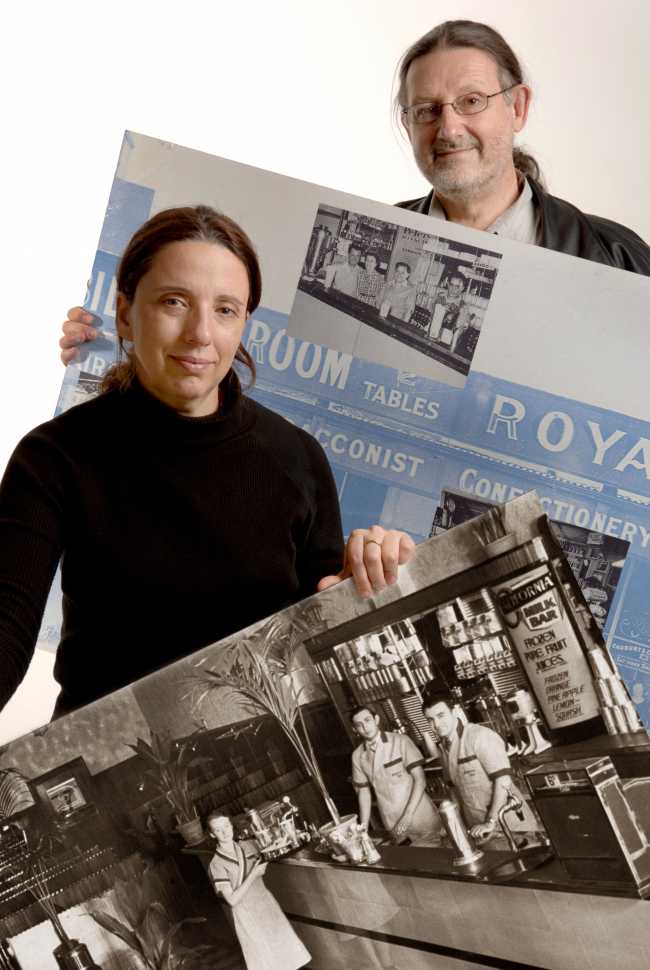
Greek Cafes & Milk Bars of Australia

8_effy_leonard_2_0

Effy Alexakis and Leonard Janiszewski.

A book by Leonard Janiszewski and Effy Alexakis

In an Australia we still remember, in each suburb and every country town, was the Greek café or milk bar – open all hours, 7 days a week.

Remember The Niagara, The Parthenon, The California, The Astoria and Paragon?

They gave us more than milkshakes, lollies, ice cream and home-style meals.

With Modernist designs, American gadgetry and coloured light, cafés brought atmosphere, a touch of glamour, at times a hint of Hollywood – a little break from the mundane reality of local life.

As the good old days faded away, Effy Alexakis and Leonard Janiszewski took their camera, tape recorder and pen into this vanishing world.

They captured the faces and stories, the style and the ethos that gave our popular culture one of its most memorable expressions.

Acclaimed actor Lex Marinos will try to convey some of our communities’ most inspiring stories.

The Sydney launch will take place at NSW Parliament House at 6.30 pm as part of the 2016 Greek Festival of Sydney, on Tuesday 15 March.

For further details or if you want to register early, please see the following website: http://www.greekfestivalofsydney.com.au/festival16/events/march/greek-cafés-and-milk-bars-of-australia.html

The duo will also be presenting a public lecture at the famous Paragon Cafe, Katoomba, on Sunday 3 April at 2.00 pm. Afternoon tea will be available for $12.

Copies of the book will be available from early April via http://www.cafesandmilkbars.com.au

source:Neos Kosmos

The lost photographs of Lemnos

limnos3

Australian patients of A1 Ward, 3rd Australian General Hospital, Turks Head Peninsula, Lemnos, 1915. PHOTO: EVELYN HUTT COLLECTION.

Jim Claven uncovers an amazing collection of images recording the Hellenic link to ANZAC, never before seen by the public.

I have been researching the role of Lemnos in Australia’s ANZAC story for many years now. One of the aspects of that story that sparked my interest was the huge archive of thousands of photographs – as well as diaries and letters – vividly recording the experience of the thousands of ANZAC soldiers and nurses who came to this northern Aegean island in 1915. And my sadness is that they have been largely ignored by historians and have effectively remained hidden from a wider audience – both here and in Greece.

So imagine my excitement when I was contacted by the family of Anzac Sister Evelyn Hutt and shown a large collection of photographs never before seen by the public.

Evelyn’s daughter, Ms Judith Gunnarsson, and Ms Deb Stewart, Evelyn’s granddaughter, revealed a wealth of photographs and postcards – more than 330 – as well as important memorabilia from Evelyn’s years as an Australian nurse in the First World War. Sitting with Judith in her apartment in Melbourne’s Caulfield, I listened to the stories told to Judith by her mother.

As I turned the pages of Evelyn’s albums, I saw an amazing collection of images recording the Hellenic link to ANZAC. The photographs in Evelyn’s collection reflect many of the aspects of the story of the Anzacs on Lemnos in 1915.

Lemnos played a critical role in the Gallipoli campaign, and was part of the Anzacs’ experience of that disastrous campaign. Its great protected bay at Mudros, with its surrounding shores and proximity to the Dardanelles, ensured its selection as the Allies forward base for the campaign.

From the arrival of the first troops in February 1915 until the departure of the Allied invasion force in January 1916, Lemnos was home to tens of thousands Allied troops, medical and other support personnel. On its shores the Anzacs practiced their landing routines. Lemnos was home to major medical facilities including Australian field hospitals, and the town of Sarpi home to the great ANZAC rest camp to which the battle-weary Anzacs returned in September and October. And it was to Lemnos that the Anzacs were evacuated after the end of the Gallipoli campaign.
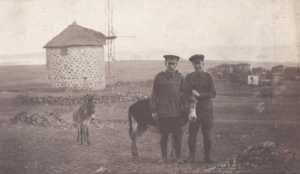
limnos00_0

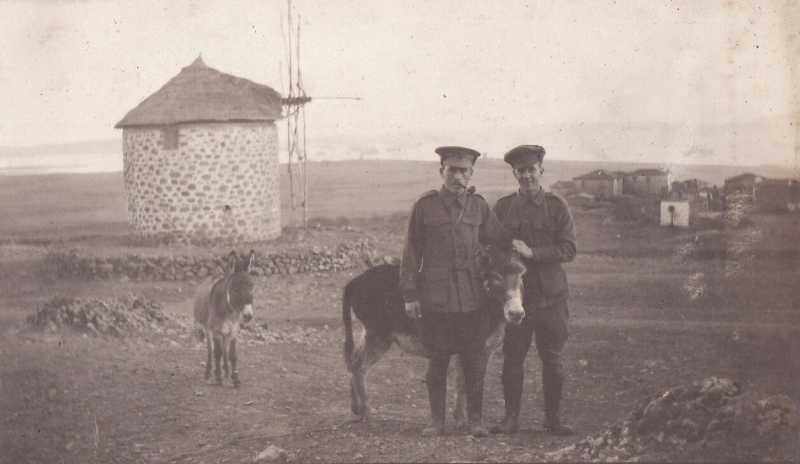
Two ANZAC soldiers – Private Oscar Keyte and Campbell (forename indecipherable) – with hired donkeys, Lemnos, 1915. PHOTO: EVELYN HUTT COLLECTION.

Twenty-seven-year-old Evelyn arrived on Lemnos on 8 August 1915 with the other nurses of the 3rd Australian General Hospital. She had sailed from Melbourne’s Princes Pier aboard the RMS Mooltan. Born in Bagdad in Tasmania, she was tall and looks confident in the portrait shots taken of her prior to her departure. In fact, the matron of the Hobart General Hospital, where she gained her nursing training, commended Evelyn’s work as “excellent” and wrote that she could “be entirely depended upon in an emergency”.

Evelyn and the other nurses were thrown into an emergency from the day they arrived. With the field hospital barely constructed on the rise above the Turks Head Peninsula, 200 patients arrived at the hospital before breakfast on 9 August. These were the first of hundreds of casualties flowing from the bitter fighting of the offensive that began on 6 August. By 13 August, Evelyn and her fellow nurses were treating 900 patients.

The Australian nurses endured summer heat and winter gales, all exposed on the peninsula jutting into the huge bay. Initially lacking basic medical equipment, the nurses and the other medical staff performed miracles in treating the sick and wounded. In the end, the nurses’ efforts would be singled out for commendation by the medical authorities.

Thousands of diggers and other Allied soldiers owed their lives to the care of Matron Grace Wilson and her nurses. Judith remembers Evelyn speaking of her enormous respect for Matron Wilson.

One of the 148 diggers who did not survive was Private Alfred Edwards of the 12th Battalion. We don’t know if Evelyn cared for him but he was a blacksmith from her home town of Bagdad in Tasmania. Only 19 years old, he died of wounds and was buried in the growing military cemetery established at Portianou.

We do know that Evelyn was touched by the diggers in her care. One dying digger with no sweetheart at home gave Evelyn a token to remind her of him. It was a Peruvian coin. Evelyn had it made into a brooch and Judith tells us that she treasured the brooch and never forgot about this young digger on Lemnos all those years before.

While on Lemnos, Evelyn was given two other gifts by diggers. One was an Ottoman soldier’s Koran and the other a hand-stitched Ottoman flag. The Koran records that it was taken from a Turkish soldier on 7 August 1915 – presumed killed at Lone Pine on the peninsula – by Kyneton-born Sergeant Robert Alexander Murdoch of the 4th Battalion. Evelyn would most likely have met Robert when he was admitted to her hospital in October suffering from dysentery. He recovered, returned to Gallipoli and finally came again to Lemnos in December. He survived the war.
limnos2

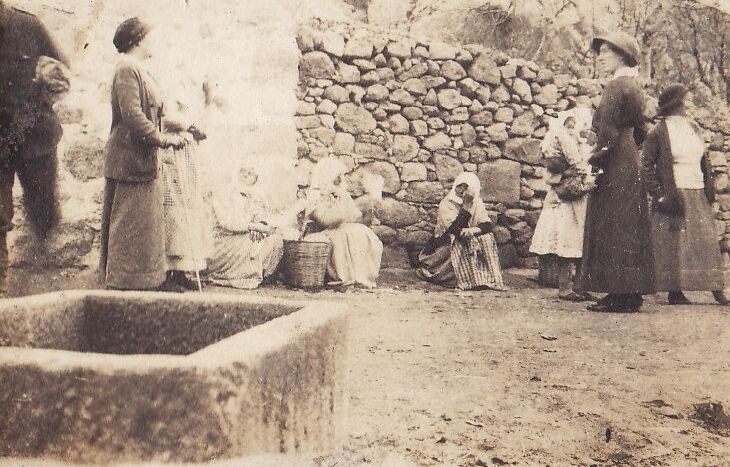
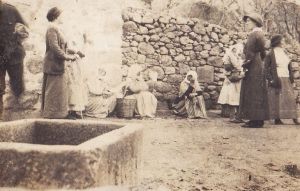
Australian sisters with local villagers.

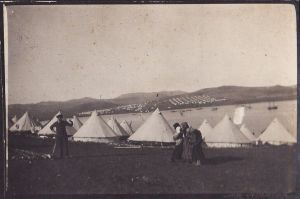
Evelyn’s photographic collection captures the life of the Anzacs on Lemnos, from the nurses arriving in Mudros Bay, rudimentary accommodation on the slopes of the peninsula, to the smart rows of tents that signalled the improved conditions at the hospitals on Lemnos. One is of two presumably Australian soldiers outside their tents, a box of Arnott’s biscuits at their feet – a reminder of home.

There is one photograph of young Australian soldiers, now patients in the A1 ward of Evelyn’s hospital on Lemnos. They stare into the camera, a few smiling and others more difficult to read. I wonder what suffering and horror they had witnessed and endured.

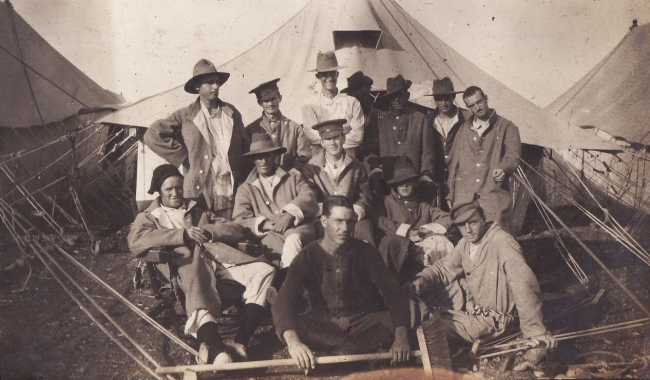
The collection also includes photographs of moments of relaxation. There is one of an army band marching through the hospital, entertaining the nurses and soldiers. Another shows a group of diggers acting up at the Anzac Rest Camp at Sarpi, across the bay from the hospitals, and often visited by the Australian nurses.

But for me some of the most important images are those featuring the interaction between the Anzacs and the local Lemnian community on the island. During the months that the Anzacs stayed on Lemnos, they spread out across the island, visiting its villages, kafenion and natural springs. Evelyn’s collection adds to the evidence of this experience.

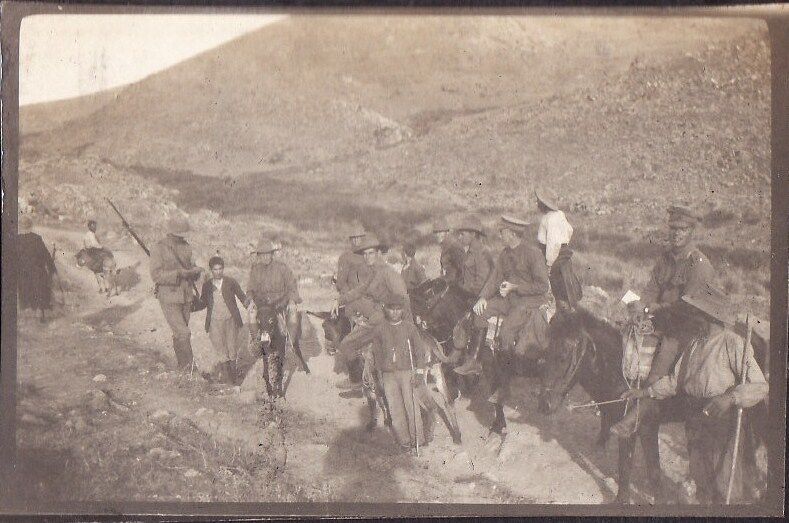
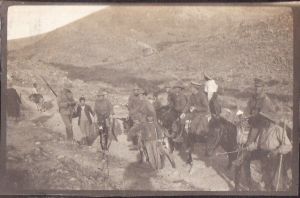
We see a photograph of the 4th Battalion’s Private Oscar Keyte, a dentist from NSW, and another soldier standing with their hired donkeys, a village and the distinctive windmills of Lemnos behind them. There is one of a group of Anzacs, some on their donkeys, guided by local Lemnian children, most likely on their way to Therma and its natural hot springs.

Evelyn and many other Anzacs visited Portianou, one of the main villages on Lemnos. Her photographs show the village houses and lanes. One shows Australian nurses and soldiers with local women and children, entitled ‘Sisters – a day out’. Another is of a group of local village women and children at their work in the village.

There is a touching image of a local woman with her child talking to an Australian nurse and soldier beside a windmill above Mudros town. Despite the language barriers, the locals and their visitors were obviously able to communicate.

Lemnos was a rural island, with villagers grinding a living from its earth. Images reveal the hard life of the island – a farmer with his over-burdened donkey in a field, another ploughing a field and women washing in a local water source.

Yet there are others of the villagers at rest, a group of local men sitting in conversation, their dog at their feet, at the end of a day’s work. Evelyn’s collection also shows the religious life of Lemnos in an image of the highly-decorated screen in one of the local Greek Orthodox churches. These images are 100 years old and yet are timeless.

After the evacuation of the peninsula, Evelyn and the other Australian nurses departed Lemnos in January 1916 on their way to Egypt and beyond. When she pasted the last photographs of Lemnos in her album she wrote ‘Good-bye LEMNOS Island’.
limnos4

Anzac soldiers on hired donkeys travelling on Lemnos, most likely on their way to the hot springs at Therma.

Evelyn would go on to serve in Egypt, France, England and in Italy, her service at the latter earning her the Royal Red Cross, 2nd Class. But she also records the streets and shops of the large and then cosmopolitan cities of Egypt. Her collection includes photographs of life in Egypt, its grand hotels and cafes, like Groppi’s, the Nile and the pyramids. Many of these will resonate with those Greek Australian’s with connections to Egypt and its former Greek community.

Evelyn returned to Australia and was discharged in December 1919. But she never forgot Lemnos and the diggers she cared for. She wore the brooch given to her by the young dying digger and always remembered Matron Wilson.

Evelyn’s memorabilia and photographs are a great addition to the Australian archive of Greece’s connection to the ANZAC story. Along with the collections of photographs of A.W. Savage held in the State Library of NSW and University of Queensland, as well as the thousands of images held in the Australian War Memorial, Evelyn’s collection underscores the important impact that Lemnos had on the thousands of ANZAC soldiers and nurses who went there over 100 years ago.
limnos3%20-%20Copy

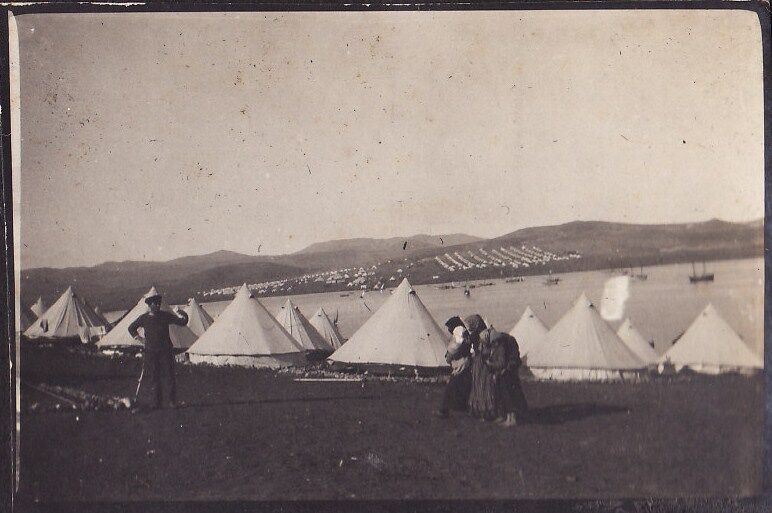
Tents of Evelyn’s 3rd Australian General Hospital, Turks Head Peninsula, Lemnos, 1915. Across the bay is the Anzac Rest Camp at Sarpi. In the foreground local Greek villagers visit the hospital. PHOTO: EVELYN HUTT COLLECTION.

AN APPEAL
It was an honour for me recently to assist Evelyn’s family in the donation of this amazing collection to the State Library of Victoria to ensure its preservation and accessibility to a wider public and future generations. This is an urgent reminder of the need to preserve these fragile records of the Hellenic link to Australia’s ANZAC story.

I am convinced that there could be many other similar collections of photographs, diaries, letters and other memorabilia lying forgotten in boxes and sheds across Australia. Many such collections have already been lost, often discarded unknowingly after the death of a veteran nurse or soldier. Time is running out to save what remains.

I urge anyone with an ANZAC veteran in their family history, nurse or soldier, to find out if any such items exist and to consider donating them to a public institution – like the State Library of Victoria – which is able to both preserve them and also to make them available, often digitally, to a wider public.
This should be one of the legacies of the Centenary of Anzac.

* Jim Claven is a historian and freelance writer. Secretary of the Lemnos Gallipoli Commemorative Committee, he has worked to have the new Lemnos Gallipoli Memorial in Albert Park erected. He is currently preparing a new and major commemorative publication telling the story of the Hellenic link to Anzac in the words and photographs of the Anzacs themselves. The photographs of Evelyn Hutt will feature in this publication. He acknowledges the assistance of Evelyn’s daughter, Ms Judith Gunnarsson, and granddaughter, Ms Deb Stewart, in researching this story.

source:Neos Kosmos



EU on alert for alternative migration routes as borders close

refugees-macedonia-border-march-2016-afp

European Union interior ministers expressed concern Thursday that migrants might seek alternative routes to northern Europe after their passage through the Balkan countries was sealed off, while the arrivals in Greece continued undeterred.

Europe has struggled with an influx of migrants and asylum seekers that brought more than 1 million people to its shores last year, with some 141,000 more following since January. Many are fleeing the war in Syria, but economic migrants have also joined their ranks.

The main route for people trying to reach wealthy northern Europe has been from Turkey via Greece, and onward through the Western Balkans. But countries along that route shuttered their borders this week, leaving thousands stranded and creating a bottleneck in Greece.

Italian Interior Minister Angelino Alfano said his country is working with Albania to prevent a new migration route from opening across the Adriatic Sea, ahead of talks in Brussels with his 27 EU counterparts.

“Logic suggests that, if there were an influx from Turkey into the Balkan route and if walls were to interrupt the journey towards northern Europe, this route could open,” Alfano said, while noting that there was no evidence of this happening at present.

Without legal pathways into Europe, “we shall see migrants and the smugglers, the ruthless smugglers that are behind them, trying to find new routes,” warned EU Migration Commissioner Dimitris Avramopoulos.

“The concern remains that there are other routes,” German Interior Minister Thomas de Maiziere said, referring specifically to Libya and Italy. Before Greece became the main conduit, many migrants crossed by sea from the northern African state to Italy’s southernmost islands.

Others have raised the prospect of Bulgaria becoming a new transit country. The EU member state shares a land border with Turkey, but is not part of Europe’s free-travel Schengen zone.

Despite this week’s border closures, migrants are still attempting the dangerous Aegean Sea crossing to Greece.

Five people, including a baby, drowned off Turkey’s coast when their boat capsized, the Dogan news agency reported. The Turkish coastguard saved nine migrants late Wednesday, the reports said. The migrants were mainly from Afghanistan and Iran.

In recent days, NATO began monitoring the sea route to help crack down on migrant smugglers. But the arrivals in Greece have so far remained steady.

“Yesterday, 2,073 people arrived on the islands,” the spokesman for the Greek migration crisis management body, Giorgos Kyritsis, said Thursday.

An overall 1,100 people were expected to be brought from the islands of Lesbos and Chios to the port of Piraeus on Thursday, the Greek coastguard said.

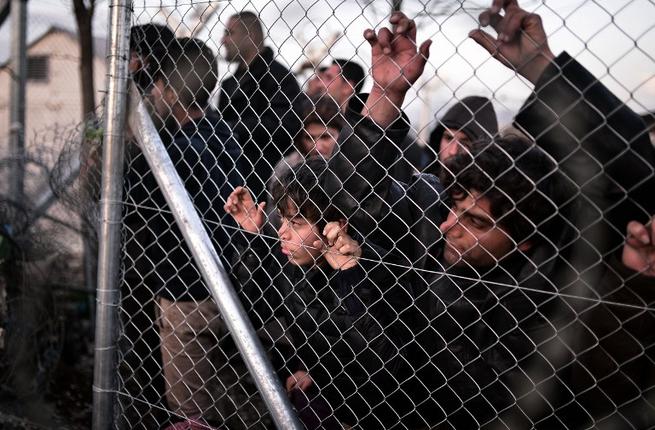
A further 13,000 people are stranded in a camp at Idomeni on the Greek border, where two days of relentless rain have turned the ground into an ocean of mud. The camp was set up as a pass-through facility for around 2,000 people.

Doctors from the nearby town of Polikastro said that hundreds of children and adults were suffering from respiratory and intestinal infections.

Around 250 people, mostly families with children, agreed to be relocated to a camp in the Athens area, 550 kilometres to the south.

Deputy Defence Minister Dimitris Vitsas hinted that the Idomeni camp could be evacuated because of the conditions, but a police officer in the area told dpa that “no police action is presently planned.”

In Brussels, Avramopoulos warned that the border closures along the Western Balkan route have created a “humanitarian crisis that risks to turn to a humanitarian disaster” in Greece.

The future of those stranded along the migration route is uncertain, after EU leaders agreed Monday to work with Turkey on a plan under which Ankara would take back any new arrivals to Greece, while the bloc would directly resettle Syrian refugees out of Turkey.

The deal, which is still being finalized, has drawn heavy criticism from rights groups and EU lawmakers, who have described it as inhumane and have questioned its legality.

Austrian Interior Minister Johanna Mikl-Leitner asked if the EU is not “ultimately throwing our values overboard” with the deal, which also offers Ankara concessions on visa-free travel for its citizens and on its long-running EU membership bid.

But her British counterpart Theresa May welcomed the deal, arguing that Europe is now “taking tough action against economic and illegal migrants.”

source:albawaba.com

George Tannous not guilty by reason of mental illness for murder of wife Margaret Tannous

untitled

They had been married for more than 18 years. But, in the past few, George Tannous became increasingly obsessed with one thing.

He was adamant his wife Margaret was cheating on him – sleeping with men in her office, flirting with tradesman, even having an affair with his cousin.

She was provoking him with such acts and leaving deliberate clues for him to discover, he believed.

It ended with him using a broom handle to bash his 49-year-old wife to death in their Bankstown home on February 17, 2014, despite none of his delusional fears being true.

On Thursday, NSW Supreme Court judge Jane Mathews found Mr Tannous, 59, not guilty of murder by reason of mental illness following a judge-alone trial that lasted less than one hour.

Both the defence and the prosecution agreed with an assessment by forensic psychiatrist Adam Martin, who told the court he had diagnosed Mr Tannous with a major psychotic disorder he referred to as delusional jealousy or morbid jealousy.

Mr Tannous was “overwhelmingly preoccupied and angry about his wife’s supposed acts of infidelity”, Crown prosecutor Terry Thorpe told the court, paraphrasing from Dr Martin’s report.

He confronted a carpenter working in their home one day, making accusations of flirting. He was suspicious of a man who shared his wife’s office. He was convinced she was sleeping with his cousin. Eventually, Mr Tannous was stalking his wife.

He was “not open to any alternative explanations of that behaviour… [of] innocent things that were occurring”, Mr Thorpe said, stressing that not one of Mr Tannous’ beliefs had “basis in fact”.

See your ad here
“Did you come to the view that he had very limited insight into what was going on?” Mr Thorpe asked Dr Martin in court.

“Yes, I think he had no insight,” he replied.

However, this obsessive disorder had developed only in recent years.

Before that, Mr Tannous exhibited controlling and suspicious behaviour. He told Dr Martin he had a mental health plan drawn up for him in 2012 but he stopped taking antidepressants because he was “concerned it would do something to his brain”.

Dr Martin concluded that the paranoid personality style and the development of the delusional disorder were not mutually exclusive.

“Delusions of jealousy against a backdrop of having a long history of controlling behaviour,” was his final conclusion, Mr Thorpe said.

Justice Mathews found that this disorder directed Mr Tannous’ actions in killing his wife and substantially impaired his judgement.

“There is no dispute at all that it was he who killed the victim,” she said. “And indeed he has always accepted responsibility for the act of killing her but the medical evidence is clear that at the time he did that he was suffering a mental illness.”

She assured Mrs Tannous’ family and supporters that he would be locked in a mental health facility until it was proven he wasn’t a danger.

“He’s not being exonerated. He’s not being allowed out into the community,” she said.

An agreed statement of facts said Mrs Tannous had returned from a trip to Lebanon on February 17 to find her husband had kicked out a man who shared her office space and had refused to allow a real estate agent in to sell their Bankstown unit.

An argument ensured and she said she wanted a divorce. He then took a broom stick from the laundry and repeatedly bashed her on the head, leaving her in a pool of blood.

As he made his way to Bankstown police station to hand himself in, he made phone calls to his children, his mother-in-law and other relatives telling them he hit his wife because he was “mad” at her but he didn’t think she was dead.

Mr and Mrs Tannous’ two adult children, Elie and Therese, were too distraught to attend court on Thursday and are understood to be angry and upset at what they believe is feigned illness by their father.

Elie posted an emotional tribute to his mother on Facebook after her death, saying she was “my angel my life my queen the closest person to me”.

He said she had spent 18 years suffering in a marriage that most women would have “let go” after three months.

Mrs Tannous’ niece and nephew attended in their place and shook their heads when Mr Tannous, wearing prison greens and a religious cross around his neck, entered a not guilty plea.

Her nephew said “f— you” to Mr Tannous when he appeared in the dock. Outside court, niece Jessica Karam said her aunt was “a beautiful person”.

“I think that violence against women is wrong in any case and I miss my aunty very much,” she said.

❏ Support is available by phoning National Sexual Assault, Domestic Family Violence Counselling Service 1800 737 732; Men’s Referral Service 1300 766

source:theherald.com.au

Η Μάχη της Κρήτης σε νόμισμα της Αυστραλίας!

ΑΥΣΤΡΑΛΙΑΝΟ ΝΟΜΙΣΜΑΗ Μάχη της Κρήτης απεικονίζεται σε νόμισμα της Αυστραλίας.

Αυτό αναφέρει σε επιστολή της προς τον δήμαρχο Χανίων, η Ενωση Τουριστικών Καταλυμάτων του Νομού.

Οπως σημειώνει, «πριν από λίγες μέρες η Κεντρική Τράπεζα της Αυστραλίας κυκλοφόρησε νόμισμα – κέρμα των 50 σεντς (μισό δολάριο) όπου απεικονίζεται στη μια του όψη η μάχη της Κρήτης το 1941».

Για να προσθέσει:

«Σε άλλες χώρες η ανάμνηση των όσων διαδραματίστηκαν στην Κρήτη τον Μάη του 41 παραμένει ασβέστη, σε μας εδώ είναι που ξεθωριάζει η μνήμη.
Αυτά σε σύγκριση με την Καλλίπολη της Τουρκίας και στα όσα προ ημερών γράψαμε για το πως σημαντικά ιστορικά γεγονότα του παρελθόντος γίνονται μέσω των κατάλληλων προωθητικών δράσεων πόλοι έλξης για τον τουρισμό».

Καταλήγοντας η Ενωση Τουριστικών Καταλυμάτων ζητά τη μεταφορά της πλακέτας που δώρισαν το 1991 Αυστραλοί σε κεντρικό σημείο της πόλης, αναφέροντας χαρακτηριστικά:
«Αλλά ας φροντίσουμε πρώτα όλα να μεταφέρουμε, επ’ ευκαιρία της 74ης επετείου, σε κεντρικό σημείο (Αγορά η παλιό λιμάνι ) την αξιόλογη πλακέτα που οι Αυστραλοί μας δώρισαν προ πολλών ετών, το 1991 και μείς έχουμε εναποθέσει σε σκιερό και μη επισκέψιμο μέρος του Δημοτικού κήπου».

Την επιστολή υπογράφουν για το Δ.Σ. της Ενωσης, ο πρόεδρος Ι. Κουκουράκης και η γεν. γραμμ. Γ. Ατσαλάκη.

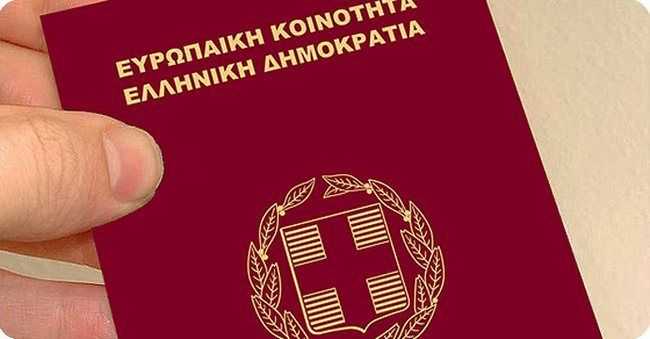
Greek passport among most valuable in the world

passport690

Those born outside Greece to at least one Greek-born parent or grandparent can obtain a Greek passport.

The Visa Restrictions Index (Business Insider, UK, 29 Feb. 2016) ‘evaluates’ the strength of passports of most countries in the world. The main criterion is in how many countries the holder of a certain passport can enter without having to issue a specific visa. According to this survey, the more visa-free access you have in countries all over the world, the more valuable your passport is.

The recently issued Henley & Partners’ Visa Restrictions Index concludes that the strongest passport is the German one, since it gives access to 177 countries without the need of a visa for its holder. The Greek passport ranks in seventh spot, along with that of New Zealand, as it gives visa-free access to 171 countries.

Those born outside Greece to at least one Greek-born parent or grandparent can obtain a Greek passport, provided certain documents are filed and processed by the Greek administration. If all birth and marriage certificates are in good order, there is no need for the applicant to speak Greek. The application is filed either at the Consulate of Greece at the country of residence of the applicant, or directly in Greece, with a proxy, or a combination of the above.

To apply and obtain your Greek passport, which is a European Union (EU) passport and allows you free entry, residence, work and status equal to local citizens in every EU member state, you have to first locate the birth certificate (birth record is not enough) of your parent or grandparent, who was born in Greece. Then, you must obtain the marriage certificate of that person, and then the birth of the next in line ancestor, until we reach your birth certificate.

If you have only one Greek grandparent, and you are now above 18 years old, the type of marriage of your grandparents is of significance. If you have only a Greek-born grandfather, you must obtain a religious marriage certificate of your grandparents. If, on the other hand, you only have a Greek-born grandmother, you must have a civil (not religious) marriage certificate of your grandparents. If you have only one Greek-born parent, the type of marriage of your parents (civil or religious) will not be an obstacle to your Greek citizenship.

The names of each ancestor must be consistent from one public document to the other. If a person is named Stathopoulos in his Greek birth certificate, being named Stathes in his foreign marriage certificate may create the need to identify that Stathopoulos, who was born in Greece, and Stathes, who was married in the USA/Canada/Australia etc. is one and the same person.

Males born outside of Greece to Greek parents or grandparents can obtain their Greek passport without having to serve in the Greek army, as long as they do not reside in Greece more than six months within the same calendar year, while they can reside the whole year long in any other EU country.

* Christos Iliopoulos is attorney at the Supreme Court of Greece, LL.M.

source:neos kosmos

Atletico Madrid to play Spurs at the MCG

Atletico%20Photo-%20AP1456904332693

Three great nights of football in July

The Australian leg of the International Champions Cup has locked in Spanish La Liga powerhouse Atletico Madrid as the third European team, together with Juventus and Tottenham Hotspur, to join Melbourne Victory in the pre-season international tournament to be played at the MCG in July this year.

It’s a reprise of the successful round-robin tournament played in Melbourne last year to which thousands flocked to see Roma, Manchester City and Real Madrid.

Atletico, coached by Argentine Diego Simeone, currently sits in second place in La Liga, between top-placed Barcelona and third-placed Real Madrid.

“The team and I can’t wait to come and play in Melbourne and visit a country as exciting as Australia, sharing with fans its passion for football,” coach Simeone says of the planned pre-season trip.

“It’s fantastic to be part of such a high-calibre tournament with some of the best teams in Europe and the A-League’s most successful side, Melbourne Victory.

“This competition will form a key part of our pre-season training and will be a great opportunity for me to put my players through their paces ahead of the new season.”

Atletico is scheduled to play in the third match of the three-match series, against London club Tottenham Hotspur, which is also currently flying high in the EPL in second place behind Leicester, and with its best chance in years of winning the title.

The three matches scheduled for July 2016 are:

Match 1: Melbourne Victory v Juventus, Saturday 23 July, 7.00 pm
Match 2: Juventus v Tottenham Hotspur, Tuesday 26 July, 8.00 pm
Match 3: Tottenham Hotspur v Atletico Madrid, Friday 29 July, 8.00 pm

Hot on the heels of announcing the Socceroos v Greece friendly in Melbourne for June, Victoria’s Minister for Sport and Tourism John Eren commented:

“The fans want the big European outfits in Melbourne and that’s exactly what we’re delivering. The biggest contests belong in the city that does them the best. We put on a great spectacle last year when more than 220,000 fans packed the MCG over three great night and we can’t wait to do it again.”

source:neos kosmos

Schulz expels Golden Dawn MEP from EU Parliament

altin-safak-ap

Eleftherios Synadinos was ‘shown the door’ for calling Turks “dirty and polluted” in racist rant.

Ιn an unprecedented move, President Martin Schulz expelled Greek Golden Dawn MEP Eleftherios Synadinos from a European Parliament plenary session after violating rules against racist speech.

Synadinos, a former army lieutenant general, said during the debate on the EU-Turkey Summit: “As it has been expressed in scientific literature, the Turks are dirty and polluted. Turks are like wild dogs when they play but when they have to fight against their enemies they run away. The only effective way to deal with the Turks is with decisive and resolute attitudes.”

Synadinos was ushered out of the chamber after European Parliament President Martin Schulz said his comments were in violation of the institution’s human rights regulations.

“This morning there was an incident in the Chamber and I believe that the European Parliament should not fail to react to it. We absolutely must react to the incident. I’d like to quote the sentence, which, firstly, I don’t think [is] acceptable and secondly I think … must be sanctioned”, explained President Schulz, re-quoting Syndinos’ statement.

“This sentence represents a breach of the values of the EU,” Schulz added, stressing that this decision was imperative.

“I believe that we have to establish a procedure here where if red lines are crossed, then we have to declare them unactable, particularly with regards to racism. For that reason, in accordance with rule 165 of the rules of procedure, in accordance with rule 11, I immediately exclude Mr Synadinos from the Chamber”, he concluded.

MEP Synadinos took his briefcase and left the Plenary, while the other two fellow Golden Dawn MEPs shouted at the President, calling him a “fascist”.

Addressing the Golden Dawn MEPs, Schulz said that “if they want to leave the Chamber with him they are free to do so”, refusing to allow a debate.

“Mr. Synadinos will be heard on this incident; no debates on the rules of procedure” Schulz told Golden Dawn MPEs Georgios Epitideios and Lampros Fountoulis.

Last week, Fountoulis accompanied by Synadinos entered a European Parliament conference on minority rights in Greece, organised by Csaba Sógor, a Romanian center-right MEP and shouted EPP MEP “There is no Turkish minority. Go to the problems of your country, not my country.”

Schulz’s decision to exclude Synadinos from the chamber was welcomed and applauded by all MEPs apart from the Le Pen group.

source:neos kosmos

Chelsea shown up as Champions League frauds: 1-2 against Paris St Germain

2825302

PSG poked fun at the Spain striker in the build-up to the second leg but while he delivered on the night, several of his high-profile team-mates looked out of their depth.

Chelsea entered the second leg of their Champions League last-16 tie with Paris Saint-Germain far from out of the running for a second European title in five seasons but, after this lesson from the French champions, it is clear the Blues won’t be back at Europe’s top table for some time to come.

Since Guus Hiddink’s arrival as interim manager there have been signs domestically that this Chelsea side still have what it takes to challenge the best England has to offer. Their league campaign was effectively over by the time Jose Mourinho was sacked, but they are likely to be back in the title shake-up in 12 months’ time.

And while against PSG they certainly threatened to turn the tie on its head either side of half-time with some energetic attacking play, their lack of potency going forward and inability to keep the ball for prolonged periods was evident against a team that was willing to wait for their opportunities and kill off their hosts.

There was an arrogance about the way Laurent Blanc’s side passed the ball in midfield and though it occasionally cost them – particularly when Pedro won the ball 40 yards from goal in the build-up to Diego Costa’s equaliser – there was a professionalism about their play that hinted they could yet test the biggest sides in the latter stages of this competition.

The gap between the two sides was most clear when rookie forward Bertrand Traore replaced the stricken Costa around the hour mark. Blanc was able to call upon Edinson Cavani, a player the majority of the Premier League’s top clubs are likely to fawn over this summer, from his bench.

Alexandre Pato was signed in January to provide back-up for Costa when required but is still yet to play for Chelsea and is likely to be shipped back to his homeland as quickly as he arrived two months ago.

What makes the result even more disappointing is that Chelsea will have no opportunity to put right their wrongs next term. They are extremely unlikely to secure a spot in the Premier League’s top four despite an upturn in results and are facing up to a final two months of the season with just the FA Cup to play for.

The likes of Gary Cahill, Branislav Ivanovic and John Obi Mikel are unlikely to get another shot at winning European football’s ultimate prize, while all signs point to John Terry leaving the club at the end of the current season.

The task for Antonio Conte for when he takes over, as seems inevitable, is to build a squad capable of challenging on all fronts once again. It is clear that those in the squad that were part of the 2012 winning team are no longer at the level to repeat the feat and while Costa, Cesc Fabregas and Willian still have plenty of miles in their legs, there are too many players at the club who cannot take the biggest of matches by the scruff of the neck.

A return to contention in this competition will never be beyond a club of Chelsea’s wealth and while a lack of Champions League football could harm their chances of securing all the signings Conte wants immediately, their pull remains large enough to start the rebuild away from the prying eyes of Europe’s great and good.

On Wednesday, though, Blues fans were forced to watch the PSG players celebrate in front of their own supporters for the second year running. Blanc has built a squad capable of beating them with ease and that will not sit well with Roman Abramovich.

source:goal.com