Monthly Archives: February 2014

Θρύλε, θεέ, Ολυμπιακέ

ol

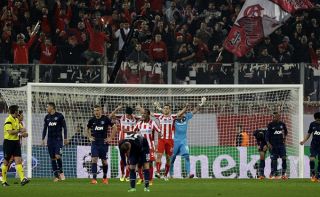
Ο Ολυμπιακός νίκησε 2-0 τη Γιουνάιτεντ και θα είναι… Άγγλος στο ραντεβού με τους «8»

Ένας… διαβολεμένος Ολυμπιακός, ανέτρεψε όλα τα προγνωστικά, όλες τις ισορροπίες και τα δεδομένα ανάμεσα στο ελληνικό και το αγγλικό ποδόσφαιρο και έγραψε μία χρυσή σελίδα στην Ιστορία του, φτάνοντας στο 2-0 απέναντι στην Μάντσεστερ Γιουνάιτεντ!

Ναι, δεν «χτύπησε» ο δαίμονας του τυπογραφείου, οι Πειραιώτες για την ακρίβεια ισοπέδωσαν τους μέχρι χθες αήττητους στην Ευρώπη «Μπέμπηδες» και έφτασαν σε έναν ανεπανάληπτο θρίαμβο.

Πλέον, ο Ολυμπιακός μπορεί να αποκαλεί τον εαυτό του ως «φαβορί» για την πρόκριση στους «8» του Champions League, έχοντας να ολοκληρώσει το έργο του στις 19/3 στη ρεβάνς του «Ολντ Τράφορντ».

Οι παίκτες του Μίτσελ ξεκίνησαν με πολύ μεγάλο ενθουσιασμό, πίεσαν την αντίπαλό τους ψηλά και έξω από την περιοχή του Ντε Χέα για να αποκόψουν την πρώτη πάσα και ταυτόχρονα προσπάθησαν να επιτεθούν, εφόσον οι συνθήκες το ευνοούσαν. Ο βασικός στόχος ήταν να αποκοπεί η τροφοδοσία στους Ρούνεϊ, που είναι εξαιρετικός και στη δημιουργία, και Φαν Πέρσι, οι οποίοι αποτελούν τη δύναμη πυρός της Μάντσεστερ.

Το πλάνο του Μίτσελ δούλεψε καλά, καθώς οι Άγγλοι δεν έβρισκαν χώρους για να κάνουν το παιχνίδι τους ακόμη κι όταν από ένα σημείο και ύστερα απέκτησαν μια ελαφρά υπεροχή ως προς την κατοχή της μπάλας. Αντίθετα, τις καλές ευκαιρίες στο πρώτο ημίχρονο είχαν οι «ερυθρόλευκοι». Στο 8ο λεπτό ο Ντομίνγκες έκλεψε την μπάλα στο χώρο του κέντρου, έτρεξε περίπου 40 μέτρα και φτάνοντας απέναντι στον Ντε Χέα ανακόπηκε από τον Βίντιτς τη στιγμή του σουτ. Στο 26΄ ο Πέρες συνέκλινε από αριστερά και σούταρε με το δεξί, με την μπάλα να καταλήγει στο εξωτερικό μέρος των διχτύων.

Τελικά το φαληρικό γήπεδο «σηκώθηκε» στο 38ο λεπτό, όταν ο πρωταθλητής Ελλάδας έφτασε στο 1-0: ο Μανιάτης έξω από την περιοχή της Γιουνάιτεντ έκανε ένα συρτό αλλά αδύναμο σουτ, ο Ντομίνγκες στη μεγάλη περιοχή είδε την μπάλα να έρχεται στα πόδια του και με «τακουνάκι» της άλλαξε πορεία στέλνοντάς την στα δίχτυα του Ντε Χέα.

Ο Ολυμπιακός συνέχισε να ακολουθεί το πλάνο του και στην επανάληψη, μένοντας απόλυτα συγκεντρωμένος στο πνεύμα και τις απαιτήσεις του αγώνα. Αυτό απέφερε το δεύτερο γκολ των «ερυθρόλευκων» στο 55ο λεπτό, με εξαιρετικό τεχνικό αριστερό σουτ του Κάμπελ από 25 μέτρα, που δεν άφησε περιθώριο αντίδρασης στον Ισπανό τερματοφύλακα. Στο 67ο λεπτό νέα αυκαιρία για την ελληνική ομάδα, όταν ο Ολαϊτάν γύρισε και σούταρε ξαφνικά μέσα από την περιοχή, στέλνοντας την μπάλα δίπλα από το αριστερό δοκάρι.

Απέναντι σε αυτό τον Ολυμπιακό η Μάντσεστερ Γιουνάιτεντ έχασε την πρώτη ευκαιρία στο 82ο λεπτό, όσο απίστευτο και αν ακούγεται, όταν ο Φαν Πέρσι υποδέχθηκε την μπάλα στην περιοχή από πάσα του Σμόλινγκ, γύρισε ωραία και απέφυγε τον Μανωλά αλλά το δυνατό σουτ που επιχείρησε έστειλε την μπάλα πάνω από το δοκάρι του Ρομπέρτο, στη μοναδική καλή στιγμή της ομάδας του Μόιες στο παιχνίδι.

Διαιτητής: Ρόκι (Ιταλία)

Κίτρινες: Εβρά, Φέρντιναντ

ΟΛΥΜΠΙΑΚΟΣ (Μίτσελ Γκονζάλες): Ρομπέρτο, Σαλίνο, Χολέμπας, Μανωλάς, Μαρκάνο, Εντινγκά, Μανιάτης, Κάμπελ (67΄ Φουστέρ), Πέρες (85΄ Βαλντές), Ντομίνγκες (76΄ Μασάντο), Ολαϊτάν.

ΜΑΝΤΣΕΣΤΕΡ ΓΙΟΥΝΑΪΤΕΝΤ (Ντέιβιντ Μόιες): Ντε Χέα, Σμόλινγκ, Εβρά, Φέρντιναντ, Βίντιτς, Κάρικ, Κλέβερλι (60΄ Καγκάουα), Βαλέντσια (60΄ Γουέλμπεκ), Γιανγκ, Ρούνι, Φαν Πέρσι.

Πηγή: Νέος Κόσμος

«Πνίγηκε» στην φαντασμαγορία η Μελβούρνη


white

Πάνω από μισό εκατομμύριο επισκέπτες απόλαυσαν το πολύχρωμο Φεστιβά

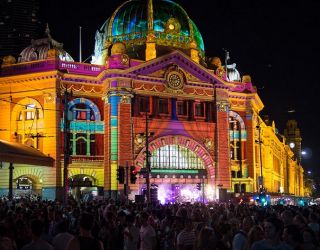
Φανταχτερή, πολύχρωμη και στα καλύτερά της ήταν η Μελβούρνη το Σάββατο το βράδυ.

Πάνω από μισό εκατομμύριο επισκέπτες έδωσαν το παρών τους στο δεύτερο Φεστιβάλ της Λευκής Νύχτας που οργάνωσε ο Δήμος της Μελβούρνης και τείνει να γίνει το μεγαλύτερη εκδήλωση της πόλης μας από πλευράς προσέλευσης κόσμου.

Σε σχέση με πέρυσι, φέτος ο κόσμος ήταν σχεδόν διπλάσιος και, ενδεχομένως, η προσέλευση μεγαλύτερη και από το ξεφάντωμα με τα πυροτεχνήματα την παραμονή της Πρωτοχρονιάς.

Ο κόσμος είχε αρχίσει να συγκεντρώνεται στο εμπορικό κέντρο της πόλης από νωρίς το απόγευμα του Σαββάτου, ενώ γύρω στις 10 το βράδυ σημειωνόταν το αδιαχώρητο σε πολλούς δρόμους και όχι μόνο γύρω από το Federation Square και το Arts Centre.

Ήταν τόση η πολυκοσμία, που για να διασχίσει κάποιος το Swanston Street, από την πολιτειακή Βιβλιοθήκη μέχρι το Federation Square, θα χρειαζόταν πάνω από μία ώρα, ενώ δύσκολα μπορούσε κανείς να περπατήσει και στους παράλληλους δρόμους, όπως το Elizabeth, Burke, Collins και Flinders Streets. Πολύ κόσμο είχαν επίσης και οι υπόλοιποι δρόμοι του κέντρου, ενώ τα εστιατόρια και τα υπόλοιπα μαγαζιά ήταν γεμάτα κόσμο μέχρι τις πρωινές ώρες της Κυριακής. Σε πολλά ασιατικά εστιατόρια του Little Burke Street o κόσμος σχημάτιζε ουρά να μπει μέσα, ενώ ανοιχτά παρέμειναν και αρκετά εμπορικά καταστήματα που έκαναν χρυσές δουλειές καθ’ όλη τη διάρκεια της νύχτας.

Τη παράσταση, όμως, την έκλεψαν τα φωτισμένα με διάφορα πολύχρωμα σχέδια ιστορικά κτίρια της πόλης, όπως η Βιβλιοθήκη, το Δημαρχείο, ο Κεντρικός Σιδηροδρομικός Σταθμός και πολλά νεοκλασικά του Flinders Street.

Με γωνιά βγαλμένη από παραμύθι έμοιαζαν οι χώροι γύρω από το Federation Square, ενώ στη πλατεία που χόρευαν και τραγουδούσαν διάφορα συγκροτήματα δεν «έπεφτε καρφίτσα».

Τον ίδιο καιρό σε διάφορους δρόμους υπήρχαν καλλιτεχνικά δρώμενα, ενώ το πολυεθνικό πλήθος που κατέλαβε το κέντρο της Μελβούρνης, διασκέδαζε όσο μπορούσε. Για την ιστορία αναφέρουμε ότι το πρώτο Φεστιβάλ Λευκής Νύχτας οργανώθηκε για πρώτη φορά στην Κολονία της Γερμανίας και, στη συνέχεια, και σε πολλές άλλες μεγαλουπόλεις του κόσμου.

Πηγή: Νέος Κόσμος

λ.


Αυτοκτονία προσωπικότητας της αυστραλιανής τηλεόρασης

Charlotte_Dawson_(8492540740)

Αίσθηση προκάλεσε στην κοινή γνώμη της Αυστραλίας η αυτοκτονία της Τσάρλοτ Ντόουσον

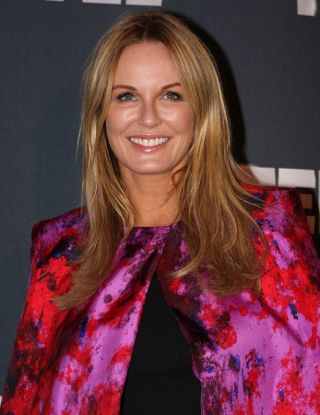
Αίσθηση προκάλεσε στην κοινή γνώμη της Αυστραλίας η αυτοκτονία της Σάρλοτ Ντόουσον, γνωστής προσωπικότητας της αυστραλιανής τηλεόρασης και πρώην μοντέλου. Η 47χρονη Ντόουσον, που έπασχε από κατάθλιψη, αυτοκτόνησε μέσα στο σπίτι της, στο Σίδνεϊ.

Η ίδια μίλησε για τους «δαίμονές της» σε συνέντευξη που παραχώρησε σε τηλεοπτική εκπομπή. Η Ντόουσον είχε γίνει και στόχος επιθετικών ηλεκτρονικών μηνυμάτων που την καλούσαν να «αυτοκτονήσει». Υπήρξε, δε, πρέσβειρα του προγράμματος κατά του ηλεκτρονικού bullying.

Ο ομογενής σχεδιαστής, Άλεξ Πέρι, που ήταν στενός φίλος της, είπε ότι «χάθηκε μια πανέμορφη και ιδιαίτερα ευαίσθητη ψυχούλα». Η Ντόουσον ξεκίνησε την καριέρα της ως τηλεοπτική δημοσιογράφος, ενώ εργάστηκε και σε πολλά περιοδικά.

*Θυμίζουμε ότι όσοι πάσχουν από κατάθλιψη μπορούν να αποταθούν για άμεση βοήθεια στο Lifeline 131114 ή στο http://www.beyondblue.org.au.

Πηγή: Νέος Κόσμος

Ξεπουλά η Shell στην Αυστραλία

shell

Αλλά και στην… Ελλάδα

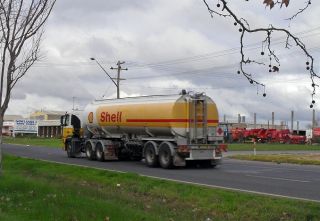
Η παγκόσμια πετρελαϊκή εταιρία Shell επιβεβαίωσε ότι πoύλησε τα 870 πρατήρι;a της, το διυλιστήριό της στο Geelong της Βικτώριας και άλλα περιουσιακά της στοιχεία στην Αυστραλία, στην εταιρία Vitol έναντι 2.9 δισεκατομμυρίων δολαρίων.

Η Shell θα διατηρήσει, πάντως, κάποιες μονάδες της στο Brisbane και το Queensland.

Η διεθνής εταιρία, σε ανακοίνωσή της, αναφέρει ότι αποσύρεται από επιχειρηματικές δραστηριότητες σε διάφορες χώρες. Μεταξύ των χωρών που αναφέρθηκαν είναι η Ελλάδα.

Σύμφωνα με την εταιρία, το προσωπικό της στην Αυστραλία θα συνεχίσει να εργάζεται για τη Vitol.

Πηγή: Νέος Κόσμος

Μεγάλη η έλλειψη ανδρών στην Αυστραλία

man

Ραντεβού στα τυφλά με πιθανό ρεκόρ Γκίνες.

Νέο παγκόσμιο ρεκόρ Γκίνες ισχυρίζονται ότι σημείωσαν οι οργανωτές μιας εκδήλωσης με τίτλο «Ραντεβού στα Τυφλά» που έγινε την Παρασκευή το βράδυ στην Όπερα του Σίδνεϊ.

Εκτιμάται ότι στο ραντεβού προσήλθαν πάνω από 780 άτομα για να βρουν τον ερωτικό τους σύντροφο. Το προηγούμενο ρεκόρ με 654 συμμετοχές είχε σημειωθεί τον περασμένο Σεπτέμβριο στο Σικάγο.

Πολλοί που προσήλθαν στο ραντεβού αισιοδοξούσαν ότι βρήκαν την μελλοντική σύζυγο ή τον μελλοντικό σύζυγο.

Οι γυναίκες είχαν εξασφαλίσει νωρίτερα τα διαθέσιμα εισιτήρια στην εκδήλωση και αυτό χαρακτηρίστηκε «φυσιολογικό» αφού στην Αυστραλία υπάρχει έλλειψη ανδρών 100.000 περισσότερες γυναίκες από άνδρες.

Πηγή: Νέος Κόσμος

H ανεργία χτυπά και τους νέους της Αυστραλίας τώρα

youth

Τον περασμένο μήνα η ανεργία των νέων στη Βικτώρια έφτασε στο 14%

Tα υψηλά επίπεδα ανεργίας και στις τάξεις των νέων της Αυστραλίας, ηλικίας μεταξύ 18 και 24 χρόνων, προκαλούν σοβαρές ανησυχίες. Τον περασμένο μήνα η ανεργία των νέων στη Βικτώρια έφτασε στο 14%.

Το πρόβλημα φαίνεται να φτάνει τα όρια κρίσης στα εξωτερικά προάστια και την ύπαιθρο, συμπεριλαμβανομένης και της βορειοανατολικής Βικτώριας (Seymour, Kilmore, Wangaratta και Wodonga) όπου έφτασε στο 17,5%.

Ο φιλανθρωπικός οργανισμός Brotherhood of St. Laurence, απευθύνει έκκληση για μια νέα κυβερνητική στρατηγική προκειμένου να βοηθηθούν οι νέοι να βρουν μια θέση στον εργασιακό χώρο, χαρακτηρίζει, δε, το ύψος ανεργίας ως «σκανδαλώδες για τους νέους μας, την κοινωνία και την εθνική οικονομία». Ο γενικός διευθυντής του οργανισμού, Tony Nicholson, θα πει συγκεκριμένα ότι το σύστημα υπηρεσιών απασχόλησης της Αυστραλίας, δεν εξυπηρετεί τους νέους, ως έχει σήμερα.

Μερικοί από τους νέους που ζητούν εργασία, για παράδειγμα, υποβάλλουν εκατοντάδες αιτήσεις, χωρίς επιτυχία. Κι ας έχουν τρία και τέσσερα πιστοποιητικά επαγγελματικού προσανατολισμού. Ο ίδιος θα προσθέσει, ότι το σύστημα δίνει μεγάλη έμφαση σε προσόντα υψηλού επιπέδου, γνώση του χώρου εργασίας και δεξιότητες που οι νέοι δεν έχουν ακόμα την ευκαιρία να αποκτήσουν.

Για το λόγο αυτό, απευθύνει έκκληση για μία νέα στρατηγική, η οποία να αντικαταστήσει το πρόγραμμα Youth Connections ύψους $80εκ. το οποίο λήγει το 2014. Ο κ. Nicholson θα πει ότι η νέα στρατηγική θα πρέπει να δίνει έμφαση στον συμβουλευτικό παράγοντα, τον επαγγελματικό προσανατολισμό και τη συγκροτημένη πείρα στον εργασιακό χώρο.

Θα πρέπει να προσθέσουμε ότι καίρια από την ανεργία έχουν χτυπηθεί στην Τασμανία το Burnie και Davenport, όπου η ανεργία έχει φτάσει στο 21%, στην Κουηνσλάδη στο Cairns έφτασε στο 20.5%, ενώ στα βόρεια προάστια της Αδελαΐδας στο 19.7%.

Πηγή: Νέος Κόσμος

From austerity to recovery

papa

Christina Papaconstantinou – Secretary General of the Greek Ministry of Finance. Photo supplied.

In Sydney for the G20, the Greek Secretary General for Finance says the economic tide is finally turning in Greece after four years of reform.

With Greece holding the presidency of the EU and Australia chairing the G20, this year the two nations find themselves presiding over the world’s most powerful international inter-governmental institutions – giving each a unique opportunity to influence global economic policies.

In Sydney today – to attend the first ministerial-level G20 meeting under Australia’s presidency – Greece, which holds the current rotating European Union Presidency will be represented by Ms Christina Papaconstantinou, Secretary General of the Greek Ministry of Finance.

A former lawyer, Ms Papaconstantinou was previously Greece’s Secretary General for Fiscal Policy and President of the Public Debt Management Office. On the eve of the meeting which prepares the ground for the G20 Leaders Summit in Brisbane in November, Neos Kosmos conducted an exclusive interview with Greece’s top civil servant with responsibility for finance. We began with the situation in Greece.

Secretary General – the Greek Government says that the economic tide in Greece is finally turning, but what is the real evidence of recovery? Is Greece finally ready to come off life-support?

Greece will no longer require financial assistance from its eurozone partners and the IMF – life-support as you call it – when the Greek state will be able to finance its funding needs from private capital markets.

For private investors to invest in Greek government bonds at an interest rate that is affordable for Greece, they need to feel confident that the causes of the crisis in Greece – loss of fiscal discipline and competitiveness – have been addressed in a sustainable way and that Greece is credit-worthy again. The fact that Greece in 2013 will have a surplus in both the primary fiscal balance (revenues minus expenditures excluding interest) and in the current account – just four years since having record deficits in both above 10 per cent of GDP – is in and of itself evidence of the unprecedented and very real progress Greece has made in a very short time.

Moreover, this progress has also led to a surge in interest from private investors recently and we plan to start borrowing from these investors in the following months, initially for small amounts, with a view to gradually building up our credibility again.

Once the Greek state accesses private markets, a virtuous cycle will be unleashed that will boost liquidity in the real economy, which is the most cited constraint by private enterprises right now.

The increase in liquidity will consolidate the nascent recovery we are seeing in late 2013. Just to name a a few, the economic sentiment indicator has reached one of the highest levels of the last five years, the Purchase Managers Index in January 2014 indicated expansion for the first time since August 2009, and retail sales increased in November for the first time after almost four years.

I am confident that by this time next year, the combined impact of improved liquidity and the implementation of our structural reforms will ensure that Greek citizens will feel the recovery – which is the most important sign that the tide is finally turning.

What are the measurable outcomes of the structural reforms and fiscal consolidation within the Greek economy over the past four years?

Greece has realised an impressive adjustment in its twin deficits, the primary fiscal deficit, and the current account deficit. For the first time after many decades, by the end of 2013, the twin deficits have not only been eliminated but they have also turned into surpluses.

On the fiscal front, over 85 per cent of the required fiscal adjustment needed to reduce debt to sustainable levels by 2020 has been completed. In particular, since 2009 Greece’s primary deficit has declined by more than 10 per cent of GDP, and it now seems that the target set for 2013 in the 2014 Budget for a primary surplus of 0.4 per cent of GDP will be over performed. Furthermore, it is estimated that since 2009, the cyclically adjusted primary balance has improved by more than 20 per cent of GDP. The improvement in competitiveness has also been remarkable. Over the last four years, the cumulative loss in cost competitiveness since Greece’s entry in the Eurozone (2001-2009) has been fully recovered. This development is also reflected in the current account balance. The current account deficit stood at 2.4 per cent of GDP in 2012 from 14.9 per cent of GDP in 2008. It is now projected that by the end of 2013 there will be a current account surplus.

Greece has implemented structural reforms in many fields of economic activity, including reforms in the labour market, the pension and health system, and tax administration. These reforms helped to close the competitiveness gap and create a favourable environment for business and foreign investment. Since 2009 Greece has lost 25 per cent of its GDP. What must Greece do to change this decline?

The crisis was the result of very high twin deficits – a primary fiscal deficit and current account deficit, and the loss of competitiveness, which led to Greece’s exclusion from the international capital markets.

The substantial financial support Greece received from its eurozone partners and the IMF was followed by fiscal and structural reforms that had to be implemented in order for the country to return to a sustainable growth path.

The unprecedented adjustment Greece has realised over the past years has come at a very high socio-economic cost. However, the signs of macroeconomic recovery now become visible.

In 2013 GDP declined by 3.7 per cent; this fall – which was the result of a continuous deceleration in the rate of decline of GDP throughout the year – was milder than originally projected. Furthermore, unemployment now seems to be stabilised.

In 2014 Greece is expected to exit the deep recession it experienced over the last six years, whereas in the years to follow Greece will grow at robust rates. The new growth model for the Greek economy currently developed will be more extrovert. It will be based on investment, innovation, exports and foreign direct investment, while the implementation of structural reforms will continue. What benefits for Greece come with your presidency of the EU? What opportunities are there and what are the challenges?

Our first major priority is the promotion of growth – in order to boost employment and cohesion. A second priority relates to further integration of the Economic and Monetary Union, including the establishment of a banking union, in order to safeguard confidence in the European economy.

Another important priority concerns a comprehensive review of the immigration and border policies in order to reflect the needs of member states and, in particular, of those who share a disproportional part of the burden.

There is also a fourth, horizontal priority: the maritime policy of the EU. The sea lanes are extremely important to our trade. We will seek to step up efforts to bring in a more global approach to all maritime issues [and] security and energy aspects of the maritime policy.

With elections to the European Parliament imminent, how concerned are you that Eurosceptics will influence the situation? Is such scepticism dangerous for Greece and Europe?

Given the direct impact of decisions taken at European level, on people’s lives across Europe, this year European Parliament elections are a great challenge for our presidency.

The economic crisis in Europe, the high unemployment rates – especially among young people in the countries of Southern Europe, and the social insecurity, supported, among other things, perceptions that questioned our common European course.

For this reason, it is very important to hear from people across the Union about what they expect, and to make that clear at the upcoming elections. They will have a real choice on what kind of Europe they want.

As a member-state of the EU and the eurozone, Greece is representing a European Union that must show its commitment to great values, solidarity and the European welfare state. The value of the European model for prosperity and growth can reaffirm the European project in the hearts and minds of the people of Europe.

As president of ECOFIN – the EU Finance Ministers’ Council – what will be Greece’s input to the G20 Ministerial Conference? What do you hope the G20 under Australia’s presidency can achieve?

Our overarching goal [is] to foster growth, competitiveness and jobs, to ensure stability and prosperity for European citizens, as well as to restore confidence in the financial sector.

We intend to focus on further developing banking union as a prerequisite for more trust and reliability, as well as for increasing liquidity in European economy, and safeguarding its financial stability.

The Single Resolution Mechanism [a pan-European ‘resolution authority’ to manage future bail-outs] is, undoubtedly, a key element of the banking union, and as such, it is an overarching priority of the Greek presidency.

We will also work towards deepening further the integration of the European Monetary Union and strengthening the coordination of national economic and fiscal policies in order to preserve the integrity of the common currency and promote the necessary growth-enhancing reforms.

In addition, the Greek presidency will advance discussions for financing the economy, in particular SMEs’ facilitation of access to financing, aiming to enhance sustainable growth and promote the creation of new jobs.

Οn taxation policy, it is highly important to carry on with the appropriate actions, at the European level, against taxation practices that undermine citizens’ and investors’ confidence and encourage tax fraud and tax evasion.

The aim of the Australian presidency to strengthen global growth and foster employment is strongly supported by the EU. Growth in Europe has been accelerating during the last months due to the implementation of ambitious structural reforms and a sound fiscal policy.

We hope we can share our experience with our partners in G20 and we are confident that the Australian presidency will succeed in coordinating all G20 members to develop ambitious growth strategies during the Brisbane summit.

The Greek diaspora business community in Australia and the US have been vocal in wanting to support Greece during the economic crisis. What can be done to realise a more effective role for the diaspora in Greece’s economic future?

Greece’s economic recovery depends critically on expanding exports and private investment and we see the diaspora playing a vital role in boosting both. The crisis has been an opportunity for us to address the chronic ailments of the business environment in Greece – excessive bureaucracy, unnecessary administrative costs, an inefficient tax system – that discouraged many well-intentioned investors.

Since 2009 we have been working hard to improve the investment climate – as shown by the fact that Greece has risen 24 positions in the World Bank’s ‘Ease of Doing Business’ rankings, and in particular 97 positions in terms of the ease of starting a business and 70 positions in terms of protecting investors. While there is still much to do, it is evident from the extremely strong investor interest in a variety of sectors that Greece is already an attractive investment destination with opportunities in real estate, energy, trade/logistics, food processing and agriculture, IT and pharmaceuticals, as well as in our traditional champions of tourism and shipping.

To give you an example, Piraeus is now the fastest growing port in the world, growing by 112 per cent between 2011-13 in terms of containers handled. It is projected to become the largest port in the Mediterranean by 2016. The driver of this growth is the investment by Chinese company Cosco that manages two out of the three terminals at Pireaus and wants to make it the gateway of choice for Asian-European trade.

Given Australia’s close ties with Asia, there are ample opportunities for the Greek Australian diaspora to play a key intermediary role both as investor and facilitator of these trade links. The diaspora seeks an enabling environment in Greece to invest on a significant scale – how can this environment be created, what are the challenges? The Greek government plans to continue its efforts to improve the business environment. In April we plan to submit a bill to Parliament that will enable investors to establish new businesses within 24 hours.

The government is paving the way for stronger bilateral economic, commercial and administrative cooperation with the Australian government. For example, in 2013 the Hellenic Parliament approved the OECD’s Multilateral Convention of Mutual Administrative Assistance that enables the tax administrations of Australia and Greece to share information on taxpayers, to avoid double taxation.

We hope that this cooperation will provide a basis for the negotiation of a double taxation treaty for which the Hellenic Republic has made formal requests to the government of Australia.

In this increasingly favourable economic environment, we invite the Greek Australian diaspora to join these efforts in order to bridge Greece and Australia in a tight network of trade, business, and investment.

source: Neos Kosmos

Underdog Olympiakos breaks Man U drought 2-0

olympiakos%20man%20u

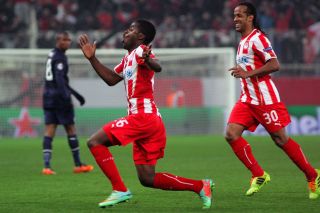
Olympiakos Piraeus’ Joel Campbell (L) celebrates with his teammate Leandro Salino (R) after scoring the 2-0 lead during the UEFA Champions League round match against Manchester United in Piraeus, Greece. Photo: EPA/PANAGIOTIS MOSCHANDREOU.

Olympiakos has defied belief as they finally break a losing streak to Manchester United with a clean 2-0 win in the Champions League.

Olympiakos FC are within touching distance of a UEFA Champions League quarter-final place for the first time in 15 years after sailing to a comfortable 2-0 victory against Manchester United FC in Piraeus.

Alejandro Domínguez gave the hosts a deserved lead seven minutes before half-time with a clever flick to divert Giannis Maniatis’s shot past the wrong-footed David de Gea. Joel Campbell, on loan from Arsenal FC, doubled the advantage ten minutes after the restart and United never looked like getting back into it. The English champions will need to improve drastically to turn this tie around on 19 March at Old Trafford.

With Kostas Mitroglou joining Fulham FC on 31 January, Olympiakos no longer possess an attacking reference point in the opposition area. Coach Míchel turned that to his side’s advantage, encouraging his forward players to drive at United and try their luck from range. It soon appeared an astute approach.

Inside eight minutes Domínguez surged into the box and, with United backing off, the Argentinian playmaker seemed certain to score – only for Nemanja Vidić to come in with an excellent tackle. Hernán Peréz also went for a solo run in the 26th minute, cutting inside from the left and firing a low shot that flew wide of the near post.

United enjoyed possession but not creativity. Olympiakos goalkeeper Roberto and the defensive duo of Kostas Manolas and Iván Marcano dealt with any high balls launched into the area and full-backs Leandro Salino and José Holebas commanded the flanks.

Míchel’s plan paid dividends with the interval looming. After Campbell’s cross was headed clear, Maniatis collected the ball on the edge of the box. His low strike went through a forest of legs, with Domínguez executing a clever flick to deflect the ball and catch De Gea off-guard.

Olympiakos did not sit on their cushion, instead seeking to extend it and they soon had United reeling as the 21-year-old Campbell picked up a loose ball and, after evading Michael Carrick, sent a delicious curling shot past De Gea. His maiden UEFA Champions League goal could not have been better timed.

David Moyes shuffled his pack, bringing on Danny Welbeck and Shinji Kagawa, but the evening was all about Olympiakos. Michael Olaitan almost made it 3-0 and even when United pushed on in the last ten minutes they lacked composure at the crucial moments. Robin van Persie had the goal at his mercy at one point but, after doing the hard part, speared his attempt over the bar. It summed up United’s night.

Source: UEFA.

Mixed marriages on the up

marriages

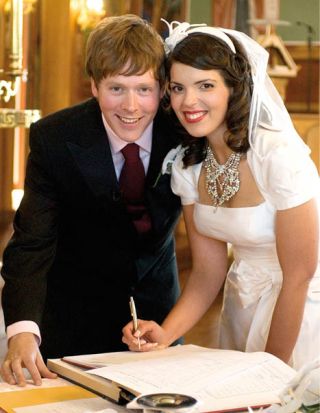
The marriage of Felix Neighbour and Eugenia Tsimilis at St Anthony’s Greek Orthodox Church Prospect in 2006,

Divorce rates in our community increase.

More than half the marriages conducted in Greek Orthodox churches in Victoria were mixed, says the Greek Orthodox Archdiocese. In 2012, of the 580 weddings conducted by the Archdiocese, 322 of those were mixed.

The figures also showed a significant drop in marriages conducted in Greek Orthodox churches in Melbourne. 935 marriages were registered in Greek Orthodox churches in Victoria in 2002, showing nearly a 50 per cent drop in church weddings. This could be due to inter-communal but also to wider societal and demographic changes that result in marriages being conducted in civil services and ceremonies. 455 of these marriages in 2002 were mixed. Greek Australians could be steering towards services and ceremonies due to mixed cultural marriages, but also a break away from religious services.

Australians of Italian descent are the biggest ethnic group that Greek Australians are looking for when choosing their life partner, followed by Anglo-Saxons, then smaller ethnic groups, said the Archdiocese.

Divorce rates amongst members of our community have also increased. In 2011, 600 marriages were conducted in churches in Melbourne and of those, 96 ended in divorce. However, the church says this rate may be higher, taking into account the Archdiocese only issues divorce certificates for Greek Australians wishing to remarry in the church.

source: Neos Kosmos

Vale Basil Hayler

basilhayler01

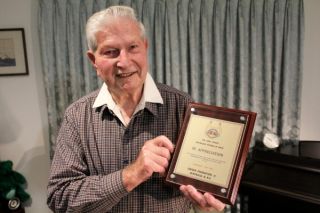
One of nature’s gentlemen. Basil Hayler holding a commemorative plaque presented to him by the Cretan Federation of Australia and New Zealand in 2011. PHOTO: TOM ANDRONAS.

RAN Battle of Greece and Crete veteran passes away.

One of the last survivors of the WWII cruiser HMAS Perth – the Royal Australian Navy warship that played a major role in the Greek and Crete campaigns of WWII and which was eventually sunk by the Japanese – has died. Basil Hayler passed away at his home in Ferntree Gully, Victoria on Monday. He was 92. Basil George Hayler was born in Werribee, Victoria in 1921 after his family had emigrated to Australia from England in 1911.

There he grew up with his four siblings – Edward, Lily, Maud and Esther – on a ten-acre soldier settlement site given to his father Edward for his service in France during WWI.

In 1938 Basil enlisted in the Royal Australian Navy, aged 16. In March 1941 the Perth took part in the deployment of Allied forces to Greece, making two voyages with troops from Alexandria to Piraeus.

He would recount years later that whilst on shore leave, standing on the Acropolis, he witnessed the German bombing of Piraeus harbour as the Nazi invasion of Greece unfolded.

After playing a significant part in the Battle of Cape Matapan – where Allied forces destroyed five Italian battleships – by late April 1941 HMAS Perth was evacuating Allied troops from the mainland, taking off troops from Porto Rafti and Tolos.

In May, the Perth took part in the evacuation from Crete. Having picked up 1188 troops from Sfakia on May 29, as it made its way to Alexandria it was subject to repeated enemy attacks. One bomb which penetrated the boiler room killed 13 crew and passengers.

Basil and his ship made it to Alexandria. Shortly after he was transferred to HMAS Stuart which was deployed on ‘the spud run’ – ferrying vital supplies to the besieged Allied forces in Tobruk.

The move to the Stuart was fateful. In March 1942 HMAS Perth was sunk by the Japanese in the Battle of Sunda Strait with the loss of more than 340 lives. In May 1944 whilst on leave in Australia, he married Pauline Kirkham, who he had known since childhood. Two children followed: Julie – born in 1946, who tragically died in a car accident in 1998, and Dianne, born in 1948.

After leaving the Navy in 1951, in civvy street he became an electrician and eventually ran his own electrical business. He also started a lily nursery which blossomed into one of the most successful wholesale lily nurseries in Australia, exporting worldwide.

In 1957 Basil was one of the founders of the HMAS Perth Association and became its president for many years. Also president of the HMAS Hawkesbury Association, he was an active and hugely popular member of Boronia RSL sub branch, the Rats of Tobruk Association and the Australian Lilium Society. In the late 1980s Basil and Pauline left Melbourne to travel Australia and eventually settled in Tweed Heads. Pauline passed away in 1993.

Basil returned to Melbourne 12 years later to live in Ferntree Gully, where he was able to spend cherished time with his seven grandchildren and 15 great-grandchildren.

Basil Hayler’s funeral takes place at 10.00 am on Wednesday 26 February, Le Pine, Burwood Highway, Ferntree Gully, VIC.

source: Neos Kosmos