Monthly Archives: January 2014

Piraeus port tops the list

GR-Piraeus%20port

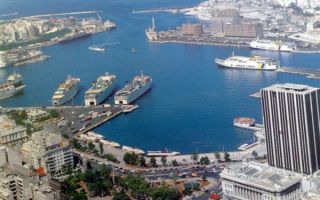
A partial view of Piraeus port, one of the largest ports in Europe.

It is the largest passenger port in Europe and the fourth largest commercial port in the Mediterranean Sea.

Piraeus Container Terminal (SEP), the local subsidiary of China’s Cosco, handled 2.52 million twenty-foot equivalent units (teu) at terminals II and III in the port of Piraeus in 2013. When that is added to the 644,000 containers handled at Terminal I, operated by Piraeus Port Authority (OLP), Greece’s biggest port handled a total of over 3.16 million containers last year.
SEP posted a 20 per cent increase last year, on top of the massive 77 per cent rise recorded in 2012. The dock operated by OLP only registered a 3 per cent increase within the last year.
Once Cosco’s new investment at the western section of Terminal III is completed, the capacity of the whole of Piraeus port will grow from a current annual 4.2 million teu to 6.2 million teu, with experts forecasting that Piraeus could become the biggest commercial port in the Mediterranean by 2016. In 2012 Piraeus ranked fourth, with Valencia in first place, handling 4.46 million teu. Another Spanish port, Algeciras, was in second and Turkey’s Ambarli in third.
The proximity of Piraeus to the Suez Canal, which is the point of entry for Asian products to Europe, and its rail interconnection with the national and continental networks, saves some six days for products on their way to Central Europe, making it the gateway of choice for Asian trade.
A second comparative advantage for Piraeus is its car terminal, which is already showing major growth. The Mediterranean is a key European entry point for vehicles from Japan, South Korea and India, so Piraeus is a top-choice transit centre for cars, too, while European Union car imports from Japan through the Eastern Mediterranean and the Black Sea are on the rise.
On the other hand, passenger traffic in the port of Piraeus fell to 17,670,000 passengers in 2013, from 17,980,000 in 2012, although passenger traffic in the sea cruise sector jumped 11.1 per cent to 2,296,000 departure-arrivals from 2,067,000 in 2012, according to official figures released this week.
According to the report by the Piraeus Port Organisation, passenger traffic in the coastal shipping sector (Aegean sea lines) totalled 5,741,167 passengers, while passenger traffic in Argosaronic Gulf was 1,856,519 passengers.
George Anomeritis, chairman and chief executive of Piraeus Port Organisation, commenting on the report said that despite a small deviation of figures “the port of Piraeus remains Europe’s largest passenger port”.
Sources: ekathimerini, capital

Plans unveiled for Greek police force overhaul


greek police

Faced with a resurgence in urban guerrilla activity, the government unveiled plans to overhaul the Greek Police (ELAS)

Faced with a resurgence in urban guerrilla activity, the government unveiled plans to overhaul the Greek Police (ELAS) in a bid to improve patrols and cut spending.

During an Athens press briefing, Public Order Minister Nikos Dendias said the aim of the authorities is to reduce the force’s response time by up to 25 percent and to bring Greek officials’ performance ratings up to the same level as the European Union average.

The bill, which was tabled in Parliament Wednesday, foresees the scrapping of about 6,700 permanent posts, which are currently vacant, as well as the merging of ELAS’s surplus administrative departments. The move is expected to cut their number almost in half, from 120 to 68. With the exception of the Attica and Thessaloniki prefectures, the remaining 52 police directorates will be substituted by the 12 regional directorates.

According to the blueprint, ELAS will be split into three autonomous bureaus that will be responsible for order, security and immigration-related issues. The Order Branch will include the departments of the general police, traffic police and the newly established citizen service and municipal police. The Security Branch, dubbed by Dendias as “the Greek FBI,” will absorb the anti-terrorism squad, the cyber-crimes department and the police’s crime intelligence unit. Finally, the Aliens Branch will bring together border police and illegal immigration prevention units.

The New Democracy minister said that the revamp will not affect the budget, adding that the government hopes to attract funds from the subsidies program of the National Strategic Reference Framework (ESPA).

During the press briefing, Dendias confirmed an earlier report in Kathimerini that ELAS is working with US and British intelligence services in order to track down and arrest November 17 member and fugitive Christodoulos Xeros. Xeros, who was serving six life sentences in the maximum-security Korydallos Prison in Athens for killing American and British operatives, disappeared earlier this month after failing to check in with local authorities during an approved holiday furlough.

After recent developments, Dendias said “requests for police protection are coming in waves.”

Source: Kathimerini

Jailed suspects in Greece may go free


greek courts

Backlog in courts may lead to release of suspects from pretrial custody.

A growing backlog in the country’s courts is likely to result in a large number of potentially dangerous suspects being released from pretrial custody, according to the head of the national union of judges and prosecutors.

Briefing a parliamentary committee, Vassiliki Thanou warned that suspects completing the 18-month maximum mandated period in custody pending trial are likely to be released in the coming months as a deepening backlog means their cases are unlikely to come to trial in the next year.

According to data submitted by Thanou in Parliament, the number of cases submitted to Greek magistrates more than doubled between 2008 and 2010, from 4,000 to 8,500. Meanwhile more than half a million cases are already pending in the country’s courts, Thanou said, noting that the backlog is also depriving the state of much-needed revenue. Pending trials for tax evasion alone could raise 1.5 billion euros if they were to proceed, she said.

Although Thanou did not specify which suspects are likely to benefit from early release from custody, she was broadly understood to be referring to lawmakers of the neofascist Golden Dawn who have been detained as part of an investigation into whether the party operated as a criminal organization as well as suspected members of guerrilla groups, notably Conspiracy of the Cells of Fire. Concerns about the release of members of the latter group are particularly pressing following reports that November 17 convict Christodoulos Xeros met regularly with them at Korydallos Prison before he absconded during a furlough earlier this month.

Police have stepped up a search for the 55-year-old convict after he appeared in an online video last week threatening to return to terrorist activity in protest at the social repercussions of an ongoing austerity drive in Greece.

Police arrested four suspects on Wednesday following raids on apartments in Athens and Thessaloniki that turned up flares, knives and a sledgehammer. One suspect was arrested in the capital and the other three in the northern port city, bringing to nine the number of people detained in connection with the manhunt.

Source: Kathimerini


Samaras urges Putin to cut gas prices for Greece


SAMARAS

The Greek PM discusses high cost of natural gas and Russia’s interest in the sale of the Hellenic Railways Organization (OSE) and Thessaloniki port.

A meeting between Prime Minister Antonis Samaras and Russian President Vladimir Putin – their first in more than two years – presented the Greek leader with a chance to discuss the high cost of natural gas and to reaffirm interest from Russia in the sale of the Hellenic Railways Organization (OSE) and Thessaloniki port.

The two men met in Brussels after Samaras addressed a Business Europe conference and Putin had met with European Union officials.

The cost of natural gas was a key item on the agenda of talks between Samaras and Putin as the meeting came amid discussions between Russian gas giant Gazprom and Greece’s Public Gas Corporation (DEPA) about the same issue. The Greek government is thought to have ordered DEPA officials to reject any price of more than $400 per 1,000 cubic meters.

Sources said that Putin did not make any binding commitments on the matter but indicated that he would examine the issue. In his comments after the meeting, Samaras drove home the point that Greece could not afford to keep paying natural gas prices that are about 30 percent above the European average. “My country is currently coming out of a six-year recession and low energy prices from Russia are crucial to our recovery,” he said.

On the issue of OSE, Putin made it known that there is Russian interest and asked whether Athens would be able to package the railways and Thessaloniki port into a single privatization tender. The government, however, will be unable to comply with this request.

Samaras extended an invitation to Putin to make an official visit to Greece soon.

Meanwhile in Athens leftist SYRIZA leader Alexis Tsipras lashed out at the imposition of austerity reforms over the past few years, claiming that the troika-imposed measures violated the Greek Constitution. “For three years now, the Constitution and the procedures that it dictates have been violated, on the orders of our lenders,” Tsipras said after talks with Sotiris Rizos, the president of the Council of State, the country’s highest administrative court.

Tsipras subsequently met with Eleni Raikou, the capital’s top corruption prosecutor, for a briefing on the progress of the graft probes she is overseeing. “Whoever stole public money must return it,” he said.

Source: Kathimerini

Σε «καμίνι» θα μεταβληθεί η Μελβούρνη το Σαββατοκύριακο

heat_0

Μαζί με την επιστροφή στα σχολεία και στις εργασίες επέστρεψε και ο καύσωνας.

Νέο κύμα καύσωνα πλήττει και πάλι -το δεύτερο μέσα σε λίγες μέρες- το μεγαλύτερο μέρος της νότιας Αυστραλίας. Το νέο κύμα, αν και πιο ήπιο, θα μας ταλαιπωρήσει καθώς οι διακοπές τελείωσαν, οι εργαζόμενοι επέστρεψαν στις εργασίες τους και οι μαθητές επέστρεψαν ή επιστρέφουν στα θρανία τους.

Σε πολλές περιοχές, σύμφωνα με τη Μετεωρολογική Υπηρεσία, η θερμοκρασία θα ξεπεράσει τους 40 βαθμούς και προβλέπεται ότι θα διατηρηθεί πάνω από 40 βαθμούς για έξι συνεχόμενες μέρες μετατρέποντας τις περιοχές αυτές σε καμίνι.

Ο κίνδυνος πυρκαγιών είναι μεγάλος και το άναμμα φωτιάς απαγορεύεται. Στο μεταξύ, οι αρχές καλούνται να λάβουν άμεσα μέτρα για να προστατεύσουν τους ηλικιωμένους και τις ευπαθείς ομάδες από τον καύσωνα.

Σύμφωνα με τα επίσημα στοιχεία, μόνο στη Βικτώρια πέθαναν 139 άτομα από τον πρόσφατο καύσωνα.

Στη Μελβούρνη χθες (Τετάρτη) πήραμε μια… ανάσα, μετά από το «καμίνι» της Τρίτης που το θερμόμετρο «σκαρφάλωσε» στους 42 βαθμούς. Από σήμερα (Πέμπτη) η θερμοκρασία τραβά και πάλι την ανηφόρα. Στη Μελβούρνη, σύμφωνα με τις προβλέψεις της Μετεωρολογικής Υπηρεσίας θα έχουμε 33 βαθμούς σήμερα, 31 την Παρασκευή, 36 το Σάββατο, 41 την Κυριακή, 36 την Δευτέρα και 31 την Τρίτη. Ετοιμαστείτε, λοιπόν, για μια θερμή εβδομάδα με αποκορύφωμα την Κυριακή.

Πηγή: Νέος Κόσμος

Εκδήλωση του HACSA για τους νεομετανάστες μας


HACSA01

Θα πραγματοποιηθεί την Κυριακή, 2 Φεβρουαρίου στη Μελβούρνη

Το HACSA (ομάδα υποστήριξης Ελλήνων νεομεταναστών) καλεί όλο τον Ελληνισμό στην πρώτη ανοικτή εκδήλωση που θα πραγματοποιηθεί την Κυριακή, 2 Φεβρουαρίου στο Τhe Grange Reserve (γήπεδο Κλαρίντας) που βρίσκεται στο Osborne Avenue, Clayton South, από τις 11πμ έως 8μμ.

Ελάτε μαζί με τις οικογένειές σας και τους φίλους σας να περάσετε μια ελληνικότατη μέρα, με μουσική επένδυση και με νοστιμότατους μεζέδες.

Σκοπός της ομάδας είναι να αφυπνίσει όλον τον ελληνισμό και να αναδείξει το μεγάλο πρόβλημα που λέγεται νεομετανάστευση-ξεριζωμός. Γι’ αυτό θα πρέπει όλοι να δώσουν το παρών, παλαιοί και νέοι ώστε να αποδείξουμε ότι όλοι μαζί μπορούμε. Η είσοδος θα είναι δωρεάν.

Για περισσότερες πληροφορίες επικοινωνήστε με τον Γιάννη στο 0433 757 130 ή τον Θεόδωρο στο 0410 368 852.

Πηγή: Νέος Κόσμος

Έξι ομογενείς τιμήθηκαν κατά την Ημέρα της Αυστραλίας

manos

Για την προσφορά τους στην χώρα.

Εκατοντάδες Αυστραλοί πολίτες τιμήθηκαν φέτος για την προσφορά τους στις επιστήμες, στις επιχειρήσεις, στα γράμματα τις τέχνες, τη φιλανθρωπία, τα σπορ, τον εθελοντισμό, τις ένοπλες δυνάμεις, επί της ευκαιρία της Ημέρας της Αυστραλίας (Australia Day).

Αυστραλός της χρονιάς ανακηρύχθηκε ο δημοφιλής, ιθαγενής παίκτης φούτμπολ, Adam Goodes, για τους αγώνες του κατά του ρατσισμού στα γήπεδα φούτμπολ και την αυστραλιανή κοινωνία.

Ηλικιωμένος Αυστραλός της χρονιάς ανακηρύχθηκε ο πρώην κοινοπολιτειακός γερουσιαστής, Fred Chaney, για την προσφορά του στον ιθαγενή πληθυσμό της Αυστραλίας και νεαρή Αυστραλή της χρονιά η χρυσή ολυμπιονίκης των Παραολυμπιακών Αγώνων Jacqueline Freney, «σύμβολο» θάρρους και αγωνιστικότητας. Μεταξύ αυτών που τιμήθηκαν είναι και οι ακόλουθοι ομογενείς:

Ο δρ Ανδρέας-Νικόλαος Λιβέρης (Andrew Nicholas Liveris), κορυφαίο στέλεχος πολυεθνικών επιχειρήσεων, τιμήθηκε με το Μετάλλιο Officer (AO) General Division,για τις εξαιρετικές υπηρεσίες του στον επιχειρηματικό τομέα, ως στέλεχος πολυεθνικών εταιρειών, καθώς και για τον ρόλο του για την ενδυνάμωση των εκπαιδευτικών και πολιτιστικών σχέσεων της Αυστραλίας με τις Ηνωμένες Πολιτείες Αμερικής.

Ο δρ Λιβέρης έχει γεννηθεί στο Darwin, αλλά δραστηριοποιείται παγκοσμίως. Ειδικεύεται στη μεταποιητική βιομηχανία, τη μηχανολογία, τις πωλήσεις και τη διεύθυνση επιχειρήσεων. Παράλληλα με τα επιχειρηματικά ενδιαφέροντά του, ο δρ Λιβέρης προωθεί και τις σχέσεις της Αυστραλίας με τις Ηνωμένες Πολιτείες Αμερικής.

Μετάλλιο OAM OAM General Division στο κ. Στέφανο-Ανδρέα Μάνο (Stephen Andrew Manos) από το προάστιο East St. Kilda της Μελβούρνης, για τις υπηρεσίες του στην ελληνική παροικία της Βικτωρίας.

Γεννημένος στην Αυστραλία από Μικρασιάτες γονείς, ο κ. Μάνος έχει αναπτύξει πολύμορφη δραστηριότητα ως μέλος της ΑΧΕΠΑ, της Ελληνικής Κοινότητας Μελβούρνης και Βικτωρίας, του Ελληνικού Τμήματος του RSL και πολλών άλλων φορέων.

Ο κ. Μάνος δήλωσε χθες στο «Νέο Κόσμο» ότι είναι υπερήφανος για την αναγνώριση της πολύχρονης προσφοράς του» και προέτρεψε τους ομογενείς όλων των ηλικιών «να προσφέρουν στην παροικία και την ευρύτερη κοινωνία, ο καθένας ανάλογα με τις δυνάμεις του».

Με το Μετάλλιο OAM OAM General Division, τιμήθηκε και ο κ. Άγγελος Λαμπρινός Νοταράς (Angelo Lambrinos Notaras) από τη Νέα Νότια Ουαλία για τις υπηρεσίες του στην ελληνική παροικία, ιδιαίτερα στην Ιερά Αρχιεπισκοπή Αυστραλίας. Γνωστό στέλεχος της ομογένειας της Νέας Νότιας Ουαλίας και με πολλές περγαμηνές στον επιχειρηματικό τομέα, ο κ. Νοταράς έχει τιμηθεί, μεταξύ άλλων, από την Αρχιεπισκοπή με το Μεγαλόσταυρο του Αγίου Ανδρέα.

Το Μετάλλιο Australian Police Medal απονεμήθηκε στον Αρχιφύλακα Δημήτριο Μπέλλο (Dimitrios Bellos) της Αστυνομίας Κουηνσλάνδης Έπαινος για εξαιρετικές υπηρεσίες απονεμήθηκε στον ανώτατο αξιωματικό Πολεμικού Ναυτικού Αυστραλίας, Ιωάννη Σταυρίδη (John Stavridis), κυβερνήτη του πολεμικού πλοίου HMAS Anzac κατά τη διάρκεια της ναυτικής επιχείρησης SUPPER την περίοδο Ιουνίου 2012-Ιανουαρίου 2013.

Μετάλλιο Conspicuous Service Medal απονεμήθηκε στον αντισυνταγματάρχη John Terence Boulouko, για εξαιρετικές υπηρεσίας στο Σώμα Εφοδιασμού-Μεταφορών του Αυστραλιανού Στρατού.

Πηγή: Νέος Κόσμος

The first Orthodox Church in London

London

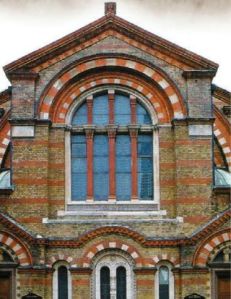
The architecture of St Sophia’s Greek Orthodox Church in London.

The story of the first Orthodox Church in London; The Dormition of the Mother of God.

The first Greek community and the first Greek Orthodox church in London date back to the eighth decade of the seventeenth century (1670-1680). Various learned Greeks had already come to England in the seventeenth century, either to study at the Universities of Oxford and Cambridge or for the purpose of publishing their writings.
To one such learned priest who came to London for the latter purpose we owe invaluable and authentic information concerning the first Greek community in London and the first Greek church. This was the Metropolitan of Samos, Joseph Georgerinos, of the island of Melos.
In any case, the Metropolitan arrived and found that his compatriots, taking advantage, perhaps, of the presence of a Greek priest, had obtained the necessary licence for the erection of their own Church.
However, as funds were lacking to build it, the Metropolitan was requested by the priest and his compatriots to take all necessary steps to find the sum required. The church was erected in 1677 in the street in Soho which was known then as Hog Lane, and today is Charing Cross Road. It was dedicated to the Assumption of the All-holy Mother of God. It appears that the Metropolitan Joseph remained in London as the ecclesiastical superior of the incumbent already serving.
Little by little, the Greeks living near and around the church left this part of London, a vivid trace of their sojourn remaining in the street which to this day is known as Greek Street. They settled down in the city, the centre of all commercial and financial activity.
The Metropolitan Joseph, seeing that the church which he had erected could no longer serve the needs of the Orthodox Greeks, decided to sell the building and erect a church in the quarter of the city where the majority of the Greeks were concentrated. It would appear that he encountered financial difficulties which prevented him from realising his project.
This first church was consequently unable to continue the career begun amid so many struggles and efforts. In 1684 it came into the possession of French Huguenots, who had come to England as refugees.
In 1712, as a result of the exceptional financial difficulties in which his diocese was involved, the Patriarch of Alexandria, Samuel Kapasoulis, sent the Metropolitan of the Thebaïd, Arsenius, to England to visit the Stuart Queen Anne.
The Metropolitan Arsenius wanted to establish such a church undoubtedly in order to satisfy the spiritual needs of the Greeks of London. As is well known, Arsenius, during the time he was in London, came into contact with the English Non-Jurors and negotiated for their union with the Orthodox Church.
He considered that the erection of a Greek Church would be of assistance in the work of uniting the two churches.
No independent Greek Church existed in London, either for a long or a short period of time, subsequent to the one erected by the Metropolitan Joseph of Samos. The Greeks worshipped in the Russian Church.
The House of Prayer of Christ the Saviour
As time went on, the need for a Greek Church was increasingly felt among the Greek colony. In 1837 there happened to be a Greek priest in London, Galaktion Galatis by name. He was staying there, not on the invitation of his compatriots in London, but on his own initiative – he probably represented some monastery or church and had come for the purpose of collecting money.
The Greeks took advantage of his presence to rent a hall in the district off Finsbury Circus.
The other Greeks living in London were concentrated round the same district. During the same year, after the establishment of the ‘Greek Chapel’, as the newly-built House of Prayer was styled, the brotherhood applied to the Holy Synod of the Church of Greece, asking that a priest should be appointed; and the Archimandrite Dionysios Xenakis of Chios was chosen.
This first church was dedicated to Christ the Saviour.
The main, indeed, the only purpose of the formation of the Brotherhood was the establishment and maintenance of a church for the satisfaction of the religious needs of the brothers. The history of the Brotherhood is consequently the history of its church.
The Church of Christ the Saviour
With the passage of time, the number of the Greeks increased. To the first-comers were added others, and the little House of Prayer which had sufficed during those early years of the community’s establishment was already proving too small to accommodate the increased Brotherhood, more particularly on the great feast-days of the Christian calendar. On the other hand, the affairs of the Greek commercial houses were entering a wider sphere and receiving the blessings of Almighty God. Those who had lately passed through financial difficulties were already enjoying a certain prosperity.
The number of the commercial houses grew, and their profits multiplied; and those devout Greeks, closely attached as they were to the traditions of their fathers, their national language and the Orthodox Faith, soon realised the inadequacy of the existing chapel and the necessity of erecting a new, larger, and more dignified place of worship. As early as 1843, there was talk of the need for building a new Church, “since the church at 9, Finsbury Circus is too small for the numbers of the Brotherhood”. At many subsequent meetings the brothers occupied themselves with this question.

On July 1, 1846, it being agreed that “the time has come for a Church of the Brotherhood in London to be built”, a committee was formed, consisting of P.S. Ralli, A.A. Ralli, A. Ionides, X. Balli, S. Mavrojanni, K. Geralopoulos, M. Spartali, I. Cavafy, A. Argenti, and A. Mavrojanni. This committee was requested “to submit to a future General Meeting its views on the matter, on which the Meeting shall then decide”. This committee showed great zeal in its work; it found a suitable site for the erection of the Church in Winchester Street, London Wall, and succeeded in completing the building by 1849.
The new church was a true successor of the preceding one, like which was dedicated to Christ our Saviour.
The Greek Orthodox Cathedral of the Holy Wisdom of God
The Greeks of the community were distinguished for their industry and their business acumen, and, being economical and frugal, especially during the early years of their establishment in London, soon became for the most part financially independent.
They now wished to enjoy a more comfortable life, both for themselves and their families. They kept their offices in the City, but took up their private residences in other parts of London.The favourite districts were Lancaster Gate and Bayswater.
These districts, which today are almost in the centre of the unending metropolis, were then only on its fringe, and to go from the City to Hyde Park, for instance, was considered a long excursion, which was undertaken, normally, only on holidays, as a relaxation and in order to enjoy the fresh country air.
After three decades had passed from the founding of the Church of Our Saviour, no one any longer had his private residence in the City; and whereas previously all had lived within a very short distance of the church, now five whole miles divided the church from the residential district of the faithful.
For the men, in particular, who had to make the journey to the city every day, a tiring one with the means of transport then available, it was hard to undergo the same fatigue on Sundays also, when they were supposed to not only perform their religious duties, but also to rest from the labours of the week.
Moreover, the number of Greeks had greatly increased, and there was scarcely room for them all in the church then existing. These various difficulties made it imperatively necessary to build a new and larger church, situated closer to the residences of the brothers.
By June 1877, the foundations of the church were marked out, and on July 18 of the same year the foundation stone was laid. The learned patriot Mr Emmanuel Mavrogordato delivered a speech appropriate to the occasion.
In explaining the reason for the name of The Church of the Holy Wisdom of God, which the committee had chosen for the church, he said the members of the committee had decided to so name it because the Orthodox Church had always been inspired in its policy by the highest philosophic principles, which had been developed by Saints John and Paul, and because the philosophical minds of the Greek fathers were attracted by the idea of giving the more important Churches of the first period of Christianity the appellations of the higher attributes of God: The Power of God, the Peace of God, the Wisdom of God.
The committee was further inclined towards this nomenclature because, ‘at the same time, it possesses a national significance from its historical association with our national fortunes and is a symbol of our national aspirations and hopes’. When we consider on the one hand the size and beauty of the Church, on the other the fact that today as in former times the construction of churches is a notably slow process, so that a building begun by one generation is not infrequently continued and finished by another, it is undoubtedly surprising to find that the building of the Church of ‘Aghia Sophia’ in London was completed in
the space of only one year and a half.
The first service was celebrated on Whit Sunday, the festival of the Church, which fell on June 1. The officiating priest was the Archimandrite Hieronymos Myriantheus, vicar of the Church, who delivered the festival sermon. The consecration of the Church was performed on February 5, 1882, by the Archbishop of Corfu, Antony Chariates, who then happened to be staying in London.
The decoration the Church was brought to a greater degree of perfection in 1926, when the electric lighting was installed. Beneath the Church is the crypt, which, until the building of the Presbytery, was
utilized for the General Meetings and deliberations of the Brothers.
After 1921, when the Presbytery, which has a ground-floor room for the purpose, was built, the crypt of the Church ceased to be used in this way.
Since 1927 it has, with the approval of the General Assembly of the Community, been suitably equipped by the administrative Council of the Educational Association in England, and it is now used as a hall for pastoral, social and other activities.
The chairman of the Building Committee, speaking before the General Assembly of the Brothers on January 16, 1879, describing the Church building from an artistic point of view, said:
‘For myself, I am convinced that for many miles around there is no church of the same type so imposing, so well-fitted for its purpose, and at the same time so beautiful and interesting from the historical, archaeological and technical points of view. As regards the beauty of the building, architects are unanimous. Furthermore, I am convinced that the in-terior, by its height, its spaciousness and the grace and harmony of its lines, is one of the most attractive of its type of design: in addition, it is most dignified. To all we can say, “come and see”.

References of this article are from: The Greek Orthodox Church in London by The Very Revd. Archim. Michael Constantinidis and The Legacy of the Greek Orthodox Cathedral of St. Sophia, London, by Byzantine & Christian Museum, Treasured Offerings.

source: Neos Kosmos

Liveris for Canberra?


liveris

Chief Executive Officer of The Dow Chemical, Andrew Liveris could be a figure in Australian politics soon. Photo: AAP/Alan Porritt.

Andrew Liveris might be looking to enter Australian politics after his job is done with Dow Chemical.

One of the most successful Greek Australian international businessmen might be considering a career change and returning back to Australia.
Andrew Liveris, the CEO of American based Dow Chemical, a $62 billion company has told Australian media that he is considering entering politics after his job is done at Dow.
Speaking to The Australian Financial Review from Switzerland at the World Economic Forum, Liveris says he has always had a strong interest in public policy and would consider a job in Australian politics.
“I’m very interested in the intersection between business and government,” he said to journalist John Kehoe.
“I would have to do it at the right moment, at the right time.”
Liveris is no stranger to politics, having been an advisor to former President Bill Clinton and is the co-chairman of President Barak Obama’s advanced manufacturing partnership and chairman of the US Business council.
If he chooses to enter Australian politics it could be through two outlets, via an American post or through preselection, possibly in his home town, Darwin.
“My wife and I are very Australian and we are going to come a live in Sydney after my Dow Retirement,” Mr Liveris said.
He has be an advocate for government intervention to give local manufacturers better access to Australia’s low-cost energy reserves, including gas.
He is would like to see the Abbott Government create more flexible manufacturing policy that will see Australia making the most of it’s resources at home.
“Australia has an abundance of fuels but chooses not to use some of them to its own advantage,” he says.
“The free market is not how that works with things that are difficult to move around, such as gas.”
Currently Australia sell its gas reserves to the global export market and does not offer a cheaper rate to local companies.
Mr Liveris is also a proud Hellene and is the founder of The Hellenic Initiative, a group that is seeking to help Greece out of its economic woes by promoting investment and offering resources to the country.
In 2013, the Initiative donated $1 million to five non-profit organizations in Greece offering support.
Source: Australian Financial Review

Helping hand


HACSA01

Members of HACSA receive a donation from the Westvale Social and Sporting Club. Photos Supplied.

A group of dedicated volunteers are doing all they can to assist newly arrived Greeks and make their transition as comfortable as possible.

The number of Greeks coming to Australia has increased in past years. The decision to do so, as admitted by many, has not been theirs alone. The economic crisis, high unemployment rates and the quality of life in the Hellenic Republic has forced their hand to make this choice. Many are leaving behind families and a life they’ve known to migrate to a new country, unsure of what will be. Like the post-war migrants, many are coming to Australia with a high level of uncertainty.
The organisation Hellenic-Australian Community Support Association (HACSA) – made up of a dedicated committee of volunteers – is doing all it can to take the stress out of migration and help these Greeks in any way they can. The association originally started two years ago as the Facebook group Greek Australian Support Network. As members saw the demand for assistance increase, they officially registered the association three months ago as HACSA.
John Athanasopoulos, one of the 12 committee members, tells Neos Kosmos, HACSA will do everything in their power to help each Greek in anyway they can. Through finding them employment to securing housing arrangements, HACSA is not only made up of the 12-member committee, but he says there are a lot of people donating time and things that will assist the migrants make their transition in Australia easier. And he implores the Greek community in Australia to be more understanding and empathetic towards them.
“It’s not easy for a 45-50 year to live their whole lives in Greece and then to uproot and come here with or without their family,” Mr Athanasopoulos explains. “It’s a hard decision to make, but it’s worse when the decision was made due to their circumstances, in this case – the crisis.
“It’s hard to think someone is leaving his father with cancer in Greece, and he knows he may never see him again, and to come to Australia to build a life from scratch – there’s a lot of emotional baggage that these people have.”
He is trying to unite the Greek community to better understand the conditions that these migrants are arriving in and to change perceptions of Greeks being lazy, which is an issue at times. But says so far, the first generation have provided ample assistance to HACSA and many of the newly arrived Greeks and credits them for all their voluntary work.
The number one priority for newly arrived Greeks is to find employment, says Mr Athanasopoulos. This is the first port of call and HACSA assists these people in connecting them with employers but also asks businesses in the community if they are looking for staff. He says the second thing of concern to newly arrived Greeks, is finding a house.
“This is an area that is an issue because they are new in Australia and they don’t have the history to help them find a rental property, as it’s hard to rent a house as it is,” says Mr Athanasopoulos. But with the assistance of HACSA, they manage to secure a home.
HACSA has a small store room where they store donations such as furniture, kitchen appliances and items so when people do gain rental properties, they can assist with furnishing them. They find out what the person needs and will deliver it to their house – no matter how far they live.
One of the biggest problems HACSA faces is people entering the country with the wrong visa, and are under the impression they can get employment even though they are on a tourist visa. He says when HACSA is contacted by Greeks still in Greece, the first piece of advice they always give is for them to ensure they have the correct visa.
“[The Greeks] think we are being tough in saying that and they respond with ‘you understand what is going on in Greece’; they think we don’t want them to come to Australia and that we are scared they are going to take our jobs.
“But we are saying the truth because it’s very hard to find a job here without a proper visa and hard to get sponsorship in Australia if you come here without a visa.”
On Sunday 2 February, HACSA will be hosting an open day at the Grange Reserve, Osborne Avenue, Clayton South, and is hoping that all Greeks will attend. He says it’s a change for the newly arrived Greeks to meet Greek Australians and together they can discuss issues pertaining to both communities. He says the free event is important to attend to understand what each other is going through and for the newly arrived Greeks to make new networks and contacts. The event will take place between 11:00 am and 9:00 pm. There will be music and entertainment on the day.

source: Neos Kosmos