Category Archives: Uncategorized

Who’s in charge of the migrants arriving in Greece?

spanish_lifeguard--2-thumb-large

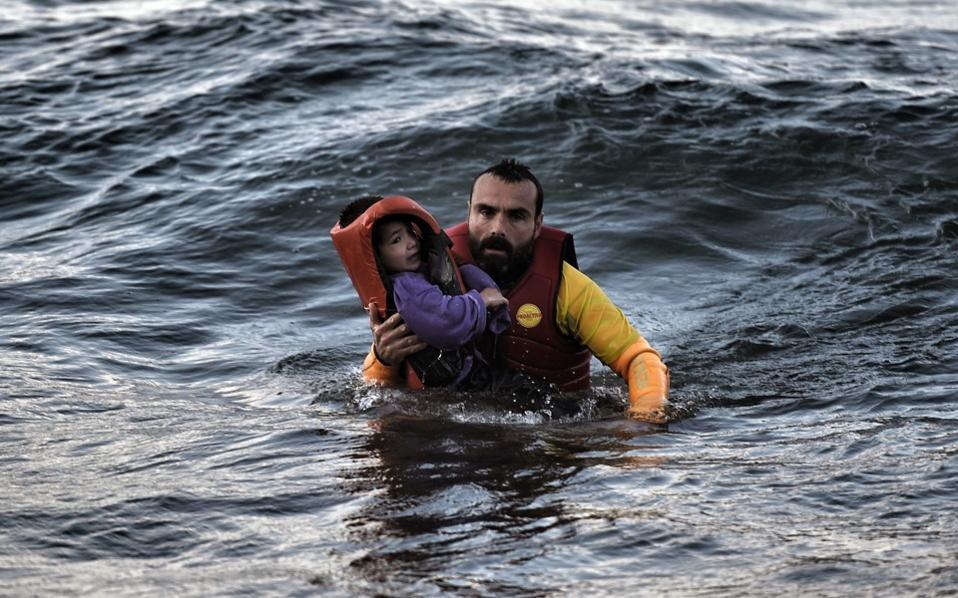
A young woman from Norway stands on the beach of this island in the Aegean Sea, scanning the horizon through binoculars for rubber dinghies carrying refugees and migrants. The telltale sign is a flash of orange, the color of life jackets.

She spots one and calls to her fellow volunteers for help. Their group of about 20, named A Drop in the Ocean, gathers around her. They wave flags and and yell at the boat to come their way.

“Hello! Welcome to Europe!” they shout. Several wade waist-deep into the water and pull the boat to shore, then help some 40 Afghans, including at least 15 children, on to dry land.

This scene plays out all day, every day on Lesvos, the epicenter of a migration crisis that is only increasing in scale. Approximately 125,000 refugees arrived in Lesvos from Turkey in October, double the number in August, according to the International Rescue Committee (IRC). They are escaping wars and violence in Syria, Afghanistan, Iraq, Eritrea and elsewhere. More than 791,000 have arrived by sea since January.

What sets this humanitarian crisis apart is the centrality of volunteers. On Lesvos alone, they number well into the hundreds. They are lifeguards from Spain, doctors from Holland, trauma counselors from the West Bank, nurses from Australia, a cook from Malaysia, and all manner of ordinary people pitching in however they can. Many come on their own dime, taking time off from work or pausing their lives indefinitely. They fill in critical gaps created by a perfect storm of political weakness and limits to aid: a Greek government in severe economic distress and without capacity to take control; a European Union strangled by politics as it struggles to define a uniform migration policy; and international aid groups that have been slow to move in because they do not normally operate in industrialized nations — and have to start their operations from scratch in a place like Lesvos.

Meanwhile, the boats keep coming, and grassroots volunteer efforts have grown increasingly sophisticated. A group called O Allos Anthropos, Greek for “The Other Person,” cooks and hands out free meals for thousands of refugees daily. A Drop in the Ocean runs its own camp for just-arrived refugees, particularly families with small children, where it provides food, tents and donated clothing. Yet another group, the Starfish Foundation, set up a central bus station for refugees in the parking lot of Oxy, a cliffside nightclub with stunning sea views. Volunteers there give out handmade bus tickets to the two official camps in the island’s south.

But as winter sets in and the sea crossing grows more dangerous, the lack of an officially coordinated emergency response could lead to higher death tolls. Though volunteers have tried organizing themselves in recent months — they now hold weekly meetings with aid workers from international organizations such as the IRC, United Nations High Commissioner for Refugees (UNHCR), and Doctors Without Borders (MSF) — most are not trained in crisis management. They vastly outnumber aid workers on the island, but for many, it’s their first experience with a humanitarian disaster. And because they’re in Greece temporarily, on hiatus from paid jobs back home, the high turnover means many must leave the island just as they are beginning to understand their roles.

On Oct. 28, that volunteer-led crisis response system was tested when five separate shipwrecks occurred within a few miles of the island. One was a wooden boat carrying some 300 people. The Greek Coast Guard, in coordination with the Spanish lifeguards and local fishermen, rescued 242. Volunteer paramedics and doctors waited onshore, then performed CPR and emergency first aid on victims as they came off the Coast Guard vessels. Bodies have been washing ashore daily since then.

Many volunteers feel the major international aid groups have left them to handle the crisis alone. No one is truly in charge; volunteers carve out responsibilities for themselves and try to coordinate among themselves. The UNHCR, typically charged with coordinating responses to disasters of this scale, has borne the brunt of their criticism. But it only steps in at the invitation and direction of national governments. And the Greek government, mired in bureaucracy, has been slow to cede control to the agency.

“In other parts of the world, we have normal operations and the UNHCR has a lot of authority,” said Ron Redmond, a spokesman for the UNHCR office in Athens. “Here, the government runs the show and we do what they ask us.”

Until this summer, the UNHCR’s office in Athens only had about 10 employees; “guys in suits,” Redmond said, not field officers who are actually on the ground arranging for supplies and ensuring the most vulnerable refugees get special protection. The UNHCR now employs about 120 in Greece, including more than 20 on Lesbos, with many called in from postings in Jordan, Iraq and Afghanistan.

The Greek government, still struggling with the latest chapter of its financial crisis, has spent $1.65 billion on the migration crisis over the past 18 months, according to the office of Greek migration minister Yiannis Mouzalas. Meanwhile, the European Commission has so far released only about 42 million euros of the 259 million euros it has allotted Greece to help deal with the flood of migrants.

But it’s unclear just where all that money has gone. On Lesvos, it is volunteers who are crowdfunding for basic supplies and organizing storehouses of donated items. Even seasoned aid workers and volunteers have said the official Greek response to the migrant crisis is shockingly ineffective.

“In other countries, you expect these things,” said Julia Gozalbes, who volunteers with Doctors Without Borders on Lesbos and has previously served in South Sudan, Haiti and Pakistan. “But this is Europe. We have the resources, we just need to get them here.”

source:ekathimerini.com

Another 100,000 Australians diagnosed with diabetes

untitled

AT least 100,000 Australians have developed diabetes in the past 12 months.

New global statistics on the disease show 280 Aussies are diagnosed with the disease each day.

The disease costs the Australian economy more than $14.6 billion a year.

The Diabetes Atlas shows type 2 diabetes is the nation’s most rampant form of the disorder, with one million Australians diagnosed.

More than 120,000 have type 1 and 32,000 women have had gestational diabetes in the past year.

Diabetes Australia believes many more people have undiagnosed type 2 diabetes.

Speaking before World Diabetes Day on Saturday NOV14, Diabetes Australia chief executive officer Professor Greg Johnson said diabetes was fast becoming the major threat to human health and productivity.

“Soon, diabetes will overtake heart disease as the leading cause of disease burden in Australia,” he said.

source:themorningbulletin.com.au

Greece hit by general strike against Tsipras government

1447355679922
Hundreds of thousands of Greeks walked off their jobs Thursday to protest austerity economics, as officials of the leftist-led government wrangled with the country’s international creditors over the terms of Greece’s third bailout. At least one Athens protest turned violent.

The 24-hour walkout shut down public services, forced the cancellation of flights and disrupted public transportation across the country. Ferries remained moored in ports, hospitals were operating with reduced staff, and museums and archaeological sites were closed.

An estimated 20,000 people joined three demonstrations in Athens, one organised by the country’s two main labor unions, another by the Communist Party, and the third drawing students and leftists, according to a police spokesman.

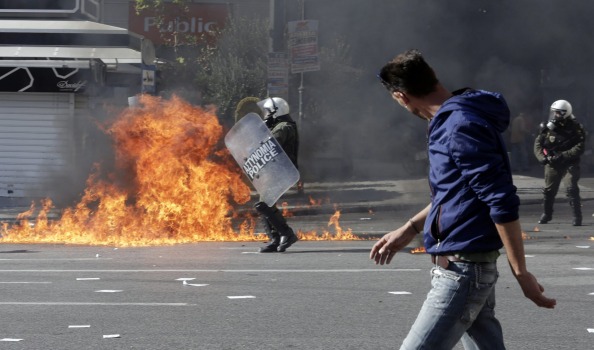
Although the protests were mostly peaceful, a gathering near the parliament building in the early afternoon turned into a clash between riot police officers and roughly 100 masked youths, who hurled stones and firebombs. The riot police responded with tear gas, as a police helicopter circled over the city centre and crowds fled the acrid smoke.

A police spokesman said a few hours later that calm had been restored in the city, although several bank branches had been damaged.

General strikes have been common in Greece in recent years, as the country has struggled with the privations of recession, high unemployment and the belt tightening the country’s foreign creditors have demanded. But Thursday’s general strike was the first under the Syriza-led government of Prime Minister Alexis Tsipras.

Tsipras came to power in January on a promise of ending years of austerity, but by summer he had agreed to an international bailout program of 86 billion euros ($92 billion) — the country’s third rescue package since 2010 — as the government was running out of money and Greece was on the brink of leaving the euro currency union. To secure the public’s reluctant support for the program, Tsipras called for new elections and was returned to power by a wide margin in September on a pledge to enforce the new bailout while easing its impact on poorer Greeks.

Although Tsipras succeeded in purging Syriza of radicals who had resisted a compromise with creditors during his initial term, divisions remain in his party over the issue. An indication of that deep rift was evident this week as Syriza’s labor policy department called for “mass participation” in Thursday’s strike and in the protest rallies planned for Athens and other major cities.

A government spokeswoman, Olga Gerovasili, on Thursday did not endorse Syriza’s support for the strike but said she understood why many Greeks were protesting. In a statement, she acknowledged that the government was “enforcing an agreement that includes measures we regard as unfair,” adding that “citizens have been hit, and they react.”

The country’s two main labor unions, which called the walkout, object to a recent barrage of economic overhauls, including further cuts to pensions and tax increases, and further budget-cutting measures that are in the works.

The General Confederation of Greek Workers, which represents private sector employees, accused the government of pursuing “policies of punishing austerity, poverty and wretchedness.” It also called for “the mother of all battles” against a new wave of austerity “that will further downgrade the living standards of Greek society.”

Social discontent has been growing as the government remains locked in talks with the country’s international creditors over the economic changes that must be enforced to unlock rescue loans. On Monday, eurozone finance ministers said Greek authorities must do more before the creditors can disburse a 2 billion euro loan payout and release an additional 10 billion euros that has been earmarked in the bailout program for the recapitalization of Greece’s struggling banks.

The eurozone ministers gave Greece a week to bridge its differences with lenders on a series of contentious measures. A big sticking point is the level of protection that should be granted to Greek mortgage holders who have fallen behind on payments. Athens, fearing social turmoil, wants to ensure that thousands of Greeks do not lose their homes. But because nonperforming loans are one of the biggest problems undermining Greek banks, the creditors want to give the banks more flexibility on when they can foreclose on mortgages or declare business borrowers to be in default.

Other snags in the creditor negotiations include disagreement over a repayment program for Greek taxpayers who are in arrears; lenders want stricter criteria for eligibility. Another dispute involves how the government will make up for a budget shortfall after a public outcry forced it to abandon a planned value-added tax on private education.

source:afr.com

Greek debt crisis: Clashes during austerity strike

_86641963_030082298-1

Greek workers are staging their first general strike against austerity since Alexis Tsipras’s left-wing Syriza government came to power in January.

Brief clashes were reported in Athens, as youths broke away from the main protest near parliament.

The main unions appealed for members to walk out against the terms of Greece’s third eurozone bailout.

The government agreed to push through tax rises and spending cuts in return for €86bn (£60bn) in rescue loans.

As protesters gathered in Athens, public services were hit and some transport services ground to a halt.
MPs have already voted to raise the retirement age and get rid of most early retirement benefits, and reduced rates of sales tax on some of the big Greek islands have been scrapped.

But the main civil servants’ union ADEDY and the GSEE private sector union objected to proposals to scale back supplementary pensions and merge pension funds. They were joined by communist-affiliated union PAME.

In Athens, reports said dozens of young people dressed in black threw petrol bombs and broke shop windows near the main parliamentary building in Syntagma Square.

Small fires were also seen at the entrance to the Bank of Greece headquarters. Police then responded with tear gas.

Metro, ferry and suburban rail services were shut down, schools were closed and hospitals had only emergency staff levels. Buses and trolley buses were providing limited services.

Museums and archaeological sites were shut and news bulletins, newspapers and websites were disrupted because journalists had walked out.

Although general strikes became regular events in Greece in the years following its first eurozone bailout in 2010, this was the first called since Syriza came to power.

After reluctantly agreeing to Greece’s third international bailout in five years in August, Mr Tsipras called an election and was returned to power in September with 35% of the vote.

Despite agreeing to a series of reforms, Greek officials are currently locked in a dispute with eurozone officials over bad home loans.

The Athens government is trying to avoid indebted Greeks losing their homes, but creditors want an agreement on a mechanism for tackling non-performing home-loans before they unlock €10bn to recapitalise Greek banks. A separate €2bn bailout instalment is also at stake.

There was some good news for the Greek economy on Thursday when officials announced that unemployment had fallen to 24.9% in August, the lowest level since June 2012.

source:bbc.com

Pauline Hanson admits smoking marijuana

IQT_13-02-2010_NEWS_05_PAULINE-HANSON-QLD-E-BRIS346_t620

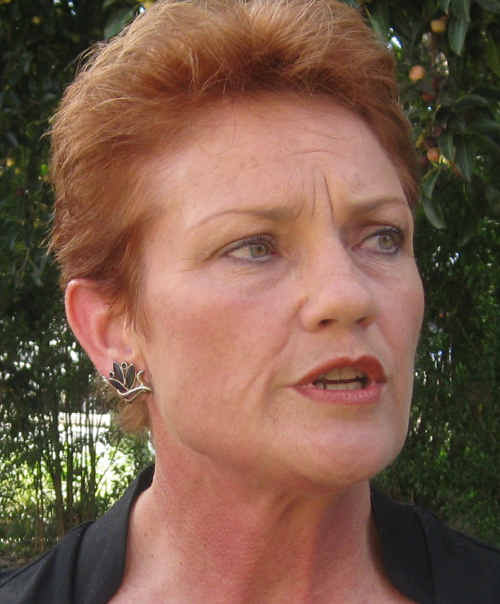
OUTSPOKEN fish and chip shop owner turned politician Pauline Hanson will admit she has smoked marijuana in tonight’s episode of The Verdict.

The former One Nation leader and Queensland federal independent MP admitted to smoking the illegal drug “three times” as part of a discussion on The Verdict looking at the ongoing push to legalise marijuana for recreational purposes.

“I will admit when I was younger that I tried marijuana three times – I was really spaced out of my head,” she reveals during the panel discussion.

“If you put me in a car and I had to drive, well….”

Ms Hanson, who rose to prominence on the back of her right wing, populist and anti-immigration views during the late-1990s, also said she was opposed to total prohibition of the drug.

But she condemned the use of illicit drugs purely for recreational purposes, saying that as a teen she was able to find enjoyment in simpler ways such as going to the beach or the movies.

“We were high on life,” she told the panel.

Tonight The Verdict will examine if it’s time Australia legalised marijuana for recreational uses. Several states, including NSW and Victoria are already actively exploring the prospect of legalising medical marijuana.

Watch The Verdict tonight on Channel 9 from 8.30pm to see the full discussion.

source:northernstar.com.au

Μελβούρνη:Νέο ρεκόρ κατέρριψαν οι τζογαδόροι της Βικτώριας

imagesATV1MC0G

Σε $5,8 δισεκατομμύρια ανέρχεται συνολικά το ποσό που σπατάλησαν τον τελευταίο χρόνο!

Αν o τζόγος ήταν άθλημα των Ολυμπιακών Αγώνων, οι τζογαδόροι της Πολιτείας μας δεν αποκλείεται να κέρδιζαν χρυσό μετάλλιο.

Παρά την οικονομική καταστροφή που υφίστανται όσοι είναι εθισμένοι με το τζόγο, παρά τα τεράστια προβλήματα που δημιουργεί οι ασχολούμενοι με τα… τυχερά παιχνίδια συνεχίζουν απτόητοι.

Ούτε την επερχόμενη διάλυση των οικογενειών τους λαμβάνουν υπόψη τους ούτε η διαφημιστική εκστρατεία της Πολιτειακής κυβέρνησης και φιλανθρωπικών οργανισμών τους συγκινεί ούτε η οικονομική τους καταστροφή.

Σαν υπνωτισμένοι, συνεχίζουν να παίζουν και να στοιχηματίζουν σε ότι… κουνιέται, με αποτέλεσμα να ξοδέψουν το οικονομικό έτος 2014-2015, πάνω από $5,8 δισεκατομμύρια.

Ένα ποσό, δηλαδή, που έτσι και κατάφερνε να συγκεντρώσει από την έξτρα φορολογία η πατρίδα μας, θα κατάφερνε να ξεπεράσει την οικονομική κρίση που την ματίζει εδώ και μια εξαετία.

Σύμφωνα με τα στοιχεία του τελευταίου πορίσματος, που κατέθεσε στη Βουλή της Βικτώριας η επιτροπή που ελέγχει τα τυχερά παιχνίδια και το αλκοόλ (Victorian Commission for Gabling and Liquor Regulation) τον τελευταίο χρόνο παίχτηκαν στον τζόγο 7,7% περισσότερα χρήματα από την προηγούμενη χρονιά.

Ένα μέρος του ποσού αυτού και, συγκεκριμένα $1,6 δισεκατομμύρια, κατέληξαν ως φόροι στο θησαυροφυλάκιο της Πολιτείας.

Η τελευταία αύξηση δεν εξέπληξε κανέναν, αφού επαναλαμβάνεται κάθε οικονομικό έτος, σύμφωνα πάντα με τα υπάρχοντα στοιχεία.

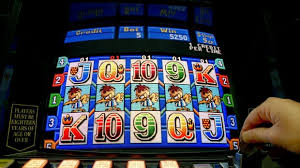
Από το συνολικό ποσό που ξοδεύτηκε στα τυχερά παιχνίδια, τα $2,7 δισεκατομμύρια προέρχονται από τις 27.000 μηχανές πόκις που λειτουργούν νόμιμα στη Βικτώρια.

Πρωταθλητές στον τζόγο, που προέρχεται από τους μονόχειρες ληστές, είναι οι δημότες Brimbank, που σπατάλησαν $142 εκατομμύρια το τελευταίο δωδεκάμηνο.

Πηγή:Νέος Κόσμος

Aυστραλία:Ανοίγει η ψαλίδα Συνασπισμού-Εργατικού Κόμματος

untitled

Τα σχέδια για αύξηση του GST δεν κλόνισαν τη δημοτικότητα της κυβέρνησης

Αλώβητος βγαίνει ο Malcolm Turnbull από τη δημόσια αντιπαράθεση κυβέρνησης-αντιπολίτευσης περί της σχεδιαζόμενης αύξησης του Φόρου Αγαθών και Υπηρεσιών (Goods and Services Tax – GST).

Αυτό προκύπτει από την πιο πρόσφατη δημοσκόπηση που διεξήγαγε η Newspoll, στην οποία ο κυβερνητικός συνασπισμός προηγείται στην πρόθεση ψήφου με 45% έναντι 35% του Εργατικού Κόμματος, αυξάνοντας την διαφορά κατά μία μονάδα, σε σχέση με την προηγούμενη δημοσκόπηση. Το άνοιγμα της ψαλίδας γίνεται σαφέστερο όταν οι ερωτηθέντες κλήθηκαν να επιλέξουν μεταξύ των δύο μεγάλων κομμάτων, με τον Συνασπισμό να παίρνει ποσοστό 53%, έναντι 47% του Εργατικού Κόμματος, φτάνοντας ξανά στα επίπεδα που βρισκόταν πριν τις εκλογές του 2013.

Η παρατεταμένη περίοδος χάριτος που απολαμβάνει ο επικεφαλής της κυβέρνησης, επιβεβαιώνεται εξάλλου και στην ερώτηση περί καταλληλότερου πρωθυπουργού, με τον Malcolm Turnbull να αυξάνει το προβάδισμά του κατά δύο μονάδες, αποσπώντας ποσοστό 63%, έναντι 17% του Bill Shorten. O αρχηγός της αξιωματικής αντιπολίτευσης βρίσκεται σε δύσκολη θέση από πλευράς δημοτικότητας, καθώς μόνο το 27% των ερωτηθέντων δηλώνει ικανοποιημένο με τις επιδόσεις του – ποσοστό το οποίο, ωστόσο, ανέβηκε κατά μία μονάδα σε σχέση με την προηγούμενη δημοσκόπηση, κάτι το οποίο αντανακλά την απαλλαγή του από τις μομφές για αντιδεοντολογική συμπεριφορά, όπως εκφράστηκε από την βασιλική επιτροπή για τις συνδικαλιστικές οργανώσεις.

Σύμφωνα με τους αναλυτές, η αυξανόμενη δημοτικότητα του πρωθυπουργού και του κυβερνητικού συνασπισμού, αποδεικνύει ότι είναι σε θέση να ξεπεράσει ακανθώδη ζητήματα, όπως αυτό της αύξησης του GST, με σχετική ευκολία.

Ωστόσο, εν όψει της επερχόμενης προεκλογικής περιόδου -αλλά και των δυσκολιών που αντιμετωπίζει η κυβέρνηση να περάσει νομοθετήματα από την Γερουσία- ο πρωθυπουργός προχώρησε σε κινήσεις εξομάλυνσης των σχέσεών του με τους ανεξάρτητους βουλευτές, παραχωρώντας τους μία αίθουσα συναντήσεων στο Κοινοβούλιο. Εκεί, ο Malcolm Turnbull είχε μία ανεπίσημη συνομιλία με τους οκτώ ανεξάρτητους γερουσιαστές την περασμένη Δευτέρα, γεγονός που σηματοδότησε μία σαφή στροφή της κυβέρνησης απέναντι στους ανεξάρτητους βουλευτές, έστω σε επικοινωνιακό επίπεδο.

Οι ίδιοι οι βουλευτές αναγνώρισαν το έλλειμμα επικοινωνίας που επικρατούσε κατά τη διακυβέρνηση Abbott, κάτι που αποτυπωνόταν και στη διαδικασία ψηφοφορίας. Αυτή η αναθέρμανση των σχέσεων θεωρείται σημαντική στρατηγική κίνηση του Malcolm Turnbull, καθώς η κυβέρνηση, σε περίπτωση που δεν καταφέρει να κερδίσει την στήριξη των κομμάτων της αντιπολίτευσης, θα χρειαστεί τις ψήφους τουλάχιστον έξι από τους οκτώ ανεξάρτητους γερουσιαστές, προκειμένου να περάσει σημαντικά νομοθετήματα από την γερουσία.

Πηγή:Νέος Κόσμος

Australia:Activists’ answer to cat eradication plan

trtworld-4852-australia-plans-kill-two-million-feral-cats-reuters

Australia plans to kill two million feral cats.

Organisations counter-propose desexing and returning cats to their home territories

Australia’s recent controversial plan to kill two million feral cats by 2020 spurred outrage among animal rights activists across the world.
Animal rights defenders the likes of famous actress Brigit Bardot and singer Morrissey have called the culling “animal genocide” and “idiocy” respectively.
Gregory Andrews, Australia’s first Threatened Species Commissioner, has penned an open letter defending the government’s plan, which aims only at “halting and reversing the growing number of plants and animals facing extinction”.
According to a statement issued by the Australian Department of the Environment, feral cats pose even more threat to the country’s mammals than foxes, rabbits or habitat loss. To tackle the issue, the government is planning to use the poison 1080 and traps to kill the cats.

“Australian unique fauna has lost 29 species over the last 200 years and if the matter isn’t tackled it will lead to even more losses,” Andrews wrote, adding that cats are an “invasive species brought by European settlers, responsible for the extinction of at least 27 mammal species”.
“We don’t want to lose any more species like these,” the commissioner continued.
“It is with this sentiment in mind that the Australian government has taken a stance on feral cats; for the protection of our native species that belong here. As of now, more than 124 Australian species are in danger of extinction because of cats, which kill five animals each night and around 20 billion a year, according to scientists.
“Our native species are simply not equipped to coexist with feral cats; they did not evolve alongside predators like the feral cat,” he added.

The letter which concluded with Andrews saying the decision is supported by major environmental organisations such as the WWF, did not mention why neutering cats instead of killing them is not a viable option, as proposed by the organisations. For Christine Pierson of C.A.T.S. (Cats Assistance To Sterilise Inc.) the reason killing and removing cats fails to control numbers is that it creates a habitat vacuum that is abhorred by nature and invites individuals of the same species from surrounding areas to re-colonise.
“The argument is that eradication can only exist in a closed system such as an island,” Pierson tells Neos Kosmos, explaining that most cats do not live in closed systems, therefore the proposed plan is destined to fail.
“This is giving our country a very bad reputation and the sooner these horrendous plans are quashed the better. I have been receiving responses from overseas as to the horrors of what Australia is doing to its sentient creatures.”

Pierson also stressed her fears that after an eradication cat killing program, the rabbits, rats and mice breed to plague proportions as they are not controlled by the cats, and this upsets the entire ecosystem and the native wildlife suffers from starvation and habitat loss.
On the other hand, Kate Clayton, president of the Cat Protection Society of SA Inc., points to the Macquarie Island cat eradication case, highlighting the disaster that would occur if this same method was to be used in open Australia. According to the SA organisation’s studies over 30 years, if attempts are made to kill the cats in open Australia, firstly the rabbits, rats and mice will breed to enormous proportions and then the cats will breed up while feeding on the masses of rabbits, multiplying the original number of cats.
“Feral cats, as every other animal, have their place on this planet and in our ecosystem,” Greek Australian bird behaviour counsellor and educator Paris Yves agrees.
“The mentality of our state governments and others is to kill any animal that they feel causes a problem.

The same applies with wild birds.”
Yves believes that Australian governments should have the mental capacity and compassion to find more ethical and positive ways of managing the country’s ecosystem, instead of using poison, in this case 1080, guns or traps.
“There have been many other successful attempts by feral cat welfare individuals and groups to trap, neuter, release or desex and return home,” she explains.
“Such toxic killing options are obviously painful and totally unnecessary, especially in a society where we are trying to encourage a more emphatic and compassionate attitude toward managing and co-existing with our wildlife.”
To Yves, the eradication of any species that does not behave as some humans expect it to is barbaric, unethical and a solution void of empathy for life in this country. She insists Australian governments need to follow the lead of other countries which practice more humane ways of managing their wildlife.
“Let’s hope this word and it’s meaning spreads amongst the rest of the government decision makers and the Australian public,” she concludes.

source:neos kosmos

Government must regain public’s trust

717886-644cc54c-b345-11e3-8ffb-bdc84c71056c

Sinodinos warns tax and other reforms should be seen as fair

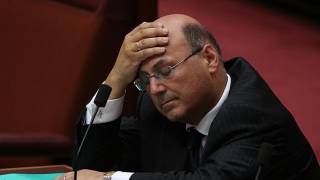
Senior Liberal Arthur Sinodinos says the government lost the trust of the public in the 2014 budget and must work to regain it.
The cabinet secretary and key advisor to Prime Minister Malcolm Turnbull said part of the reason for the change in leadership was losing the trust of the Australian people.
“We lost that trust after the 2014 budget, we can excuse it as much as we like by saying there was an urgency to do things, but part of the reason Malcolm Turnbull is prime minister today is because we needed to find a way to regain the trust of the Australian people,” Senator Sinodinos told Sky News.
He believes the government also needs to ensure tax and other reforms are seen as fair, noting that was why reforms were currently on the table.
The cabinet secretary of the Turnbull government said any future tax reform should be a co-operative venture between the federal government and the states to get the balance right.
The senator was responding to a News Corp report that says the government is considering raising the GST to 15 per cent while making tax cuts for middle-income earners but keeping fresh food GST-free.
The senator said the government is looking at getting the balance right between direct and indirect taxes like the GST.
“This is a cooperative venture, this is not just about the feds on tax reform, this a cooperative venture with the states,” he said.
But Opposition Leader Bill Shorten can’t understand why the government believes raising the GST will solve all of Australia’s problems.
“I think it’s the wrong idea for confidence, for families trying to make ends meet,” Mr Shorten told reporters in Melbourne.

source:neos kosmos

Το άγνωστο «Στόουνχεντζ» στα Υψίπεδα του Γκολάν

D972B7D5852673C3A1BDDC0D4B77D182

Το μυστηριώδες μνημείο εκτιμάται ότι άρχισε να κατασκευάζεται την ίδια εποχή με το Στόουνχεντζ. Κανείς δεν ξέρει από ποιον και γιατί.

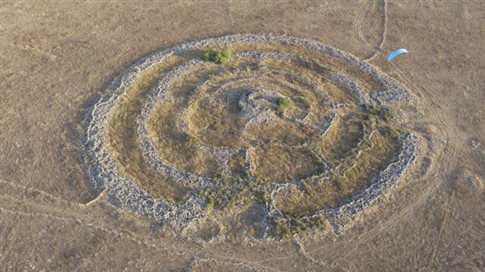
Είναι εύκολο να το προσπεράσεις χωρίς να προσέξεις κάτι ασυνήθιστο. Το προϊστορικό, μεγαλιθικό μνημείο, περίπου της ίδιας εποχής με το Στόουνχεντζ, έμενε απαρατήρητο για αιώνες σε αυτή τη γυμνή έκταση των Υψιπέδων του Γκολάν.

Η μυστηριώδης κατασκευή ανακαλύφθηκε λίγο μετά τον πόλεμο του 1967 στον οποίο το Ισραήλ απέσπασε τα Υψίπεδα του Γκολάν από τη Συρία, αναφέρει ο απεσταλμένος του πρακτορείου Reuters. Αρχαιολόγοι που εξέταζαν αεροφωτογραφίες εντόπισαν τότε έναν μεγάλο κύκλο από πέτρες που δεν ήταν ορατός από το έδαφος. Οι ανασκαφές που ακολούθησαν αποκάλυψαν μια από τις αρχαιότερες και μεγαλύτερες κατασκευές αυτής της περιοχής.

Γνωστό στα αραβικά ως Ρούτζμ ελ-Χίρι, που σημαίνει «πέτρινος σωρός της αγριόγατας», το μνημείο αποτελείται από πέντε ομόκεντρους κύκλους, από τους οποίους ο μεγαλύτερος έχει διάμετρο 152 μέτρα. Στο κέντρο, ένας τύμβος ύψους πέντε μέτρων. Το εβραϊκό του όνομα είναι Γκιλγκάλ Ρεφαΐμ, ή «τροχός των γιγάντων» και αναφέρεται σε μια βιβλική μάχη γιγάντων.

Θραύσματα αγγείων και λίθινα εργαλεία δείχνουν ότι το μνημείο άρχισε να κατασκευάζεται τη Νεολιθική Εποχή, γύρω στο 3500 π.Χ., περίπου την ίδια εποχή με το διάσημο μεγαλιθικό μνημείο του Στόουνχεντζ στη Βρετανία. Τμήματά του όμως δεν αποκλείεται να προστέθηκαν στη διάρκεια των επόμενων δύο χιλιάδων ετών.

Σε αντίθεση όμως με το Στόουνχεντζ, το οποίο αποτελείται από κατακόρυφους και οριζόντιους ογκόλιθους, το Ρούτζμ ελ-Χίρι κατασκευάστηκε από μικρές βασαλτικές πέτρες που ζυγίζουν συνολικά πάνω από 40.000 τόνους.

Κανείς δεν ξέρει ποιοι το κατασκεύασαν, ούτε την πραγματική του σημασία: «Είναι ένα αινιγματικό μνημείο. Έχουμε αποσπασματικές πληροφορίες αλλά όχι την πλήρη εικόνα» λέει στο Reuters ο Ούρι Μπέργκερ της ισραηλινής Υπηρεσίας Αρχαιοτήτων, ειδικός στους μεγαλιθικούς τάφους.

Το Ρούτζμ ελ-Χίρι θα μπορούσε πάντως να έχει κάποια σχέση με την αστρολογία. Όπως λέει ο Μπέργκερ, στο θερινό και χειμερινό ηλιοστάσιο ο ήλιος περνάει από ανοίγματα στις πέτρες την ώρα της ανατολής.

Σε κάθε περίπτωση, θα είναι δύσκολο να εξακριβωθεί ποιος και γιατί κατασκεύασε αυτούς τους γιγάντιους κύκλους.

Σήμερα, το μνημείο είναι επισκέψιμο μόνο τα Σαββατοκύριακα και τις αργίες -τις υπόλοιπες μέρες η περιοχή χρησιμοποιείται ως πεδίο άσκησης του ισραηλινού στρατού.

Πηγή:in.gr