Category Archives: Uncategorized

Is Turkey buying oil smuggled by Islamic State?

6991784-3x2-700x467

A war of words has broken out between Russia and Turkey over accusations that Turkey is buying oil smuggled by Islamic State (IS).

Russian president Vladimir Putin has accused Turkey of shooting down a Russian warplane last week out of a desire to protect these oil supply lines.

“At the moment we have received additional information confirming that oil from the deposits controlled by Islamic State militants enters Turkish territory on an industrial scale,” he said on the sidelines of the climate change summit in Paris.

“We have every reason to believe that the decision to down our plane was guided by a desire to ensure security of this oil’s delivery routes to ports where they are shipped in tankers.”

Turkish president Tayyip Erdogan has attacked the claims as slander, and said if there was proof that Turkey was co-operating with IS he would resign.

“We are not that dishonest as to buy oil from terrorists. If it is proven that we have, in fact, done so, I will leave office,” he was quoted by Russia’s TASS news agency as saying.

“If there is any evidence, let them present it, we’ll consider [it].”

So is there evidence Turkey is buying oil smuggled by IS?

It is no secret that IS rakes in a fortune from oil fields it now controls in Syria and Iraq. A US treasury official recently told a security conference in Aspen that IS brought in $500 million a year in oil revenues.

“Earlier this year [IS] made about $40 million in one month off of the sale of oil. So if you want to extrapolate that out, you can get to about $500 million in the course of a year, and this is all internally generated,” David Glaser, assistant secretary of the US treasury for terrorist financing, said.

Security analysts say Western black market exists for IS oil

In September 2015, IS seized the last major oilfield under Syrian government control in a desert area north-west of the ancient city of Palymra and a region that holds Syria’s main natural gas fields and multi-million dollar extraction facilities.

Since taking control of key areas of Syria and Iraq last year, IS has developed an illicit trade in oil sales.

Buyers are readily found in the West and tanker trucks are permitted to reach ports where oil tankers are waiting to load it.

Dr Norman Bailey, Haifa University’s Centre for National Security Studies and Geostrategy

Many security analysts believe there is a huge black market for IS oil in the West.

“Islamic State’s barbaric conquests are financed by collaborators among the business and financial circles of the West,” wrote Dr Norman Bailey, of the Centre for National Security Studies and Geostrategy at Haifa University in Israel.

“Buyers are readily found in the West and tanker trucks are permitted to reach ports where oil tankers are waiting to load it.

“All this requires ready, willing and able collaborators among the business and financial circles of the West as well as surrounding countries.”

Dr Bailey was reluctant to name the ports or countries involved.

“This is not the place to name names, but the buyers and the facilitators and the financiers are not that difficult to identify, so that if the opponents of Islamic State were really serious about doing something about it, along with the occasional bombing raid, the IS could be starved of funds,” he wrote.

Turkish opposition politician claimed IS smuggled $800m of oil

In June 2014, a member of Turkey’s parliamentary opposition, Ali Edibogluan, claimed that IS had smuggled $800 million worth of oil into Turkey from Syria and Iraq, according to the Al Monitor website.

He cited oil fields at Rumaila in northern Syria and others near Mosul in Iraq, saying that IS had laid pipes allowing it to “transfer the oil to Turkey and parlay it into cash”.

“Turkey’s cooperation with thousands of men of such a mentality is extremely dangerous,” he said, according to the Al Monitor report.

“Similar pipes exist also at [the Turkish border regions of] Kilis, Urfa and Gaziantep … they take the oil from the refineries at zero cost.

“Using primitive means, they refine the oil in areas close to the Turkish border and then sell it via Turkey.”

Now, a former Iraqi member of parliament has backed up those claims.

“In the last eight months [IS] has managed to sell what is $800 million worth of oil in the black market of Turkey. This is Iraqi oil and Syrian oil, and these are carried by trucks from Iraq, from Syria, through the borders to Turkey and sold … [at] less than 50 per cent of the international oil price,” Mowaffak al Rubaie said in an interview with the Russian channel RT.

“It has always been sold in the region of $21-22 for the barrel.

“Now this either gets consumed inside, the crude is refined on Turkish territory by the Turkish refineries, and sold in the Turkish market. Or it goes to Jihan and then in the pipelines from Jihan to the Mediterranean and sold to the international market.

“Money and dollars generated by selling Iraqi and Syrian oil on the Turkish black market is like the oxygen supply to [IS] and its operation.

“Once you cut the oxygen then [IS] will suffocate.”

‘No shadow of a doubt’ Turkey knew about smuggling

The former Iraqi MP said there was “no shadow of a doubt” that the Turkish government knew about the smuggling operations.

“The merchants, the businessmen [are buying oil] in the black market in Turkey under the noses, under the auspices if you like, of the Turkish intelligence agency and the Turkish security apparatus,” he told RT.

Mr Rubaie also accused Turkey of providing medical treatment to IS terrorists in Turkish hospitals along the border with Syria and even in “Istanbul itself”.

“There are security officers who are sympathising with [IS] in Turkey,” he said.

“They are allowing them to go from Istanbul to the borders and infiltrate … Syria and Iraq.

“There is no terrorist organisation which can stand alone, without a neighbouring country helping it — in this case Turkey.”

The Iraqi politician urged Turkey to come clean and join the international efforts to destroy IS.

The Russian news outlet said Mr Putin himself noted that it was “hard to believe, but is theoretically possible” that the Turkish leadership knew nothing about oil flowing into Turkey illegally.

“Vehicles, carrying oil, lined up in a chain going beyond the horizon,” Mr Putin reportedly said as he compared the views seen by Russian pilots and drones to a “living oil pipe” stretching from IS and rebel-controlled areas in Syria into Turkey.

“Day and night they are going to Turkey. Trucks always go there loaded, and back from there — empty.”

The RT website has photographs that appear to show aerial photographs of rows of trucks near the Turkish-Syrian border.

Turkey’s president Mr Erdogan has called claims that Turkey buys oil from IS “slander”.

“I will say something very strong here. If such a thing is proven, the nobility of our nation would require that I would not stay in office,” he said.

“The countries from which Turkey buys oil are well known.”

Russia has imposed a series of economic and trade sanctions against Turkey in retaliation to the decision to shoot down the Russian war plane.

source:abc.net.au
Australian Government urged to take action on car-making

untitled

A parliamentary inquiry has urged the federal government not to give up on Australia’s car manufacturing industry.

The Labor-dominated committee tabled its final report in the Senate on Tuesday, recommending the government set up an automotive industry taskforce bringing together industry, unions and government to develop a national automotive policy framework.

“We must not give up on automotive manufacturing in this country,” independent senator Nick Xenophon told parliament, adding 200,000 jobs will be lost if no action is taken.

source:news.com.au

ARCHIVAL REVIVAL: Sharks of the Hunter | photos, interactive

untitled

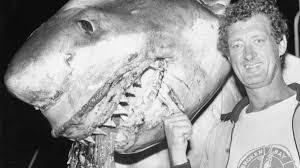
LAST summer was the season of the shark – but it certainly was not the first time the predators visited our region.

A dig through the Herald’s photographic archives proves Hunter fishermen and surfers have long had an ambivalent relationship with the predators, who often herald a healthy ecosystem beneath the surface.

But tensions have grown closer to shore in recent years, with a Parliamentary inquiry beginning last Thursday to examine how sharks can be managed in NSW.

Unseasonably hot November weather has driven the Hunter’s punters into the surf early this year, with few deterred by the record closures last summer.

Perhaps they are placing more emphasis on the fact Lake Macquarie beaches have had just two serious attacks in more than 50 years.

Glen “Lenny” Folkard was attacked in January 2012 and Reginald “Rex” Ogilvie in 1932, both at Redhead beach.

But those statistics seem less memorable than the attacks in recent years.

Former Newcastle firefighter Dave Quinlivan nearly died from blood loss when he was attacked at Black Head in September this year, and musicianLisa Mondy was bitten several times by a great white shark after falling from her wakeboard in March 2011 at Jimmys Beach.

Plenty were willing to brave the water even during those ten hot January days when Newcastle City Council lifeguards shut down the city’s coastline for safety reasons.

One shark, famously described as five metres long and weighing about 1700 kilograms, kept popping up.

While there have been numerous attacks in the Hunter in the past few years, the focus of the shark debate has shifted towards the state’s north coast after a spate of attacks.

Far North Coast Shark Action Group’s Don Munro told Fairfax last week that he was in favour of the new drumline technology “as a short term, interim thing. The sooner the better.”

In his submission to the committee, Mr Munro said he had “never seen a community so shaken up and cautious about entering the ocean”.

source:theherald.com.au

Liverpool narrow the gap with a 1-0 win over Swansea

cq5dam_web_320_228

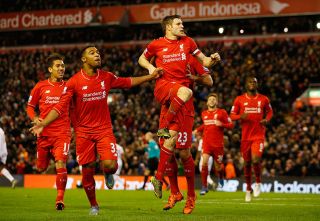
James Milner scored from the spot for the second match running to earn Liverpool a hard-fought 1-0 win over Swansea City at Anfield on Sunday.

Milner was on target with a penalty in Thursday’s UEFA Europa League victory over Bordeaux and he proved Liverpool’s matchwinner against Garry Monk’s side after the hosts had looked set for a frustrating stalemate, handing manager Jurgen Klopp his first BPL victory at Anfield.

Liverpool were on top for large spells prior to Milner’s goal shortly after the hour but lacked a cutting edge without playmaker Philippe Coutinho, who was not risked following a hamstring problem picked up in the 4-1 win over Manchester City.

Captain Jordan Henderson and striker Daniel Sturridge made their long-awaited returns from injury from the bench to feature under Klopp for the first time – adding gloss to a third victory in a row in all competitions that lifts Liverpool to sixth in the table.

The result means that Swansea have one win from their last 10 league fixtures.

Following back-to-back wins over City and Bordeaux, Liverpool began confidently and almost went ahead five minutes in via Kyle Bartley. Jordon Ibe burst forward and Bartley’s challenge diverted the ball onto Lukasz Fabianski’s right-hand post.

Ibe – one of two Liverpool changes due to Coutinho’s injury and Lucas Leiva’s suspension – was heavily involved in the opening stages as Liverpool dominated possession.

Missing suspended Jonjo Shelvey, Swansea gradually grew into the contest around the half-hour mark but, like their hosts, could not muster a shot on target before the interval.

Having survived early Liverpool pressure, Swansea were on top after the break but Ibe had the first effort of the second period when he forced Fabianski into a save down to his right.

And Klopp’s men broke the deadlock on 62 minutes when Taylor was adjudged to have handled Ibe’s delivery and Milner produced an impressive penalty to beat Fabianski.

Henderson was introduced soon after for his first appearance since mid-August and assumed the captain’s armband from Milner before Sturridge featured for the first time in almost two months.

The striker missed the midweek success after sustaining a knock in training but almost got himself on the end of Milner’s wayward shot at the far post shortly after his introduction.

Swansea substitutes Jefferson Montero and Befetimbi Gomis saw late shots blocked as Liverpool’s momentum continued to grow ahead of Wednesday’s League Cup quarter-final at Southampton.

Liverpool manager Jurgen Klopp: “It was really difficult for both teams, the wind was in the stadium more than the stands.

“Swansea defended very well. They had some problems in the last few games but they were more compact. I am proud of the lads. It is a good result in difficult circumstances.”

Swansea manager Garry Monk: “I am gutted for my players as they were excellent. I have no complaints over the performance.

“We didn’t look like a team in trouble. We are not going to make excuses, I know we need results but if we play like that it is a given. It was an excellent performance which deserved much more than it got. I take full responsibility for this period. You can see players are working hard to put it right.”

source:premierleague.com

Australia:Helen Kapalos opens multicultural debate

vmc271115_026

VMC commissioner argues for new definition of ‘reductionist’ ‘m’-word

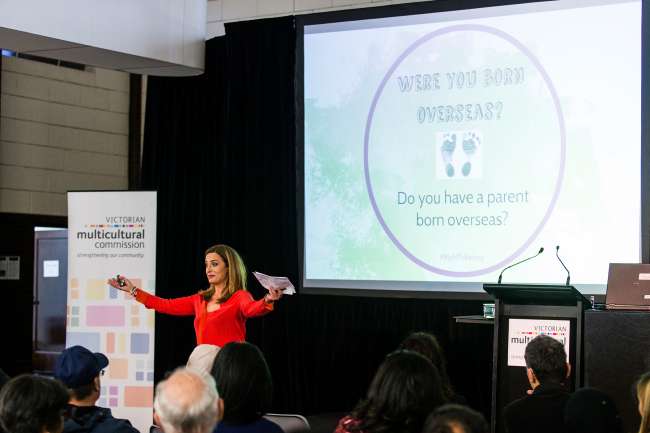
Television presenter and journalist Helen Kapalos​, chair of the Victorian Multicultural Commission (VMC), appealed for a deeper understanding of what has driven Australia’s multicultural success this week and called on Australians to challenge an “us and them” mentality stoked by the media.

Ms Kapalos, delivering an impassioned keynote speech at the VMC’s headquarters in Melbourne, used the event to lay out her vision for revamping not only the state’s multicultural agenda, but our use of the ‘m’-word.

Drawing on her own experience and relating a brief history of ‘multiculturalism’ as an expression across the globe, the VMC chair argued that it was time to place the word, used traditionally to describe minorities and minority issues, in the mainstream of contemporary Australia.

“I saw the term as belonging largely to minority groups … a reductionist term, reserved for more vulnerable members of the community, or the newly arrived, or for festivals,” said Ms Kapalos, before adding that as a Greek Australian such a label was difficult to identify with.

“I wondered whether it was that the term had not evolved … or maybe our multicultural policy should be a policy for all, not just for ethnic minorities, because the value which underpins it is a value we can all relate to: the right to belong.”

Relating her own experiences as a journalist with SBS and commercial broadcasters, Ms Kapalos said understanding the difference between cultural diversity as a lived experience, and multiculturalism as a political process was useful to move the debate forward.

“My constant frustration is one which still remains… how we index or rate the value of a human life, which appears to rely on how close to our culture and identity they are.”

Alluding to the Paris terrorist attacks of November 13, the VMC commissioner said media coverage of the attacks, compared to coverage of similar atrocities in recent weeks, raised questions that go to the heart of multicultural concepts.

“Did we get the same coverage about a similar strike in Beirut and why not? Why do some lives matter more than others? There’s one argument that equates it to the ‘relate-ability’ factor. ‘They are more like us’, so we’ll feel more empathy as news viewers, but why do we constantly focus on our differences and not our similarities?

“Why are some cultures and traditions ranked as more acceptable than others? The short answer is fear, fear of what we do not know.”
Ms Kapalos said the path to challenge fear and change the media’s discourse on diversity was about “reviewing our attitudes, our unconscious bias, and increasing intercultural understanding by empowering ourselves about other cultures”

“That way we can form our own perception, not one which has been filtered through the lens of the media. It means we might be less reactive and less likely to feed the media narrative.”

The VMC Chair concluded her speech by quoting Martin Luther King “who dreamt that one day his children would not be judged by the colour of their skin but by the content of their character. They are often repeated words but it’s still as prescient a vision as ever for the world”.

Source:Neos Kosmos

Melbourne:Orthodox liturgy to be delivered in English

2015_11_17_evangelismos_544

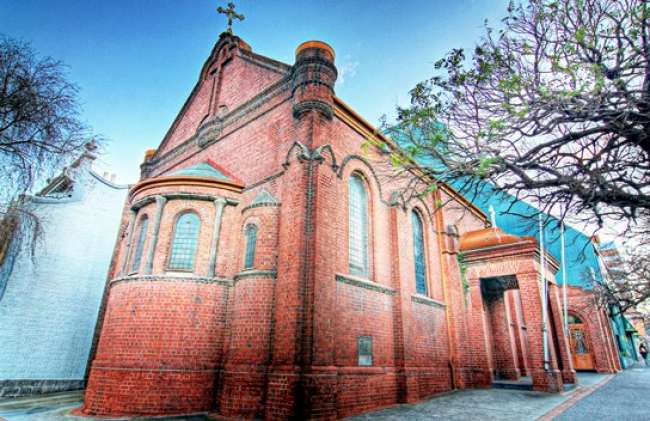
The Greek Orthodox Parish of the Annunciation of Our Lady has announced that it will be holding a divine liturgy in English once a month, with the next service set to take place on December 3.

The service, led by newly appointed priest Father Kosmas, will give second and third generation members of the Orthodox faith a chance to experience the liturgy in their first language, making it easier for them to understand and engage.

The East Melbourne church was the second Greek Orthodox Church to be erected Down Under.

Prior to its establishment, church services were run through a small hall hired by the community, with Father Athanasios Kantopoulos named the first official priest of the parish in 1898.

source:neos kosmos

Why slain Russian pilot deserves to be honored

151129071540-russia-pilot-body-returned-from-turkey-sot-00010828-exlarge-169

As a military analyst for CNN, I’ve found the anchors often ask tough questions regarding tactics, battlefield operations, strategy and political maneuvering associated with conflict. But Sunday morning, I was asked: “What is the protocol for the transfer of remains of the Russian pilot whose plane was shot down over Turkey?”

That may be the most difficult question I’ve ever been asked.

Watching an escorted fallen soldier returning home to family and friends is something I have experienced far too often. I keep a box with photos of 257 soldiers who made the ultimate sacrifice under my command, and every day those pictures remind me of their service to country and of a life which ended too abruptly. That’s why I became emotional commenting on the final flight of Lt. Col. Oleg Peshkov.

No matter your thoughts on Russian, Turkish or U.S. national strategy regarding the civil war in Syria and the fight against the terrorists of ISIS, Peshkov was a simple soldier — a bomber pilot — serving his state, and he deserves to be honored.

Unfortunately, given the circumstances, there really aren’t any protocols. But we’ve learned Peshkov’s body was prepared by an Orthodox priest near where he fell, and then taken on a flight from Hatay, Turkey, near where the body was recovered, to the capital, Ankara. Accompanied by a Russian military attache (who was likely a Russian colonel), he was met by the Russian ambassador to Turkey and the Russian Embassy staff upon landing in Ankara.

The flight will quickly leave Turkey for Russia, and I suspect Peshkov’s family will meet him wherever he lands. There will likely be a bevy of media and scores of Russian politicians present. This is certainly not the same protocol afforded the hundreds of Russians soldiers who have fallen in Ukraine, because those are battlefield casualties that Russian President Vladimir Putin does not want publicly honored, or even known, by his fellow citizens.

Peshkov’s arrival will certainly generate more anti-Turkish fervor, more Russian nationalism and continued support by Putin of Syria’s Assad regime. The level of those emotions will be fueled by the factors associated with not just the shoot-down of the aircraft, but Peshkov’s combat death.

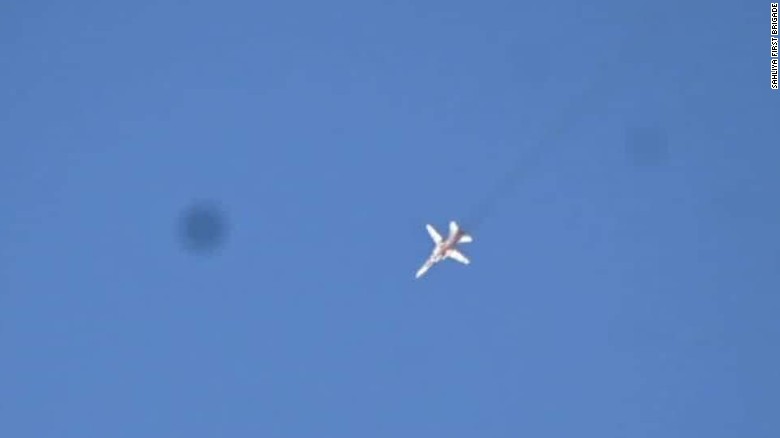
Peshkov was the unfortunate pilot of an aircraft that served as the final straw for Turkey’s patience. While there had been multiple incursions by Russian aircraft in Turkish airspace, and multiple warnings to desist, this Su-24 bomber would become the example for Turkish President Recep Tayyip Erdogan to show he was serious about Turkish territorial integrity. The flight and shoot-down have become the center of a political firestorm.

But it was what happened after the shoot-down that will contribute to complications between these two countries.

After successfully bailing out of his damaged aircraft, Peshkov was killed. According to video distributed on social media by a Syrian rebel group, Turkmen freedom fighters shot at the ejected pilots as they were landing on the border between Turkey and Syria. (CNN couldn’t immediately confirm the video’s claim.)

If the facts back up the video, they committed a war crime in their actions. Firing on an unarmed, parachuting pilot is an unmistakable violation of the law of land warfare.

There have been hundreds of political and military disputes between Russia and Turkey over the years. Some have been casus belli — justifications for possible war — while others have contributed to strained relations. The circumstances of Peshkov’s death will certainly contribute to tension between Turkey’s and Russia’s bellicose and mercurial leaders. We’ll likely see it played out in public this week in Paris.

But today is a day to separate the warrior from the war. On Sunday, Peshkov will return home to his loved ones and to the Russian motherland. For his family’s sake, I hope for a dignified transfer of remains, and for his sake, I pray he rests in peace. Because that is what a fellow soldier does.

Source:cnn.com

Vandals desecrate Sydney graves

w1200_h678_fmax

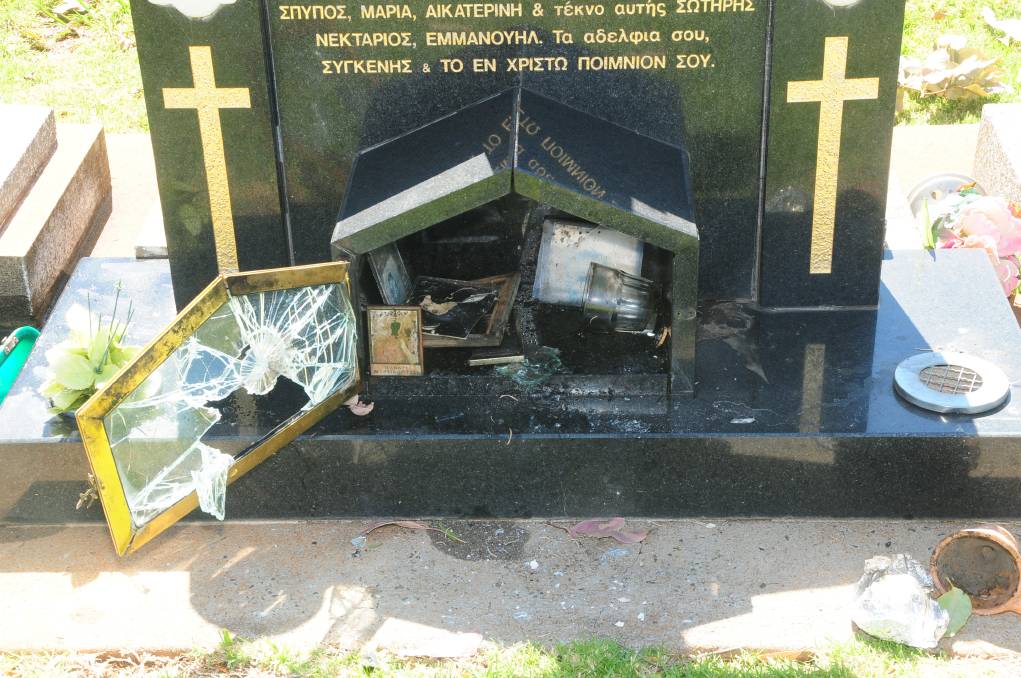
Vandals have caused about $500,000 damage at Sydney’s Rookwood Cemetery after desecrating more than 50 graves.

Police have labelled those responsible for damaging graves, ornaments, lights and flowers in the overnight rampage “low grubs”.

“I’d have to question the person’s mentality as well as status in society as well as their upbringing,” Inspector Sean Gabin told reporters on Saturday.

“The lowest common denominator of a human being – I’d call them low grubs.

“Many of the desecrated graves were in the cemetery’s Greek and Ukrainian section but police do not believe it was a targeted attack.

Officers were called to the cemetery about 2am on Saturday.Police stopped two men, aged 22 and 25, who were leaving as they arrived.

Their vehicle was searched and packets of substances believed to be illicit drugs were seized and sent for analysis.

The pair have been released without charge pending further investigation.It is the second time in less than a year that vandals have targeted Rookwood Cemetery.

More than 70 gravestones were desecrated in a late-night attack in December 2014, prompting the cemetery to increase overnight security patrols.

source:skynews.com.au

A guide for parents of Schoolies teens: if you love someone, set them free

1448740340462

I wanted my 17-year-old daughter to take a fake ID to Schoolies week.

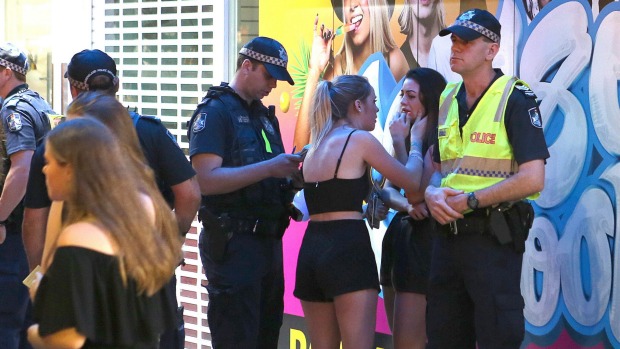
The annual school leavers’ mega-party on the Gold Coast is a special kind of hell for parents of under 18s – the last thing you want is for them to be wandering the streets alone while their legal-drinking-age friends disappear into pubs.

When she left for her first adult-free trip, I believed having a fake licence would keep her tethered to her big group of 18-year-old school mates when they went out on the town.

So that just leaves falling off balconies, crossing the street drunk, swimming at night, drink spiking and unwanted attention from toolies to worry about.

To say nothing of the torture that is a teenager’s unanswered phone.

If you have been unable to convince your offspring that a charity immersion in Asia would be better soul food than a 24-hour party on the beach, like an estimated 25,000 other parents in NSW, your newly free child is probably in Surfers’ Paradise right now.

And the reality is they are probably far safer there this week than almost anywhere else in the world.

A special joint emergency services HQ is operating three blocks from party central at Cavill Mall – there police, ambulance, fire officers and a CCTV camera crew are on duty 24/7 in one room ready to respond in lightning time to any trouble in public spaces.

You can’t walk a block without seeing police patrolling on foot, or with drug dogs. They’re on the look out for trouble from older tourists known as toolies, drug dealers and drunken brawlers.

While no one can completely eliminate the risk of young adults getting into dangerous situations – and let’s face it, none of us will ever know what they get up to in their apartments – the impressive co-ordinated operation of services means help is close by.

The Queensland police told The Sun-Herald this week the whole Gold Coast community is geared to keeping our teens as safe as possible as the region’s tourism coffers depend on it.

Psychologist Christine Bagley-Jones said parents should try not to catastrophise, or let their own anxieties spoil Schoolies for their children.

“I think its inevitable parents will be stressed out – it’s a daunting concept but it’s about keeping busy and distracting yourself so you don’t spend every hour wondering what your kid is doing,” said Christine, a mother of five.

“In reality they are probably at the beach swimming and shopping and yes, there will be drinking and partying but it probably isn’t as bad as the images we create in our heads.”

Psychologist Sally-Anne McCormack, a mother of four schoolies survivors, agrees, saying parents have no choice but to trust their children.

“I’ve been there, done that, and my advice is to train yourself to replace anxious thoughts with good ones. Chances are they are safe, even if they are not answering their phone,” she said.

“Don’t have expectations of communication with them during this week. If you call them too much, it just teaches them to lie and all it does is pass on your own anxieties to them.

“Trust that you have raised them well. If you have made the decision to let them go, then let them be free and have fun with their friends.”

As for me, my commitment to resist over-calling was the hardest part. Though I knew her group had booked into a secure building with some of the strictest rules on the strip, I found it hard not to fret this time three years ago. Particularly as the fake ID didn’t happen.

They are too smart to post anything hair-raising on Facebook so stalking social media didn’t help quieten my need to know she was safe but being glued to incident-free news bulletins did.

In the end the best tonic is having a laugh with other mums. Some I know took the chance to go away on their own version of schoolies – moolies – as a distraction and a reward for helping get the kids through the high school years.

And when I had my own daughter safely at home again, I felt newly blessed by her presence, delighted with her company. Like the song says if you love someone, set them free.

source:smh.com.au

Egypt: Secret chamber likely behind King Tut’s tomb

untitled

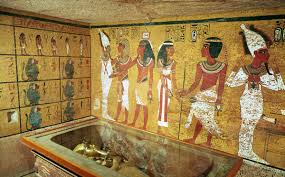
There is a ‘90% chance’ that behind King Tutankhamun’s tomb is a hidden chamber which may be the last resting place of Queen Nefertiti.
 Radar scans have suggested an empty space behind the walls of the pharaoh’s tomb and the evidence will now been analysed in Japan.
The tests were carried out after British archaeologist Dr Nicholas Reeves suggested the Ancient Egyptian Queen’s tomb might be hidden in an adjoining chamber in the Valley of the Kings.
Queen Nefertiti, who was thought to have been the boy-king’s stepmother, died in the 14th century BC.And if her final resting place has been discovered it would be the most remarkable Egyptian archaeological find this century.
The country’s antiquities minister Mamdouh al Damaty said experts were ‘approximately 90%’ sure there was another chamber there.Dr Reeves said: ‘Clearly it does look from the radar evidence as if the tomb continues, as I have predicted.
‘The radar, behind the north wall (of Tutankhamun’s burial chamber) seems pretty clear. If I am right it is a continuation – corridor continuation – of the tomb, which will end in another burial chamber.
‘It does look indeed as if the tomb of Tutankhamun is a corridor tomb… and it continues beyond the decorated burial chamber. I think it is Nefertiti and all the evidence points in that direction.
‘Experts carried out a preliminary scan of the tomb earlier this month using infra-red thermography to map out the temperature of its walls.At the time, Mr Damaty said the analysis showed ‘differences in the temperatures registered on different parts of the northern wall’ of the tomb.
King Tut died around 1323 BC and his tomb, complete with golden burial mask, was discovered in 1922 by another British archaeologist Howard Carter.
Experts have tried to understand why Tut’s tomb was smaller than that of other pharaohs and why its shape was more like that of the Egyptian queens of the time.Egyptologists remain uncertain over where Queen Nefertiti died and was buried.
She was thought to have passed away during her husband’s reign, suggesting she could be buried in Amarna, where her bust was found in 1912.
source: skynews.com.au