Category Archives: Uncategorized

Japan gives green light to commence whaling in the Antarctic

untitled

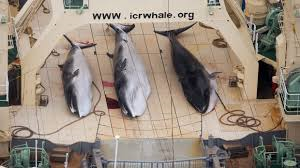
Japan has finally confirmed it will commence whaling in the Antarctic this summer, despite the weight of court decisions and scientific opinion against it.

The Japanese government’s confirmation of its plan to begin killing nearly 4000 minke whales over 12 years came in letters to the International Whaling Commission published on Saturday.

This follows months of wrangling over Japan’s new “scientific research” plan, after the previous program was ruled illegal by the International Court of Justice in a case brought by Australia.

Since then, Japan has faced trouble trying to fit the new plan, called NEWREP-A, within the terms of the international court’s ruling.

A special panel of International Whaling Commission experts said in January that Japan had failed to demonstrate the need for killing whales in order to achieve the plan’s objectives.

The plan also failed to gain the support of the commission’s full scientific committee in May.

Japan’s IWC commissioner, Joji Morishita, said in a letter published by the IWC that his government had “sincerely taken into account” recommendations of the scientific committee.

“As a result of such additional works … the proponent reached to a conclusion that it does not require any substantial changes to the contents of NEWREP-A,” Mr Morishita said.

“The government of Japan therefore made a decision to start NEWREP-A from this austral summer.”

See your ad here
Details of the plan provided to the IWC said that after serious scientific consideration, it has been concluded that the age of whales could only be obtained through “lethal sampling”.

The Japanese government has also moved swiftly to fence itself off from further action in the International Court.

Last month Japan advised United Nations Secretary-General Ban Ki-Moon, in a special declaration, that it will take a sweeping exception to the court’s jurisdiction.

It said the court’s jurisdiction “does not apply to … any dispute arising out of, concerning, or relating to research on, or conservation, management or exploitation of, living resources of the sea”.

In a separate action, the Federal Court this month fined the Japanese government-funded whaling company, Kyodo Senpaku Kaisha, $A1 million for contempt of court, over whaling in the Australian Antarctic Whale Sanctuary. The whaling company has refused to recognise the action.

Under the new plan, the area that the whalers will hunt minke whales in stretches around most of the Antarctic continent, from east of the Ross Sea to the South Atlantic.

The government’s Institute of Cetacean Research refused to detail the whaling grounds for security reasons, “to avoid violent sabotage activities by anti-whaling groups”.

However the anti-whaling activists of Sea Shepherd said they would not be chasing the whaling fleet this summer, with two of their ships in drydock, and a third, the Melbourne-based Steve Irwin, hunting illegal Antarctic fishers.

With the whaling fleet expected to leave Japan in days, the Australian Marine Conservation Society urged Prime Minister Malcolm Turnbull to stand up against Japan over the decision to resume hunting.

“Australia was courageous enough to stand up to Japan in the international courts, urged on by the Australian people,” said AMCS director Darren Kindleysides.

“Once again, the Australian government must step up and challenge the Japanese government’s illegal whaling.”

On Saturday, Environment Minister Greg Hunt said Australia strongly opposed Japan’s decision.

“We do not accept in any way, shape or form the concept of killing whales for so-called ‘scientific research’,” he said.

Mr Hunt said Australia is “working with other international scientists at the forefront of developing and applying modern non-lethal methods” of cetacean research.

Mr Turnbull recently told Fairfax Media in Hobart: “Our position is standard, that we … strongly encourage Japan to cease its whaling operations in any time, in any season, in any year.”

source:theherald.com.au

Αύξηση 162% στις επισκέψεις Αυστραλών στην Ελλάδα

austra

Κατά τους τελευταίους δώδεκα μήνες

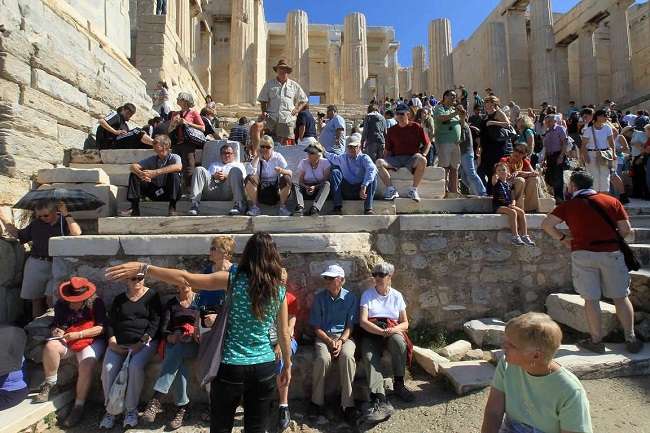
Αύξηση 162% (τη μεγαλύτερη από οποιαδήποτε άλλη χώρα) παρουσίασε ο αριθμός των τουριστών από την Αυστραλία που επισκέφθηκαν την Ελλάδα στους τελευταίους δώδεκα μήνες, σύμφωνα με τα επίσημα στοιχεία.

Ακολουθούν η Ισπανία (107%), Ιταλία (91%) και η Ιαπωνία (78%).

Εκτός της εντυπωσιακής αύξησης, όμως, οι τουρίστες από την Αυστραλία που επισκέπτονται την Ελλάδα, ξοδεύουν και τα περισσότερα χρήματα από τους τουρίστες οποιασδήποτε άλλης χώρας.

Κατά μέσον όρο, ένας τουρίστας από την Αυστραλία δαπανά στην Ελλάδα 1420 ευρώ (1820 δολάρια Αυστραλίας) και μένει 12 μέρες, περισσότερο από οποιαδήποτε άλλη εθνικότητα.

Ακολουθούν οι Καναδοί (1207 Ευρώ), οι Αμερικανοί (1098 Ευρώ) και οι Ρώσοι (1005 Ευρώ).

Παρά την πτώση της αξίας του δολαρίου Αυστραλίας, η κίνηση αναμένεται να διατηρηθεί σε υψηλά επίπεδα καθώς έχει υποχωρήσει η τιμή των υγρών καυσίμων και τα αεροπορικά εισιτήρια θα παραμείνουν σχετικά φθηνά.

Πηγή:Νέος Κόσμος

Aυστραλία:Το σχέδιο ενίσχυσης των Ελλήνων νεομεταναστών

untitled

Ποιους αφορά, τι προβλέπει!

Σημαντικές ανακοινώσεις θα υπάρξουν σύντομα από την Αυστραλοελληνική Κοινωνική Πρόνοια για το πρόγραμμα ενίσχυσης ατόμων που μεταναστεύουν στη Βικτώρια από την Ελλάδα.

Σύμφωνα με έγκυρες πληροφορίες του “Νέου Κόσμου”, η “Πρόνοια” έχει λάβει το “πράσινο φως” από την πολιτειακή κυβέρνηση της Βικτώριας για την εφαρμογή του προγράμματος, και μπαίνουν και οι τελευταίες “πινελιές”. Χθες (Τετάρτη) υπήρξε μία ακόμη συνάντηση στα γραφεία του οργανισμού στο Brunswick για το θέμα.

Το πρόγραμμα θα έχει τέσσερις πυλώνες που θα αφορούν εκπαιδευτικά προγράμματα, ενημερωτικά σεμινάρια, βοήθεια σε θέματα βίζας και ομαλής εγκατάστασης στην Μελβούρνη.

Θα αφορά τους 6.000-7.000 Έλληνες που έχουν μεταναστεύσει (και παραμένουν) στην Αυστραλία και, σύμφωνα με τις δηλώσεις του αρμόδιου υπουργού Πολυπολιτισμικών Υποθέσεων της Βικτώριας,

Robin Scott, τον περασμένο Ιούλιο, η χρηματοδότηση θα διαρκέσει μέχρι το 2019 και θα κοστίσει $360,000.

Πηγές της “Πρόνοιας” ανέφεραν στον “Ν.Κ.”, ότι ήδη υπάρχει έντονο ενδιαφέρον για το πρόγραμμα, οι αιτήσεις συμμετοχής είναι εκατοντάδες και, εξαιτίας της κατάστασης στην Ελλάδα, το μεταναστευτικό ρεύμα ατόμων με αυστραλιανή υπηκοότητα προς την Βικτώρια από την Ελλάδα θα ενισχυθεί ακόμη περισσότερο. Ο κ. Scott έχει δηλώσει ότι αυτή την στιγμή υπάρχουν 135,000 περίπου Αυστραλοί υπήκοοι που ζουν στην Ελλάδα, και που στην πλειονότητά τους είναι ελληνικής καταγωγής.

Στην χάραξη και εφαρμογή του προγράμματος, σημαντικό ρόλο διαδραματίζει και το Υπουργείο Μετανάστευσης της Αυστραλίας.

Το πρόγραμμα ήταν προεκλογική υπόσχεση του Εργατικού Κόμματος της Βικτώριας και ανακοινώθηκε επίσημα από την κυβέρνηση Andrews στις 7 Ιουλίου 2015.

Πηγή:Νέος Κόσμος

Moscow Wants Turkey to Return Cathedral of Agia Sophia to Orthodox Church

222015.p

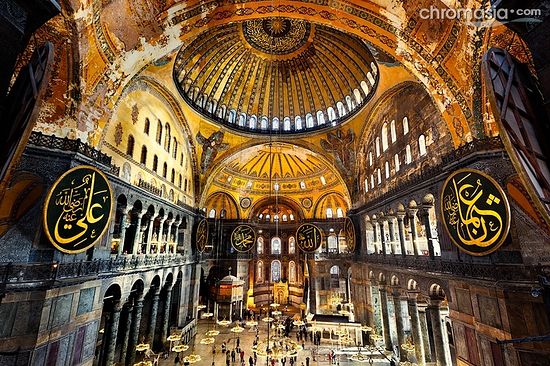
State Duma deputies have supported the idea of the return of Agia Sophia in Constantinople to the Orthodox Church. This was stated by Chairman of Committee on Property, and the coordinator of the inter-factional parliamentary group on the protection of Christian values, Sergei Gavrilov, TSN reports.

Today, when Russian-Turkish relations are undergoing an “endurance trial,” mutually friendly initiatives and proposals are of special importance, Gavrilov says.

“The Russian side deems it possible to return to the question of Agia Sophia, the ancient shrine of the Christian world, located in Constantinople – an ancient Byzantine cathedral associated with the history of the universal Christian Church. We expect a friendly step from the Turkish side – returning Agia Sophia of Constantinople to the Christian Church,” the deputy said.

He added that Russia is ready to participate financially, and to involve the best Russian architects and scientistsin the restoration of the universal Christian monument.

“This step would help Turkey and Islam demonstrate that good will is above politics. Agia Sophia should be returned to Christians,” the parliamentarian said.

Agia Sophia in Constantinople was converted into a mosque and in 1935 Agia Sophia acquired the status of museum. It was included in the UNESCO World Heritage List among the other monuments of Constantinople historic center in 1985.

source:pravoslavie.ru

Asteras and PAOK lose all Europa League hopes

paok_qabala_web-thumb-large

Asteras Tripolis and PAOK lost even the mathematical hopes they had to advance in the Europa League, both failing to score any goals in the games they played on Thursday for the fifth round of games of the competition’s group stage.

Asteras lost 1-0 at Sparta Prague after a rather disappointing performance and remained without a point on the road in Europe.

The Peloponnesians needed at least a draw to stay alive in the group, but a goal by Jakub Brabec on the 33rd minute sealed their fate in the Czech capital.

PAOK remained winless in the group stage failing to beat even its Azeri visitor on Thursday, as it drew 0-0 with Qabala in Thessaloniki. The match marked the second goalless draw for the Black-and-whites in five days.

Notably when Dimitar Berbatov was substituted by PAOK coach Igor Tudor on the 71st minute he went straight to the locker room.

source:ekathimerini.com

Varoufakis labels Australia a ‘plaything’ of economy forces

Varoufakis%2001

The former Greek finance minister is Down Under on a speaking tour.

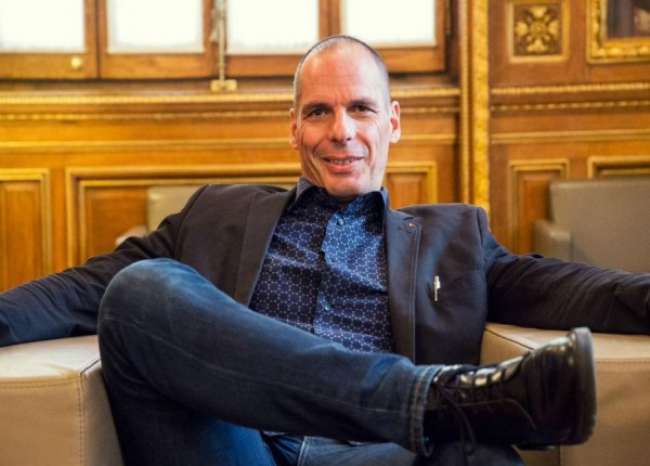
He has yet to hit Australian shores, but the former Greek finance minister Yanis Varoufakis is already making headlines with claims the Australian economy has become a “plaything of forces out of its control”.
In an interview with The Guardian, Mr Varoufakis said the country had seen a “remarkable” flow of money into real estate, namely from China, which has led to a “false sense of well-being” when it comes to the global crisis.
“Australia – especially Sydney and Melbourne – has always insulated itself from facts about the world. Aided and abetted by the remarkable flow of capital towards the property market in Sydney and Melbourne, it has created a false sense of wellbeing,” he said.
But if the nation is to avert a crisis in the instance that the Chinese economy deflates further, Mr Varoufakis, who was finance minister of the flailing Greek economy for six months before announcing his resignation, advised the economy change direction quick smart.
In doing so, he went on to encourage decision makers to aspire to greater innovation, with a vision to redirect the economy from “rent” to “entrepreneurial profit” by selling commodities.
“Australia has excellent pockets of innovation such as CSIRO. But there is a glass ceiling where they usually have to sell up and move to the US in order to progress,” he explained.
“It was Paul Keating who said Australia needed to move from being the lucky country to being the smart country. But the government didn’t help that and Australia still has a problem taking ideas to the next stage.”
The former economics professor at Sydney University is due to appear in conversation with Mary Kostakidis as part of The Interrobang: A Festival of Questions.
Yanis Varoufakis will be appear at Melbourne’s Athenaeum Theatre today (Saturday 28 November) from 11.00 am – 12 noon and at the Sydney Opera House tomorrow, Sunday 29 November.

Source: The Guardian

Discovery of ancient warrior’s grave hides bonds of friendship

internet11-thumb-large

In late May, 10 days after breaking ground, American archaeologist Sharon Stocker received an unexpected message on her cell phone: “We’ve struck bronze.” Members of her research team at Ano Egliano in Hora, Messinia, in the southwest Peloponnese, had just discovered a bronze object in an unplundered beehive tomb. It was the first sign that something spectacular lay beneath the olive groves.

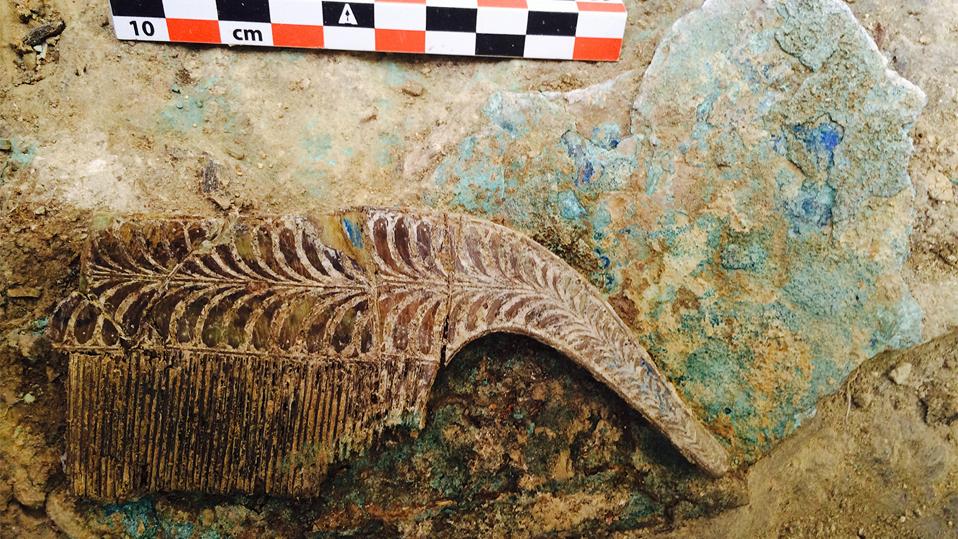
Months of excavations followed. They were conducted in great secrecy, with 24-hour security to keep away prying eyes and possible looters, until the discoveries were revealed to the world in late October: a bronze sword with an ivory handle covered in gold, solid gold seal rings and other ornate seals, a mirror and a gold chain were but some of the objects placed in the grave of a warrior in 1500 BC.

According to the scientists, this is one of the most impressive prehistoric funerary monuments to have been found on mainland Greece in the past 65 years.

“It is unique,” says Stocker, as she removes three sheets of tarpaulin protecting the site from the elements to reveal a narrow grave.

“When I first saw it, I couldn’t have imagined that I’d spend five months in there,” says conservator Alex Zokos, one of the key members of the large team that worked on the excavation. “It was tiring because you had to sit in a confined space and work with fragile materials.”

The rich finds could form the basis of a different interpretation of the past. Until recently, archaeologists would uncover graves containing numerous bodies and scientists would separate the objects found within between the men and the women in the grave. The warrior’s tomb, which contained the remains of just one individual, allows the experts to attribute all of the objects to him, even those that may be considered feminine.

Stocker and her husband Jack Davis, a professor of archaeology at the University of Cincinnati and a member of the Institutional Council of the National and Kapodistrian University of Athens, are in charge of the archaeological team from the University of Cincinnati that is investigating the area, together with Greek conservators and archaeologists. The project is run by the American School of Classical Studies in Athens (of which Davis was director from 2007 to 2012) under the supervision of the Ephorate of Antiquities of Messinia.

“We are privileged that the community has embraced us and makes our work easier,” says Stocker. “Without its support we would not have made it.”

Capital controls imposed in the summer created difficulties in paying the expenses of the individual members of the team on time, but local businesses gave them credit. The bond of trust dates back to deep friendships strengthened through the generations, forged when the grandfathers of the area’s residents had worked with American archaeologists on the same land decades ago.

The digs of the 1950s

The warrior’s grave is located on an expanse strewn with olives and antiquities. It is 3 kilometers from the small town of Hora and just meters from the Palace of Nestor, first uncovered in 1939 and excavated in 1953 by Carl Blegen (1887-1971), a professor of archaeology at the University of Cincinnati who dedicated a big chunk of his life to excavations in the broader region before and after World War II.

The community had allowed Blegen to use an old schoolhouse where, together with his wife, Elizabeth Denny Pierce, he would invite locals for afternoon tea and regale youngsters with tales of ancient Greece from Homer’s epics.

In addition to being a font of knowledge, the American archaeologist was also an important employer for the area’s jobless young men in the tough postwar years.

“The locals wouldn’t say ‘We’re going to the digs’ but ‘We’re going to the works,’” remembers 78-year-old Harikleia Androutsaki. We’re sitting in the small living room of her home as she offers us kourabies biscuits and kumquat liqueur. It was in this same house, just a few dozen meters from the Archaeological Museum of Hora, that she would host the archaeological missions almost every summer during that exciting period.

Her husband Dionysis (or Nionios as he was known in the village) was just a child and fatherless when he first got to know Blegen, after giving the American some ancient artifacts he found in a family field. The locals would usually destroy such discoveries in the hope that they contained gold. Blegen was impressed by the boy’s initiative and offered him a job. Androutsakis started by taking water to the workers on a donkey, later becoming a site foreman and later still guiding dignitaries from foreign countries around the archaeological site.

“He became Blegen’s right hand and Blegen in turned loved him dearly. In his letters he would call him son,” reminisces Androutsakis’s widow. “And Nionios saw him as his father too.”

Blegen also defended Androutsakis when the local authorities accused the latter of hiring communist workers during the civil war.

The Greek couple returned the love, naming their daughter Karolina after the American archaeologist. She in turn carried on the family tradition and worked in the Ephorate of Underwater Antiquities.

‘Friends of Greece’

Jack Davis was still a student when he met Harikleia and Dionysis Androutsakis for the first time in the autumn of 1975. “They opened their home to us,” he remembers. “I will never forget their hospitality.”

When he returned to the area in the early 1990s to start his own research he remembers the locals, and especially the teachers, giving him a warm welcome. And there were definitely periods when the team needed their support. In the early years when the researchers could not afford to rent accommodation, the people of Hora put them up in a room at the local school and hired a cook to prepare their meals. It worked both ways. Davis gave lectures for the area’s unemployed and also hired quite a few locals to work at the site.

“In 1992, while we were exploring a wooded hill near Hora, we were almost arrested by police. They thought we were arsonists,” remembers Davis. “We were saved by one of our young volunteers who told the officers: ‘They’re not arsonists! They’re friends of Greece!’”

Two decades later, Stocker and Davis moved to the nearby seaside town of Pylos, where they now spend most of the year.

“They have awakened the people’s interest in their heritage. A lot of us were like Athenians who’ve never visited the Acropolis,” says Yiannis Kalogeropoulos, the owner of a restaurant in nearby Gialova, who has been welcoming American archaeologists since 2003. “Even though we’re just 20 kilometers from Nestor’s Palace, I had only visited the site once, while I was at elementary school. Now I’ve found the time and I’ve been to see what’s going on at the excavations.”

In 2011 Davis and the Hora Cultural Association honored 48 families, members of which had worked with Blegen back in the day. Some of the older men had to be supported as they came to accept their medals.

Blegen also defended Androutsakis when the local authorities accused the latter of hiring communist workers during the civil war.

The Greek couple returned the love, naming their daughter Karolina after the American archaeologist. She in turn carried on the family tradition and worked in the Ephorate of Underwater Antiquities.

‘Friends of Greece’

Jack Davis was still a student when he met Harikleia and Dionysis Androutsakis for the first time in the autumn of 1975. “They opened their home to us,” he remembers. “I will never forget their hospitality.”

When he returned to the area in the early 1990s to start his own research he remembers the locals, and especially the teachers, giving him a warm welcome. And there were definitely periods when the team needed their support. In the early years when the researchers could not afford to rent accommodation, the people of Hora put them up in a room at the local school and hired a cook to prepare their meals. It worked both ways. Davis gave lectures for the area’s unemployed and also hired quite a few locals to work at the site.

“In 1992, while we were exploring a wooded hill near Hora, we were almost arrested by police. They thought we were arsonists,” remembers Davis. “We were saved by one of our young volunteers who told the officers: ‘They’re not arsonists! They’re friends of Greece!’”

Two decades later, Stocker and Davis moved to the nearby seaside town of Pylos, where they now spend most of the year.

“They have awakened the people’s interest in their heritage. A lot of us were like Athenians who’ve never visited the Acropolis,” says Yiannis Kalogeropoulos, the owner of a restaurant in nearby Gialova, who has been welcoming American archaeologists since 2003. “Even though we’re just 20 kilometers from Nestor’s Palace, I had only visited the site once, while I was at elementary school. Now I’ve found the time and I’ve been to see what’s going on at the excavations.”

In 2011 Davis and the Hora Cultural Association honored 48 families, members of which had worked with Blegen back in the day. Some of the older men had to be supported as they came to accept their medals.

“I was deeply moved by the locals’ expression of love,” remembers the American archaeologist.

“They have benefited the entire community,” Evgenia Kokkevi, chair of the Hora Cultural Association, says of the American archaeologists. Kokkevi remembers Blegen from when she was a child and organized the event in recognition of his former workers.

“Now we need to preserve this legacy and propagate it,” she adds.

source:ekathimerini.com

Newcastle Weather: region swelters on 40-degree day

untitled

THE Hunter has sweated through its second 40-degree day in a week, with hot and blustery conditions forcing many to head to the beach.

The oppressive weather reached its peak during mid-afternoon on Thursday, with Williamtown, Tocal and Maitland all eclipsing the 40-degree mark.

Several other suburbs, including Cooranbong, Cessnock, Singleton, Newcastle, Scone and Norah Head were just a shade away from cracking the 40-mark.

The hottest temperature recorded in the Hunter on Thursday was 41 at Williamtown, four degrees shy of the November record for the Hunter in the past 10 years.

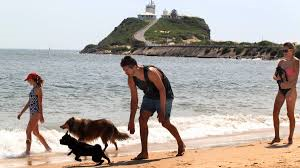
With vandals leaving Newcastle Ocean Baths high and dry for much of the day, many headed to Merewether to cool off.
Horseshoe Beach was popular among dog owners looking to beat the heat, while decent surf at the Cowrie Hole had plenty of boardriders in the line-up.

Further west, the stifling conditions created a constant threat of bushfire, with a total fire ban in place and the RFS on high alert.

source:theherald.com

Putin warns Turkey after jet shot down

epa04533539 Russian President Vladimir Putin speaks at his annual news conference in Moscow, Russia, 18 December 2014. Vladimir Putin will face scrutiny from journalists with more than 1,000 gathered in Moscow on 18 December for the Russian president's end-of-the-year press conference. Global interest in the annual event is high because of the crisis over Ukraine and the recent collapse of the Russian ruble. While Putin will certainly dwell on the economy and international issues during the traditional marathon event, he is expected to take many questions from journalists from Russian provinces. His spokesman Dmitry Peskov has stressed that reporters from all of the country's 85 regions, including the recently annexed Crimea, will be present.  EPA/MAXIM SHIPENKOV

President Vladimir Putin has warned Ankara that Turkey’s downing of a Russian warplane on the Syrian border would have ‘serious consequences’ for ties.

Speaking at a meeting with Jordanian King Abdullah II in the Black Sea resort of Sochi, a tense-looking Putin branded the shooting down of the aircraft on Tuesday a ‘stab in the back committed by accomplices of terrorists’.

‘I cannot call what happened today anything else,’ he said, accusing Turkey’s armed forces of essentially backing up the Islamic State group.

‘Today’s tragic event will have serious consequences for Russian-Turkish relations.

‘We will of course carefully analyse everything that happened.’Russia later announced that a planned visit to Turkey on Wednesday by Foreign Minister Sergei Lavrov had been cancelled.

The fighter jet was shot down on the Syrian border by two Turkish F-16s, with Ankara saying the plane had violated Turkish airspace 10 times within a five-minute period.

Moscow said the fate of the two pilots was still unclear, while the Syrian opposition said one was dead and the other missing.

Putin rejected the accusations that the plane running sorties in Syria had violated Turkish airspace, saying it did not pose any threat to Turkey.

‘Our plane was shot down over the territory of Syria by an air-to-air missile from a Turkish F-16 jet.

‘It fell in Syrian territory four kilometres from the border with Turkey.’Our pilots and our plane did not in any way threaten Turkey, that’s an obvious thing.

‘He said the plane was shot down as it was targeting members of the IS group in the northern Latakia region, adding that they mostly hailed from Russia.

‘They were carrying out their immediate task of conducting preventative strikes against terrorists who could return to Russia any second,’ the president said.

Putin said NATO-member Turkey, which is part of a US-led coalition bombing the Islamic State group, shot down the plane despite Moscow’s agreement with the United States to avoid such incidents.

‘We will never tolerate such crimes,’ Putin said.The Russian strongman also took issue with the fact that Turkey called a NATO meeting instead of reaching out to Moscow.

‘It is as if we shot down a Turkish plane and not they ours,’ he said.’We always treated Turkey not only as a close neighbour but a friendly state.

I don’t know who needed what was done today. Not us at least.’He accused Turkish armed forces of providing backup to the IS jihadists.

‘What, do they want to place NATO at the service of ISIL?’ Putin said, referring to the IS group by another acronym.

The defence ministry in Moscow summoned the Turkish military attache over the incident, while Ankara summoned the Russian charge d’affaires to the foreign ministry.

Jordanian King Abdullah II for his part expressed condolences at the loss of a Russian pilot and said the only way to end the conflict in Syria was through ‘your active participation, Russia’s participation’.

Turkish Prime Minister Ahmet Davutoglu said that Turkey had a duty to act against anyone violating its borders.

‘Everyone must know that it is our international right and national duty to take any measure against whoever violates our air or land borders,’ Davutoglu said in Ankara.

source:skynews.com.au

Russian fighter jet shot down by Turkish jets near Syrian-Turkish border

1448360698517

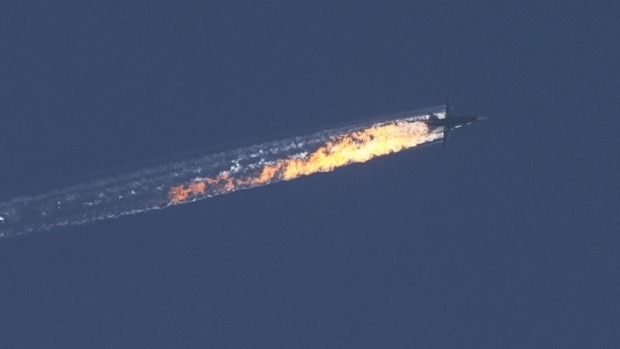
Beirut: In a dangerous escalation in the Syrian conflict, a Russian warplane has been shot down by Turkish fighter jets in Syria near the Turkish border, after it violated the nation’s air space.

It was shown plummeting towards an area known as Turkmen Mountain near the town of Bayirbucak in the northwest of Syria near the Turkish border.

The Turkish military said the aircraft had been warned 10 times in the space of five minutes about violating Turkish airspace. Officials said a second plane had also approached the border and been warned.

“The data we have is very clear. There were two planes approaching our border, we warned them as they were getting too close,” a senior Turkish official told Reuters.

“We warned them to avoid entering Turkish airspace before they did, and we warned them many times. Our findings show clearly that Turkish airspace was violated multiple times. And they violated it knowingly,” the official said.

Footage showed the two pilots parachuting from the burning jet before it crashed. Some local media reports indicated at least one pilot was “in the hands of locals”.

Reuters is reporting that a video sent by a Syrian rebel group claims to show a Russian pilot immobile and badly wounded on the ground.

“A Russian pilot,” a voice is heard saying as a group of men gather around him. “God is great,” a voice is heard saying.

An official from the group says the pilot is dead.

Russian officials confirmed that a Russian warplane had been shot down but claimed it had been flying over Syria and had not violated Turkish airspace.

The plane was likely shot down “due to shelling from the ground,” the Russian Ministry of Defence said.

The Russian Defence Ministry said the plane was one of more than three-dozen fixed-wing aircraft flying sorties in Syria as part of Russia’s two-month old bombing campaign there. It is the first Russian plane to crash in that time.

President Vladimir Putin’s spokesman called the downing of a Russian Su-24 warplane in Syria a “very serious incident”, but said it was too early to draw conclusions, according to Reuters.

“It is just impossible to say something without having full information,” Dmitry Peskov, Putin’s spokesman, told reporters.

Tensions between Turkey and Russia escalated early last month when Russian warplanes violated Turkish air space twice – on October 3 and 4 – violations Russia said had happened by accident due to weather conditions.

Since it began its air campaign in Syria to prop up the regime of President Bashar al-Assad on September 30, Russia has been harshly criticised for pursuing mostly opposition groups fighting to overthrow President Assad, as opposed to the Islamic State terrorist group it says it is targeting.

But in recent days, Russia had shifted its air campaign in an effort to mimic the US-led anti-ISIS coalition’s recent offensive to target ISIS-run oil and natural gas infrastructure, the Institute for the Study of War reported.

Without specifying the incident, Turkey indicated it would take the issue to the United Nations and NATO.

“Necessary initiatives will be taken at NATO, UN and at the level of countries concerned by the foreign ministry upon instructions from Mr Prime Minister,” a statement from Prime Minister Ahmet Davutoglu’s office said.

Over the weekend, Russia’s Ministry of Defence reported its fighter jets had carried out 141 combat sorties “engaging 472 terrorist objects in the Aleppo, Damascus, Idlib, Latakia, Hama, Homs, Raqqah, and Deir al-Zor provinces”.

They eliminated “columns of petrol tank vehicles and oil production plants in the oil-bearing regions in the north and east of Syria …These facilities in the districts of Palmyra, Deir al-Zor and Raqqa are controlled by terrorists and constitute their main source of income,” the Ministry said in a statement.

According to groups monitoring the Syrian war, Russian airstrikes had killed more than 400 civilians since they began in September.

The UK-based Syrian Observatory for Human Rights (SOHR) said the death toll from September 30 to November 20 had reached 403 civilians, including 97 children, while another group, the Syrian Network for Human Rights, said the toll was as high as 526, including 137 children.

Russia denied the civilian casualty toll and criticised the “so-called fake ‘human rights observatories’ and other propaganda organisations”.

At least 250,000 people have been killed in Syria’s civil war, more than four million Syrians have fled their homes, mostly to neighbouring countries, while a further 7.6 million have been displaced.

Human rights groups say it is the Assad regime, rather than the Islamic State group that is responsible for the majority of deaths in Syria, in particular through its use of barrel bombs.

The Syrian government denies the allegations.

source:smh.com.au