Monthly Archives: July 2016

John Howard admits ‘embarrassment’ over Iraq invasion

20070908000044062786-original

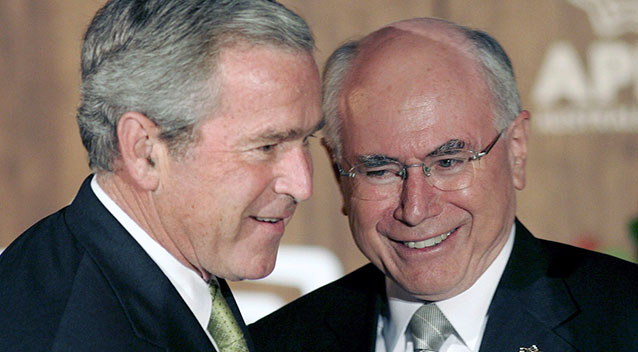
Former Prime Minister John Howard believes there were “no lies”, only “errors of intelligence” in the background of his decision to invade Iraq in the 2003 war.

He told the Seven Network today he was “embarrassed” when he learned there were in fact no weapons of mass destruction in Iraq, and denied that Isis grew out of the invasion.

“It’s very, very hard to find a situation where advice is beyond doubt,” Mr. Howard said this afternoon in a press conference with Sky News.

“Sometimes if you wait, you can end up with very disastrous consequences. There were errors in intelligence, but there were no lies.”

Mr Howard’s statement comes in response to the Chilcot inquiry, published overnight, which covers the political decisions made in the lead-up to the intervention and military action of the Iraq war by Australia, the United Kingdom and the United States.

Mr Howard disagrees with the report, stating that “context was everything”.

“The Chilcot report imposes a standard of beyond doubt,” he said.

“When you’re dealing with intelligence it’s very, very hard to find a situation where advice is beyond doubt. Sometimes if you wait for advice that is beyond doubt you can end up with very disastrous consequences.”

“I believe the decision to go into Iraq was justified at the time,” he said.

Mr Bush called Mr Howard on March 18 to make the formal request for Australia to participate in a future military intervention in Iraq.

“I vividly remember George ringing me in September of 2002,” Mr Howard recalled.

“I was in Queensland in the liberal party convention and he said ‘I’m thinking of going back to the security council for another resolution,’ and I said ‘Yes, that is a good idea’.”

Following the phone call, Mr Howard held a cabinet meeting ahead of a live national television broadcast. In that broadcast, he announced Australia’s decision to commit troops to any US-led coalition to disarm Iraq.

Foreign Minister Julie Bishop was in the party room before that announcement was made.

She responded to the report today, saying that the Australian government took “full responsibility” for its decision to back the US-led 2003 war on Iraq.

“It was based on information, the best information that we had at the time,” she told Seven this morning.

“I was in the party room. I recall very well the information that was presented to us.”

When drawn to the point put forward by Chilcot that France or Russia would eventually become involved in the war, Mr Howard was adamant.

“The French or the Russians or the Germans weren’t going to agree,” he argued. “That was my judgment. Anyone can say I was wrong, but that was the basis on which I reached my decision.”

Indeed, he told Mr Bush in the phone call at the time, he “wasn’t very hopeful” of this ever happening.

He said Mr Bush agreed with him on the matter.

Former Australian chief of army Professor Leahy said Australia had “very little say” in what happened.

He believes many decisions made then led to much of the chaos nowadays, the Australian has reported.

He also warned that Australia needed to be wary of “blindly” following international partners.

“Frankly, some of the decisions the United States, our senior partner in our strategic alliance, have made over the last 20 or 30 years have been a bit crook,” he told ABC TV this morning.

When asked whether the process of going to war should be changed today, Mr Howard responded that he was “happy to see debate about the process now.”

“But I’m not Prime Minster anymore,” he pointed out. “I’m here because I was Prime Minster when those events occurred.”

Mr Howard laughed down the idea of putting the power of going to war into non-government hands.

“You want to hand everything over to unelected bodies?” he responded to the journalist. “That’s why the British voted to leave the European Union.”

Independent member Andrew Wilkie resigned from the Office of National Assessments in protest over the Australian Government’s decision to join in the invasion of Iraq in March 2003.

He was the only serving intelligence official in the US, UK or Australia to dispute the official explanation for the war before the invasion.

“The evidence is in and it’s clearer than ever,” he said today.

“John Howard took Australia to war on the basis of a lie and stands accused of war crimes.”

“Frankly the blood of the Australians killed in the 2005 Bali bombing, and in the Lindt Cafe siege and elsewhere, is on their hands,” he said.

Mr Howard described tying these events to the Iraq war as “irrational”.

source:au.news.yahoo.com
Piraeus Port deal with Cosco faces uncertainty

Piraeus%2002

Greek government accussed of altering fundamental parts of the agreement

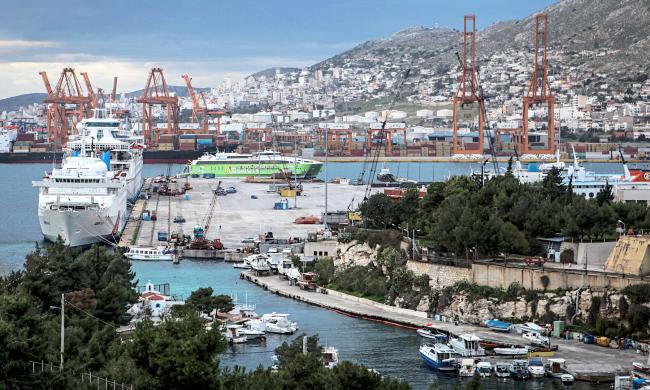
Chinese shipping giant Cosco has pushed the brakes on the Piraeus Port deal, accusing the Greek government of altering fundamental parts of the agreement.

The company issued a statement to privatisation agency TAIPED, claiming that the bill that was submitted to Parliament last week did not adhere to the agreement reached on April 8, and that it was in fact completely overturned and in turn unacceptable, reports Kathimerini.

“Cosco expects the government and TAIPED to implement what they signed on to in the presence of the prime minister,” stated Cosco.

The deal was expected to be ratified ahead of Prime Minister Alexis Tsipras’ arrival in China on Friday.

In an address to Parliament, Greek shipping Minister Theodoros Dritsas admitted to the discrepancies, however he defended the government’s right to make amendments.

“The government will look into it, it will look into the objections and will probably consider making improvements,” he said.

One of the changes noted was the requirement for the Greek state to approve project licensing within 90 days, a significant detail, which if not included in the agreement the company says could likely change the amount it bids for a project, or even discourage the submission of a bid.

The deal, which if all goes ahead as planned will see the sale of a 67 per cent majority stake in the port, is a vital move for Greece in its current economic state, believed to be the catalyst needed to kick-start growth.

Source: Neos Kosmos

Aυστραλία: Θα πάρει μέρες για τα τελικά εκλογικά αποτελέσματα

epele

Ο κυβερνών συντηρητικός συνασπισμός Φιλελευθέρων-Εθνικών βρίσκεται μία ανάσα μπροστά από το αντιπολιτευόμενο Εργατικό Κόμμα, αλλά δεν είναι βέβαιο ότι κάποια από τις δύο πλευρές θα καταφέρει να συγκεντρώσει τις 76 έδρες για σχηματισμό αυτοδύναμης κυβέρνησης.

Ο κυβερνών συνασπισμός συγκεντρώνει 68 έδρες έναντι 64 των Εργατικών και 5 των ανεξάρτητων και των υποψηφίων των Πρασίνων. Άλλες 13 έδρες είναι αμφίβολες.

Ο κυβερνητικός συνασπισμός πρέπει να συγκεντρώσει 76 έδρες προκειμένου να παραμείνει στην εξουσία ή να καταφέρει να συγκροτήσει νέα κυβερνητική συμμαχία.

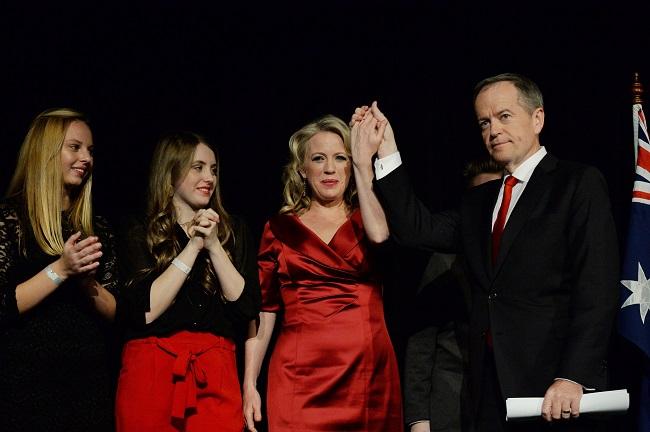
Ο πρωθυπουργός Μάλκολμ Τέρνμπουλ δήλωσε ότι πιστεύει πως η παράταξή του θα σχηματίσει αυτοδύναμη κυβέρνηση ενώ ο αρχηγός των Εργατικών Μπιλ Σόρτεν σημείωσε πως «το Εργατικό επέστρεψε και η κυβέρνηση έχασε την εντολή της από τον λαό».

Ειδικότερα ο πρωθυπουργός  κ. Τέρνμπουλ εξέφρασε την αισιοδοξία του ότι ο συντηρητικός κυβερνητικός συνασπισμός θα καταφέρει να σχηματίσει κυβέρνηση πλειοψηφίας, αλλά τόνισε ότι τα τελικά αποτελέσματα θα είναι γνωστά σε μερικές ημέρες.

Ο ηγέτης των Εργατικών παραδέχθηκε ότι ίσως χρειαστούν κάποιες ημέρες μέχρι να ξεκαθαρίσει το τοπίο.

Πιθανή είναι μία κυβέρνηση μειοψηφίας, γεγονός που θα εμπόδιζε την δυνατότητα για μεγάλες οικονομικές μεταρρυθμίσεις.

Η εκλογική επιτροπή  (Αustralian Electoral Commision) ανακοίνωσε ότι το τελικό αποτέλεσμα των εκλογών θα καθυστερήσει να ανακοινωθεί εξαιτίας της μάχης «ψήφο με ψήφο».

Δεν έχει προγραμματιστεί καταμέτρηση ψήφων για σήμερα (Κυριακή)  και η διαδικασία θα ξαναρχίσει τη Δευτέρα στη Γερουσία και την Τρίτη στην Βουλή των Αντιπροσώπων.

Πηγή:Νέος Κόσμος

Election 2016: Will Pauline Pantsdown return after Pauline Hanson’s success in the Senate?

7565910-3x2-700x467

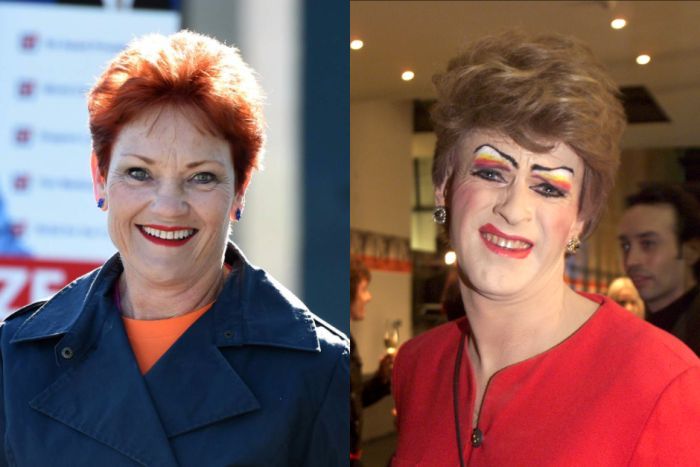
The political satirist who created Pauline Pantsdown is considering bringing the character out of retirement after Pauline Hanson’s performance in Saturday’s election.

Simon Hunt, a University of New South Wales media lecturer and LGBTI activist, shot to fame in the 1990s with two songs parodying Ms Hanson and the One Nation Party.

Hunt told the ABC he had fielded dozens of messages since Saturday’s result, which saw Ms Hanson’s party secure enough votes in Queensland for at least one Senate seat.

“I’ve had about 75 messages saying ‘we’re assuming Pauline Pantsdown will be back’,” Hunt said.

“I’m not sure yet, but it’s what people want. I don’t know whether it’s useful or not.”

In the ’90s, Hunt released the singles I Don’t Like It and Backdoor Man, a song for which Ms Hanson sued the ABC for defamation when it was played on triple j.

Hunt’s parodies involved meticulously clipping audio from Ms Hanson’s interviews and re-arranging them to create songs. Given advancements in audio production, he said it would be “a lot easier” to create new content than it was in the 1990s.

The Pauline Panstdown character was phased out when Ms Hanson’s political influence waned in the early 2000s, but Hunt revived it on Facebook and Twitter when she stood for the Senate in 2013.

“I always have to go with that idea of whether I am raising her stakes. Who are her supporters this time round, and am I helping her cause by satirising her?” Hunt said.

“Last time when I had my 15 minutes of fame, it was Aboriginal people and Asian people who came up to me and said ‘thank you for giving me a conduit to help me through the pain I felt’.

“So I don’t know yet. I’ll be thinking about it … I’m not a drag queen who dresses up to laugh at women.”

Major parties ‘harnessing xenophobia’: Hunt

Hunt said he was not surprised to see Ms Hanson’s One Nation party poll so strongly.

Since Ms Hanson’s political emergence in the 1990s, he believes the major parties have “learned the power of harnessing xenophobia”. This, he says, has forced Ms Hanson further to the fringes.

“It’s no longer Asians, it’s Muslims now,” Hunt said.

“She’s having to say things that are more extreme like putting surveillance cameras into mosques, and having a royal commission into whether Islam is a religion.

“It’s at that bizarre, Donald Trump edge of reality.”

Hunt also believes the mainstream media is partly responsible for Ms Hanson’s revival, accusing them of not properly interrogating her during the campaign because she had previously worked as a paid political commentator.

“She’s had a lot more media training and it’s a very slick machine now,” he said.

In recent years, Hunt has been involved in a social media campaign against Georgian opera singer Tamar Iveri, who was due to tour Australia but was sacked over homophobic comments.

He also took part in a local campaign against the World Congress of Families, and was planning to turn his attention to the potential plebiscite on same-sex marriage.

source:abc.net.au

Election 2016: Malcolm Turnbull faces backlash as blame game begins

untitled

Malcolm Turnbull has assured Australians he can deliver stability but after a stinging rebuke from voters, the fate of his government may not be known for days and the Prime Minister is staring down an internal push from conservative MPs for the return of Tony Abbott to the ministry.

With the final lower house seat count from the knife-edge election unlikely to be clear until the end of the week, anger is growing within the Coalition over its massive reversal of electoral fortunes, which has ended the careers of three ministers, stymied industrial relations reforms used to justify the double dissolution, and dealt up an even more unruly Senate crossbench.

Three outcomes remain possible from the election, including a razor-thin Turnbull majority if seats in doubt tumble its way, a hung parliament in which neither side has a majority, and another election is even an outside possibility if a clear winner cannot be determined.

On Sunday night, Labor took an unexpected lead in the two-party preferred vote after an update on the Australian Electoral Commission’s website.

It showed the swing away from the Coalition had risen to 3.7 per cent, putting Labor in the lead by a wafer-thin margin. 

But veteran ABC election analyst Antony Green explained the change by claiming the AEC data excluded the 2PP count from the 16 closest electorates.

An analysis by Fairfax Media put the result of the count so far as 71 Coalition seats, 65 for Labor, five independents, one Green and eight seats in which the count is too close to call.

Both Mr Turnbull and Bill Shorten began courting the crossbench on Sunday, with horse-trading likely to ramp up in the week ahead.

The political earthquake delivered by voters on the weekend sparked leadership ructions on both sides with suggestions that the Left’s Anthony Albanese could yet contest the ALP leadership against Mr Shorten despite Labor’s stronger than expected performance – assuming it fails to form a majority.

But Mr Shorten declared on Sunday he had “never been more certain of my leadership than I am this morning”. He received the strong backing of deputy leader Tanya Plibersek and sources close to Mr Albanese indicated that, given Labor looked to have gained at least 10 seats and possibly several more, a challenge was unlikely.

Mr Shorten said: “What I’m very sure of is that, while we don’t know who the winner was, there is clearly one loser: Malcolm Turnbull’s agenda for Australia and his efforts to cut Medicare. We want to make the 45th parliament work.”
The Opposition Leader restated he would not do a deal with the Greens.

Shock and disappointment within the Coalition is threatening to morph into an outright insurrection, with MPs and senators grumbling about Mr Turnbull’s performance and openly challenging his intention to deny Mr Abbott a return to the frontbench.

Conservatives are also gunning for Assistant Treasurer Kelly O’Dwyer over superannuation changes announced in the budget and for which she is being blamed for a backlash in the Liberal heartland.

Two Liberal senators, WA’s Chris Back and Queensland’s Ian MacDonald, told Fairfax Media the Prime Minister should reach out to the conservatives and restore Mr Abbott to the ministry as a gesture of good faith and to rebuild party unity.

Mr Back told Fairfax Media that if Mr Turnbull formed government he should “look for the best skills to take the country forward”.

“I would be very surprised if Malcolm did not believe that Tony has the skills needed for the frontbench,” he said.

Senator MacDonald said the decision to call the early double dissolution was a political mistake, would lead to a “more chaotic Senate” and that “clearly, dumping Tony Abbott had spawned a resurgence of parties on the right”.

“First of all we have to see if we can form a ministry, but yes, I would expect Tony should be in there,” he said.

But Mr Turnbull said on Sunday he was “not proposing to bring back any particular individuals” even as he conceded there would have to be changes to his frontbench and positioned himself as the man to provide stable government in a deeply divided parliament.

“The focus is on completing the count, on ensuring we know who is in the parliament and then we can settle the form of the government after that,” he said.

“One million postal votes have not been counted at all. So they are a complete unknown in that respect. There are a lot of votes that remain to be counted. The counting has to be complete but it is my commitment to the Australian people to do everything I can to ensure that the next Parliament serves them.”

South Australian senator Nick Xenophon, who is set to see his NXT party claim the seat of Mayo from the Liberals, is still challenging in Grey and three Senate spots, said he would back whomever would form stable government.

Senator Xenophon said his incursion into Labor and Liberal territory had “broken the duopoly” of the major parties but that he would not consider any formal coalition arrangement, nor a spot in a ministry.

A third conservative MP, however, said the Prime Minister should promote the next generation of conservatives such as Victorian Michael Sukkar and the ACT’s Zed Seselja to fill the vacancies created by the exit of Turnbull-supporting junior ministers Richard Colbeck, Wyatt Roy and Peter Hendy.

“The 2019 election will be decided in the next six months – it depends on which party implodes first. We have to lock in now, as happened for [John] Howard in 1998.”

source:smh.com.au