Daily Archives: October 10, 2015

Μειώνονται οι μισθοί υπουργών, βουλευτών και στελεχών του Δημοσίου

ImageHandler

Καταργείται το αφορολόγητο για βουλευτές με αποτέλεσμα να μειώνεται κατά 20% η αποζημίωση – Τσίπρας: Όταν μπαίνει το ζήτημα της κατάργησης των φορολογικών εξαιρέσεων για τους αγρότες, δεν μπορούμε να κάνουμε τους δήθεν αδιάφορους για τα δικά μας.

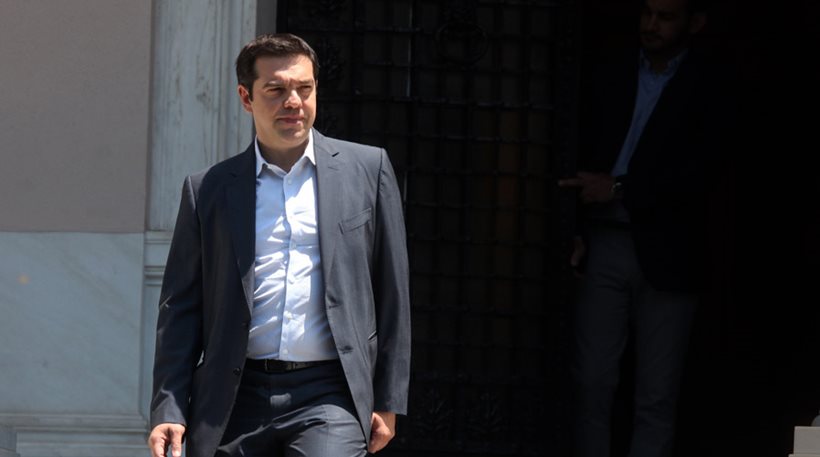
Μειώσεις στους μισθούς υπουργών και στελεχών του δημόσιου τομέα αποφάσισε ο πρωθυπουργός Αλέξης Τσίπρας έπειτα από σύσκεψη που είχε με τον αναπληρωτή υπουργό για θέματα Διοικητικής Μεταρρύθμισης, Χριστόφορο Βερναρδάκη, τον αναπληρωτή υπουργό για θέματα Γενικού Λογιστηρίου του Κράτους Δημήτρη Μάρδα και τον Γραμματέα του Υπουργικού Συμβουλίου Σπύρο Σαγιά.
Οι μειώσεις θα αφορούν τις αποζημιώσεις των υπουργών, των Διοικητών ΔΕΚΟ και των Προέδρων των Ανεξάρτητων Διοικητικών Αρχών.

Μιλώντας στη σύσκεψη, ο πρωθυπουργός Αλέξης Τσίπρας είπε μεταξύ άλλων:

«Όταν στο τραπέζι των διαπραγματεύσεων, μπαίνει το ζήτημα της κατάργησης των φορολογικών εξαιρέσεων που ισχύουν για τους αγρότες, δεν μπορούμε να κάνουμε τους δήθεν αδιάφορους για τις φορολογικές εξαιρέσεις που ισχύουν για εμάς τους ίδιους… Το πολιτικό σύστημα οφείλει να ανταποκρίνεται στο κοινό αίσθημα. Γι αυτό πρέπει να κατατεθεί άμεσα το νομοσχέδιο που καταργεί το αφορολόγητο των βουλευτών, και εξορθολογίζει τις αποδοχές των Υπουργών, των Διοικητών Οργανισμών και των Προέδρων των ανεξάρτητων αρχών. Είναι μια πολιτική πρωτοβουλία όχι μόνο με οικονομικό αποτέλεσμα, αλλά και με συμβολικό περιεχόμενο. Και η πρωτοβουλία αυτή δεν επιβάλλεται από την τρέχουσα διαπραγμάτευση, αλλά από την υποχρέωση του πολιτικού συστήματος να μην εξαιρεί τον εαυτό του από τα μέτρα τα οποία λαμβάνει».

Σύμφωνα με πληροφορίες το νομοσχέδιο θα κατατεθεί σήμερα και θα περιλαμβάνει μειώσεις κατά 25% σε υπουργούς που είναι και βουλευτές, 15% σε όσους δεν είναι βουλευτές, ενώ για τα μέλη των ΔΣ των Ανεξάρτητων Αρχών οι μειώσεις θα αγγίξουν το 40%. Κατά μέσο όρο οι μειώσεις που αποφασίστηκαν είναι της τάξης του 30%.

Επίσης αποφασίστηκε να αλλάξει το φορολογικό καθεστώς των βουλευτών με στόχο την εξομοίωση με αυτό που ισχύει για τα φυσικά πρόσωπα. Με την κατάργηση του αφορολογήτου μειώνεται η βουλευτική αποζημίωση κατά 20%.

Όπως έχουν δηλώσει πηγές του υπουργείου Οικονομικών «ακόμα και σήμερα από τα περίπου 100.000 ευρώ βουλευτικών εισοδημάτων, τα 30.000 ευρώ φορολογούνται με κλίμακα και τα υπόλοιπα τα λαμβάνουν “μαύρα”». Κατά μέσο όρο κάθε βουλευτής λαμβάνει το χρόνο περίπου 93.000 ευρώ από βουλευτική αποζημίωση, αποζημίωση για συμμετοχή σε κοινοβουλευτικές επιτροπές και διάφορα «χρυσά» επιδόματα. Για το συγκεκριμένο ποσό πληρώνει φόρο περίπου 5.500 ευρώ όσο δηλαδή και ένας μισθωτός ή συνταξιούχος με ετήσιο εισόδημα 25.000 ευρώ. Στην περίπτωση που εφαρμοζόταν ο νόμος, ο ίδιος βουλευτής θα έπρεπε να καταβάλει 39.000 ευρώ! Με άλλα λόγια το Δημόσιο εισπράττει σήμερα περίπου 1.650.000 ευρώ από την φορολόγηση των 300 εθνοπατέρων ενώ θα μπορούσε να εισπράξει 11.700.000 ευρώ.

Σε δήλωση που έκανε εξερχόμενος του Μεγάρου Μαξίμου, ο κ. Βερναρδάκης ανέφερε ότι «η λογική είναι ότι δεν μπορεί να υπάρξει εξαίρεση του πολιτικού προσωπικού και μάλιστα του ανώτερου πολιτικού προσωπικού τη στιγμή που ο λαός βρίσκεται σε πολύ δύσκολη κατάσταση, επομένως πρέπει να δούμε μια συνολική μείωση των αποδοχών και των προνομίων που απολαμβάνει το κεντρικό πολιτικό προσωπικό της χώρας». «Για τον σκοπό αυτό», συμπλήρωσε, «σήμερα θα κατατεθεί αντίστοιχο νομοσχέδιο το οποίο θα προβλέπει όλες αυτές τις μειώσεις και τις ρυθμίσεις».

Πηγή:in.gr

Γιατί οι ελέφαντες δεν παθαίνουν καρκίνο

9E8EA9E12B3C998FC40BDFB27462EF53

Βιολογικό μυστήριο: H πιθανότητα θανάτου από καρκίνο είναι πολύ μικρότερη στους ελέφαντες από ό,τι στους ανθρώπους

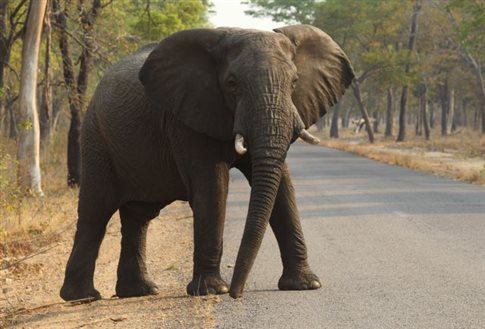
Οι ελέφαντες έχουν τουλάχιστον 100 φορές περισσότερα κύτταρα από έναν άνθρωπο, θεωρητικά επομένως θα έπρεπε να εμφανίζουν και 100 φορές περισσότερους καρκίνους στη μακρά ζωή τους. Το μυστήριο βασάνιζε για δεκαετίες τους βιολόγους, όμως δύο μελέτες δείχνουν να προσφέρουν τώρα τη λύση.

Οι ελέφαντες, αναφέρουν δύο ερευνητικές ομάδες ανεξάρτητα η μία από την άλλη, διαθέτουν 40 αντίγραφα του ογκοκατασταλτικού γονιδίου p53, το οποίο υπάρχει στους ανθρώπους μόνο σε δύο αντίγραφα (ένα από τον κάθε γονέα).

Η ανακάλυψη δείχνει να εξηγεί γιατί ο καρκίνος σκοτώνει μόνο το 5% των ελεφάντων, συγκριτικά με 11 έως 25 τοις εκατό των ανθρώπων.

Το p53, έναν από τους σημαντικότερους μηχανισμούς για την πρόληψη του καρκίνου κωδικοποιεί μια πρωτεΐνη η οποία εμποδίζει τον πολλαπλασιασμό κυττάρων που έχουν υποστεί γενετικές βλάβες. Τα ελαττωματικά κύτταρα είτε αυτοεπιδιορθώνονται ή απλά αυτοκτονούν.

Για να ελέγξουν το κατά πόσο τα επιπλέον αντίγραφα του p53 προστατεύουν όντως τους ελέφαντες, ερευνητές του Πανεπιστημίου της Γιούτα απομόνωσαν λευκά αιμοσφαίρια από τα παχύδερμα και τα εξέθεσαν σε μεταλλαξιγόνο ακτινοβολία. Στην ίδια δοκιμή υποβλήθηκαν λευκά αιμοσφαίρια από υγιείς ανθρώπους καθώς και από ασθενείς που έφεραν μόνο ένα λειτουργικό αντίγραφο του p53 και αντιμετωπίζουν 90% πιθανότητα να εμφανίσουν καρκίνο.

Το πείραμα έδειξε ότι τα κύτταρα των ελεφάντων ήταν δύο φορές πιθανότερο να καταστραφούν μετά την έκθεση σε ακτινοβολία, συγκριτικά με τα κύτταρα υγιών ανθρώπων.

Πηγή:in.gr

Τόμσεν: Μη βιώσιμο το ελληνικό χρέος, ανάγκη για γενναία αναδιάρθρωση

C56140EDC4E7E81A032D03412242F937

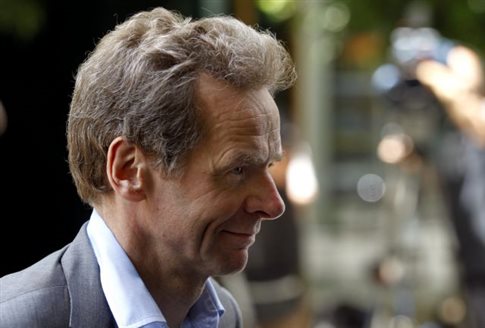
Ο επικεφαλής του Ευρωπαϊκού Τομέα του ΔΝΤ Π.Τόμσεν (Φωτογραφία: ΑΠΕ )

Έμμεση πλην σαφή απάντηση στον επικεφαλής του Eurogroup Γερούν Ντάισελμπλουμ έδωσε ο επικεφαλής του Ευρωπαϊκού Τομέα του Διεθνούς Νομισματικού Ταμείου Πολ Τόμσεν, ο οποίος, μιλώντας από τη Λίμα του Περού, τόνισε ότι ότι το χρέος της Ελλάδας δεν είναι βιώσιμο και ξεκαθάρισε ότι το «ΔΝΤ δεν πρόκειται να συμμετάσχει στη χρηματοδότηση του ελληνικού προγράμματος, αν προηγουμένως η Ευρώπη δεν προχωρήσει σε μία γενναία ελάφρυνση του δημοσίου χρέους της χώρας».

Το χρέος της Ελλάδας έχει γίνει εξαιρετικά μη βιώσιμο (highly unsustainable), είπε ο κ. Τόμσεν προτρέποντας τους Ευρωπαίους να προχωρήσουν σε μία γενναία ελάφρυνσή του, καθώς, όπως είπε, οι μεταρρυθμίσεις από μόνες τους δεν αρκούν, προκειμένου η χώρα να επανέλθει στο δρόμο της βιώσιμης ανάπτυξης.

Ξεκαθάρισε ότι χωρίς ελάφρυνση του χρέους, το ΔΝΤ δεν θα συμμετάσχει χρηματοδοτικά στο νέο πρόγραμμα, ενώ απέφυγε να προσδιορίσει το πώς εννοεί το ΔΝΤ την ελάφρυνση αυτή.

O πρόεδρος του Eurogroup Γερούν Ντάισελμπλουμ ανέφερε την Παρασκευή υπάρχει «ευρεία συναίνεση» πως η ελάφρυνση του ελληνικού χρέους θα πρέπει να επιτευχθεί με την επιβολή ετήσιου ορίου στο κόστος εξυπηρέτησής του, σε επίπεδα μέχρι το 15% του ΑΕΠ.

Σχολιάζοντας την αναφορά αυτή, ο Πολ Τόμσεν δήλωσε «το ποιος θα είναι ο ακριβής στόχος θα πρέπει να το συζητήσουμε, όμως δεν υπάρχει αμφιβολία για εμάς ότι εάν η Ευρώπη επιλέξει να παράσχει ελάφρυνση χρέους με επιμήκυνση της περιόδου χάριτος και των περιόδων αποπληρωμής, τότε μιλάμε για μία ιδιαίτερη σημαντική περίοδο χάριτος και μία ιδιαίτερα σημαντική περίοδο αποπληρωμής.

Ο κ. Τόμσεν εκτίμησε ότι ο κίνδυνος αναζωπύρωσης της κρίσης στην Ελλάδα έχει περιοριστεί σημαντικά με τη νέα συμφωνία που υπέγραψε η ελληνική κυβέρνηση το καλοκαίρι. Όπως είπε, η ελληνική κυβέρνηση εμφανίζεται έτοιμη να συζητήσει για τις αναγκαίες μεταρρυθμίσεις στις οποίες πρέπει να προχωρήσει η χώρα.

Ωστόσο, διευκρίνισε ότι η ατζέντα των μεταρρυθμίσεων στις οποίες θα πρέπει να προχωρήσει η κυβέρνηση, κυρίως στο συνταξιοδοτικό, αλλά και στο δημοσιονομικό πεδίο, είναι αρκετά μεγάλη. Ωστόσο, όπως είπε χαρακτηριστικά, «καλωσορίζουμε την ελληνική κυβέρνηση η οποία φαίνεται να αντιλαμβάνεται αυτή την αναγκαιότητα».

Πηγή:in.gr

Eurozone, IMF still at odds over Greek debt

dijsselbloem_eurogroup_web-thumb-large

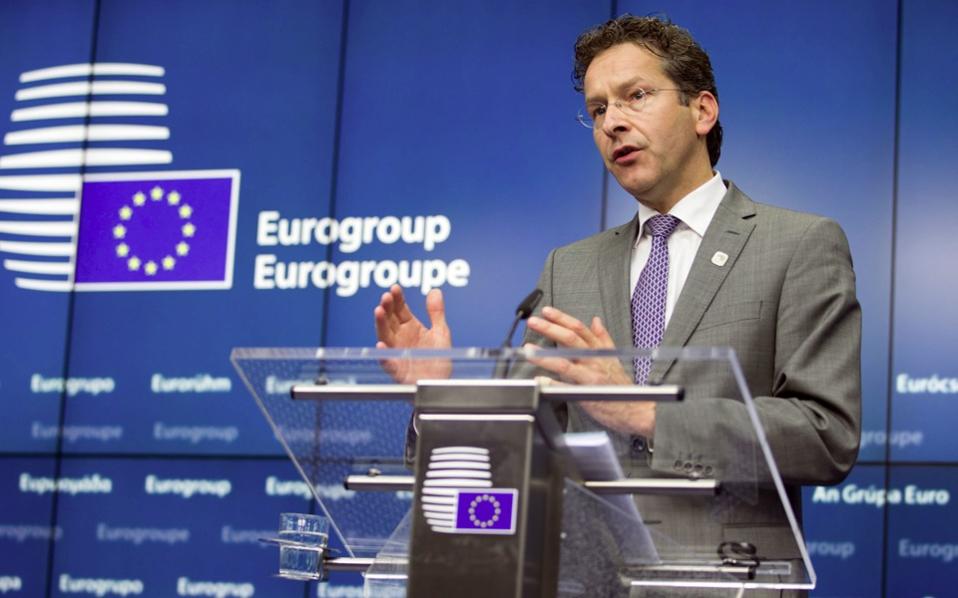
Under increasing pressure from the International Monetary Fund to ease Greece’s debt, Eurogroup head Jeroen Dijsselbloem said on Friday that the sustainability criterion for the country’s arrears is that the yearly cost of servicing them does not exceed 15 percent of the Greek gross domestic product. However, the IMF is calling for a “significant” extensions to Greece’s grace period and the repayment period.

Dijsselbloem said any measures to be decided regarding the further restructuring of Greece’s debt will be in the long term and under certain conditions that the eurozone is currently examining, adding that the real need for a lightening of the debt will come in 15 years’ time.

This came as a response to Athens’s insistence on putting the issue on the agenda, effectively telling the government it should not expect any major relief moves.

Dutch Finance Minister Dijsselbloem also told Reuters that the analyses of the European Stability Mechanism foresee no funding problems in Greece during the next 15 years and that “we’ll see whether there is an increase to the funding needs in the next 30 years.” However, he noted that the definitive decisions on the issue will only be made after consulting with the members of the eurozone, the European Commission and the IMF.

Poul Thomsen, the IMF’s director for Europe, reiterated the Fund’s position that, as it stands, the Greek debt is unsustainable and requires interventions of a “significant” size by the creditors.

“We think the Greek debt has become highly unsustainable,” Thomsen told a news conference on the sidelines of an IMF meeting in Lima on Friday. “We think that Greece cannot deal with its debt just through reforms and adjustment, without debt relief,” he said.

Thomsen added that the discussion on how to provide debt relief to Greece has shifted from a nominal haircut on the stock of its debt to capping gross financing needs, but without referring to the 15 percent threshold. “What the exact targets should be, we will have to discuss, but there is no doubt in our mind that if Europe wants to go the route of providing relief by lengthening the grace period and lengthening the repayment period, we are looking at a significant lengthening of the grace period and significant lengthening of the repayment period,” Thomsen said.

The Fund has made it known it will only take part if the eurozone takes some new debt relief measures, and Dijsselbloem stressed that he desires the participation of the IMF in the new bailout program for Greece, before adding that the loans offered by the IMF have a far higher interest rate than the European ones and part of the current program concerns the gradual replacement of the IMF loans with more European ones.

Speaking to Bloomberg, the Dutch minister commented that “it will take one or two additional measures and assurances [for the IMF] to participate. One of them is the social security reform, plus certain assurances on the fiscal issues and of course the debt; we will come to it in November,” said Dijsselbloem.

He did add that “approach is becoming ever more clear. We will examine how Greece will be able to manage its debt on an annual basis.” He said that, in this context, “we have done a lot to reduce the interest that Greece will have to pay and we have granted a repayment period of 32.5 years. Therefore, there should be no problem with the management of the debt; but we will discuss with the IMF on that. I am sure we will reach an agreement.”

source:ekathimerini.com

Northern Ireland busts ghost of Greece

northern_ireland_web-thumb-large

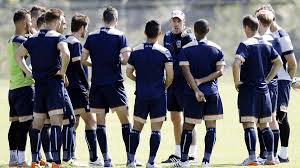
The sorry ghost of the 2004 European champion that is the national soccer team of Greece was once again busted by Northern Ireland, this time in Belfast, as the host celebrated its first qualification to a major finals, those of the Euro 2016, since 1982 with a 3-1 win over the hapless Greek visitors.

The emphatic result leaves little to say for the team of caretaking coach Costas Tsanas, though it really is painful to see so much talent going to waste due to the mentality, teamwork and preparation problems.

Greece remained winless for the ninth game in his campaign, suffering one more bad night that should be put behind as soon as possible.

Fully deserving their win and their place in the finals in France, the hosts sliced the Greek defense like an onion on the 35th minute for 1-0, as a diagonal pass to the right by Corry Evans – that Jose Holebas misjudged – found Stuart Dallas at the edge of the box; he crossed the ball to an unmarked Steven Davis who scored a sitter from close range.

Greece missed its best chance at the end of the first half, as Nikos Karelis had his shot blocked, the ball went to the edge of the box, Costas Mitroglou pounded it goalward but eventually it hit the upright of goalkeeper Michael McGovern.
Then barely four minutes into the second half Josh Magennis received the ball from a corner from the right and lobbed a header perfectly just below the crossbar to make it 2-0 in a delirious Windsor Park.

It took another 14 minutes for Northern Ireland to make it 3-0, as after a corner kick from the left by Chris Brunt was cleared by Andreas Samaris toward Davis, the Irish captain sent a rare 20-yard header straight into the Orestis Karnezis net.

Christos Aravidis scored Greece’s consolation goal four minutes from the end by turning in a cross from the right by Vassilis Torosidis. That was the first Greece goal for Aravidis.

The last act in Greece’s tragedy of a qualifying campaign will be Sunday’s home game against Hungary in Piraeus: The last chance for Greece to notch up a win.

source:neos kosmos

Greek Islands see surge in refugee arrivals

lesvos_refugees_arrival-thumb-large

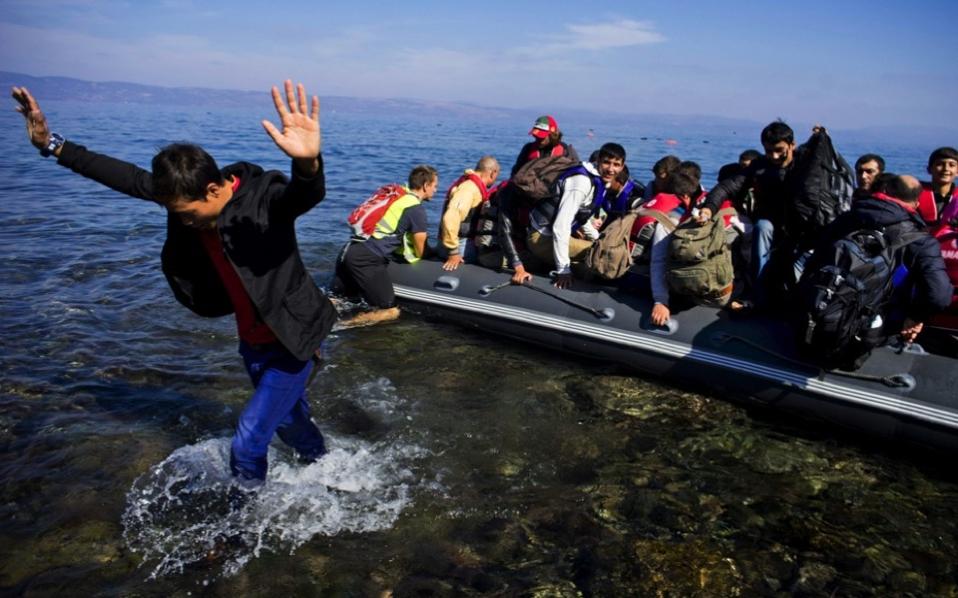
The number of refugees arriving on Greek islands has risen from 4,500 a day in late September to 7,000 over the past week, the International Organization for Migration (IOM) said Friday, as a toddler was found dead off the coast of Lesvos in the eastern Aegean.

Speaking ahead of a visit to Lesvos Saturday and a meeting with Prime Minister Alexis Tsirpas in Athens later in the week, UN High Commissioner for Refugees Antonio Guterres said asylum seekers appeared to be making a move before weather conditions deteriorate.

“All of a sudden, with the kind of weather that you have in the Balkans, this can be a tragedy at any moment,” Guterres said.

The IOM data came as a baby died after the motor of the rubber dinghy carrying him and another 56 people broke down off Levsos, the coast guard said Friday. The 1-year-old boy, whose nationality was not reported, was found unconscious and taken to a hospital, where he was pronounced dead.

Investigation

Also Friday, sources said that a police officer who was photographed kicking a refugee in a temporary reception center on Lesvos had been identified. He is expected to be summoned to explain himself following an urgent investigation into the incident.

Meanwhile, the UN refugee agency (UNHCR) welcomed the departure Friday of a first group of asylum seekers from Italy to Sweden under the EU’s relocation scheme and expressed hope that the Greek program will start soon.

“We think it will be a slow start but will accelerate once the process functions,” UNHCR spokesperson Melissa Fleming said.

Skepticism

In a related development Friday, Greece’s opposition voiced skepticism over the “Draft Action Plan” unveiled during Turkish President Recep Tayyip Erdogan’s visit to Brussels. According to the plan, which is expected to be ratified by the next EU summit later this month, Turkey will join Greek coast guard operations in the Aegean.

“The wording of the plan is extremely worrying as it does not specify the sea area in which the neighboring country will have a right to operate,” conservative heavyweight Dora Bakoyannis said.

source:ekathimerini.com

Sheikh Google and Sheikh Twitter radicalising young Muslims, Grand Mufti says

untitled

Respected Muslim community members fear a leadership vacuum in Australia has allowed radicalisation to flourish as young men turn to social media for spiritual guidance.

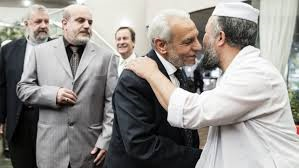
One week after schoolboy Farhad Jabar killed a police accountant, the country’s most senior Muslim leader spoke publicly for the first time on Friday flanked by his translator and a group of faith leaders.

The Grand Mufti, Dr Ibrahim Abu Mohammed, refused to call the shooting at Parramatta police headquarters a terrorist act, despite Police Commissioner Andrew Scipione and Premier Mike Baird labelling it one.

“Without enough information, and given that we are not an investigation body, I can’t comment on that,” he said through a translator.

Sarwa Abdelraheem, a spokeswoman from the Grand Mufti’s office, said violent extremism was a serious but small problem facing the entire community, influenced by a huge range of factors including psychological state and family context.

“All of these factors in association with misguided and deviant so-called religious teachings become a dangerous recipe with disastrous consequences,” she said.

Ms Abdelraheem said they did not want to call the murder of police accountant Curtis Cheng a terrorist act because Jabar’s motive was still unknown and “speculation at this stage is just that, unfounded speculation”.

See your ad here
Dr Abu Mohammed said teachings that influenced extremists were not coming from sheikhs or community members in Australia.

“The misguided teaching is imported to us. It is not made by us. It is Sheikh Google, Sheikh Twitter, Sheikh Facebook and not made here in Australia. In addition to that, the developments in the international arena contribute also.”

Ahmed Kilani, founder of the Muslim Village website, said radicalisation via social media flourishing because the Muslim leadership in Australia had become completely out of touch with younger generations.

He said the Grand Mufti not addressing the public in English, despite living in Australia for almost two decades, was a clear example.

“The majority of the mosques and Islamic organisations are still ethnic-based and a lot of the imams, including the Mufti, don’t speak English proficiently or have a western mindset. This is in vast conflict of 85 per cent of the Australian Muslim community who were born here or raised here,” he said.

“The leadership of the community is therefore not only not representative of the community, they are really out of touch with grassroots issues facing the younger generation.”

Mr Kilani said there had been no handover to the younger generation of Muslim Australia, who are best-placed to connect with radicalised youth but have not been equipped or encouraged to do so.

Maha Abdo, executive officer at the United Muslim Women’s Association, said it was crucial to transfer leadership to younger generations.

However, she said the Muslim community has been “under seige” and hasn’t had the “breathing space” to properly mentor youth.

“Our youth get older and the generations will continue and we have to continue to pass on the… positive contributions that we’ve made together,” she said.

“Any discourse that attempts to apportion blame by association or sensationalises violence to stigmatise a certain segment of society only serves to undermine community harmony and safety,” she said.

Father Rod Bower, from the Gosford Anglican Church, appeared alongside the Muslim community leaders in an effort to promote inclusion.

He said an anti-Islam protest planned outside Parramatta Mosque on Friday was only adding to the divisions that lead young men to feel marginalised and angry.

“It is actually part of the problem. They are contributing to the problem,” he said.

source:theherald.com.au

Pressure on Newcastle Jets imports to erase horror of 2014-15

untitled

NEW owners, new coach, new players, new strip … new hope.

That is the vibe surrounding the Jets as they embark on another major rebuild.

The tumultuous reign of former billionaire Nathan Tinkler came crashing down after a shambolic 2014-15 A-League campaign.

Three wins in 27 games, the lowest points haul in the club’s history, a mid-season revolt which led to an unprecedented axing of five senior players and three support staff, overdue wages, unpaid superannuation and $20 million in liabilities. A complete horror show.

That was then. This is now.

Tinkler is history.

Football Federation Australia is pulling the strings and paying the bills until a sale with a consortium headed by Dundee United chairman Stephen Thompson is done.

The governing body, on the recommendation of none other than Socceroos boss Ange Postecoglou, has taken a gamble on untried coach Scott Miller, a former assistant at Fulham who at 34 is the youngest tactician in the history of the league.

Countering Miller’s inexperience is his lieutenant, Jean-Paul De Marigny, knowledgeable, respected and most importantly a winner, having been Kevin Muscat’s right-hand man for Melbourne Victory’s premiership double last season.

There are 11 fresh faces on the roster.

Skipper Nigel Boogaard, industrious midfielder Mateo Poljak and imports Leonardo and Milos Trifunovic head the list of new arrivals. Solid, rather than jaw-dropping, is an apt description.

As well as an improved spine, Korean fullback Lee Ki-je and Serbian winger Enver Alivodic are back and will have benefited from a full pre-season.

From day one Miller has put a strong emphasis on organisation and structure, which has been reflected in pre-season results, culminating with a scoreless draw against Brisbane and a 1-0 win over Central Coast Mariners.

Off the pitch, the Jets have been busy reconnecting with the football and business community.

They will begin the season with almost 7500 members, a miracle given last season’s debacle, and will carry bona fide major sponsors on their playing shirts for just the second time in the club’s history.

The preliminary work has been done, and now for the real stuff, starting with Wellington Phoenix at Westpac Stadium on Sunday.

New arrivals

Mark Birighitti (Varese). Returns after a six-month loan at Italian Serie B club Varese. Despite making only six appearances in Italy, seems to have benefited from the experience. Has won a tight contest for the No.1 job from Ben Kennedy, who usurped him after seven rounds last year. A brilliant shot-stopper, Birighitti needs a confident start.

Nigel Boogaard (Adelaide). Finally gets an opportunity to not only play for his home-town club but also captain the side. A left-sided stopper, the 29-year-old is strong in the air, a good organiser and has a wealth of experience.

Andy Brennan (South Melbourne). A powerfully built attacker who has been a prolific goal-scorer in the Victorian Premier League and Tasmanian State League. Raw and extremely enthusiastic. He could be one out of the box.

Labinot Haliti (Wanderers). Back for a third spell. Since last a Jet he has won an Asian Champions League and A-League [minor] premiership at Wanderers. Not a prolific scorer but has made a habit of kicking important goals. Hit the target regularly in the pre-season and versatility will ensure he is a major contributor.

Jason Hoffman (Melbourne City). Newcastle-born right back returning to the Jets after five seasons in Melbourne. Has great engines and is suited to the high-tempo game the Jets want to play. Likes to bomb forward and at 190cm will be dangerous from set pieces.

Lachlan Jackson (Brisbane Roar). A project player. Tall left-sided stopper in a similar mould to Boogaard. Can also play left back.

Mateo Poljak (Wanderers). Rock-solid holding midfielder and just what the Jets need. Came through the youth system at Dinamo Zagreb and at 26 has a wealth of experience. An efficient distributor with a high work rate, he has been in winning dressing rooms throughout his career and will help build a strong culture.

Leonardo Santiago (1860 Munich). The highest-profile signing. Brazilian but moved to Holland aged 12 and has played the majority of his career there. Hasn’t played since an ugly split from 1860 Munich after a change in manager. Has pedigree, having won a UEFA Cup at Feyenoord and spent three years in a star-studded Ajax dressing room. Adds class to an otherwise workmanlike squad. Will need to chip in with goals as well as create them.

Cameron Watson (Adelaide). Defensive midfielder who can also slot in at right back. Made 106 appearances for Adelaide over five seasons, but a combination of a toe injury and the arrival of the Spanish armada at the Reds was the catalyst for limited game time last season. A safe if not spectacular midfielder, he will compete with Ben Kantarovski to partner Poljak in front of the back four.

Themba Muata-Marlow (Sydney FC). Signed by previous coach Phil Stubbins. A big, athletic centre back, he had three years in Sydney FC youth system but earned just one senior cap.

Milos Trifunovic (Radnicki Nis, Serbia). Serbian striker with a strong goal-scoring record. Tall and powerful, his resume includes stopovers at Red Star Belgrade (8 goals in 26 games), Bunyodkor (17 in 25) and Liaoning Whowin (13 in 44). Has averaged a goal every three games but needs to better that strike rate if the Jets are to feature in the finals.

Departures

Zenon Caravella (released), Sam Gallagher (Wanderers), Andrew Hoole (Sydney FC), Edson Montano (loan ended), Scott Neville (Wanderers), Jacob Pepper (Wanderers), Taylor Regan (released), John Solari (released), Jess Vanstrattan (retired), James Virgili (released), Allan Welsh (released).

The burning question

Where will the goals come from?

The Jets scored a paltry 23 goals last season at a clip of less than one a game. Montano led the way with six, 10 fewer than Adam Taggart’s golden-boot effort in 2013-14. The Jets have worked hard on transition from defence into attack in the pre-season. Miller wants – demands – the Jets’ first instinct be to play forward. Still, Trifunovic will be under pressure to score regularly. He averages a goal in every three games but needs to better that. He will have a target of 12 to 15 goals. Leonardo will need to create as well as net five to 10 times. They will also need solid contributions from Labinot Haliti, Enver Alivodic, David Carney and Mitch Cooper.

Modern-day sport, it seems, is all about a strong culture and momentum.

Bottom line

Have that and it’s a ticket to success.

The Jets start on the ground floor in both departments in what shapes as a critical juncture in their history.

The Hunter faithful are not expecting another championship – yet – but after five years of mediocrity they demand improvement.

A team of which to be proud, one that fights hard, punches above its weight and delivers its share of knockouts.

Miller may be untried but the early signs are encouraging.

He has the respect of the players, educates rather than berates and has lifted the professionalism.

He will rely on the back four and two screeners to prevent a repeat of the suicidal 55 goals they conceded last season.

How far up the ladder they climb will rest largely on the shoulders of their overseas contingent.

Leonardo and Trifunovic need to adjust quickly and provide goals.

David Carney is fit and focused and Labinot Haliti will find reason to rip his shirt off in front of the Squadron.

The wildcard could be Mitch Cooper.

The Jets need a lot to go right for them, no doubt, but they are miles advanced on this time last season.

Don’t put the champagne on ice in anticipation of a championship, but they should be in a dog fight for sixth rather than fighting to avoid the embarrassment of consecutive wooden spoons.

TIP: SIXTH

JETS’ BEST TEAM 2015-16

4-2-3-1

MARK BIRIGHITTI

JASON HOFFMAN

DANIEL MULLEN

NIGEL BOOGAARD

LEE KI-JE

MATEO POLJAK

CAMERON WATSON

ENVER ALIVODIC

LEONARDO

DAVID CARNEY

MILOS TRIFUNOVIC

Team at end of last season

Ben Kennedy; Nick Cowburn, Taylor Regan, Daniel Mullen,

Lee Ki-je; Allan Welsh, Jacob Pepper; Enver Alivodic, Mitch Cooper, Andrew Hoole;

Edson Montano

Last season’s stats

10th place, 3 wins, 8 draws, 16 losses, GF 23, GA 55, 17 points

source:theherald.com.au

Newcastle:Hunter farmers face kangaroo nightmare

untitled

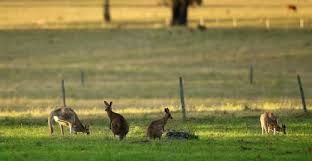
MOBS of hungry kangaroos are on the march across the Hunter, destroying crops and stock pastures.

Farmers are calling on the state government to act before the population gets out of control.

Groups of up to 100 eastern grey kangaroos have been spotted on properties between Nelson Plains and the Barrington Tops, with most circulating on land around Seaham, Clarence Town, Paterson and Vacy.

The influx also extends west around Singleton and Muswellbrook where groups of 30 to 40 are grazing on farmland and on the roadside.

Some farmers are taking matters into their own hands, shooting the protected animals and risking fines that can climb as high as $11,000 for killing without a licence and $1100 per kangaroo.

Mobs of kangaroos are also a serious hazard for motorists, with more than 1000 hit in the region each year.

A mob of 70 recently destroyed Josh Evans’ newly sprung rye grass crop, which he replanted within a fenced paddock near Vacy after the April super storm. The kangaroos ate the grass before it was high enough to nourish his beef cattle herd.

The mob has since moved on and he has only seen three kangaroos on his property since. ‘‘They thought the crop was much better than grazing on grass and they hung around for a while – I saw them mostly in the early morning and at dusk. They would get under the shade during the heat of the day and then come back out to feed in the late afternoon,’’ Mr Evans said.

‘‘I didn’t do anything about them being here – I’m not against kangaroos, I’m happy to co-exist with them.’’

See your ad here
It’s unclear how the region’s problem is changing, because the state government does not track the Lower Hunter’s kangaroo population – it is not part of the commercial harvest zone, which extends into parts of the Upper Hunter.

It “has no plans to undertake region-wide population surveys where there is no commercial harvest” because kangaroos are protected under the National Parks and Wildlife Act, a spokeswoman said.

Landholders and the NSW Farmers Association want the government to start monitoring in the Lower Hunter as part of a regional approach to kangaroo management.

They argue the lack of eastern grey population data in the Lower Hunter will be “bad for kangaroos and bad for farmers” as numbers become out of control.

Association Hunter region manager David Banham said “solid evidence” was needed to analyse the annual population so kangaroos and farming can “comfortably co-exist”.

“Farmers would prefer to keep them off their property instead of shooting them,” Mr Banham said.

“Culling is just one way to deal with the situation. If we’ve got data we can accurately say this is what is happening in the Lower Hunter.”

Landholder Peter Lawrence, of Gresford, has questioned how culling on individual Lower Hunter properties is an effective control method when nobody knows how many eastern greys are in the area.

“[Monitoring the population is] as much for the sake of the kangaroos as it is farming – if their numbers get out of control and there is a serious drought they are going to suffer trying to find enough feed to survive, and nobody wants that,” he said.

NSW Office of Environment and Heritage research suggest farms and kangaroos can co-exist most of the time and the kangaroo population followed a “boom and bust cycle” that “correlated with drought and good conditions”.

Upper Hunter landholders within the kangaroo harvest management plan zone can engage commercial shooters to cull on their land and help meet a specific quota that the NSW Office of Environment and Heritage releases annually.

The population count within the zones determines the quota, which is set at no more than 15 per cent of the population.

Lower Hunter landholders have to apply to the National Parks and Wildlife Services for a licence to cull and tag a specific amount.

Requests are likely to be approved if the landholder can prove how many kangaroos are on the property and the economic harm and damage they have caused.
Cull quotas not being met due to a lack of demand

A LACK of demand for kangaroo meat has left culling quotas in the Upper Hunter largely unfulfilled. Annual quotas for eastern grey kangaroos have only been met three times in the past 15 years.

In the past two years 38,040 eastern greys were identified for culling in the Upper Hunter under the NSW kangaroo harvest management plan, yet only 8895 were shot.

Contract shooters haven’t come close to meeting the annual target since 2007, when they reached 98per cent of it, and 2003 when they achieved 93per cent.

In 2013, only 19per cent of the 25,125 eastern greys identified were culled.

NSW MLC Robert Brown, a Shooters and Fishers Party member, blamed the lack of demand for kangaroo meat overseas and the geographical location of the Upper Hunter.

He said commercial shooters could easily make $1000 to $2000 a week shooting kangaroos out west on flat ground and keep their running costs down. He said shooters in the Upper Hunter had to contend with hilly country and “work a lot harder” to find enough kangaroos in a group to make it financially viable.

“They might drive around for half an hour before they find a kangaroo … Why do that when they can go out west and get 100 of them in a night. If they are running the car they want to be shooting,” Mr Brown said.

The NSW Office of Environment and Heritage releases a quota of eastern grey, red, western grey and wallaroo kangaroos that can be culled every year under the harvest plan. These species are classified as abundant and are not at risk of becoming vulnerable because of the cull.

Upper Hunter landholders within a zone identified in the plan can engage commercial shooters to take a certain number of kangaroos on their property.

The shooters place the dead kangaroos in chillers and pass them onto processors.

Exporting kangaroo meat is expected to be the next big thing for the industry and could be worth about $600million a year. The federal government already has an agreement with 70 countries to export kangaroo meat. The first tonne went to Peru in March after an agreement between the two countries was created five years ago. It cost $6 per kilogram to transport.

But Kangaroo Industry Association of Australia executive officer John Kelly said the industry needed to conquer bigger markets like China.

If that happened the amount of kangaroos harvested every year could dramatically increase, he said.

Mr Brown said Russia was a strong customer until President Vladimir Putin banned a range of Western food, including kangaroo meat, last year.

Patrick Medway, who sits on the NSW kangaroo management advisory panel on behalf of the Australian Wildlife Society, said the industry could thrive in Australia if the nation relinquished its “emotional attachment” to the native animal. He argued the lack of demand for meat and skins within Australia was deterring commercial shooters from participating in the harvest.

He said shooters were paid $2 to $3 per kilogram, while kangaroo fillets sold in supermarkets for $21 per kilogram and mince fetched $9 per kilogram.

“The return to shooters isn’t high enough and unless that changes the actual take won’t reflect the set quota,” Mr Medway said. “If the price of kangaroo meat reflected the rising cost of beef, lamb and chicken it would be a viable business.”

source:theherald.com.au