Monthly Archives: February 2015

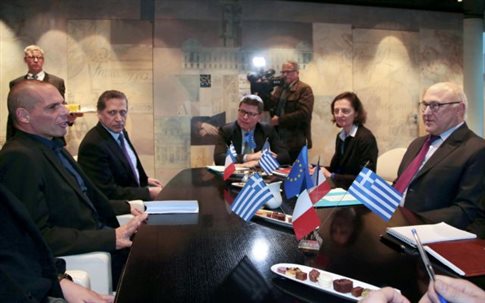
Varoufakis counting on ECB as Sapin says Greece needs new contract with eurozone

Greece is counting on the European Central Bank to maintain a financial lifeline while the week-old government in Athens negotiates new terms on its international bailout package, Finance Minister Yanis Varoufakis said.

While the country is “desperate” for funds, it will forgo further disbursements of emergency aid until negotiating a “new social contract” with its creditors, he said. He set an end-May deadline for reaching a deal on a revamped rescue with the euro area and the International Monetary Fund.

“For that period, we’re not going to ask for any more loans,” Varoufakis told reporters today in Paris after meeting French Finance Minister Michel Sapin. “During this period, it is perfectly possible in conjunction with the ECB to establish the liquidity provisions that are necessary.”

The danger for Prime Minister Alexis Tsipras, who won power on Jan. 25 following pledges to undo more than four years of austerity tied to emergency aid, is that both the country’s banks and the government could be left without funding as soon as next month. Greece has until end-February to qualify for an aid payment of as much as 7 billion euros ($7.9 billion) and hasn’t indicated any willingness to seek an extension.

Letting the review lapse under Greece’s 240 billion-euro aid program could result in its banks effectively being excluded from ECB liquidity operations while the government is still shut out of international bond markets.

At the moment, Greece has a special dispensation from the ECB because the country is considered to be complying with the bailout pact. That means its debt can be used in central-bank refinancing operations even though it is rated junk.

Varoufakis, whose Paris visit was the first of a series of trips to European cities to press his case, said he intends travel to Frankfurt to seek support for Greek banks from the ECB while a political accord on an aid overhaul is negotiated with the euro area and the IMF. He’s scheduled to see British Chancellor of the Exchequer George Osborne in London tomorrow.

A revamped rescue for Greece, where unemployment is more than 25 percent, would address a “humanitarian crisis,” the need for investment and the country’s debt mountain of about 180 percent of gross domestic product, he said.

“What this government is all about is ending the addiction” to funds that are tied to demands for austerity, Varoufakis said. The government is willing to “go cold turkey for a while, while we’re deliberating,” he said.

At the same briefing, Sapin said France would be willing to offer Greece debt relief in the form of longer repayment periods and lower interest rates while rejecting a writedown that Tsipras has demanded. That position mirrors the euro area’s stance.

“Anything that can alleviate the Greek debt burden will be welcome … but of course there is no question of cancelling the Greek debt,» Sapin said.

He added that this would simply mean that instead of the Greek taxpayer it would be for the European or French taxpayer to foot the bill.

Sapin said he wants to facilitate a new deal for Greece with its official creditors after hearing the country’s plans for economic revival.

Sapin said that it’s “legitimate” for Greeks to be concerned about their debt burden and the country needs investment to generate economic growth after meeting the Greek finance minister, Yanis Varoufakis, in Paris on Sunday.

Greece’s creditors should offer the country a “new contract,” Sapin said.

Varoufakis said that Greece wants its debt repayments to be tied to economic growth and appealed to the European Central Bank to keep funding the country’s lenders until an agreement is reached. Varoufakis said he’ll arrange a meeting with German Finance Minister Wolfgang Schaeuble within the next 24 hours and also plans to visit Frankfurt.

Varoufakis appointed Lazard Ltd. as adviser on issues related to public debt and fiscal management on Saturday.

“There is a range of possible solutions: extending the maturities, lowering interests rates, and the much more radical solution, the haircut,” Matthieu Pigasse, the head of Lazard’s Paris office who has advisedGreece in the past, said in a Jan. 30 interview on BFM Business television. “If we could cut the debt by 50 percent” he said, “it would allow Greece to return to a reasonable debt to GDP ratio.”

He said Greece’s debt to public creditors was about 200 billion euros.

source: ekathimerini.com

Obama says Greece needs growth, not more austerity

As representatives of the new Greek government begin a round of visits to eurozone countries, President Barack Obama has suggested that Greece will not be able to recover from its economic crisis unless there is a let up in austerity policies.

“You cannot keep on squeezing countries that are in the midst of depression,” when CNN’s Fareed Zakaria asked him about the case of Greece. “At some point, there has to be a growth strategy in order to pay off their debts and eliminate some of their deficits.

“There is no doubt that the economy of Greece was in dire need of reform,” he said in the interview broadcast on Sunday. “Tax collection was famously terrible. In order for Greece to compete in the world markets, they had to initiate a series of changes.”

However, the US president underlined that it is very difficult to carry out reforms when a country’s economy has contracted dramatically. Greece saw almost a quarter of its GDP disappear between 2008 and 2014.

“It’s very hard to initiate those changes if people’s standards of living are dropping by 25 percent,” he said. “Over time, the political system and society cannot sustain it.”

Obama also made reference to the compromise that would be needed by the SYRIZA-led coalition and the eurozone to reach a deal that would keep Greece in the single currency.

“My hope is that Greece will remain in the eurozone,” he told CNN. “I think that will require compromise on all sides. When the financial crisis in Greece flared up a few years ago, we were very active in trying to arrive at some sort of accommodation. I think there’s recognition on the part of Germany and others that it would be better for Greece to stay in the eurozone than be outside of it and the markets will obviously be skittish about this.”

Obama suggested that the eurozone needed to do more to stimulate growth and repeated that country’s that have been through deep recessions, such as Greece, should be assisted.

“More broadly I’m concerned about growth in Europe. Fiscal prudence is important, structural reforms are necessary in many of these countries but what we’ve learnt in the US experience… is that the best way to reduce deficits and restore fiscal soundness is to grow,” he said.

“When you have an economy that is in freefall there has to be a growth strategy and not simply an effort to squeeze more and more out of a population that is hurting worse and worse”.

source: ekathimerini.com

Γερμανικός Τύπος: Έκτακτο σχέδιο στήριξης της Ελλάδας από την Κομισιόν


Γερμανικός Τύπος: Έκτακτο σχέδιο στήριξης της Ελλάδας από την Κομισιόν

Έκτακτο σχέδιο στήριξης της Ελλάδας φέρεται -σύμφωνα με δημοσιεύματα του γερμανικού Τύπου- να καταρτίζει η Κομισιόν. Κατά τις πληροφορίες, η στήριξη θα δοθεί έως το καλοκαίρι και θα έχει ως αντάλλαγμα δομικές μεταρρυθμίσεις. Παράλληλα, δημοσιεύματα θέλουν τον επικεφαλής της Κομισιόν Ζαν-Κλοντ Γιούνκερ να επιθυμεί την κατάργηση της τρόικας, κάτι με το οποίο φέρεται μάλλον να συμφωνεί και το Βερολίνο.

«Ο Γιούνκερ θέλει να καταργήσει την τρόικα» είναι τίτλος δημοσιεύματος στην ηλεκτρονική σελίδα της γερμανικής οικονομικής εφημερίδας «Handelsblatt», με τον υπέρτιτλο «Ελλάδα-Συμβιβασμός».

«Πρώτα οι Έλληνες προκάλεσαν εντός της εβδομάδας πολλή φασαρία. Το Σαββατοκύριακο τα μηνύματα από την Αθήνα έγιναν πιο συμφιλιωτικά. Και τώρα ο πρόεδρος της Ευρωπαϊκής Επιτροπής Γιούνκερ είναι έτοιμος για έναν συμβιβασμό. Και το Βερολίνο μάλλον ακολουθεί» αναφέρει το δημοσίευμα.

Σύμφωνα με πληροφορίες της εφημερίδας, ο κ. Γιούνκερ σχεδιάζει να καταργήσει την τρόικα της Ελλάδας και «αυτό το τρίο να μην ξαναπάει στην Αθήνα».

«Πρέπει τώρα να βρούμε γρήγορα μια εναλλακτική για αυτό», επισημαίνει η εφημερίδα ότι ειπώθηκε σε κύκλους της Κομισιόν. «Με αυτό ο Γιούνκερ συμφωνεί με ένα κεντρικό αίτημα του νέου έλληνα πρωθυπουργού», τονίζει ο συντάκτης και προσθέτει ότι και η γερμανική κυβέρνηση είναι κατ’ αρχήν πρόθυμη να συμφωνήσει σε μια μεταρρύθμιση της τρόικας.

«Θα μπορούσαμε να παραιτηθούμε από τις επισκέψεις ελέγχου στην Αθήνα, οι οποίες εκλαμβάνονται από τους Έλληνες, ως εξευτελιστικές και αντ’ αυτών να τεθούν στην Ελλάδα πλέον μόνο πιο γενικοί οικονομικοπολιτικοί στόχοι» αναφέρει η εφημερίδα πως είναι η άποψη σε κύκλους της γερμανικής κυβέρνησης.

Μια τέτοια παραχώρηση είναι δυνατή όμως μόνο εφόσον η νέα ελληνική κυβέρνηση αποδεχτεί την έως τώρα συμφωνηθείσα πορεία μεταρρυθμίσεων και λιτότητας, τονίζεται.

Ο κ. Γιούνκερ, σύμφωνα με την Handelsblatt, θέλει να στηρίξει τον κ. Τσίπρα και σε ένα άλλο σημείο: Ο επικεφαλής της Κομισιόν δείχνει κατανόηση στο ότι ο νέος έλληνας πρωθυπουργός θέλει να αυξήσει τον κατώτατο μισθό, επισημαίνει ο συντάκτης και διευκρινίζει ότι ο κ. Γιούνκερ παραμένει κατηγορηματικά αντίθετος στο ενδεχόμενο κουρέματος του ελληνικού χρέους.

Πηγή:in.gr


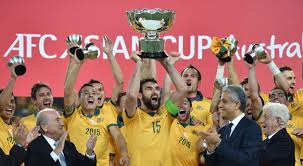
2015 Asian Cup: The crowning moments of a magical tournament

01

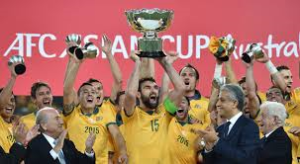
The Socceroos’ victory in the Asian Cup was the final piece in a jigsaw puzzle that had already wowed and captivated millions across Australia, and many more overseas.

The vibrant and passionate support in the stands, the quality action on the pitch and the near faultless organisation all contributed to a magnificent tournament.

This Asian Cup was an undoubted success, and it is yet another milestone in Australia’s rich history of hosting sporting tournaments.

The FFA should be hailed for its success, as should the Australian public, including our many diverse cultural communities, for creating a platform for the following narratives.

The Postecoglou Generation has usurped the Golden Generation
For a few seconds, it felt like 1997 all over again. It had echoes of Italy in 2006, and Japan 2011 was looming in the not too distant background. The demons of Australian football’s past flashed in front of everyone’s eyes when Son Heung-min’s equaliser slipped under Mat Ryan.

Yet the fight of this team, and the fervent belief instilled in them by Ange Postecoglou, shone through. That fleeting moment of despair was banished forever as the Socceroos put in an inspiring extra 30 minutes.

How they found the additional energy is quite inspirational, and the Socceroos in reality shouldn’t have made it through extra time. Robbie Kruse went down with what could yet prove to be a sickening long-term injury, and Ivan Franjic, who had played every minute of the Asian Cup leading into the final, soon followed.

But this was a time for champions and Ange’s charges proved themselves more resolute and more worthy than any side before them. Forget the Golden Generation, this is the team that won when it counted most, and with it a deserved place in the history books.

Proving the football haters wrong
There were many detractors in Australia leading into the Asian Cup, too many to account for. There were the established journalists with love for other codes, the members of the public who saw it as a non-event and Eddie McGuire of course, who’s sucking those lemons now.

There was the Victorian government, who didn’t bid for a semi-final match because they feared the pull of the Australian Open would overshadow the match. Even the organisers set a slightly modest crowd target of 500,000.

The most fervent football fans would be lying if they said they held no lingering doubts leading into the tournament, both about crowds and the Socceroos’ chances of winning. But at least they were there from the start, hoping and dreaming of success.

The crowds and the team proved the major doubters wrong, especially those who believed it wouldn’t even register for a sporting public that had the tennis and cricket to entertain them. How wrong they were, football is coming.

The people didn’t just turn up, they flocked
The previously mentioned modest aggregate target of 500,000 was easily smashed, with about 650,000 rocking up to Brisbane, Newcastle, Sydney, Canberra and Melbourne.

The lowest attendance was for a dead rubber between Qatar and Bahrain (4841), and that match was held in Sydney, not in the predicted trouble regions of Canberra and Newcastle.

In fact, of the dead rubbers played in those two cities, Newcastle drew almost 7500 to Oman versus Kuwait, while Canberra managed a massive 18,457 between China and North Korea. Quite astonishing.

The original target of 500,000 was ticked off following the quarter-finals, and the overall figure could have almost reached the heights of the 690,000 that turned up to the 2007 edition if the Socceroos had qualified for the semi-final in Sydney.

Impressive figures elsewhere included the 5.3 million that tuned in to at least five minutes of the showpiece between Australia and South Korea on ABC. Three million were watching during the final minute of extra time.

Canberra in particular proved the doubters wrong, and the city has put itself on the FFA’s radar for expansion in the A-League.

Showing FIFA, and Qatar, who’s boss
There is little doubt that we have blown Qatar completely out of the desert in terms of on and off the field exploits in the Asian Cup. The 2015 tournament’s success in the stands and the faultless organisation (save for the Brisbane pitch) easily outrivals the Qataris’ efforts in 2011. They managed to pull a paltry 405,000, along with reports of ticket mismanagement.

Then the Socceroos went and won the competition, following a quarter-finals appearance in 2007 and ticket to the final in 2011. Qatar, after losing all three of their group games in Australia, have now failed to make it to the knockout rounds in three of five attempts since 2000.

There is little doubt they were one of the competition’s biggest disappointments this year, having been tipped by many experts as dark horses. For a nation that has never qualified for a World Cup, this was their first chance since gaining the rights for the 2022 edition to show they have a team worthy of playing against the best.

They failed, and while it’s never nice to revel in an opponent’s misery, it feels good given the acrimonious World Cup bid and the constant controversy over its legitimacy and viability. Australia has shown that it deserved the World Cup rights, and while Sepp Blatter was beautifully booed during the trophy presentation, I’m still blaming that cartoon kangaroo.

Renewed interest in the Asian Football Confederation
While Asian football has never been huge in Australia – indeed it’s never even been moderately popular – there is no doubt a few players left their mark on our sporting world.

Omar Abdulrahman, who had rights to challenge Massimo Luongo for player of the tournament if he’d made the final, was the highlight in the foreign department. His silky skills, deft touch and first-time balls were just magical.

Iraq’s Yaser Kasim was another standout, though Swindon Town supporters have been well aware of his abilities, and Luongo’s, for some time. China’s goalkeeper Wang Dalei was also impressive, and not just because he took advice from Brisbane ballboy Stephen White to save a penalty against Saudi Arabia.

Uzbekistan’s Sardor Rashidov, Iraq’s central defender Ahmad Ibrahim and Iran’s Sardar Azmoun were some of the other relatively unknown stars to make a lasting impression on the 2015 Asian Cup.

Hopefully this sparks more interest from A-League clubs in Asian talent, and Australian football fans in the Asian leagues. A stronger relationship with our AFC counterparts is beneficial for everyone.

A win for multiculturalism
Ange Postecoglou, the man who just delivered Australia its first success in a major men’s football tournament, arrived in this country thanks to a bloody boat. Many of the men, women and children who made the Asian Cup such a success in the stands arrived in similar circumstances from war-torn countries.

It’s a clear sign of what different cultures can achieve in Australia, and what they can contribute to our society. They’re not freeloaders, they’re not extremists and they aren’t here to destroy the English language and the Australian way of life.

While I’m hopefully preaching to the choir on The Roar, let’s hope many people’s views on immigration were challenged, and altered, following the scenes in the Asian Cup.

Chinese football could be ready to fulfil its potential
Since Australia joined the Asian Football Confederation, the superpowers have been Japan, South Korea and the Socceroos. Now the region’s sleeping dragon, China, look ready to challenge that triumvirate.

Three wins out of three group games, against quality opposition, was a big surprise for a team expected to have to fight for second spot in Group B. A win against Australia in the quarter-finals would have been huge, but there are enough signs for this nation that they can finally find some sustained progress, which has faltered since their foray into the World Cup in 2002.

Similarly, it’s a case of what now for Japanese football. A terrible World Cup campaign, where they were expected to at least make the knockout stages, and now a premature exit in a competition they have dominate over the last 25 years, signals something of a crisis for Samurai Blue.

Smells like team spirit
One of the most heartwarming images from the scenes of the Socceroos’ victory celebrations was when Robbie Kruse entered the field on crutches. It was about an hour after he’d left the pitch on a stretcher in tears, a forlorn figure with another long-term injury on the cards.

His teammates gathered to embrace him, and while it was clear he was struggling to come to terms with this latest setback, there was always a Roos player with an arm around him throughout the euphoria.

One of his best mates at club side Bayer Leverkusen, Son, was also there to lend his support, even while trying to shake off the disappointment of an Asian Cup final loss.

Kruse was sorely missed during the Brazil World Cup, and was instrumental for the Socceroos in this tournament. An Asian Cup winner’s medal is just reward after fighting back from an ACL injury and hopefully we see him back sooner rather than later.

source:theroar.com.au

Greece Asks ECB to Keep Banks Afloat as Debt Deal Sought

Greek Prime Minister Alexis Tsipras began the hunt for allies against German demands for austerity as his week-old government appealed to the European Central Bank not to shut off the money tap.

Finance Minister Yanis Varoufakis said his country won’t take any more aid under its existing bailout agreement and wants a new deal with its official creditors by the end of May. While Greece tries to wring concessions on its debt and spending plans, it needs the ECB’s help to keep its banks afloat, Varoufakis said at a briefing in Paris late Sunday.

“We’re not going to ask for any more loans,” Varoufakis said after meeting his French counterpart, Michel Sapin. “During this period, it is perfectly possible in conjunction with the ECB to establish the liquidity provisions that are necessary.”

Tsipras, who issued a statement Saturday promising to stick by Greece’s financial obligations, is seeking to repair damage after a rocky first week. Bond yields spiraled and banks stocks plummeted after German Chancellor Angela Merkel stonewalled his plans to ramp up spending and write down debt. The Greek leader visits Cyprus on Monday before trips to Rome, Paris and Brussels.

He’s not scheduled to see Merkel, the biggest contributor to Greece’s financial rescue, until a European Union summit on Feb. 12.

Merkel wants to avoid getting drawn into a direct confrontation with Tsipras and is unlikely to agree to a face-to-face meeting with him at next week’s gathering of leaders, according to a German government official who asked not to be named because the discussions are private.

Merkel’s Aim

The chancellor’s goal is to show Tsipras that he is isolated, the official said. What’s more, she sees little margin for maneuver on the conditions of any further support for Greece and is skeptical about Tsipras’s claims that he can raise revenue by cutting corruption and increasing taxes on the rich, the official added.

“Europe will continue to show solidarity with Greece, as well as other countries particularly affected by the crisis, if these countries undertake their own reforms and savings efforts,” Merkel said in an interview with Hamburger Abendblatt published Saturday.

While euro-area officials want Greece to stick to the austerity demands of its existing bailout agreement, Tsipras is seeking a debt writedown so he can increase public spending.

The danger is that the Greek financial system is left without funding long before Tsipras’s May deadline for a deal.

At the moment, the country has a special dispensation from the ECB because it’s considered to be complying with the bailout program. That means its debt can be used in central bank refinancing operations even though it is rated junk.

‘No Surprises’

“There will be no surprises if we find out that a country is below that rating and there’s no longer a program that that waiver disappears,” ECB Vice President Vitor Constancio said at an event in Cambridge, England, on Saturday.

Greek bonds have tumbled since Tsipras’s Jan. 25 election victory. Ten-year yields posted their biggest weekly increase since May 2012 and bank stocks have dropped 38 percent.

The French government has so far offered the strongest encouragement to Greece.

“It’s legitimate for them to say we want to discuss how we can lower the weight of this debt,” Sapin said Sunday. “We can discuss, we can postpone, we can alleviate. But we won’t cancel it.”

Obama’s View

U.S. President Barack Obama weighed in, questioning demands further austerity. “You cannot keep on squeezing countries that are in the midst of depression,” he said on CNN Sunday. “When you have an economy that is in freefall there has to be a growth strategy and not simply an effort to squeeze more and more out of a population that is hurting worse and worse.”

Tsipras meanwhile has already started to roll back the austerity program. He asked for the resignation of Emmanuel Kondylis, chairman of the fund overseeing the country’s privatization program, and Paschalis Bouhoris, its chief executive officer, a spokeswoman for the fund said late Friday.

The Greek Finance Ministry on Saturday hired Lazard Ltd. to advise on its debt strategy. Prior to the appointment, Matthieu Pigasse, the head of Lazard’s Paris office who has advised Greece in the past, said a 50 percent haircut would give Greece a “reasonable” debt burden.

“We need time to breathe and create our own medium-term recovery program,” Tsipras said in a statement e-mailed to Bloomberg News on Saturday. “Despite the fact that there are differences in perspective, I am absolutely confident that we will soon manage to reach a mutually beneficial agreement, both for Greece and for Europe as a whole.”

source:bloomberg.com

Malcolm Turnbull and Julie Bishop actively considering their options as leadership crisis looms

1422821770694

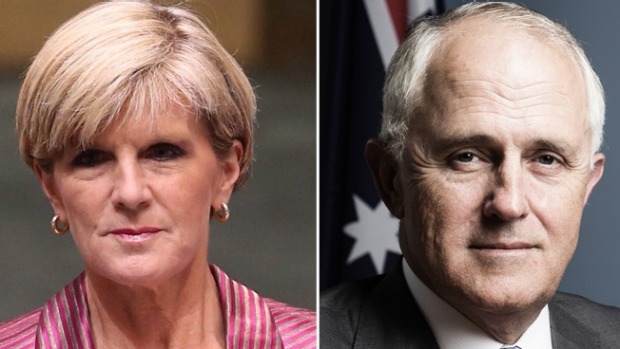
Foreign Affairs Minister Julie Bishop and Communications Minister Malcolm Turnbull are understood privately to be talking to each other about the future leadership. Photo: Andrew Meares, Nic Walker

Malcolm Turnbull and Julie Bishop, under growing pressure from their colleagues to challenge Tony Abbott for the prime ministership, are now actively considering their options, bringing closer the prospect of a strike against Mr Abbott in the weeks ahead.

The two top candidates for the Liberal leadership had been rebuffing their colleagues’ demands, but the shock loss of the Queensland election on Saturday jolted the party.

By Sunday, Mr Turnbull and Ms Bishop had started actively weighing their options for the first time. The two are close political friends. They are understood privately to be talking to each other about the future leadership of the party, raising the prospect of a joint ticket.

Both publicly declared their loyalty to Mr Abbott on the weekend. But a new Fairfax-Ipsos poll will do nothing to calm jangling Coalition nerves, despite Mr Abbott attempting to tie off more unpopular policies.

With his leadership under extreme pressure, Mr Abbott will finally walk away from his signature paid parental leave scheme on Monday after doggedly defending it as a core belief for years.

Itself a widely criticised $5.5 billion “captain’s call” which was announced without reference to the party room, Mr Abbott will finally run up the white flag at the National Press Club, accepting his friendless policy – a high profile election promise – was unaffordable and is henceforth “off the table”.

“I have listened to the feedback from my colleagues and from mums and dads around Australia – and they have said that, with our current budget constraints, the better focus now is on childcare if we want higher participation and a stronger economy. So a bigger, better PPL scheme is off the table,” he will say, according to speech notes provided by his office.

He will instead propose a new childcare assistance deal, and will also use the speech to flag a jobs package, new tighter national security laws, and changes to foreign investment rules.

It comes as voters across the country are abandoning the Coalition in droves.

Just three in 10 expect Mr Abbott to make it to the next election compared to seven out of 10 who say Opposition Leader Bill Shorten is safe in his position. Mr Shorten has also widened his advantage on the question of preferred prime minister, with half of all voters, or 50 per cent, choosing him over the incumbent, on 34.

A Queensland-style electoral rout now looms as a genuine possibility in 2016 with a Fairfax-Ipsos poll, showing the ALP has surged to the lead with a primary vote of 40 per cent, equalling its best performance in the months following the unpopular May budget last year.

The Coalition’s percentage has slipped backwards to 38.

The result puts Labor solidly ahead after preferences with 54 per cent of the vote to the Coalition on just 46 per cent. That represents a 7.5 swing away from the Coalition approaching the halfway mark of its first term and would see around 36 Coalition seats surrendered if the swing were uniform.

The statistically weighted nationwide telephone survey of 1405 adults was conducted from Thursday to Saturday – before the stunning Queensland result which looks to have wiped roughly the same number of state seats off the LNP column in the Sunshine State.

Mr Abbott’s approval rating – those voters who approve of his performance (29 per cent) minus those who disapprove (67 per cent) – has tanked after a disastrous start to 2015 and now stands at minus 38. That represents a precipitous 19-point deterioration in his approval rating since December when it was already in strongly negative territory at minus 19.

It is a lower approval rating than any of the previous three prime ministers at the same point of their first terms in office with John Howard registering an approval of 46 per cent and Kevin Rudd and Julia Gillard registering 74 and 33 respectively.

Mr Shorten’s approval is in positive territory with fewer detractors than supporters giving him an approval rating of plus 10 – up five points since December.

The result is sure to strengthen the arm of a growing number of Coalition MPs who believe Mr Abbott should relinquish the leadership in favour of either Communications Minister Turnbull, Foreign Affairs Minister Bishop, or Social Services Minister Scott Morrison.

The Coalition’s first preference vote has dipped 3 points since December to be just 38. It reached 45 per cent at the September 2013 election while Labor’s was just 33 at that time.

Based on preference flows from that election, Labor enjoys an 8-point buffer with 54 per cent of the two-party-preferred vote to the Coalition on 46. The Coalition achieved an actual share of the vote in 2013 of 53.5 to Labor’s 46.5.

However when voters were asked where their second preference would go now, Labor’s lead grew to a landslide-inducing 12-point advantage with a 56 per cent share of the overall vote to just 44 for the combined Liberal and Nationals parties.

Liberals are now actively discussing the leadership in the wake of a horror start to 2015 capped off by the Prime Minister’s self-inflicted knights and dames controversy, and the spectacular repudiation of the Liberal National Party government in Queensland.

Many worry that the Newman LNP government was of a similar ilk to the Abbott administration in Canberra, suggesting it will go the same way unless radical surgery is undertaken.

Senior ministers continue to rally to the Prime Minister’s cause, claiming he will lead the government to the next election. A two-day planning and policy cabinet meeting is scheduled to begin on Tuesday with ministers preparing to confront Mr Abbott on his performance.

They will be watching nervously on Monday during the Press Club address. The address has now assumed critical significance in his survival with MPs looking for evidence that he has the plans and the communications wherewithal to carry them to voters. But insiders admit a process of questioning and destabilisation is under way which may now be unstoppable.

A senior backbencher, speaking on condition of anonymity, said Mr Abbott’s tenure as Prime Minister was already terminal, with the only questions being how it ends and when.

He said it was in a “death spiral” primarily because Australians had decided on him and they “would not come back” to the Coalition under his leadership.

The government’s woes appear to be particularly focused on the leadership with voters expressing relatively high levels of confidence and satisfaction on some of the key policy issues.

For example, nearly three quarters of voters (72 per cent) say they are confident that the government is doing a good job of responding to the terrorist threat, and comfortably more than half think action needs to be taken to rein in potentially burgeoning Medicare costs – including via a $5 cut in the rebate for non-concessional patients.

A surprisingly high one in four voters even backed the awarding of an Australia Day knighthood for the Queen’s husband, Prince Philip, despite the “captain’s pick” decision of the Prime Minister becoming the flashpoint for what may be an assault on his leadership.

Labor is now bracing for the possibility of a switch to a new prime minister and the potential of an election this year if the new leader gets a poll bounce and seeks to capitalise on it by seeking a fresh mandate.

source:smh.com.au

Σαπέν: Νέο συμβόλαιο Ελλάδας – Ευρώπης

72C7F5B5678ED42543C997A4612EAD29

Την ανάγκη να θεσπιστεί ένα «νέο συμβόλαιο μεταξύ Ελλάδας και Ευρώπης» επισήμανε ο γάλλος υπουργός Οικονομικών Μισέλ Σαπέν μετά τη συνάντηση που είχε με τον Γιάνη Βαρουφάκη το απόγευμα της Κυριακής στο Παρίσι.

Ο έλληνας υπουργός Οικονομικών τόνισε ότι μαζί με τον γάλλο ομόλογό του κάθισαν στην ίδια πλευρά του τραπεζιού και έβαλαν απέναντί τους το πρόβλημα, με στόχο να δοθεί λύση που να είναι επωφελής για όλη την Ευρώπη. Το ίδιο θα πράξει η ελληνική κυβέρνηση με ΕΕ, Κομισιόν και ΔΝΤ, δήλωσε ο κ. Βαρουφάκης.

Η συνάντηση του υπουργού Οικονομικών Γιάνη Βαρουφάκη με το γάλλο ομόλογό του Μισέλ Σαπέν διεξήχθη σε εξαιρετικά φιλική ατμόσφαιρα, το απόγευμα της Κυριακής το Παρίσι. Ο υπουργός Οικονομικών εξήγησε ότι αυτό που επιδιώκει η ελληνική κυβέρνηση είναι «ένα νέο συμβόλαιο», που ο ίδιος θα ήθελε να το ονομάσει «κοινωνικό συμβόλαιο».

Στη διάρκεια της συνέντευξης Τύπου που ακολούθησε τη συνάντηση, ο κ. Βαρουφάκης επανέλαβε ότι δεν είναι προτεραιότα η άμεση εξασφάλιση της επόμενης δόσης και παραλλήλισε την Ελλάδα με τοξικομανή που για πέντε χρόνια περίμενε συνεχώς τη δόση του.

Σύμφωνα με το χρονοδιάγραμμα που παρουσίασε, η ελληνική κυβέρνηση σκοπεύει έως το τέλος Φεβρουαρίου να παρουσιάσει τις αναλυτικές προτάσεις της και στη συνέχεια για περίπου έξι εβδομάδες σκοπεύει να έλθει σε επαφές και συζητήσεις με τους θεσμούς και τους εταίρους (Κομισιόν, ΕΚΤ, ΔΝΤ) προκειμένου να καταλήξει σε μια λογική συμφωνία μαζί τους.

Ο Γάλλος υπουργός Οικονομικών δήλωσε την ικανοποίησή του για την ουσιαστική, σχεδόν δίωρη συνάντηση εργασίας που είχε με τον κ. Βαρουφάκη και επανειλλημένα διαβεβαίωσε για τη θέληση της Γαλλίας να «συνοδεύσει» τη νέα ελληνική κυβέρνηση στις προσπάθειές της.

Συζήτησαν εφ’ όλης της ύλης και σύμφωνα με τον κ. Σαπέν οι κοινές τους πεποιθήσεις βασίζονται σε 4 βασικά στοιχεία: Κατ’αρχάς η Ελλάδα είναι και θα παραμείνει στην Ευρωζώνη, κοινός στόχος είναι η ανάπτυξη, ιδιαίτερα για την Ελλάδα που έχει χάσει το 25% του ΑΕΠ, να έλθει μέσα από τις επενδύσεις, και τέλος ένα αποτελεσματικό και δίκαιο φορολογικό σύστημα.

Ειδικότερα, για το θέμα της φορολογικής μεταρρύθμισης, ο Μισέλ Σαπέν ανακοίνωσε ότι πρότεινε την ενίσχυση της συνεργασίας με την ελληνική κυβέρνηση και ότι θέτει στη διάθεσή της τις υπηρεσίες των εμπειρογνωμόνων που διαθέτει.

Ικανοποίηση στην κυβέρνηση

Μήνυμα ότι η διαπραγμάτευση με τους εταίρους θα οδηγήσει σε αμοιβαία επωφελή λύση για την Ελλάδα και την Ευρωπαϊκή Ένωση, χαρακτηρίζει, με δήλωσή του, ο κυβερνητικός εκπρόσωπος Γαβριήλ Σακελλαρίδης, την αποψινή συνάντηση Βαρουφάκη-Σαπέν, στο Παρίσι.

«Η ταύτιση των δύο Υπουργών Οικονομικών σε μία σειρά από κομβικά ζητήματα αποδεικνύει ότι οι θέσεις της ελληνικής κυβέρνησης βρίσκουν πλέον γόνιμο έδαφος στην Ευρώπη» αναφέρει ο κ. Σακελλαρίδης και προσθέτει ότι στο ίδιο πλαίσιο κινήθηκε, με συνέντευξή του στο CNN, ο αμερικανός πρόεδρος Μπάρακ Ομπάμα.

Ο κυβερνητικός εκπρόσωπος υπογραμμίζει ότι ο ελληνικός λαός «μπορεί να είναι βέβαιος ότι η κυβέρνηση θα τιμήσει την εντολή που του έδωσε με αποφασιστικότητα και νηφαλιότητα».

Πηγή:in.gr

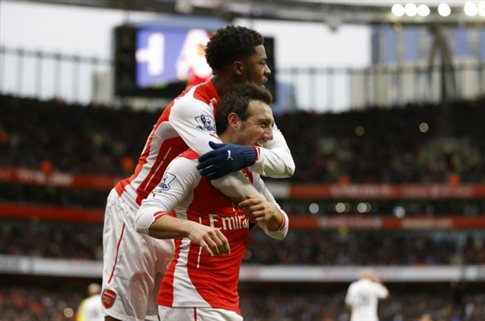
Άρσεναλ… 5 αστέρων, διέλυσε την Άστον Βίλα

FADE47624511D9E47819B10206EB7FF7

Ένα εύκολο απόγευμα πέρασε σήμερα η Άρσεναλ στο «Εμιρέιτς Στέιντιουμ», καθώς συνέτριψε 5-0 την Άστον Βίλα, στο πρώτο παιχνίδι της ημέρας για την 23η αγωνιστική της Premier League και «έπιασε» προσωρινά τη Σαουθάμπτον στη βαθμολογία.

Με γκολ του Τζόντζο Σέλβι στο 83′ η Σουόνσι έκανε τη μεγάλη έκπληξη και νίκησε 1-0 τη Σαουθάμπτον στο «Σεντ Μέρις».

Ετσι, οι «Αγιοι» έχασαν μεγάλη ευκαιρία να πλησιάσουν τη Μάντσεστερ Σίτι στη δεύτερη θέση της βαθμολογίας, ενώ πλέον μοιράζονται την τέταρτη με την Αρσεναλ.

Τα αποτελέσματα και οι σκόρερ της 23ης αγωνιστικής:

Χαλ-Νιούκαστλ 0-3
(40΄ Καμπεγιά, 50΄ Αμεόμπι, 78΄ Γκουφράν)

Κρίσταλ Πάλας-Έβερτον 0-1
(2΄ Λουκάκου)

Λίβερπουλ-Γουέστ Χαμ 2-0
(51΄ Στέρλινγκ, 80΄ Στάριτζ)

Μάντσεστερ Γ.-Λέστερ 3-1
(27΄ Φαν Πέρσι, 32′ Φαλκάο, 44΄ αυτ. Μόργκαν – 80΄ Βασιλέφσκι)

Στόουκ Σίτι-ΚΠΡ 3-1
(21΄, 34΄, 90+2΄ Γουόλτερς – 36΄ Κράντσαρ)

Σάντερλαντ-Μπέρνλι 2-0
(20΄ Γουίκαμ, 34΄ Ντεφόου)

Γουέστ Μπρομ-Τότεναμ 0-3
(6΄ Έρικσεν, 15΄, 64΄ πεν. Κέιν)

Τσέλσι-Μάντσεστερ Σίτι 1-1
(41΄ Ρεμί – 45΄ Νταβίντ Σίλβα)

Άρσεναλ-Άστον Βίλα 5-0
(8΄ Ζιρού, 56΄ Οζίλ, 63΄ Γουόλκοτ, 75΄ πεν. Καθόρλα, 90+2΄ Μπεγερίν)

Σαουθάμπτον-Σουόνσι 0-1
(83΄ Σέλβι)

ΒΑΘΜΟΛΟΓΙΑ (σε 23 αγώνες)
Τσέλσι 53
Μάντσεστερ Σίτι 48
Μάντσεστερ Γιουν. 43
Σαουθάμπτον 42
Άρσεναλ 42
Τότεναμ 40
Λίβερπουλ 38
Γουέστ Χαμ 36
Σουόνσι 33
Στόουκ Σίτι 32
Νιούκαστλ 30
Έβερτον 26
Κρίσταλ Πάλας 23
Σάντερλαντ 23
Γουέστ Μπρομ 22
Άστον Βίλα 22
Μπέρνλι 20
Χαλ 19
ΚΠΡ 19
Λέστερ 17

Πηγή:in.gr

Στο +5 μέσω Βέροιας ο ΟΣΦΠ, νίκες για ΠΑΟ, ΠΑΣ και Ξάνθη

39110D76CC239F49A725761B3F93D77F

Ο Ολυμπιακός πέρασε δύσκολα από τη Βέροια (Βέροια – Ολυμπιακός 0-2) που αγωνίστηκε από το 12′ με δέκα παίκτες και από το 76′ με εννέα και εκμεταλλεύτηκε την σαββατιάτικη ήττα του ΠΑΟΚ, ξεφεύγοντας στην κορυφή με πέντε βαθμούς διαφορά.

Νωρίτερα, στον Πλατανιά «ξέσπασε» ο Παναθηναϊκός μετά την ήττα-αποκλεισμό από το Κύπελλο, αφού οι «πράσινοι» κέρδισαν χωρίς καμία δυσκολία την ομάδα των Χανίων (Παναθηναϊκός – Πλατανιάς 3-0) και έδειξαν σημάδια αγωνιστικής ανάκαμψης.

Στη Λιβαδειά, η Ξάνθη κατάφερε να φύγει με τους τρεις βαθμούς απέναντι στον Λεβαδειακό (Λεβαδειακός – Ξάνθη 1-2), ενώ στα Γιάννενα, η Κέρκυρα προηγήθηκε, αλλά ο ΠΑΣ κατάφερε με ολική επαναφορά να φτάσει στη νίκη (ΠΑΣ Γιάννινα – Κέρκυρα 2-1).

Δείτε τι έγινε στους αγώνες του Σαββάτου

Σάββατο 31 Ιανουαρίου
Πανιώνιος – Πανθρακικός 2-1
Καλλονή – Αστέρας Τρίπολης 1-0
ΠΑΟΚ – Παναιτωλικός 1-2

Κυριακή 1η Φεβρουαρίου
Παναθηναϊκός-Πλατανιάς 3-0
Λεβαδειακός-Ξάνθη 1-2
ΠΑΣ Γιάννινα-Κέρκυρα 2-1
Βέροια-Ολυμπιακός 0-2
Ατρόμητος-ΟΦΗ (Δεν ορίστηκε)
Εργοτέλης-Νίκη Βόλου 3-0 (α.α)

ΒΑΘΜΟΛΟΓΙΑ (σε 21 αγώνες)
1. Ολυμπιακός 51
2. ΠΑΟΚ 46
3. Παναθηναϊκός 43
4. Αστέρας Τρίπολης 35
. Παναιτωλικός 35
6. Ατρόμητος 33
7. Ξάνθη 31
. ΠΑΣ Γιάννινα 31
9. Βέροια 30
10. Καλλονή 27
11. Κέρκυρα 25
12. Πλατανιάς Χανίων 22
13. Πανθρακικός 21
. Λεβαδειακός 21
15. Πανιώνιος 19 -20αγ.
16. Εργοτέλης 18 -20αγ.
17. ΟΦΗ 10
18. Νίκη Βόλου 7
* Στον ΟΦΗ έχει επιβληθεί ποινή αφαίρεσης 10 βαθμών.

Το πρόγραμμα της επόμενης (22ης) αγωνιστικής:

ΤΕΤΑΡΤΗ 4/2
Κέρκυρα-Λεβαδειακός 15:00 NS3
Παναιτωλικός-Εργοτέλης 15:00 NS2
Ξάνθη-Πανιώνιος 17:15 NS6
Αστέρας Τρίπολης-Πλατανιάς 17:15 NS7
ΟΦΗ-ΠΑΟΚ 17:15 NS2
ΠΑΣ Γιάννινα-Βέροια 17:15 NS3
Ολυμπιακός-Ατρόμητος 19:30 NS1

ΠΕΜΠΤΗ 5/2
Νίκη Βόλου-Παναθηναϊκός 19:30
Πανθρακικός-Καλλονή 19:30 NS1

Πηγή: in.gr

Eurozone alarm grows over Greek bailout brinkmanship

A Greek and an EU flag wave in front of the ancient temple of Parthenon atop the Acropolis hill in Athens
Eurozone officials are increasingly worried that Greece’s €172bn bailout will expire at the end of the month and potentially plunge it into chaos, after a series of meetings with the new Greek government convinced them Athens is unaware of how perilous its financial situation has become.

Yanis Varoufakis, the new Greek finance minister, embarked on a tour of European capitals, starting with Paris on Sunday, intended to garner support for a renegotiation of its bailout and debt burden.

EU officials were dismayed on Friday when Mr Varoufakis rejected a bailout extension — and refused to co-operate with the “troika” of international creditors. It capped a tumultuous first week in power for the anti-austerity government, whose announcements reversing spending cuts and privatisation roiled markets and wiped 40 per cent off the value of Greek banks.

There was some relief when Alexis Tsipras, Greece’s radical leftwing prime minister, struck a more emollient tone over the weekend, saying he was not “seeking conflict” and hoped to “reach a mutually beneficial agreement”. He also revealed he had called Mario Draghi, president of the European Central Bank, to reassure him of his intention to reach a deal.

But patience in Greece’s creditor countries, particularly Germany, is running thin. Martin Schulz, the president of the European parliament and a German Social Democrat, urged Greece to go easy with its repeated attacks on Berlin. “Bashing the Germans might go down well in some quarters. But it is also short-sighted and gets us nowhere,” he told Welt am Sonntag newspaper. On Saturday, Chancellor Angela Merkel, bluntly warned Athens not to expect “a further haircut”.

German officials are also annoyed that Mr Varoufakis, who visits London on Monday and then Rome, has made no contact with Berlin.

Officials familiar with the conversations between eurozone policy makers and Athens said they were no wiser about what sort of international financial help Greece was seeking or how it intended to negotiate. Eurozone finance ministers want to discuss Greece’s needs at their next meeting on February 16 — if not sooner, by telephone.

The bailout programme is due to expire on February 28. If it is not renewed, Greece will for the first time in five years be left without an EU financial backstop. Because the International Monetary Fund is unlikely to distribute funds without the EU’s participation, Athens could lack access to emergency funding to repay billions of euros in debt due in the coming months.

EU officials believe the country could eke out €4.3bn in payments owed to the IMF next month, but will run into a wall at the beginning of June when the first of two bonds worth more than €3bn must be paid. Without bailout funding, and an ongoing sell-off in the private bond markets, Athens would be forced to default.

Of more concern to many officials is the Greek banking system, which after massive outflows of deposits, is relying on cheap ECB loans to fund day-to-day operations. ECB officials over the weekend made it clear that if the programme expires at the end of February, the central bank would be forced to cut off their liquidity loans.

But they have not clarified whether Greek banks could still access back-up central bank financing, known as emergency liquidity assistance. Although technically loaned by the Greek central bank, it must be approved by the ECB which has been cagey on whether such lending would be allowed.

Since the outbreak of the eurozone crisis, Greece’s banking system has always been seen as the most likely route to an “accidental” Greek exit from the euro. Without ELA lending, Athens would probably have to print its own currency to keep its banking system running.

Mr Draghi has told colleagues he is planning to drive a hard bargain on bank liquidity — a similar strategy used with Cyprus in March 2013, which forced Nicosia to accept onerous bailout terms. But Mr Draghi is also wary of unelected central bankers taking a decision that would force Greece from the euro.

The French government is hoping to act as broker between a defiant Athens and its increasingly exasperated Berlin.

“France is well placed to be the link … between this Europe of budgetary rigour and this Europe of the south and in particular Greece, which is suffering,” Michel Sapin, finance minister, said last week. But Paris, like Berlin, has ruled out the debt cancellation demanded by Athens, underlining how few allies the new Greek government has.

source:ft.com