Monthly Archives: February 2015

Χιλιάδες πολίτες «ενάντια στους εκβιασμούς των δανειστών»

B9lCpGyIEAAP8ta

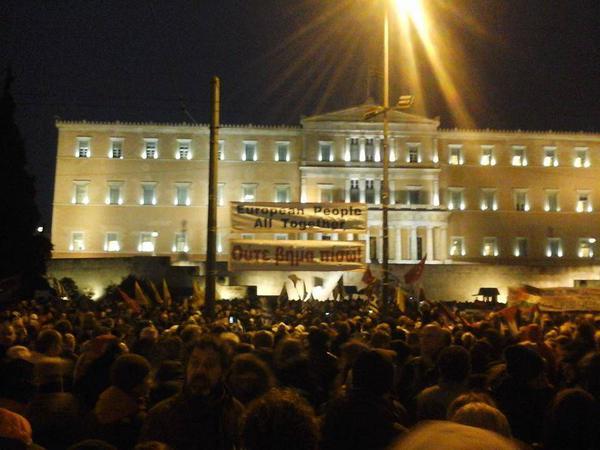
Νέες συγκεντρώσεις «ενάντια στους εκβιασμούς των δανειστών» πραγματοποιήθηκαν σε Αθήνα, Θεσσαλονίκη και άλλες πόλεις, με αφορμή την έκτακτη συνεδρίαση του Eurogroup.

Στην Αθήνα η κεντρική συγκέντρωση έγινε στο Σύνταγμα. Το παρών έδωσαν δεκάδες χιλιάδες πολίτες. Γεμάτη κόσμο ήταν η πλατεία Συντάγματος, η Αμαλίας, η Γεωργίου Α’ και η Όθωνος, ενώ με μεγάλη δυσκολία διεξαγόταν η κίνηση στην οδό Σταδίου.

Σημειώνεται ότι δεν υπήρχε αστυνομική παρουσία.

Κεντρικό σύνθημα της συγκέντρωσης στο Σύνταγμα ήταν «Ανάσα αξιοπρέπειας σε όλη την Ελλάδα» και οι διοργανωτές απευθύνουν κάλεσμα συμμετοχής μέσω του Facebook.

Χιλιάδες οι συγκεντρωμένοι και στον Λευκό Πύργο της Θεσσαλονίκης και αυτό παρά το δριμύ ψύχος. Στο συλλαλητήριο συμμετείχαν, μεταξύ άλλων, η τρίτη αντιπρόεδρος της Βουλής, Δέσποινα Χαραλαμπίδου και ο βουλευτής Ημαθίας του ΣΥΡΙΖΑ, Κώστας Λαπαβίτσας.

Συγκέντρωση υπέρ των θέσεων της ελληνικής κυβέρνησης στις διαπραγματεύσεις με τους εταίρους έγινε στο Ηράκλειο στην πλατεία Ελευθερίας, υπό αντίξοες καιρικές συνθήκες λόγω του ψύχους και της βροχής. Αυτό, πάντως, δεν εμπόδισε τους Ηρακλειώτες να πάρουν μέρος μαζικά και δυναμικά στο συλλαλητήριο.

Στα Χανιά, εκατοντάδες πολίτες διαδήλωσαν στην πλατεία Δημοτικής Αγοράς. Παρά το κρύο που επικρατούσε πολίτες κάθε ηλικίας δήλωσαν με την παρουσία τους τη στήριξή τους στις θέσεις της κυβέρνησης για τη διαπραγμάτευση με τους δανειστές.

Συγκεντρώσεις πραγματοποιήθηκαν και σε πολλές ακόμα πόλεις της χώρας. Εκατοντάδες πολίτες συγκεντρώθηκαν στις 6 το απόγευμα στην κεντρική πλατεία της Τρίπολης, στα Περιβολάκια της Κορίνθου, στην κεντρική πλατεία της Καλαμάτας, αλλά και στις υπόλοιπες πόλεις-πρωτεύουσες των νομών της Πελοποννήσου, δηλώνοντας εμπράκτως τη στήριξή τους στην κυβέρνηση.

Πλήθος κόσμου και στις πόλεις της Ηπείρου, παρά τις πολύ χαμηλές θερμοκρασίες: Ιωάννινα, Πρέβεζα, Ηγουμενίτσα και Άρτα.

Συγκεντρώσεις έγιναν και σε Λάρισα και Καρδίτσα.

Εκατοντάδες Κύπριοι και Έλληνες που διαμένουν στην Κύπρο διαδήλωσαν στη Λευκωσία, αψηφώντας το βροχερό καιρό και το τσουχτερό κρύο.

Την εκδήλωση οργάνωσε το Δίκτυο Αλληλεγγύης Ελλήνων πολιτών Κύπρου με την υποστήριξη του ΑΚΕΛ, του ΔΗΚΟ, της ΕΔΕΚ, των Οικολόγων, της Συμμαχίας Πολιτών και του τουρκοκυπριακού κόμματος Ενωμένη Κύπρος, καθώς και διάφορες οργανώσεις.

Οι διαδηλωτές που συγκεντρώθηκαν έξω από το Σπίτι της Ευρώπης κάλεσαν την ΕΕ να πάρει το μήνυμα ότι η πολιτική της λιτότητας έχει αποτύχει.

Συλλαλητήριο πραγματοποιήθηκε και στο Ραδιομέγαρο της Αγ.Παρασκευής, από πρώην εργαζομένους της πρώην ΕΡΤ, μέλη πολιτικών φορέων και σωματείων, με αφορμή τη συμπλήρωση 20 μηνών από το κλείσιμο του πρώην φορέα της Δημόσιας Ραδιοτηλεόρασης.

Συγκέντρωση θα πραγματοποιηθεί απόψε και στη Νέα Υόρκη. Σύμφωνα με ανακοίνωση της διοργανωτικής επιτροπής, στην οποία συμμετέχουν αρκετές ανθρωπιστικές, πολιτικές, πολιτιστικές και συνδικαλιστικές οργανώσεις της αμερικανικής μεγαλούπολης, η συγκέντρωση θα γίνει μπροστά στα γραφεία της Αντιπροσωπείας της Ευρωπαϊκής Ένωσης στον Οργανισμό Ηνωμένων Εθνών, στη 1 μετά τα μεσάνυχτα (ώρα Ελλάδας).

Συγκεντρώσεις έγιναν επίσης στο Λονδίνο και τη Λισαβόνα.

Ο κυβερνητικός εκπρόσωπος Γ.Σακελλαρίδης δήλωσε:

«Οι πολίτες της Αθήνας και δεκάδων άλλων πόλεων της Ελλάδας και της Ευρώπης δίνουν και πάλι ζωή στις πλατείες σε διαδηλώσεις ενάντια στη λιτότητα. Το τσουχτερό κρύο και το χιόνι δεν στάθηκαν εμπόδιο στο να γεννηθεί ένα νέο “κίνημα πλατειών” προκειμένου να συμπαρασταθεί στην προσπάθεια της ελληνικής κυβέρνησης ενάντια στην φτώχεια και την ανεργία. Στο Eurogroup και τη Σύνοδο Κορυφής δεν διαπραγματεύεται μόνη της η ελληνική κυβέρνηση αλλά μαζί με τα 10.000.000 των Ελλήνων πολιτών. Η ελπίδα έδιωξε τον φόβο».

Πηγή:in.gr

Ο Ολυμπιακός υποτίμησε την ΑΕΚ, σκορ πρόκρισης ο Ηρακλής

Ο Ολυμπιακός υποτίμησε την ΑΕΚ, σκορ πρόκρισης ο Ηρακλής

Η ΑΕΚ κατάφερε να σταθεί όρθια στο «Γ.Καραϊσκάκης» (Ολυμπιακός – ΑΕΚ 1-1) παίζοντας κατά διαστήματα καλύτερο ποδόσφαιρο από τους Ερυθρόλευκους, που μάλλον υποτίμησαν την Ένωση. Έτσι, οι Κιτρινόμαυροι μπορούν να ελπίζουν σε πρόκριση στα ημιτελικά του Κυπέλλου Ελλάδος στη ρεβάνς του ΟΑΚΑ στις 4 ή 5 Μαρτίου.

Νωρίτερα, ο Ηρακλής έκανε μεγάλο βήμα για την πρόκριση στα ημιτελικά, κερδίζοντας τον Πανιώνιο (Ηρακλής – Πανιώνιος 2-0) στο Καυτανζόγλειο. Έτσι, οι «κυανόλευκοι» βρίσκονται μπροστά σε μία ακόμη έκπληξη, μετά τον αποκλεισμό του Αστέρα Τρίπολης.

Παράλληλα την Πέμπτη, ο ΟΦΗ θα υποδεχθεί την Ξάνθη σε μία εξαιρετικά ανοικτή αναμέτρηση, όπως αναμένονται να είναι και το Χανιά-Απόλλων Σμύρνης.

Η ΑΕΚ έμεινε «όρθια» στο Φάληρο και ελπίζει

Η ΑΕΚ έμεινε «όρθια» στο Φάληρο και ελπίζει

Ολυμπιακός και ΑΕΚ αναδείχθηκαν ισόπαλοι 1-1 στο «Γ.Καραϊσκάκης» στην πρώτη τους αναμέτρηση για την φάση των «8» του κυπέλλου Ελλάδας και η πρόκριση θα κριθεί στην ρεβάνς του ΟΑΚΑ.

Η «Ένωση» προηγήθηκε με τον Αραβίδη στο 14΄ αλλά ο Μιλιβόγεβιτς ισοφάρισε για τους «ερυθρόλευκους» στο 48΄.

Ο Ολυμπιακός παρατάχθηκε με αρκετές αλλαγές στο βασικό του σχήμα και το πλήρωσε αφού η εμφάνιση του ήταν κάκιστη στο πρώτο ημίχρονο με τους παίκτες του να κάνουν αρκετά λάθη από την πίεση της ΑΕΚ.

Η πρώτη καλή ευκαιρία για την «Ένωση» ήρθε μόλις στο 4’ με τον Μπαρμπόσα να εκμεταλλεύεται τα κενά στην άμυνα των «ερυθρόλευκων» σουτάροντας ανενόχλητος από το ύψος της μεγάλης περιοχής αλλά ο Μέγερι απέκρουσε με την μπάλα να καταλήγει κόρνερ αφού χτύπησε πρώτα στο οριζόντιο δοκάρι του.

Στο 11΄ ακόμα ένα λάθος των γηπεδούχων που παραλίγο να εκμεταλλευτεί η ΑΕΚ όταν μετά από ένα λάθος γύρισμα του Σαντάνα στον Μέγιερι ο Μάνταλος έκλεψε αλλά τελευταία στιγμή τον έκοψε με τάκλιν ο τερματοφύλακας των Πειραιωτών.

Στο 14΄όμως ήρθε το γκολ για τον «δικέφαλο» όταν ο Σοϊλέδης βρήκε με συρτή σέντρα τον Αραβίδη στην μικρή περιοχή του Ολυμπιακού αυτός γύρισε και με κοντινό πλασέ έκανε το 1-0.

Ο Ολυμπιακός παρόλο που είχε την κατοχή (65%) αδυνατούσε να δημιουργήσει φάσεις και μοναδική ευκαιρία που είχε στο πρώτο μέρος της αναμέτρησης ήταν η κεφαλιά του Φουστέρ μετά από σέντρα του Ντουρμάζ στο 35΄ που πέρασε άουτ.

Ο Ολυμπιακός κατάφερε να ισοφαρίσει μόλις τρία λεπτά από την επανέναρξη του αγώνα όταν μετά εκτέλεση φάουλ του Φορτούνη ο Διαμαντάκος πήρε την κεφαλιά η μπάλα βρήκε στον Μιλιβόγεβιτς για να καταλήξει στα δίχτυα του Ανέστη.

Η ΑΕΚ στο 51΄, μετά από ένα ακόμα αβίαστο «ερυθρόλευκο» λάθος, απείλησε με δυνατό του σουτ του Σοϊλέδη που «εξουδετέρωσε» ο Μέγερι με διπλή προσπάθεια.

Στο 60΄ ο Μάνταλος έκλεψε την μπάλα μετά από ένα τραγικό λάθος του Σιόβα τροφοδότησε τον Πλατέλα αλλά το απευθείας σουτ που δοκίμασε ο τελευταίος πέρασε άουτ.

Στο 82΄ ο Ντουρμάζ έδωσε «ασίστ» στον Πλατέλα αλλά ευτυχώς για τους γηπεδούχους ο Μαζουακού έκοψε τον παίκτη της ΑΕΚ πριν προλάβει αυτός να απειλήσει τον Μέγερι. Στο 90΄ο Ολυμπιακός λίγο έλειψε να κάνει την ολική ανατροπή όταν ο Ανέστης έκανε λάθος έξοδο αλλά οι συμπαίκτες του απομάκρυναν την μπάλα.

Διαιτητής: Λαμπρόπουλος (Ηλείας)

Κίτρινες: Σαλίνο, Φορτούνης -Μπαρμπόσα, Λαμπρόπουλος, Μάνταλος

Ολυμπιακός (Περέιρα):
Μέγιερι, Σαλίνο, Σαντάνα (46΄ Μήτρογλου), Σιόβας, Μαζουακού, Εντινγκά, Μιλιβόγεβιτς, Φουστέρ (46΄ Αφελάι), Ντουρμάζ, Φορτούνης, Διαμαντάκος (65΄ Ντομίνγκες).

ΑΕΚ (Δέλλας):
Ανέστης, Μπακάκης, Λαμπρόπουλος, Τζανετόπουλος, Σοϊλέδης, Γιόχανσον, Ανάκογλου, Μάνταλος (86΄ Μάνταλος), Μπαρμπόσα (72’ Ρόβας), Πλατέλλας (90+4΄ Σαρρής), Αραβίδης.

Πηγή:in.gr

Coalition MPs stage walkout after Bill Shorten raises budget in Closing the Gap speech

A group of Coalition MPs walk out of the chamber while Opposition Leader Bill Shorten raised the budget in his Closing the Gap speech.

A group of Coalition MPs walk out of the chamber while Opposition Leader Bill Shorten raised the budget in his Closing the Gap speech. Photo: Alex Ellinghausen


Bipartisan consensus on Indigenous policy ruptured on Wednesday when several Coalition MPs walked out on a speech by Labor leader Bill Shorten calling on the government to reverse $500 million in budget cuts.

The annual Closing the Gap report to Parliament exposed deep differences between the government and opposition, with Indigenous leaders clapping the speech by Mr Shorten after responding in polite silence to an address by Mr Abbott.

The Prime Minister expressed “profound disappointment” that the report showed most targets are not on track to be met, including the critical goal of closing the gap on life expectancy.

Lamenting that there were too many “backward steps” in the report, Mr Abbott said this was not because of any lack of goodwill or effort by successive governments.

The Prime Minister’s chief indigenous advisor, Warren Mundine, described the results as “damning” and called for urgent action to engage with Aboriginal leaders.

“We need a breakthrough and we need some drastic actions to happen now,” he said.

Opposition Leader Bill Shorten delivers a Closing the Gap statement at Parliament House.

Opposition Leader Bill Shorten delivers a Closing the Gap statement at Parliament House. Photo: Alex Ellinghausen


Mr Abbott pointed to the likely achievement of a new target of closing the gap on school attendance within five years as evidence of progress.

Only two of the original six targets – on Indigenous mortality rates for children under five and year 12 attainment – were on track to be met.

While Mr Shorten said every opposition wanted the government to succeed in tackling Indigenous disadvantage, he said he felt compelled to highlight what cuts to services would mean.

“Right now, a host of vital organisations don’t know whether their funding will be continued or withdrawn,” he said, prompting the walkout by several government MPs.

“When people fleeing family violence need a safe place to stay, cuts mean that shelters close,” Mr Shorten said. “When having a lawyer can determine whether a first-time offender gets a second chance or a prison sentence, these cuts will rob Indigenous Australians of legal aid.”

Victorian Liberal MP Russell Broadbent was first to show his anger by leaving the chamber and later said he believed the partisan comments belittled an occasion that should have been above point-scoring.

“The people of Australia are calling out for leaders who can rise above the fray,” he told Fairfax Media.

Others who walked out included Andrew Nikolic, Angus Taylor, John Cobb, Ken O’Dowd and Melissa Price.

Labor’s Indigenous senator, Nova Peris, who was observing from the floor of the Parliament, described the walkout as a disgrace. “If we are fair dinkum about this we’ve got to stop playing political football with Aboriginal people’s lives.”

Mr Shorten also backed the calls from Indigenous leaders for a new target to close the gap between the incarceration rates of Indigenous and non-Indigenous Australians.

“The rate of jailing Indigenous Australians has almost doubled in the last decade. It is time to speak out against this silent emergency,” he said.

Indigenous Affairs Minister Nigel Scullion said it was unfortunate that Mr Shorten had used the occasion for “political point-scoring”. He insisted programs that were effective would be told next month that their funding would continue.

“The only ones who need to be a bit fearful about their future are those who are not delivering a service that is decent and proper,” he told Fairfax Media.

He reaffirmed the government’s rejection of a target to reduce Indigenous incarceration, but said he was working on a number of initiatives with state and territory governments he believed would reduce incarceration rates.

Aboriginal and Torres Strait Islander Social Justice Commission Mick Gooda, who is also co-chair of the Close the Gap campaign, said he was not concerned by the lack on consensus in the Parliament.

“I think bipartisanship will be pretty safe. I gotta say, within that bipartisanship, we still need tension. We still need oppositions to hold government to account. It doesn’t mean we don’t have any debate around it, either outside or inside the Parliament.”

source:smh.com.au

We must stop Angela Merkel’s bullying – or let the forces of austerity win

Alexis Tsipras

Germany can’t be allowed to strangle Syriza at birth. The fate of millions across Europe depends on it.

Angela Merkel is the most monstrous western European leader of this generation. Politicians who inflict economic cruelty on a mass scale, trashing the lives of millions as they do so, do not end up in courts to face justice. But Merkel undoubtedly stands tried and convicted in the dock of history already. The EU’s high priests of austerity conjure up the words of Charlie Chaplin’s rousing speech at the end of The Great Dictator: “Machine men, with machine minds and machine hearts”. The Greeks have rebelled against machine men – and women – and they are crying out for others to follow.

However, Merkel, the EU bureaucrats and international financiers are cruel but not stupid: they know hope is a contagion, and will do all they can to stop Syriza inspiring others. Merkel has already demanded that Alexis Tsipras, the new Greek prime minister, ignore his democratic mandate and stick to foreign-imposed austerity measures.

In the runup to the election, leaks from the German government suggested a Greek exit from the eurozone: a clear message to the Greek people not to vote the wrong way. For those who want Europe to have a future that isn’t one of falling living standards, rising insecurity and stripped-away social provision, it is the policies of Merkel and the rotten elites she represents that must face a reckoning.

Consider the Nobel prizewinning economist Paul Krugman’s skewering of a policy that has hacked away a quarter of the Greek economy. As Krugman notes, the troika – the IMF, European Central Bank and European commission – promoted “an economic fantasy”, for which the Greeks have paid. They projected that unemployment would peak at 15% in 2012, but it hurtled to over 25% instead. He demolishes the lie that the Greeks did not impose enough austerity: they cut even further than was planned, and as the economy collapsed so did the tax revenues.

The Greeks must live within their means; they are suffering from years of profligacy, unlike the thrifty German state, or so the mantra goes. Greece is certainly more afflicted by the scandal of tax avoidance and evasion than most nations, and Syriza promises a welcome radical crackdown on both.

But the myths that underpin what is barely veiled collective punishment would be destroyed. As a Bloomberg editorial put it: “Every irresponsible borrower is enabled by an irresponsible lender.” Germany ploughed money into countries such as Greece and Spain – that’s the “magic” of deregulated markets – and in doing so “lent more than they could afford”. German banks and their political champions should have known this would end in disaster.

So why didn’t they act? Simple: greed. As Kevin Drum, a US writer, explains: it provided “German savers with a place to invest their money” and, crucially, “provided the periphery with enough cheap capital to act as a thriving market for German exports”. Who were the first EU countries to exceed the budget rules tied to the single currency, but Germany and France? Powerful as they were, they faced no comeback. Does that absolve the Greek elites – note, not the Greek people – of their role in calamity? Of course not. But Merkel should be begging for forgiveness too.

All Europe’s leaders have to offer is broken societies and broken people. Over half of young people in Spain and Greece are without work, leaving them scarred: as well as mental distress, they face the increased likelihood of unemployment and lower wages for the rest of their lives.

Workers’ rights, public services, a welfare state: all won at such cost by tough, far-sighted people, all being stripped away. There is a certain smugness expressed in Britain: just look across the waters at how bad things could be. Certainly Britain has been free of the euro. It has employed quantitative easing on a grand scale – though for the benefit of banks rather than people, and in an unsustainable, credit-fuelled mini-boom.

But in any case, British workers have suffered the biggest fall in their paypackets since the Victorian era, and one of the worst of any EU country. Britain’s rulers, just like those everywhere else in Europe, have punished their own people for the actions of an ever-thriving elite.

That’s why Greece has to be defended urgently – not just to defend a democratically elected government and the people who put it there. European elites know that if Syriza’s demands are fulfilled, then other like-minded forces will be emboldened. Spain’s Podemos, a surging anti-austerity movement, will be more likely to triumph in elections this year. Syriza has already achieved change: the European Central Bank’s limited quantitative easing is partly a response to its rise.

Even that well-known radical Reza Moghadam, Morgan Stanley’s vice-chairman of global capital markets and ex-head of the IMF’s European department, confirms Syriza’s strong negotiating position. The precedent of an exit from the eurozone would lead to the market punishing other members, and to calls for the erasing of half of Greece’s debt. A victory is possible, but it depends on popular pressure right across Europe. If Syriza extracts concessions, it will be a stunning victory for all anti-austerity forces, and will help shift the balance of power in Europe.

But if Greece loses, as those governments and banks that will now try to suffocate Syriza at birth intend? Then austerity will triumph over democracy. The future of millions of Europeans – Greek, French, Spanish and British alike – will be bleak indeed. That is why a movement to defend the already ruined nation of Greece is so important. Defeated Germany benefited from debt relief in 1953, and we must demand that for Greece today. We must champion Syriza’s call for the end of an austerity policy that has achieved nothing but social ruin, across Europe in favour of a strategy of growth.

Syriza’s posters declared: “Hope is coming”. Its election must represent that everywhere, including in Britain, where YouGov polling reveals huge popularity for a stance against austerity and the power of big business. A game of high stakes indeed: one that, if lost, will mean countless more years of economic nightmare.

This rerun of the 1930s can be ended – this time by the democratic left, rather than by the fascist and the genocidal right. The era of Merkel and the machine men can be ended – but it is up to all of us to act, and to act quickly.

source:theguardian.com

Keiser Report: Hidden Truth About Greece

In this episode of the Keiser Report back in London, Max Keiser and Stacy Herbert discuss the Greek situation and that a nation is not what it thinks it is but what others attempt to hide about that nation – like the fact that it is bankrupt.

They discuss the role Goldman Sachs played in helping Greece hide its debts and, thus, strapping it to the euro and the mispricing of real risk by well-compensated bond investors lending to Greece at ultra low interest rates.

They also discuss that, while deflated footballs was the main headline on the nightly news in America, a memo was delivered to Obama outlining the various ways that brokers defraud American investors of years worth of retirement income.

source:www.facebook.com


Germany’s Carthaginian terms for Greece

 greece_vote_2136049b

By

The last time Germany needed a bail-out from world creditors, it secured better terms than shattered Greece last week.

The US, Canada, Britain, France, Greece, and other signatories at the London Debt Agreement of 1953 granted Chancellor Konrad Adenauer a 50pc haircut on all German debt, worth 70pc in relief with stretched maturities. There was a five-year moratorium on interest payments.

The express purpose was to give Germany enough oxygen to rebuild its economy, and to help hold the line against Soviet overreach. This sweeping debt forgiveness caused heartburn for the British – then in dire financial straits, themselves forced to go cap in hand to Washington for loans. The Greeks had to forgo some war reparations.

Yet statesmanship prevailed. The finance ministers of the day agreed to overlook the moral origins of that debt, and the moral hazard of “rewarding” a country that had so disturbed the European order.

The Wirtschaftswunder whittled down the burden of German debts to modest levels within a decade. Germany emerged as a vibrant democracy and a pillar of the western security system.

Greece has less strategic relevance, and must comply with tougher terms.

The EU deal will in theory cap Greece’s public debt at 120pc of GDP in 2020 – at the outer limit if viability – after eight years of belt-tightening and depression, if all goes perfectly.

Since nothing has gone to plan since Europe’s austerity police began to administer shock therapy eighteen months ago, even this grim promise seems too hopeful.

The Greek economy was expected to contract by 3pc in 2011 under the original EU-IMF Troika plan. In fact it shrank by 6pc, and is now entering what the IMF fears could become “a downward spiral of fiscal austerity, falling disposable incomes, and depressed sentiment.”

Manufacturing output fell 15.5pc in December. The M3 money supply crashed at a 15.9pc rate. Unemployment jumped to 20.9pc in November, up from 18.2pc the month before, and is already above the worse-case peak pencilled in by the Troika.

Some 60,000 small firms and family businesses have gone bankrupt since the summer, the chief reason why VAT revenues dropped 18.7pc in January. The violence of the slump is overwhelming the effects of fiscal retrenchment. So much Sisyphean effort for so little gain.

You can argue that Greece has dragged its feet on EU-IMF demands – though the IMF is careful not make such a crude claim, offering mixed praise in its last report.

But as Professor Vanis Varoufakis from Athens University says: “If we had better implemented the measures, the worse it would be: the economy would be comatose, and the debt-to-GDP ratio would be even more explosive.”

So yes, like Germany accepting the terms of the Carthaginian Peace with a gun to its head in 1919, Greece signed “an insincere acceptance of impossible conditions” – to borrow from Keynes – hoping that sense would prevail with time.

Greece must cut 150,000 public sector jobs by 2015 under the latest accord, and fiscal policy will tighten by an extra 1.5pc of GDP beyond the squeeze already under way.

“There are another 50,000 shops and small businesses hanging on for dear life that are expected to collapse over the next six months,” said Prof Varoufakis.

Premier Lucas Papademos pleaded for national unity the weekend. “We are just a breath away from ground zero. A disorderly default would set the country on a disastrous adventure. Living standards would collapse and it would lead sooner or later to an exit from the euro.”

Well, perhaps, but remaining in EMU is also a disastrous adventure, and living standards will certainly collapse, which is why it ultimately makes no difference whether or not the Greek parliament backs the latest accord (I write before knowing the outcome of Sunday’s vote).

The policy cannot command democratic consent over time. The once dominant Pasok party has collapsed to 8pc in the polls. Support is splintering to the far Left and far Right, just like Weimar Germany under the Bruning deflation.

The next Greek parliament will be packed with “anti-Memorandum” fire-breathers, and any attempt by Greek elites to prevent elections taking place must push street protests towards revolution.

In a sign of things to come, the Hellenic Police Federation has called for the arrest of Troika officials on Greek soil for attacks on “democracy and national sovereignty”.

It is clear that Germany’s finance minister Wolfgang Schäuble wishes to expel Greece from the euro, calculating that Euroland is now strong enough to withstand contagion, and that the European Central Bank’s `Draghi bazooka’ for lenders has eliminated the risk of a financial collapse.

“We can’t keep sinking billions into a bottomless pit,” he said on Friday.

Earlier he was caught on camera telling his Portuguese colleague that Lisbon can expect softer terms on its rescue package but only once Europe has dealt harshly enough with Greece to satisfy German public opinion.

Any slippage by Greece will be seized upon as a pretext to withhold the EU loans.

It is certainly arguable Greece has no hope of clawing back viability within monetary union and should therefore return to the Drachma.

While Ireland has pulled off an “internal devaluation” inside EMU by deflating wages, it has an open economy, a high trade gearing, and a current account surplus: Greece has a deficit of 9.4pc of GDP after four years of slump. Greece’s “equilibrium real exchange rate” is overvalued by 33pc according to IMF data.

But that is not the argument made by Mr Schäuble. As high priest of the “household fallacy” – the false equation of macro-economics with the budget of a Schwabian Hausfrau – he thinks Greece is in trouble because it spends too much, not because it is trapped in debt deflation with a badly over-valued currency.

From there he progresses to the next fallacy of thinking that Portugal, Spain, and Italy will pull through as long as they cut, cut, and cut again.

If Portugal spirals down in much the same fashion as Greece once austerity bites in earnest – and therefore misses target after target – it is likely that Mr Schäuble will turn on Portugal with equal fury, because that is how he sees the world.

Each failure is ascribed to lack of moral fibre, not to the design flaws in the currency project that he himself helped create and foist on the German people against their wishes.

Belief that EMU fall-out from Greek exit – or “Grexit” in market slang – can be contained by firewalls and more fiscal austerity assumes that Greece is a special case, alone brought low by turpitude.

If you think, as I do, that Greece did indeed commit a host of sins but is also the first of several victims of a mad ideological experiment that shackled together economies with different growth rates, wage bargaining systems, productivity patterns, sensitivity to interest rates, and inflation proclivities – without fiscal transfers or sufficient labour mobility to cushion the effects – and that this disaster was compounded by Germany’s (beggar-thy-EMU-neighbour?) wage squeeze, and compounded yet further by sharp monetary and fiscal contraction at the wrong moment in the states most at risk, then you will expect the crisis to grind on whatever happens in Greece.

The EMU end-game is harrowing for Greece, but it is also ghastly for Germany. Berlin has accumulated ruinous liabilities without yet solving anything, and is fast squandering sixty years of diligent statecraft.

By demanding a budget viceroy for Greece, and now an escrow account to seize Greek revenues at source, the Merkel-Schäuble government has crossed a diplomatic line and brutalised EU politics. “Memorandum Macht Frei”, as one Greek newspaper splashed.

Would Konrad Adenauer ever have made such a blunder?

source:telegraph.co.uk

Germany owes Greece money for the war – but morality needn’t come into it

Angela-Merkel-with-an-EU--008

Instead of focusing on the emotionally charged issue of reparations for the second world war, Berlin and Athens should set up a future fund for the joint rehabilitation of a ‘shared’ history

Τhe triumph of Alexis Tsipras’s Syriza in last month’s elections means that the old debate about whether Germany still owes Greece wartime reparation payments is emphatically back on the table. “I can’t overlook what is an ethical duty, a duty to history … to lay claim to the wartime debt,” Tsipras said, while addressing parliament on Sunday.

Germany’s deputy chancellor, Sigmar Gabriel, has rejected Tsipras’s demands outright: “The probability is zero.” Calls for wartime repayments are often seen as being a sleight of hand on behalf of those “bankrupt” Greeks, trying to cover their debts by tricking poor German taxpayers out of their hard-earned euros. But it’s worth having a closer look at what kind of debt we are actually talking about.

Nazi Germany’s 3.5-year occupation of Greece was bloody and destructive. The Paris reparations conference in 1945 accepted calculations that estimated damage to Greece to amount to 7bn pre-war US dollars. It should be made clear that this wasn’t automatically the suggested reparation payment, as often has been maintained by Greek politicians and journalists: the purpose of the conference was not to come up with absolute sums but to work out percentages of a then still unspecified reparations pool.

But the criteria for how this pool should be divided up, drawn up by the US, worked predominantly in favour of the great powers rather than the “smaller allies”. Contributions to the total allied war effort (war expenditures, army-service and war production) were compensated more generously than suffering, death, destruction and resistance efforts. In the following years, Greece was compensated by the Inter-Allied Reparations Agency with goods amounting to, according to varying claims, $25-80m.

At the same time, a growing consensus was emerging among western states that West Germany needed to be built up and strengthened as a bulwark against the Soviet threat. Hence, reparation in kind by dismantling of industry plants (“demontage”) was gradually discontinued and the Marshall plan was drawn up to rebuild destroyed west European infrastructure. In 1953, a US-induced “haircut” for German external debt from the pre- and postwar era was agreed in London, while “considerations of claims arising out of the second world war” were “deferred until the final settlement of the problem”, which was not expected before the event of German unity (which, in turn, was not expected at any time soon).

Towards the end of the 50s, the German government eventually bowed to pressure and agreed to pay a lump sum for those “affected by national socialist persecution on the basis of their race … or world view”, as a “voluntary compensation”. Greece received 115 million Deutsche Marks – a sum that has since been subject to myths and legends from both sides of the Greek-German divide.

Further compensation for war damages were denied, supposedly on the grounds that only a reunified Germany could agree to make such payments, but it was an open secret that Germany’s government actively tried to postpone the payment indefinitely (“until Greek calends”)– even after reunification. In May 1990 the then foreign minister, Hans-Dietrich Genscher, moved quickly to supply various German embassies affected (including the one in Athens) with secret memos outlining how calls for reparations could be fended off.

By the early 90s, German politicians’ most common argument against reparations was the lapse of time – even though Germany had been forced by the German-allied court of arbitration to pay DM47m in compensation in 1974 for first world war damages 60 years after the start of the war. Another argument used was that Greece had since received generous bilateral support from Nato and the EU, in which Germany would have been the largest contributor – further muddying issues of investment in future cooperation and wartime guilt and atonement.

As wrong as the German government’s arguments may have been, they were perhaps understandable. Once one reparation payment had been granted to one country, officials in newly unified Germany with urgent investment needs in the east asked themselves where it would end.

Yet it’s important in this case to make a distinction between reparation payments for war crimes and repayments of so-called Besatzungsanleihe: monthly loans demanded from the Greek government in 1942-44 to pay for the maintenance costs of the German army in Greece and further military activity in the Mediterranean, even delivering food from starving Greece to Rommel’s “Afrika-Korps”. In early 1945, in the final days of the Third Reich, a group of high-ranking German economists calculated this “German debt (Reichsschuld) to the Greek state” to amount to 476m Reichsmarks, which would be roughly €10bn today.

Compared with the highly emotionally charged issue of wartime reparations, this debt is relatively free of moralistic baggage. It could – and should – form the basis for talks about the foundation of a “future fund”, a foundation dedicated to a joint rehabilitation of a “shared” history and the financing of a symbolic infrastructure project.

This would however require a major change of attitude on Germany’s behalf. Only Berlin has the power to open talks about a historic consolidation with Greece. Until then, we continue to exist with an absurd situation where democratically elected German postwar governments of all colours continue to be in denial about the existence of this debt, which was officially recognised even by the Nazi regime.

This piece was amended on 11 February 2015 to make it clear that the Greek government was paying maintenance loans for the German army in Greece from 1942-44, rather than for the Greek army.

source:theguardian.com


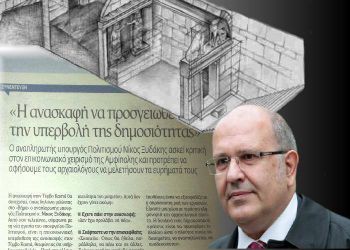
Θύελλα αντιδράσεων μετά τις δηλώσεις Ξυδάκη για την Αμφίπολη

10967725_10206070747188833_1687192202_n-350x250

του Γιώργου Ροδάκογλου

Τσαλακώνεται στα μάτια των Ελλήνων το προφίλ του νέου αναπληρωτή υπουργού πολιτισμού μετά τις δηλώσεις του στην εφημερίδα Βήμα της Κυριακής.

Τα όσα είπε «η προβολή της Αμφίπολης έκανε κακό στις ανασκαφές» προκαλούν θύελλα αντιδράσεων οι οποίες αναμένεται να φτάσουν έως τον πρωθυπουργό Αλέξη Τσίπρα.
Εικοσιπέντε επώνυμοι από το χώρο των γραμμάτων και τεχνών του Νομού Σερρών σε ανοιχτή επιστολή εκφράζουν την έντονη διαμαρτυρία τους, για τις δηλώσεις που έκανε, ενώ οι δράσεις τους αναμένεται να συνεχιστούν με τη συλλογή υπογραφών και τη διαμαρτυρία μέσω διαδικτύου.
Έτσι πέρα από το αίτημα ανασκευής των όσων δήλωσε ο Νίκος Ξυδάκης δεν αποκλείεται η απαίτηση των Ελλήνων για την παραίτηση του από τη θέση που κατέχει με το αιτιολογικό ότι δεν εκφράζει τον πολιτισμό της Ελλάδας.

Οι υπογράφοντες την επιστολή ζητούν από τον νεοορκισμένο υπουργό να συνεχιστεί απρόσκοπα η ανασκαφή στο Λόφο Καστά της Μεσολακκιάς ενώ παράλληλα θεωρούν βάναυση προσβολή το καπέλωμα κάθε διεπιστημονικής ομάδας, από επιτροπεία. Παράλληλα ζητούν από την κυβέρνηση την προστασία των επιστημόνων της ανασκαφής από διαφαινόμενες “συναδελφικές” αντιπαλότητες, υπονομεύσεις και παρεμβάσεις

Ο Νίκος Ξυδάκης φαίνεται ότι υιοθετεί την άποψη μιας ομάδας αρχαιολόγων τα ονόματα των οποίων είναι ευρύτερα γνωστά, όπως και τα κίνητρα από τα οποία διακατέχονται.

Την πρόταση της επιτροπείας προωθούν δυο διευθυντικά στελέχη αρχαιολογικών υπηρεσιών της Βορείου Ελλάδος και ορισμένοι ακαδημαϊκοί οι οποίοι πολιτικοποίησαν το ζήτημα της ανασκαφής λίγες ημέρες πριν από τις εκλογές με σκοπό να φλερτάρουν μια θέση στο ΥΠΠΟΑ.
Ένα εκ των διευθυντικών στελεχών βολιδοσκοπεί τη θέση της Γενικής Γραμματέας στο Υπουργείο ενώ ένα άλλο στέλεχος αρχαιολογικής υπηρεσίας ήδη δηλώνει σε κλειστό κύκλο ότι εργάζεται άτυπα για λογαριασμό του Νίκου Ξυδάκη.
Οι συγκεκριμένοι «πολέμιοι» της ανασκαφής της Αμφίπολης στο ενεργητικό τους δεν έχουν ούτε μια ανασκαφική δραστηριότητα, αλλά απλά έτυχε να έχουν καταλάβει τις θέσεις που υπηρετούν εδώ και πολλά χρόνια λόγω συγκυριών και λόγω των καλών και στενών σχέσεων με όλες τις προηγούμενες κυβερνήσεις.
Στην επιτροπεία της Αμφίπολης καίγονται να μπούν διακαώς πολλά πρόσωπα από το χώρο της αρχαιολογίας προκειμένου να έχουν λόγο ύπαρξης και εφόσον ήδη ξέρουν ότι η εξέλιξη των ανασκαφών στον λόφο Καστά επιφυλάσσει πολλές άλλες εκπλήξεις.
Το ζήτημα της Αμφίπολης για το χώρο των αρχαιολόγων και κυρίως των Ακαδημαϊκών είναι πολύ απλό. Δεν μπορούν ορισμένοι να κατανοήσουν ότι μια αρχαιολογική υπηρεσία όπως η ΚΗ Εφορία Αρχαιοτήτων Σερρών κατάφερε με συστηματική δουλειά να φέρει στο φώς ένα τόσο σπουδαίο μνημείο.
Έτσι χωρίς να έχουν ουσιαστικά επιχειρήματα ασκούν κριτική με πρόσχημα την έως τώρα επικοινωνιακή προβολή της ανασκαφής υποστηρίζοντας το γεγονός ότι ήταν βλαπτική και αδιαφορώντας παντελώς για τον εκπαιδευτικό χαρακτήρα που έχει σε ολόκληρο το κοινό που την παρακολουθεί. Με λίγα λόγια υιοθετούν την άποψη της μυστικότητας των ερευνών τη στιγμή που οι ανασκαφές σε άλλες χώρες μεταδίδονται online στο διαδίκτυο. Βέβαια δεν πρέπει να περνάει απαρατήρητο ότι πίσω από την ιστορία αυτή κρύβεται και η μάχη για την κατανομή κονδυλίων.
Οι πρόσφατες δηλώσεις του Νίκου Ξυδάκη στο «Βήμα της Κυριακής» προφανώς δεν βρίσκουν σύμφωνο το πρωθυπουργό Αλέξη Τσίπρα ο οποίος εξεδήλωσε το ενδιαφέρον του τον περασμένο Αύγουστο, και μάλιστα αναμένεται να επισκεφτεί τον Λόφο Καστά με τον περιφερειάρχη Κεντρικής Μακεδονίας Απόστολο Τζιτζικώστα, κάτι που ήδη συμφωνήθηκε.
Ίσως ο κύριος Ξυδάκης τα αγνοεί όλα αυτά όπως και το μεγάλο ενδιαφέρον του Ελληνικού λαού αφού δείχνει ότι το εκτιμά με πολύ χαμηλά κριτήρια.

Η ΕΠΙΣΤΟΛΗ ΤΩΝ ΣΕΡΡΑΙΩΝ ΠΟΛΙΤΩΝ

«Πολίτες – Φίλοι της Αμφίπολης»
«Αξιότιμε κύριε Υπουργέ
Με αφορμή πρόσφατη συνέντευξή σας στο “Βήμα” και αναφορά σας στην ανασκαφή της Αμφίπολης, ως Σερραίοι πολίτες, φίλοι της Αμφίπολης, κάνουμε έκκληση να συνεχιστεί απρόσκοπτα το ανασκαφικό έργο στο λόφο Καστά Μεσολακκιάς και οι εργασίες συντήρησης, μελέτης και ανάδειξης των ανασκαφικών ευρημάτων.
Να προστατευτεί το συνολικό επιστημονικό έργο της Αρχαιολογικής υπηρεσίας Σερρών από τυχόν πολιτικές σκοπιμότητες και διαφαινόμενες “συναδελφικές” αντιπαλότητες, υπονομεύσεις και παρεμβάσεις.
Να αποκλειστεί κάθε περίπτωση ιδιότυπης εποπτείας, που προσβάλει ευθέως το σπουδαίο επιστημονικό έργο και τη μεγάλη προσφορά της κυρίας Περιστέρη και των συνεργατών της.
Ζητούμε την αμέριστη συμπαράσταση και υποστήριξή σας προς την επιστημονική – ανασκαφική ομάδα , προκειμένου να ολοκληρωθεί και αποδοθεί στην Ελλάδα αλλά και την παγκόσμια κοινότητα το μοναδικής αξίας μνημείο.
Αυτό είναι αναγκαίο ιδιαίτερα τώρα, που διαμορφώνονται σοβαρές αναπτυξιακές προτάσεις , ήπιας αξιοποίησης του συνολικού αρχαιολογικού χώρου της Αμφίπολης και της ευρύτερης περιοχής του Δυτικού Παγγαίου.
Ήδη με τη συνεργασία του ΔΙΑΖΩΜΑΤΟΣ, και τη στήριξη φορέων και πολιτών της περιοχής, απαλλοτριώθηκε ο χώρος του Αρχαίου Θεάτρου της Αμφίπολης και αναμένεται άμεσα η ανάδειξη ενός ακόμη μεγάλου μνημείου.
Ευχόμενοι κάθε επιτυχία στο δύσκολο έργο που αναλάβατε, σας βεβαιώνουμε ότι τόσο οι υπογράφοντες την επιστολή αυτή, όσο και το σύνολο πιστεύουμε των τοπικών φορέων, είμαστε στη διάθεση του υπουργείου για ουσιαστική συνεργασία και εθελοντική προσφορά».
Υπογράφουν οι:
ΒΑΦΕΙΑΔΗΣ ΒΑΣΙΛΗΣ, ζωγράφος
ΒΟΖΙΚΑΣ ΓΙΩΡΓΟΣ, ερευνητής λαογραφίας, Κέντρον Ερεύνης της Ελληνικής Λαογραφίας της Ακαδημίας Αθηνών
ΓΙΑΝΝΟΓΛΟΥΔΗΣ ΒΑΣΙΛΗΣ, εκπαιδευτικός
ΓΡΗΓΟΡΙΑΔΗΣ ΘΟΔΩΡΟΣ, συγγραφέας
ΔΗΜΟΥΔΗΣ ΔΗΜΗΤΡΙΟΣ, πρόεδρος της Εταιρείας Μελέτης και Έρευνας της Ιστορίας των Σερρών (Ε.Μ.Ε.Ι.Σ.)
ΕΛΕΥΘΕΡΙΑΔΟΥ ΣΤΕΛΛΑ, πρόεδρος Λυκείου των Ελληνίδων Σερρών
ΕΜΜΑΝΟΥΗΛΙΔΟΥ ΚΑΙΤΗ, πρόεδρος του Ομίλου Σερρών για την UNESCO
ΕΥΘΥΜΟΠΟΥΛΟΣ ΔΗΜΗΤΡΙΟΣ, πρόεδρος του Συλλόγου Φίλων Γραμμάτων και Τεχνών Σερρών
ΘΩΜΑΤΙΚΟΣ ΓΡΗΓΟΡΗΣ, δημοσιογράφος
ΚΑΛΟΓΕΡΟΥΔΗΣ ΓΙΑΝΝΗΣ, διευθυντής Αναπτυξιακής Εταιρείας Σερρών
ΚΑΡΤΕΡΗΣ ΓΙΩΡΓΟΣ, συγγραφέας
ΚΑΦΤΑΝΤΖΗΣ ΒΑΣΙΛΗΣ, Ιατρός
ΜΑΛΛΙΑΣ ΓΙΩΡΓΟΣ, τέως αναπληρωτής Διοικητής Αγίου Όρους
ΜΑΝΔΗΛΙΩΤΗΣ ΖΗΣΗΣ, φωτογράφος
ΜΕΝΤΗΣ ΠΑΝΑΓΙΩΤΗΣ, θεατρικός συγγραφέας, καλλιτεχνικός διευθυντής ΔΗ.ΠΕ.ΘΕ. Σερρών
ΜΗΤΛΙΑΓΚΑΣ ΖΗΣΗΣ, φιλόλογος,, πρ.Δήμαρχος Σερρών
ΜΠΑΣΔΑΝΗΣ ΑΘΑΝΑΣΙΟΣ, πρόεδρος της Δημόσιας Κεντρικής Βιβλιοθήκης Σερρών
ΝΑΝΙΟΠΟΥΛΟΣ ΑΡΙΣΤΟΤΕΛΗΣ, καθηγητής Α.Π.Θ., πρόεδρος του συλλόγου “Σερραίων Πολιτεία”
ΠΑΥΛΙΔΗΣ ΠΑΝΤΕΛΗΣ, συνθέτης
ΠΑΥΛΙΔΗΣ ΑΒΡΑΑΜ, φωτογράφος
ΠΑΣΧΑΛΗΣ ΚΩΣΤΑΝΤΙΝΟΣ, επιχειρηματίας,συγγραφέας
ΣΑΟΥΛΙΔΗΣ ΣΤΕΛΙΟΣ, πρ. Διευθυντής Ε.Ρ.Α. Σερρών
ΣΠΥΡΙΔΟΥ ΓΙΟΥΛΗ, πρόεδρος ιστορικού συλλόγου “ΟΡΦΕΑΣ” Σερρών
ΤΣΑΒΔΑΡΟΓΛΟΥ ΧΑΡΑΛΑΜΠΟΣ, αρχιτέκτονας
ΧΑΤΖΟΠΟΥΛΟΣ ΤΑΚΗΣ, σκηνοθέτης

Πηγή:thousandnews.gr

Σε ένα μήνα το νομοσχέδιο για την επανίδρυση της ΕΡΤ

images8IF0LP2Y

Επανέρχεται η μετάδοση του σήματός της στην Ομογένεια

Εντός του επόμενου μήνα θα κατατεθεί στη Βουλή το νομοσχέδιο για την επανίδρυση της ΕΡΤ, όπως δήλωσε ο αρμόδιος υπουργός Επικρατείας, Νίκος Παππάς, κατά τη συζήτηση στην Ολομέλεια της Βουλής επί των προγραμματικών δηλώσεων της κυβέρνησης.

Ο κ. Παππάς είπε ότι το σχέδιο νόμου για την επανίδρυση της ΕΡΤ, θα δημιουργεί ένα διαυγές και κατοχυρωμένο νομικό πλαίσιο, χωρίς ρεβανσισμούς, προχειρότητες και μαύρο στις οθόνες.

«Η κυβέρνηση αποφάσισε να ανοίξει η ΕΡΤ γιατί ο λαός αποφάσισε να ανοίξει η ΕΡΤ. Η πληγή που άνοιξε στο σώμα της Δημοκρατίας θα κλείσει» είπε, ξεκαθαρίζοντας ότι οι αστρονομικοί μισθοί για λίγους και εκλεκτούς, οι εξωφρενικές δαπάνες και οι ανισότητες θα τελειώσουν.

Ο κ. Παππάς είπε, μάλιστα, ότι όσοι πρώην εργαζόμενοι της ΕΡΤ το επιθυμούν μπορούν να γυρίσουν στην νέα ΕΡΤ, επισημαίνοντας ότι η επαναπρόσληψή τους δεν θα επιβαρύνει τον κρατικό προϋπολογισμό, αφού συνεχίζεται η χρηματοδότηση από το ανταποδοτικό τέλος.

Δήλωσε, εξάλλου, ότι θα ελεγχθούν οι προϋπολογισμοί της ΝΕΡΙΤ και θα εξετασθούν ηθελημένες ασάφειες, αποκλίσεις και αναθεωρήσεις. Όπως ανέφερε ενδεικτικά ο υπουργός Επικρατείας, ο τελευταίος προϋπολογισμός της ΕΡΤ προέβλεπε δαπάνη για ρεύμα, φωταέριο, ύδρευση και τηλεπικοινωνίες 3,7 εκατ. ευρώ, ενώ ο αντίστοιχος της ΝΕΡΙΤ, 12 εκατ. ευρώ.

Ο κ. Παππάς ανέφερε ότι η νέα ΕΡΤ αποκτά το δικό της δίκτυο ψηφιακής τηλεόρασης και επαναφέρει τη μετάδοση του σήματος στην Ομογένεια.

Ακόμη, υπογράμμισε ότι η κυβέρνηση είναι αποφασισμένη να επαναφέρει την κανονικότητα στο χώρο των ΜΜΕ σύμφωνα με το Σύνταγμα και την κείμενη νομοθεσία και θα εφαρμόζει άμεσα θεσμικό πλαίσιο για τον έλεγχο των οικονομικών των ραδιοτηλεοπτικών σταθμών και άλλων ΜΜΕ, λέγοντας χαρακτηριστικά:

«Τελειώνουν οριστικά τα δάνεια άνευ εγγυήσεων και με αδιαφανείς όρους παραχώρησης και εφαρμόζονται οι προβλέψεις του νόμου σχετικά με την προκήρυξη διαγωνισμών για την ανοιχτή και διαφανή αδειοδότηση ραδιοτηλεοπτικών Μέσων».

«Η πληροφόρηση, η ενημέρωση και η επιμόρφωση του λαού δεν είναι εμπόρευμα αλλά θεμέλιο της Δημοκρατίας και η κυβέρνηση θα το προστατεύσει και θα το εγγυηθεί» τόνισε ο υπουργός Επικρατείας.

Πηγή: Νέος Κόσμος

Ο Αυστραλιανός Τύπος για τις προγραμματικές δηλώσεις της Ελληνικής κυβέρνησης

th

Η εφημερίδα «The Age» στέκεται ιδιαίτερα στη δήλωση του πρωθυπουργού για τη διεκδίκηση κατοχικού δανείου και επανορθώσεων.

Μεγάλη δημοσιότητα δίνουν τα αυστραλιανά μέσα ενημέρωσης στις προγραμματικές δηλώσεις της ελληνικής κυβέρνησης που ανέγνωσε ο πρωθυπουργός, Αλέξης Τσίπρας, ενώπιον της Ολομέλειας της Βουλής, κάτι που δεν έχει συμβεί ποτέ στο παρελθόν.

Η εφημερίδα «The Age» στέκεται ιδιαίτερα στη δήλωση του πρωθυπουργού για τη διεκδίκηση κατοχικού δανείου και επανορθώσεων.

«Η Ελλάδα», γράφει, «θα διεκδικήσει 236 δις δολάρια από τη Γερμανία, παρά την άρνηση του Βερολίνου να της καταβάλει πολεμικές αποζημιώσεις».

Η προβολή του αιτήματος αυτού, σύμφωνα με την εφημερίδα, ενδέχεται να επιδεινώσει ακόμα περισσότερο τις σχέσεις Ελλάδας-Γερμανίας.

Το δημόσιο ραδιοτηλεοπτικό ίδρυμα του ABC αναφέρει ότι πρόθεση του κ. Τσίπρα είναι να τηρήσει τις προεκλογικές δεσμεύσεις του, με πρώτη προτεραιότητα τη σίτιση, στέγαση, ιατροφαρμακευτική περίθαλψη και παροχή ρεύματος στους πιο αδύναμους.

Σημειώνει ακόμα ότι ο κ. Τσίπρας τόνισε ότι το μνημόνιο έχει αποτύχει και έχει καταψηφιστεί από τον ελληνικό λαό και ότι η κυβέρνησή του δεν πρόκειται να ζητήσει παράταση αυτού του προγράμματος.

Αλλά και το ABC στέκεται ιδιαίτερα και με έμφαση στη διεκδίκηση κατοχικού δανείου και επανορθώσεων από τη Γερμανία από την οποία διεκδικεί 162 δις Ευρώ.

Η εφημερίδα «The Australian», παρά την διάψευση του υπουργού Οικονομίας Υποδομών Τουρισμού και Ναυτιλίας, Γιώργου Σταθάκη, αναδημοσιεύει δημοσίευμα της Wall Street Journal ότι «το ελληνικό δημόσιο μπορεί να μην έχει ρευστότητα τον Μάρτιο για να καλύψει τις υποχρεώσεις του που ανέρχονται σε 4-5 δισ. ευρώ, αν δεν λάβει προσωρινή χρηματοδότηση από την Ευρωζώνη».

«Η Ελλάδα στα πρόθυρα της χρεοκοπίας χωρίς χρήματα από την Ευρωζώνη» είναι ο τίτλος της εφημερίδας.

Πηγή: Νέος Κόσμος