
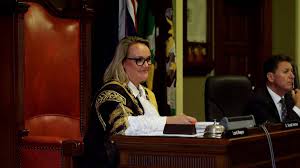
The council had been widely tipped to seek a 37.5per cent increase over five years, but at the first meeting since Labor councillor Nuatali Nelmes took the lord mayoral reins, she used her casting vote to back moves by the Greens to lift rates even higher.
Greens councillor Michael Osborne first moved for the 46.9 per cent rates hike, saying the smaller increase would only make the council financially sustainable and not provide any additional funds for revitalisation.
He was immediately backed by Labor’s Stephanie Posniak who said ‘‘the days of councils [simply] providing roads, rates and rubbish are long gone’’.
Green Therese Doyle said it was ‘‘hard to ask residents and ratepayers to pay more but the people of Newcastle have made it clear that they want us to provide services’’.
Both Labor and Greens councillors blamed state and federal cost-shifting for the need to raise rates so dramatically, singling out the state government which was blocking the council from claiming millions of dollars worth of developer contributions on major development projects.
Only seven months ago, Cr Nelmes was a staunch opponent of rate rises.
When the 37.5 per cent rates increase was floated in April, Ms Nelmes told the council: ‘‘We’ve had all these cuts to services that don’t add up to a lot of savings. We’ve had job losses [and as a result] I don’t think we have enough standing in the community at the moment to jack up rates this much.’’
In February this year, Cr Nelmes, along with her Labor and Greens colleagues, voted against a mere 1.1per cent rise in residential rates, saying she would not support the rise because the council had failed to deliver on the projects it promised when it got a significant rates increase approved in 2012.
Last night, Cr Nelmes said she was ‘‘not going to shy away from making the tough decisions’’ because the council needed to find a more sustainable financial position.
Liberal councillors Lisa Tierney and Brad Luke led the predictable opposition during last night’s debate. Cr Tierney said the council had ‘‘just spent $40,000 on a community survey’’ in which the majority of people didn’t support the 46.9 per cent rise.
‘‘We’re not even an hour into the new council and the first decision is to raise rates by nearly 50 per cent,’’ she said.
If the application is approved by IPART, the average residential rate will rise by $101 a year. Over the five years, the average rate will rise from $1074 a year to $1578 a year.
source:theherald.com.au






 STUDIO 3 NEWCASTLE AUSTRALIA