Category Archives: Uncategorized

Tsipras, Merkel fail to agree on key issues

tsipras_merkel_migration

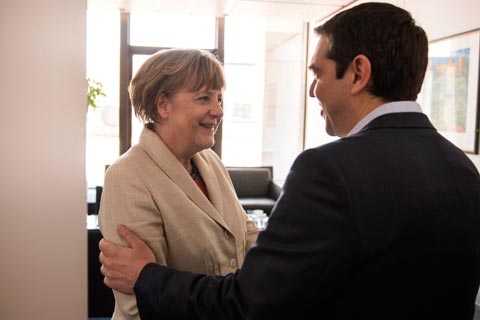
A handout photo shows German Chancellor Angela Merkel (left) and Greek Prime Minister Alexis Tsipras (right) prior to their meeting on the sidelines of the extraordinary EU Summit on migration in Brussels, on Thursday.

Prime Minister Alexis Tsipras and German Chancellor Angela Merkel had “constructive and positive” talks on the sidelines of an immigration summit in Brussels on Thursday, Greek government sources said, noting that there was a “convergence of views” on the level of Greece’s primary surplus target this year and next year and as regards privatizations.

Tsipras and Merkel, who met for about an hour, were said to have agreed that the primary surplus target should range between 1.2 and 1.5 percent this year and in 2016, significantly below the targets originally proposed by the country’s creditors and that Greece should push forward with privatizing state assets to raise much-needed revenue. The two leaders also agreed on the need to boost the independence of the Finance Ministry’s General Secretariat for Public Revenues and of the Hellenic Statistical Authority (ELSTAT), according to sources who said that Greece remains committed to its so-called red line, namely pension and labor overhauls and value-added tax increases.

The talks came ahead of a summit in Riga, Latvia, on Friday where eurozone finance ministers are to take stock of the progress in slow-moving talks between Greece and its international creditors though no decision is expected on the release of much-needed rescue loans. Tsipras’s meeting with Merkel in Brussels on Thursday was intended to elicit some political support from the German leader as Greek finances run dangerously low and speculation about a possible default is rife. According to sources, the two leaders agreed that efforts should be made to speed up negotiations on reforms with the likelihood of an extraordinary Eurogroup being held next week, rather than May 11, the next scheduled gathering of eurozone finance ministers.

Tsipras has said that he is aiming for a deal by the end of this month. Eurogroup President Jeroen Dijsselbloem said on Thursday that a deal is possible by the end of April, and that sub-tranches of a pending bailout installment could be released in such a scenario, but that this would require “serious work.”

European Commission Vice President Valdis Dombrovskis was less optimistic, saying he no longer saw a deal this month and that he expected an agreement sometime during May. “Progress is not good,” he told ARD German television, adding that Greece would only receive further money if it honors the terms of its second loan program. European Commission Vice President Jyrki Katainen, who was in Athens on Thursday, was also very reserved, noting that trust had “decreased” in the talks between Greece and its creditors. “You cannot negotiate if you don’t trust,” Katainen told a news conference when asked about whether trust in Greece was being restored.

source:ekathimerini.com

Armenian massacres: What happened during the genocide and why does Turkey deny it?

Armenians-Massacre_3279109b

As Yerevan and Armenians across the world gather to remember the 1.5 million killed during the massacres, Richard Spencer explains what happened.

On Friday, Yerevan and the Armenian disapora together with world leaders in the Armenian capital will commemorate the 1.5 million victims of the Armenian genocide.

It is the 100th anniversary of the date on which the Ottoman Empire began its attack on Armenians when intellectuals and political leaders were rounded up in Istanbul on April 24, 1915.

What was the Armenian genocide?

As the Ottoman Empire suffered its first losses in the First World War, the “Young Turk” government rounded up intellectuals and political leaders from its Christian Armenian minority. It then went one step further – ordering the community’s expulsion from Anatolia to Syria.

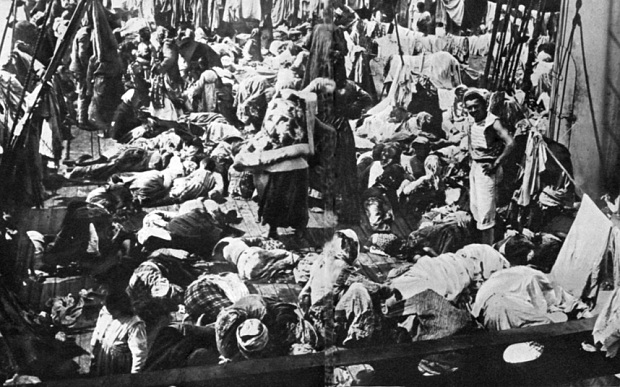
Armenians marched long distances and said to have been massacred in Turkey (AP)

Across eastern Turkey, long columns of Armenians were ambushed by soldiers and Kurdish gangs, who slaughtered them by the hundreds of thousand. Instructions from provincial Ottoman officials, notably the governor of Diyarbakir province Mehmed Reshid, gave impunity to the attackers, many of whom plundered and looted Armenian property.

The killings were carried out under the glare of international publicity, including from missionaries – America was yet to join the war, and dramatic witness accounts of hundreds of people being killed, or even burned alive, appeared in the western press. Photographs show whole valleys littered with skulls.

Armenian historians now claim 1.5 million people were murdered or starved to death in the Syrian deserts.

Asked later how as a doctor he justified his policies, Reshid said: “My Turkish identity won out over my profession. I thought: we must destroy them before they destroy us. If you ask me how I as a doctor could commit murder, my answer is simple: the Armenians had become dangerous microbes in the body of this country. And surely it is a doctor’s duty to kill bacteria?”

Why do the Turkish authorities deny it was a genocide?

The Turkish government furiously rejects claims that this was the “first genocide of the twentieth century”. It claims there was no deliberate attempt to wipe out the Armenian population, that the move to deport them was a defensive position after Armenians sided with Russians in the war, and that as many Turks and other Muslims as Armenian Christians died in the fighting.

Armenian refugee children pictured in 1915 awaiting aid (UPPA)

Some historians, including western historians, agree, pointing to a recent history of Armenian nationalist and Marxist terrorism against the Ottoman Empire, in which numerous Ottoman officials and even Armenians who sided with the state were killed. They also claim that Russia expelled Turks from areas it conquered – and that many Muslims had also been killed and expelled in the Balkans as the Ottoman empire lost its European possessions like Greece and Bulgaria over the course of the 19th Cenutry.

Ahmet Davutoglu, the Turkish prime minister, said this week: “The scars left by the exile and massacres that Turkish and Muslim Ottomans were subjected to a century ago are still vivid in our minds today.

“To ignore this fact and discriminate between pains suffered is as questionable historically as it is mistaken morally.”

Who is right?

The Turks are right to say that there is no exact parallel with the Holocaust of the Jews in the Second World War, no order for a “final solution” to exterminate the Armenian people. It is also true that the Ottoman government, in terminal decline, had reason to fear that Russia and other Western, Christian nations were intent on exploiting its weakness to carve out new spheres of influence in collaboration with disaffected minorities.

However, the massacres did not begin with the war. There had been previous pogroms, especially in 1895-6, when thousands, possibly hundreds of thousands of Armenians were killed. Moreover, even in times of war, a mass deportation programme leading to the deaths in a short period of time of hundreds of thousands, even a million people, is an exceptional event.

Armenian victims of the massacres in Turkey (AP)

Most importantly, while massacres of civilians on ethnic or sectarian grounds is sadly common enough in war, the attempt to dispose of an entire ethnicity, however it was done, is what differentiates this event.

The Turkish government over the course of the last century has also done itself no favours by refusing to discuss the issue for long periods, persecuting historians and others who report on its past and present treatment of minorities.

To its credit, the current government has opened up the topic more than its predecessors. However, across eastern Anatolia, towns that were once thriving hubs of the Armenian civilisation bear no trace of their presence – and certainly no memorial to those murdered, despite the “regrets” expressed by Ankara today.

In some cases, churches that were scenes of massacres a century or more ago have been converted to mosques, with the present-day worshippers having no idea of what happened to their predecessors so recently.

source:telegraph.co.uk

Έκτακτη συνάντηση για την Ελλάδα, 24 ώρες πριν από το Eurogroup

Έκτακτη συνάντηση για την Ελλάδα, 24 ώρες πριν από το Eurogroup

Φωτογραφία αρχείου από συνεδρίαση του Eurogroup στις Βρυξέλλες

Ρίγα, Λετονία
Έκτακτη σύσκεψη βρίσκεται σε εξέλιξη στη Ρίγα της Λετονίας για το ελληνικό ζήτημα, μόλις 24 ώρες προτού πραγματοποιηθεί η προγραμματισμένη συνεδρίαση του Eurogroup.

Στη συνάντηση λαμβάνουν μέρος εκπρόσωποι της Κομισίον, ο Πόουλ Τόμσεν του ΔΝΤ και ο Κλάους Ρέκλινγκ του ESM.

Παράγοντες του υπουργείου Οικονομικών, σχολιάζοντας τις πληροφορίες για συνάντηση εκπροσώπων των Θεσμών χωρίς την παρουσία της Ελλάδας ανέφεραν:

«Εάν βρέθηκαν, καλώς βρέθηκαν, μήπως και αποφασίσουν μια κοινή γραμμή απέναντι στην Ελλάδα. Διότι, βασικός λόγος καθυστέρησης της διαπραγμάτευσης είναι η απουσία κοινής γραμμής».

To Eurogroup της Παρασκευής

Οι υπουργοί Οικονομικών της Eυρωζώνης που θα συνεδριάσουν το πρωί στη Ρίγα με τη συμμετοχή του Γιάνη Βαρουφάκη. Αναμένεται να αναζητήσουν τις οδούς που θα επιτρέψουν την ταχύτερη δυνατή περαίωση των διαπραγματεύσεων, στις οποίες έχουν εισέλθει οι ελληνικές αρχές με τους εκπροσώπους των θεσμών.

Κοινή είναι η εκτίμηση ότι οι διαπραγματεύσεις αυτές το τελευταίο διάστημα εξελίσσονται ταχύτερα και αποτελεσματικότερα σε σχέση με το παρελθόν, πλην όμως οι πάντες συμφωνούν ότι πολλά μένουν ακόμη να συμφωνηθούν.

Κοινοτικές πηγές που επικαλείται το Αθηναϊκό Πρακτορείο θεωρούν ότι η ελληνική πλευρά θα πρέπει κατά κάποιο τρόπο να «μετριάσει τις απαιτήσεις της» και να «ελαττώσει τις κόκκινες γραμμές» που έχει θέσει, ενώ ελληνικές διπλωματικές πηγές εκτιμούν πως οι εκπρόσωποι της ευρωζώνης δεν δείχνουν πνεύμα ευελιξίας και ελαστικότητας, κυρίως σε ότι αφορά τους δημοσιονομικούς στόχους και την ελευθέρωση των αγορών, τόσο των αγαθών όσο και της εργασίας.

Όπως ανέφερε ανώτατος παράγοντας της ευρωζώνης, οι «18» θα προσπαθήσουν να έλθουν σε συμφωνία με την ελληνική πλευρα για τη δημιουργία ενός είδους «οδικού χάρτη» βάσει του οποίου θα κινηθεί τις επόμενες ημέρες η Ελλάδα, ώστε έως το Eurogroup της 11ης Μαΐου να έχει συμφωνηθεί μια «κρίσιμη μάζα» μεταρρυθμίσεων που θα επιτρέψει την εκταμίευση των δόσεων που δεν έχουν ακόμα φτάσει στην Αθήνα.

Πηγή:in.gr

The dubious politics of Fortress Europe

In this photo made available Thursday, migrants crowd and inflatable dinghy as rescue vassel ‘Denaro’ (not in picture) of the Italian Coast Guard approaches them, off the Libyan coast, in the Mediterranean Sea, Wednesday.

 An estimated 800 people died on Sunday when a boat packed with migrants trying to cross the Mediterranean to Europe capsized near Libya. The disaster came a week after two other shipwrecks left some 450 people dead. Little will change as long as European politicians insist on blocking all existing legal ways of setting foot on the continent, claims a new book on the subject of the European Union’s immigration policy.

In “Border Merchants: Europe’s New Architecture of Surveillance” (published by Potamos), Apostolis Fotiadis, an Athens-based freelance investigative journalist, seeks to document a paradigm shift in Europe’s immigration policy away from search and rescue operations to all-out deterrence. The switch, the 36-year-old author argues, plays into the hands of the continent’s defense industry and is being facilitated by the not-so-transparent Brussels officialdom.

“Their solution to the immigration problem is that of constant management because this increases their ability to exploit it as a market. The defense industry would much rather see the protracted management of the problem than a final solution,” Fotiadis said in a recent interview with Kathimerini English Edition.

“Without a crisis there would be no need for emergency measures, no need for states to upgrade their surveillance and security systems,” he said.

Fotiadis claims the trend is facilitated by the revolving door between defense industry executives and the Brussels institutions, which means that conflict of interests is built right into EU policy.

“There is a certain habitat in which many people represent the institutions and at the same time express a philosophy about the common good,” he said.

The book documents the growing interest of Frontex, the EU’s external border agency, in purchasing drones to enhance its surveillance capabilities in the context of its unfolding Eurosur project. Eurosur, a surveillance and data-sharing system that first went into effect in late 2013, relies on satellite imagery and drones to detect migrant vessels at sea.

The author goes back to October 2011 to tell the story of how the Warsaw-based organization hosted and financed a show for companies dealing in aerial surveillance systems in Aktio, northwest Greece. That was, Fotiadis claims, where Greek officials for the first time pondered the idea of acquiring drone technology. Greece is expected to sign a deal later this year.

The European Commission has defended the agency’s moves, saying that it is within the legal obligations of Frontex to participate in the development of research relevant for the control and surveillance of the bloc’s external borders.

“What they are doing is not necessarily illegal. However, an entire network of institutions has been held hostage as they have installed a non-transparent mantle behind which they promote their own interests,” he said.

No magic recipe

Fotiadis researched the subject for three years. Access to information was not always easy, he says, as much of what is at stake is decided behind closed doors. Despite the interesting insights, Fotiadis’s gripping book does not offer possible ways out of Europe’s problem. The author holds that efforts to come up with foolproof solutions are in vain. There simply aren’t any.

“There is no specific reason why migration occurs. Hence, there is no magic recipe. It is a constant problem which requires constant adjustment. The point is to have a genuine debate on it – which you don’t have – so that you can carry out the right adjustments,” he said.

More than 1,750 migrants have perished in the Mediterranean since the start of 2015 as people try to escape violence in Syria, Iraq and Libya. The Italian-run Mare Nostrum, a 9-million-euro-per-month mission launched in the aftermath of the 2013 Lampedusa drownings was ditched because it was deemed costly and politically unpopular. It has been succeeded by a much more limited EU-led mission called Triton.

Although there are no magic solutions, the Europeans could nevertheless shoulder some of the blame for the trouble, Fotiadis says. “The EU’s foreign policy is a push factor. The nature of many of the ongoing crises has in part been influenced by decisions of European states,” he said.

French President Nicolas Sarkozy led calls to intervene in Libya in 2011, an idea that found backing among other European leaders, including British Prime Minister David Cameron.

“By no means wishing to defend authoritarian regimes, the current situation is not necessarily better than the previous one,” Fotiadis said, adding that Europeans made similar mistakes on Syria as they continued to arm and fund the rebels even after the situation there had spun out of control.

“Europe likes to present itself as part of the solution while it’s actually part of the problem,” he said.

Significant in the overall process, Fotiadis argues, is the willingness of the EU to gradually externalize its immigration controls, setting up screening centers in the countries of origin – a process which he saw at work in the wake of Sunday’s tragedy.

A 10-point action plan put forward by the European Commission and backed by EU foreign and interior ministers at a meeting in Luxembourg on Monday foresees the deployment of immigration liaison officers abroad to gather intelligence on migration flows and strengthen the role of EU delegations. The plan was set to be discussed at an emergency EU summit in Brussels late Thursday. However, according to a report in the Guardian, EU leaders were due to only allow 5,000 refugees to resettle in Europe, with the remainder set to be repatriated as irregular migrants.

‘Sinister bulwark’

The book focuses on Greece which, being part of the EU’s external frontier, has become a major gateway for undocumented migrants and asylum seekers from Africa and the Middle East. More than 10,000 people arrived illegally in the first quarter of 2015, while the number is expected to reach 100,000 by the end of the year. Greece’s handling has been mostly awkward but Fotiadis is equally keen to point a finger at the hypocrisy amid the nation’s European partners.

“They want Greece to do the dirty work and, at the same time, criticize it for any human rights’ violations. They know very well what goes on here, but they keep sending funds to keep this sinister bulwark in place,” he said.

Human Rights Watch (HRW) and other groups have in the past accused Frontex of turning a blind eye to the torture, beating and systematic degradation of undocumented migrants.

Does debt-hit Greece have what it takes to deal with the problem? For one thing, Fotiadis argues, the country has never seen a proper debate on the issue of immigration while news coverage has been largely hijacked by populist and scaremongering media.

“The topic has been communicated in a hysterical, vulgar manner. When the discourse is that of ‘hordes of invading immigrants,’ there is inevitably very little room for a reasonable reaction,” he said. “Throw them in the sea or else they will eat us alive,” said the headline of an ultra-conservative tabloid published ahead of the interview.

Otherwise, Fotiadis believes, there is no reason Greece should not be able to set up some basic infrastructure to deal with the influx. He says that the number of immigrants and refugees received by the EU is in fact small compared to the more than 1.5 million refugees who have found shelter in Turkey due to civil war in Syria. Jordan is estimated to be home to over 1 million Syrian refugees, while one in every four people in Lebanon is a refugee. Meanwhile, the EU, one of the wealthiest regions of the world, with a combined population of over 500 million, last year took in less than 280,000 people.

“All that hysteria is a knee-jerk overreaction to an illusory version of reality,” he said.

As the death toll of people trying to reach Greece rises, Fotiadis was happy to see leftist Prime Minister Alexis Tsipras call for greater European solidarity to deal with the problem and plead for “diplomatic initiatives” to help resolve the conflicts in Syria, Iraq and Libya.

He also defends the leftist-led government’s controversial decision to shut down migrant detention facilities across the country, saying that its conservative predecessors had abused the legal detention limits. However, he argues the government should have been better prepared to deal with the consequences of that decision.

“As with many other issues, they were well-intended but ill-prepared,” he said.

source:ekathimerini.com

Tsipras, Merkel fail to agree on key issues

A handout photo shows German Chancellor Angela Merkel (left) and Greek Prime Minister Alexis Tsipras (right) prior to their meeting on the sidelines of the extraordinary EU Summit on migration in Brussels, on Thursday.

 Prime Minister Alexis Tsipras and German Chancellor Angela Merkel had “constructive and positive” talks on the sidelines of an immigration summit in Brussels on Thursday, Greek government sources said, noting that there was a “convergence of views” on the level of Greece’s primary surplus target this year and next year and as regards privatizations.

Tsipras and Merkel, who met for about an hour, were said to have agreed that the primary surplus target should range between 1.2 and 1.5 percent this year and in 2016, significantly below the targets originally proposed by the country’s creditors and that Greece should push forward with privatizing state assets to raise much-needed revenue. The two leaders also agreed on the need to boost the independence of the Finance Ministry’s General Secretariat for Public Revenues and of the Hellenic Statistical Authority (ELSTAT), according to sources who said that Greece remains committed to its so-called red line, namely pension and labor overhauls and value-added tax increases.

The talks came ahead of a summit in Riga, Latvia, on Friday where eurozone finance ministers are to take stock of the progress in slow-moving talks between Greece and its international creditors though no decision is expected on the release of much-needed rescue loans. Tsipras’s meeting with Merkel in Brussels on Thursday was intended to elicit some political support from the German leader as Greek finances run dangerously low and speculation about a possible default is rife. According to sources, the two leaders agreed that efforts should be made to speed up negotiations on reforms with the likelihood of an extraordinary Eurogroup being held next week, rather than May 11, the next scheduled gathering of eurozone finance ministers.

Tsipras has said that he is aiming for a deal by the end of this month. Eurogroup President Jeroen Dijsselbloem said on Thursday that a deal is possible by the end of April, and that sub-tranches of a pending bailout installment could be released in such a scenario, but that this would require “serious work.”

European Commission Vice President Valdis Dombrovskis was less optimistic, saying he no longer saw a deal this month and that he expected an agreement sometime during May. “Progress is not good,” he told ARD German television, adding that Greece would only receive further money if it honors the terms of its second loan program. European Commission Vice President Jyrki Katainen, who was in Athens on Thursday, was also very reserved, noting that trust had “decreased” in the talks between Greece and its creditors. “You cannot negotiate if you don’t trust,” Katainen told a news conference when asked about whether trust in Greece was being restored.

source:ekathimerini.com

Mythology that blocks progress in Greece

1429660188431

The Greek epic continues. It will not end well if the people involved do not recognise they are clinging on to myths. Here are six, each of which poses intellectual and emotional obstacles to reaching a solution.

1. A Greek exit would help the eurozone

“Will no one rid me of this turbulent priest?” This is the question Henry II is supposed to have asked about Archbishop Thomas Becket. Wolfgang Schäuble, Germany’s finance minister, must think much the same of his Greek partners. For the English king, however, the gratification of his wish was a disaster. A similar thing is likely to be true if Greece leaves. Yes, if Greece suffered a calamitous aftermath, populist campaigns elsewhere would be less effective. But euro membership would cease to be irrevocable. Each crisis could trigger destabilising speculation.

2. A Greek exit would help Greece

Many believe a weak new drachma offers a painless path to prosperity. But this is only likely to be true if the economy can easily expand its production of internationally competitive goods and services.   Greece cannot. And the immediate consequences are likely to include exchange controls, defaults, a halt to foreign credit, and more political turbulence. Stable money counts for something, particularly in a mismanaged country. Ditching it carries a cost.

3. It is Greece’s fault

Nobody was forced to lend to Greece. Initially, private lenders were happy to lend to the Greek government on much the same terms as to the German government. Yet the nature of Greek politics, tellingly described in The 13th Labour of Hercules by Yannis Palaiologos, was no secret.

Then, in 2010, it became clear the money would not be repaid. Rather than agree to the write-off that was needed, governments (and the International Monetary Fund) decided to bail out the private creditors by refinancing Greece. Thus, began the game of “extend and pretend”. Stupid lenders lose money. That has always been the case. It is still the case today.

4. Greece has done nothing

Greece has undergone a huge adjustment of its fiscal and external positions. Between 2009 and 2014, the primary fiscal balance (before interest) tightened by 12 per cent of gross domestic product, the structural fiscal deficit by 20 per cent of GDP and the current account balance by 12 per cent of GDP.

Between the first quarter of 2008 and the last of 2013, real spending in the Greek economy fell by 35 per cent and GDP by 27 per cent, while unemployment peaked at 28 per cent of the labour force.

These are huge adjustments. Indeed, one of the tragedies of the impasse over the conditions for support is that the adjustment has happened. Greece does not need additional resources.

5. The Greeks will repay

This myth derives partly from the refusal to recognise sunk costs. The bad lending and the adjustment to the cessation of that lending both lie in the past. What is open is whether the Greeks will devote the next few decades to repaying a mountain of loans that should never have been made.

What makes this far worse is that the debt burden has doubled, relative to GDP, despite a restructuring, since the crisis. Forgiveness is inevitable. Indeed, a report from the Centre for Economic Policy Research notes that excessive debt hangs over the entire eurozone, not just Greece.

6. Default entails a Greek exit

A sixth myth is that if Greece defaults, it would have to create a new currency and so leave the eurozone. It is possible that if the Greek government defaulted, Greek banks would no longer be deemed eligible for Emergency Lending Assistance from the Greek central bank.

If so, banks would almost certainly have to impose a halt on withdrawals. There might even be a stop on payments.

Some argue that the ECB would have no more right to cease to act as a lender of last resort in relation to Greek banks than the Federal Reserve would have had to stop lending to banks in Detroit after its city government defaulted.

But there is a difference. No American bank was likely to be so exposed to Detroit as to be made insolvent by its default. But in the eurozone, which has 19 separate banking markets, one for each member, with the sovereign looming large in each, a default by a national government could bankrupt national banks.

The ECB should not lend to clearly insolvent banks. The question then would be how to respond. It might be possible to run the Greek economy with restricted functioning of its banks. The cash-starved Greek government might make payment with IOUs that it would accept in payment of obligations due to itself. While undesirable, this would be possible.

Such myth-busting will not give a satisfactory solution. But it would be a start. A deal containing a permanent reduction in the debt burden after completion of reforms in the functioning of the Greek economy and polity would be the best outcome. Indeed, Mr Palaiologos shows that Greece has a development problem more than just one of economic reform. But such a deal would only work if Greeks were committed. A seventh myth – possibly most dangerous of all – is that reforms agreed under duress work. They rarely do.

If such an agreement could not be reached, the least bad outcome might be to accept the reality of default and leave Greece to decide what to do. That would surely be a bad outcome. But who is now confident of a better one?

source:afr.com

Ανακαλεί τον πρεσβευτή της στη Βιέννη η Άγκυρα

1675365

Η κυβέρνηση της Τουρκίας ανακοίνωσε αργά το βράδυ χθες Τετάρτη ότι ανακαλεί για διαβουλεύσεις τον πρεσβευτή της στην Αυστρία, σε ένδειξη διαμαρτυρίας για τη συμβολική αναγνώριση από το κοινοβούλιο στη Βιέννη της γενοκτονίας των Αρμενίων από την Οθωμανική Αυτοκρατορία στη διάρκεια του Α΄ Παγκοσμίου Πολέμου.

«Η διακήρυξη του αυστριακού κοινοβουλίου δημιούργησε ανεξίτηλες ουλές στη φιλία και στις σχέσεις ανάμεσα στην Τουρκία και στην Αυστρία (…). Η Τουρκία αποφάσισε να ανακαλέσει τον πρεσβευτή της Χασάν Γκέους για διαβουλεύσεις», ανέφερε σε ανακοίνωσή του το τουρκικό υπουργείο Εξωτερικών.

Δύο ημέρες πριν από τις εκδηλώσεις για την 100ή επέτειο των σφαγών του 1915, το αυστριακό κοινοβούλιο τήρησε χθες ενός λεπτού σιγή για την γενοκτονία των Αρμενίων, γεγονός χωρίς προηγούμενο στη χώρα, η οποία ήταν άλλοτε σύμμαχος της Οθωμανικής Αυτοκρατορίας και όπου ο όρος αυτός δεν είχε ποτέ πριν υιοθετηθεί επίσημα.

ΠΗΓΗ: ΑΠΕ-ΜΠΕ

Guardian: Η Ευρώπη θα στέλνει πίσω τους μετανάστες

1675486

Την επαναπροώθηση της συντριπτικής πλειοψηφίας των μεταναστών που περνούν στην Ευρώπη πίσω στις χώρες τους προβλέπει το εμπιστευτικό σχέδιο του κοινού ανακοινωθέντος που θα συζητηθεί σήμερα κατά τη διάρκεια της έκτακτης ευρωπαϊκής συνόδου κορυφής, όπως αποκαλύπτει η εφημερίδα The Guardian.

Το σχέδιο προβλέπει για τους πρόφυγες μόνον 5.000 θέσεις μετεγκατάστασης στην Ευρώπη. Είναι χαρακτηριστικό ότι η συντριπτική πλειοψηφία των ανθρώπων που θα επιζήσουν από την επικίνδυνη διέλευση της Μεσογείου, οι οποίοι πέρυσι ανήλθαν σε 150.000, “θα στέλνονται πίσω”. Μάλιστα το νέο πρόγραμμα ταχείας επανόδου που θα συντονίζεται από την Frontex.

Σύμφωνα με το σχέδιο απόφασης, δεν προβλέπεται σημαντική επέκταση των επιχειρήσεων έρευνας και διάσωσης στη Μεσόγειο για την αντιμετώπιση της ανθρωπιστικής κρίσης, παρά τις πιέσεις που ασκούνται έπειτα από τις αλυσιδωτές τραγωδίες στη θάλασσα.

Το κείμενο της απόφασης φθάνει μόνο μέχρι την επικύρωση της απόφασης της κοινής συνόδου των υπουργών Εξωτερικών και Εσωτερικών των χωρών της Ευρωπαϊκής Ένωσης για τον διπλασιασμό της χρηματοδότησης και την ενίσχυση των μέσων των επιχειρήσεων Triton και Poseidon για την εποπτεία των θαλασσίων συνόρων. Σύμφωνα με το σχέδιο απόφασης, η προσπάθεια αυτή θα ενισχύσει τις δυνατότητες των επιχειρήσεων έρευνας και διάσωσης, στο πλαίσιο της υπάρχουσας εντολής της Frontex.

Οι αρχηγοί κρατών και κυβερνήσεων της ΕΕ αναμένεται αντιθέτως να συμφωνήσουν για άμεση έναρξη των προετοιμασιών για τον συστηματικό εντοπισμό, κατάσχεση και καταστροφή των σκαφών πριν από τη χρησιμοποίησή τους από τους διακινητές ανθρώπων. Η στρατιωτική επιχείρηση της Ευρωπαϊκής Ένωσης με αυτόν τον στόχο θα γίνει στο πλαίσιο του διεθνούς δικαίου.

Στην ανακοίνωση της ευρωπαϊκής συνόδου κορυφής, η παρούσα κρίση περιγράφεται ως “τραγωδία” και αναφέρεται ότι η ΕΕ θα κινητοποιήσει όλα τα μέσα που έχει στη διάθεσή της για να εμποδίσει και άλλους θανάτους.

“Κατά συνέπεια, αποφασίσαμε να ενισχύσουμε την παρουσία μας στη θάλασσα, να αντιμετωπίσουμε τους διακινητές, να προλάβουμε τις παράνομες μεταναστευτικές ροές και να ενισχύσουμε την εσωτερική αλληλεγγύη”, αναφέρεται στο σχέδιο απόφασης, το οποίο αναφέρεται και στις προσπάθειες για την αποκατάσταση της κυβερνητικής εξουσίας στη Λιβύη και την αντιμετώπιση των παραγόντων που εξωθούν τους ανθρώπους να εγκαταλείπουν στη Συρία. Ωστόσο, σημειώνεται στο δημοσίευμα της βρετανικής εφημερίδας, τα προτεινόμενα μέτρα υπολείπονται κατά πολύ αυτών των στόχων.

Οι ηγέτες των χωρών της Ευρωπαϊκής Ενωσης δεσμεύονται επίσης στην κοινή ανακοίνωση για την παροχή αυξημένης επείγουσας βοήθειας προς τις χώρες μέλη της πρώτης γραμμής, δηλαδή την Ιταλία, τη Μάλτα και την Ελλάδα.

Πηγή:madata.gr

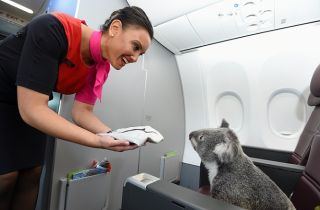
Τι γυρεύουν τέσσερα κοάλα σε ένα αεροπλάνο;

shkoala

VIP αντιμετώπιση για τους νέους “Πρεσβευτές Πολιτισμού” της Αυστραλίας

Oι “παράξενοι” επιβάτες της Qantas ταξίδεψαν από την Αυστραλία στη Σιγκαπούρη.

Τα ονόματά τους είναι Παντλ, Πελίτα, Τσαν και Ιντάλια και είναι οι πιο παράξενοι επιβάτες αεροπλάνου, και πιο συγκεκριμένα της αυστραλιανής αεροπορικής εταιρείας Qantas, με την οποία ταξίδεψαν από τη γενέτειρά τους στη Σιγκαπούρη.

Η τελευταία γιορτάζει φέτος τα πενήντα χρόνια της ανεξαρτησίας της και η Αυστραλία τής δάνεισε τα χαριτωμένα ζωάκια προκειμένου να φιλοξενηθούν για μισό χρόνο περίπου στον ζωολογικό κήπο της Σιγκαπούρης ως «Πρεσβευτές Πολιτισμού» της Αυστραλίας προς την εορτάζουσα χώρα.

Στη διάρκεια της πτήσης τους, οι φωτογραφίες της οποίας έχουν κάνει το γύρο του κόσμου, τα κοάλα έτυχαν ιδιαίτερης περιποίησης από το προσωπικό της εταιρείας, καθώς φιλοξενήθηκαν στα μπροστινά καθίσματα ως VIP επιβάτες, ενώ τους προσφέρθηκαν φύλλα από ευκάλυπτο για φαγητό και ζεστές πετσέτες για να… φρεσκαριστούν.

Πηγή: Νέος Κόσμος

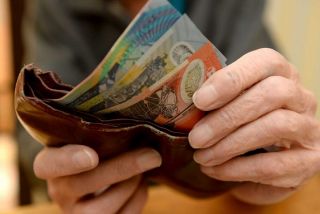
Αυστραλία:Φόρος στα έσοδα των πλουσίων συνταξιούχων

epsuppa

Το σχέδιο του Εργατικού Κόμματος για να ενισχυθούν το συνταξιοδοτικό σύστημα και η οικονομία της χώρας.

Οι αυτοχρηματοδοτούμενοι συνταξιούχοι, το ταμείο εφάπαξ (superannuation) των οποίων ξεπερνά το κεφάλαιο του $1,5 εκατ., μπαίνουν στο στόχαστρο του Εργατικού κόμματος καθώς σύμφωνα με τις πρόσφατες εξαγγελίες του, αν επανέλθη στην εξουσία, θα τους φορολογήσει, στοχεύοντας στην εξοικονόμηση $14 δις για τα επόμενα 10 χρόνια.

Ο αρχηγός της αξιωματικής αντιπολίτευσης, Bill Shorten, εξήγγειλε ότι οι αυτοχρηματοδοτούμενοι συνταξιούχοι, τα έσοδα των οποίων από το εφάπαξ τους ξεπερνούν τις $75,000 ετησίως, θα φορολογηθούν με ποσοστό 15% επί των εσόδων τους. Την ίδια στιγμή, για τους εργαζόμενους που έχουν εισόδημα πάνω από $250,000 ετησίως, θα επιβληθεί φόρος επί των εισφορών τους στο εφάπαξ της τάξης του 30%.

Σύμφωνα με το ισχύον σύστημα, οι αυτοχρηματοδοτούμενοι συνταξιούχοι δεν φορολογούνται για τα έσοδά τους από το εφάπαξ τους αυτή τη στιγμή, ενώ και οι έξτρα εισφορές στο εφάπαξ και άσχετα, υπόκεινται σε φόρο της τάξης του 15%.

Αν, τελικά, το Εργατικό Κόμμα ανέλθει στην εξουσία και επιβάλει τους παραπάνω φόρους, εκτιμάται ότι περίπου 110.000 Αυστραλοί που αυτή τη στιγμή πληρώνουν φόρο 15% στις έξτρα εισφορές τους, θα επηρεαστούν από το μέτρο, το οποίο θα αποδώσει στα δημόσια ταμεία $5,1 δις εντός των επομένων 10 ετών.

Η φορολόγηση των εσόδων από το εφάπαξ που ξεπερνούν τις $75,000 ετησίως θα αποφέρει στην Πολιτεία το ποσόν των $9,2 δις για τα επόμενα 10 χρόνια ενώ απ’ αυτόν θα επηρεαστούν περίπου 60.000 συνταξιούχοι.

Επίσης, αν οι αυτοχρηματοδοτούμενοι συνταξιούχοι έχουν έσοδα στο εφάπαξ τους από επενδύσεις σε ακίνητα αυτά θα αρχίσουν να συμπεριλαμβάνονται στα έσοδά του εφάπαξ τους και κατ’ επέκταση θα φορολογηθούν μετά το 2017.

Ο κ. Shorten ανέφερε ότι αυτές είναι οι μοναδικές αλλαγές που το κόμμα του θα κάνει στο σύστημα συνταξιοδότησης, αφήνοντας όμως ανοικτό το ενδεχόμενο για την ανάπτυξη μέτρων για τον γυναικείο εργαζόμενο πληθυσμό της χώρας ώστε να αυξηθούν οι καταθέσεις τους στο εφάπαξ τους που αυτή τη στιγμή είναι κατά μέσο όρο το μισό απ’ αυτό των εργαζομένων ανδρών.

H ανακοίνωση των αλλαγών στην φορολόγηση του εφάπαξ που προτίθεται να εφαρμόσει το Εργατικό Κόμμα έγινε κατά την διάρκεια συνέντευξης Τύπου στο National Press Club στην Kαμπέρα και τόσο ο κ. Shorten όσο και ο σκιώδης ομοσπονδιακός θησαυροφύλακας, Chris Bowen, δεσμεύτηκαν ότι πριν την εφαρμογή των μέτρων αυτών θα υπάρξουν εκτενείς διαβουλεύσεις με φορείς και επιχειρήσεις που δραστηριοποιούνται στον συνταξιοδοτικό τομέα.

Μάλιστα, ο κ. Shorten ανέφερε ότι με την ψήφιση των μέτρων θα επανδρωθεί ανάλογα και η Εφορία της χώρας ώστε να ανταπεξέλθει στις επιπρόσθετες υποχρεώσεις της, εφαρμογής και ελέγχου.

Πηγή: Νέος Κόσμος