Category Archives: Uncategorized

Whyalla:Two Greeks on a mission to save the ‘Steel City’

whyalla

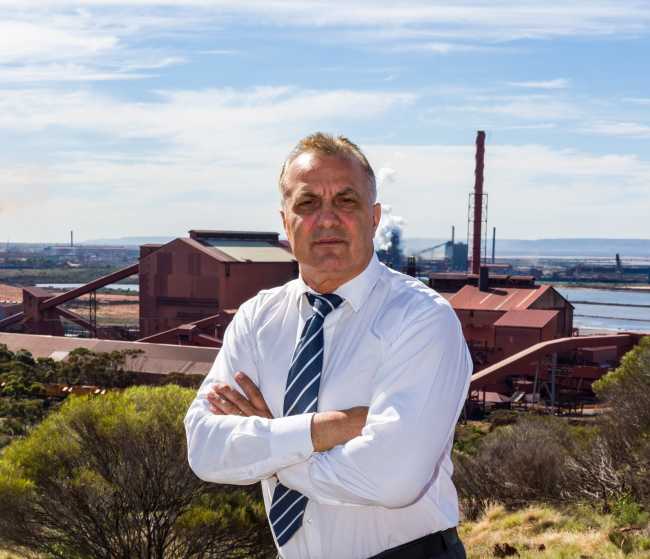
Tom Antonio deputy mayor on site.

The pair are looking to ensure the Arrium plant continues to push out quality steel.

Whyalla is facing more uncertainty regarding the struggling Arrium steelmaking plant, since new administrators KordaMentha were appointed on Tuesday after a successful federal court order, sought by banks and the AWU (Australian Workers’ Union).

“The creditors have the right to appoint the firm they wish to represent them,” says previously appointed administrator Paul Billingham, of Grant Thornton.
South Australian Treasurer Tom Koutsantonis just wants to get on with finding a solution for the 1,600 Arrium workers, in South Australia’s third most populous city.
“I don’t think there is any more uncertainty; just a further delay with the banks forcing a change of administrator,” Koutsantonis stated in Neos Kosmos.

Greek-born, acting Whyalla mayor Tom Antonio met with the KordaMentha on Wednesday morning.

Antonio’s wish is for the administrator to collaborate with state and federal governments to ensure the Arrium plant continues to push out the quality steel that Whyalla produces, while he insists that the federal government should encourage all state governments to use Australian steel for all taxpayer-funded infrastructure projects.

“The community was initially concerned about the change, but after my meeting with KordaMentha, I feel that they can follow on from the good work Grant Thornton has produced,” he tells Neos Kosmos.
“We shouldn’t be buying steel from overseas,” Antonio points out, at a time when a lot has been said about importing and using foreign steel for major construction projects in South Australia, such as the new Royal Adelaide Hospital construction project.
Koutsantonis, on the other hand, is adamant.
“All our infrastructure is built using South Australian or Australian steel.
“They only time we import steel is if the steel required is not manufactured in Australia or unavailable,” he says.

Whyalla is known as the ‘Steel City’ due to its integrated steelworks and shipbuilding heritage, while the port of Whyalla has been exporting iron ore since 1903. Unfortunately, according to Tom Antonio, the city has already been affected tremendously by the Arrium crisis, experiencing up to 30 per cent drop in real estate value.

“Arrium is a lifeline for the community and has been the backbone of the South Australian economy for the last 100 years.
“Arrium and Whyalla are too big to be left to fail and the economic and social impact would be catastrophic if it’s allowed to happen,” warns Antonio. “Closure is not an option.”

Furthermore, Leader of the House and Minister for Industry, Innovation and Science, Christopher Pyne, scheduled a door-stop on Wednesday at his electorate office in Adelaide together with Assistant Minister for Science Karen Andrews, regarding steel anti-dumping.

And it doesn’t end there.

Adelaide Crows Football Club has also shown its support towards the Whyalla community by conducting school visits to eight schools across three days this week, preaching wellbeing and positive messages to more than 1,600 children, as part of the club’s schools program, ‘Growing with Gratitude’.

“It just made sense to get up there as quickly as possible, to get our community team into some cars and into the trenches in Whyalla,” said the club’s CEO, Andrew Fagan, in his statement to the local press.

source:neos kosmos
Cosco buys biggest Hellenic port

Piraeus_0

SYRIZA govt’s biggest privatisation step infuriates unions

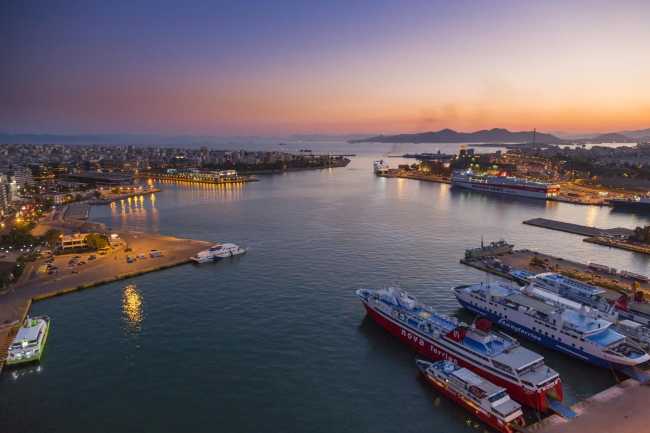
Athens’ seaport is to be sold to Chinese conglomerate Cosco, after the board reached an agreement with the Greek government last Friday.

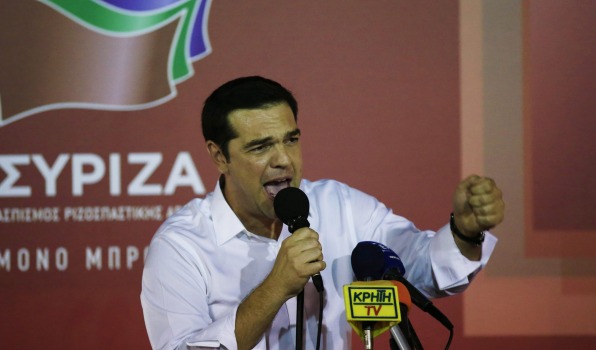
“This important amended agreement between the two sides comes at a crucial time for Greece at the end of a difficult season and the start of a new, more optimistic one, where emphasis will be given to restarting the economy,” Prime Minister Alexis Tsipras said.

The €1.5 billion deal will include Cosco paying the sum of €368.5 million for the attainment of the seaport’s 67 per cent, which includes the main stake of the Piraeus Port Authority, plus investments with a projected worth of €350 million.

This major privatisation step was heavily criticised by the country’s main opposition party, New Democracy.

Spokesperson George Koumoutsakos accused the prime minister of “signing on to neoliberal policies”.

“We welcome his delayed return to reality,” he said.

Meanwhile, hundreds of port workers, members of the Greek Federation of Port Employees (OMYLE) and a dockworkers union held a rally in central Athens.

“The government, despite its pre-electoral commitments, is proceeding to sell off the port. They threw away all the declarations regarding public ports and took advantage of fights between harbour workers in order to take power, and now throws parties to embrace the most neoliberal privatisation,” the union’s statement said.

source:neos kosmos

Wall Street closes at nine-month high but Greece might stop the party

1461030708465

There have been increasing reports that Greek Prime Minister Alexis Tsipras would resign if he can’t convince his countrymen of new financial demands. Lefteris Pitarakis

The US sharemarket has again confounded the pessimists by shrugging off the tumbling oil price and the ongoing stalemate over Greece to close at its highest level since last July.
The blue-chip Dow Jones Industrial Average closed above 18,000 for the first time since July, leaving it up nearly 15 per cent from its mid-February lows when it was weighed down by worries over global growth and tumbling commodity prices.
More surprisingly still, the US sharemarket appears to have loosened its link with the oil price, with which it has moved in tandem for most of this year. US shares moved higher even though the price of crude slipped after talks between oil producers in Doha on Sunday failed to reach a deal to curb output.
But investors’ optimism could be cut short by a fresh outbreak of jitters over Greece.
Greece and its creditors – the International Monetary Fund, the European Central Bank, the European Commission and the European Stability Mechanism – are due to resume talks today on what more Athens needs to do before it is allowed to access its third €86 billion ($125 billion) rescue package, agreed in August. This is no mere formality, given that the talks have already been dragging on for three months with little sign of consensus.
The main sticking point has been that under its bailout plan, Greece has to achieve a primary budget surplus (before interest payments on the country’s hefty debt) of 3.5 per cent of GDP from 2018 onwards.
The Europeans were inclined to take a more lenient approach, arguing that the steep spending cuts and tax hikes that Athens has already introduced, including the pension reforms unveiled in January, would allow the country to reach its goal.
But the IMF, which has a decidedly dimmer view of the Greek economy, argued that Athens would need to find an additional €3.6 billion in budgetary savings in order to reach the 3.5 per cent target. The alternative would be to reduce the country’s huge debt burden (which stands at 180 per cent of GDP), but this is something that Germany refuses to countenance.

On the sidelines of the IMF’s meeting in Washington late last week, Greece’s lenders reached an agreement. Greece would be asked to agree to adopt a new packet of reforms (which would deliver up to €3.6 billion in savings) in case economic growth stumbled in coming months, which would make its 3.5 per cent target unattainable.

But Greece’s Syriza-led government is resisting these new demands, arguing that the Greek economy is stagnating because talks over fresh funding have dragged on for so long. And it is dismayed that the emphasis is on fresh austerity measures rather than renegotiating the country’s debt.

There are also questions as to whether Greek Prime Minister Alexis Tsipras will be prepared to impose these fresh sacrifices on the long-suffering population. Several Greek newspapers ran articles on the weekend which speculated that Tsipras could resign if the talks fail.

The speculation is not completely unjustified. Tsipras’ parliamentary majority is wafer thin, with the Syriza-led coalition controlling just 153 votes out of 300. That’s enough to pass the tough measures, provided that Syriza can maintain discipline among its deputies.

But discontent within the left-wing Syriza is bubbling over. Last week, one of its factions published a long text advocating that the government should “fall in heroic resistance” to the country’s lenders, rather than be humiliated.

In the meantime, time is running out. Financial markets are likely to start becoming jumpy unless Greece and its creditors can reach a compromise by May. Greece has to repay about €3.5 billion in loans to the ECB in July and its failure to access funding could revive the spectre of default and the country’s exit from the euro.

And this will exacerbate the nervousness caused by the looming June 23 referendum on whether Britain should leave the European Union. 

Polls show UK voters are split over whether to leave or stay in the EU, with analysts saying that arguments over the economic impact of a Brexit could play a big role in determining the final outcome of the vote.

And certainly, UK voters are not being left in any doubt as to the potential risks of a Brexit.

Last week, the IMF warned that a Brexit would inflict “severe” damage on the British and European economies.

And overnight UK Chancellor George Osborne ramped up the rhetoric, warning that a British exit from the EU could permanently damage the UK economy.

Citing a new 200-page analysis by UK Treasury, Osborne warned that Brexit would cost UK households £4300 ($8000) a year by 2030, leaving them “permanently poorer”.

source:afr.com

Newcastle:Hunter schools have a $70 million maintenance backlog

untitled

THE Hunter’s schools are suffering under the weight of a $70 million maintenance backlog, part of a statewide school funding black hole.

Figures from the Department of Education reveal that more than a dozen high schools in the Hunter have a maintenance backlog of more than $1 million.

They include Hunter Sports High School, with a backlog of $1.9 million, Maitland High School with $1.6 million, Irrawang High School with $1.5 million and Kurri Kurri High School with $1.4 million.

The worst school in the Hunter is Rutherford High, the only school in the Hunter to top $2 million, and the ninth worst in the state.

Rutherford High School
2069107
Hunter Sports High School
1965179
Maitland High School
1675158
Cessnock High School
1654388
Maitland Grossmann High School
1598722
Irrawang High School
1530264
Hunter River High School
1467350
Whitebridge High School
1412391
Kurri Kurri High School
1408796
Cardiff High School
1215345
Wyong High School
1116228
Kotara High School
1099466
Belmont High School
1080285

That’s despite the school being touted as a leader in high-tech education after the government committed to spending almost $20 million on a major construction project including state-of-the-art classrooms, administration buildings and outdoor areas.

The damning numbers were released to the state Labor opposition after a freedom of information request, and are accurate to June 2015. 

Maitland MP Jenny Aitchison has slammed the government for “neglecting” students.

“At a place like Rutherford, which has had a substantial amount of money spent on new buildings, this indicates a situation where you’ve got some students in brand new buildings and some in buildings that are falling down,” she said.

“This can represent anything from leaking roofs to broken windows, and the thing is you know with leaving maintenance work is that it gets worse the longer it’s left.”

The government has sought to blame Labor for the backlog, but Ms Aitchison said the government should “take responsibility”.

“They’ve been in government for five years,” she said,

The government’s parliamentary Secretary for the Hunter Scot MacDonald said that since being elected in 2011 the O’Farrell and Baird governments have committed almost $4 billion to school infrastructure and maintenance, with over $342 million allocated in 2015-16 for school maintenance.

“Additionally, the NSW Government has committed an estimated $42 million to maintenance and capital works at public schools in Maitland, and an estimated $19 million to capital works and maintenance at public schools in Cessnock since the 2011-12 financial year,” Mr MacDonald said.

“This figure includes $247,000 of maintenance at Maitland High School in 2014-15, $369,127 of maintenance at Maitland Grossman High School and $252,933 of maintenance at Cessnock High School.”

source:theherald.com

Greece:An image of weakness

flags_acropolis_web-thumb-large-thumb-large

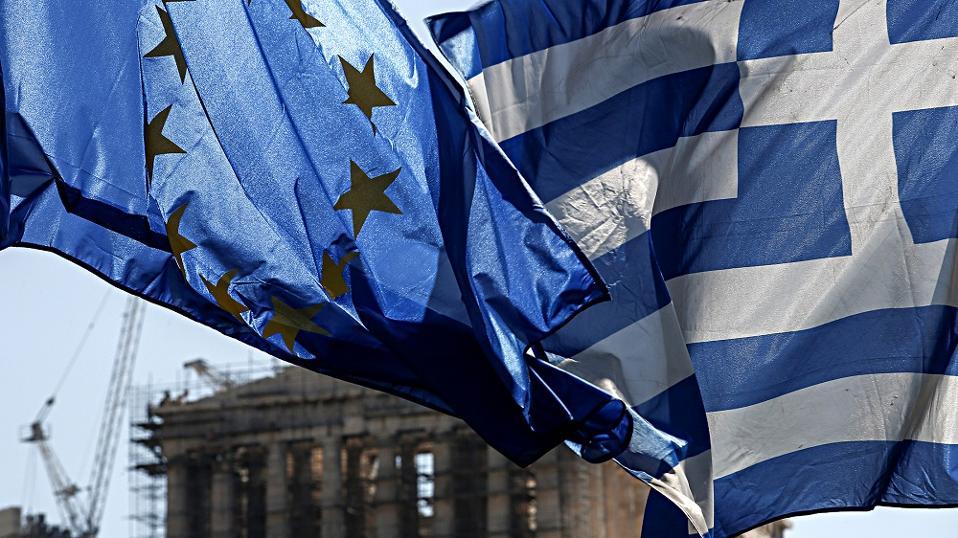
The image a country projects beyond its borders is of crucial importance. Just over 10 years ago, Greece was a leading political and economic player in the Balkans. Turkey was on the rise, but the asymmetry between the two countries was not that visible. Nowadays Greece really comes across as the European Union’s Puerto Rico. The country is living on bailout tranches and loans and it has yet to come up with its own reform plan that will put it back on its feet.

Meanwhile, Balkan leaders are addressing Greece’s leadership with disdain, Turkey is acting as the region’s ruler and the Europeans are dealing with Recep Tayyip Erdogan as if he were a neo-Ottoman sultan.

And what’s worse, Greece has adopted an enraging argument when carrying out negotiations with powerful players abroad. In the past, Greek leaders such as Eleftherios Venizelos and Constantine Karamanlis spoke to their foreign interlocutors as equals, making and earning major strategic concessions by taking risky decisions. Now Greece is asking those beyond our borders to not leave us to our own devices because the country has a pivotal geopolitical position and becoming a failed state would have serious repercussions.

Out of necessity, the Europeans have established a sui generis protectorate with regard to the refugee-migrant issue. To a large extent the Greek state has been substituted in terms of guarding its borders and managing the hot spots on the eastern Aegean islands. On the other hand, unprecedented situations emerge in places where the Greek state is the only one in charge. For instance, authorities in the Former Yugoslav Republic of Macedonia (FYROM) return refugees and migrants to Greece through holes in the fences. We slowly became used to all this.

An imbalance between rhetoric and actions makes the phenomenon even more unpleasant. When it comes to international affairs everyone knows that when someone barks without ever biting, not even once, they end up becoming predictable. Big words, political negotiations and displays of military power may still be convincing on the local level but they certainly don’t have the same effect abroad.

Greece has been through similar periods during its history. These often ended in some form of tragedy which subsequently led to the rebirth of the nation. Some believe that history will repeat itself.

Hopefully this will not be the case and Greece will find the strength to rebuild the country without experiencing an even larger disaster. Besides, you can’t fool anyone anymore. A country’s power on the international scene depends primarily on its economic power, the stability of its institutions and whether or not it has a gutsy and professional leadership. Greece’s image abroad is poor. Unfortunately, it is a fair reflection of the country’s current state of decay.

source:ekathimerini.com

ABCC motion facing defeat in Senate, July 2 election is increasingly likely

untitled

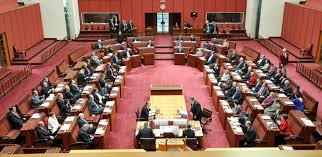
A July 2 election is increasingly likely as crossbench senators dig in against Turnbull government plans to restore the building industry watchdog.

Independent senator Nick Xenophon believes legislation to reinstate the Australian Building and Construction Commission will fail in the upper house for a second time.

‘We will be going to the polls on July 2,’ he told ABC radio on Monday.Parliament has been recalled three weeks early so the Senate can deal with bills Prime Minister Malcolm Turnbull has threatened to use as a trigger for a double-dissolution election.

There is no guarantee the ABCC bill will even get to the stage where amendments are even considered by the Senate.If it does, Senator Xenophon plans to move an amendment which ensures Australian steel is used on building projects.

Fellow crossbenchers Glenn Lazarus, Jacqui Lambie and John Madigan are opposed to the legislation in its existing form.Liberal Democrat David Leyonhjelm believes the latest opinion polls, showing Labor and the coalition neck and neck, may influence the government.

‘Perhaps they have changed it from a non-genuine offer to negotiate to a genuine offer,’ he told reporters. Attorney-General George Brandis insists Employment Minister Michaelia Cash has been negotiating with crossbenchers in good faith.He rejected claims the government was not serious about passing the bill.

Asked about the numbers in the chamber, Senator Brandis told ABC radio: ‘I don’t think we will know until we get to the final vote’.Senator Cash says she will continue to have an ongoing dialogue.

‘I think everybody knows in politics anything can happen at any time,’ she said.Both ministers also hit out at a ‘hysterical’ trade union ad which claims under the ABCC ice addicts have more rights than construction workers.

‘It goes to show the depths to which the CFMEU will stoop in trying to protect their own position in this industry that the best they can do is run a campaign which is utterly dishonest,’ Senator Brandis said.

source:skynews.com.au

EPL: Chelsea are destroyed by Man City 0-3

cq5dam_thumbnail_490_338_margin

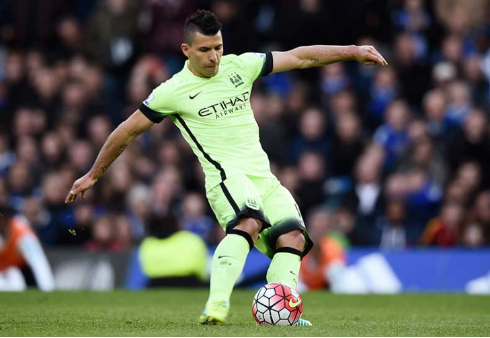
Manuel Pellegrini described Sergio Aguero as the best striker in the Barclays Premier League after his hat-trick sealed a 3-0 victory for Manchester City at Chelsea.

Aguero’s clinical treble took his tally to 21 league goals this season, and 99 in 146 BPL matches since joining Man City in August 2011.

The win at Stamford Bridge moved Man City up to third in the table, one point above Arsenal ahead of the Gunners’ match against Crystal Palace on Sunday, and Pellegrini praised the manner of his side’s third straight league victory.

Pellegrini said: “I think tonight was a complete game, and it’s three very important points because we want to finish as near the top of the table as we can.

“Sergio Aguero? I am sure he is the best striker in this league. Of course he’s a very important player. It was a big performance for the team.”

For more reaction from Pellegrini, watch his post-match press conference by clicking on the video above.

source:premierleague.com

Tsipras says pope’s visit to Lesvos is historic

pope_tsipras_web-thumb-large

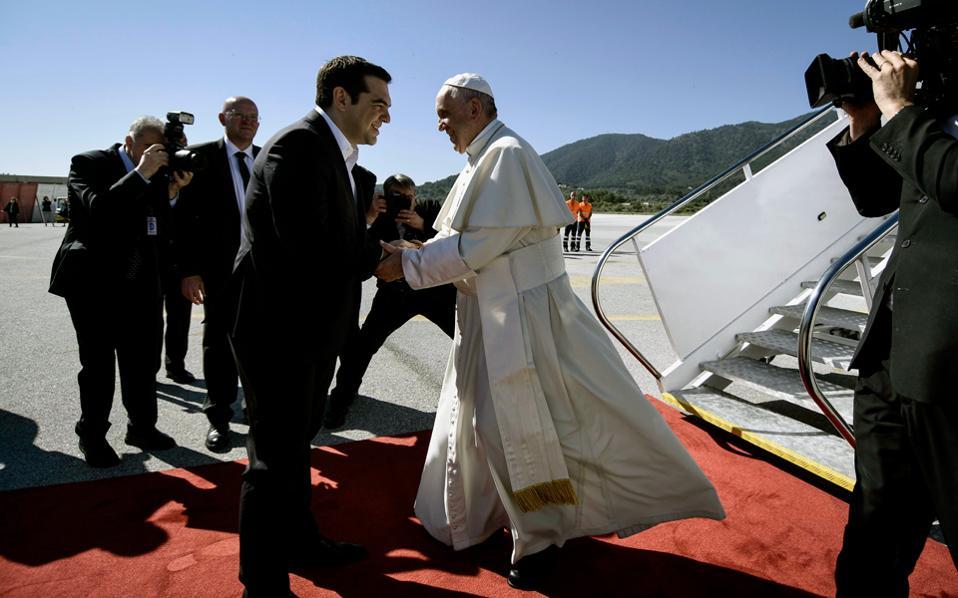
Greek Prime Minister Alexis Tsipras says Pope Francis’ visit to the Greek island of Lesvos is a historic event and an important opportunity to highlight the need to find a legal route into Europe for those fleeing conflict.

Tsipras says he is proud of the Greek people for welcoming refugees and other migrants at a time when they are suffering under austerity measures imposed on Greece by the country’s international lenders.

“I am proud of this, particularly at a time when some of our partners – even in the name of Christian Europe – were erecting walls and fences to prevent defenseless people from seeking a better life. That is why I consider that your visit is historic and important,” Tsipras told Francis shortly after his arrival at the airport Saturday.

He said the pope’s visit “is a very important opportunity to show the need to stop the war, the taking advantage of people and to give the possibility of a legal route for these people who leave their homes and search for a better future in Europe.”

source:ekathimerini.com

Australia:Meraki TV returns to cable

MerakiTV_FUNNY

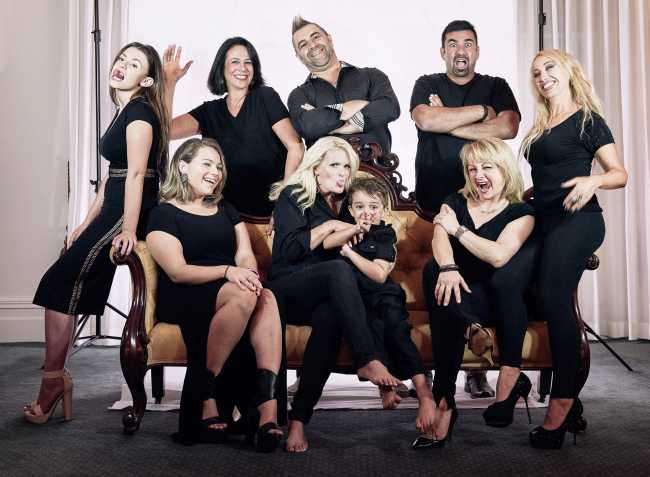
Billy Cotsis speaks to the producer of the show, Ane Sevo

Meraki TV is a Greek Australian TV program made by and for Greeks living here in Australia.

By Greeks, I mean those born in Greece, but more importantly, subsequent generations. Meraki TV’s main goal is to be one of the means whereby second, third and fourth generation Greeks can connect, share their unique experience, and learn about the positive aspects of their culture.

Billy Cotsis (BC): This will be the third season for Meraki TV. Tell us about the first two – how did they go? Did they meet your expectations?
Ane Sevo (AS): The first two seasons were amazing! Among the big names of Christos Dantis, Angelo Tsarouchas, Master Tempo, Vegas, Kostas Sommer, and Alekos Zazopoulos we introduced amazing local talent such as the party pirates, author Will Kostakis, and historians Effy Alexis and Leonard Janiszewski. We spoke to the University Greek Societies from Victoria University and UTS, introduced our Kids Corner with Yiannaki, launched Helen’s Kouzina with celebrity chef Helen Demetriou (My Kitchen Rules). We also compiled mini- documentaries on everything from the Oracle at Delphi to the origins of the Zeibekiko and in between got all the glam and gossip from our celebrity socialite Stavroula, and of course, the king of Greek music in Australia DJ Krazy Kon kept us up to date with music news.

BC: Foxtel continues to grow in this country. Recently it scored a major coup with rugby league and AFL rights that are worth billions. Where do you see community TV evolving in the future? Will Foxtel remain the best platform?
AS: With the government cut backs on community TV and radio, community- based programs are all being pushed onto the web. Foxtel has shown great vision in keeping its Aurora channel. It gives us little guys access to an audience and a platform that we otherwise would not have.

BC: What are we expecting from Meraki TV this season? Any surprises?
AS: Firstly, our team has grown, with fresh young presenters jumping on board to make sure we properly represent that segment of our community. We’re also extending our Kids Corner this year. Get ready for the great Pita Challenge, Eat it or Wear it – Greek Style, some Greek toy reviews and more!

Comedy is also on the agenda this season. We can’t wait for you all to meet yiayia MD – you’re going to love her! We want to get more local music on this season. If you’re a muso/singer you need to get in touch with us.

BC: You have a star studded line-up, from arguably one of the biggest DJ’s and dance producers in the country to a socialite. Tell us about your reporters.
AS: DJ Krazy Kon is the man when it comes to Greek music, not only in Australia but now internationally. When he decided to launch a locally-mixed Greek CD he was scoffed at; he’s just released volume 17 of his Greece series and is constantly invited to tour the US. He’s a shining example of just how alive and thriving Hellenism is in this country.

Stavroula has been in Greek TV all the way back to her days with Harry Michaels. She has sass, style and brains. Her glitz and goss is the perfect balance between juicy gossip, interesting current affairs, fashion and style!

Maria Hohlastou was born and raised in Australia, but left and lived in Greece for nearly 20 years. She thrived until the crisis, and like so many, came back to her ‘other’ country. Maria gives an incredibly unique perspective. She understands the Greeks from Greece’s viewpoint and deeply feels the Grozzie viewpoint. She epitomises the great struggle we all have between being Greek and being Australian.

Helen Demetriou first came to light in My Kitchen Rules with her brother Steve. In Helen’s Kouzina she gets to showcase her love for Greek food!

Demitra Alexandria, only 23 years old and with a professionalism and attitude way beyond her years is a girl to watch. In 10 years time we will all be saying ‘I remember her on Meraki TV!’. Incredibly beautiful, intelligent and passionate.

Yianna Carpis, only just 18 and like so many Greeks her age, heading off for a European adventure between semesters. Yianna will bring us a totally different perspective. Fun, vivacious and incredibly cheeky, she will have all of us booking our next trip.

And then, of course, there’s you Billy, a well-respected journalist and deeply passionate Hellene.

BC: Where do you see the show going in the next five years?
AS: We will be filming in every part of the country and also bringing you stories from all around the globe. Once we’ve united Australia we can’t wait to unite with the rest of the world – South Africa, London, Chicago, Boston, New Zealand – even Iceland!

BC: A number of sponsors have come on board – how important are they to the show?
AS: Our sponsors are our lifeblood. I must take a moment to really thank every single one who has come on board Meraki TV. We’ve had sponsors who really didn’t need to advertise do so just to support our ideals. We even had one small business buy just one small ad; that was all they could afford but they wanted to help us get off the ground.

We’re a community show with no funding and we pay for our air time. Everything you have seen on Meraki TV has been aired through the donated blood, sweat and tears of our team. I’m honoured to have the Meraki TV team, they are professional, passionate and generous with their time and talent because they truly believe in what it is we’re trying to create here.

Our sponsors also understand that Greeks love to buy from Greeks, and they love good value and quality – that’s why they advertise with us. They know that Meraki TV is a great way for them to reach the discerning Greek market; they are our everything, and the best way to support us is to support our sponsors.

BC: Finally, any funny stories or highlights over the last two years?
AS: A personal highlight for me was interviewing Christos Dantis. The guy is an absolute legend in Greek music – he’s written half of the hits of the last 20 years and he was generous in our interview. It’s nice when you’re a massive fan and you meet your idol and walk away an even bigger fan!

Also, the day we went to interview Angelo Tsarouchas and we managed to get him locked out of his hotel room. He was great about it!

Then there was that time we filmed Helen’s Kouzina on a 43 degree day in a room with no air conditioning and closed windows because it was very loud outside. Poor Helen had to have a towel under the table in between shots to wipe the sweat off her.

Meraki TV airs from Monday, April 18 @ 7.00 pm on Foxtel Aurora Channel 183.

source:Neos Kosmos

With migrant mission to Greece, pope pushes Orthodoxy

pope-francis-thumb-large

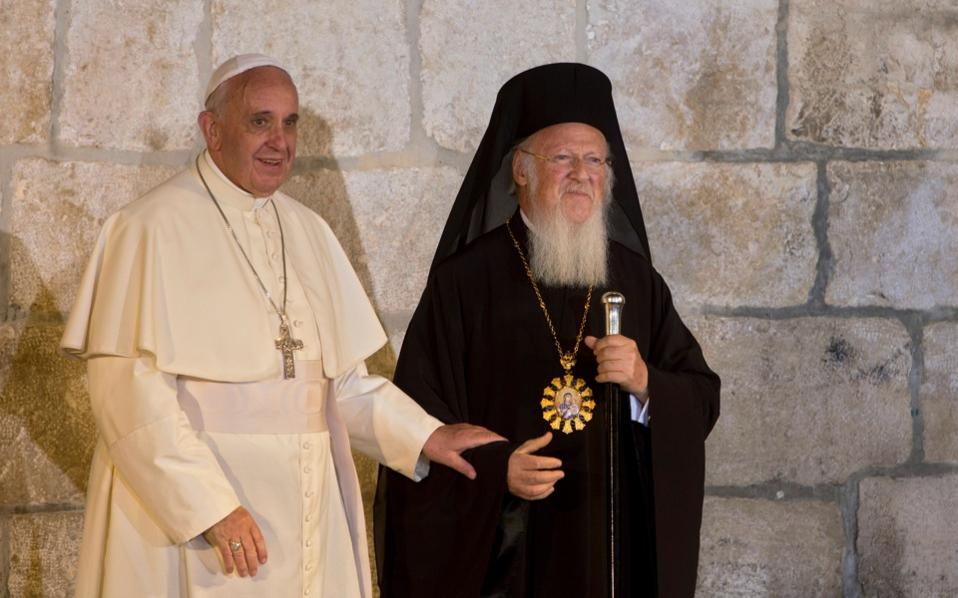
When Pope Francis and Ecumenical Patriarch Bartholomew I, the spiritual leader of the world’s Orthodox Christians, visit migrants on the Greek island of Lesbos this weekend, they’ll be doing more than sending a political message about the need to welcome refugees.

Christianity’s two most important leaders, still officially divided by a thousand-year schism, will be speaking with an increasingly unified voice that has gone beyond the realm of religion to confronting pressing issues such as climate change and humanitarian crises around the globe.

The visit, which comes on the heels of Francis’ historic meeting with the head of the Russian Orthodox Church, is evidence of an increasingly important Catholic-Orthodox partnership that has been strengthened by shared concern for Christians being exterminated by Islamic extremists in the lands of Jesus’ birth.

Francis has called these indiscriminate attacks on Christians – Catholic, Orthodox and others – an “ecumenism of blood,” and it wouldn’t be surprising if he uses the term again on Lesvos when he meets with refugees fleeing Syria, Iraq and elsewhere.

“The ecumenical patriarch and popes for the last generation have increasingly begun to speak together on issues of common concern,” said George Demacopoulos, chair of Orthodox Christian studies at the Jesuit-run Fordham University in New York. “What you have here is a more specific case: You have the uniqueness of Pope Francis and the ecumenical patriarch at a tipping point in historical and European events.”

According to the Greek organizers, Francis and Bartholomew will visit with new arrivals at Lesvos’ Moria refugee registration center, which has essentially been turned into a detention center for refugees slated for deportation under the controversial EU-Turkey plan, which calls for new arrivals in Greece to be returned to Turkey. From Moria, Francis, Bartholomew and the head of the Church of Greece, Athens Archbishop Ieronymos, will visit the port in Mytilene, the island’s capital, to meet residents and hold a prayer service.

“It’s an extraordinary occasion,” said Cardinal Peter Turkson, head of the Vatican’s justice and peace office. “It’s a historic event because something like this has never happened before.”

Francis told his weekly general audience Wednesday that he and his Orthodox “brothers” were going “to express the closeness and solidarity to both the refugees and the citizens of Lesvos and the entire Greek people, who have been so generous in their welcome.”

The Catholic and Orthodox Churches split in 1054 in a dispute over papal power, among other things. The Second Vatican Council’s call for greater Catholic outreach to other Christians resulted in Pope Paul VIs historic meeting with the spiritual leader of the world’s Orthodox, Ecumenical Patriarch Athenagoras, in Jerusalem in 1964.

In 2014, Francis and Bartholomew marked the 50th anniversary of that event with a meeting in Jerusalem, which was followed by Francis’ visit to Istanbul later that year. The two men clearly get along well: Francis cited Bartholomew’s environmental writings in his own 2015 ecological encyclical – a first for a pope.

Bartholomew is the Istanbul-based “first among equals” in global Orthodoxy. The Greek church is independent of the patriarchate, one of the self-governing, “auto-cephalous” Orthodox churches that also include the Russian, Bulgarian and Serbian churches. While the Greek church and Ecumenical Patriarchate get along, the Greek church has been far less cozy with the Vatican.

Not so long ago, the Greek church adamantly opposed a papal visit.

When St. John Paul II toured Greece in 2001, the first pope to do so since the Great Schism, he was met with howls of protest by Greeks who considered it a Roman Catholic attempt to establish authority over the Orthodox Church. Orthodox monks and nuns prayed through the night to stop the visit, ordinary Orthodox took to the streets to protest and monastery bells tolled in mourning.

There was even a diplomatic standoff over whether John Paul would kiss the ground upon his arrival, as was his custom upon landing in a foreign country. In the end, he did kiss a pot of soil.

More importantly, John Paul issued a sweeping apology upon arrival in Athens for the “sins of action and omission” by Roman Catholics against Orthodox, including the Crusades-era sacking of Constantinople, the center of Greek Byzantium.

Fifteen years later, there has been no hint of protest at Francis’ visit.

And Catholic-Orthodox relations are clearly getting stronger: Bartholomew became the first ecumenical patriarch since the Great Schism to attend the installation of a pope when he was a guest of honor at Francis’ 2013 installation Mass. Francis recently met with the head of the Russian Orthodox Church, Patriarch Kirill, the first-ever meeting between a pope and a Russian patriarch.

A delegation from the Vatican and the Moscow Patriarchate recently returned from Syria on a humanitarian aid mission that drew up a list of Christian sites that need to be repaired, evidence that even with the most estranged Orthodox church, Francis is finding common cause.

That said, Francis isn’t visiting Greece on an official state visit but rather on a humanitarian mission to a Greek island, and just for a few hours.

In an indication of the delicate protocol issues at play, both diplomatic and ecclesial, theres no shared version of how the visit came off.

Bartholomew’s office said he had invited Francis to join him in Lesbos via letter on March 30.

The Holy Synod of the Church of Greece, the decision-making body of the Greek church, said Francis had asked to come to Greece to highlight the plight of refugees, that the synod had proposed he visit Lesvos and invited Bartholomew to come along.

The Vatican said Francis had accepted an invitation from Bartholomew and the Greek president, with no mention of the Greek Orthodox Church.

“The reality was that this was the patriarch’s idea,” said Demacopoulos. “The pro-forma is that he had to go through the archbishop of Athens and the state of Greece to make it happen.”