Category Archives: Uncategorized

Australia:Battle of Crete commemorated in NSW

13054840_10208912862199325_1357354397_o

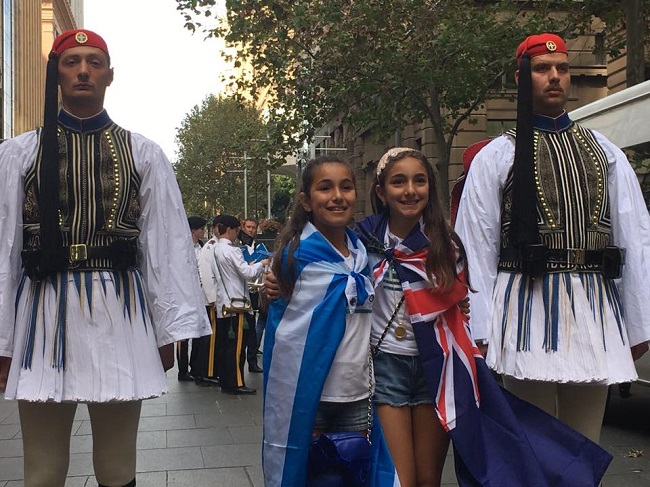
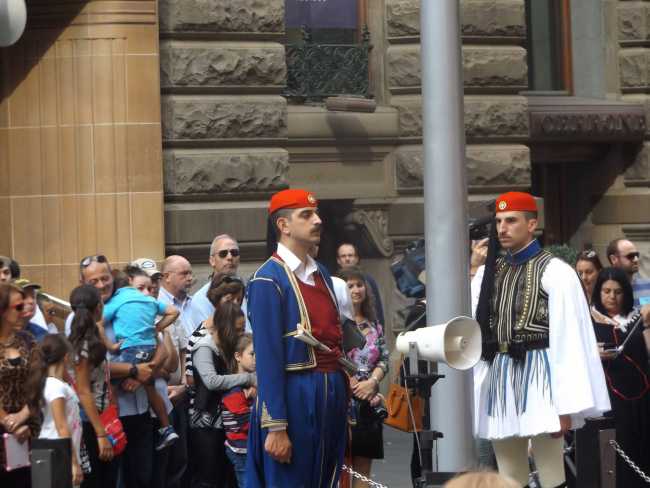
The Evzones from Greece honoured in Sydney

The Martin Place Cenotaph on Saturday 16 April played host to a thousand members of the Greek and broader community who came to pay their respects and to remember one of the legendary campaigns in modern history, 75 years ago.

What made this day special was the coming together of representatives from Australia, New Zealand, Britain, Canada and Greece to remember the heroes of a joint Greece – Allied defence of Crete. The Commonwealth Government have identified the Battle of Crete as one of significance during the Centenary of ANZAC commemoration events.

The day commenced with six ‘Evzones’ – soldiers of the Greek Presidential Guard, the highest level of military guard in Greece – marching through Sydney to join the ceremony to mark the 75th anniversary of the Battle of Crete.

This was the first ever appearance of the guards in Australia, adding a sense of aura to the occasion. The guards visited Sydney as guests of the Hellenic Club Sydney, who had to secure special permission from the Greek Prime Minister. The guards marched with a Sydney police escort, stopping traffic as they marched from the Grace Hotel (York Street) to Martin Place, where the official memorial service was held. The Evzones also appeared in Martin Place on the 20th, 21st and 22nd for a changing of the guard ceremony in front of the Sydney Cenotaph. This was also a historic moment for Greek – Australian relations.

Graham Athaunaseris, Chairman of the Cultural Committee of the Hellenic Club Sydney told Neos Kosmos, “The Battle of Crete was one of the key conflicts of the Second World War.”

His Excellency General the Honourable David Hurley, Governor of New South Wales attended this ceremony, placing the first wreath. There were approximately 100 wreath layers consisting of official representatives of the NSW and Australian Parliaments, Consulates General , Australian military officers and Anzac families and schools. Surviving Anzacs of the Anzac Centenary that served in Greece and Crete were also present.
Underlining the sense of this historic occasion, Lieutenant General Konstantinos Gkatzogiannis, Chief of Staff of the Hellenic National Defence General Staff, addressed the gathered public on behalf of a grateful Greek nation.

Secretary for the Joint Committee for the Commemoration of the Battle of Crete & The Greek Campaign, Nick Andriotakis told Neos Kosmos:
“1686 Anzacs were killed defending Democracy Freedom and Greece. Over half of them were never recovered or their names identified. They lie in the sacred soil of which holds all the defenders of Greece from Leonidas to the Anzacs and beyond.”

Most Australians that fell during battle in Crete are buried in the British and Commonwealth War Cemetery at Suda Bay, on the northern coast of Crete. The memorial that stands in honour of the Australians is called Stavromeni. The Cemetery has received visits from thousands of Australians over the years and it is one battle that is commemorated in Crete, and by the Australian, New Zealand and British Embassies every year.

The sombre and special occasion came to a fitting conclusion with the playing of the Australian and Greek National anthems by the assembled military band.

This commemoration is just one of the many planned events to remember the Battle of Crete. A further 12 events have been arranged including the annual Battle of Crete Ball, Ramsgate RSL sub-Branch Annual Anzac Dinner which commemorates the Battles of Greece and Crete at Ramsgate RSL which was held on 22 April and the Exhibition, “Anzacs in Greece THEN and NOW.” The exhibition will continue until 30 September at the National Maritime Museum, Darling Harbour.

Changing the course of history


The Battle of Crete and the battle for Greece which began with Mussolini’s defeat by Greek forces in late 1940 arguably changed the course of the war, and confounded Allied war strategists who had all but given up on Greece. Indeed, the actions of the Greeks led Winston Churchill to declare to the UK Parliament: “Greeks do not fight like heroes, heroes fight like Greeks”, in reference to the fact that Hellenic forces held out the Italians and Germans over the colder months of 1940-1941. Whilst most of continental Europe was occupied by the Nazi vermon, the Greek forces fought bravely despite being outnumbered and fighting with weapons from a bygone era. Hitler had to delay his Russian offensive to deal with the Greeks, and in the process gave precious time to Stalin to twist the fortunes of war to his advantage by preparing for battle during the following year’s brutal winter months.

By May 1941, mainland Greece was overrun by the Germans, and they needed only two weeks to secure their stranglehold over Crete. The invasion, which was launched on May 20, however was no cakewalk; for the German casualties were far greater than the Allies. Incoming airborne paratroopers were gunned down by waiting Allies and the brave local population. The first day’s battle was intense and German casualties high. Hitler became reluctant to use paratroopers to invade enemy territories thereafter. Had the Allied Commander, General Freyburg of New Zealand, launched a counter attack on day 2 of the battle, the Germans (according to historian Antony Beevor) would have been defeated. History tells us that poor leadership ensured that this did not happen and Crete would ultimately be lost, but not without the heroics of Allied troops and the local population.

Australian forces

The Aussies were represented by the Australian 19th Brigade Group and the Artillery Battery unit. Almost 40 per cent of Australian troops that fought across Greece during 1940-1941 were either killed or taken prisoner. Prime Minister Robert Menzies had said that the fight in Greece and Crete “was a great risk in a good cause.”

Throughout the Battle and the subsequent resistance, Cretans were ferocious in the defence of their island displaying a sense of patriotism that has always been the hallmark of Crete throughout their history.

ANZAC troops earned undying praise for their tenacity and courage When the Royal Navy pulled out as many of the Allies from Crete as they could on May 30 and 31, hundreds of Australians were left behind, and in true ANZAC spirit, took it upon themselves to form part of the resistance.
The Cretans, at risk of certain death from the Germans, would shelter and protect Australians fighting in the resistance. The bonds that were forged would never be broken.

My Kombaro knows this to be only too true. His next door neighbour in Sydney as a kid was an Australian veteran of the battle. He, like many others, was stranded in Crete after the evacuation and was kept safe by the Cretans, who also ensured his safe passage off the island. George recanted to me the story of when his father first met this grateful World War Two veteran: “Upon hearing of our Cretan roots, he told him: ‘I owe my life to the people of Crete. If there is anything I can do for you, do not hesitate to ask’.”

It should be noted that over 25,000 people across Greece would go on to be executed by the Nazis for helping or sheltering Allies during the German occupation.

At one stage, during the Cretan occupation there were approximately 75,000 Nazis on the island. It is truly a testament to the inhabitants of Crete and the ANZACs who continued the fight against such overwhelming odds.

The 75th anniversary, just like every anniversary moving forward, will never forget the heroism of the people who fought to protect Crete, Greece and liberty.

“Anzacs in Greece THEN and NOW” exhibition on now at the National Maritime Museum, 2 Murray Street Darling Harbour, Sydney
For more information head to www.anzacsofgreece.org

*Billy Cotsis is a frequent visitor to Crete and a Sydney based writer

Source:Neos kosmos
Mum, 60 Minute TV crew ‘free to leave Lebanon’

Article%20Lead%20-%20wide1008096814go52efimage_related_articleLeadwide_729x410_go70ha_png1460682824809_jpg-620x349

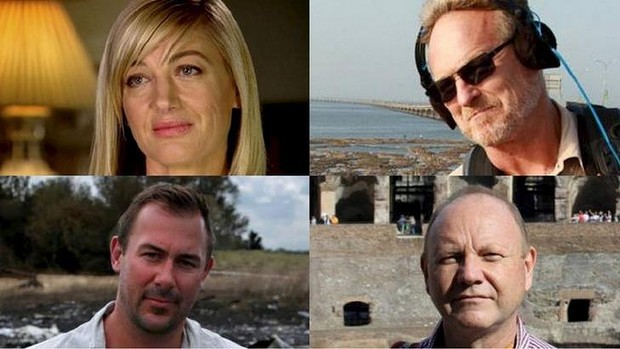
Brisbane mother Sally Faulkner and an Australian 60 Minutes crew are free to leave Lebanon after charges were dropped over the botched recovery of her children in Beirut, but could still be ordered back to the country.

Faulkner’s estranged husband Ali Elamine agreed to drop the personal charges against the Australians in a Beirut court on Wednesday.

Judge Rami Abdullah said Faulkner, 60 Minutes journalist Tara Brown and her crew Benjamin Williamson, David Ballment and Stephen Rice would be released from jail on bail.

“They are free to leave Lebanon,” he said.

They had been in jail since being arrested two weeks ago when a child recovery team seized Faulkner’s young children, Lahela and Noah, from a Beirut street as they were walking with their Lebanese grandmother.

But they are still facing public prosecution charges of kidnapping and being members of a criminal gang and may be required to return to Lebanon if the state decides to go ahead with the prosecution, Judge Abdullah said.

“Everybody is happy,” Nine Network lawyer Kamal Aboudaher said outside court on Wednesday.

Faulkner’s lawyer Ghassan Moghabghab told AAP earlier on Wednesday an agreement had been negotiated between Faulkner and Elamine, in which she gives up custody of the two children in return for her release.

When Moghabghab was asked whether the deal involved a payment to Elamine, he replied: “For my part it does not involve money, I don’t know about the other party (the Nine Network).

Under the deal it is understood the Nine Network will be required to pay compensation in order to drop the charges.

But Aboudaher had said on Monday the broadcaster hadn’t offered any financial compensation to Elamine.

Faulkner and Brown were brought from Baabda Women’s Prison into the Palace of Justice in handcuffs, while the three crew were cuffed to each other.

Faulkner, Brown, the crew and Elamine all met with Judge Abdullah in his office.An Australian embassy official also attended the court.

The fate of Britons Adam Whittington, who was allegedly in charge of the operation, and Craig Michaels, as well as two Lebanese involved, remains unclear.

source:skynews.com.au

A Greek Australian woman’s transition from the arts to the helm of a taxi empire

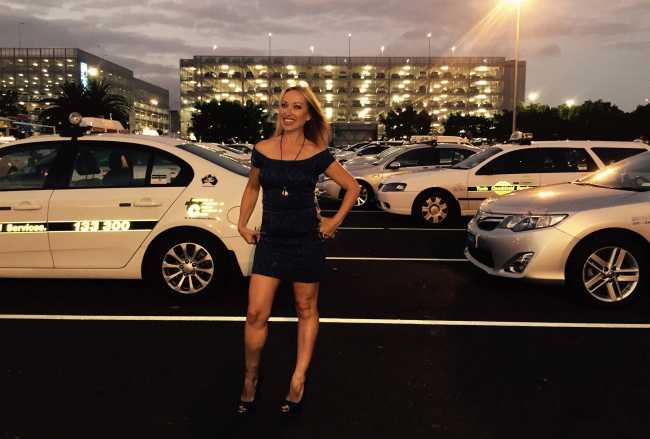
AS_TAXI_OpenerAs art director for several major magazines, Roula Angel enjoyed a privileged place among Sydney’s social set – so her career switch, into the blokey, rough and ready taxi industry, was destined to shock.

Across the nation, the industry is in turmoil, with disruptive technologies making an aggressive entry into the point to point transport sector, led by global ‘ride sharing’ giant, Uber.

So far the smartphone app-based enterprise has been given the green light in NSW, WA and the ACT, with Tasmania likely to be next to regulate it. But everywhere else in Australia, ‘ride sharing’ remains outlawed.

Even before the Uber shake-up, a mountain of issues was preventing a prosperous outlook for various taxi enterprises across the nation.

In every state, there’s a suffocating regulatory regime, often to the advantage of vested interests of one industry stakeholder at the expense of another.

Throw into NSW’s tangle of red tape and testosterone a determined, capable and passionate Greek Australian woman and things start to get interesting.

“When I tell people what I do, they usually laugh or assume I’m making things up,” Roula says.
“It doesn’t really bother me, it’s to be expected I guess. There will always be an underlying sexism in Australian society and we’re a long way off from true equality.”

Her gutsy determination and active role in the NSW taxi industry has certainly not gone unnoticed.

“Roula is a very active member of the taxi industry in a highly competitive environment and is an example of a businesswoman working hard to achieve success,” NSW Taxi Council CEO Roy Wakelin-King told Neos Kosmos.

“It’s a challenging time for taxi owners and operators around Australia, but that only reinforces the importance of strong business practices and innovating within the law to ensure the ongoing viability of taxi services.”

He said the council was “proud to have Roula as a member and recognises her ongoing contributions to our industry”.

But the transition into the cut-throat, high-pressure world of taxi fleet management, with its exhaustingly long days, round-the-clock weekends and on-call existence, came in tragic circumstances.

Roula’s family was left devastated when her father Angelo died after a stroke in late 2014, leaving her and sister Theony to take over the family business, a fleet of taxis and commercial and residential property investments.

She said her father, in his peculiar way – which often involved “tough love” – had already prepared her for the switch from a high-flying career in visual communications with packed social schedules, to the rough and tumble taxi industry, where aesthetics didn’t matter but being a woman did.

“I’ll never forget the day he called me, while I was still working in magazines,” Roula explains. “He said to me: ‘I’m leaving for Greece for three months tomorrow. Come and take over. You can either sink or swim – it’s up to you.’
“That’s the way my father was – nothing ever came to him without hard work, sweat and determination – and he thought that was the best way to also prepare me and my sister for the real world.”

Roula took the challenge with both hands – she swam.

And while she admits that it seemed a ‘mission impossible’ at the time, she was resourceful and called other taxi operators close to her father, asked them as many questions as they could handle and eventually, put her stamp on the family business.

Despite often exhausting days, Roula keeps a packed schedule with her other passions, which often revolve around her pride in her Greek culture. “It’s an ideal form of escapism for me. It keeps things in balance and also keeps me sane by allowing me to do something I really enjoy,” she explains.

The former drama student is host of the ‘Glitz and Goss’ segment on Meraki TV and was also a host on now-defunct Optus subscription channel GA-TV and, as one of the hosts of Karamela Radio in Sydney, interviewed countless Greek artists and celebrities.

Roula, who has risen to the challenge of running the family-owned fleet of more than a dozen taxis, believes the industry has been through its worst and is cautiously optimistic about what lies ahead.

“It’s not hard to work out I’m no fan of Uber, which shouldn’t be getting a free kick in point to point transport at the expense of taxi operators who are lumbered with considerable up-front and ongoing compliance costs,” she says.

“But there’s a saying: ‘From adversity comes opportunity.’
“The war with Uber has delivered a golden opportunity that otherwise probably would never have come – getting the NSW government to review and undo its ridiculous regulatory regime, one we have to put up with each and every day.”

The standout issue with legalisation of Uber with minimal regulatory impediments is that it is being carried out by the same governments who happily once accepted hundreds of thousands of dollars in fees for a licence from operators.

Those operators have largely suffered in silence, hamstrung by ongoing regulatory changes that have reduced flexibility in the way they can commercially operate their taxi licence asset and have added significant costs.

“If I’m going to be honest about it, I’d have to say the taxi industry seems to be built on rorts and self-interest,” Roula says.
“The government has been part of the problem, imposing all sorts of regulatory restrictions to make life harder for taxi operators, then issuing its own, government-owned taxi licences to compete with us and further squeeze us.”

Roula says there’s a very good reason why the public often perceives taxi drivers to be reckless on the road.

“It’s because they’re not held accountable. My third party property insurance (green slip) recently went up $1,000 to around $8,000 per taxi and there’s a $1,000 excess in the event of an accident.
“But under NSW law, if one of my taxis is in an accident, I’m unable to claim the excess from the driver.
“Meanwhile, that vehicle is out of action while it gets repaired and the driver can then go and drive for another operator with impunity. Where’s the fairness in that?”

A spokesman for the NSW Taxi Council said in relation to operators recovering excess costs from drivers, “the current laws are being reviewed”.

Roula said another archaic rule was mandatory affiliation with a taxi network, including monthly fees for radio access, decreasingly relevant in an environment of technological innovation.

“The network and government would occasionally cook up hare-brained ideas around how to extract more revenue from taxi operators, including compulsory application of stickers in the taxi which were marked up considerably and carried the network’s branding,” she says.

Several years ago, the introduction of mandatory ‘braille’ notices in taxis, in the form of raised lettering was exposed through the major media outlets.

The taxi networks in NSW had to install security cameras, point of sale terminals and radios and meter, from which they generate revenue from every transaction.

Another thought bubble was the introduction of security screens which had to be installed and later uninstalled at the expense of taxi operators.

“The non-mandatory affiliation with taxi networks is currently proposed as part of the NSW reforms,” the NSW Taxi Council.
“Networks are also under significant pressure due to the reforms and face viability challenges of their own.”

Roula also cited technological innovation as an area in which the industry had been lagging behind its competition.

The Australian Consumer and Competition Commission (ACCC) held up the introduction of a new universal taxi booking app, ‘ihail’, amazingly – given the illegalities involving Uber-X drivers – citing concerns over its unfair competitive advantage and lack of competition in its payment processing functions.

source:Neos Kosmos

How 76 profitable companies left Australian taxpayers $5.6 billion out of pocket

1461094058843

The biggest multinational companies operating in Australia are paying half the 30 per cent corporate tax rate on average, according to a new report delivered just weeks out from a budget expected to target multinational tax dodging.

A review of two year’s worth of financial data lodged by multinationals including Google, Yahoo!, Microsoft and Samsung found profit-making companies reduced their tax bills by a combined $5.4 billion in 2013 and 2014.

Three tax avoidance experts from the University of Technology Sydney found the average rate of tax paid was 16.2 per cent – or less than the income tax rate paid by a working nurse in Australia.

They found the main tax avoidance techniques are debt-loading, also known as thin capitalisation, where Australian subsidiaries are hit with massive interest bills by offshore divisions of the same company as a way of artificially-lowering taxable earnings here, and profit alienation.

Profit alienation is where Australian divisions are forced to pay large intellectual property fees to divisions based in tax havens and low-tax jurisdictions.

The report suggests that multinational pharmaceutical companies – some of whom were called before the Senate’s inquiry into tax avoidance and criticised for using profit alienation – have the lowest effective tax rate of just 5.7 per cent of their local profits.

The Australian earnings of multinationals pharma companies including Procter & Gamble, Roche, Glaxosmithkline, Sanofi-Aventis Australia and Pfizer were scrutinised as part of the review by UTS academics Ross McClure, Roman Lanis and Brett Govendir.

The report was funded by 1700 GetUp! supporters, whose contributions paid for the release of 200 financial reports lodged with Australian regulatory authorities.

Multinational tax avoidance is shaping as a key election battleground, with a leaked post-budget television advertisement script suggesting the Turnbull government will announce a tax avoidance crackdown, potentially saving billions.

In March last year, Labor announced its first tax policy, a package aimed at limiting profit-shifting that it said would claw back $2 billion for the budget bottom line over fours years.

The issue of international tax evasion has taken on a new dimension since the Panama Papers leak exposed endemic tax avoidance across the globe.

Australian Tax Commissioner Chris Jordan will front a special hearing of the Senate tax avoidance inquiry on Thursday after trying to co-ordinate a global regulatory response to the Panama Papers scandal.

The UTS report found multinationals in the tech sector paid an average 7.5 per cent tax rate.

Companies like Apple, Google and Microsoft were heavily-criticised after they appeared before the Senate inquiry.

Daney Faddoul, a senior campaigner at GetUp!, said the tax lost in 2013 and 2014 would be greater if all multinationals were included in the review instead of just the largest 76 profit-making companies in the top 100.

“Everyday Australians are paying tax at a higher rate than billionaire corporations like Chevron, Apple and Google. These foreign multinationals are inflating their losses and shifting their profits to rob Australia of crucial investment in our local hospitals and schools,” he said.

The budget will be handed down on May 3.

source:smh.com.au

Arthur Sinodinos to front Senate inquiry over Liberal fundraising in NSW

1461069871734

Prime Minister Malcolm Turnbull’s recall of Parliament to secure a July 2 election has delivered unintended and potentially damaging consequences for the Liberals, with the Senate agreeing to hold a snap inquiry into political donations which will target the dealings of Cabinet Secretary Arthur Sinodinos.

Senator Sinodinos will be compelled to give evidence to the inquiry that will investigate the Liberal party’s fundraising body Free Enterprise Foundation (FEF), after Labor secured the support of the Greens and crossbenchers to pass its motion on Tuesday evening.

The successful motions put forward by Labor senate leader Penny Wong also call for the finance and public administration references committee to examine whether the Australian Electoral Commission has sufficient powers to deal with misconduct.

The move comes after a report from the NSW electoral commission that slammed the NSW Liberal party for “concealing” the identities of illegal major donors before the 2001 election and using the FEF to “channel and disguise donations by major political donors some of whom were prohibited donors”.

The NSW Electoral Commission is refusing to pay the Liberals more than $4.4 million until it reveals the secret donors who poured about $700,000 into the party’s coffers ahead of the 2011 state election.

Senator Sinodinos was the finance director and treasurer of the NSW Liberals at the time.

The inquiry, which has the potential to significantly damage the Turnbull government, would not have transpired had the prime minister not recalled parliament for extra sittings in a bid to reinstate the building industry regulator, the ABCC, of trigger a double dissolution election.

Senator Wong said Senator  Sinodinos had serious questions to answer regarding political donations and his involvement with the Free Enterprise Foundation.

She said the federal government had fought tooth and nail to avoid a vote on whether he should be directed to appear before a Senate committee.

“Malcolm Turnbull and [Attorney-General] George Brandis have repeatedly refused to respond to questions on Senator Sinodinos’ involvement in the Free Enterprise Foundation,” Senator Wong said.

“If Senator Sinodinos has nothing to hide why have senior ministers used every procedural trick in the book to resist scrutiny of the Senate.”

Senator Brandis vehemently objected to the motion, saying there had been no negative findings against Senator Sinodinos.

“The prime minister most certainly was satisfied in every respect that [Senator Sinodinos] satisfied the requirements of the ministerial code of conduct and that he is a person of integrity, as we all know him to be,” Senator Brandis said.

source:smh.com.au

Αυστραλία: Η «αδελφή Τερέζα» της παροικίας μας

zahos000

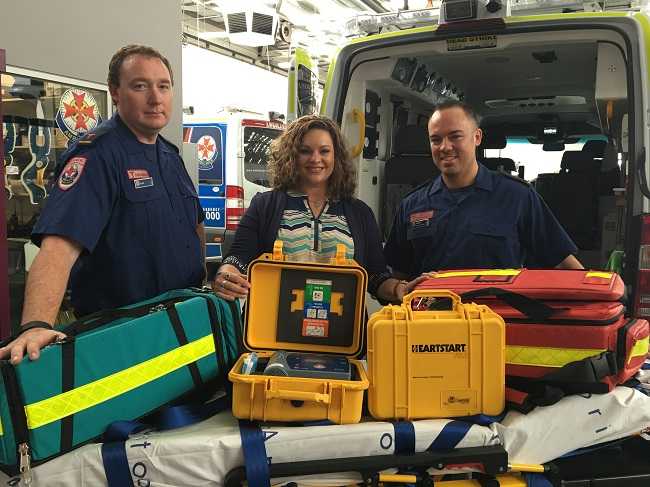
Η Ελένη Ζάχου με τον Scott Dart (Ambulance Victoria Acting Operational Equipment Support Manager) και τον Michael Holmes (Mobile Intensive Care Ambulance Paramedic – MICA) με μέρος του ιατρικού υλικού που προσφέρθηκε δωρεάν για να σταλεί στην Ελλάδα

Ελένη Ζάχου: Η Ελληνοαυστραλή νοσοκόμα που προσφέρει εθελοντικά τις υπηρεσίες της στους κατατρεγμένους όπου γης

Στα χνάρια της «Μητέρας Τερέζας» βρίσκεται η συμπάροικος νοσοκόμα, Ελένη Ζάχου. Όπου πονεμένος και κατατρεγμένος, η Ελένη στο πλευρό του ως εθελόντρια.Βρέθηκε στον πολύνεκρο και καταστροφικό σεισμό του Νεπάλ, αλλά και στον φονικό τυφώνα των Φιλιππίνων, για να παράσχει εθελοντικά υπηρεσίες στα θύματα. Και, φυσικά, δεν θα μπορούσε να μείνει ασυγκίνητη από το προσφυγικό δράμα που ζει η Ελλάδα. Η Ελληνοαυστραλή νοσοκόμα πέρασε τους τελευταίους τρεις μήνες στην Ελλάδα ως εθελόντρια στη Λέσβο και την Ειδομένη, για να παράσχει βοήθεια στους πρόσφυγες. «Βρέθηκα στο Νεπάλ, μετά τους πολύνεκρους σεισμούς και στις

Φιλιππίνες μετά τον καταστροφικό τυφώνα, αλλά τέτοια κατάσταση δεν έχω δει, όπως αυτή που είδα στην Ελλάδα» μάς είπε η κ. Ζάχου, που έκανε λόγο για «κόλαση του Δάντη».

Στη Λέσβο έζησε από πρώτο χέρι και ένα πολύνεκρο ναυάγιο με πρόσφυγες όπου χάθηκαν και ανήλικα παιδιά. Η ίδια συμμετείχε στη διάσωση μέσα στα παγωμένα νερά και, αργότερα, στην περίθαλψη.

Διαπιστώνοντας την έλλειψη ιατρικού υλικού έκτακτης ανάγκης -και κάνοντας χρήση των γνωριμιών της-, έγραψε στην Ambulance Victoria για βοήθεια και βρήκε ανταπόκριση.

Της πρόσφεραν δωρεάν μεγάλες ποσότητες πολύτιμου ιατρικού υλικού για να το στείλει στη Λέσβο.

Το επόμενο βήμα ήταν τα έξοδα μεταφοράς. Τη μεταφορά ανέλαβε η ομογενειακή εταιρία Hermes Shipping, προσφέροντας στην Ελένη μεγάλη έκπτωση.

Τα υπόλοιπα τα έβαλε η ίδια από την… τσέπη της, ελπίζοντας ότι θα της τα επιστρέψει η μη κυβερνητική οργάνωση ‘Vi Gor Vad Vi Kan’ (we do what we can’) που σημαίνει «Κάνουμε ό,τι μπορούμε».

Το υλικό ήδη φορτώθηκε για την Ελλάδα και η Ελένη που βρέθηκε αυτές τις μέρες στη Μελβούρνη είναι ιδιαίτερα χαρούμενη που «ίσως συμβάλει στο να σωθούν ανθρώπινες ζωές».

Αξίζει να σημειωθεί ότι η οικογένεια της Ελένης Ζάχου κατάγεται από την Κατερίνη, αλλά η ίδια γεννήθηκε στο Ντάργουιν και μεγάλωσε στο νησί Groote, μιάμιση ώρα με το αεροπλάνο από το Ντάργουιν.

Στο νησί αυτό, όπου η πλειοψηφία των κατοίκων είναι Αβοριγίνες, ο πατέρας της εργαζόταν σε ορυχείο.

Αν και ζούσε σε ένα απομονωμένο μέρος, η Ελένη έμαθε καλά τα ελληνικά και έχει στην καρδιά της (εκτός απ’ τους ανθρώπους) και την Ελλάδα!

Πηγή:Νέος Κόσμος

Aυστραλία: Όλοι οι εύζωνες ήταν… υπέροχοι

shevzon

Μπορεί να ήταν λίγοι αλλά τράβηξαν όλη την προσοχή και οι φωτογραφίες και τα βίντεο σε μέσα κοινωνικής δικτύωσης και το διαδίκτυο κάνουν θραύση.

Μόλις πέντε εύζωνες παρέστησαν το Σάββατο στις επετειακές εκδηλώσεις για την Μάχη της Κρήτης (ο έκτος ήταν αδιάθετος λόγω του μεγάλου ταξιδιού που είχε προηγηθεί) αλλά και οι πέντε ήταν… υπέροχοι, με τον υπολοχαγό τους.

Λόγω (και) της παρουσίας του ολιγομελούς αγήματος της Προεδρικής Φρουράς της Ελλάδας οι εκδηλώσεις φέτος είχαν ιδιαίτερη λάμψη. Και περισσότερος κόσμος, και περισσότερα μέσα ενημέρωσης, και μεγαλύτερη απήχηση.

Οι εκδηλώσεις του Σαββάτου ξεκίνησαν από το Anzac Memorial στο Hyde Park του Σίδνεϊ. Εκεί ξεναγήθηκαν οι εύζωνες, αλλά και ο αντιστράτηγος Κωνσταντίνος Γκατζογιάννης, επιτελάρχης Γενικού Επιτελείου Εθνικής Αμύνης (Γ.Ε.ΕΘ.Α.) και ο αντισυνταγματάρχης Κωνσταντίνος Βασιλόπουλος, που εκπροσώπησαν φέτος τις ελληνικές ένοπλες δυνάμεις.

Ακολούθησε σεμνή τελετή όπου η ελληνική Πολιτεία παρασημοφόρησε δύο Αυστραλούς παλαιούς πολεμιστές που συμμετείχαν στις επιχειρήσεις στην Ελλάδα κατά τον Β’ Παγκόσμιο πόλεμο. Τιμήθηκαν ο 97χρονος Thomas Lea, και ο αποθανών Charles Norman Badan (παρέλαβε το παράσημο ο εγγονός του, Jacob Ralph, σμηναγός της Πολεμικής Αεροπορίας).

Επίσης, παραδόθηκε στον Ελληνοαυστραλό πλοίαρχο Ιωάννη Σταυρίδη, σημαία που παλαιότερα κοσμούσε το θωρηκτό «Γεώργιος Αβέρωφ», γνωστό για τον άκρως σημαντικό ρόλο του στους Βαλκανικούς Πολέμους και την απελευθέρωση νησιών, όπως η Σάμος και η Λήμνος απ’ όπου κατάγεται ο ομογενής αξιωματικός του Αυστραλιανού Πολεμικού Ναυτικού.

Περίπου στις δύο το μεσημέρι, πραγματοποιήθηκε στο Κενοτάφιο Martin Place, η κύρια εκδήλωση της ημέρας με επιμνημόσυνη δέηση και κατάθεση στεφάνων. Παρέστη ο κυβερνήτης της Ν.Ν. Ουαλίας, David Hurley, τονίζοντας ότι «συναντήθηκαν κατά τον Β’ Παγκόσμιο Πόλεμο δύο δημοκρατίες – μία νέα με την αρχαιότερη». Επίσης, τόνισε πως όπως «και στην Καλλίπολη, έτσι και στην Κρήτη, δεν υπήρξε νίκη με τη στρατιωτική σημασία, όμως υπήρξε νίκη εν τη ευρεία έννοια. Αποτελεί τρανταχτό παράδειγμα του τι μπορεί να επιτύχουν οι άνθρωποι από κοινού».

Ο αντιστράτηγος Κωνσταντίνος Γκατζογιάννης, ευχαρίστησε τους διοργανωτές και τις αυστραλιανές Αρχές, εξέφρασε τις πολύ καλές του εντυπώσεις από την Ομογένεια και χαιρέτισε θερμά τον λαό της Αυστραλίας.

Άλλοι επίσημοι στο Martin Place, ήταν ο γενικός πρόξενος της Ελλάδος στο Σίδνεϊ, Δρ. Σταύρος Κυρίμης, ο ομοσπονδιακός υπουργός Αθανάσιος Συνοδινός, ο Εργατικός βουλευτής, Matthew Thistlewaite, η σκιώδης πολιτειακή υπουργός, Σοφία Κώτση, και άλλοι από την πολιτική σκηνή, την τοπική αυτοδιοίκηση, την Ομογένεια και ευρύτερα.

Όσον αφορά τους ευζώνους στη διάρκεια αυτής της εβδομάδας θα φρουρήσουν τιμητικά επί μία ώρα το Κενοτάφιο και αρκετά κανάλια έχουν δείξει ενδιαφέρον να τους κινηματογραφήσουν.

Το άγημα της Προεδρικής Φρουράς μαζί με τους δύο αξιωματικούς επισκέφθηκαν χθες τον στρατώνα «Λαμία», έξω από το Σίδνεϊ καθώς και το ίδρυμα «Βασιλειάδα» στην περιοχή Lakemba.

Πηγή:Νέος Κόσμος

Proxenos: Greece’s new online certification database

consulllll

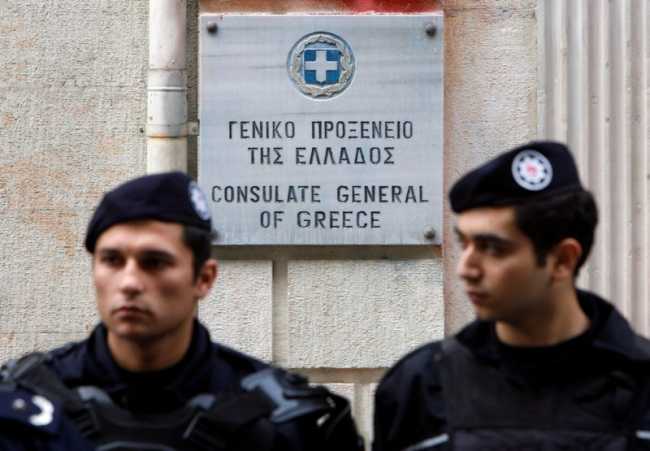
Greece’s Minister of Foreign Affairs Nikos Kotzias and Interior Minister Panos Kouroublis have announced the launch of an initiative, titled Proxenos, that will allow Greeks living abroad to apply for official certificates and documents from the country’s consular services online.

Proxenos, which stands for the Greek word for consul, has started operating in pilot mode at the Greek Consulate in Dusseldorf, offering Greeks worldwide the opportunity to get hold of birth, marriage and death certificates, as well as other official documentation from their nearest consulate, accessing central public records databases. Dusseldorf’s feedback during the first week’s trial will help improve the service before it is expanded to other countries.

Foreign Minister Nikos Kotzias also announced plans to digitise the ministry’s history archive and to update its translation service, cutting time spent searching for paperwork and additional expenses for the state as well as citizens.

“This is a jump in the quality of services offered by Greece’s consular services throughout the world, facilitating the lives of Greek expatriates,” Kotzias said during a joint press conference last Friday.
“Greeks will be able to receive certificates of birth and marital status online, thus cutting time spent searching for such paperwork in Greece and saving money for the state.”

Interior Minister Panos Kouroublis also said that the ministry will complete a program of 15 more database connections during the year.

“This connection with the database is the second achieved by the interior ministry, with the first one connecting with a database of the education ministry.
“This program will bring the diaspora closer to Greece, by showing the country cares and sends them a message of hope and optimism,” Kouroublis concluded.

source:Neos Kosmos

Australia faces tough final qualifying stage for Russia 2018

postecoglou

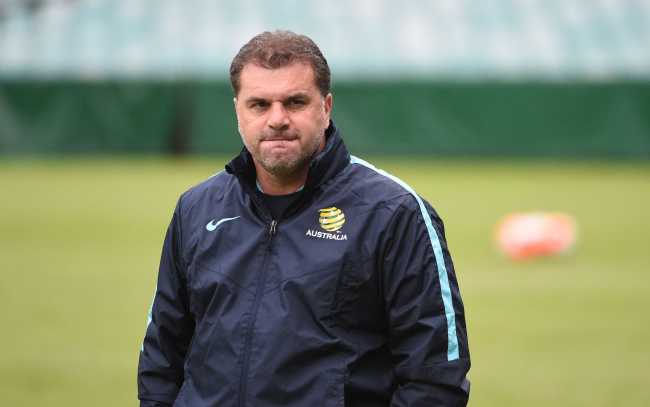
Australian Socceroos coach Ange Postecoglou at training ahead of their 2018 FIFA World Cup qualifier match against Jordan. PHOTO: AAP/MICK TSIKAS.

Postecoglou says ‘we’re prepared for what’s thrown at us’

The final qualifying phase of the Socceroos’ long and winding road to the 2018 World Cup finals in Russia is now set out before them. It kicks off at home on 1 September against Iraq and ends at home 12 months later against Thailand, taking in 10 matches along the way, including matches against UAE, Saudi Arabia and Japan.

The Socceroos will cover the length of Asia from the Middle East to the Far East to South East Asia in its quest to qualify for its fourth consecutive World Cup finals. Tuesday evening’s draw in Kuala Lumpur divided the 12 remaining countries into two groups of six. Each country will play all other countries in their group twice over the course of 12 months.

Coach Ange Postecoglou attended the draw and commented immediately afterwards.

“It’s good to know the draw so we have a clear picture of what is in front of us from a football and logistics perspective to qualify for the World Cup. Over the last two years we have built up a very strong portfolio of information on most Asian nations and its players by having scouts at matches and tournaments all over Asia, so the players go into every match well prepared. That information will be sharpened and expanded now we know that we face Japan, Iraq, UAE, Saudi Arabia and Thailand.
“As champions of Asia we will show due respect to all countries but are focused on continuing our journey that has aspirations greater than simply qualifying for the World Cup.”

Postecoglou agreed that the draw had placed Australia in the tougher of the two groups, but added that his team is prepared for whatever is thrown at it.

Australia and Japan are favourites to qualify from Group B but they face strong challenges from both Saudi Arabia and UAE. The schedule is also likely to test Australia, with eight of the ten matches occurring in four pairs so that Australia plays the first of a pair of matches at home, and then has to fly to another country and time zone to play a second match away just five days later, or vice versa.

Coach Postecoglou has stressed the importance of stadium selection and playing surface preparation to optimise Australia’s chances of success in their home fixtures. The home venues have yet to be decided, but the coach said any state government who requested a home game needed to provide their biggest and best playing surface. He added it was no longer acceptable to come home to a torn-up playing surface even during winter months.

“If state governments want us it’s up to them to make a pitch for us and we aren’t fixed to one place or another. We want the best possible place and best possible venues. The Saudi Arabian crowd will be hostile and we’ll face a similar scenario in Japan. I reckon the Thais will pack out their stadium for us as well. Hopefully our guys will feel invincible at home,” Postecoglou told The Sydney Morning Herald.

SOCCEROOS WORLD CUP QUALIFIERS SCHEDULE:
Australia v Iraq (home) Thursday 1 September, 2016
UAE v Australia (away) Tuesday 6 September , 2016
Saudi Arabia v Australia (away) Thursday 6 October, 2016
Australia v Japan (home) Tuesday 11 October, 2016
Thailand v Australia (away) Tuesday 15 November, 2016
Iraq v Australia (away) Thursday 23 March, 2017
Australia v UAE (home) Tuesday 28 March, 2017
Australia v Saudi Arabia (home) Thursday 8 June, 2017
Japan v Australia (away) Thursday 31 August, 2017
Australia v Thailand (home) Tuesday 5 September, 2017

The other qualifying group, Group A, includes the following six countries: Iran, South Korea, China, Uzbekistan, Qatar, Syria.

The top two countries from each group qualify automatically for the World Cup finals, while the two teams finishing third in each group will then enter into play-offs for the chance to qualify.

Sources: Fox Sports; SMH

World-acclaimed barrister teams up with Foundation for Hellenic Studies

parthenon22

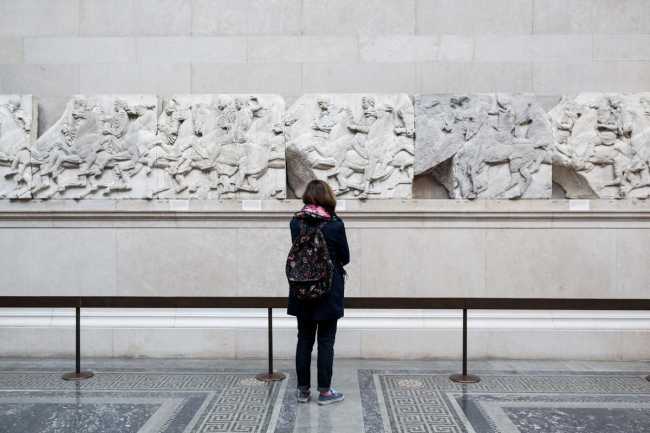
A tourist in front of the Parthenon metopes, British Museum, London. PHOTO: KONSTANTINOS TSAKALIDIS.

Geoffrey Ronald Robertson QC visits Adelaide to discuss the west’s longest cultural issue – the return of the Parthenon Sculptures

As part of the 100-day exhibition ‘The Sculptures of The Acropolis – A Retrospective’, the Sydney-born human rights barrister, academic, author and broadcaster, Geoffrey Ronald Robertson QC, will be arriving in Adelaide on 6 May to attend a formal dinner hosted by not-for-profit organisation The Foundation for Hellenic Studies.

The well-respected barrister is a founder and joint head of Doughty Street Chambers and, together with British-Lebanese lawyer, activist, and author Amal Alamouddin Clooney, visited Greece in October 2013 to meet with former Greek Prime Minister Antonis Samaras and his cabinet in an attempt to resolve the ongoing issue and reclaim the Parthenon Sculptures.

Sixty-nine-year-old Robertson, who holds dual Australian and British citizenship, will attend the event as an honorary guest, During the evening, he will have the opportunity to talk about his involvement and experience during his engagement, in the presence of dignitaries such as the Treasurer of South Australia Tom Koutsantonis, the Consul General of Greece in South Australia, Andreas Konstantinos Gouras, Chief Justice of the Supreme Court of South Australia Chris Kourakis and a number of distinguished interstate guests.

The sculptures, which include 75 metres of friezes depicting mythological scenes and 17 statues, were removed from the ruins on the Acropolis by British ambassador Thomas Bruce, the seventh Earl of Elgin, in the early 19th century.

“There is considerable support for the emergence of an international rule requiring the return of cultural treasures of great national significance,” Robertson wrote in his 2012 book Crimes Against Humanity, attempting to explain his theory of an international right to the return of cultural property.
“Such a rule would not result in the emptying of western museums; it would only apply to ‘unique’ works such as the marbles – a living symbol of history and culture from the time of the birth of democracy. It would be based on international treaties and conventions that grant countries a ‘right to culture’,” he concluded.

The Foundation for Hellenic Studies launched the #ReturnTheMarbles campaign back in 2013 and has since accumulated thousands of supporters from all over the world. The overwhelming response across the globe spurred the approach to the Greek government, and The Foundation secured a first-time exhibition in Australia with the support of the South Australian government.

The life-size replicas, which include Poseidon’s bust, a two-metre-tall caryatid and examples of elements from the Parthenon’s frieze and metopes, were presented in an official opening on 31 March.

The exhibition will remain ‘in residence’ at the Adelaide Festival Centre for a period of 100 days, so that visitors can view the majestic forms of ancient Greece, that were used to symbolise democracy, equality and community.

source:neos kosmos