Daily Archives: October 28, 2015

Australian media on OXI 28 October 1940

oxi7

How the Australian media reported the events of October and November 1940 in Greece.

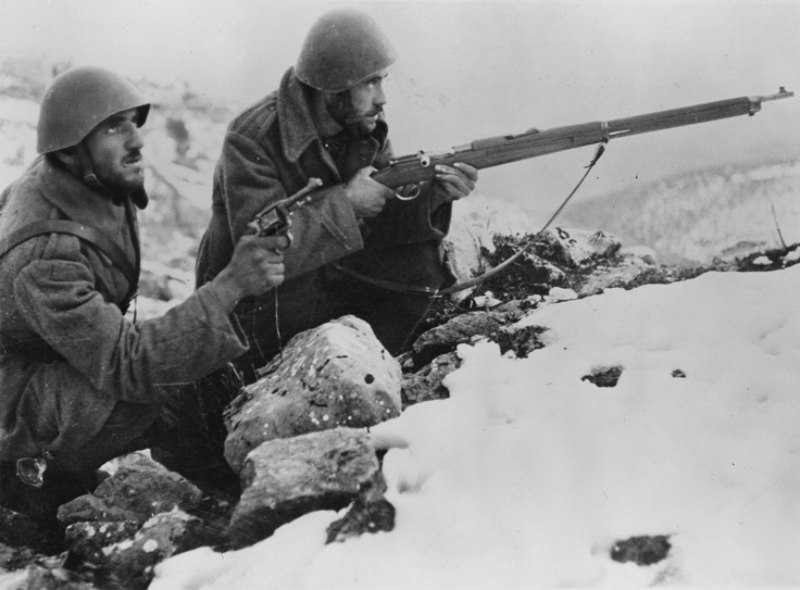
Next Wednesday, the Greek Australian Memorial in Melbourne and the Anzac Memorial in Sydney will be the focal point of commemorations of Hellenic National Day. On 28 October 1940, fascist dictator Benito Mussolini’s forces invaded officially neutral Hellas, having received a firm ‘NO’ to his demands to occupy strategic ports and islands around the Ionian and Aegean Seas. The events have been discussed at some length. How did the Australian media report on the heady events of October and November 1940, the days when an utterly unprepared Hellenic state fought – and defeated – the Nazis’ key ally? How do those events remain relevant in 2015?

Under the headline ‘Italy’s flagrant aggression’, Melbourne’s The Age opened its coverage of the invasion with the following:

‘A small mountainous country, with long indented coasts and many islands, Greece has for years sought by agreements and treaties to promote good relations with her neighbours while carefully avoiding the least provocation to the Axis powers.

Actually, the country has been too poor to indulge revisionist ambitions, and too much immersed in domestic affairs to show more than a self-protective concern for foreign affairs.’

Reading the newspapers of the time – available online thanks to the National Library of Australia – the main target for Mussolini’s men was the coast of Epirus and the best port in south-eastern Europe, Thessaloniki. What evolved into the ‘Greek Campaign’ of 1941, concluding with the Battle of Crete in May, began as the struggle ‘between the invading Italian forces and the British Navy’, according to Brisbane’s The Telegraph (29 October 1940).

This key port in the last war is likely to be one in the present campaign. It was through this centre that the Allied forces in the last war struck upwards into the Balkans in the campaign that resulted in the overthrow of Bulgaria, and carried the war towards Constantinople.

The strategic island of Kerkyra (Corfu), across from the heel of the Italian peninsula, was ‘in an ideal position for use by the British fleet’. While the first Australian troops landed in Hellas in March 1941 – they joined their New Zealand comrades to form the Second Anzac Corps the following month – the Royal Australian Navy had an active presence in Hellenic waters from July 1940.

The ill-fated HMAS Sydney (originally named the HMS Phaeton) patrolled the waters around Crete and Kythera for some time. During the Battle of Cape Spada (Crete’s north-western extremity), the Australian light cruiser damaged the high-speed light cruisers Giovanni dalle Bande Nere and Bartolomeo Colleoni (the latter sinking with the loss of 121 lives). HMAS Sydney remained on duty around the Aegean until January 1941, but was not involved in another major engagement.

A few days after the initial assault, Perth’s The West Australian informed its readers: ‘GREEKS ATTACK – ENEMY REPULSED IN EAST – ADVANCE INTO ALBANIA – ITALIAN PRESSURE IN EPIRUS’. According to Italian communiqués, their forces were ‘attempting to drive down the coast in Epirus towards Yanina’, mentioning ‘bombing raids’ against the Epirote capital. Indeed, ‘one Rome statement claims that the advance has reached Yanina’. (4 November 1940, page 7).

The reality on the ground was very different. The fascist advance on Florina ‘(with Salonika as the ultimate object)’ had already been stopped by the Hellene defenders, with a counter-attack underway.

Similarly, while I recall my grandmother’s stories of hearing the Italian air-raids on Ioannina, about 20 kilometres away, the city would not fall to the Axis for more than six months.

Australian media outlets often quoted the statement of the Hellene Ambassador to London in November 1940. M. Simopoulos declared that:

“Hellenism united throughout the world is fighting today for its freedom and independence. Hellas has not survived for thousands of years to become anybody’s serf now. We are proud that our country finds itself in this struggle by the side of a great, heroic nation fighting for a common ideal, and as the King of Britain said to our King, ‘Your fight is our fight’.” (The West Australian 4 November 1940, page 7)

The longer the Hellenic resistance to the Axis invasion lasted – let’s not forget the fascists were assisted by Albanian collaborator units in their initial assault – the more gushing the praise of Hellenism became.

The 21 December 1940 issue of The Australian Women’s Weekly features a large photograph of the ‘Dancing Guardsman of King of Greece’ under the headline ‘THEY CAN FIGHT, TOO!’ The Evzones are described as ‘magnificent specimens of a race counted among the most handsome in the world. They have long been famed for their dancing, but it is their fighting the world admires just now’.

Such admiration was far from universal in Australia, as attested by the anti-Greek riots in 1930s Kalgoorlie.

RELEVANCE TO 2015

The articles in the Australian media on the failed attempt to conquer Hellas in October 1940 number in the thousands. Literally. Reading even a handful of them, such as those here, illustrate a few key points.

First, so little has changed in Hellenic society. One has only to listen to the media from Athens to understand just how ‘immersed in domestic affairs’ society in the Greek state remains.

Second, these articles, cartoons, photographs and drawings demonstrate how deeply intertwined Australia and Hellenism have been throughout the 20th century.

Australians (of Hellenic background and otherwise) served in Hellas (from Macedonia to Crete, from Epiros to Megisti) in every conflict fought there in the last century – Balkan Wars (1912-1913), World War One (1914-1918), World War Two (1939-1945), Civil War (1946-49) – serving in either military or humanitarian roles.

Hellenes and Australians served alongside each other in the South African War (1899-1902), the Korean War (1950-53), the Vietnam War, the Gulf Wars, Afghanistan, Iraq, and elsewhere. At no time have Australians and Hellenes fought against each other.

The Anzac legend has deep roots in Hellenic soil and water; it was on Lemnos, around Thessaloniki, around Thermopylae, on Crete, and elsewhere, that Anzacs fought ‘for a common ideal’.

This shared heritage should be used by history and language educators, by politicians and lobbyists, by individuals and associations, by clergy and laity, to promote Hellenism and the Hellenic ideals every single day. These ideals are shared by all Australians and are great segues to promoting Hellenic education in all its forms: language, history, culture.

If we – Australian Hellenes – do not undertake this, then who will?

* Dr Panayiotis Diamadis lectures in Genocide Studies at the University of Technology, Sydney, and teaches history at a Catholic college in Sydney.

source:Neos Kosmos
Gino and Mark Stocco: Body found on property where father and son fugitives arrested near Dunedoo, NSW

6892660-3x2-700x467

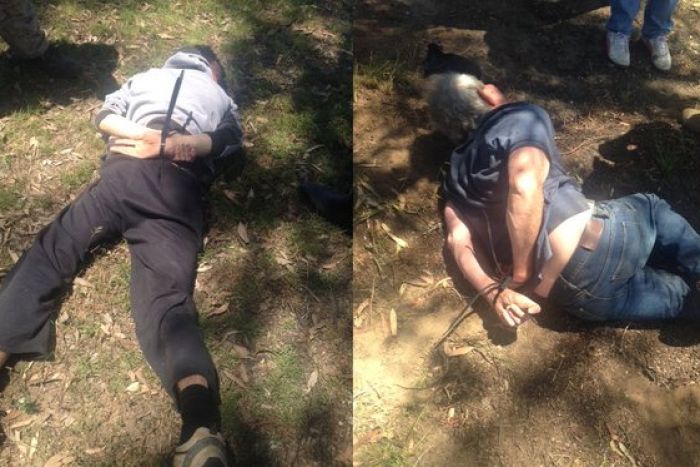
A man’s body has been found on the property where police arrested Gino and Mark Stocco, near Dunedoo in central western New South Wales.

The father and son fugitives Gino, 57, and Mark, 35, wanted after allegedly shooting at police in NSW, were taken into custody after a search spanning three states.

The pair, who had been wanted by police for eight years, were found at a property at Elong Elong, near Dunedoo.

Police said no shots were fired and no-one was injured during the arrest.

The body of the man found after the men were arrested is believed to be that of a 68-year-old who has been missing since early October.

The cause of his death is not yet known.

A crime scene has been established at the property.

An ambulance was on standby in Dunedoo at the time of the men’s arrests but a spokeswoman said it was not needed.

The pair are being taken to Dubbo police station to be charged.

There was an unconfirmed sighting of the Stoccos at about 7:00am at Hillston, which is a five-hour drive south-west of Dunedoo.

Bakery owner Donna Francis said the men were recognised by other customers who called police.

“I’m thinking to myself, are they the Stocco fellows?” she said.

“And I kept looking at them, but the father actually has a clean face now.

“I’ve only seen the police, the local ones, once and they asked me had I recognised them, and I said, well, I think it was them, I’m not 100 per cent sure.”

Elong Elong property ‘very isolated’

Elong Elong Rural Property Centre director Denise Male said she sold the property Pinevale, where the men were arrested, only last year.

She said it was an isolated property that backed onto the Goonoo State Forrest, which is traversed by many remote access roads.

“It’s a very remote and private property,” she said.

“It’s a brilliant thing that police have tracked them down to that location, because it’s very isolated.”

Police have been running a major operation to capture the Stoccos since they allegedly shot at police with a high-powered rifle during a car chase in Wagga Wagga in NSW earlier this month.

A local roadworker said he saw a number of police and ambulance vehicles travelling up the road.

“I thought something must have been up, and yeah they kicked us off our job site and told us we had to get out,” he said.

“And yeah, apparently it was the blokes who have been wanted for a long time. At least they caught them I suppose.

“In Warrumbungle Shire you don’t usually see too much of this action going on.”

They were on Australia’s most-wanted list for a number of violent crimes and property offences in Queensland, NSW and Victoria.

They were sighted at Gundagai in southern New South Wales on Saturday October 24, when they stopped to fill up a white Toyota LandCruiser with fuel, and drove away without paying.

NSW Police also received a report of a sighting east of Wagga Wagga in the morning on October 25 but had been unable to confirm it, they said.

There were also multiple sightings of the stolen vehicle in Victoria, including an unconfirmed sighting at Sale, in the state’s south east, on October 24.

The men had likely been changing their appearance, including shaving their beards, police said.

They were also believed to have frequently changed the licence plates on the LandCruiser ute.

There was speculation the pair could have stockpiles of supplies and weapons throughout NSW and Victoria.

Police described them as “fairly resourceful individuals”.

source:abc.net.au

Stoke City beats Chelsea on penalties in League Cup, Sheffield Wednesday stuns Arsenal

6891432-3x2-700x467

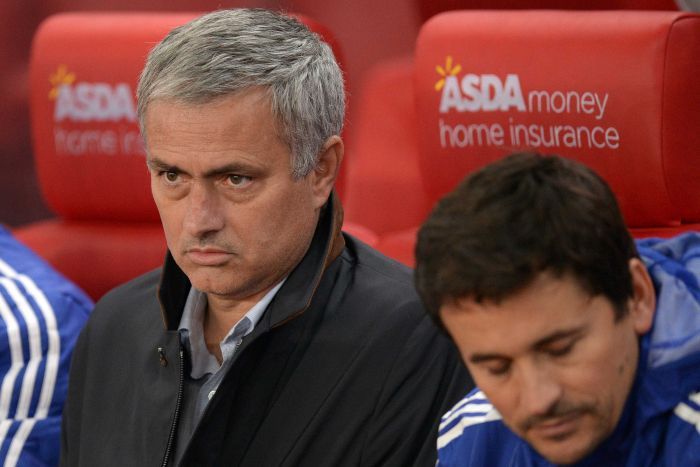
Eden Hazard has squandered the decisive penalty as Stoke City deepened Chelsea manager Jose Mourinho’s woes with victory in the League Cup, while second-tier Sheffield Wednesday stunned Arsenal 3-0.

After Jon Walters put Stoke ahead with a fine 20-yard shot at the Britannia Stadium, Chelsea substitute Loic Remy, on for the injured Diego Costa, lashed home an injury-time equaliser to make the score 1-1.

Following a goalless period of extra time, the first nine penalties of the shootout were all scored, only for the out-of-form Hazard to see his 10th spot-kick parried by Stoke goalkeeper Jack Butland.

The Belgian’s mishap condemned Mourinho’s side to their ninth defeat in all competitions this season and saw the holders exit the tournament in the fourth round.

It came hot on the heels of a 2-1 defeat at West Ham United on Saturday, which left Mourinho facing a Football Association misconduct charge after being sent to the stands, and ramped up the pressure on the Portuguese ahead of Saturday’s Premier League home game with Liverpool.

With Chelsea currently 15th in the league table and third in their Champions League group, British newspapers have speculated that Mourinho could be sacked if their fortunes do not improve quickly.

At Hillsborough, Arsene Wenger’s Arsenal were well beaten by Championship side Wednesday and also lost Alex Oxlade-Chamberlain and Theo Walcott to injury in the first half.

Ross Wallace put Wednesday ahead after 27 minutes and then teed up Lucas Joao for the hosts’ second goal shortly before half-time, with Sam Hutchinson completing victory early in the second period.

Asked how his young fringe players had handled the occasion, Wenger delivered a scathing assessment, telling Sky Sports: “It was too high for them. They are not ready to play at this level, none of them.”

Acres of space

On the injuries his team suffered, he added: “We are short now because we lose Chamberlain today, we lose Walcott and we have already a few injuries.

“It is a big blow for us, of course to lose the game, but even more for the other competitions, which are very important for us, to lose two players of that stature.”

It was Wednesday’s second Premier League scalp in this season’s competition, following their third-round win at Newcastle United, and brought Arsenal’s run of four successive victories to an end.

Wenger made eight changes to the team that beat Everton 2-1 on Saturday for the trip to Hillsborough, which was a repeat of the 1993 final.

Oxlade-Chamberlain was one of only three players who kept their places, along with Petr Cech and Olivier Giroud, but he went off in the fifth minute after pulling up while running along the touchline.

Walcott replaced his England team-mate, but he in turn was forced off 13 minutes later with an apparent calf injury.

Ismael Bennacer, a 17-year-old midfielder, came on, joining Glen Kamara and Alex Iwobi in making his Arsenal debut.

Wednesday took the lead nine minutes later when a neat move down their left flank culminated in Daniel Pudil cutting the ball back for Wallace to steer a first-time shot inside the left-hand post.

Wallace teed up Wednesday’s goal in the 40th minute after a short corner, swinging over a cross from the left for striker Joao to head home.

Wednesday completed victory six minutes into the second half when Barry Bannan’s free-kick found Tom Lees in acres of space at the back post and he volleyed across goal for Hutchinson to score with his knees.

In the morning’s other matches, Everton did just enough to progress past Norwich in a 1-1 draw thanks to Leon Osman’s second-half equaliser to cancel out Sebastian Bassong’s opener, before the Toffees progressed 4-3 on penalties.

Hull City also advanced 5-4 on penalties following a 1-1 draw with Premiership outfit Leicester.

source:abc.net.au

Family’s heartbreaking words to Karlie Pearce-Stevenson and daughter Khandalyce

1445973383090

Bodies identified: Karlie Jade Pearce-Stevenson and Khandalyce Kiara Pearce. Photo: NSW Police

After almost a decade waiting to see their smiling faces again, the family of Karlie Pearce-Stevenson and her daughter Khandalyce are waiting no more.

The father and step-brother of Ms Pearce-Stevenson have provided a glimpse into their anguish over the past several years in a death notice in the NT News.
Read more: http://www.smh.com.au/nsw/familys-heartbreaking-words-to-karlie-pearcestevenson-and-daughter-khandalyce-20151027-gkk194.html#ixzz3pnntMohH
Follow us: @smh on Twitter | sydneymorningherald on Facebook

“No more looking to see if that gir (sic) is you, as we saw someone else in a crowd,” the notice published on Tuesday read.

Advertisement
“No more waiting to hear.

“No more waiting to see you show up smiling again as usual. No more laughter, giggles and pranks.

Death notice published in NT News on Tuesday.
Death notice published in NT News on Tuesday. Photo: NT News

“No more late nights just talking with the music playing

“You are the only one that knows, and you can tell your Mum, Nanna and Grandma when you see them again.”

The family have remained relatively silent, opting to grieve in privacy, since learning bones discovered five years apart in different states belonged to Ms Pearce-Stevenson and Khandalyce.

Ms Pearce-Stevenson left her home of Alice Springs with her little girl between 2006 and 2008 to travel Australia and work.

Her bones were found in Belanglo State Forest in 2010 and Khandalyce’s five years later in Wynarka, South Australia.

On the same day police revealed the shocking identity theft that occurred years after their murders, their family have vowed to remain strong for the mother and daughter.

“Our hearts have a thousand cuts and we will remain your strength,” Ms Pearce-Stevenson’s father and her step-brother, Luke Povey, wrote in the notice.

“Give Khandals a hug for me and Luke sweetie.

“Love from Dad and Luke.”

The notice included words, similar to lyrics from Cat Steven’s song Wild World.

“It’s hard to get by with just a smile girl.

“I’ll always remember you as a child.”

source:smh.com.au

China expresses anger at US warship entering South China Sea, sends own destroyers in response

f8fce2512d0bba54d64cca8cd0c55486

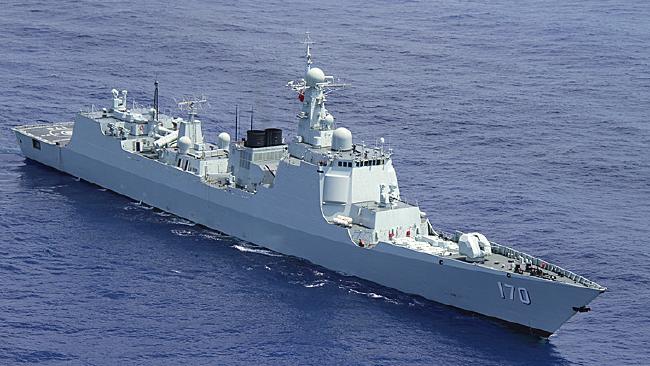
Armed response … The Chinese navy destroyer PLAN Lanzhou, above, is one of two warships deployed in response to the US destroyer USS Lassen passing close to Chinese artificial islands in the disputed South China Sea. Source: mil.cnr.cnSource:Supplied

CHINA has summoned the US ambassador in Beijing to protest the presence of a warship in what it claims as its national waters, and has deployed two of its own destroyers to counter further ‘incursions’.

The US Navy warship sailed past one of China’s artificial islands in the South China Sea yesterday, in a challenge to Chinese sovereignty claims that drew an angry protest from Beijing, which said the move damaged US-China relations and regional peace.

Vice Foreign Minister Zhang Yesui has summoned US ambassador Max Baucus to lodge a formal protest over the issue.

China’s Foreign Ministry said authorities monitored and warned the USS Lassen as it entered what China claims as a 12 mile (21km) territorial limit around Subi Reef in the Spratly Islands archipelago, a group of reefs, islets, and atolls where the Philippines has competing claims.

“The actions of the US warship have threatened China’s sovereignty and security interests, jeopardised the safety of personnel and facilities on the reefs, and damaged regional peace and stability,” the ministry said on its website.

“The Chinese side expresses its strong dissatisfaction and resolute opposition,” the statement said.

Chinese media is this morning reporting two of its own warships have been sent to waters near Subi reef to confront any further ‘trespassing’.

The guided missile destroyer Lanzhou and the patrol vessel Taizhou will enforce China’s sovereignty on the area and deter any further ‘illegal’ activity’.

“This action by the United States threatens China’s sovereignty and security interests, endangers the safety of personnel and facilities in the reef, and harms regional peace and stability,” the state-owned People’s Daily reports.

China says virtually all of the South China Sea belongs to it, while Brunei, Malaysia, the Philippines, Taiwan and Vietnam claim either parts or all of it. Since 2013, China has accelerated the creation of new outposts by piling sand atop reefs and atolls then adding buildings, ports and airstrips big enough to handle bombers and fighter jets.

WAR OF WORDS

The US Obama administration has long said it will exercise a right to freedom of navigation in any international waters.

“Make no mistake, the United States will fly, sail and operate wherever international law allows, as we do around the world, and the South China Sea is not and will not be an exception,” Defense Secretary Ash Carter said earlier this month.

A Chinese Foreign Ministry statement said China adhered to international law regarding freedom of navigation and flight, but “resolutely opposes the damaging of China’s sovereignty and security interests in the name of free navigation and flight.”

“China will firmly deal with provocations from other countries,” the statement said, adding that China would continue to monitor the air and sea and take further action when necessary.

Chinese Foreign Ministry spokesman Lu Kong said such actions by the US might end up spurring further advances in Chinas defence capabilities.

“If any country wishes to disrupt or impede China’s reasonable, justifiable and lawful activities on our own territories by playing some little tricks, I would advise these countries to cast off this fantasy,” Lu said.

Indonesia’s president called last night for all parties to exercise restraint and for China and Southeast Asia’s regional bloc to start discussions on the substance of a code of conduct to manage tensions there.

Widodo, who met President Barack Obama on Monday, said Indonesia supports freedom of navigation but also underlined his nation’s neutrality.

“Indonesia is not a party to the dispute but we have a legitimate interest in peace and stability there. We call on all parties to exercise restraint and refrain from taking actions that could undermine trust and confidence and put at risk the peace and stability of the region,” he told the Brookings Institution think tank.

The Association of Southeast Asian Nations, or ASEAN, and China have made little headway in the past decade on negotiating a binding code of conduct in the South China Sea, which is a major conduit for world trade.

INTERNATIONAL CONCERN

US ally the Philippines welcomed the move as a way of helping maintain “a balance of power.”

Navy officials had said the sail-past was necessary to assert the US position that China’s man-made islands cannot be considered sovereign territory with the right to surrounding territorial waters.

Speaking to foreign correspondents in Manila, Philippine President Benigno Aquino III said he supported the US naval manoeuvres as an assertion of freedom of navigation and as a means to balance power in the region.

“I think expressing support for established norms of international behaviour should not be a negative for a country,” he said. “I think everybody would welcome a balance of power anywhere in the world.”

FACING OFF

Beijing’s response closely mirrored its actions in May when a navy dispatcher warned off a US Navy P8-A Poseidon surveillance aircraft as it flew over Fiery Cross Reef, where China has conducted extensive reclamation work.

A Defense Department official, who spoke on condition of anonymity to discuss the USS Lassen’s movements, said the patrol was completed without incident. A Pentagon spokesman, Navy Cmdr. Bill Urban, declined to comment.

International law permits military vessels the right of “innocent passage” in transiting other country’s seas without notification. China’s Foreign Ministry, though, labelled the ship’s actions as illegal.

The US says it doesn’t take a position on sovereignty over the South China Sea but insists on freedom of navigation and overflight. About 30 per cent of global trade passes through the South China Sea, which also has rich fishing grounds and a potential wealth of undersea mineral deposits.

China says it respects the right of navigation but has never specified the exact legal status of its maritime claims. China says virtually all of the South China Sea belongs to it, while Brunei, Malaysia, the Philippines, Taiwan and Vietnam claim either parts or all of it.

ROUGH WATERS AHEAD

State Department spokesman John Kirby said Monday the US would not be required to consult with other nations if it decided to conduct freedom of navigation operations in international waters.

“The whole point of freedom of navigation in international waters is that it’s international waters. You don’t need to consult with anybody,” Kirby said.

The South China Sea has become an increasingly sore point in relations with the United States, even as President Barack Obama and China’s President Xi Jinping have sought to deepen cooperation in other areas.

Despite those tensions, exchanges between the two militaries have continued to expand, with a US Navy delegation paying visits last week to China’s sole aircraft carrier and a submarine warfare academy.

source:news.com.au


Six-point lead for Reds after PAOK downs Panathinaikos

rodrigues_vs_pao_web-thumb-large

A spectacular first-half performance by PAOK saw the Thessaloniki giant beat Panathinaikos 3-1 at home on Sunday in the most important game of the eighth round of Super League games, while leader Olympiakos overcame one more opponent on the road as it beat Atromitos 2-1.

PAOK put three past the league’s best defense within a quarter of an hour thanks to a Dimitar Berbatov penalty kick, and goals by Garry Rodrigues and Miguel Vitor. This was Berbatov’s third Super League goal, but upon scoring he pulled a muscle and got substituted.

The only thing Panathinaikos managed to do at Toumba was to score from the penalty spot through Nikos Karelis in the second half.

That result has allowed Olympiakos to stretch its advantage at the top to six points from Panathinaikos, after its victory at Peristeri. Two goals by Spanish central defender Alberto Botia gave the Reds a 2-0 lead before Serb Milos Stojcev pulled one back for Atromitos.

AEK is now two points behind Panathinaikos, in third, courtesy of an emphatic 5-1 home win over Iraklis on Saturday. Ronald Vargas netter twice, with Christos Aravidis, Elder Barbosa and Diego Buonanotte scoring one each. Apostolos Vellios tucked in Iraklis’s consolation. Next weekend AEK visits Panathinaikos.

Veria put an end to Panionios’s great run scoring the game’s sole goal at Nea Smyrn in the last minute of injury time. There were also away wins for Asteras Tripolis at PAS Giannina (2-1) and for Platanias Hanion at Panetolikos by the same score.

The games of Kalloni Lesvou with Levadiakos and of Panthrakikos with Xanthi finished goalless.

source:ekathimerini.com

News story prompts reunion between German journalist, Greek Holocaust survivor

kalariti_web-thumb-large

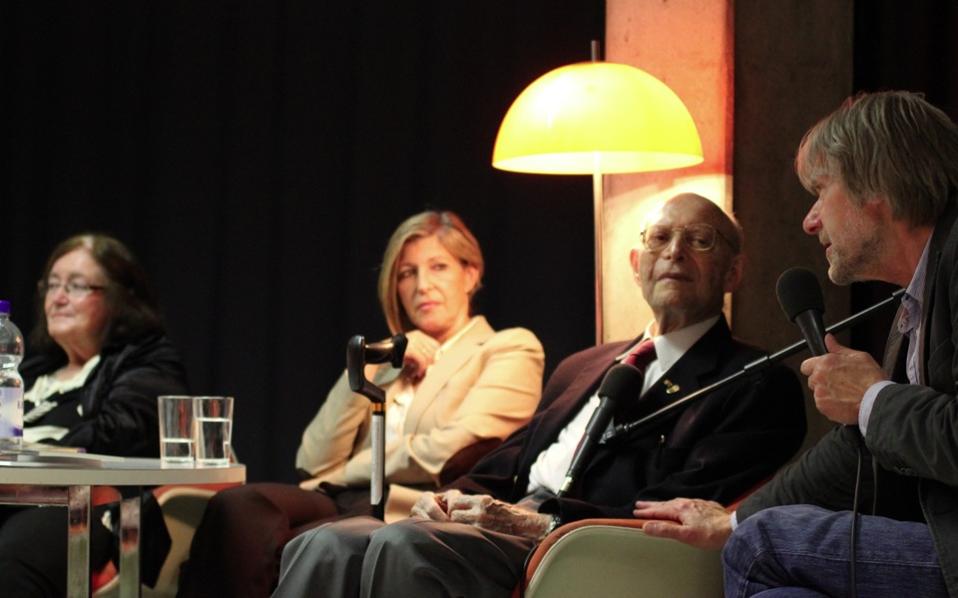
Gizela Kalariti (left), 77, and 87-year-old Heinz Kounio (third from left), accompanied by his daughter, are seen during the event held in Ulm, Germany. Kounio, a Greek Jew who had been put on the first train to leave Thessaloniki for Auschwitz 70 years ago, spoke of his experience at the SS camps.

Newspaper old-timers have a point when they say that the most beautiful stories can often be found in readers’ letters to the editors, and a fine example landed on the doorstep at Kathimerini recently, handwritten in a somewhat old-fashioned hand and sprinkled with just a few spelling mistakes.

“I apologize for any errors in Greek; I taught myself the language,” said the writer, 77-year-old Gizela Kalariti from Ulm in Germany. The surname comes from her late Greek husband but her knowledge of the language is all her own, learned long before she met him thanks to a deep love of all things Greek from a young age. Her attraction was inexplicable. In fact, her father asked her one day: “What is it about the country that draws you so strongly? Perhaps we have some distant relation?” Extensive research into the family’s genealogy failed to turn up a link. Before retiring, Kalariti worked as a journalist in a local newspaper, in which she had published a plethora of pieces on Greece.

But why was she writing to Kathimerini now? It all started last April when she read an edition of the paper dated March 15, “with some delay,” she admits. A faithful reader for the past 25 years, Kalariti has her local newsagent save her copies of the Sunday editions of Kathimerini, Ta Nea and Efimerida ton Syntakton.

“But I had been busy and didn’t get my hands on the paper until some days later,” she wrote. As she eventually leafed through it her attention was drawn by a photograph with a story by Sakis Ioannidis on 87-year-old Heinz Kounio, one of the last survivors of the Holocaust, a Jew who had boarded the first train to leave Thessaloniki 70 years ago for Auschwitz. The sight of the photograph took Kalariti back 30 years.

“I grew more and more restless as the days passed. I kept thinking that I had to do something. But what? For me it was an incredible story,” she wrote to Kathimerini.

Kalariti has visited Thessaloniki in 1984 to research a story on the city’s Jews, over 90 percent of whom were exterminated in the Nazi death camps. As she wandered around the city, she happened on Kounio’s photography studio. They spent several hours talking.

“That is when I got his book, ‘I Survived Death,’ which I’ve read three or four times. He had taken most of the photographs in the book. He told me that when the camp was liberated – he was just 35 kilos by then – the Americans asked him his profession. He told them he was a photographer and they gave him a camera. That is why we have so many original photographs from that event,” said Kalariti.

In 1988 Kalariti met Kounio’s sister Erica, but as the years passed, they eventually lost touch.

“But I didn’t forget them,” said Kalariti. “I didn’t know whether they were alive or dead until I read that Kathimerini paper.”

The story got her thinking. “I spent a week pacing around my apartment thinking of what I could do,” she said. She started by calling a friend who taught at the University of Ulm and pitched the idea of organizing a series of events on Greece.

“For so many years the German press has been insulting the Greeks, writing about their mistakes, that they are lazy; it’s not right. It’s not right to tar an entire people with the same brush.”

Her friend agreed with alacrity and she proposed a screening of Giorgos Avgeropoulos’s documentary on the Greek crisis, “Agora,” a talk by writer Petros Markaris on the last book of his trilogy on the crisis, “End Titles,” as well as presentations by Greek Holocaust survivors Argyris Sfountouris from Distomo, and, of course, Kounio.

Kalariti was concerned about whether Kounio would agree to travel.

“I looked through all my old address books, 30 years’ worth, and found his home phone number. I was nervous but told myself, ‘Be brave.’” Kounio, like the other three guests, accepted the invitation at once and spoke at the university on September 30.

“When he arrived I spent three or four hours with him at his hotel; we spoke a lot. It was such a lovely atmosphere, as though we were neighbors,” wrote Kalariti. “The event was a big success; you could hear a pin drop. Despite his years, he spoke for an hour-and-a-half about what he went through in the SS camps. His daughter, who had accompanied him, would help him when he choked up. It was amazing teamwork. I’m so happy it could all happen.”

source:ekathimerini.com