
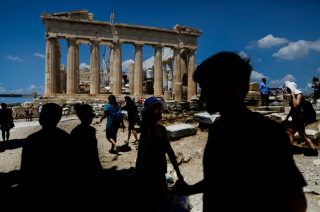
Greek travel agents fear the price increase could scare away visitors. photo: AP/Daniel Ochoa de Olza.
Greek government raises the price of the country’s most popular archaeological site from A$19.06 to A$80.44
Pericles’ symbol of Democracy, the Parthenon, has been turned into the symbol of a cash-strapped nation overnight.
In search of a money-generating solution, Alexis Tsipras and the Ministry of Tourism decided to capitalise on the citadel’s popularity, increasing admission fees.
To replenish the government’s finances, the Greek economy has targeted the streams of tourists arriving to visit the cradle of the famous Athenian civilisation.
Athens is reportedly hiking the Acropolis ticket from A$19.06 to as much as A$80.44 per person, sparking many negative comments.
With more than 10,000 tourists visiting the holy rock each day during peak season, the current entrance fee was dubbed “unacceptably low” by SYRIZA party officials.
Alexis Tsipras’ government has argued additional revenues from tourists could offset austerity measures demanded by international bailout creditors, such as higher taxation on all private education.
“By introducing the price adjustment at state museums and archaeological site entrance fees, we can repeal and replace that measure that affects many more Greeks,” said Culture Minister Aristides Baltas in a recent statement.
Greek travel agents, however, fear drastically soaring prices fourfold will not help the country’s finances breathe but deter potential visitors from coming.
“The value-added tax hikes on all goods and tourism services, as well as the announced increases to the ticket prices of museums and archaeological sites, burden the travel package so much that it will become uncompetitive in the end,” said Lysandros Tsilidis, the president of the federation of Greek travel agents.
The Acropolis won’t be the only Greek treasure to suffer, however, as the Greek culture ministry confirmed higher prices will also come in at 200 state museums.
Popular tourist sites, the likes of Ancient Olympia and the Minoan ruins of Knossos in Crete, will also more than double their entrance fees.
The new prices will apply between April and November 2016, with a 50 per cent discount for the rest of the year while unemployed Greeks will be granted free entry.
Meanwhile, the number of people visiting Greek museums in June, rose by 9.5 per cent over last year, with receipts rising by 13.4 per cent, according to figures published on Wednesday by the Hellenic Statistical Authority (ELSTAT).
There was a 7.8 per cent rise in the number of visitors to archaeological sites during the same month. Receipts rose by 10.1 per cent.
Between January and June this year, visitors to museums have risen by 11.8 per cent and receipts by 17.2 per cent. During the same period, there was a 11.2 per cent rise in visitors and 10.7 per cent increase in receipts at archaeological sites.
Source: Daily Mail, CNBC





 STUDIO 3 NEWCASTLE AUSTRALIA